Best Towns on Lake Como: Where to Go and What to See
Every Lake Como list looks the same. Ten pretty towns, a paragraph each, and not one of them tells you which town to actually skip when you only have a day. So here is the version I wish I’d had: opinionated, honest, and built around the ferry, because on this lake the boat timetable decides your trip more than any villa does.
The short version. The best towns Lake Como has sit at its center: Bellagio, Varenna and Menaggio, a tight ferry triangle. But Como city earns a stop for its funicular and nightlife, Tremezzo and Lenno hold the two greatest villas, Cernobbio is the luxury corner, and Nesso and Torno are the quiet ones most people miss.
Who is this for? Travelers picking which towns to spend their limited hours on, and which to wave at from the boat. I’ll profile each one with a candid take, tell you what to see, and show you how to string them together. For where to sleep, I defer to my Lake Como where to stay guide; for ferry mechanics and the full picture, the guide to visiting Lake Como.
The whole lake at a glance
If you read one thing, read this table. It’s the answer to “which town is which” before you commit a single ferry ride.
| Town | Best for | How to reach | Don’t miss |
|---|---|---|---|
| Bellagio | The showpiece; classic views | Ferry hub; bus/car ferry from Varenna | Villa Melzi gardens, Punta Spartivento |
| Varenna | Romance, walkability, trains | Direct train from Milan; ferry | Villa Monastero, Vezio castle |
| Menaggio | Value, relaxed base, ferry hub | Ferry; bus from Lugano/Como | Lakeside promenade, the old marina |
| Como city | Urban energy, nightlife, year-round | Train (~40 min from Milan); ferry | Duomo, Brunate funicular, Villa Olmo |
| Tremezzo | Villa Carlotta, gardens | Ferry (stops at villa and town) | Villa Carlotta’s botanic garden |
| Lenno | Villa del Balbianello | Ferry; walk or boat to the villa | Villa del Balbianello, the Greenway |
| Cernobbio | Luxury, quiet afternoon | Ferry from Como (~20 min) | Villa d’Este views (from the water) |
| Nesso | A dramatic ravine, no crowds | Slow ferry (some stop); bus from Como | Orrido di Nesso, the Civera bridge |
| Torno | A sleepy authentic village | Ferry/bus from Como | The waterfront piazza, Villa Pliniana views |
| Lecco branch | Quieter, cheaper, local life | Direct train from Milan | Lakefront promenade, mountain trails |
A note on “best for”: these are not interchangeable. Bellagio and Varenna look similar on a map and feel completely different on the ground. The rest of this guide is me explaining why.
How the ferry decides everything
Lake Como is shaped like an upside-down Y. The two legs point south and end at Como city on the southwest and Lecco on the southeast. Where the arms meet, in the middle, is the Centro Lago — and that’s where the famous trio lives.
That geography matters more than any single sight. The central triangle (Bellagio, Varenna, Menaggio, plus Tremezzo/Cadenabbia across the water) is served by frequent passenger ferries and a car-ferry loop all day, so crossing between them takes around 15 to 30 minutes as of 2026. The tips — Como, Lecco, Cernobbio — sit an hour or more away by slow boat.
So the practical rule: cluster your days around the center, and treat the tips as their own separate outings rather than quick hops. I cover routes, ticket types and timings in the full Lake Como guide, and if you’re coming up just for the day from the city, the logistics live in my Lake Como day trip from Milan walkthrough. Here I’m staying in my lane: which towns, and what to do once you’re standing in them.
The best towns Lake Como puts at its heart: the central trio
These three are the reason people fly here. They ring the Centro Lago, they’re a short ferry apart, and most first-timers can see all three in a single well-planned day. Here’s the honest read on each.
Bellagio — the showpiece (and the crowds)
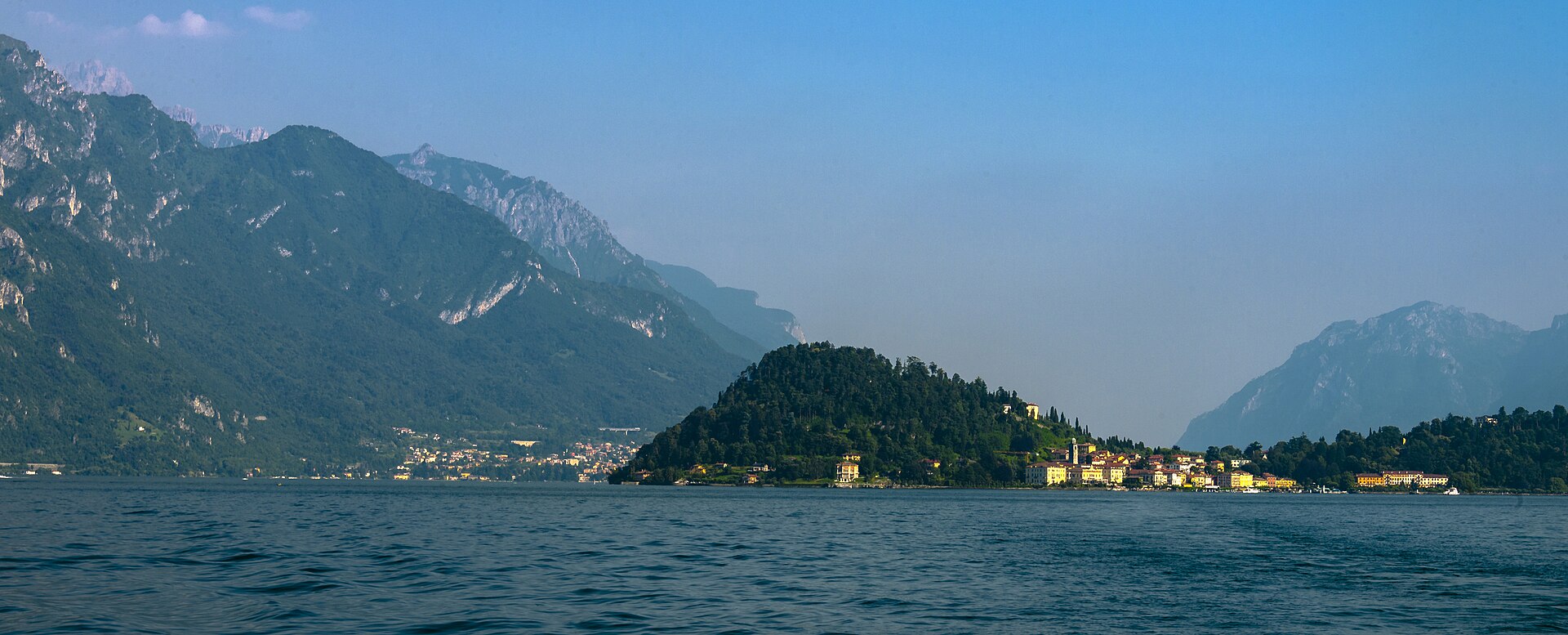
Bellagio is the one everyone has seen on a postcard, perched on the headland where the lake splits in two. The stepped cobbled lanes climbing from the water, the ivy balconies, the silk shops — it’s genuinely beautiful, and it’s also the single most crowded patch on the lake between roughly 10am and 4pm in season. Both things are true at once.
My take: come, but get off the main shopping streets fast. The crowds thin within two turns. Walk up to the side lanes and you’ll find the Bellagio that the day-trippers never see.
What to do and see:
- Villa Melzi gardens — the standout. A neoclassical villa with lakeside grounds, azaleas and a Japanese garden, far calmer than the town center. This is the reason to linger.
- Punta Spartivento — the “point that divides the wind,” the northern tip where you can stand and look down both branches at once. Free, and one of the best free views on the lake.
- Pescallo and San Giovanni — the two little harbors on the far side of the headland, a short walk or a hop on the seasonal tourist train. Quieter, lovely, and a swim spot in summer.
Prices in Bellagio run high for food and drink, which is the trade-off for that address. If a lakefront aperitivo here costs a few euros more, that’s the Bellagio tax. Worth it once.
Varenna — romantic, walkable, and the easy one to reach
Varenna sits across the water on the eastern shore, and it’s my pick for the prettiest of the trio. It’s smaller and quieter than Bellagio, with fishermen’s houses in faded ochre and pink stacked above a tiny waterfront, and a lakeside walkway called the Passeggiata degli Innamorati — the lovers’ walk — bolted to the cliff just above the water.
The other thing Varenna has going for it: trains. It’s on the Milan–Tirano line, so you can arrive directly by rail in about an hour, no ferry required to get here. That makes it the most painless base of the three.
What to do and see:
- Villa Monastero — a former monastery turned villa, with a long botanical garden that runs right along the shore. The garden is the draw; allow real time for it.
- Castello di Vezio — the ruined hilltop castle above town. It’s a climb (15 to 20 minutes uphill), but the panorama over the Centro Lago is the best in Varenna, and there’s a falconry display in season.
- The old town — genuinely walkable in a way Bellagio’s main drag isn’t once the crowds arrive. Wander the stepped alleys down to the harbor and the little church on the square.
Varenna is hilly and full of stairs, worth knowing if you’re hauling a suitcase or pushing a stroller.
Menaggio — the value base and the ferry hub
Menaggio is the practical one. It has no must-see villa, which is exactly why it’s calmer and cheaper — you come for the town itself, not a ticketed attraction. It has a flat, tree-lined lakefront promenade, a proper town square in Piazza Garibaldi, and the easy, lived-in feel of a place where Italians actually holiday rather than just day-trip.
My take: if Bellagio prices make you wince and you want a relaxed home base with great ferry links, Menaggio is the smart move. It’s a hub, so you can ferry to Bellagio or Varenna in about 15 to 20 minutes and reach the villa towns easily.
What to do and see:
- The lakefront promenade — walk it in both directions from the main square. South takes you to a tiny walled marina that’s the most photogenic corner in town.
- Piazza Garibaldi — the lively heart, ringed with cafe terraces. The spot for people-watching and an evening drink.
- The hills above town — Menaggio is a launch point for walks, including trails toward Lake Lugano. Good if you want to stretch your legs beyond the waterfront.
For who should actually sleep here versus just visit, see my where to stay in Lake Como breakdown — Menaggio scores well on value.
The villa towns: Tremezzo and Lenno
Across the water from Bellagio, the western shore between Colonno and Griante holds the two greatest gardens on the lake. The towns themselves are small and strung along one lakeside road, but the villas are the reason you make the trip.
Tremezzo — Villa Carlotta
Tremezzo is a thin ribbon of a town, mostly one road lined with cafes and the grand old Grand Hotel Tremezzo. The headline is Villa Carlotta, an 18th-century villa with a botanic garden famous for its spring explosion of azaleas and rhododendrons, plus palms, bamboo and citrus. You can tour the lavishly furnished interior too, but the garden is the star.
Ferries are the way in — boats stop at both the Villa Carlotta dock and Tremezzo center, a short walk apart. Allow two hours minimum for the villa and gardens; longer if you want lunch on the water.
Lenno — Villa del Balbianello and the Greenway
A little south, Lenno is home to the most cinematic property on Lake Como: Villa del Balbianello, the terraced villa on its own wooded promontory that has stood in for backdrops in Star Wars and a James Bond film. The loggia and gardens stepping down to the water are the image people chase. Book ahead — interior tours in particular sell out weeks out in summer, and you reach the villa on foot or by a short taxi-boat from Lenno’s harbor.
Lenno is also a good launch for the Greenway del Lago di Como, a roughly 10-kilometer walking path linking villages between Colonno and Griante. You can walk the whole thing in three to four hours or just do a scenic stretch — it threads past lake views, old churches and villa gates, and it’s the best way to feel the western shore on foot.
Don’t rush straight back to the boat: Lenno’s church of Santo Stefano and its old crypt are a quiet few minutes most visitors skip.
Como city — the urban gateway
Como sits at the bottom of the southwest leg, and a lot of guides treat it as a doorway you pass through. That sells it short. Como is the only place on the lake that stays fully alive year-round, with a flat, walkable historic center, real nightlife, and shops and restaurants open when the smaller villages have half-shuttered for the season.
It’s also the easy arrival point: direct trains from Milan in around 40 minutes drop you a short walk from the water.
What to do and see:
- The Brunate funicular — ride it up to the hill village of Brunate for a sweeping view back over the city and the lake. This is the Como must-do, and it runs year-round.
- Como Cathedral (the Duomo) — a striking Gothic-Renaissance church right in the center, worth stepping inside.
- Piazza Cavour and the lakefront promenade — the wide waterfront square and the walk along the shore, the nicest flat lakeside stroll on the whole lake.
- Villa Olmo — a grand neoclassical villa with gardens just outside the center, walkable in about 20 minutes.
Como also has the lake’s best after-dark scene, so if you want a town with evening energy rather than early-closing village quiet, this is it. For broader city context and onward routes, my guide to visiting Milan and Northern Italy sets the region.
Cernobbio — the luxury corner
Just north of Como, Cernobbio is the lake’s most refined address, and the home of the legendary Villa d’Este. Important reality check: Villa d’Este is now a five-star hotel, so you can’t tour it unless you’re a guest or dining there. You’ll see it best from the water, gliding past on the ferry.
So what’s the point of stopping? A genuinely elegant, low-key lakeside village with a pretty waterfront promenade, the gardens and exterior of Villa Erba (used for events and exhibitions), and a calmer, moneyed mood than anywhere else down here. It’s a 20-minute ferry from Como.
My honest take: I wouldn’t burn one of your precious central-lake days on Cernobbio. But if you’re overnighting in Como and want a quiet, polished afternoon nearby, it’s a lovely, easy add-on.
The towns most people miss: Nesso and Torno
Here’s where I beat the standard list. Almost every “best towns” roundup recycles the same famous names and stops. The quieter east-of-Como villages — Nesso and Torno — get skipped, and they’re some of the most atmospheric stops on the lake precisely because the crowds haven’t found them.
Nesso — the ravine and the bridge
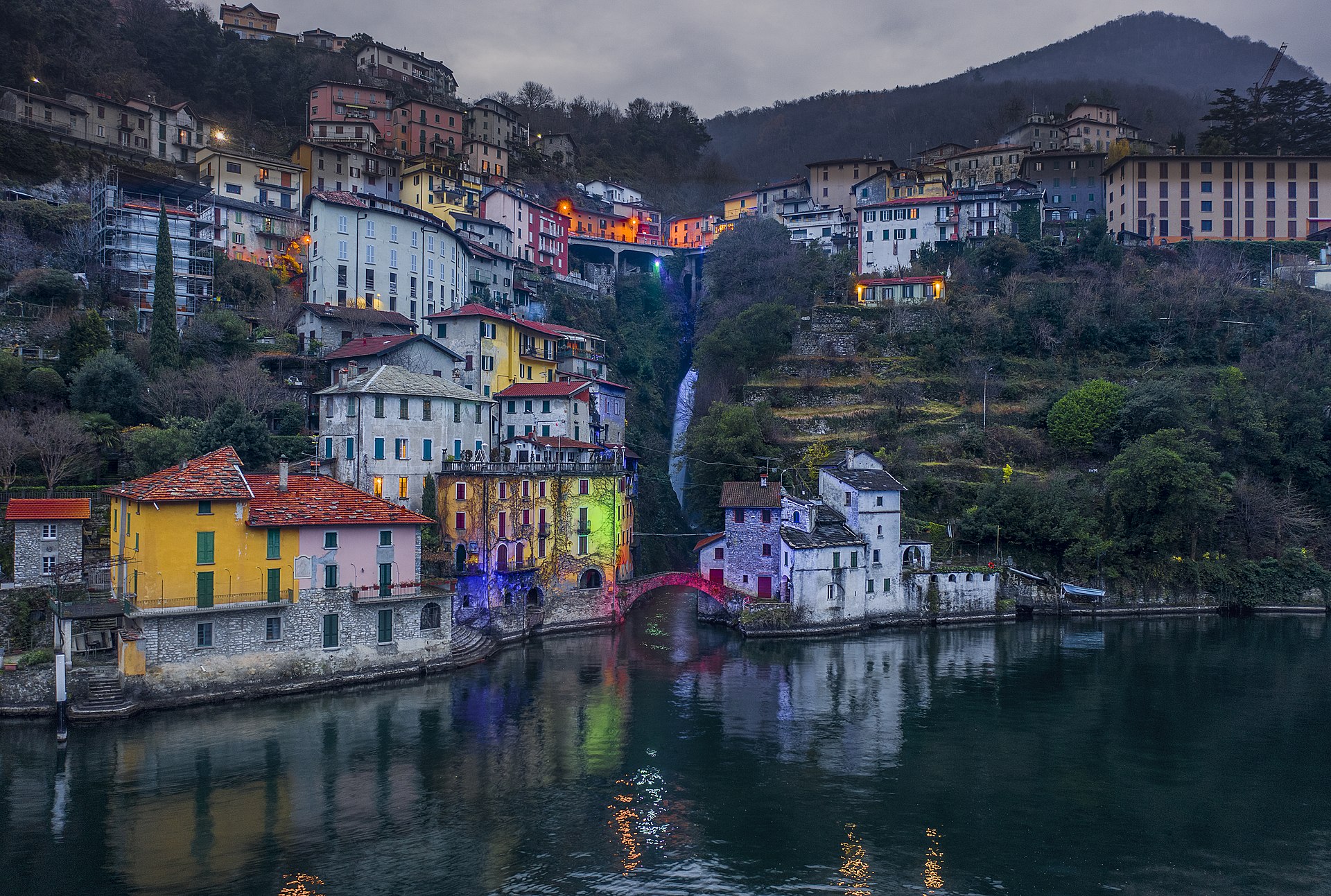
Nesso is a tiny village tumbling down the hillside between Como and Bellagio, and its claim to fame is the Orrido di Nesso: a dramatic ravine where two mountain streams meet and plunge toward the lake, crossed by the arched medieval Ponte della Civera. Leonardo da Vinci even noted it in his notebooks. Stone steps lead down toward the water, and in summer locals swim and (at their own risk) leap from the rocks.
Getting here takes a little planning — only some slow ferries (the battello) stop at Nesso, and fast hydrofoils skip it, so check the current timetable. Buses run from Como too. The village takes under an hour to explore on foot, but the gorge view from the bridge is one of those Lake Como images that doesn’t make the postcards and probably should.
Torno — the sleepy authentic one
Closer to Como, Torno is a small, lived-in village with a quiet harbor-side piazza, a couple of old churches, and almost none of the day-trip churn. It sits below Villa Pliniana, the historic villa with a spring that famously rises and falls, best appreciated from the water on the way past.
There’s not a long list of “sights” here, and that’s the appeal. Torno is where you go to sit on a piazza with a coffee and feel like you’ve stepped off the tourist conveyor belt. Easy to reach by ferry or bus from Como, easy to pair with Nesso on a slow-boat day down the southwest arm.
The Lecco branch — the quieter, cheaper alternative
The lake’s southeast leg, the Lecco arm, is the half most foreign visitors never see. The competition on the western and central shores is just too strong, so people pile in there and leave this side to the locals. That’s exactly why it’s worth knowing about.
Lecco itself is a real working town at the foot of dramatic limestone peaks, with a lovely lakefront promenade (the Lungolago) and some of the best sunset views on the lake. It’s a direct, easy train from Milan, and prices for food and rooms run noticeably lower than in Bellagio or Varenna.
Along this shore you also find Bellano, a low-key town with its own showstopper: the Orrido di Bellano, a narrow gorge you cross on suspended wooden walkways bolted above roaring waterfalls, carved over millions of years by the Pioverna river. It’s a genuinely dramatic, hands-on experience, it costs only a few euros as of 2026, and it sees a fraction of the crowds. Bellano is a quick train from Varenna (around five minutes), which makes it an easy add to an eastern-shore day.
My take: if you’re on a budget, traveling slower, or you’ve done the famous towns and want the lake without the scrum, the Lecco branch is the move. It’s also flatter and more stroller-friendly in places than the stair-stacked central villages.
How to actually string the towns together
You can’t see everything well, so don’t try. Here’s how I’d order a classic central-lake day using the ferry triangle, assuming you’re based in or near the Centro Lago.
The ferry-triangle day:
- Start early in Varenna. Trains and the first ferries beat the worst crowds. Do Villa Monastero’s garden, then climb to Vezio castle for the morning view while it’s quiet.
- Ferry to Bellagio (~15 min). Hit Villa Melzi first, walk out to Punta Spartivento, then let yourself get lost in the back lanes. Lunch here if your budget likes it.
- Ferry to Tremezzo or Lenno (~15 min). Pick one villa — Villa Carlotta’s garden or Villa del Balbianello’s promontory. Trying to do both plus the towns is a recipe for missing the last boat.
- End in Menaggio (~15 min) for the aperitivo. It’s calmer, cheaper and the promenade is made for the golden hour. Ferry back to your base after.
That’s a full, satisfying day and it keeps every hop short. Two villas, two famous towns, and a relaxed finish.
If you’ve got a second day, give it to the slow southwest arm: a battello down past Nesso and Torno, ending in Como city for the Brunate funicular and dinner. Or take the eastern shore for Bellano‘s gorge and the quieter Lecco-branch mood.
Photography stops worth planning around:
- Punta Spartivento, Bellagio — both branches in one frame, best in soft morning or evening light.
- Vezio castle, above Varenna — the classic aerial-feeling shot over the Centro Lago.
- The Civera bridge, Nesso — the ravine and arch, often best seen from a passing boat or the steps down.
- Villa del Balbianello’s loggia, Lenno — the most cinematic terrace on the lake.
- Brunate, above Como — the whole city and southwest arm laid out below.
Best time to avoid crowds: the lake fills up midday in high summer (July and August). Aim for May to early June or September for warm weather with thinner crowds, and either way, move early. The towns are calm before 10am and after about 5pm, when the day-trip ferries empty out. For the wider seasonal picture across Italy, see my best time to visit Italy guide.
For fitting Lake Como into a bigger trip, I’ve got an suggested route through the Italian Lakes and the regional complete guide to the Italian Lakes; for the country-wide plan, the Italy itineraries hub. And if you want to eat well between town-hops, Italian food and wine points you at what’s worth ordering up here.
Final thoughts
The mistake almost everyone makes on Lake Como is trying to tick off every town. Don’t. Pick a base in the center, give the famous trio a full unhurried day via the ferry triangle, and spend whatever’s left on one quiet stop the crowds miss — Nesso’s ravine, a slow boat to Torno, or the Lecco branch with its gorge and lower prices.
That’s the whole secret. The lake rewards depth over distance. For planning the rest of your route, start with the complete guide to visiting Italy and the regional Italian Lakes travel guide, then come back here when you’re ready to choose your towns.
Questions travellers ask
Which is the best town to visit on Lake Como?
For most first-timers, Varenna. It combines real beauty, a direct train from Milan, two walkable villas, and a calmer feel than Bellagio. Bellagio is the close runner-up if you want the most central position and the most restaurants and shops, and don’t mind the midday crowds. There’s no wrong answer between the two — it comes down to crowds versus convenience.
Is Bellagio or Varenna better?
Both are excellent, and they’re different. Varenna is quieter, slightly cheaper, easy to reach by train, and feels like a real village. Bellagio is more central, with ferries running in every direction and a wider choice of dining and shopping, but it draws the biggest day-trip crowds from about 10am to 4pm in season. Pick Varenna for calm, Bellagio for buzz and ferry convenience.
What are the prettiest villages on Lake Como?
Varenna and Bellagio usually top the prettiest-villages lists, with Tremezzo and Lenno close behind for their villas and gardens. For something quieter and dramatic, Nesso’s ravine and medieval bridge are stunning, and the Lecco-branch town of Bellano hides a gorge most visitors never see. The “prettiest” depends on whether you want polished and famous or quiet and authentic.
How do you get between the towns on Lake Como?
By ferry. The public boat network links all the main towns, with frequent service from roughly April to October and reduced runs in winter. Crossings within the central triangle (Bellagio, Varenna, Menaggio) take around 15 to 30 minutes as of 2026. A central-zone day pass (around 15 euros) pays off if you’re making three or more hops. Full route and ticket detail is in my complete guide to Lake Como.
How many days do you need for Lake Como’s towns?
Two to three full days is the sweet spot. One day covers the central triangle — Varenna, Bellagio, a villa town and Menaggio — at a comfortable pace. A second day lets you add Como city and the quieter southwest-arm villages, or the eastern Lecco branch. With a third, you can slow right down and actually sit on a piazza instead of chasing the next ferry.
Which Lake Como town is closest to Milan?
Como city, at roughly 40 minutes by direct train from Milan. It’s the easiest arrival point, but it sits at the southern tip, away from the most scenic central stretch. Varenna is about an hour by direct regional train and lands you right in the heart of the lake, which makes it the better target if your goal is the famous central towns. For the full day-trip plan, see how to do Lake Como in a day from Milan.
Which Lake Como towns are best for families?
Como city and Menaggio are the easiest with young children — both have flat, walkable centers that handle strollers well. Varenna and Bellagio are full of hills and stairs, beautiful but tiring with a pushchair. On the Lecco branch, Bellano has a flat lakeside promenade, and its dramatic gorge walkway is a hit with older kids and teens.
Do you need a car to see the towns on Lake Como?
No, and honestly a car is often a liability here — parking in the popular towns is scarce and stressful in season. The ferries link the towns better than the roads do, and Varenna, Como, Lecco and Bellano are all reachable by train from Milan. A car only really helps for the quietest corners and the Lecco branch. More on the car-free approach in our guide to accommodation in Lake Como and Italy transportation.