Lake Maggiore Travel Guide: Borromean Islands and Stresa
Most people arrive at Lake Maggiore expecting a smaller Lake Como and leave talking about three islands they’d never heard of a week earlier. That switch — from “the other big lake” to “wait, why does nobody mention this” — happens on the water off Stresa, usually within the first hour.
This Lake Maggiore travel guide is built around that moment. Short version: Maggiore’s headline is the Borromean Islands off Stresa — the palace-and-garden Isola Bella, the botanical Isola Madre, and the fishermen’s Isola dei Pescatori for lunch — backed by the Mottarone mountain above town and a quieter Swiss end up north. Base in Stresa, ride the public ferry, and give it two days.
Who this is for: first-timers who want a real plan, not a photo carousel. People deciding between the Italian lakes, or adding Maggiore to a Como trip. I’ll tell you which island does what, how the ferries actually work, and where the honest disappointments are. There are a couple.
The three islands at a glance
Before the deep dive, here’s the decision most of your day turns on. Three islands, three completely different jobs. You can do all three, but you don’t have to.
| Island | What it is | Time needed | Entry (as of 2026) | Skip if… |
|---|---|---|---|---|
| Isola Bella | Baroque palace + terraced Italian garden, small village | 2–3 hours | Palace+garden ~€27 | You hate crowds and grand interiors |
| Isola Madre | English-style botanical garden, gentler villa, peacocks | 1.5–2 hours | ~€23 | You’re short on time (it’s furthest out) |
| Isola dei Pescatori | Real fishing village, no big sight, all restaurants | 1–1.5 hours (lunch) | Free | You’re not eating or strolling |
If you only have a half day, do Isola Bella plus a lunch hop to Pescatori and let Madre go. If you love gardens more than gilt, flip it: Madre and Pescatori, skip the palace queue. Combined Bella + Madre tickets run around €40 as of 2026, which is the move if you’re doing both.
A fourth island, Isolino di San Giovanni, sits just off the Pallanza shore and is the Borromeo family’s private home — conductor Arturo Toscanini lived there for years. You can photograph it from the waterfront but not land. Don’t plan around it.
Stresa: the base that makes everything easy
Stresa is the obvious home for a Maggiore trip, and for once the obvious choice is right. It’s the town directly across from the Borromean Islands, it has the main ferry pier, and it’s an easy train hop from Milan. Almost everything in this guide is reachable from a Stresa morning.
The town itself is an Belle Époque lakefront — grand old hotels strung along a promenade, palm trees, a band of cafés facing the water. It’s not edgy or undiscovered. It’s a place built for looking at a view, and it does that one job extremely well. The waterfront stroll between the Grand Hotel des Iles Borromées and the public gardens is the evening ritual; do it with a gelato and you’ve understood Stresa.
Practically, you want to know two spots. Piazza Marconi is the main lakefront square where the public Navigazione Laghi ferries leave for the islands. A short walk north sits the private-motorboat jetty (signed Navigazione Isole Borromee), where smaller operators run their own island shuttles. More on the difference between those two in a moment, because it matters for your wallet.
Stresa also works as a sleep-base for the whole region: Lake Orta is half an hour away, the gardens at Verbania are a ferry ride up the lake, and Milan is close enough that some people daytrip Stresa entirely and never stay over. If you’re weighing where to sleep across the lakes generally, the Italian Lakes travel guide sets Maggiore beside its neighbors, and for a route that strings them together there’s the Italian Lakes itinerary.
The Borromean Islands in depth
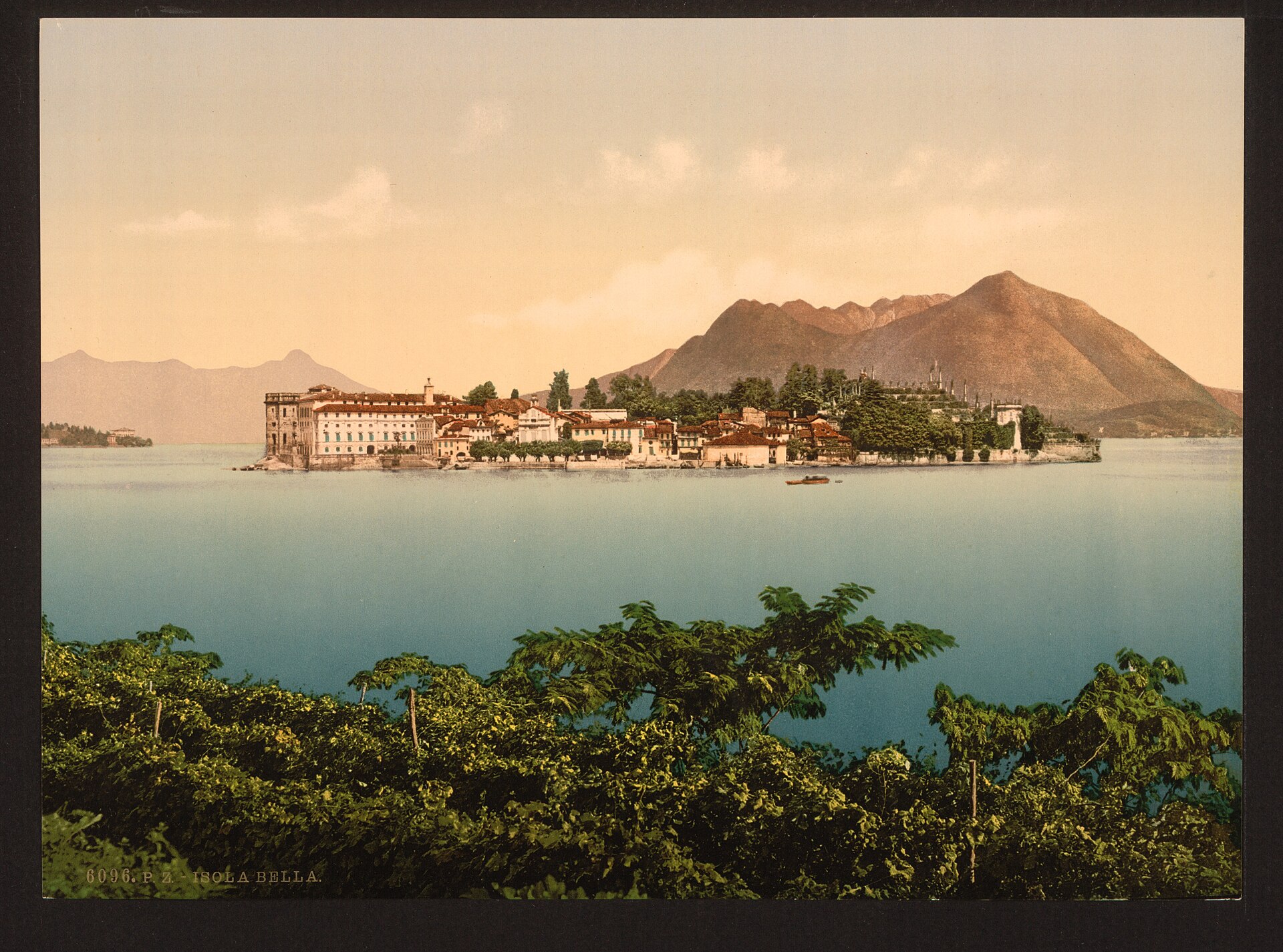
This is the reason you came. The Borromean Islands are three (visitable) islands clustered in the bay between Stresa and Verbania, owned for centuries — minus the fishermen’s one — by the Borromeo family, aristocratic bankers who turned two of them into showpieces. Look for their coat of arms, three interlocking rings, once you spot it you’ll see it everywhere.
Here’s how each one actually plays.
Isola Bella: the palace and the garden
Isola Bella is the famous one, and the crowds prove it. You step off the boat almost at the palace door, which is the right place to start. The Palazzo Borromeo is a 17th-century baroque pile that took the better part of 400 years to finish, and the interiors deliver exactly the gilt-and-tapestry opulence you’d hope for — mirrored halls, a throne room, Flemish tapestries with mythological beasts in the final rooms before the garden.
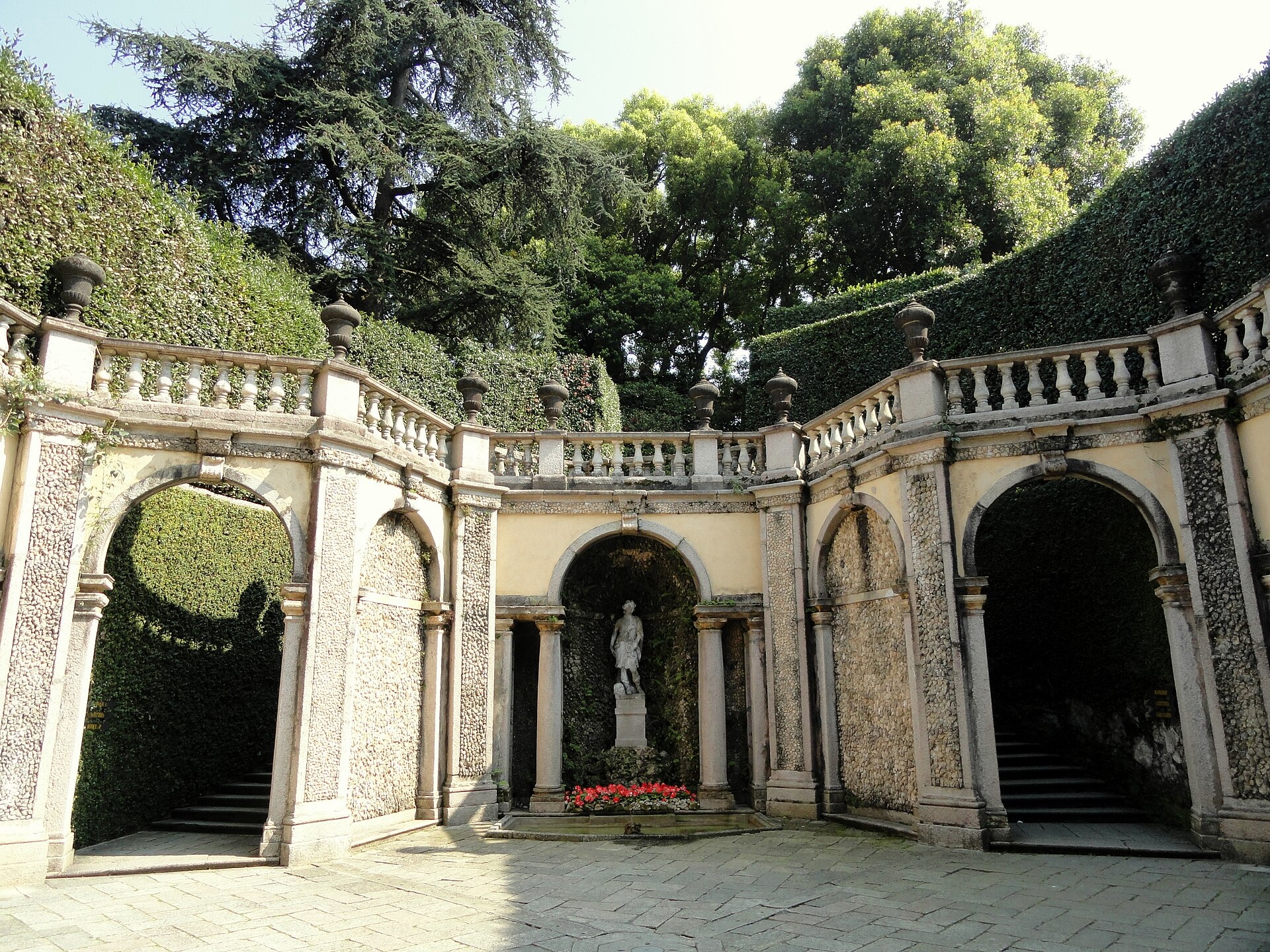
The strange highlight is downstairs: a series of grottoes lined floor to ceiling in shells, pebbles and black-and-white stone, built to stay cool in summer. They’re genuinely odd and unlike anything else on the lake.
Then you climb out into the garden, and this is where Isola Bella earns its name. It’s a tiered baroque theatre of clipped hedges, statues, and a central tower crowned with a unicorn, all stacked up so the whole island looks like a green wedding cake from the water. White peacocks wander the terraces. From the top tier you get the best wide view of the lake, the Stresa shore, and the Alps behind. Give the palace and garden together two to three hours; rushing it is a waste.
Isola Madre: the botanical one
Isola Madre sits further out, closer to the Verbania shore, and it’s the quieter, greener sister. The villa here is older and far less grand than Bella’s — it reads as a lived-in family house, with portraits and furniture rather than show-off state rooms — and that’s fine, because you come for the garden.
It’s an English-style botanical garden spread over the whole island: wisteria, rhododendrons, camphor and cypress, magnolias, citrus, and a famous old Kashmir cypress that’s one of the largest in Europe. Peacocks and a few parrots have the run of the place. It feels calmer and more wandering than Bella’s sharp geometry — less a stage set, more a place to lose half an hour on a bench. If you only have appetite for one garden, decide whether you want drama (Bella) or botany (Madre). I lean Madre when it’s hot and the crowds on Bella get thick.
Isola dei Pescatori: lunch and a real village
Isola dei Pescatori — also called Isola Superiore — is the one with no ticket and no grand sight, and it might be your favourite anyway. It’s the only Borromean island never owned by the family, a genuine fishing village of narrow lanes and tall shuttered houses, with a couple of dozen year-round residents and a small church. You can walk end to end in a few minutes.
What it has is restaurants, lined along the waterfront, most of them serving lake fish. This is the designated lunch island, and the move is to time your day so you land here around 12:30 when kitchens open. Reserve a waterside table in advance in high season if the view matters to you; eat on an interior lane and you’ll pay less for the same fish minus the lake. Either way, it’s a lovely, unhurried hour between two garden visits.
How the island ferries work: the Lake Maggiore travel guide section that matters most
This is the part guides gloss over, so let’s be precise. There are two completely different ways to reach the islands, and confusing them is how people overpay.
Public ferries (Navigazione Laghi) leave from Piazza Marconi in Stresa and run roughly every half hour through the season, from around 8:00 to about 18:00. The smart buy is the “free circulation” day ticket for the central zone — around €16.90 for an adult as of 2026 — which lets you hop on and off between Stresa, Isola Bella, Isola dei Pescatori and Isola Madre all day, in any order. You can also board at Baveno, Pallanza/Verbania, Villa Taranto and Intra, so if your hotel is up the lake you’re not tied to Stresa. Stresa to Isola Bella is about a 12-minute crossing.
Private motorboats depart from the separate jetty just north of Piazza Marconi. They’re faster and more flexible, they’ll often quote you a fixed island-hop package, and they tend to cost more than the public day ticket. Nothing wrong with them — just know you’re choosing convenience over price, and don’t assume the first booth you see is the official ferry. The public Navigazione Laghi booth is clearly marked at the main square.
Two things nobody warns you about. First, the palace and garden entry tickets are separate from your boat ticket — the ferry gets you to the island, the Borromeo tickets get you inside Bella and Madre, and you buy those at each island (or online to skip the July–August queue). Second, there’s a tiny disembarkation tax, around €0.50 per person per island, paid in cash. Carry coins.
Best island order, if you’re doing all three: start at Isola Bella as it opens (palaces open around 10:00, last entry around 17:00, season roughly mid-March to early November), so you beat the midday tour-group wave. Hop to Pescatori for lunch. Finish on Isola Madre in the afternoon when Bella is at its worst. That sequence keeps you ahead of the crush the whole day.
The Stresa–Mottarone cable car and Giardino Alpinia
Now the honest part, because most older guides get this wrong. The Stresa–Alpino–Mottarone cable car — the aerial tramway that used to run from the Lido di Carciano up Mount Mottarone — has been closed since the May 2021 disaster, and as of 2026 it has not reopened. Any guide telling you to “take the cable car up for the seven-lakes view” is out of date. Don’t build a day around it; check the current status before you count on it changing.
That doesn’t kill the mountain, though. Mottarone (about 1,490 m) is still there, still nicknamed the balcony of the seven lakes, and on a clear day the panorama runs from the Po plain to the Alps with lakes scattered below. You just have to reach it another way: by road, which is a winding drive (or a taxi/private tour) up from Stresa, or on foot for the well-shod. The summit is a low-key place — ski runs in winter, walkers and an adventure park in summer — not a polished attraction, so set expectations accordingly.
Partway up sits the Giardino Botanico Alpinia, an alpine garden at the old mid-station above Stresa, with terraces of mountain and subalpine plants and a wide view back down over the lake and the islands. It’s reachable by the mountain road, and it’s a pretty, modest stop if you’re driving up anyway. Treat Mottarone as a fair-weather, car-or-tour add-on rather than the easy lift ride it once was.
Verbania and the Villa Taranto gardens
Across the bay from Stresa, on the northern shore, Verbania is the lake’s biggest town and a more lived-in, less touristy place to wander — its Pallanza waterfront is a calm counterpoint to Stresa’s grandeur. The reason most visitors come, though, is one of the great gardens of the Italian lakes.
The Giardini Botanici di Villa Taranto were planted from the 1930s by a Scottish captain, Neil McEacharn, who spent decades importing species from around the world. The result is a serious botanical garden — terraced beds, a dahlia maze, water-lily pools, seasonal tulips and rhododendrons, thousands of plant varieties — laid out for slow walking. Adult entry runs around €15 as of 2026, and the season is roughly mid-March to early November, with hours that shrink in the shoulder months.
The neat trick: Villa Taranto has its own ferry stop on the Navigazione Laghi network, so you can reach it by boat from Stresa, Baveno or Pallanza without a car. Pair a morning on the islands with an afternoon at Taranto and you’ve done two of Maggiore’s best things on one ferry ticket family.
Santa Caterina del Sasso: the cliff hermitage
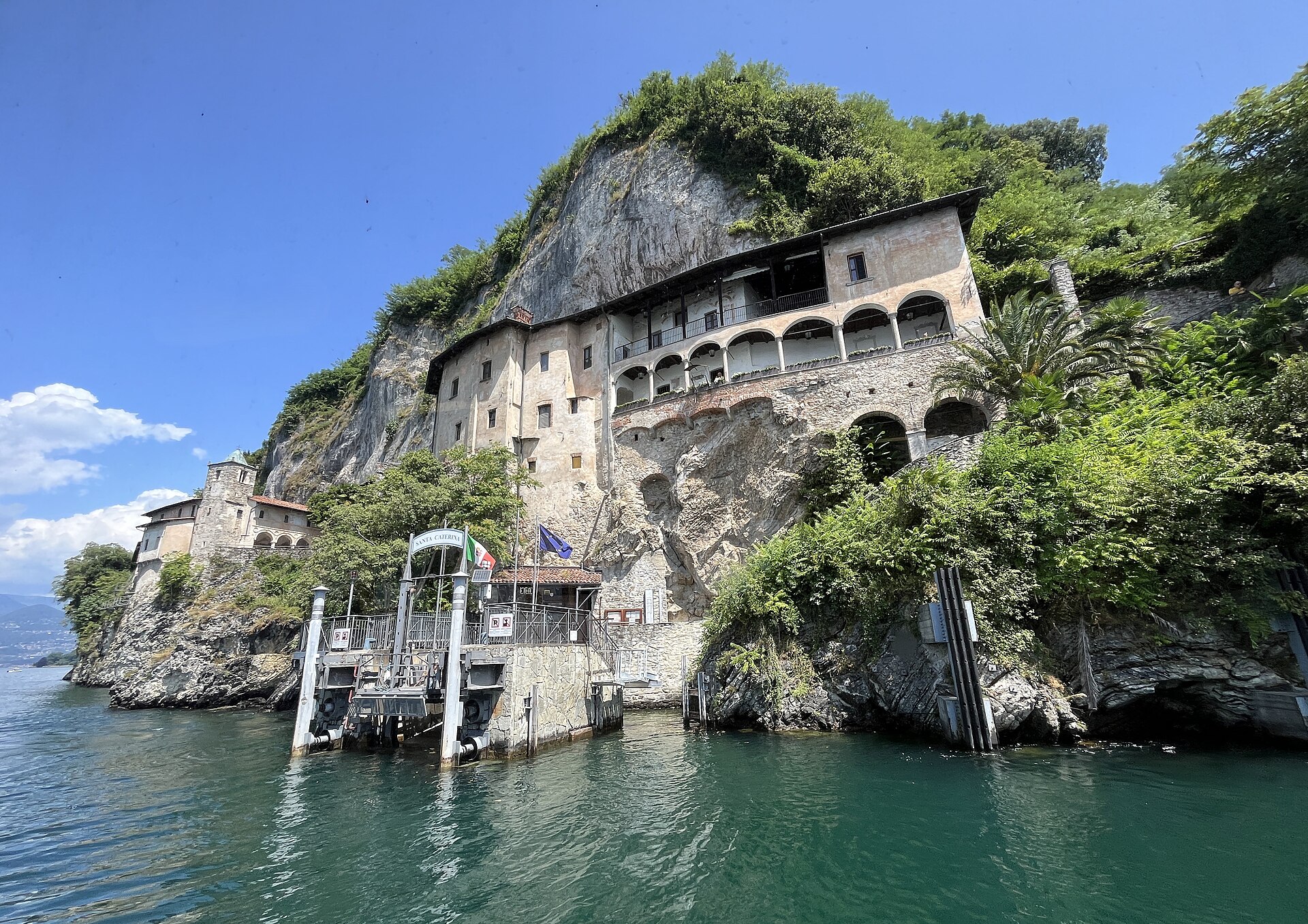
Here’s a sight page-one guides routinely forget, and it’s one of my favourites on the whole lake. Santa Caterina del Sasso is a 13th-century hermitage built straight into a cliff face on the eastern (Lombardy) shore, near Leggiuno — a row of frescoed monastic buildings clinging to the rock above the water, looking like they might slide in at any moment. They don’t. They’ve been there 700-odd years.
It’s a small visit but a memorable one: a chapel, old frescoes, a working sense of stillness, and a balcony view straight down the lake. You reach the buildings either by descending a long staircase from the car park above or by an elevator cut into the rock, and best of all you can arrive by boat — there are seasonal Navigazione Laghi sailings from the Stresa/Arona side, and the approach from the water, looking up at the hermitage on its ledge, is the whole point.
Open daily through the main season, roughly 9:30 to 19:30 in the warmer months with reduced winter hours, and entry to the hermitage itself is free. It sits on the opposite shore from Stresa, so it pairs naturally with the eastern side of the lake or a boat day rather than a quick island morning.
Arona and Angera: the southern gateway and a castle
Down at the lake’s southern tip, two facing towns guard the entrance. Arona on the Piedmont side is the practical one — a workaday lakeside town, an easy train stop, and home to a giant 17th-century copper statue of San Carlo Borromeo (the “Sancarlone”) that you can actually climb inside for a view out of his eyes, which is exactly as odd as it sounds.
Across the water, Angera has the real draw: the Rocca di Angera (Rocca Borromeo), a medieval fortress on a rocky hill with one of the best commanding views on the lake. Inside lives the Doll and Toy Museum, said to be the largest of its kind in Europe — over a thousand dolls, antique automatons, a children’s-clothing collection — founded by Princess Bona Borromeo. It’s a genuinely strange and good rainy-day option, and the castle’s frescoed Hall of Justice and ramparts are worth the climb regardless. It’s generally open April to October, adult entry around €12–15, and you can fold it into the same Borromeo multi-site ticket as the islands if you’re doing several.
The Swiss end: Locarno and Ascona
Lake Maggiore doesn’t stop at the Italian border. Its northern third is in Switzerland, in the Italian-speaking canton of Ticino, and the two main towns up there — Locarno and Ascona — have a sunnier, more Mediterranean Swiss-riviera feel: palm-lined promenades, an arcaded piazza in Locarno (Piazza Grande, of film-festival fame), and the lovely Brissago Islands botanical park just offshore.
Practical notes if you’re tempted north. It’s a real border crossing, so carry your passport even though boats cross freely — you may be asked. You’ll also be paying in Swiss francs up there, not euros, and prices jump noticeably the moment you cross. International boats run between the Swiss towns and the Italian end (Locarno to Arona and back) on a seasonal schedule, roughly spring to autumn, and it’s a long, slow, scenic ride rather than a quick hop. For the documents-and-money side of crossing into Switzerland for a day, my Italy travel tips page covers the border practicalities. Treat the Swiss end as a deliberate day out, not a casual detour.
Nearby Lake Orta: the easy, lovely add-on
If you do one thing beyond Maggiore, make it this. Lake Orta sits just over the ridge to the west, about a 30-minute drive from Stresa (or bus #32, under an hour), and it’s the antidote to the islands’ crowds — a small, soft, almost secret lake that feels like Maggiore did fifty years ago.
The village of Orta San Giulio is the heart of it: pastel facades around Piazza Motta, one of the prettiest little squares in northern Italy, with cafés facing the water and a tiny island a few hundred metres offshore. That island is Isola San Giulio, reached by a five-minute public boat (round trips run frequently, a few euros), and it’s occupied by a basilica and a Benedictine convent. A single cobbled lane circles it — signed as the “way of silence” — and walking it is genuinely one of the calmest twenty minutes you can spend on any Italian lake.
Above the village, the Sacro Monte di Orta, a wooded UNESCO hillside of 20 chapels telling the life of St Francis, makes an easy uphill stroll with lake views. A full day does Orta justice; even a half day from Stresa is worth the trip. It’s the rare add-on that’s both effortless and better than the thing you came for, depending on your mood.
Getting there, when to go, and how long
Getting there. Almost everyone arrives from Milan, and it’s simple. Direct trains run from Milano Centrale to Stresa in roughly 60–90 minutes — Stresa is on the main Milan–Domodossola–Switzerland line — and the station is a short walk uphill from the lakefront. If you’re piecing together a wider northern trip, my Milan and Northern Italy travel guide frames how the lakes connect, and the Italy transportation overview covers trains, passes and the regional-versus-fast distinction. Driving from Milan is about an hour, but you don’t need a car for an islands-and-Stresa trip; a car only earns its keep if you’re doing Mottarone by road, Orta, or the eastern shore.
When to go. The sweet spot is late April through June and September. The gardens are in bloom, the palaces and Villa Taranto are open (their season runs roughly mid-March to early November), and the heat and crowds haven’t peaked. July and August are busy and hot, and Stresa parking gets ugly on summer weekends — arrive early. Winter is quiet and many garden sights close, though Stresa stays open and atmospheric. For month-by-month detail across the country, see the Italy season by season.
How long. Two full days is the honest answer. Day one: the three Borromean Islands, start to finish. Day two: pick one of Villa Taranto, Santa Caterina, Angera, or a half-day at Lake Orta. A single day can cover the islands alone if you’re tight, but you’ll be glancing at your watch. Three days lets you add Orta properly and the Swiss end without rushing.
Pairing with Como. Maggiore and Lake Como sit close together west of Milan and combine beautifully — two or three days each, train between them via Milan. They’re different in character: Como is steeper, glossier, villa-and-ferry country; Maggiore is gentler, garden-and-island country. The Italian Lakes itinerary maps a route that links them, the Lake Como travel guide covers its neighbor in full, and if Como’s where you’ll sleep, where to stay in Lake Como breaks down the towns. For the third giant, the Lake Garda travel guide rounds out the trio.
Practical specifics: tickets, order, and beating the crush
A few hard-won details that make the islands day go smoothly:
- Buy the right boat ticket. The public Navigazione Laghi “free circulation” day pass (around €16.90 as of 2026) beats paying private operators per hop if you’re seeing all three islands. Use the clearly marked public booth at Piazza Marconi.
- Boat ticket ≠ entry ticket. Your ferry pass moves you between islands; the Borromeo palace/garden tickets (Bella ~€27, Madre ~€23, combo ~€40 as of 2026) are separate and bought on the island or online. Pescatori is free.
- Best order: Bella → Pescatori → Madre. Hit Isola Bella at opening (~10:00) before the tour groups, lunch on Pescatori, finish on Madre. This keeps you one step ahead of the midday wave all day.
- Avoid the midday crush. The crowd peaks on Isola Bella between roughly 11:00 and 14:00 when bus tours pour in. Mornings and late afternoons are calmer. Spring and September are far easier than July–August.
- Carry small cash. For the ~€0.50-per-island disembarkation tax, the Orta island boat, and Swiss francs if you head north.
- Book island lunch in season. A waterside table on Pescatori in high summer is worth reserving; interior tables cost less.
For where this fits in a longer trip and how to slot the lakes around cities, the Italy itineraries hub and the broad Italy travel guide are the wider maps. And if you want to eat well around the lake, the lake-fish-and-Piedmont-wine angle lives in Italy food and wine travel.
Final thoughts
Lake Maggiore rewards the traveler who shows up with a plan and a little patience. Get the early ferry, do Isola Bella before the tour buses, eat lake fish on Pescatori, and let the gardens slow you down. Don’t bank on the cable car, do bank on Orta, and carry coins. Do that and Maggiore stops being “the other lake” and b
Questions travellers ask
Which Borromean Island is the best to visit?
If you see only one, make it Isola Bella — the baroque palace, grottoes and terraced garden are the lake’s signature sight. But the best day visits all three in sequence: Bella for the palace, Isola dei Pescatori for lunch in a real fishing village, and Isola Madre for the calmer botanical garden. They’re each different enough that doing all three rarely feels repetitive.
How do you get from Stresa to the Borromean Islands?
Take the public Navigazione Laghi ferry from Piazza Marconi in Stresa; it runs roughly every 30 minutes and reaches Isola Bella in about 12 minutes. A “free circulation” day ticket (around €16.90 as of 2026) lets you hop on and off all three islands. Private motorboats leave from a separate jetty nearby — faster, more flexible, usually pricier.
Is the Stresa–Mottarone cable car open in 2026?
No. The Stresa–Alpino–Mottarone aerial tramway has been closed since the May 2021 accident and, as of 2026, has not reopened. You can still reach Mottarone’s summit and its seven-lakes view by the mountain road (drive, taxi or tour), and the Giardino Alpinia partway up is reachable the same way. Check the current status before planning around the lift.
How much time do you need at Lake Maggiore?
Two full days is the sweet spot: one for the three Borromean Islands, one for a second highlight (Villa Taranto, Santa Caterina del Sasso, the Rocca di Angera, or a half-day at Lake Orta). You can squeeze the islands alone into a single long day from Milan, but it’s tight. Three days lets you add Orta and the Swiss end comfortably.
Can you do Lake Maggiore as a day trip from Milan?
Yes. Direct trains run Milano Centrale to Stresa in 60–90 minutes, and from the Stresa pier you can ferry to the Borromean Islands and back in a full day. Start early, do Isola Bella at opening, lunch on Pescatori, and fit Isola Madre if time allows. It’s a long but very doable day; an overnight in Stresa makes it far less rushed.
What’s the difference between Lake Maggiore and Lake Como?
Both are large lakes west of Milan, but the feel differs. Como is steeper, glossier and more compact — villa-and-ferry country focused on the central lake. Maggiore is gentler and more spread out, built around garden islands and Stresa’s Belle Époque promenade, with a quieter Swiss end. Many travelers pair them, two to three days each, connecting by train via Milan.
Is Lake Orta worth visiting from Lake Maggiore?
Very much. Lake Orta is about 30 minutes from Stresa (bus #32 or a short drive) and far quieter than Maggiore. Orta San Giulio’s pastel square and the five-minute boat to Isola San Giulio — with its convent and a cobbled “way of silence” — make one of the calmest, prettiest half-days in the region. It’s the rare add-on that often outshines the main event.
Do you need a passport for the Swiss end of Lake Maggiore?
Yes, bring your passport. The lake’s northern third (Locarno, Ascona, the Brissago Islands) is in Switzerland, so visiting is a real border crossing even though boats cross freely and you may not always be checked. You’ll also pay in Swiss francs there, not euros, and prices rise noticeably. Treat the Swiss towns as a planned day trip rather than a casual hop north.