Practical Information, Safety & Etiquette
Italy Packing List by Season
I have dragged the wrong suitcase up four flights of marble stairs in a Florence walk-up with no lift, and I have stood at the door of a Roman church being turned away for bare knees. Both were avoidable. This Italy packing list is the one I wish someone had handed me before my first trip: pack light, lean smart-casual, bring broken-in walking shoes, and carry something that covers your shoulders and knees so churches let you in. Everything else is detail.
This guide is for the traveler who wants one carry-on, wants to blend in a little rather than scream “tourist,” and wants the season-and-region logic that most checklists skip. I’ll give you a season table up top, a capsule that actually does the math, blunt opinions on shoes, and the regional tweaks for the Dolomites, the southern beaches, and Venice when the water comes up. I’ll hedge the prices and temperatures because weather lies and so do exchange rates, but the strategy holds. It pairs well with the rest of my Italy travel tips if you’re still planning the trip itself.
The short version: what to pack for Italy, by season
Before the deep dive, here’s the whole thing on one screen. Treat the temperatures as rough ranges, not promises — Italy runs from Alpine peaks to near-African south, so a single number never fits the whole boot.
| Season | Typical weather (approx.) | Key clothing | Don’t forget |
|---|---|---|---|
| Spring (Mar–May) | Cool to mild, ~10–24°C / 50–75°F, real rain risk; chilly mornings | Layers: long-sleeve tops, a light sweater, a packable rain jacket or trench, dark jeans, one nicer outfit | Compact umbrella, a scarf, broken-in walking shoes, sunglasses |
| Summer (Jun–Aug) | Hot, often ~28–36°C / 82–97°F, humid in the north, scorching in the south | Linen and cotton, breathable tops with sleeves, light dresses, smart shorts (cities) or swim gear (coast) | Sun hat, high-SPF sunscreen, refillable water bottle, a shoulder cover for churches |
| Autumn (Sep–Nov) | Mild sliding to cool, ~12–26°C / 54–79°F early, wetter and foggy late | Same as spring plus a warmer layer: knit sweaters, a wool-blend coat by November | Umbrella, layers you can peel, waterproof-ish shoes for late fall |
| Winter (Dec–Feb) | Cold, ~2–12°C / 36–54°F in cities; sub-zero and snowy in the north and mountains | Warm coat, thermals (north), sweaters, scarf, gloves, hat; layer everything | Waterproof boots, lip balm, a real coat — Italian buildings can be drafty |
That table is the spine. The rest of this guide is the muscle: how to turn it into a bag you can actually carry, and what changes when you swap Rome for a Dolomites trail or a Sicilian beach.
The capsule wardrobe approach (and how Italians actually dress)
Here’s the mistake almost every first-timer makes, me included: packing outfits instead of a system. You bring eight tops and six bottoms because each one “goes with” a specific plan, and then half of it never leaves the suitcase. A capsule fixes that. You pick a tight color palette and pieces that all talk to each other, so any top works with any bottom.
My working capsule for a week, regardless of season (you scale the warmth up or down):
- 4–5 tops that all share a palette. Build around neutrals — navy, black, white, beige, olive. Italians do this instinctively; they mix tones, not loud contrasts, which is why even a simple outfit looks deliberate.
- 2–3 bottoms. A pair of dark jeans, one pair of trousers or a skirt, and in summer either linen pants or one pair of smart shorts.
- 1 layer — a sweater, blazer, or sharp knit. This single piece does more for “looking pulled-together” than anything else in the bag.
- 1 jacket matched to the season (rain shell in spring/fall, warm coat in winter, light cardigan in summer).
- 1 “nice” option — a dress, or a shirt-and-trousers combo you’d happily wear to a real dinner.
Five tops and three bottoms is fifteen combinations before you even add the layer. That’s two weeks of not repeating yourself, in a carry-on.
Now, the cultural part, because it changes what you pack. Italians dress a notch up from what most North Americans wear day-to-day. Not formal — you don’t need a tie — but considered. Fitted rather than baggy. Dark, clean denim rather than distressed. A proper jacket in the evening. The giveaway tourist uniform is athleisure worn as streetwear: gym leggings, basketball shorts, a giant-logo tee, a baseball cap, white running shoes built for a 10K. None of it is illegal; it just marks you instantly and, in a few restaurants and clubs, gets you a worse table or a polite no at the door.
The evening shift is real and worth packing for. Locals dress up a touch at night, especially for the passeggiata, the unhurried evening stroll where the whole town seems to be out looking slightly sharper than they did at noon. Pack so you can make that small upgrade: swap day sneakers for loafers or nicer flats, throw on the blazer or the one good dress. You don’t need a second wardrobe — you need one or two pieces that lift the basics. For the deeper “why” of Italian social norms and how to read a room, see my notes on Italian etiquette and dress expectations; my lane here is just the physical packing.
Shoes: the single most important call on your Italy packing list
If you get one thing right, make it your feet. Italy is a walking country laid over stone, and the stone is the point. Sampietrini — those rounded cobbles you see in Rome — are gorgeous and brutal: uneven, slick when wet, and unforgiving over a 20,000-step day. Florence, Siena, Venice, Matera, basically every historic center is the same story.
My non-negotiables:
- Bring shoes that are already broken in. This is the rule people break and regret by day two. A brand-new pair of “comfortable” sneakers is still a stranger to your feet, and cobblestones are exactly where blisters bloom. Whatever you bring, log a few long walks in them at home first.
- Skip flip-flops and flimsy thong sandals in cities. They offer zero support on uneven stone, they’re a stubbed-toe hazard, and locals read beach footwear in a piazza as a tell. Save them for the actual beach.
- Skip brand-new heels and tall stilettos for daytime. The heel wedges between cobbles; you will roll an ankle. If you want height for dinner, a block heel or wedge is far safer than a stiletto.
What I actually pack: two pairs, three if I have a specific reason. One supportive, decent-looking walking shoe — a leather sneaker or a cushioned low-profile trainer in a neutral color reads fine in Italian cities and carries you all day. One slightly dressier pair for dinners — leather flats, loafers, or low ankle boots in cooler months. The optional third is activity-specific: hiking shoes for the Dolomites or the Path of the Gods, or sport sandals you can get wet on the coast. If your feet need orthotic inserts, bring them; the stone does not care about your arches.
How to handle the church dress code without overpacking
This is the rule that trips up summer travelers most, and it’s simple: cover your shoulders and your knees. It applies in churches across Italy — St. Peter’s and the Vatican, the Duomo in Florence, and countless smaller ones — and, importantly, it applies to men as well as women. No bare shoulders, no tank tops, no spaghetti straps, no shorts above the knee, no exposed midriff. At the big sites there are often guards at the door who will turn you away, and they are not negotiating. Smaller parish churches can be just as strict.
You do not need to dress like a nun all day to manage this. The whole trick is one piece of fabric: a lightweight scarf or pashmina. It weighs almost nothing, lives in your day bag, and turns a sleeveless summer outfit into a church-legal one in two seconds — drape it over your shoulders, or wrap it around your waist as a makeshift skirt over shorts. I keep one in my bag every single day from spring through fall. For men, the easy version is wearing trousers or longer shorts that clear the knee, and tossing a light overshirt in the bag for sleeves. For the etiquette reasoning behind the dress code and how to behave once you’re inside, I go deeper in my guide to Italian etiquette — here I just want you to pack the scarf.

The electrical adapter you genuinely need
Coming from the US, this is the one item people forget and then panic-buy at the airport for triple the price. Italy uses Type F and Type L plug sockets, running on 230 volts at 50 Hz. Older outlets sometimes also take the slimmer Type C plug. None of these match North American plugs, so:
- You need a plug adapter — ideally a universal one that covers Type F/L — to physically fit your chargers into the wall.
- Most modern electronics are dual-voltage and only need that adapter. Check the small print on the charger brick: if it says “INPUT: 100–240V,” you’re fine with just the adapter. Phones, laptops, tablets, and most camera chargers fall here.
- High-wattage US appliances are the exception. A US-only hair dryer, flat iron, or curling wand rated for 120V will need an actual voltage converter, not just an adapter — and honestly, plugging a US hair tool into Italian power is a known way to fry it. My advice: leave those at home. Most hotels supply a hair dryer, and dual-voltage travel tools exist if you must.
Bring one or two adapters, not a brick of six. A small power bank for long sightseeing days is worth more than extra adapters.
Luggage: why carry-on wins in Italy
I am a carry-on evangelist for Italy specifically, and it’s not about looking like a minimalist — it’s about physics. Two things make a big suitcase miserable here. First, those cobblestones eat wheeled luggage; dragging a heavy roller over them is loud, slow, and hard on the bag. Second, historic-center accommodation often has no elevator and narrow stone staircases, so you may be hauling everything up several flights by hand. Add the trains — you’ll be lifting bags onto overhead racks and hustling on and off platforms with short stops — and a manageable bag stops being a preference and becomes sanity.
For trips up to about ten days, carry-on only is very doable if you pack the capsule above, use packing cubes, and accept one quick laundry stop. It also means no checked-bag wait and no lost luggage on a tight connection. If you’re moving between cities by rail, this matters even more — I get into the practicalities of luggage on trains in my Italy transportation guide. If you genuinely need a checked bag (a long winter trip, ski gear, a big family), fine — just choose one you can lift fully loaded over your head, because at some point you will have to.
A secure day bag and anti-theft habits
Tourist-heavy cities — Rome, Florence, Venice, Naples — have skilled, organized pickpockets who work crowds, transit, and photo-op chaos. Your day bag is a security decision, not just a style one. What I carry and recommend:
- A crossbody bag with a real zip, worn across the body and swung to the front in crowds and on packed buses. A cinch-top tote or an open shoulder bag is an invitation.
- Nothing valuable in back pockets. Phones and wallets ride in front pockets or the zipped crossbody, full stop.
- A slim profile. Many museums and churches won’t let large backpacks in anyway, so a compact bag saves you a cloakroom detour.
A money belt under your clothes for passport and backup cards is overkill for most people but reasonable if you’re nervous; I’d rather keep copies safe at the hotel. The mechanics of the common scams — the “free” bracelet, the petition clipboard, the fake-officer shuffle — are worth knowing cold, and I break them down in how to avoid tourist scams in Italy. Pack the bag that makes those tricks harder.
Medications, documents, and the boring stuff that saves the trip
Medications. Bring your prescriptions in their labeled containers, with enough for the whole trip plus a few buffer days, in your carry-on (never only in checked luggage). Add a small kit of the basics: pain reliever, anti-diarrheal, antihistamine, blister plasters, and any motion-sickness help if you’re doing ferries or winding coastal roads. Italian farmacie are excellent and the pharmacists are genuinely helpful, but knowing the generic name of your medication helps, and some things sold over the counter at home sit behind the counter there. For how the pharmacy system works and what you can get without a prescription, see my guide to Italian pharmacies — I’m keeping the medical detail there, not here.
Documents. Your passport, obviously, valid well past your trip. Make both digital and paper copies of your passport, and keep them separate from the originals. I store a copy on my phone, email one to myself, and tuck a paper copy in a different bag. Entry rules and the upcoming ETIAS travel authorization for visa-exempt visitors are changing, so check current requirements before you fly — I track that in Italy visa and entry rules. Bring one Visa and one Mastercard if you can (American Express isn’t accepted everywhere), plus an ATM card for cash.
A reusable water bottle. Tap water in Italy is safe to drink, and many cities have free public fountains — Rome’s nasoni run constantly with cold, clean water fed by old aqueducts. A refillable bottle saves real money over a multi-week trip and cuts plastic waste. Fill it at your accommodation and top up at fountains as you go; when you need an actual restroom rather than a fountain, my public bathrooms in Italy guide covers where to find one.
Your phone and connectivity. Sort out data before you’re standing jet-lagged in an airport. An eSIM is the easiest route for most modern phones — you can buy and install an Italian or European plan before you even leave home. Check that your phone is unlocked and eSIM-capable first. I walk through the options in getting an Italian SIM card or eSIM.
Season-by-season specifics
The table up top is the summary; here’s the texture, because each season has a trap.
Spring. The trap is assuming it’s already summer. March can be genuinely cold, especially in the north, and rain is common everywhere. Pack layers you can peel as the day warms, a packable rain jacket or a trench, and a scarf that doubles for churches and chilly mornings. Don’t leave the sweater at home because the forecast looks mild — Italian evenings turn on you.
Summer. The trap is heat plus the church rule colliding. It can hit the mid-30s°C (mid-90s°F), humid in Milan and Venice, blistering in Rome and the south. Pack breathable linen and cotton in light colors, tops that have some sleeve so you’re church-ready, a wide-brim hat, real sunscreen, and that scarf again. Smart, tailored shorts are fine for men and women in cities — baggy cargo shorts and beach cover-ups are not. Hydrate; the water bottle earns its keep.
Autumn. The trap is the second half. Early September still feels like summer; by November it’s wet, foggy in the northern plains, and properly cool. Pack like spring but add a warmer knit and a wool-blend coat for late-season trips, plus an umbrella. Shoes that shrug off a puddle help once the rains settle in.
Winter. The trap is underdressing for indoor drafts and northern cold. Cities are chilly and damp; the north and mountains get snow and sub-zero temperatures. Layer hard: thermals as a base in the north, sweaters, a warm coat, scarf, gloves, hat. Waterproof boots matter. Bring lip balm and hand cream — cold wind and dry indoor heat are rough on skin. Christmas markets and a near-empty Colosseum are worth the cold if you pack for it.
Region adjustments most lists ignore
This is where generic checklists fall down. “Italy” is not one climate or one dress code, and three regions in particular need their own thinking.
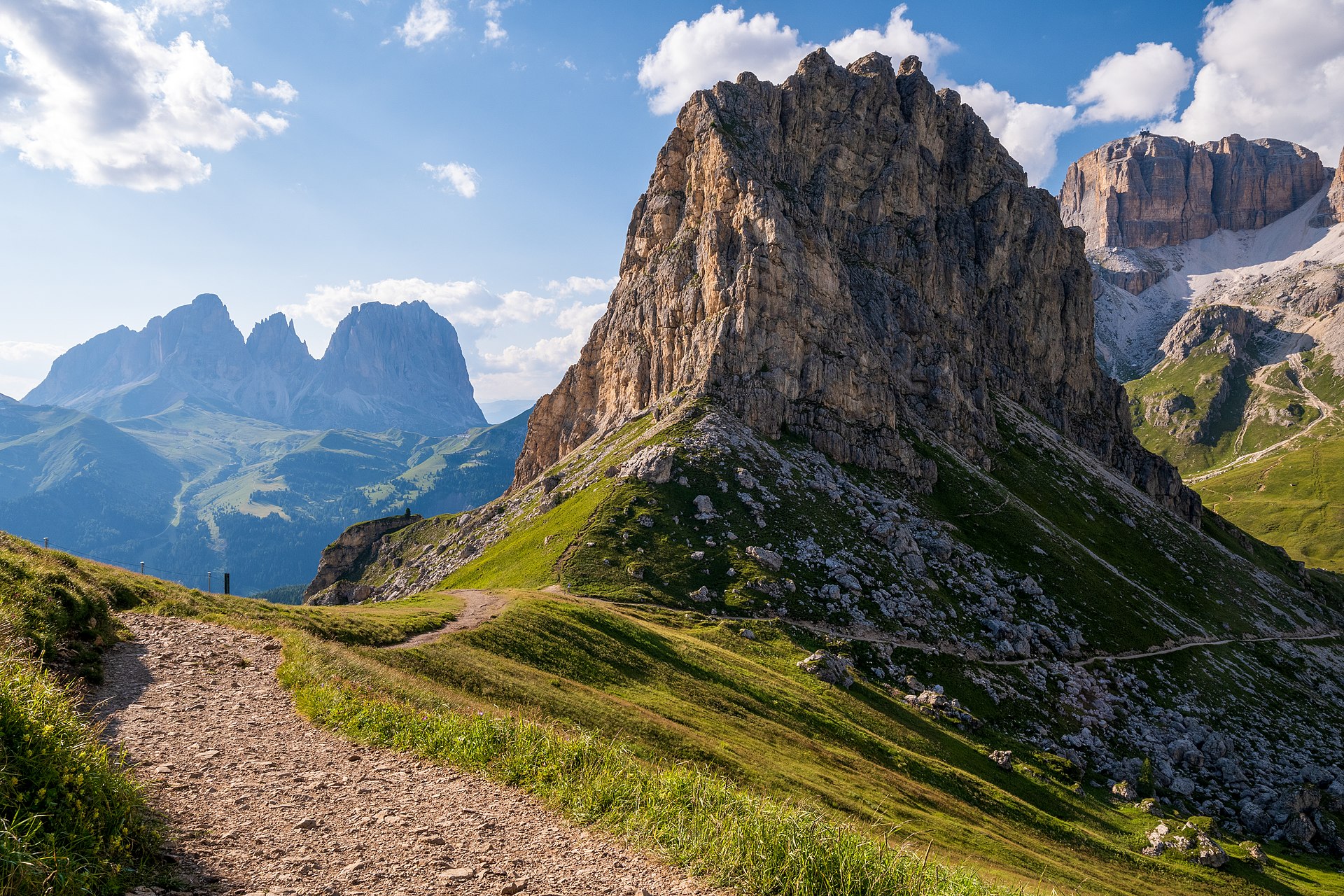
The Dolomites and the Alps. Mountain weather does what it wants, and it can swing 15°C in an afternoon. Even in summer, pack layers and rain gear: a moisture-wicking base, a fleece or light insulated mid-layer, and a genuinely waterproof shell. Bring proper hiking shoes or boots with grip — your city sneakers are not enough on a trail — plus a small daypack, sun protection (UV is stronger at altitude), and a warm hat even in July for early-morning chairlifts and high passes. If the mountains are on your itinerary, my Dolomites and Alps travel guide gets into the specifics of trails and seasons.
The southern beaches and islands. Sardinia, Sicily, Puglia, the Amalfi Coast — here you add genuine beach gear: swimwear, a quick-dry towel, sport sandals or water shoes (many beaches are rocky or pebbly, and some swimming spots reward shoes that protect your feet), strong reef-safe sunscreen, and a cover-up that can double as a church layer. The sun is intense and the afternoons are long; a hat and good sunglasses aren’t optional. For where to actually swim and how the coast works, see my Sardinia beaches guide.
Venice and acqua alta. Venice has its own packing wrinkle. In autumn and winter especially, high tides — acqua alta — periodically flood low-lying areas like Piazza San Marco. The city puts out raised walkways, and you’ll see locals in tall rubber boots. You don’t need to buy galoshes, but pack waterproof shoes if you’re visiting in the wet season, and check the tide forecast while you’re there. Beyond the water, Venice is all bridges and steps, which is one more vote for a carry-on you can lift. My Venice and the Veneto guide covers timing and logistics.
What NOT to pack for Italy
Half of packing well is leaving things home. Here’s what I cut, and why.
- A second, third, and fourth pair of “maybe” shoes. Shoes are heavy and you’ll wear two pairs 95% of the time. Be ruthless.
- US-only hair dryers and hot tools. Voltage mismatch risks frying them; hotels usually have a dryer. If you must, bring a dual-voltage travel tool.
- A giant suitcase “just in case.” The just-in-case is exactly the bag you’ll curse on a staircase. Size down.
- Beachwear as city wear. Flip-flops, swim trunks, and cover-ups belong at the beach, not in a Roman piazza or a restaurant.
- Loud-logo tourist gear. “I ♥ Roma” tees and big-brand-logo everything mark you as a target and a tourist. Neutral and simple travels better.
- Too much cash and any traveler’s checks. ATMs are everywhere; traveler’s checks are a relic. Carry modest cash, rely on cards.
- A full bottle of every toiletry. Hotels supply the basics, and you can buy anything you forget. Pack travel sizes; refill on the road.
- Valuables you’d hate to lose. Leave the expensive jewelry and heirloom watch at home — fewer worries, smaller target.
A printable-style Italy packing checklist
Copy this, trim it to your season and trip, and check it off the night before.
Documents and money
– [ ] Passport (valid well past your trip) + paper and digital copies
– [ ] Current entry authorization checked (see entry requirements)
– [ ] Visa + Mastercard credit cards, ATM/debit card
– [ ] Modest cash / a few euros
– [ ] Travel insurance details, booking confirmations, ticket QR codes saved offline
Clothing (capsule)
– [ ] 4–5 mix-and-match tops in a neutral palette
– [ ] 2–3 bottoms (dark jeans + trousers/skirt; linen or smart shorts in summer)
– [ ] 1 layer (sweater / blazer / knit)
– [ ] 1 season jacket (rain shell, warm coat, or light cardigan)
– [ ] 1 nicer outfit for dinner / the passeggiata
– [ ] Underwear and socks for ~7 days
– [ ] Sleepwear
– [ ] Scarf or pashmina (church cover + warmth)
– [ ] Season add-ons: thermals (winter), swimwear + cover-up (coast), hat + sunscreen (summer)
Shoes
– [ ] Broken-in walking shoes (neutral, supportive)
– [ ] One dressier pair (flats / loafers / low boots)
– [ ] Activity pair only if needed (hiking boots / sport sandals)
– [ ] Orthotic inserts if you use them
Tech
– [ ] Phone + charger; eSIM or local SIM sorted before you fly
– [ ] Type F/L plug adapter(s), 230V — converter only for non-dual-voltage tools
– [ ] Power bank
– [ ] Camera + charger if you bring one
Health and day bag
– [ ] Prescriptions (labeled) + small first-aid kit (see pharmacies)
– [ ] Blister plasters, pain reliever, antihistamine
– [ ] Anti-theft crossbody day bag with zip
– [ ] Reusable water bottle
– [ ] Sunglasses, lip balm, travel-size toiletries
Final thoughts
The best Italy packing list isn’t the longest one — it’s the one you can carry up a staircase without resenting it. Bring less than you think, lean a little more polished than you would at home, protect your feet, and keep a scarf handy so no church door cl
Questions travellers ask
How many pairs of shoes should I pack for Italy?
Two for most trips: one broken-in, supportive walking shoe for all-day sightseeing on cobblestones, and one dressier pair for dinners. Add a third only for a specific activity — hiking boots for the Dolomites or sport sandals for the coast. Shoes are the heaviest thing in your bag, so resist the “just in case” extras you won’t wear.
Can I wear jeans in Italy, even in summer?
Yes. Jeans are completely normal and Italians wear them year-round. The trick is fit and wash: go for darker, well-fitted, non-distressed denim rather than baggy or heavily ripped styles. In summer heat, choose a lighter-weight pair and pair them with a nice top so you can go from daytime sightseeing straight to an evening aperitivo without changing.
What is the dress code for churches in Italy?
Cover your shoulders and your knees — and it applies to men too. No tank tops, bare shoulders, short shorts, or exposed midriffs. Major sites like St. Peter’s and Florence’s Duomo enforce this at the door. The easy fix is a lightweight scarf in your day bag: drape it over your shoulders or wrap it around your waist over shorts. See my Italy etiquette guide for more.
Do I need a power adapter for Italy?
Yes. Italy uses Type F and Type L sockets at 230 volts, 50 Hz, which don’t fit North American plugs. Bring a universal adapter. Most phones, laptops, and camera chargers are dual-voltage (check for “100–240V” on the brick) and need only the adapter. High-wattage US hair tools need an actual voltage converter and are usually better left at home.
Is carry-on only realistic for a trip to Italy?
For trips up to about ten days, yes — and it’s genuinely the smarter choice here. Cobblestones punish wheeled luggage, many historic-center hotels have no elevator and narrow stairs, and you’ll be lifting bags on and off trains. Pack the capsule, use packing cubes, and plan one quick laundry stop. The payoff is mobility and no baggage-claim wait.
What should I not bring to Italy?
Skip US-only hair dryers and hot tools (voltage issues), excess shoes, an oversized suitcase, beachwear worn as city clothes, loud-logo tourist tees, traveler’s checks, and a pile of cash. Leave expensive jewelry home — it’s a target and a worry. The general rule: if you’re packing it “just in case,” you probably don’t need it.
Is the tap water safe to drink in Italy?
Yes, tap water across Italy is safe to drink, and many cities have free public drinking fountains — Rome’s nasoni run cold and clean from old aqueducts. Bring a reusable bottle, fill it at your accommodation, and top up at fountains. It saves a surprising amount of money over a long trip and cuts down on single-use plastic.
What do I pack differently for the Dolomites versus the south?
The Dolomites demand mountain layers and waterproofs year-round: a wicking base, a fleece or light insulated layer, a real rain shell, and grippy hiking shoes — weather swings fast at altitude. The southern beaches and islands want swimwear, a quick-dry towel, water shoes for rocky shores, and serious sun protection. Same country, two very different bags; plan for the regions you’ll actually visit.