Italy Travel Checklist: Documents, Apps, Packing and Tickets

Everything You Need Before You Board
Planning a first trip to Italy is exciting and, quickly, slightly overwhelming. The food, the train routes, the museums, the question of whether Florence or Rome comes first — there is a lot to organize. But the thing that actually trips people up is not the itinerary. It is the pre-departure admin: the documents they forgot to check, the tickets they assumed were available at the door, the apps they downloaded three days too late.
This Italy travel checklist covers all of it. Documents and entry rules as of 2026, travel insurance, money and cards, the apps worth having before you land, what to pre-book and when, and a practical Italy packing checklist by season. If you are still building your day-by-day itinerary, start with the Italy planning walkthrough — this article picks up where that one leaves off.
The Quick-Reference Italy Travel Checklist
| Category | What to action | Key note |
|---|---|---|
| Passport | Valid 6+ months beyond return date | Check the expiry date now — not the week before |
| ETIAS | Apply online (around €7) once live | Expected late 2026; monitor travel-europe.europa.eu |
| EES biometrics | Register at border kiosk on arrival | Allow 30 extra minutes at the airport for first-timers |
| Visa | Not required for US, UK, CA, AU, NZ (up to 90 days) | Check your nationality at the Italian government portal |
| Travel insurance | Purchase before departure | Medical + cancellation + baggage cover minimum |
| Cards + cash | Notify bank; carry some euros | Aim for €50–100 in cash on arrival |
| Venice access fee | Book QR code online if day-tripping on peak days | Around €5 fee on approximately 60 peak days in 2026 |
| Train tickets | Book Trenitalia/Italo as early as possible | Frecciarossa fares rise sharply near travel date |
| Museum tickets | Pre-book Colosseum, Vatican, Uffizi, Borghese | Timed-entry, frequently sells out weeks ahead |
| Apps | Google Maps, Trenitalia or Italo, FreeNow, Translate | Download and set up before you land |
| Packing | Season-appropriate layers; walking shoes broken in | No new shoes on day one — cobblestones are unforgiving |
| Church visits | Covered shoulders and knees for all | Keep a scarf or light layer in your day bag, every day |
Documents and Entry Rules for Italy in 2026
Passport: Check the Expiry Date Now
Italy requires your passport to be valid for at least three months beyond your planned departure date from the Schengen Area. That is the legal minimum. In practice, airlines and border agents can be stricter, and some will turn you away if validity is under six months. Check the expiry date today — not the week you pack. If you need a renewal, start that process well in advance. Some passports are taking two to three months in peak season.
EU and Schengen Area citizens can enter with a valid national identity card. Everyone else needs a valid passport.
Visa: Most English-Speaking Visitors Do Not Need One
Citizens of the United States, United Kingdom, Canada, Australia, and New Zealand can enter Italy without a visa for stays up to 90 days within any 180-day period. If you are staying longer, or your nationality is not on the visa-exempt list, check the official Italian visa portal and apply well ahead of travel.
EES: The New Digital Border System (Live April 2026)
As of April 2026, the EU Entry/Exit System (EES) is fully operational. The old passport stamp is gone. Non-EU arrivals — including US, UK, Canadian, and Australian passport holders — now register biometrics at automated kiosks: fingerprints and a facial scan. It is designed to speed things up over time, but for your first trip under EES, budget an extra 30 minutes at the airport. Bring patience. It is only once.
ETIAS: Coming Later in 2026
ETIAS (European Travel Information and Authorization System) is an online travel authorisation for visa-exempt visitors entering the EU — think of it as Europe’s version of the US ESTA or Australia’s ETA. It is not a visa. As of mid-2026, ETIAS has not yet launched, but it is expected to go live later this year. When it does, it will cost around €7 and be valid for three years. Apply at travel-europe.europa.eu and do it at least a month before you fly. Airlines will not board you without an approved ETIAS once the system is live.
Time-sensitive entry rules change. Always verify current requirements through official EU or Italian government sources before your trip — not just travel blogs.
International Driving Permit
Renting a car? You need an International Driving Permit (IDP) alongside your home country licence. Get it from your national automobile association before you leave — it costs around US$30–40 and takes a few days to arrive. Digital IDP offers online are not valid in Italy. For the full picture on driving, including ZTL zones you absolutely must not enter by mistake, see the Italy transportation guide.
Travel Insurance: Not Optional
Italy is not a dangerous destination, but things go wrong everywhere — a fractured ankle on cobblestones in Florence, a cancelled flight, a lost bag, a stomach bug that sidelines you for two days. Without travel insurance, any of those scenarios can cost you thousands.
At minimum, your policy should cover: emergency medical treatment and repatriation, trip cancellation and interruption, and lost or stolen baggage. If you plan to rent a scooter or do any adventure activity, check the small print — most standard policies exclude those activities and require an add-on.
Buy your insurance as soon as you book your flights, not the week before departure. That way trip-cancellation cover kicks in immediately.
Money, Cards and Cash in Italy
Which Cards Work Best
Italy is increasingly card-friendly. Major cities and tourist areas accept Visa and Mastercard almost everywhere. Amex less reliably so. Contactless is common. That said, a small agriturismo in Umbria, a rural petrol station, or a village trattoria may be cash-only. Do not assume.
Before you travel, notify your bank that you are going abroad — some still flag foreign transactions as fraud and freeze your card. Better yet, travel with a fee-free card if you have access to one. Revolut, Wise, and Charles Schwab (US) are popular options for avoiding currency conversion fees.
How Much Cash to Carry
You do not need to arrive with a wallet full of euros, but having €50–100 on you when you land is sensible. Cash machines (bancomat) are easy to find in cities. Withdraw at bank ATMs rather than private operators in tourist spots, which charge punishing fees. Keep a few €1 and €2 coins in your pocket — you will use them for public toilets, small tips, and the occasional unstaffed parking meter. More small habits like this are collected in our things worth knowing before you go.
For a detailed breakdown of what Italy costs day to day, the Italy travel budget guide has you covered.
Apps for Italy Travel: What Actually Helps
There is no shortage of “best apps for Italy” lists online. Most of them recommend downloading fifteen things. Here is a shorter, more honest version.
Getting Around
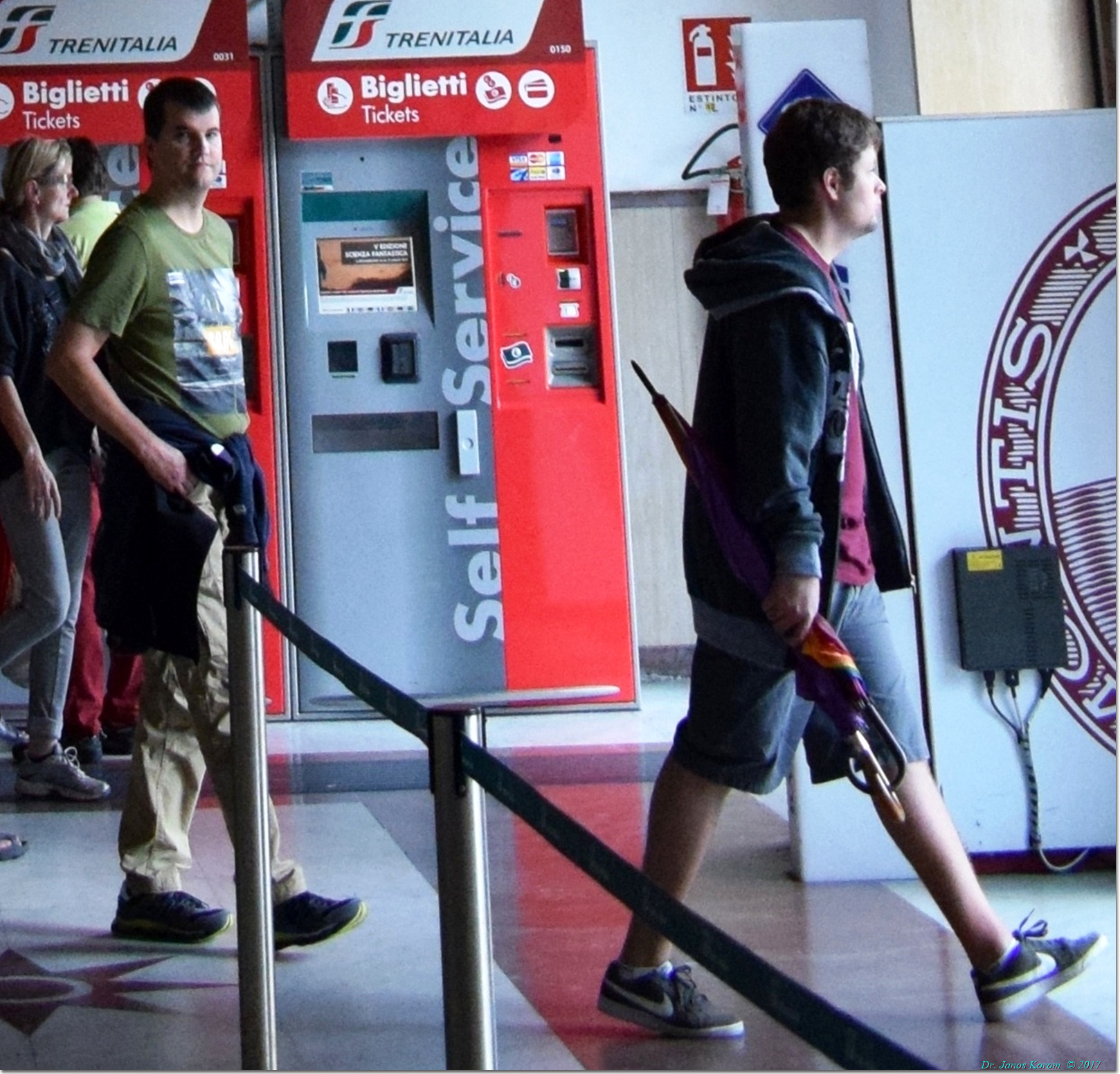
Trenitalia and Italo — download both. Trenitalia runs the state rail network including the Frecciarossa high-speed trains; Italo is the private operator on the same high-speed lines, often with competitive fares on popular routes. You can buy, manage and download tickets directly in the apps. Buy early for the best prices — fares are dynamic and jump significantly close to departure.
Google Maps — download your Italian city maps for offline use before you land. Do this on Wi-Fi at home. In Rome, Florence and Milan, Google Maps handles public transit reliably, including bus and metro times. It will also flag ZTL restricted zones if you are driving, though always double-check — ZTL violations generate automatic fines.
FreeNow — the most reliable taxi-hailing app across Italian cities. Official licensed taxis only; price displayed before you confirm. Useful for late nights, airports, or anywhere Uber does not operate. Uber does exist in a limited form in Rome and Milan, but coverage is patchy.
For ferries between cities or to islands, Ferryhopper lets you compare routes and book in one place.
Eating, Booking and Paying
TheFork (called ElTenedor in some markets) — the dominant restaurant reservation platform in Italy. In 2026, even mid-range trattorias fill up, especially in Rome and Florence on weekends. Book two to three days ahead for most places; a week or more for somewhere you have your heart set on.
WhatsApp — this is how Italian small businesses communicate. If you are renting an apartment, booking a private guide, or trying to reach a farm stay, they will likely respond faster on WhatsApp than by email.
Translation and Navigation
Google Translate — specifically for its camera function. Point it at a menu, a sign, or a label and it translates in real time. Invaluable. Download the Italian language pack for offline use.
EasyPark — if you are driving, this app handles paid parking across most Italian cities. Look for blue painted parking bays and pink EasyPark stickers on the sign.
What You Do Not Need
Skip most dedicated “Italy travel guide” apps unless you are buying an audio tour for a specific site. The Colosseum, Vatican Museums and Uffizi all have their own official apps for in-venue guidance — worth downloading once you arrive, not before.
What to Pre-Book Before You Leave
This is the section most first-timers underestimate. Italy’s top attractions operate on timed-entry systems, and the most popular ones sell out days or weeks in advance — sometimes more.
Book before departure, not on arrival:
- Colosseum, Rome — timed entry, sells out weeks ahead in peak season. Book via the official Colosseo website. Arena floor access requires a separate ticket or guided tour.
- Vatican Museums and Sistine Chapel — the queue without a ticket can be three to four hours. Book direct at the Vatican Museums site. Skip-the-line tours are a legitimate option.
- Borghese Gallery, Rome — entry is strictly limited to two-hour slots. This one genuinely sells out. Book weeks ahead.
- Uffizi Gallery, Florence — timed entry, available online. Much calmer once inside if you have pre-booked.
- The Last Supper, Milan — slots are small, demand is enormous. This sells out months in advance. If you want to see it, book the week you confirm your travel dates.
- Trevi Fountain lower tier, Rome — as of 2026, walking down to the basin area to toss your coin requires a €2 ticket. The fountain itself is viewable from the piazza for free.
- Pantheon, Rome — now requires a €5 entry fee and advance booking is strongly recommended, especially on weekends and in summer.
For a full timeline of what to book and when, the Italy trip planner lays this out by months-before-departure. The Rome tourism guide goes deeper on ticket logistics for the capital’s major sights.
Italy Packing Checklist by Season
What to pack for Italy depends heavily on when you are going. The country spans a long latitude, and the difference between a July afternoon in Rome (regularly 35°C) and a November morning in the Dolomites is not subtle.
Spring (March–May)
Spring in Italy is genuinely pleasant — warm enough for light layers, cool enough for evenings to catch you off guard. Pack:
- Light-to-medium layers you can peel off by noon
- A packable rain jacket (April showers are real, especially in the north)
- One warm layer for evenings — a light merino or fleece
- Comfortable walking shoes, already broken in
- A scarf (practical and doubles as church cover)
Summer (June–August)
Italian summers in the cities are hot. Rome and Florence are relentlessly so. Focus on breathable fabrics and sun protection.
- Lightweight, loose-fitting clothes in natural fabrics (linen, cotton)
- Sandals that can handle cobblestones — flat soles, secure straps
- A sturdy pair of walking shoes for day trips and sites
- Sunscreen, sunglasses, a wide-brimmed hat
- A reusable water bottle — public drinking fountains (nasoni) are abundant and the water is good
- A light layer for heavily air-conditioned restaurants and museums
One thing to skip: white trainers or the kind of elaborate streetwear that announces “tourist” from forty metres. Italians dress simply but well. You do not need to be fashionable; just neat.
Autumn (September–November)
September is arguably the sweet spot — crowds thin, temperatures ease. October gets variable. November can be outright cold in the north.
- Layers, layers, layers — a light base, a mid-layer, a jacket that handles wind
- Waterproof or water-resistant shoes for wet cobblestones (they become genuinely treacherous)
- One smarter outfit if you plan to eat at anywhere worth a reservation
Winter (December–February)
Winter in Italy is mild by northern European standards in the south, cold and potentially snowy in the north. Rome in January averages around 12°C. Milan averages closer to 4°C.
- A proper winter coat if heading to Milan, Turin, Venice or the north
- Layers underneath rather than one thick jumper
- Waterproof boots in Venice — acqua alta flooding can occur without much warning
The Shoes Rule
Whatever season, buy and break in your walking shoes before you go. One pair of new shoes on day one of a Rome trip is a mistake that will chase you for the rest of the holiday. Italian cities are paved in beautiful, uneven cobblestones that will punish anything without grip, cushioning and a proper fit.
The Bag Rule
If you can carry it on, do. A large checked suitcase navigating Rome’s metro stairs, Venice’s bridge steps, or a medieval hill town with no lift is a significant inconvenience. A carry-on plus a quality day bag is a genuinely better system.
Church and Religious Site Dress Code
Italy takes this seriously, and so should you. Major churches — including St. Peter’s Basilica in Vatican City, the Pantheon, the Duomo in Florence, and effectively every church you will want to visit — require covered shoulders and knees for all visitors, regardless of gender.
This is not a suggestion. Guards turn people away at the door. It happens constantly in summer when people arrive in vest tops and shorts.
The practical solution is simple: keep a lightweight scarf or sarong in your day bag. Wrap it around your waist for knee cover, drape it over your shoulders, and you are through the door in thirty seconds. If you forget, vendors outside major churches sell cheap scarves, but that is a waste of money and time.
For everything you need to know about avoiding the classic mistakes that cost first-timers time, money and enjoyment, the Italy travel mistakes guide is worth reading before you go.
Final Thoughts
The Italy travel checklist is not glamorous work, but it is the difference between a trip that flows and one that spends its first afternoon at a tourist information desk. Sort the passport, note the ETIAS situation, book the timed-entry tickets early, download the maps before you land, and pack a scarf. Everything else is flexible.
Italy rewards the traveller who shows up organized enough to be spontaneous — who has the Colosseum sorted but still has time to wander into a side street in Trastevere because there is no queue to race to. That is the version of the trip worth planning for.
For the bigger-picture pre-trip questions — how many days, which cities, what order — the Italy travel guide and how many days in Italy guide have the answers. And if you are heading there alone, the solo travel Italy guide is built for exactly that.
Buon viaggio.
Questions travellers ask
Do I need ETIAS to visit Italy in 2026?
As of mid-2026, ETIAS has not yet launched, though it is expected later in the year. Once live, it will be required for visa-exempt visitors from the US, UK, Canada, Australia, New Zealand and around 60 other countries. It costs around €7, takes minutes to apply for online, and is valid for three years. Monitor the official EU site at travel-europe.europa.eu and apply as soon as it becomes available before your trip.
What documents do I need to enter Italy?
For most English-speaking visitors: a valid passport (with at least six months validity recommended beyond your return date), travel insurance documentation, and — once launched — an ETIAS authorisation. If you are renting a car, add an International Driving Permit. EU and Schengen citizens can use a national identity card. Check visa requirements for your specific nationality before travelling.
Is Italy cash or card?
Mostly card in cities, but do not count on it everywhere. Major hotels, restaurants and shops in Rome, Florence, Milan and Venice accept contactless payment without issue. Rural areas, small markets, and older establishments may be cash only. Carry €50–100 in euros and top up at bank ATMs rather than airport or tourist-area machines with high fees.
What should I pack for Italy that I will actually use?
The things that earn their weight every single trip: broken-in walking shoes, a packable rain layer, a lightweight scarf for churches, a portable phone charger, and a smaller cross-body bag for day use (pickpockets are a real consideration in crowded sights). The things people over-pack: formal clothes for dinners that rarely require them, too many shoes, and anything white that will show every trace of a gelato incident.
What are the best apps for Italy travel?
The short list: Google Maps (download offline maps before arrival), Trenitalia or Italo for trains, FreeNow for taxis, Google Translate with Italian downloaded for offline camera translation, and TheFork for restaurant reservations. WhatsApp is surprisingly useful for communicating with small accommodation providers and guides. That is genuinely enough.
Do I need travel insurance for Italy?
It is not legally required, but skipping it is a bad bet. A medical emergency in Italy without insurance can cost tens of thousands of euros. Trip cancellation cover is worth having given how much you may have pre-booked. Buy it as soon as you confirm your trip — that way cancellation cover applies from day one, not the week before you leave.
What is the dress code for churches in Italy?
Covered shoulders and knees for everyone, always. This applies to St. Peter’s, the Pantheon, every duomo and essentially every church worth visiting. The simplest solution is a lightweight scarf in your bag that doubles as a wrap when you need it. Do not rely on borrowing something at the door — not all churches offer that, and the ones that do have a queue.
How far in advance should I book Colosseum tickets?
At minimum, three to four weeks before your visit during spring and summer. During the peak July to August period, popular time slots sell out faster than that. The Borghese Gallery fills up even earlier. The Last Supper in Milan is a category of its own — book the same week you confirm your travel dates, which may be months out. See the first-time Italy itinerary guide for a full pre-booking timeline.