Italy Travel Mistakes to Avoid (And Exactly How to Fix Each One)

The single biggest Italy travel mistake isn’t arriving without an itinerary or forgetting to book the Colosseum. It’s arriving with the wrong mental model entirely — treating Italy like a highlight reel you tick off rather than a place you actually inhabit. Fix that first, and the rest is detail. These are the Italy travel mistakes that quietly wreck first trips. But the detail still matters, especially when one wrong turn in a rental car can cost you €300 you’ll discover eight months after you’re home.
This guide is for first-time visitors who want to travel Italy without the rookie errors — the ones that waste money, waste time, or just make you feel like a tourist in the worst sense of the word. It pairs with the Italy travel guide and the first-time in Italy itinerary, which handle the positive planning side. Here, we cover what not to do.
Quick Reference: Italy Travel Mistakes at a Glance
| Mistake | Why It Hurts | The Fix |
|---|---|---|
| Cramming too many cities | Exhaustion, no depth, expensive logistics | Pick 3 cities max for 10 days; slow down |
| Driving into a ZTL zone | Automated fine of €80–€300+ arriving months later | Never drive into a historic center; drop keys before the gate |
| Skipping ticket validation on regional trains | Fine from the conductor, even if accidental | Stamp paper tickets before boarding; digital tickets auto-validate |
| Eating at tourist-trap restaurants | Overpriced, underwhelming, nowhere near local food | Walk one block away from any major sight before sitting down |
| Planning dinner at 6 or 7 PM | Empty restaurants, offseason-only menus, rushed service | Aim for 8 PM; 8:30 in the south |
| Visiting in August peak | Ferragosto closures, 35°C heat, highest prices | Go April–June or mid-September–October |
| Ordering cappuccino after lunch | You’ll survive, but locals will notice | Espresso after meals; cappuccino before 11 AM |
| Skipping timed-entry reservations | Turned away after flying 10 hours | Book Vatican, Colosseum, Uffizi, Last Supper months ahead |
| Over-tipping (or tipping wrong) | Looks odd; tip line doesn’t exist on Italian card receipts | Round up or leave a few euros cash; skip if coperto is charged |
| Taking an unofficial taxi from airports | Overcharge or scam | Only white licensed taxis; or take the Leonardo Express / Italo/Trenitalia |
Planning Mistakes That Snowball Into a Bad Trip
Trying to See All of Italy in One Go
Italy is roughly the size of Arizona — but trying to see Rome, Florence, Venice, the Amalfi Coast, Sicily, and the Cinque Terre in twelve days is one of the most common Italy travel mistakes first-timers make. You end up spending more time on trains and in hotel lobbies than anywhere that matters.
A better frame: think in nights, not destinations. For a ten-day first trip, three cities with at least three nights each is a realistic foundation. Two nights anywhere is barely enough to orient yourself. One night is a stopover, not a visit.
The how many days in Italy guide goes deep on this by region and travel style. The short answer: cut your list in half, then consider cutting it again.
Not Accounting for Transfers and Transit Time
Italy’s rail network is genuinely excellent — high-speed trains connect Rome, Florence, Bologna, Milan, and Venice efficiently. But “efficient” doesn’t mean instant. Rome to Florence is around 1.5 hours on the Frecciarossa; Rome to Venice is around 4 hours. Add transfer time to and from stations, check-in and check-out windows, and you’ve burned most of a day on logistics.
If you’re renting a car for the countryside, factor in drop-off and pickup points carefully. Returning a car to a historic-center location in Florence or Siena means navigating ZTL zones (more on that below). Better to return at the airport or a peripheral parking area.
The Italy transport guide has the full breakdown by route and transport mode.
Transport Mistakes That Cost Real Money
Driving Into a ZTL Zone
This is one of the most expensive mistakes tourists make in Italy, and the cruelest part is that you often don’t know you’ve done it until a fine lands in your mailbox six to twelve months later.
ZTL stands for Zona a Traffico Limitato — a restricted traffic zone covering the historic centers of virtually every Italian city with an old town worth visiting. Around 300 cities and towns have them. The zones are enforced by overhead cameras (varchi elettronici) that read your plate automatically and compare it against a list of permitted vehicles. Tourists aren’t on that list.
As of 2026, base fines start at around €83 and can reach €300 depending on the city and how many cameras you pass through. Florence has five distinct ZTL sectors operating on different schedules. Rome’s zone now extends toward the Colosseum. Bologna’s covers a wide perimeter around Piazza Maggiore. Your rental company will receive the fine, charge you an administrative processing fee (around €45), and forward your details to the authorities. The original fine and the rental surcharge both arrive.
How to avoid it: Don’t drive into any historic center. Drop your rental car before you enter the city. If you’re checking into a hotel inside a ZTL zone, call ahead — some hotels can register your plate for a one-time authorized entry window, but only if you arrange it before you arrive at the gate. The ZTL.Italia app gives real-time alerts when you’re approaching a restricted zone.
If you’re using a rental car primarily for rural Tuscany, Umbria, or the Amalfi Drive, that’s fine — just return it at a rail hub before entering the city. See the Italy transportation guide for more.
Not Validating Your Regional Train Ticket
Buy a paper regional train ticket at the station and forget to stamp it in the yellow validation machine before boarding, and the conductor can charge you the full fare again plus a fine — even if you clearly have a valid ticket in hand. It feels absurd. It’s real.
The rule exists because regional tickets (as opposed to intercity or high-speed Frecciarossa and Frecciargento tickets) are often sold without a fixed departure time. The stamp is what locks in when your journey begins.
What you need to know:
- Paper tickets for regional trains: must be stamped in the green or yellow validation machines on the platform or inside the station before boarding. Not on the train. Before.
- High-speed Frecciarossa / Frecciargento / Italo tickets: are tied to a specific seat and departure; no validation needed. Show the conductor your booking confirmation.
- Digital regional tickets (Trenitalia app or website): as of recent updates, these auto-validate on the scheduled departure time, so no manual stamping is required.
- Rail passes (Eurail etc.): require a separate check-in process — confirm the current rules when you buy.
If you genuinely forgot and realize it just as you board, approach the conductor immediately and explain. Many will validate on the spot for a small surcharge rather than issue a full penalty. Approach them after they’ve caught you, and you’ll get less sympathy.
Assuming the Airport Taxi Is Your Only Option
At Rome Fiumicino (FCO), first-time visitors often tumble out of arrivals and into the first taxi they’re offered — sometimes by people not driving licensed cabs. Rome has a fixed-rate taxi fare from Fiumicino to central Rome (within the Aurelian Walls), which as of 2026 is around €50. The only legitimate taxis are white and metered, lined up at the official taxi rank outside arrivals.
But you don’t have to take a taxi at all. The Leonardo Express train runs directly from Fiumicino to Roma Termini every 15 minutes, takes 32 minutes, and costs around €14. It’s faster than a taxi in any meaningful traffic window and significantly cheaper.
From Rome’s Ciampino airport, there’s no direct train to Termini — take a bus shuttle to the Ciampino train station, then a regional train to Termini. Or book a licensed transfer in advance. Our guide to getting from Rome airport to the city centre covers every option and what each one costs.
For Milan Malpensa, the Malpensa Express train connects to Milano Centrale and Cadorna stations. For Florence’s Peretola airport (small, regional), the new tram line T2 links directly to Santa Maria Novella station as of recent years.
The principle: check the train option first. It’s usually cheaper, often faster, and avoids any ambiguity about who’s driving.
Money Mistakes
Misreading the Bill (Coperto, Servizio, and Tipping)
Italian restaurant billing confuses visitors in both directions — some over-tip dramatically, some feel cheated by charges they didn’t expect.
Here’s how it works:
Coperto: A per-person cover charge, typically €1–€3, that covers bread, table settings, and your right to occupy the table. It is not a service charge. It’s legal and normal. It should appear on the menu; if it doesn’t and it appears on your bill, ask.
Servizio: A service charge, sometimes 10–15%, added automatically in some restaurants, particularly in tourist-heavy areas. If you see servizio incluso, you’ve already tipped. Adding more on top looks odd.
Tipping when neither is added: Not expected, but appreciated. Round up to the nearest convenient number, or leave a euro or two in cash per person. Italians do not tip by percentage, and sliding a 20% tip on a €120 dinner is the kind of thing that reads as foreign rather than generous. There is no tip line on an Italian credit card terminal.
What not to do: Don’t stiff a server because you misread the coperto as a tip. Don’t tip 20% out of American habit. Don’t leave coins on the table as if dismissing the place.
Eating at the Restaurant Right Next to the Major Sight
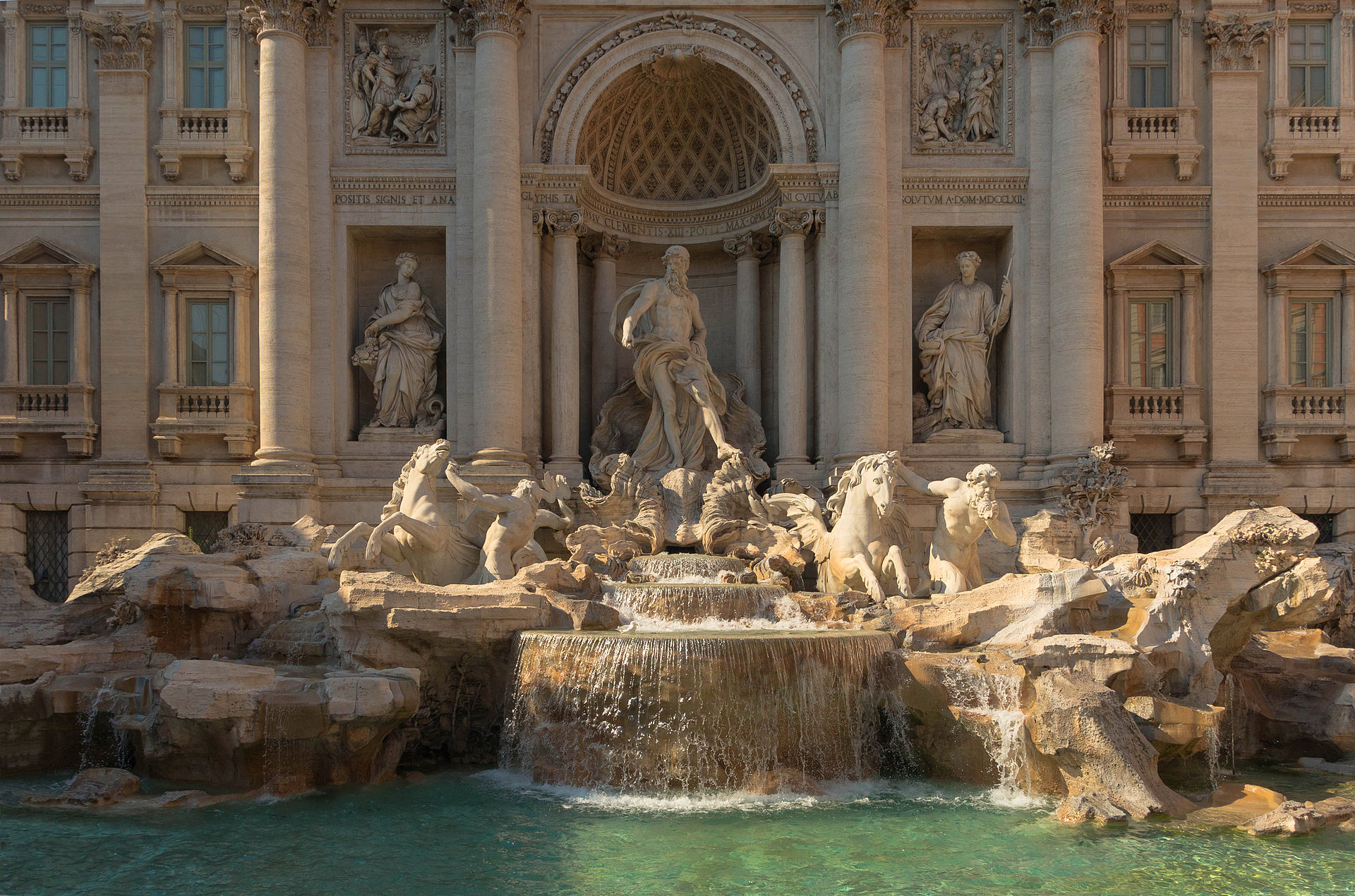
Every major landmark in Italy — the Trevi Fountain, Piazza San Marco, the Duomo in Florence, Campo de’ Fiori — is ringed by restaurants whose menus are laminated, whose staff stand outside waving people in, and whose pasta runs €20 for something that tastes of sorrow.
This is not always true. But the density of tourist-trap restaurants within 50 meters of a major sight is real and documented. The fix is mechanical: walk at least one block away from the sight in any direction. Two blocks is better. No one standing outside beckoning you in. A handwritten menu on a chalkboard. Tables without menus in six languages displayed in the window. These are your signals.
For actual guidance on what and where to eat, the Italy food and wine guide has regional breakdowns. The single best rule of thumb: eat where you see locals eating, at the hours locals eat.
Food and Etiquette Mistakes
Ordering Cappuccino After Lunch or Dinner
Nobody will arrest you. No one will throw you out. But this is the most reliable way to quietly mark yourself as a tourist, and it happens at every table with Americans around noon onward.
In Italy, cappuccino is a morning drink. The logic is practical: milk is heavy, and a milky coffee after a substantial meal is not something Italian stomachs find appealing. Espresso — short, strong, immediate — is what follows lunch and dinner. If you want something milder, a macchiato (espresso with a small spot of milk) or caffè lungo (longer pull, less intense) are both acceptable at any hour. Cappuccino after 11 AM is noticed, even if no one says anything.
Similarly, don’t order a “latte” expecting a latte. In Italian, latte means milk. You’ll get a glass of warm milk.
Expecting Dinner at 7 PM
Italian dinner service doesn’t really get going until 8 PM, and in southern Italy — Naples, Sicily, Puglia — 8:30 or 9 PM is more typical. Show up at 7 PM and you’ll find empty restaurants, staff still setting up, and a vibe that says you’re eating at the wrong time.
This isn’t flexible in the way you might hope. Many kitchens don’t open until 7:30 PM anyway, and even at that hour you may be offered a limited “early” menu. The rhythm of Italian evenings is built around a long, leisurely dinner that starts late and doesn’t rush.
Adjust your day accordingly: a substantial late lunch around 1–2 PM, a long afternoon, aperitivo around 6:30–7 PM (this is the right time for Aperol Spritz and bar snacks), then dinner at 8.
Wearing the Wrong Things to Churches
Italy’s churches are not museums. They’re active religious spaces, and the dress code is enforced — not just suggested — at major sites like St. Peter’s Basilica, the Sistine Chapel, and hundreds of smaller churches across the country. Shorts (on men and women), tank tops, sleeveless tops, and bare shoulders will get you turned away at the door. If you’ve queued for 45 minutes, this is not the moment to discover you’re wearing the wrong thing.
The easy fix is a light scarf or wrap, carried in your bag, that can cover shoulders and knees in thirty seconds. In summer it doubles as sun protection on rooftops and terraces.
Timing Mistakes
Visiting in August
August is the most popular month to visit Italy among international tourists, and among the worst for the experience. The reasons stack up:
Ferragosto: August 15 is a national holiday — the Feast of the Assumption — and the surrounding two weeks are when a large portion of the Italian population goes on holiday. Restaurants, local shops, and services that cater to residents (dry cleaners, pharmacies, small grocers) close. In cities like Rome and Florence, the tourist infrastructure stays open, but local life evacuates. The Rome and Florence you experience in mid-August is not the real Rome and Florence.
Heat: July and August regularly hit 35°C+ in Rome, Florence, and the south. Sightseeing for six hours in 37°C heat on exposed cobblestones is miserable, not charming.
Crowds and prices: Peak season demand means peak hotel rates, peak cruise ship volumes in Venice and the Amalfi towns, and the longest queues at every major sight. In Venice, those same peak dates are when the day-visitor access fee applies.
The counterpoint: beach towns and coastal resorts are fantastic in August if that’s actually what you want. But for cities, art, and culture, the best months are late April–early June and mid-September–October. Shoulder season gives you gentler weather, lower prices, and a city that’s actually inhabited by people who live there.
The guide to timing your Italy trip guide covers this month by month, including regional variations.
Not Pre-Booking Timed-Entry Tickets for Major Sights
The Vatican Museums, Sistine Chapel, Colosseum, Uffizi Gallery, the Borghese Gallery, and the Last Supper in Milan all require advance reservations. For some — particularly the Borghese Gallery and the Last Supper — availability is limited to a small number of visitors per slot and books up weeks or months ahead.
This is not a recent development. These have been the rules for years. Showing up on the day and hoping to walk in works occasionally in deep low season. In spring and summer it means standing in a queue for 2–3 hours or not getting in at all.
Book before you leave home. Use the official websites or trusted booking platforms. The Vatican’s official site (vatikanstate.va), Colosseum’s official tickets (coopculture.it), and the Uffizi (uffizi.it) are the real sources — third-party resellers will charge significantly more. For the Borghese Gallery, you must book by phone or through their official online system and slots fill fast. Our guide to Colosseum tickets walks through the booking flow and what each ticket tier includes.
The guide to visiting Rome has more on navigating the major Roman sights specifically.
Mistakes That Make the Trip Feel Like a Slog
Over-Packing Your Bags (and Your Schedule)
Italy is made of cobblestones, uneven pavements, steep stairs, and medieval lanes designed for people carrying very little. A full-size wheeled suitcase in the Cinque Terre or up the stairs of a Rome metro station is not a logistical problem — it’s a punishment.
Pack lighter than you think you need to. A carry-on or large backpack handles a two-week trip if you’re willing to do one laundry run. Many accommodation options — including agriturismos and boutique hotels — have in-house laundry or a nearby lavanderia.
The same principle applies to your daily sightseeing schedule. Three major museums and two neighborhoods in one day means you’re moving through all of them too fast to remember any of them.
Skipping the Smaller Towns Entirely
Rome, Florence, Venice: all essential, all legitimate, and all extraordinarily crowded. Part of what makes Italy so rewarding is what sits between the big three — Siena, Orvieto, Lecce, Matera, Lucca, Ravenna, Parma, Bergamo. These places are not consolation prizes. They’re often where the food is better, the prices are lower, and you can walk down a medieval street without feeling like you’re in a queue.
Even a single night in a smaller city between major stops changes the texture of a trip significantly. If you’re building your first Italy itinerary, the Italy trip planner covers how to build a routing that includes these without adding travel time.
Assuming Your Phone and Bank Won’t Create Problems
Italy is increasingly card-friendly, but not uniformly so. Some smaller towns, rural areas, and local markets still run on cash. More importantly, if you haven’t told your bank you’re traveling internationally, your card may be blocked on the first transaction. Do this before you leave.
ATMs (bancomat) are widely available, but use those attached to actual banks rather than standalone currency exchange machines in tourist areas, which charge predatory conversion rates. Your home bank’s ATM fee is usually lower than the exchange desk’s margin.
Also: avoid the “dynamic currency conversion” option that some Italian ATMs and card machines offer — where they convert to your home currency on the spot. Always pay in euros. The conversion rate they offer is always worse than your bank’s rate.
Italy Travel Tips That Feel Counterintuitive
One of the most useful Italy travel tips isn’t about what to avoid — it’s about reframing what the trip is for. Italy does not reward speed or efficiency. The best experiences tend to happen when you stop optimizing and start eating lunch for two hours, wandering without a destination, and sitting in a piazza long enough to watch the evening unfold.
The mistakes covered above are worth avoiding not because they’re shameful — they’re incredibly common — but because each one either wastes your money or removes you from the experience you came to have. Fix the logistics, and the rest takes care of itself.
For the full planning picture, start with the Italy travel tips hub and the Italy travel checklist for the timeline of what to book and when.
Final Thoughts
I’ve talked to people who came home from Italy frustrated, and the pattern is consistent: too many cities, a fine they didn’t understand, a dinner that felt like eating at a theme park, and jet lag compounded by August heat. None of these are unavoidable. They’re all fixable with a bit of advance reading — which is presumably why you’re here.
Italy is forgiving of most things. The country has been receiving overwhelmed, underprepared visitors for centuries and somehow remains wonderful. But it rewards the people who approach it on its own terms: slow down, eat late, never drive into the old town, stamp the ticket, and walk away from any restaurant where someone is standing outside trying to talk you in. Do those five things and you’re ahead of ninety percent of first-time visitors.
The solo travel Italy guide, the Italy food and wine travel section, and the full guide to planning a trip to Italy are all worth bookmarking for the planning stages. The mistakes are easy to avoid once you know what they are.
Questions travellers ask
What is the biggest mistake tourists make in Italy?
The most consequential single mistake is driving into a ZTL zone in a rental car. The fine arrives months later, the rental company adds an administrative surcharge, and there’s very little recourse. A close second is skipping timed-entry reservations — people fly 10 hours and get turned away from the Vatican because they assumed they could queue on the day.
Do you need to validate train tickets in Italy?
For regional paper tickets purchased without a fixed departure time, yes — you must stamp them in the validation machines on the platform before boarding. High-speed Frecciarossa and Frecciargento tickets are seat-assigned and don’t need validation. Digital regional tickets bought through the Trenitalia app auto-validate at departure time. When in doubt, stamp it.
Is it rude to order a cappuccino after dinner in Italy?
“Rude” is too strong — no one will say anything to you. But Italians genuinely don’t drink cappuccino after about 11 AM. Milk-based coffees are considered too heavy for after a meal. Espresso is the correct choice post-meal. If you want something milder, ask for a macchiato.
How bad is August in Italy for tourists?
August is the most challenging month for city travel. Ferragosto (August 15 and the surrounding week or two) sees widespread closures of local businesses, extreme heat in Rome, Florence, and the south, peak crowds, and highest prices. If your dates are fixed in August, coastal resorts and beach towns are better choices. For cities, aim for late September or May instead.
What should you not do in Italy with money?
Don’t use currency exchange desks in airport arrivals halls or near tourist sights — rates are poor. Don’t accept dynamic currency conversion at ATMs or payment terminals (always pay in euros). Don’t assume everywhere takes cards — carry some cash. Don’t over-tip at restaurants; round up generously in cash if you want to leave something, but 20% American-style tips are not expected.
Is tipping expected in Italian restaurants?
Not in the way it is in the US. Italy has no tip-line on card receipts. A coperto (cover charge, €1–3 per person) is standard at sit-down restaurants; a servizio charge (10–15%) is sometimes added in tourist areas. If neither applies, rounding up or leaving a few euros in cash is appreciated but not obligatory. If servizio is on the bill, you’ve already tipped.
How do you avoid tourist-trap restaurants in Italy?
Walk at least one block away from any major landmark before sitting down. Avoid places with laminated picture menus and staff standing outside to recruit you. Look for a handwritten daily specials board, small tables, and a lunch crowd that includes people who look like they work nearby. Eating where locals eat, at the hours locals eat (lunch 1–2:30 PM, dinner 8–9 PM), is the most reliable filter.
What is a ZTL zone and how do I avoid it?
ZTL (Zona a Traffico Limitato) is a restricted traffic zone covering the historic center of most Italian cities. Only residents and permitted vehicles can enter — cameras read license plates automatically. Tourists driving rental cars who enter a ZTL receive fines of €83–€300+, often delivered months after the trip. Avoid by not driving into any walled or old city center. Return your rental car before entering the city, or use designated hotel arrival routes after calling ahead.