Rome Food Guide: What to Eat and Where to Look
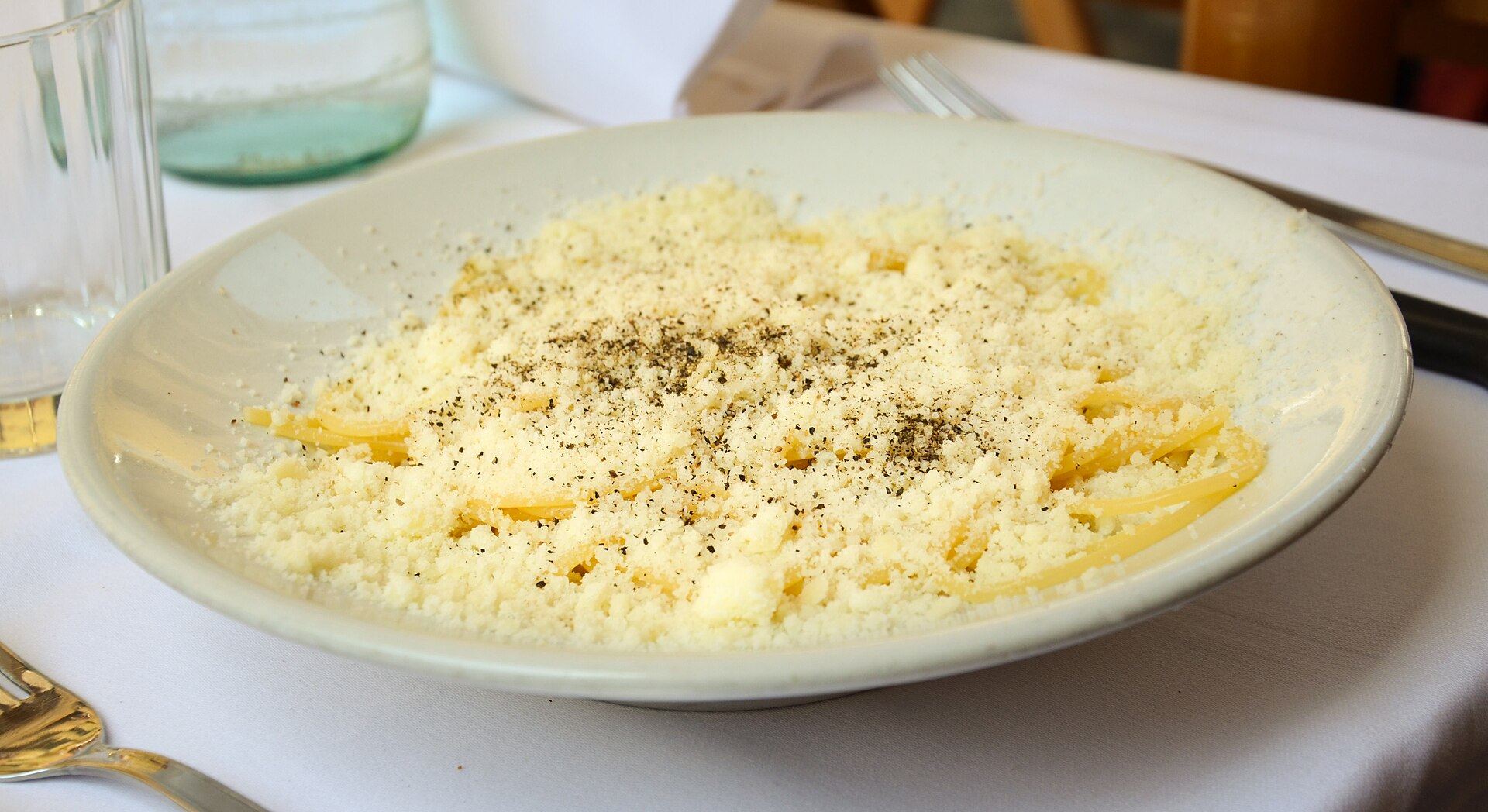
Rome does not reward the passive eater. Turn up hungry near a famous fountain, sit at the first terrace that catches your eye, and you will spend twenty euros on a plate of pasta that no Roman has ever voluntarily ordered. Do the opposite — walk three streets away, find a place with a handwritten daily board and a menu that fits on one side of a card — and you will eat some of the most satisfying food in the world.
This Rome food guide covers the Roman canon dish by dish, the neighborhoods and markets worth your time, and the signals that separate a real trattoria from a tourist operation. The must-eat shortlist: cacio e pepe, carbonara, amatriciana, gricia, supplì, pizza al taglio, carciofi alla giudia, and a maritozzo for breakfast. The one rule: walk away from any restaurant with photos on the menu and a man outside trying to hand you a laminated card.
If you want the broader Italian food picture — regional wine, Slow Food regions, what to eat beyond Rome — I defer all of that to our guide to Italy food and wine travel. This page is Rome only.
Rome Food Guide: The Roman Canon at a Glance
| Dish | What it is | Where it’s best |
|---|---|---|
| Cacio e pepe | Pasta with pecorino romano and black pepper — three ingredients, zero margin for error | Testaccio trattorias, neighborhood spots in Prati |
| Carbonara | Guanciale, egg yolk, pecorino, black pepper — no cream, no exceptions | Any serious trattoria; Testaccio is the heartland |
| Amatriciana | Tomato, guanciale, pecorino on rigatoni or bucatini — the loudest of the four pastas | Trattorias in Trastevere and Testaccio |
| Gricia | Carbonara without the egg; cacio e pepe with guanciale — the least famous and arguably the best | Testaccio, off-tourist-trail neighborhood spots |
| Supplì | Deep-fried rice balls with ragù and molten mozzarella — Rome’s premier street snack | Pizza al taglio shops, Testaccio Market |
| Pizza al taglio | Rectangular pizza sold by weight, light and airy crust, topped simply | Bakeries and forno shops city-wide |
| Pizza tonda | The thin, crisp whole-pizza version eaten in a pizzeria, not by the slice | Evening pizzerias in Trastevere, Prati, Ostiense |
| Carciofi alla giudia | Deep-fried artichoke, twice-cooked to a crisp flower — Jewish-Roman, spring only | Jewish Ghetto, February–May |
| Carciofi alla romana | Braised artichoke with olive oil, garlic, parsley, mint — gentle and yielding | Trattorias city-wide in spring |
| Maritozzo | Soft brioche bun split and filled with whipped cream — a Roman breakfast | Any good bar or pasticceria in the morning |
| Gelato | Denser and less sweet than ice cream; flavors that actually taste like what they are | Look for metal lids on the tubs, not piled-up mounds |
The Four Pastas: Roman Cuisine in a Sentence Each
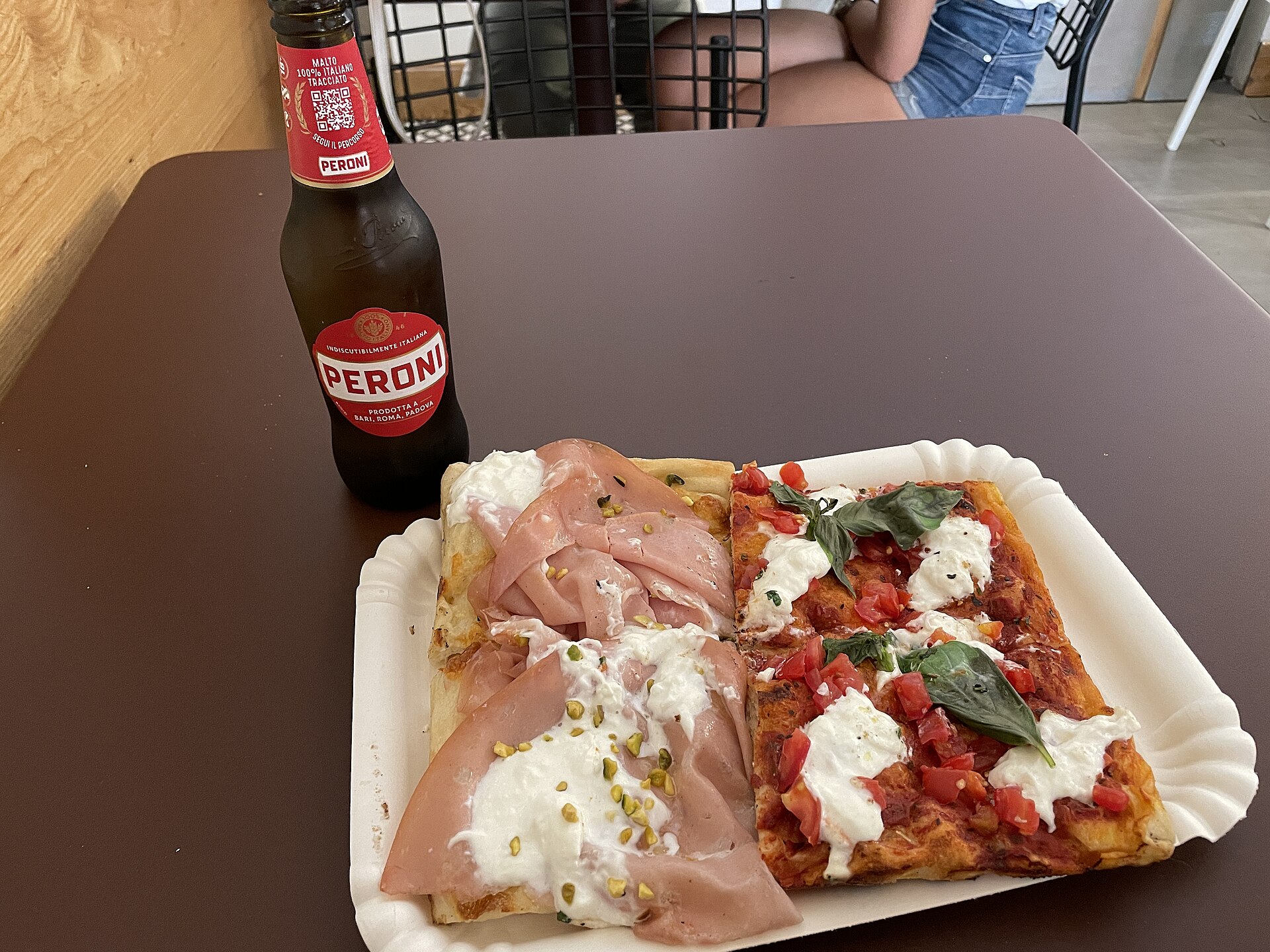
Roman cuisine is a cuisine of discipline. The four great pastas — cacio e pepe, carbonara, amatriciana, gricia — share a common logic: a small number of high-quality ingredients, combined with precision, in the right proportions. Add cream to a carbonara and you have not made it richer; you have made it wrong. That is not snobbery. It is the point.
Cacio e Pepe
Three ingredients: pasta (tonnarelli or spaghetti), pecorino romano, freshly cracked black pepper. The technique is everything. The pasta water is the only liquid. The cheese emulsifies into a sauce against the starchy water; get the temperature wrong in either direction and you get a clump or a soup. When it works — and in the right hands it always does — the result is sharp, peppery, intensely savoury, and completely unlike anything you can replicate outside of Rome.
The dish traces its roots to cucina povera, the “poor kitchen” of the shepherds and working class who shaped Roman cooking. Sheep were everywhere in Lazio. Pecorino was cheap. Pepper was a preservative. Nothing was wasted.
Order it. Pay attention to whether the cheese coats every strand evenly. That is the test.
Carbonara
The mythology around carbonara is enormous and mostly unnecessary. The dish is not ancient. The most credible origin story places it in Rome in the 1940s, when eggs and cured pork (guanciale, the cured pork cheek that gives a more intense, fatty flavour than pancetta) were combined with pasta and the sharp local cheese. Whatever its exact birth, it became the Roman dish.
Authentic carbonara is made with guanciale — not pancetta, not bacon. The sauce is egg yolks (sometimes whole eggs), pecorino romano, and black pepper, emulsified into a gloss by the heat of the pasta and a splash of cooking water. No cream. No onion. No peas.
If you see cream listed anywhere on the preparation, order something else.
Amatriciana
Technically, amatriciana comes from Amatrice, a hilltop town about 150 kilometres northeast of Rome. Romans have long since claimed it. The dish has three core elements: guanciale, tomatoes, and pecorino romano. It’s the most sociable of the four — vivid red, slightly saucy, best eaten with rigatoni or bucatini that can hold the sauce in their ridges. A small pinch of chilli is traditional. Parmesan is not.
It is the best entry point for anyone new to the Roman pasta canon. It is also the most forgiving to cook, which means you’ll encounter both brilliant and mediocre versions. The brilliant ones have guanciale that still has some bite to it, not cooked down to mush, and a sauce with depth rather than simple sweetness.
Gricia
Ask most visitors if they know gricia and they’ll look blank. Ask most Romans and they’ll tell you it’s the one they actually order for themselves. Gricia is carbonara without the egg: guanciale, pecorino romano, black pepper, pasta. It predates carbonara by a long time — the egg (and tomato, in amatriciana’s case) came later. Some call it the mother of the other three.
It is quieter than carbonara, less dramatic than amatriciana, more savoury than cacio e pepe. The guanciale does more of the work. When the fat is rendered properly and the cheese has melted into the pasta water into something just barely liquid, a plate of gricia is hard to improve on. Order it at least once.
Street Food and Fried Things
Rome has an old relationship with the fryer. The cucina ebraico-romanesca — the Jewish-Roman kitchen — codified frying in oil long before it was fashionable, for reasons that were religious as much as practical. That tradition spread into the city’s broader street food culture. The fried things in Rome are very good.
Supplì
Supplì are oblong rice balls, bound with ragù, filled with a core of mozzarella, and coated in breadcrumbs before deep-frying. Pull one apart while it’s hot and the mozzarella stretches in a long string — the reason Romans call them supplì al telefono, after the telephone wire. The outside is golden and crisp. The inside is soft, rich, and just slightly sharp from the tomato in the ragù.
They cost around one to three euros each and you’ll find them at most pizza al taglio shops and at every serious pizzeria, where they traditionally arrive as a starter while you wait for your pizza to come out of the oven. The Testaccio Market has stalls that do them well. So do a number of street-food counters in Trastevere.
The key is temperature. A supplì that has been sitting on a warming shelf for an hour is not a supplì worth eating. Look for the ones coming straight from the fryer.
Pizza al Taglio
Rome’s relationship with pizza is different from Naples’. Naples invented pizza as a whole round thing, baked fast on a stone floor. Rome made it rectangular, sold it by weight, and turned it into something you eat walking.
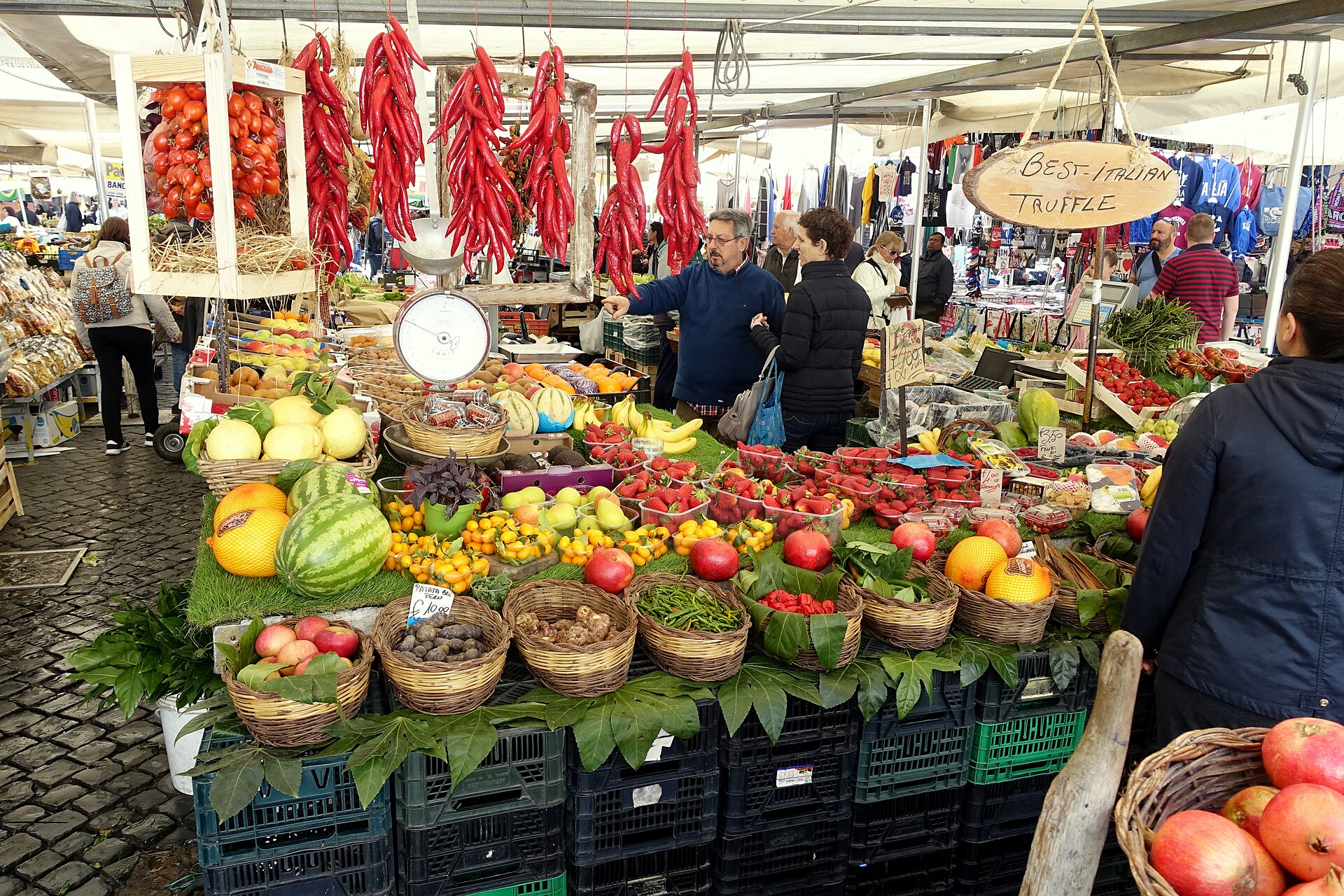
Pizza al taglio is baked in large trays, displayed on the counter, cut to order, and weighed on a scale. You point to the piece you want, the person behind the counter cuts it, and you pay by the gram. The crust is lighter and airier than it looks — the dough is long-fermented, sometimes 48 to 72 hours — with a satisfying chew and a thin, crackling base. Toppings are simple: tomato and fior di latte, potato and rosemary, zucchini flowers and anchovies, plain white pizza with olive oil.
The “say basta when it’s enough” ordering ritual takes some confidence the first time. Just point and say così (like that) when the portion looks right, or ancora un po’ (a little more) if you want more.
Pizza Tonda (Romana)
This is the sit-down version: a round, ultra-thin pizza served whole in a pizzeria in the evening. Roman pizza tonda is not Neapolitan pizza. The crust is cracker-thin, crisped almost through, and designed to be eaten with a knife and fork — or folded if you know what you’re doing. It doesn’t have the soft, pillowy cornicione of a Neapolitan pizza. It is its own thing, and a very good one.
If you hold a slice of roman tonda up by the edge, it shouldn’t sag. That’s the structural test. Pizzerias in Trastevere, Prati, and Ostiense tend to do this well. Avoid any pizzeria near the major monuments that also offers pasta, salads, tiramisu, and twenty-three other items.
The Jewish-Roman Kitchen
Rome’s Jewish community is one of the oldest in the world, predating the destruction of the Second Temple. For more than three centuries, from 1555 to 1870, that community was confined to a walled ghetto on the banks of the Tiber — a small, often flooded strip of land where an extraordinary culinary tradition developed out of necessity, kashrut (Jewish dietary law), and the particular produce that was available and affordable.
That tradition is the cucina ebraico-romanesca. Its influence on what is now thought of as Roman food in general is enormous, and its finest dishes are still made in the Jewish Ghetto today.
Carciofi alla Giudia
The most iconic dish of the Jewish-Roman table: a whole artichoke, its outer leaves trimmed, fried twice in olive oil. The first fry cooks the artichoke through. The second, at higher heat, crisps the leaves into something between a chip and a flower petal. The centre remains tender. The outside is crunchy and slightly bitter. A squeeze of lemon lifts the whole thing.
It is a spring dish, because it requires the Romanesco artichoke — the round, almost-thornless variety grown in Lazio — and those are at their peak from February to early May. Outside of that window, the dish exists but is not the same. Go to the Jewish Ghetto for it. The restaurants around Via del Portico d’Ottavia have been making it for generations. It is not cheap — around twelve to fifteen euros as a starter, as of 2026 — but it is one of the great vegetable dishes in European cooking.
Carciofi alla Romana
The gentler counterpart: artichokes braised in olive oil with garlic, parsley, mint, and a little white wine until they are completely yielding, almost creamy at the centre. This version is available more broadly across the city and for a longer season, though spring is still optimal. The two artichoke preparations together tell you almost everything you need to know about the range of Roman technique.
The Quinto Quarto
The “fifth quarter” is Rome’s offal tradition — the cuts left over after the four principal quarters of the animal were sent to the wealthy. The workers of Testaccio’s old slaughterhouse (il mattatoio), which operated from the 1890s until the 1970s, were paid partly in offal: tripe, oxtail, sweetbreads, liver, intestines. They cooked these cuts into dishes that are now considered the soul of Roman cuisine.
Coda alla vaccinara — oxtail braised slowly with tomato, celery, wine, and a touch of bittersweet cocoa until the meat is falling off the bone — is the most famous of them. Trippa alla romana — tripe in a fragrant tomato sauce with mint and a final snow of pecorino — is equally good. These are not adventurous-eating stunts. They are genuinely delicious slow-cooked dishes, available in the old Testaccio trattorias that made them famous.
You don’t have to order offal in Rome. But if you want to eat the way the city actually ate for most of its history, the Testaccio tradition is where to look. Our guide to things to do in Rome covers the Testaccio neighborhood and the old slaughterhouse complex that now houses artists and market stalls.
Sweets, Gelato, and the Maritozzo
Maritozzo
A maritozzo is a soft, slightly sweet brioche roll, split down the middle, filled with a generous amount of whipped cream — the kind of filling where the cream extends a centimetre or two beyond the bun on either side. It is a breakfast food. Romans eat it at the bar counter with a cappuccino, usually standing up, usually quickly.
The original maritozzo — documented back to ancient Rome — was made with dried fruit, honey, and spices, and was given by men to their intended brides during Lent (the name connects to marito, husband). The whipped cream version is the modern incarnation, and it is very good.
Look for pasticcerie and bars that make them fresh in the morning. The bun should be pillowy and just barely sweet; the cream should be cold and light, not stiff or synthetic. A good one eaten at a Roman bar counter at 8 a.m. is one of the quiet pleasures of the city.
Gelato
Real gelato is denser than ice cream, contains less air, and uses less fat — which means the flavours are cleaner and more intense. A good gelateria makes its product fresh daily and stores it in metal lidded tubs. The key visual test: if the gelato is piled high in the display case in enormous, photo-friendly mounds, it is probably made with mixes and stabilizers designed for display. If it’s in covered containers and portioned out as you order, it’s more likely the real thing.
Fruit flavours should taste of fruit. Pistachio should be grey-green, not neon. Chocolate should be dark and slightly bitter. Prices run around two to four euros for a cone or cup, as of 2026 — if you’re paying significantly more, you are probably near a monument.
Tiramisù and Pasticcerie
Tiramisù in Rome is made with espresso-soaked savoiardi biscuits, mascarpone, egg yolks, and cocoa — no cream, no elaborate flavouring. A good pasticceria will have a version that sets properly in the night, with layers that hold when you scoop them. A bad one will present you with something that looks and tastes assembled from a packet.
Coffee Culture: The Real Rules
Roman coffee culture is built on a few genuine principles, not quite as strict as the internet makes them sound, but real enough to be worth knowing.
Un caffè is an espresso. That is what you order. You don’t ask for “an espresso” — you say un caffè, per favore. It arrives in a small white cup, very short, with a crema on top, and you drink it in two or three sips. Some bars set a small glass of water beside it. The water is to cleanse the palate before (not after) the coffee.
Stand at the bar. Roman coffee is designed to be drunk standing at the counter. The price at the bar is typically around one to one-and-a-half euros for an espresso; sitting at a table can cost two to three times that, and in tourist-facing piazzas significantly more. The bar is the right way to do it. You will be in and out in four minutes and you will have had a much better cup of coffee.
Cappuccino is a morning drink. This rule is real. Italians do not drink cappuccino after about eleven in the morning — they believe the milk is too heavy at any other time of day. They will sell you one at 3 p.m. if you want it, and no one will say anything, but ordering a cappuccino after lunch is a reliable flag that you are a tourist. Caffè macchiato (espresso with a splash of steamed milk) is the acceptable mid-day compromise if you want something milky.
Colazione at a bar: the Roman breakfast is a cornetto and a coffee. The cornetto is a lighter, more delicate cousin of the French croissant — less buttery, less flaky — and it comes vuoto (empty), alla marmellata (jam), alla crema (pastry cream), or filled with Nutella or pistachio cream. It costs around one to two euros alongside your coffee. The whole transaction — coffee, pastry, brief conversation with the bar staff — takes about five minutes. It is the correct way to start a morning in Rome.
The nasoni: Rome has hundreds of small iron drinking fountains scattered throughout the city, called nasoni (big noses) for the shape of their spout. The water comes from the same ancient aqueduct system that has been supplying Rome for two millennia. It is cold, clean, and free. Fill a bottle at one rather than buying water repeatedly. Our Italy travel tips page has more on navigating daily life in Italian cities.
Meal Timing: Use It to Your Advantage
Romans eat on a schedule that is quite different from Northern European or American norms, and understanding that schedule will improve your food experience considerably.
Breakfast (colazione) happens between about 7 and 10 a.m. at a bar. Light and fast.
Lunch (pranzo) is the main meal for many Romans, and it runs roughly 1 to 3 p.m. This is when local trattorias fill up with office workers and residents, not tourists. Arriving at 1 p.m. on a weekday gets you into the rhythm of the city. Arriving at noon suggests you are on a tour bus schedule.
Aperitivo happens between about 6:30 and 8:30 p.m. This is a pre-dinner drink — a Campari soda, an Aperol Spritz, a glass of wine — often accompanied by a few small snacks. It is not a meal. It is a transition.
Dinner (cena) starts late: 8 p.m. is early, 9 p.m. is normal, and in summer Romans sit down at 9:30 or 10. Restaurants that are full at 7:30 p.m. are almost certainly full of tourists. If you arrive at 8:30 and the trattoria still has half its tables empty, that means locals haven’t come yet — not that the food is bad. Sit down, order some wine, and wait.
This timing gap is useful. If you eat lunch at 1 p.m. when Romans do, you will encounter a different restaurant — more engaged service, fresher prep, more daily specials on the board. If you eat dinner at 9 p.m. when Romans do, you will find that the kitchen is properly fired up, the chef is focused, and the pace is unhurried. Eating at 6:30 p.m. because you are hungry from a day of sightseeing is understandable but suboptimal.
Where to Eat: Neighborhoods Worth Your Time
Testaccio
If you have one afternoon in Rome dedicated to eating, spend it in Testaccio. This is the working-class neighborhood that grew up around the old city slaughterhouse (il mattatoio) in the 19th century, and its food culture reflects that history directly. The four Roman pastas are done here with particular seriousness. The quinto quarto dishes — coda alla vaccinara, trippa alla romana — are at home here.
The Testaccio Market (Mercato di Testaccio) is an indoor covered market that moved to a purpose-built space in 2012. It is not a tourist food market. It is where Romans shop for produce, cheese, cured meats, and fish, with a cluster of excellent prepared-food stalls alongside. You can eat supplì, fried artichokes, fresh pasta, and roast porchetta for almost nothing, standing at small counters inside. Go in the morning, Tuesday through Saturday.
The streets around the market — and the older trattorias that have been there for decades — represent Rome’s food culture in a less diluted form than most of the centro storico. The neighborhood has gentrified significantly but has not lost its core.
Trastevere
Trastevere is beautiful, and its food is genuinely good — but it requires more care than Testaccio. The neighborhood has been a major tourist destination for long enough that a significant portion of its restaurants now operate on a tourist-facing model: higher prices, more multilingual menus, staff outside waving you in.
The good places are still there, on the side streets and quieter piazzas away from the main drag around Piazza di Santa Maria in Trastevere. Pizza tonda in a properly packed local pizzeria, a plate of amatriciana at a trattoria that has been in the same family for thirty years — these experiences are available in Trastevere. You just have to walk past the obvious options to find them.
Trastevere is also one of the better neighborhoods for an evening stroll with a glass of wine and a supplì from a takeaway counter, which is a perfectly valid way to spend time.
The Jewish Ghetto and Surroundings
The area around Via del Portico d’Ottavia and the Largo dei Fiorentini is where you go for the Jewish-Roman kitchen: carciofi alla giudia in season, the quinto quarto dishes, the fried preparations that define this tradition. The restaurants here range from serious to touristy — the ones that have been operating for generations tend to be well-known by now — but the best of them are serving food that represents a genuinely distinct culinary tradition, not just generic “Roman” cooking.
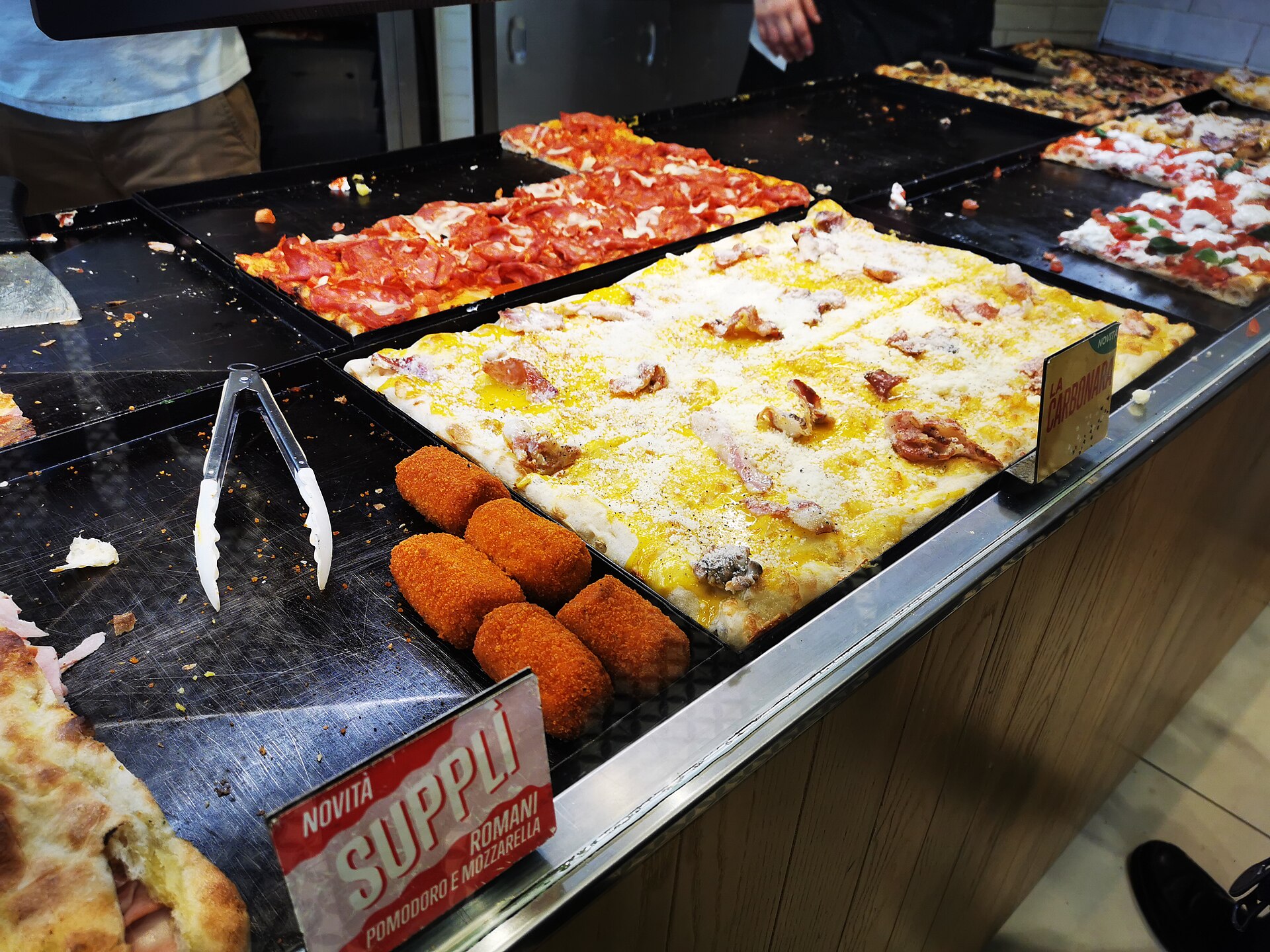
This is also close to Campo de’ Fiori, which hosts a morning market (Monday through Saturday, until about 2 p.m.) selling produce, herbs, olives, and a variety of food stalls. It is more touristy than Testaccio Market but still worth an hour in the morning if you are in the area.
Monti and Pigneto
Monti is the neighborhood immediately north of the Colosseum — which is an unusual sentence to write about a neighborhood that feels genuinely local. It is one of the parts of Rome’s old centre that still has a resident population, meaning actual bars and shops that serve people who live there, not just people visiting. Pizza al taglio, neighbourhood trattorie, aperitivo bars. Worth exploring if you are spending time near the Forum and want to eat well without going far.
Pigneto is further east, past the centro storico, and is where young Romans go for aperitivo and dinner. Less polished and more interesting than most tourist-facing neighborhoods, with a range of restaurants covering Roman classics and some more experimental cooking. Worth a taxi ride if you want an evening that feels less performative.
A Note on Prati
Prati sits just across the Tiber from the Vatican and is a proper residential neighborhood — grid streets, real shops, locals. Because most visitors to the Vatican come from one direction and don’t cross back, Prati is significantly less tourist-affected than it should be given its location. There are good trattorias here doing honest Roman work at honest prices. If you are visiting the Vatican or Castel Sant’Angelo, eat in Prati rather than in the immediate vicinity of either monument.
Avoiding Tourist-Trap Restaurants
This deserves direct attention rather than a polite mention at the end.
Restaurants near the Colosseum, Trevi Fountain, Piazza Navona, and the Spanish Steps are operating a specific business model: high footfall from people who are not coming back, and who are too hungry or too overwhelmed to walk three streets further. The food does not have to be good. It only has to be available.
The signs are consistent:
A person outside trying to hand you a menu. No good restaurant in Rome does this. None. A place confident in its product does not need a salesperson on the pavement.
Photos on the menu. The photos are designed to trigger a decision without engagement. They are not a sign of pride in the food.
A menu in six languages with fifty items. A kitchen that cooks Roman food well makes ten to fifteen things well. It does not make sushi, a club sandwich, and a full English breakfast alongside the carbonara.
Empty or near-empty at prime times. If a restaurant near a major sight has available tables at 1:30 p.m. or 9 p.m. on a weekday, and nearby trattorias are full, that is information.
Prices significantly above the neighbourhood average. A pasta dish in a genuine trattoria in Rome runs around twelve to eighteen euros, as of 2026. If the carbonara is twenty-six euros and the restaurant is forty metres from the Pantheon, you know why.
The alternative is simple: walk. In almost every case, moving four or five minutes away from the major sight on foot will get you to a different category of restaurant. The map does not lie — the tourist density is very local. Our Italy travel mistakes guide covers this pattern across the country, and our 3 days in Rome itinerary builds meals into the routing so you are already in the right area at the right time.
A handwritten specials board (often only in Italian), a menu that changes with the season, a dining room that is mostly full of people speaking Italian at lunch — these are the signals to follow.
Markets: Where to Go and What to Expect
The best food in Rome often starts in its markets, and two are worth your time as a visitor.
Mercato di Testaccio (Via Beniamino Franklin, Testaccio) is the serious one. An indoor covered market, it runs Tuesday through Saturday until early afternoon. The produce stalls are surrounded by a ring of prepared-food counters — supplì, porchetta sandwiches, pasta, carciofi — and the quality is consistent because the clientele is Roman. Prices are low. The atmosphere is entirely non-performative. This is not a food market designed for Instagram; it is where people buy their vegetables on a Wednesday morning.
Campo de’ Fiori (Piazza Campo de’ Fiori, centro storico) runs Monday through Saturday mornings. It is more touristy than Testaccio but still has genuine produce vendors, good seasonal vegetables, herbs, olives, and a handful of excellent prepared food stalls. The square becomes a bar and restaurant hub by evening; the market is a morning thing.
Porta Portese (Sunday mornings, Trastevere) is a flea market and general Sunday chaos, not a food market specifically, but there are food stalls within it and it is part of understanding how Rome spends a Sunday morning.
For a deeper look at how to structure your time around Rome’s major sites and neighborhoods, the things to do in Rome guide covers logistics, and the where to stay in Rome page explains how neighborhood choice shapes the whole eating experience. If you are in Testaccio or Trastevere, you will walk past good food constantly. If you are in a hotel near the Termini train station without a plan, the nearest trattoria may not be worth the walk.
Final Thoughts
Rome is not a subtle city and its food is not subtle food. The pastas are assertive, the fried things are unapologetic, and the coffee culture has actual rules. None of this is difficult to navigate once you understand the logic — eat where Romans eat, eat on Roman timing, walk away from the laminated menu outside the Colosseum.
The Jewish-Roman kitchen gives Rome a culinary depth that most visitors miss entirely because it requires going to a specific neighbourhood at the right time of year. Go to the Ghetto in March or April, order the carciofi alla giudia, and you’ll understand why that dish has been made in essentially the same way for five hundred years.
For the wider Italian picture — what to eat across different regions, how wine geography shapes the table, the Slow Food culture and where it shows up — see our guide to Italy food and wine travel. For planning the Rome trip around what to see as well as what to eat, start with the Rome tourism hub and the 3 days in Rome itinerary. And if you want to understand the broader context before you arrive, the Italy travel guide covers the practical framework.
Eat the carbonara. Order gricia at least once. Walk five minutes past the crowd before you sit down.
Questions travellers ask
What is the most important dish to eat in Rome?
If you can only order one thing, order cacio e pepe. It is Roman cuisine in its purest form — three ingredients, no substitutions, entirely dependent on technique. A good one, in the right trattoria, using tonnarelli pasta and aged pecorino romano, demonstrates exactly why simplicity and precision matter more than complexity. Everything else about Roman food flows from this principle.
Is carbonara actually Roman?
Yes, and no. The dish most likely developed in Rome in the 1940s — the most credible theory involves American troops who brought eggs and cured pork into contact with Italian pasta after the war. Whether you accept that origin story or prefer the older pastoral version, carbonara is absolutely a Roman dish in its current form, deeply embedded in the city’s cooking culture. What it is not: a dish that contains cream. Authentic Roman carbonara is guanciale, egg yolk, pecorino romano, and black pepper. If you see cream in the ingredients, order something else.
What is the difference between pizza al taglio and pizza tonda?
Pizza al taglio is the Roman street food version: rectangular trays, sold by weight, available throughout the day from bakeries and forno shops. The crust is light and slightly focaccia-adjacent. Pizza tonda (the round version, also called pizza romana) is the sit-down evening version served whole in a pizzeria. The crust of pizza tonda is almost cracker-thin and extremely crisp — structurally opposite to Neapolitan pizza. Both are worth eating. They are different enough that trying only one means missing half the picture.
Can you eat well on a budget in Rome?
Yes, if you know what to order and where. A supplì costs around one to two euros. A slice of pizza al taglio is two to four euros. A cornetto and espresso at a bar is two to three euros total, eaten standing up. A lunch menu (menù del giorno) at a neighbourhood trattoria — pasta, secondo, water, cover charge — is often fifteen to twenty euros. The tourist trap pricing exists but is highly localised. Walk away from the monuments, eat standing at counters when it makes sense, and follow the meal timing of actual Romans.
What should I know about carciofi alla giudia before ordering?
It is a spring dish. The Roman artichoke (the Romanesco or Cimarolo variety) is in season from approximately February to early May. Outside of that window, the dish exists on some menus but uses different artichokes and is not the same preparation. Go to the Jewish Ghetto for the best versions — the restaurants around Via del Portico d’Ottavia have been making it for generations. Order it as a starter. It comes out looking like a golden flower and it should be eaten immediately, while the outer leaves are still crisp.
How do I order coffee in Rome without looking completely lost?
Walk into a bar. Go to the counter, not a table. Say un caffè, per favore and you will get an espresso. If you want a cappuccino, say un cappuccino — but note that this is a morning drink and if it’s past noon, you’ll get a slightly puzzled look rather than a refusal. You pay at the till either before or after depending on the bar’s system; many bars have you pay at the cassa first and then hand the receipt to the barista. Watch what the person in front of you does. Tip is not expected but small change in the cup is appreciated.
What are the red flags for a tourist-trap restaurant in Rome?
The main ones: a person outside the door inviting you in; a menu with photographs; a menu in six languages covering thirty or more dishes; tables that are empty during prime hours while nearby restaurants are full; carbonara on the menu with cream listed as an ingredient; prices significantly above the neighbourhood average for pasta dishes. Any one of these is a signal. Two or more is a decision.
Is Rome good for vegetarians?
Better than its reputation suggests. Cacio e pepe, gricia (without guanciale on request, though it becomes a different dish), carciofi in both preparations, suppli (check the filling — the classic is meat, but many shops also do cheese-only or vegetable versions), pizza in all its forms, vegetables cooked in the Roman style (puntarelle salad with anchovies aside, which is a fish dish). The contorni — side dishes — in Roman trattorias often include genuinely interesting seasonal vegetables. Spring brings artichokes, asparagus, and peas; summer brings peppers and courgette; winter brings chicory and bitter greens. You will eat well. You will not eat the full Roman canon without meat.
1 comment
Comments are closed.