Italy in December: Christmas Markets and Winter Trips

Italy in December: Is It Worth Going?
Italy in December is genuinely one of my favourite times to visit — but it asks something of you. The days are short, the north gets cold and foggy, and if you show up expecting summer Italy with fairy lights, you will be disappointed. Show up expecting a slower, more candid version of the country, decorated for its most important holiday, and it delivers in ways August simply cannot.
The quick answer: yes, go — especially if Christmas markets, dramatically lit cities, and museums you can actually breathe in matter to you. The caveats are real: pack for genuine cold, plan around the value window of early December before prices spike at Christmas, and stay away from beach-dependent destinations unless solitude is the point.
December rewards city travellers, market seekers, and skiers. If that is you, read on.
December Weather in Italy: What to Actually Expect
Weather in December in Italy varies more sharply by region than almost any other month. The north — Milan, Venice, Bologna — can be grey, damp, and close to freezing, with fog settling into the Po Valley for days at a stretch. The Alps and Dolomites sit under snow. Rome stays useable in a coat. Sicily is mild enough for long lunches outdoors on a good day.
Sunset comes early everywhere: around 4:30–4:45 pm in Milan and Venice, closer to 4:50–5:00 pm in Rome. Plan sightseeing for mornings and early afternoons. Afternoon light disappears fast.
| Region | Typical High | Typical Low | Daylight feel |
|---|---|---|---|
| Milan / Venice / Bologna | 5–8°C (41–46°F) | 0–3°C (32–37°F) | Cold, often foggy; brief sun |
| Florence | 9–11°C (48–52°F) | 3–5°C (37–41°F) | Crisp and clear on good days |
| Rome | 12–14°C (54–57°F) | 4–6°C (39–43°F) | Cool but walkable; occasional rain |
| Naples / Campania | 13–15°C (55–59°F) | 6–8°C (43–46°F) | Mild; rainy spells |
| Sicily / Palermo | 15–17°C (59–63°F) | 9–11°C (48–52°F) | Warmest; still feels like autumn |
| Alps / Dolomites | -2–4°C (28–39°F) | -8–-2°C (18–28°F) | Snow-covered; ski season open |
These are typical ranges; actual conditions vary year to year. Check the extended forecast the week before you travel and pack accordingly — a warm coat, waterproof layers, and proper shoes will serve you far better than optimism.
For a full seasonal picture across every month, see our guide to the best time to visit Italy.
December 8: The Day Italy Turns on Christmas
Before anything else, know this date: 8 December, the Feast of the Immaculate Conception, is Italy’s official start of the Christmas season and a national public holiday. On this day, Christmas trees across the country are officially lit — the tree at the Colosseum in Rome, the one in Piazza del Duomo in Milan, the Vatican’s enormous specimen in St. Peter’s Square. The Pope traditionally pays tribute to the statue of the Immaculate Virgin on Via Condotti in Rome in a centuries-old ceremony.
In Manarola in the Cinque Terre, a giant living nativity scene is illuminated on the hillside — one of the most photographed images in Italy come winter. It is not worth going to the Cinque Terre for just this, but if you are passing through, time it right.
The 8th also marks when Italian families put up their own presepe (nativity scene) at home. The Christmas tree was imported; the presepe is Italian to its bones.
One practical note: December 8 is a public holiday, which means busier museums, fuller restaurants, and a weekend-like buzz in city centres — book ahead for anything timed around it.
Christmas Markets in Italy: Where the Best Ones Actually Are
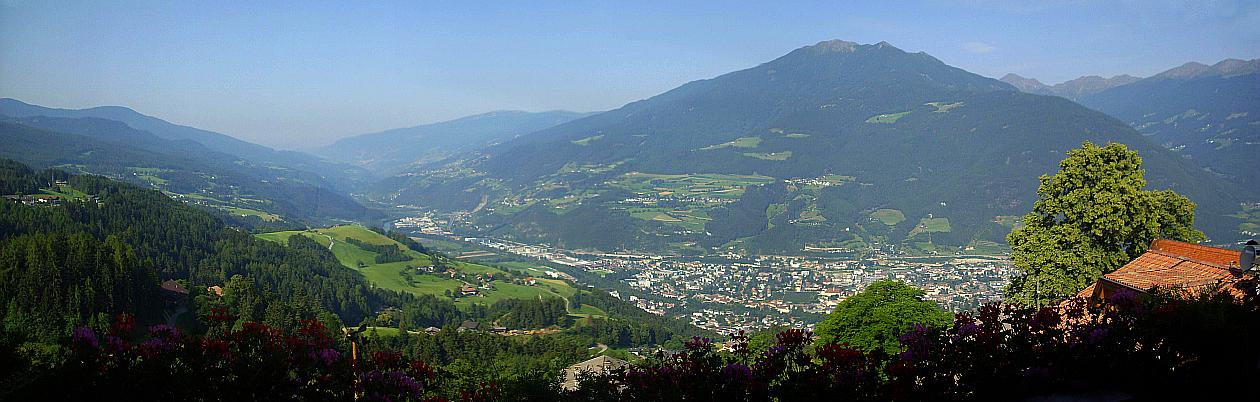
Most major Italian cities run Christmas markets through December. Most are perfectly pleasant. But if you want to understand what a genuinely good Christmas market feels like, you need to go to Alto Adige — the South Tyrol — and specifically to Bolzano, Bressanone, and Merano.
This is the corner of Italy that was part of Austria until 1919, and the Germanic roots run deep. The markets here are not Italian approximations of a northern European tradition — they are the real thing, operating within a culture that has been doing this for centuries.
Bolzano
The Bolzano Christmas market (Christkindlmarkt) fills Piazza Walther from late November through January 6th. It is one of Italy’s oldest, and the setting — Gothic cathedral on one side, Alpine peaks visible above the rooftops — is hard to beat. The stalls sell hand-carved wooden decorations, locally made Lebkuchen (spiced biscuits), and mulled wine (Glühwein) that actually warms you rather than the sugary tourist version served elsewhere. Go on a weekday to avoid the weekend crowds from Verona, Munich, and beyond.
Bressanone (Brixen)
Smaller than Bolzano and, for my money, more atmospheric. The market wraps around the cathedral cloisters, which are illuminated at night with a quiet elegance that Bolzano’s larger market cannot quite match. Bressanone also gives easy access to the ski slopes above town. The market runs from late November to January 6th.
Merano (Meran)
Merano’s market takes place in the Kurpark, a thermal spa town setting, and has a slightly more refined feel — the stalls are curated, the pace is calmer, and the surrounding architecture (more Belle Époque than Gothic) gives it a different character from the other two. Merano is also worth visiting for the thermal baths if you want to thaw out after a day in the cold.
These three towns are all within easy reach of each other by train or car. A two- or three-night base in Bolzano lets you visit all three and still have time for a short ski day.
Markets in the Major Cities
Outside Alto Adige, the markets are worth a look but manage expectations:
Florence: The market at Piazza di Santa Croce is the largest in central Italy, with around 55 wooden chalets and a good mix of crafts and food. It borrows heavily from the German Heidelberg tradition and is well-organised. Florence also runs the F-Light festival throughout December — artistic light projections onto the facades of Palazzo Vecchio, the Ponte Vecchio, and other landmarks. Worth seeing.
Rome: The main market at Piazza Navona is touristy and overpriced, but atmospheric — Baroque fountains, winter lights, and the noise of the city. A more local option is the market near Piazza Bologna in the Pigneto area. Rome is not a Christmas-market destination, but it is a superb December destination for other reasons (see below).
Milan: The Fiera di Sant’Ambrogio on December 7th (the feast of Milan’s patron saint) is one of the city’s oldest traditions — stalls spread around the Basilica di Sant’Ambrogio selling crafts, antiques, and seasonal food. The Christmas market at Piazza Duomo is larger and more commercial. Milan compensates with its shop window displays, which are extraordinary in December; the Quadrilatero della Moda is worth a walk just for those.
Naples: The city’s Christmas market is an entirely different beast — and the most important one in Italy for cultural reasons. More on this below.
The Neapolitan Presepe: Italy’s Most Serious Christmas Tradition
No other city in Italy takes Christmas as seriously as Naples, and no other tradition captures what Italian Christmas actually means as completely as the Neapolitan presepe.
The nativity scene (presepe, from the Latin for crib) arrived in Italy via St. Francis of Assisi in the 13th century — he staged the first living nativity in Greccio in 1223. Naples turned it into an art form. By the 18th century, the presepe was not just a religious tableau but a full theatrical world: terracotta villages complete with markets, taverns, musicians, tradespeople, seasons changing across the landscape, and months of the year represented by different figures (the butcher for January, the baker for June, and so on).
The place to see this tradition at its most concentrated is Via San Gregorio Armeno, a narrow street in the old city centre that has been the home of presepe workshops for centuries. From mid-November through January, it operates at full intensity — artisans working in front of open shopfronts, their hands shaping shepherds, Madonnas, and an ever-updated cast of contemporary figures. Politicians, footballers, and celebrities of the year always appear, rendered in terracotta with the frankness of a good caricaturist. This is not a new development; embedding current events into the nativity scene is a centuries-old Neapolitan practice.
Via San Gregorio Armeno is free to walk, open during shop hours (roughly 9:30am–6:30pm), and genuinely unlike anywhere else in Italy in December. It is also very crowded on weekends between mid-December and Christmas — go on a weekday morning if you want space to breathe.
Beyond the street, Naples’ churches display elaborate historical presepi from the 17th and 18th centuries. The Museo di San Martino on the Vomero hill has one of the finest collections. Naples in December also means struffoli (tiny honey-coated fried dough balls), pastiera (ricotta and wheat pastry), and mostaccioli (spiced chocolate biscuits) appearing in every pasticceria window. The food alone justifies the train fare from Rome.
Cities That Earn Their December
Some Italian cities feel diminished in winter. Others come into their own.
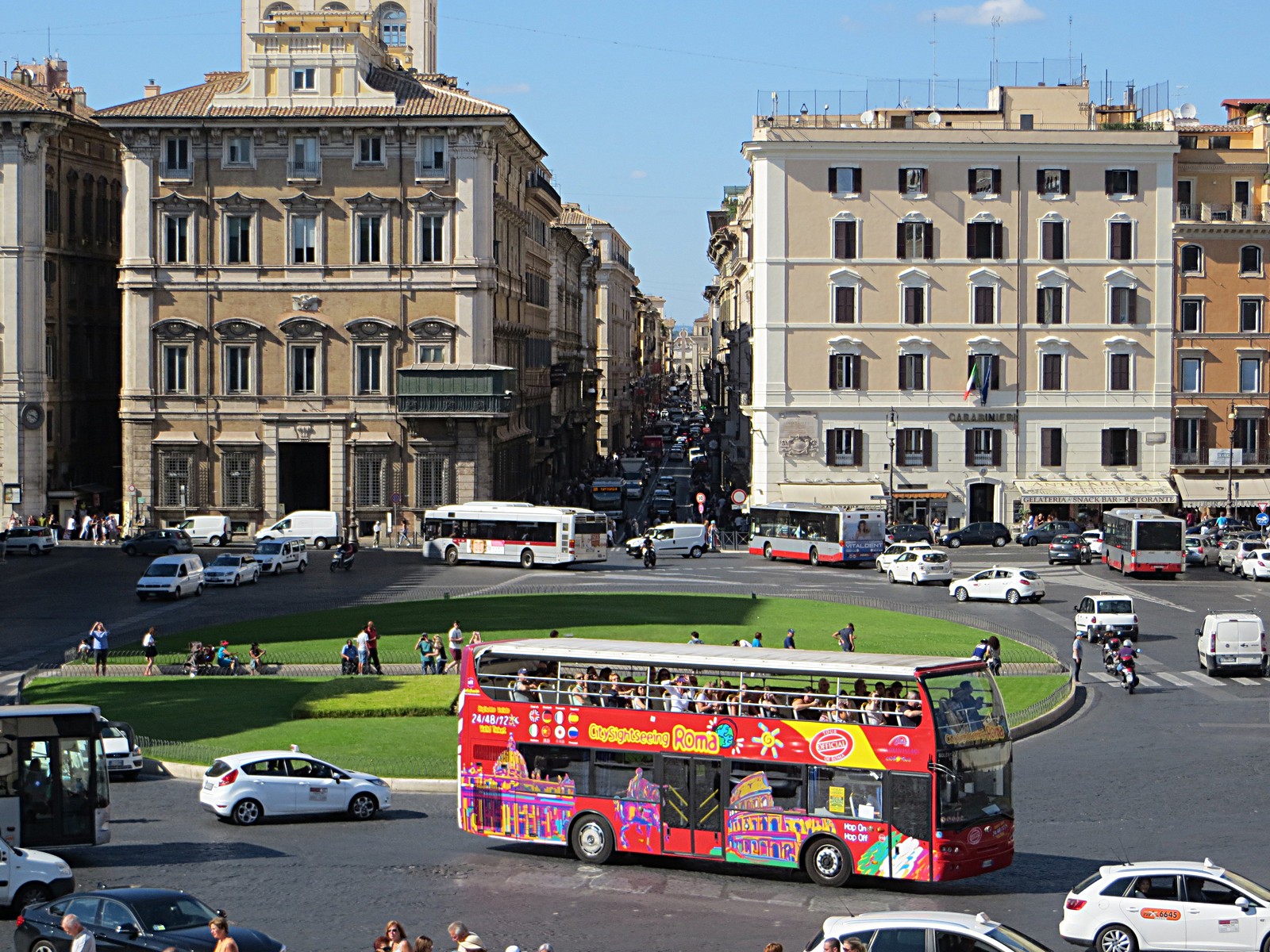
Rome
Rome in December is magnificent. The crowds that overwhelm the Colosseum in July are gone; you can walk into the Vatican Museums on a weekday morning with a fraction of the summer queue. The Christmas tree in St. Peter’s Square and the nativity scene displayed in the piazza go up around December 8th. Piazza Navona fills with its market. The streets of the historic centre are strung with lights. And the light itself — low, golden, slanting through umbrella pines at 3pm — does things to the city’s ochre facades that summer sun cannot.
Rome is also cold, and it rains. Expect it. The reward is a city that feels like it belongs to people who actually live there rather than to the summer tourist circuit.
For everything Rome has to offer, our Rome travel guide goes deep.
Milan
Milan’s December secret is that no one comes for the right reasons. The Last Supper (Santa Maria delle Grazie) — which requires booking weeks or months ahead — is dramatically easier to access in December than in summer. La Scala’s opera season opens in full splendour on December 7th with the first night (Prima della Scala), one of Italy’s great cultural events. The Duomo neighbourhood is lit up with an elegance the city takes seriously; Milan has money and it shows at Christmas. The streets of Brera, with their independent boutiques and trattorias, are at their most convivial.
Our guide to Milan and northern Italy covers the city in detail.
Florence
Florence in December rewards slower travel. The Uffizi, the Accademia, the Bargello — all dramatically less crowded than in summer. The F-Light festival transforms the city’s monuments with projections that are surprisingly moving. The Oltrarno neighbourhood feels genuinely local in December, the kind of place where you end up eating in a trattoria that has been run by the same family since before you were born. The countryside around Florence is stripped back and honest — bare vines, silver olive groves, mist in the valleys — and beautiful in a way the green summer version is not.
Skiing and the Dolomites in December
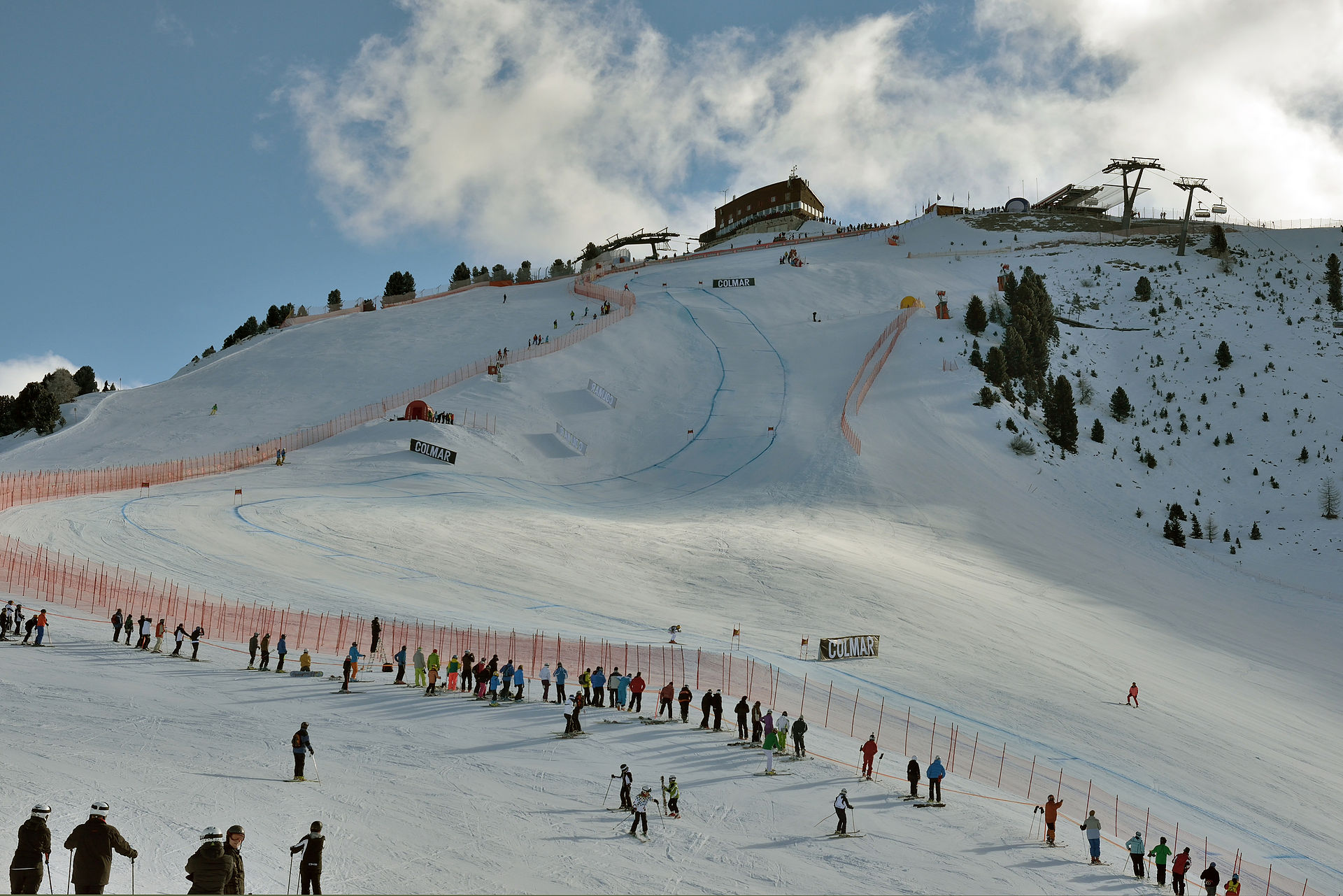
The ski season in the Italian Alps and Dolomites typically opens in late November or early December, snow permitting. The Dolomiti Superski network — which covers Val Gardena, Alta Badia, Cortina d’Ampezzo, and other resorts — generally has lifts running from early December. Val Gardena specifically has historically opened around December 4th–6th.
Early December is arguably the best time to ski in the Dolomites if you want good snow, open slopes, and none of the wall-to-wall February school holiday crowds. Accommodation prices in the valley towns are lower in early December than at Christmas and significantly lower than the peak February weeks.
The Dolomites in December also give you the Christmas market combination: Bolzano, Bressanone, and Merano are all within a short drive or train ride of the main ski areas. It is entirely feasible to spend a morning on the slopes above Val Gardena, descend to Bolzano by afternoon, and walk the market in the evening.
Our Dolomites and Alps travel guide covers the ski areas, villages, and logistics.
Crowds and Prices: The December Window
This is the part most December guides handle vaguely. Let me be direct.
Early December (1st–15th approx.) is genuine low season in most of Italy. Hotels are cheaper — sometimes significantly — flights are at their lowest of the year outside January and February, and the main attractions are as quiet as they get. If you want to see the Sistine Chapel without craning over shoulders, or walk the Roman Forum without queuing forty minutes, this is your window.
Mid to late December (15th–26th) is where the calculus shifts. Prices start rising. Christmas week itself — December 23rd through 26th — is a mini high season in the major cities, Rome and Florence especially. Accommodation rates in popular areas can match early summer levels. Book well ahead.
Christmas Day and December 26th see widespread closures — many museums, restaurants, and attractions close entirely or operate on reduced holiday schedules. Always check individual opening hours before planning around these dates.
New Year’s Eve is expensive everywhere. Hotels in Rome, Florence, and Venice charge premium rates. Many restaurants only offer set-menu packages at prices that reflect demand rather than quality.
The value sweet spot for December in Italy is the first two weeks of the month — you get the markets, the lights, the lower crowds, and the lower prices, without the holiday spike. Travelling to Italy in October gives you even better weather and even fewer crowds; see our Italy in October guide for that comparison. For what comes after, our Italy in January guide covers the even quieter, even cheaper post-Christmas weeks.
What to Pack for December in Italy
The biggest mistake visitors make in winter Italy is underpacking. The indoor heating in older Italian buildings — and most historic accommodation is in older buildings — is less aggressive than what you might be used to. You will be wearing a jumper indoors.
Essentials:
– Warm coat (wool or down, depending on where you are going — heavier for the north, lighter for Rome/Naples)
– Waterproof shoes or ankle boots with good grip (cobblestones get slippery in rain)
– Scarves and layers — temperatures shift significantly between midday and 4pm, when the sun disappears
– Small umbrella or packable rain layer
– Thermal base layers for the Dolomites or any Alpine destination
Leave behind:
– Light trainers or sandals (you will not use them)
– Expectations of outdoor café culture (possible in Rome and Naples on good days; wishful thinking in Milan)
A Sample December Week in Italy
This itinerary uses the markets-plus-cities combination and works for a first-time December visitor:
Days 1–3: Alto Adige (base in Bolzano)
Arrive Bolzano. Two full days across the three markets — Bolzano, Bressanone, Merano. Consider a half-day ski trip up to Val Gardena if snow is good. Eat at least one Schlutzkrapfen (South Tyrolean pasta) and one Knödel (bread dumpling) before leaving.
Days 4–5: Milan
Train south to Milan (about 3.5 hours). Day 4: the Last Supper (booked months ahead), Duomo neighbourhood, Galleria Vittorio Emanuele in full Christmas decoration. Day 5: Brera gallery and neighbourhood; Quadrilatero della Moda window displays; Sant’Ambrogio basilica.
Day 6–7: Florence or Rome
Either direction works. Florence for art and slower pace; Rome for scale, spectacle, and the Vatican in low season. Add Naples as a final day if your itinerary stretches to it — three hours by fast train from Rome, and Via San Gregorio Armeno will justify the round trip.
For a fuller framework, our Italy itineraries guide has route options across different trip lengths and styles. Budget-conscious travellers should check our Italy travel budget guide for realistic December cost estimates.
Final Thoughts
Italy in December is not Italy with the volume turned down. It is a different programme entirely — one built around fire and candlelight and the particular pleasure of a warm trattoria on a cold evening. The museums are accessible. The cities are lit. The Christmas markets in Alto Adige are among the finest in Europe, full stop.
Come before the 15th for best value. Come ready for the cold. Stay for a cioccolata calda at a café where the locals are arguing about football and nobody is looking at their phone for directions. That version of Italy exists in December. It does not exist in August.
For planning across the full year, start with our full guide to visiting Italy and our best time to visit Italy overview. If you are weighing December against shoulder season, our Italy in March guide covers the spring alternatives.
Questions travellers ask
Is December a good time to visit Italy?
Yes, with clear expectations. Early December offers genuine low-season value — shorter queues, lower prices, and a more candid version of the country. The Christmas markets in Alto Adige (Bolzano, Bressanone, Merano) are exceptional. The main cities are beautifully decorated. The trade-offs are short days, cold weather in the north, and a price spike around Christmas and New Year. Time it right and it is one of the best months to visit.
Where should I go in Italy in December?
For Christmas markets: the South Tyrol — Bolzano, Bressanone, and Merano above all others. For history and art without crowds: Rome and Florence in early December. For the presepe tradition: Naples. For skiing with festive atmosphere: the Dolomites. Skip beach-dependent destinations (Amalfi Coast, Cinque Terre); most coastal infrastructure winds down and the experience is limited.
How cold does Italy get in December?
It varies sharply by region. Milan and Venice hover between 0–8°C (32–46°F) with fog common in the Po Valley. Florence sits around 3–11°C (37–52°F). Rome is milder at 4–14°C (39–57°F). Naples and Sicily stay above 8°C (46°F) most days. The Dolomites and Alps are properly cold and snowy — dress accordingly for the mountains.
What are the best Christmas markets in Italy?
The Alto Adige markets — Bolzano, Bressanone, and Merano — are Italy’s best by considerable distance, drawing on an authentic Germanic tradition rooted in the region’s history as part of the Austrian Tyrol. Outside the north, Florence’s Santa Croce market and Milan’s Sant’Ambrogio market are solid options. Rome’s Piazza Navona market is atmospheric but commercially overpriced.
Is Italy expensive in December?
Early December (roughly the 1st to 15th) is among Italy’s cheapest travel windows, with hotels and flights noticeably lower than summer. From mid-December onward, prices climb, and Christmas week itself rivals early summer rates in popular cities. New Year’s Eve is premium everywhere. Book accommodation and trains well ahead for any travel after December 20th.
What is the presepe tradition in Naples?
The presepe (nativity scene) is Italy’s oldest Christmas tradition, and Naples has elevated it to an art form over three centuries. Neapolitan nativity scenes recreate entire villages — complete with markets, tradespeople, seasonal details, and contemporary celebrity figures — in terracotta and cloth. Via San Gregorio Armeno in the historic centre is the epicentre of this craft. The workshops are open year-round, but December is when they operate at full cultural intensity.
Do museums close in Italy in December?
Most major museums stay open through December, often with better availability than any other month. However, Christmas Day (December 25th) and, to a lesser extent, December 26th see widespread closures or reduced hours. Always verify individual museum websites before visiting during the holiday week.
Is the Amalfi Coast worth visiting in December?
It depends on what you want. The coastline is beautiful regardless of season, and you will find dramatically lower prices and zero crowds. But many restaurants, hotels, and ferry services close down, limiting your options. Sorrento is more resilient in winter and makes a reasonable day trip from Naples. If your goal is the full Amalfi experience — the sea, the hiking, the village life — wait for spring or consider a brief visit as part of a Naples base rather than a dedicated trip.