Lake Como Travel Guide: Towns, Villas and Ferries
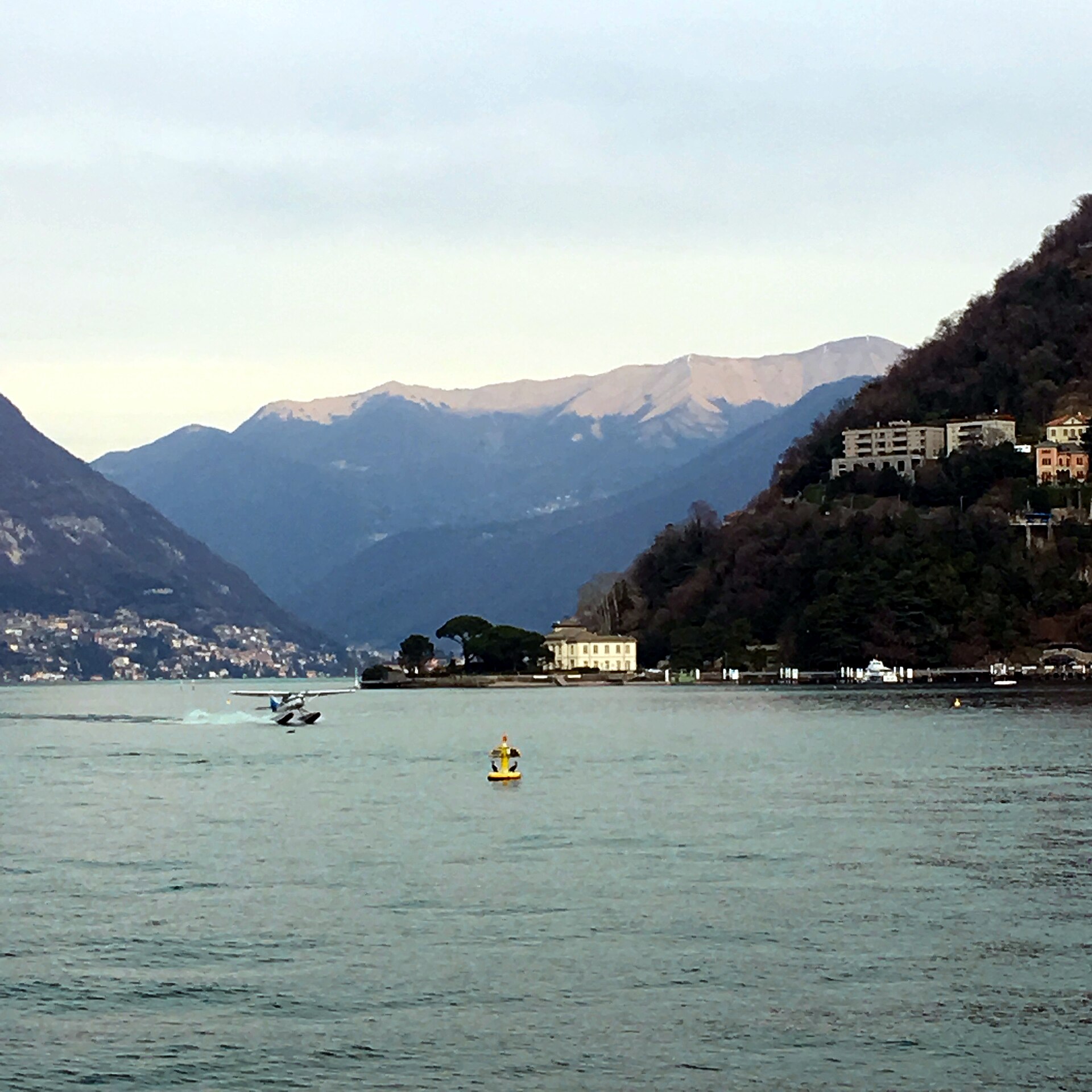
The first thing nobody tells you about Lake Como is that it isn’t really shaped like a lake. It’s a giant upside-down Y, and once that clicks, the whole place stops being confusing.
This Lake Como travel guide is my attempt to give you the practical spine most posts skip. Short version: Como is an upside-down-Y lake, about 50 km top to bottom, with three branches meeting in the middle. Base yourself on the central lake around Varenna, Bellagio and Menaggio, lean on the ferries instead of a car, and give it at least two full days. More if you can.
Who this is for: first-timers who want a mental map and real logistics, not another carousel of villa photos. I’ll tell you how the boats actually work, which towns do what, and where to go deeper. For the “which town should I sleep in” decision, I send you to a dedicated piece. Here, you get the overview that makes the rest make sense.
The lake at a glance
Before the deep dive, here’s the whole thing on one screen. Use this as your map of the map.
| Part of the lake | Where it is | What it’s for | Get there by |
|---|---|---|---|
| Como city | Bottom of the southwest branch | Train arrival, Duomo, Brunate funicular, lower prices | Train from Milan (~1 hr) |
| Cernobbio / lower west shore | Just north of Como | Grand hotels (Villa d’Este), short scenic boat loop | Walk or ferry from Como |
| Central lake (Tremezzina / Lenno) | West shore, mid-lake | Villa del Balbianello, Villa Carlotta, the Greenway walk | Ferry; bus from Como |
| Bellagio | The point where the Y splits | The icon: stepped lanes, Villa Melzi, ferry hub | Central-lake ferry |
| Varenna | East shore, mid-lake | Train arrival from Milan, quiet evenings, gardens | Train to Varenna-Esino; ferry |
| Menaggio | West shore, mid-lake | Best base for buses, most lived-in feel, hikes | Ferry; ASF bus |
| Lecco branch | Southeast leg of the Y | Mountains, fewer tourists, Manzoni country | Train to Lecco |
| Alto Lago (Colico end) | The long northern arm | Quiet, windsurfing, Piona abbey | Slow boat; train to Colico |
If you only remember one row, make it the central lake. That’s where you’ll spend most of your time, and it’s where the ferries run thickest.
The geography: why it’s a Y, not a lake
Picture the letter Y, upside down, tipped slightly. The two top arms point south; the single leg points north.
The southwest arm ends at Como city, the main hub and the reason the whole lake is nicknamed Lario. This is almost certainly where your train arrives. The southeast arm ends at Lecco, a more workaday, mountain-backed town that most first-timers skip (it’s quieter and cheaper, and the scenery is more rugged than pretty). The single long northern leg, the Alto Lago or “high lake,” runs up toward Colico and the Alps, and gets steadily emptier and windier the further you go.
Where the three arms meet is the magic bit. Sitting right on the fork is Bellagio, on a promontory, with Varenna facing it across the water to the east and Menaggio to the west. Those three towns plus the smaller jetties around them are what everyone means by the “central lake” or Centro Lago. The distances between them are tiny, the boats are constant, and the views are the ones you’ve seen on every postcard.
Here’s the practical payoff of understanding the Y. The lake is long and skinny, so getting from the very bottom (Como) to the very top (Colico) is a slow, multi-hour boat ride. But hopping between the three central towns takes ten to twenty minutes. So you don’t want to be schlepping the full length of the lake every day. You want to land in the middle and do short hops. That single insight will save you hours.
For how Como fits into the wider region of northern lakes, the Italian Lakes travel guide sets it next to Garda and Maggiore.
How to get to Lake Como
Almost everyone comes from Milan, and that’s the easy part. Two railway lines matter.
To Como city (the west side). Trains run from Milano Centrale to Como San Giovanni in roughly an hour. San Giovanni sits up the hill above town; it’s about a ten-minute walk down to the waterfront. There’s also a second, slower line from Milano Cadorna to Como Nord Lago (sometimes signed Como Lago), which is handy because Lago station is right on the lakefront, steps from the ferry piers. If you’re headed for the ferries, Nord Lago drops you closest; if you want speed, take the faster Centrale–San Giovanni train.
To Varenna (the east side). This is the underused trick. Trains from Milano Centrale toward Lecco, Sondrio or Tirano stop at Varenna-Esino, and from there it’s a short downhill walk to the ferry dock. This puts you straight onto the central lake without ever touching Como city. If your base is Varenna, Bellagio or Menaggio, this is usually the smarter arrival. As of 2026, occasional engineering works can close stretches of the Milan–Varenna line and replace them with a Lecco-to-Varenna bus, so check the timetable before you commit.
From the airport. Milan Malpensa is the nearest major airport, around 1 to 1.5 hours to Como by train with a change (often at Saronno or Porta Garibaldi). For the full breakdown of getting from the planes to the platforms, see my Milan airport to city center guide and the broader Italy transportation overview.
A note on driving: don’t, unless you have a specific reason. The lakeshore roads are narrow, two-lane, and clog badly on summer weekends when Milan empties out. Parking in the towns is scarce and expensive. Plenty of visitors rent a car, drive it once, and leave it parked for the rest of the trip. The ferries reach every town that matters, so a car is more liability than asset here. I’ll come back to the car question below.
If you’re based in Milan and just want a taste, Como is one of the great easy escapes; the day trips from Milan roundup puts it in context, and there’s a dedicated Lake Como day trip from Milan walkthrough for doing it in a single day.
Getting around by ferry: the Lake Como travel guide section that matters most
This is the heart of any honest guide, so I’m going to slow down here. The boats are run by Navigazione Laghi, the historic public operator, and they are genuinely the best way to move around. They’re also a little more complicated than “hop on a ferry,” and the gap between knowing how they work and not knowing can cost you an hour in a ticket queue.
The three kinds of boat
There are really three types you’ll deal with, and they behave differently.
Ordinary boats (the slow ferries). These are the classic public boats with open decks. They stop at many piers, take their time, and turn a transfer into a scenic cruise. If you’re not in a rush, this is the one you want; you sit on deck and watch the villages slide past. Slow boats are covered by standard tickets and day passes.
Car ferries (traghetto). These run only in the central lake, shuttling vehicles and foot passengers between Bellagio, Varenna, Menaggio and Cadenabbia. Even on foot, you’ll use these constantly because they’re frequent, short, and run late into the evening. On the timetable they’re marked Traghetto. They board from a separate pier with twin loading towers, so don’t confuse it with the passenger jetty (an easy and common mix-up).
Fast services (SR / hydrofoils and catamarans). Marked SR (Servizio Rapido) on the schedule, these are the quick, enclosed boats that cover the long runs. Como to Bellagio is around 45 minutes by fast service versus roughly two hours on a slow boat. They carry a surcharge on top of the base fare. A classic strategy if you’re staying in Como with one day to spend up the lake: take a fast SR boat up in the morning, then drift back on a slow boat in the evening with a drink and the light going gold.
The central-lake triangle
Burn this into memory: Bellagio – Varenna – Menaggio form a tight triangle, and the traghetto car ferries plus passenger boats stitch them together all day, every ten to twenty minutes. This is the single most useful piece of geography on the lake. You can have breakfast in Varenna, cross to Bellagio for the afternoon, ferry over to Menaggio for dinner, and hop back, all on short crossings. If you base yourself anywhere on this triangle, you’ve effectively got three towns plus the villa shore within easy reach.
Tickets, passes and the contactless thing
You’ll meet a few ticket types. A one-way or return is for a single trip between two stops (the return is just two singles, no discount). The one you usually want is a Free Circulation day pass, which gives unlimited hop-on-hop-off within a zone for the day. There’s a Centro Lago pass for the central triangle, a wider mid-lake zone, and a full-network pass (Como to Colico). If you’re visiting two or more towns in a day, the day pass is almost always the right call.
Since 2025, most boats also take NaviTap, a contactless system: tap your bank card, phone or watch on the onboard validator when you board, and tap again when you get off, and it works out the fare by distance. It’s a great way to skip the ticket window. Two warnings, both of which catch people out. First, always tap out when you leave, or it charges you a full-network day ticket because it can’t tell where you got off. Second, NaviTap doesn’t work on the fast SR boats, and it doesn’t guarantee you a seat; if a popular boat is full, you wait for the next one no matter how you paid.
On fares and timetables, I’m going to be honest rather than precise. Prices rose roughly 15% for 2026, and as a rough feel a Como–Bellagio one-way runs around €10–12 on a slow boat and a bit more on the fast SR, with the central-lake day pass in the mid-teens of euros. But these move every season, so treat any number you read (including mine) as “around, as of 2026” and confirm on the official Navigazione Laghi site. Summer timetables are typically published on 1 June. One genuinely important detail: the last boat of the day can be surprisingly early outside peak season, and missing it means a long, pricey taxi ride around the shore. Always check the final return before you set out.
A few field-tested truths. Board early, especially in July and August, when the Como and Bellagio ticket offices can build queues of up to two hours and boats fill by mid-morning. Buses (run by ASF) are a useful backup the boats don’t replace; note that Bellagio buses leave from Como Lago, not San Giovanni. And the boats stop for weather: storms, high wind and fog can suspend service with little notice, so build in slack.
Towns and villas: the headline acts
This is the part that sells the lake, so here’s the at-a-glance version. For a proper ranking and “which one suits me” detail, I defer to the best towns on Lake Como breakdown. Below is enough to orient you.
Bellagio
The famous one, on the tip of the promontory where the Y forks. Steep stepped lanes (the salite) climb between the two waterfronts, lined with shops and gelaterie, and the gardens of Villa Melzi stretch along the shore just south of the centre. Bellagio is gorgeous and it knows it, which means crowds and prices to match by midday. My honest take: come early or stay the night, and it rewards you; arrive at noon in August and it can feel like a queue with a view. As a ferry hub it’s unbeatable, with car ferries and passenger boats to Varenna and Menaggio constantly.
Varenna
Across the water on the east shore, smaller, quieter, and the one I’d point a first-timer toward for evenings. Pastel houses stack up the hillside, a little waterfront walkway (the Passeggiata degli Innamorati) hugs the lake, and the gardens of Villa Monastero and Villa Cipressi sit right in town. Because Varenna has its own train station (Varenna-Esino), you can arrive here straight from Milan and skip Como entirely. After the day-trippers leave on the late boats, it gets blissfully calm.
Menaggio
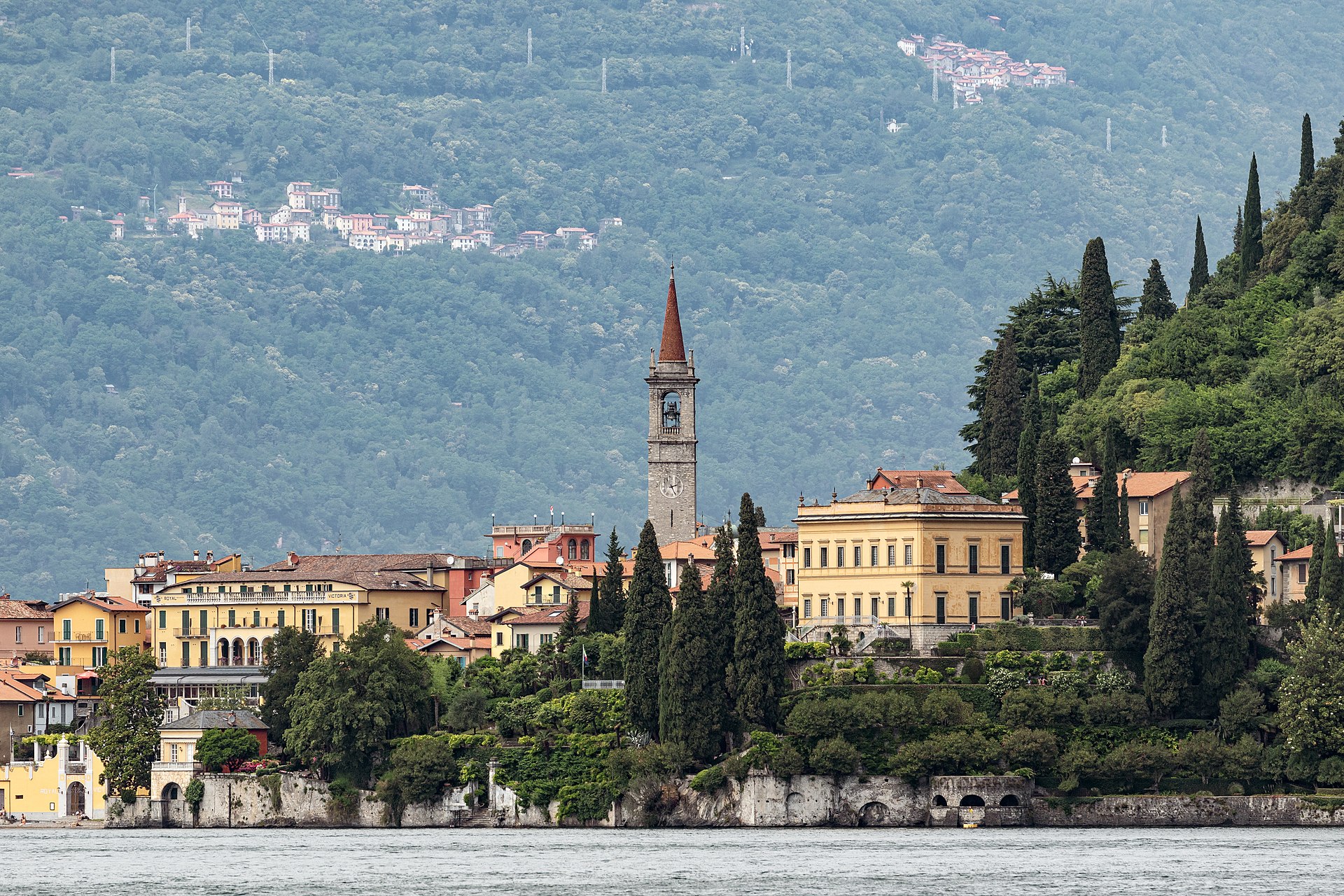
On the west shore, this is the most lived-in of the three, with a proper town square, real shops, and the best bus connections (it’s a hub for routes up to the Alto Lago and over toward Lake Lugano). Walkers like it because trails head straight up into the hills behind town. If you want somewhere that feels like a working Italian town rather than a film set, Menaggio is it.
The villas
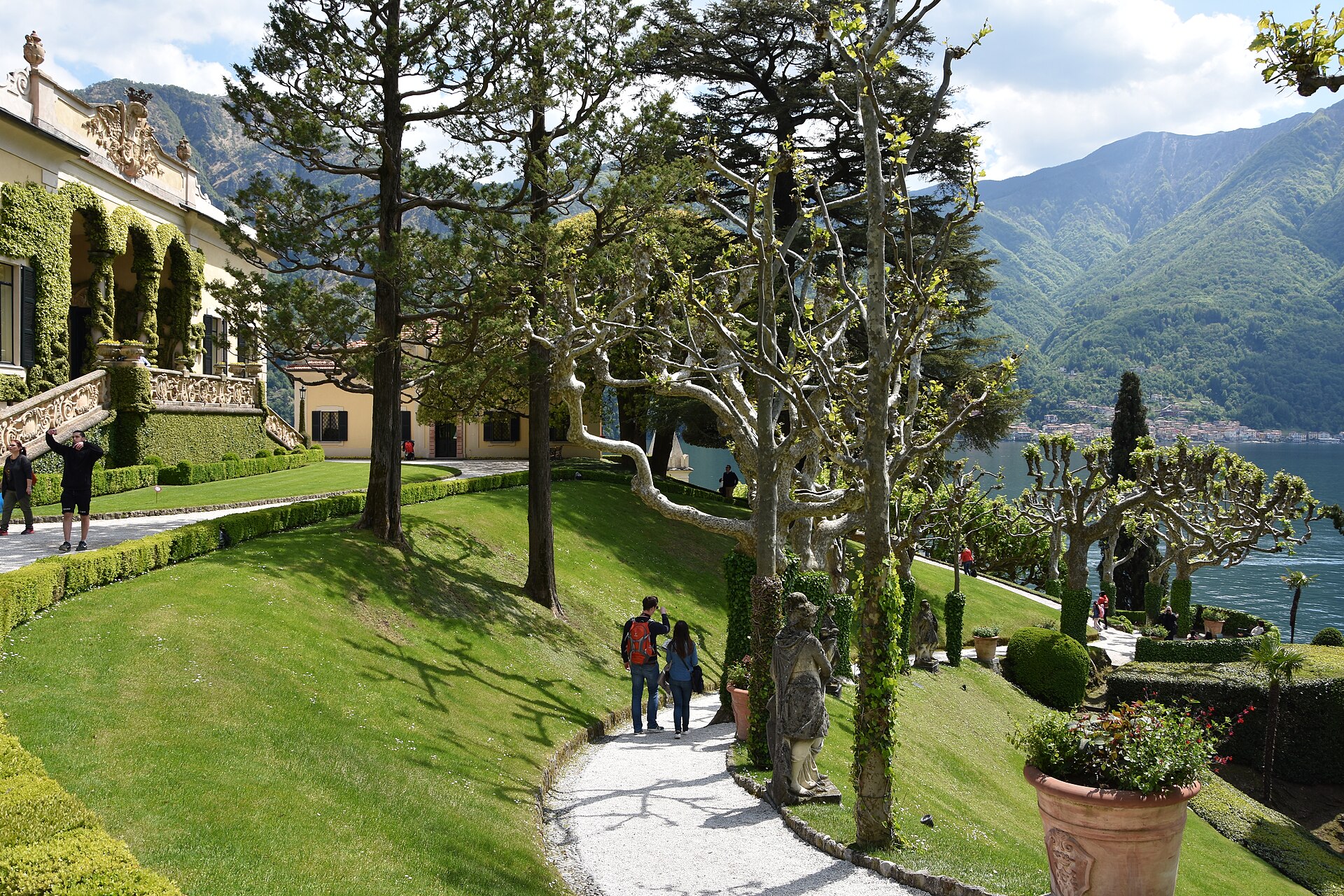
Como’s villas are the reason half of you are here, so know the headline four.
Villa del Balbianello, on a promontory at Lenno (Ossuccio), is the showstopper: terraced gardens, a columned loggia, and that ivy-draped boat dock you’ve seen in Casino Royale and Star Wars: Attack of the Clones. It’s run by FAI, the Italian heritage trust. You reach it by a short walk from Lenno or a quick water-taxi shuttle, and it’s worth timing your day around. Check days and hours on the FAI site before you go, as it isn’t open daily.
Villa Carlotta, at Tremezzo on the west shore, pairs a museum with a 20-acre botanical garden that’s most famous for its azaleas and rhododendrons exploding into colour in late April and May. The jetty is steps from the entrance, so it’s an easy ferry stop. Villa Melzi, at Bellagio, gives you English-style lakeside gardens with statues and a little Japanese pond, an easy stroll from the centre. And Villa Olmo, back in Como city, is a grand neoclassical pile on the waterfront whose gardens you can wander for free, with paid exhibitions inside when they’re on.
A small reality check on opening times and tickets: every one of these sets its own schedule, often closes part of the week or the season, and changes prices. I’m deliberately not quoting figures that’ll be stale by the time you read this. Pull up each villa’s own website a week out and confirm.
Como city and the Brunate funicular
Don’t write off Como city as just the train arrival. The lakefront has been reopened and freshened up, the Duomo (one of Italy’s last Gothic cathedrals, with that pale dome) anchors the old town, and the pedestrian centre feels like a real place with locals doing their shopping rather than a postcard set. Como is also where the lake’s silk trade lives, so the scarf shops are the genuine article.
The thing you must do here: ride the funicular up to Brunate. It’s been running since 1894, climbs a wall-like 55% gradient in about seven minutes, and delivers a balcony view over the whole southwest arm of the lake. Walk fifteen minutes further up to Volta’s lighthouse (Faro Voltiano) for an even wider panorama toward Switzerland. Trains run every fifteen minutes from early morning to late evening. On a clear day it’s the best-value view on the lake.
Things to do beyond the towns
Once you’ve got the towns and villas sorted, the lake opens up.
Take a boat just to take a boat. Even if you’re not going anywhere in particular, a short cruise (the one-hour Como basin loop past Cernobbio, Moltrasio and Torno is cheap and easy) is the single best way to actually see the lake. The shoreline only makes sense from the water.
Walk the Greenway del Lago. This is a roughly 10 km signposted footpath along the west shore through the Tremezzina, linking villages, churches and villa gates on old mule tracks and lanes. You can do segments of it between ferry stops, which makes it the perfect car-free half-day: boat out, walk a stretch, boat back.
Swim. Yes, you can. The lake is clean and there are public lidos and swimming spots, including beaches near Cernobbio and around Menaggio and Lecco. Summer water is cool but very swimmable. Pack a suit even if you didn’t plan on it.
Go up high. Beyond Brunate, the hills behind Menaggio, Bellagio and Varenna are laced with trails, from gentle viewpoint loops to proper mountain hikes. Local guides run trips matched to your fitness if you want company and route-finding.
Eat the lake. The food here is mountain-and-lake, not coastal Italian. Look for risotto con pesce persico (perch risotto), missoltini (sun-dried lake shad), polenta, and cassoeula (a pork-and-cabbage stew for cold days). It’s heartier and less famous than southern Italian cooking, and it’s good. For the wider context of regional Italian eating, the Italy food and wine travel guide goes deeper.
Channel the films. If the budget stretches, hiring a classic wooden speedboat with a skipper for an hour is the most cinematic thing you can do on the lake, gliding past villa fronts you can’t see from land. Self-drive motorboats (no licence needed for the small ones) are a cheaper, sillier, very fun alternative.
When to go and how long to stay
Season. Late April through May is my favourite stretch: the villa gardens are at their peak (Villa Carlotta’s azaleas alone justify a May trip), the weather is warm-ish, and the worst crowds haven’t landed. June and September are the sweet spot for reliable warmth without the full August crush. July and August are hot, beautiful and busy, with the heaviest ferry queues and the Milan weekend exodus piling in; come if you must, but come early each morning. Spring and autumn bring some rain but far more breathing room. Winter is quiet to the point of shuttered, with many hotels and restaurants closed, though the lake keeps the cold mild. For the national picture, see choosing the right season for Italy.
How long. Two full days is the honest minimum to enjoy the central lake without rushing: one for the Bellagio-Varenna-Menaggio triangle and a villa or two, one for Como city, the funicular and a long boat. Three or four days lets you add the Greenway, a hike, swimming, and a slow boat up the quieter Alto Lago. A single day from Milan is doable but tight, and you’ll only scratch the central lake. If Como is one stop on a bigger trip, the day-by-day Italian Lakes plan and the wider Italy itineraries pages help you slot it in.
The practical stuff: car or no car, day trips, where to sleep
Car versus no car. I’ll say it plainly: skip the car. The combination of slow boats, fast SR boats, car ferries, ASF buses and trains covers everything you’ll want to see, and it does so more pleasantly than fighting lakeside traffic and hunting for parking. A car only earns its keep if you’re staying somewhere remote up the Alto Lago or doing a wider road trip through the Alps. For the central lake, it’s dead weight.
Day-trip feasibility. Como city alone makes an excellent day trip from Milan: train down, funicular, waterfront, a basin boat, home by evening. Reaching Bellagio and back in a day is also possible but means committing most of your hours to transit, so pick one central town and don’t try to “do” the whole lake. The step-by-step is in the Lake Como day trip from Milan guide.
Where to base yourself. This deserves its own decision, because it shapes the whole trip, and I’ve written it up separately in our Lake Como neighbourhood guide. The quick version: stay on the central triangle (Varenna, Bellagio or Menaggio) for the best of the lake, or in Como city for lower prices, easy train access and a real-town feel. Menaggio wins for buses, Varenna for quiet evenings, Bellagio for the icon factor at a premium. If you’re tacking Como onto time in the city, our guide to accommodation in Milan covers the other end.
How Como compares. If you’re choosing between the northern lakes, Lake Garda is bigger, sunnier and better for families and watersports, while Lake Maggiore is quieter with the famous Borromean islands. Como is the most dramatic and the most fashionable of the three. The Milan and northern Italy travel guide ties the whole region together, and for the country at large there’s the Italy travel guide.
Final thoughts
Lake Como rewards a tiny bit of planning more than almost anywhere I know. Get the upside-down-Y in your head, base yourself on the central triangle, treat the ferries as part of the fun rather than mere transport, and you’ll skip the queues and the stress that trip up everyone who shows up expecting a single tidy lakefront. Two days m
Questions travellers ask
How many days do you need at Lake Como?
Two full days is the realistic minimum to enjoy the central lake without rushing, giving you one day for the Bellagio-Varenna-Menaggio triangle and a villa, and one for Como city, the Brunate funicular and a boat ride. Three to four days lets you add the Greenway walk, a hike, swimming and the quieter northern lake. A single day from Milan works but only scratches the surface.
What’s the best town to stay in on Lake Como?
It depends on your priorities. Varenna is quietest and has its own train station; Menaggio has the best buses and a lived-in feel; Bellagio is the iconic one but pricier and busier; Como city is cheapest with the easiest train access. For the central-lake experience, any of the first three works well. I cover the trade-offs in detail in my dedicated where-to-stay guide, linked above.
How do the Lake Como ferries work?
Navigazione Laghi runs three kinds: slow “ordinary” boats with open decks, car ferries (traghetto) that shuttle the central triangle, and fast SR hydrofoils that carry a surcharge. Buy a Free Circulation day pass if visiting several towns, or tap a contactless card via NaviTap on most boats. Always check the last return time, and confirm current fares on the official site.
Do you need a car at Lake Como?
No, and I’d actively recommend against one. The ferries, buses and trains reach every town worth visiting, and the lakeshore roads are narrow with scarce, expensive parking that clogs on summer weekends. Many visitors rent a car, use it once, then leave it parked. A car only makes sense for remote stays up the northern lake or a wider Alpine road trip.
When is the best time to visit Lake Como?
Late April and May are my pick, with the villa gardens at their peak and crowds still manageable. June and September give reliable warmth without the August crush. July and August are hot and busy with the longest ferry queues, so board early. Winter is mild but very quiet, with many places closed for the season. Spring and autumn bring some rain but far more space.
How do you get from Milan to Lake Como?
By train, easily. Milano Centrale to Como San Giovanni takes about an hour; Milano Cadorna to Como Nord Lago is slower but drops you right by the ferries. For the central lake, take a Milano Centrale train toward Lecco or Tirano and get off at Varenna-Esino, a short walk from the dock. From Malpensa airport it’s roughly 1 to 1.5 hours with a change.
Which villas are worth visiting on Lake Como?
The headline four: Villa del Balbianello at Lenno (the cinematic one, run by FAI), Villa Carlotta at Tremezzo (botanical gardens, azaleas in May), Villa Melzi at Bellagio (lakeside gardens), and Villa Olmo in Como city (free-to-wander grounds). Each sets its own opening days and ticket prices and may close part of the week or season, so check each villa’s own website before you visit.
Can you swim in Lake Como?
Yes. The lake is clean and there are public lidos and beaches, including spots near Cernobbio, Menaggio and Lecco. Summer water is cool but very swimmable, usually most comfortable from June through September. Some lidos add pools, sun loungers and bars. Pack a swimsuit even if swimming wasn’t part of the plan, because on a hot day you’ll want it.