Sicily Food Guide: Palermo, Catania and Street Food
The first time I ate in Sicily, I made the mistake of treating it like the rest of Italy. It is not the rest of Italy. The food here has been shaped by Greeks, Arabs, Normans, and Spanish in turn, and you taste all of them in a single afternoon.
This Sicily food guide is the map I wish I’d had: what to eat in Sicily, where each dish actually belongs, and how to plan your eating around Palermo, Catania, and the island’s street food so you’re not just chasing a checklist. You’ll get the dishes, the markets, the timing, and a few honest opinions.
It’s for travelers who want to eat like they live here for a week, not photograph a cannoli and leave.
The quick map: what to eat in Sicily and where
Before the deep dive, here’s the table I keep in my head. Sicily is big, and the same dish can have a different name, shape, or recipe depending on which coast you’re standing on. Eat things where they belong and they taste better. That’s not romance, it’s just freshness and pride.
| Dish | What it is | Where to eat it | Sweet/savory & price feel |
|---|---|---|---|
| Arancina / Arancino | Fried rice ball, ragù or butter filling | Palermo (round) & Catania (cone) | Savory, cheap (~€2–4) |
| Pasta alla Norma | Pasta, fried eggplant, tomato, ricotta salata | Catania (its home) | Savory, mid (~€10–14) |
| Pasta con le sarde | Pasta with sardines, fennel, raisins, pine nuts | Palermo & the west | Savory, mid |
| Sarde a beccafico | Stuffed, rolled sardines, sweet-sour | Palermo | Savory, small-plate |
| Couscous di Trapani | Fish couscous, Maghreb roots | Trapani & San Vito Lo Capo | Savory, mid |
| Pani ca’ meusa | Spleen sandwich on a sesame bun | Palermo street stalls | Savory, cheap (~€3–4) |
| Panelle e crocchè | Chickpea fritters & potato croquettes | Palermo friggitorie | Savory, very cheap |
| Sfincione | Thick, spongy Palermo “pizza” | Palermo bakeries | Savory, cheap |
| Stigghiola | Grilled seasoned intestines on a skewer | Palermo & Catania streets | Savory, cheap |
| Cannolo | Fried shell filled with sweet ricotta | Island-wide; filled to order | Sweet, cheap (~€3) |
| Cassata | Sponge, ricotta, marzipan, candied fruit | Palermo | Sweet, mid |
| Frutta martorana | Marzipan shaped and painted as fruit | Palermo | Sweet, by weight |
| Granita + brioche | Semi-frozen ice with a knotted brioche | Catania (coffee), Messina, east | Sweet, cheap (~€3–5) |
| Pistachio di Bronte | Bronte’s prized green pistachio, in everything | Etna’s slopes; island-wide | Both; premium |
Keep that nearby. The rest of this guide is the long version, with the why and the when.
Why Sicilian food tastes like nowhere else in Italy
You can’t understand what to eat in Sicily without understanding who cooked here first. The Greeks brought olives, grapes, and honey. Then came the Arabs in the 9th and 10th centuries, and they changed everything: rice, citrus, almonds, pistachios, sugarcane, saffron, cinnamon, raisins, pine nuts, the whole sweet-and-savory instinct that runs through the island’s cooking. The Normans and Spanish layered more on top.
That history is not a museum. It’s on the plate. The raisins and pine nuts in a savory pasta, the marzipan fruit in a pastry window, the cone of fried rice that exists because someone brought rice to a Mediterranean island a thousand years ago: that’s the Arab kitchen, still working.
I find it helps to taste with that in mind. When a dish swings sweet where you expect savory, that’s not a mistake. That’s Sicily. If you want the wider Italian context for how regional this country gets, the what to eat in Italy overview sets the stage, and the broader Italy food and wine travel pillar ties the regions together.
The arancina vs arancino war (and which side I land on)
Let’s get the fight out of the way, because you’ll walk into it within an hour of landing.
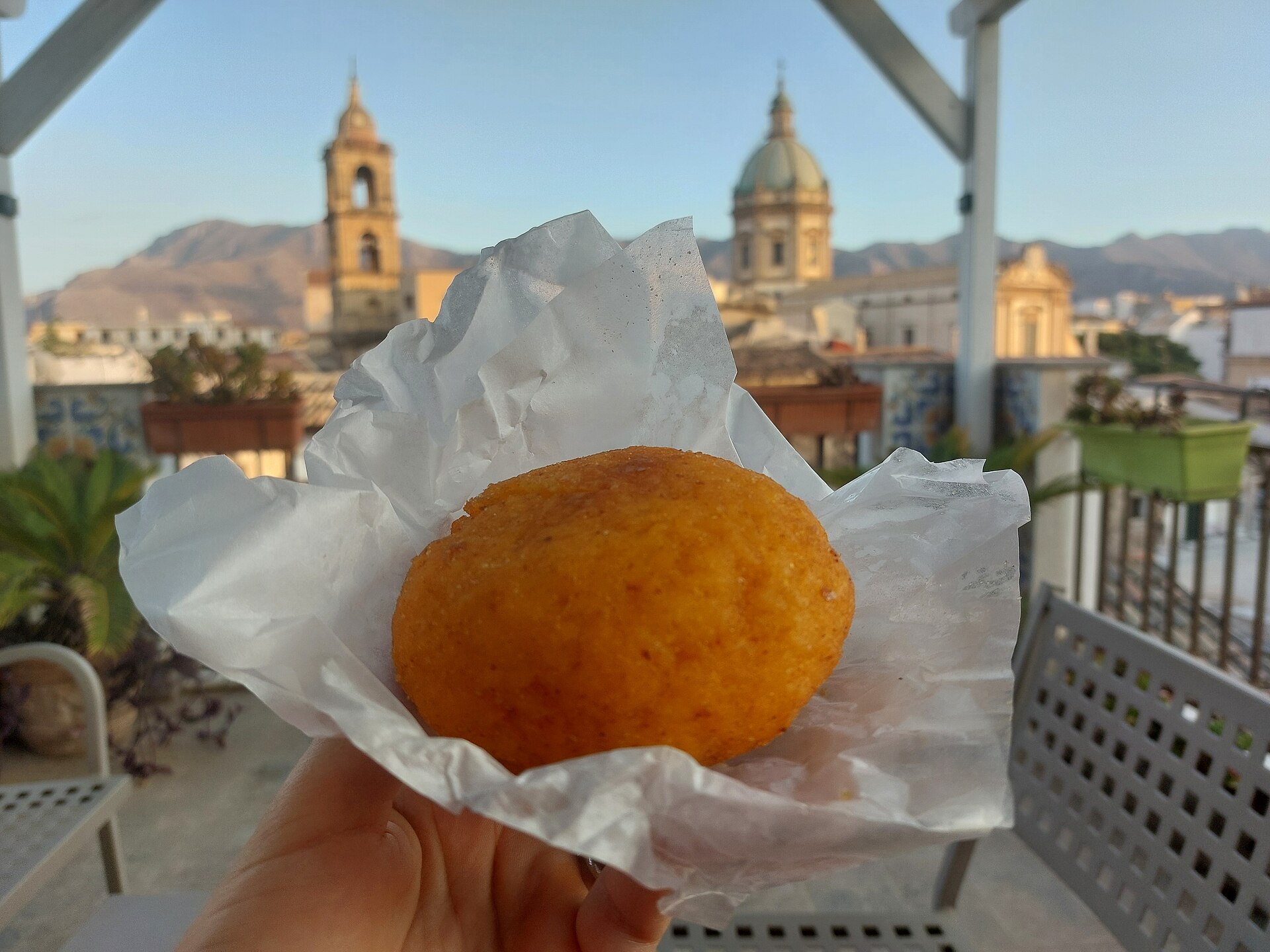
In Palermo and the west, it’s arancina — feminine, round, proud, often filled with ragù or butter and ham. In Catania and the east, it’s arancino — masculine, frequently cone-shaped (some say to echo Mount Etna), defended just as fiercely. People will tell you their version is the only correct one. They are both wrong to be so sure, and the language settles it: the Accademia della Crusca, Italy’s authority on the language, has effectively ruled that both forms are acceptable.
The grammatical case for arancina is clean: the orange fruit is arancia (feminine), so the little orange-shaped rice ball is arancina. Catania’s case is historical: an 1857 Sicilian-Italian dictionary recorded the masculine arancinu, and in Sicilian dialect the Italian masculine -o becomes -u. Both sides have a real argument.
My honest take after eating dozens of them on both coasts: the name is a draw, but the cone in Catania is the more fun object to eat — you bite the point and work down, and the ragù versions there are gloriously messy. In Palermo I default to the round butter-and-ham one (al burro) as a morning snack. Order it however the locals around you are ordering it and you’ll be fine. Just don’t start the argument at the counter; let them start it.
Either way, eat one fresh and hot. A reheated arancina is a sad thing. Look for high turnover.
What to eat in Catania: Norma, the Pescheria, and granita done right
Catania sits under Etna, and the city eats like it. The volcanic soil grows intense vegetables, and the sea is right there.
Pasta alla Norma
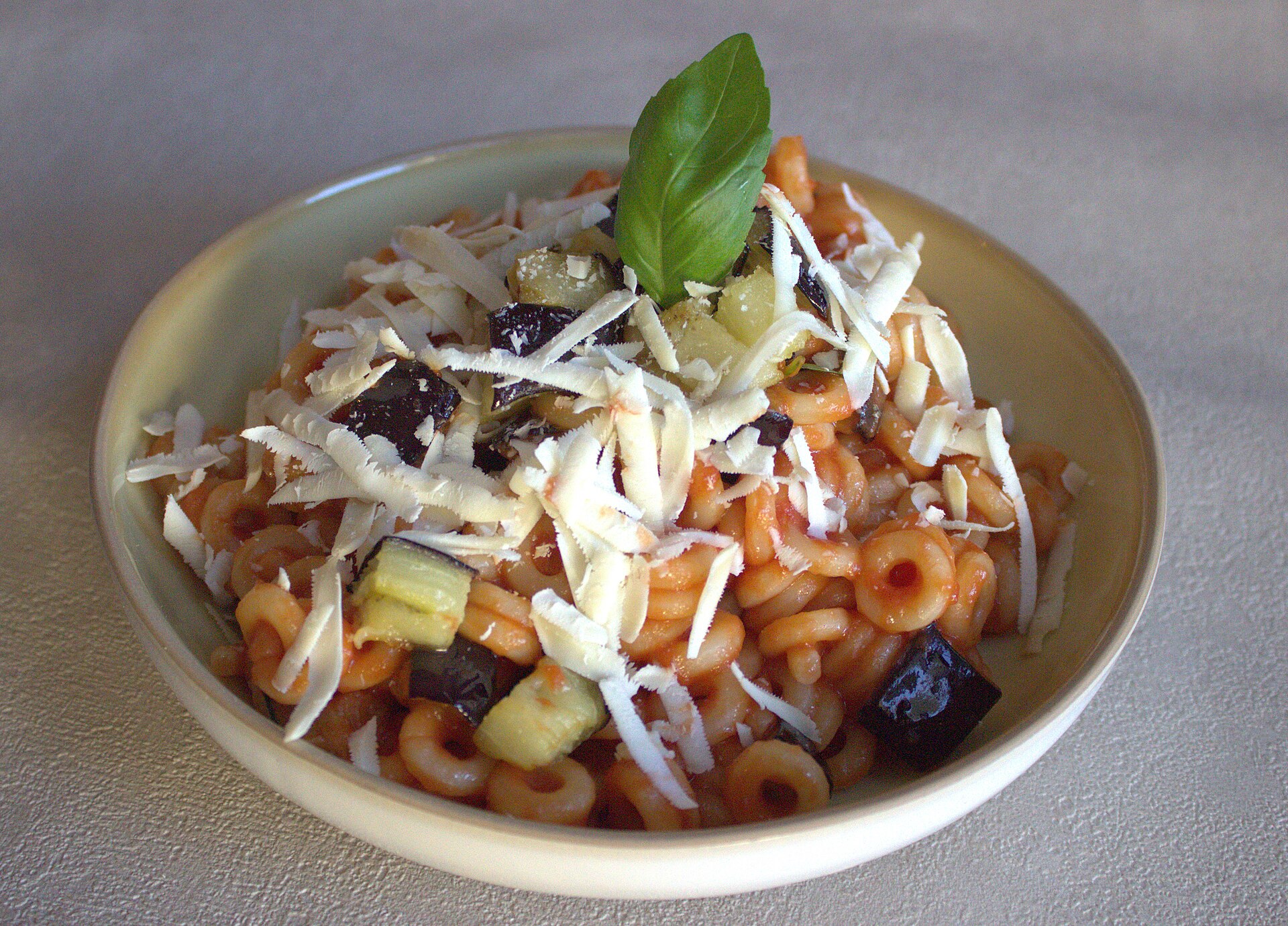
This is Catania’s dish, full stop. Pasta (usually a short shape that catches sauce), a proper tomato sauce, slices of eggplant fried until silky, grated ricotta salata, torn basil. The story goes it’s named for Norma, the opera by Bellini, Catania’s own composer — a local declaring the dish as perfect as the music. Eat it in late summer when the eggplant is at its peak and you’ll understand the fuss. Around €10–14 in a sit-down trattoria as of 2026.
Do not accept a Norma drowning in cheese or swimming in oil. The eggplant should be tender, not greasy; the ricotta salata is a salty, dry counterpoint, grated over the top, not melted in.
La Pescheria fish market
Catania’s morning fish market is the city’s beating heart, and it’s free theater. Tables piled with swordfish, tuna, sardines, sea urchins, octopus; vendors shouting prices; the floor wet, the energy total. It runs roughly 7am to 2pm, every day except Sunday. Go before noon, watch, then eat seafood at one of the little spots that ring the market and cook what was just landed.
Swordfish (pesce spada) is the one to order on the east coast, typically May to September, best in high summer. Grilled simply, or done alla siciliana with tomatoes, capers, and olives.
Granita and brioche: Catania’s breakfast flex
Here’s the etiquette that surprises people most: in Sicily, granita is breakfast. Not dessert. Breakfast.
Granita is semi-frozen, somewhere between a sorbet and shaved ice, made from fruit, coffee, or almond. You eat it with a brioche col tuppo — a soft, sweet, enriched bun with a little knot of dough on top (the tuppo, named for the old bun-shaped hairstyle). You tear the brioche, dunk it, and alternate bites and spoonfuls.
Catania is the capital of coffee granita, served darker and more bitter, in a glass rather than a metal cup, and a good one with brioche is, no exaggeration, one of the best breakfasts in Europe. The locals’ window is about 7:30 to 9:30am, when the bars are busy, the granita is fresh, and the brioche just came out of the oven. In the heat of July you can absolutely have a second one at 4pm and no one will judge you.
Almond (mandorla), lemon (limone), and pistachio are the other classics. Mulberry (gelso) when it’s in season is the one to chase.
Palermo street food: the best eating on the island
If you only have time to eat seriously in one Sicilian city, make it Palermo. Palermo street food is the island’s masterpiece — cheap, ancient, slightly unhinged, and rooted in the same poor-kitchen ingenuity that runs through southern Italian cooking generally. (For the mainland cousin, Naples food guide covers a city with a similarly fierce street-food soul.)
You eat this food standing up, with your hands, from a stall or a hole in the wall, and you eat it among Palermitani doing the same.
Pani ca’ meusa (the spleen sandwich)
The famous one. A soft sesame roll (vastedda) loaded with veal spleen and lung that’s been boiled then simmered in lard. You order it schietta (plain, with lemon) or maritata (“married,” with caciocavallo cheese and ricotta). It’s rich, faintly gamey, deeply savory, and it has a backstory in the city’s medieval Jewish butchers. Save it for when you’re genuinely hungry. Around €3–4. This is the dare-dish, and honestly it’s good if you go in willing.
Panelle e crocchè
The gateway street food, and my favorite cheap bite anywhere in Italy. Panelle are thin chickpea-flour fritters, fried crisp, often piled into a roll with a squeeze of lemon. Crocchè (called cazzilli locally) are potato croquettes, soft inside, crackly outside. Get them together in a bun. A couple of euros. The friggitorie around the Capo market do some of the best in the city.
Sfincione
Palermo’s answer to pizza, and a totally different animal: thick, spongy, focaccia-like, topped with tomato, onion, oregano, breadcrumbs, and a little caciocavallo or anchovy. The name comes from a root meaning “sponge,” which is exactly the texture. Bakeries sell it by the slab; it was once a Christmas thing and is now everyday. Cheap, filling, excellent walking food.
Stigghiola
Skewers of seasoned lamb or veal intestine, wrapped, grilled over charcoal with onion and parsley, finished with lemon. You smell the smoke before you see the cart. Eaten plain, no bread. It’s smoky, chewy, primal, and you’ll find the carts on Palermo streets in the evening and at the markets.
The cuoppo and the frittola
A cuoppo is a paper cone of fried things — seafood, panelle, croquettes, whatever’s going — perfect for walking and eating. Frittola is the deep-cut local move: scraps of veal cooked in their own fat, kept warm under a cloth, scooped blind by the vendor into a cone or roll. You’ll mostly find it at Ballarò. It is not for everyone. That’s part of its charm.
The markets: Ballarò, Capo, Vucciria, and La Pescheria
The markets are where Sicilian food makes the most sense, because you see the raw materials and the street food in the same fifty meters. Treat them as the main event, not a side trip.
Ballarò (Palermo) is the oldest and most genuinely local, a maze in the Albergheria quarter that traces back to the Arab period. Come for the abbanniate — the singsong cries of the vendors — and the frittola. Busiest in the morning.
Il Capo (Palermo) runs along Via Porta Carini and is where Palermitani shop without the tourist crush. The friggitorie here are reason enough to come; the panelle and crocchè are top-tier.
La Vucciria (Palermo) is quieter and a bit faded by day, then flips at night into one of the city’s best open-air eating-and-drinking scenes. Go after dark for the atmosphere and the grilled stuff.
La Pescheria (Catania) is the great fish market described above — go in the morning, watch the swordfish get butchered, eat seafood right there.
A few market rules I follow: go before 1pm for the freshest fried food, carry cash for the small stalls (cards are creeping in but aren’t universal), pick stalls with a line of locals, and don’t be shy. The vendor shouting at you is being friendly, mostly.
The sweets: cannoli, cassata, marzipan, and granita
Sicilian pastry is its own civilization, and it leans heavily on ricotta, almonds, and candied fruit — again, the Arab inheritance.
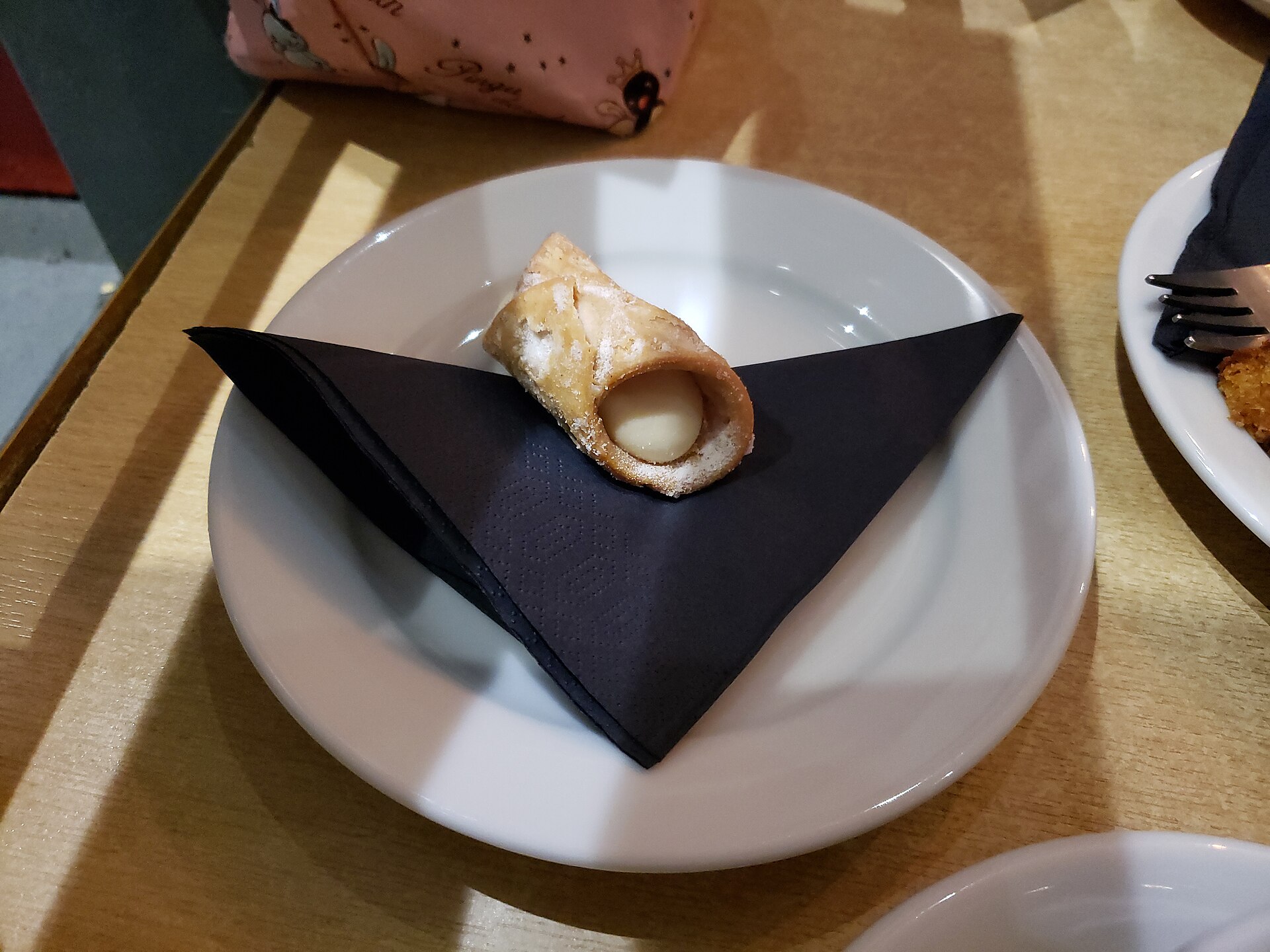
Cannoli are the icon: a crisp fried shell filled with sweetened sheep’s-milk ricotta, the ends often dipped in chopped pistachio or chocolate. The single most important rule in this entire guide: the shell must be filled to order. A cannolo filled hours ago has a soggy shell and has missed the point entirely. If a place has them pre-filled in a tray, walk on. A good one is around €3 and worth crossing town for.
Cassata is the celebration cake — sponge soaked in liqueur, sweet ricotta, a green shell of marzipan, and a riot of candied fruit on top. It originated in Palermo and it is intensely sweet; share one. Beautiful, baroque, not subtle.
Frutta martorana is marzipan sculpted and painted to look uncannily like real fruit — peaches, prickly pears, cherries. It’s traditionally tied to Palermo’s convent kitchens and the November feasts. Buy a small mixed bag by weight from a proper pasticceria; the cheap stuff is just sugar, the good stuff tastes of real almond.
And granita again, because it’s both breakfast and dessert here. Almond granita with brioche on a hot afternoon is, for my money, the most refreshing thing in the Italian south.
Pistachio di Bronte, couscous di Trapani, and the regional specialties worth a detour
Two things make the case for getting out of the two big cities.
Pistachio di Bronte comes from the town of Bronte on Etna’s western slopes, and these intense, deep-green pistachios are widely regarded as among the best in the world. They turn up in granita, gelato, pesto, pastry cream, even sausage. It’s a protected product and genuinely premium — if a “pistachio” gelato is pale and cheap, it’s probably not really Bronte. Pay a little more for the real thing.
Couscous di Trapani is the clearest proof that Sicily faces Africa as much as Italy. On the west coast, around Trapani and San Vito Lo Capo, couscous is fish couscous — steamed semolina with a rich seafood broth and Mediterranean herbs, a recipe born from centuries of exchange with the Maghreb. San Vito Lo Capo throws an international Cous Cous Fest each September that’s been running since 1998. If your route swings west, build a meal around it.
Other regional notes worth ordering when you see them: sarde a beccafico (sardines stuffed with breadcrumbs, raisins, and pine nuts, rolled and baked — sweet-savory, very Palermo), caponata (the sweet-sour eggplant relish, the most quintessentially Sicilian vegetable dish), busiate alla Trapanese (spiral pasta with an almond-tomato-basil pesto), and pesce spada up and down the coasts.
If you’re mapping all this onto an actual route, the Sicily travel guide covers how to move between Palermo, Catania, Trapani, and the rest, and the Italy itineraries hub helps you slot Sicily into a longer trip. For getting around the island itself, Italy transportation has the trains-versus-car reality.
What to drink: Marsala, Etna wine, and almond milk
Sicily drinks as distinctively as it eats. Marsala, the fortified wine from the west, is far more than the cooking wine you know — a good aged dry Marsala is a serious aperitivo or after-dinner pour, and tasting it at the source reframes it completely. On the other coast, the Etna wines — reds from Nerello Mascalese, mineral whites from Carricante — are some of Italy’s most exciting, grown on volcanic soil at altitude. Sicily is one of the country’s great wine islands; the Italy wine regions guide puts it in national context.
Non-alcoholic, look for latte di mandorla (almond milk), fresh and barely sweet, the perfect foil to the heat. And coffee, of course, taken Sicilian-fast at the bar — the Italian coffee guide covers how to order without looking like a tourist.
How to use this Sicily food guide: a loose eating day
You don’t need a rigid schedule, but a rhythm helps you hit things at their best.
Morning (7:30–9:30): Granita and brioche, or a coffee and a fresh arancina. This is the locals’ window — fresh granita, warm brioche.
Late morning (before 1pm): Hit a market — Ballarò or Capo in Palermo, La Pescheria in Catania. Graze the friggitorie: panelle, crocchè, a cuoppo. This is peak fried-food freshness.
Lunch: A sit-down plate of the city’s signature pasta — Norma in Catania, sarde or con le sarde in Palermo — or seafood near the Pescheria.
Afternoon: Another granita if it’s hot. A cannolo filled to order. Wander.
Evening: Street food crawl (stigghiola, sfincione, a spleen sandwich if you’re brave), or a proper trattoria dinner with Etna or Marsala. La Vucciria after dark for the scene.
Don’t try to eat everything in one city in one day. Sicilian eating rewards patience and an empty stomach far more than ambition.
Avoiding tourist traps
Most Sicilian food is honest and cheap, but the usual rules apply, especially near the big sights. Skip places with photo menus and a tout outside, be wary of “fixed tourist menus,” and treat pre-filled cannoli and reheated arancini as red flags. Follow the lines of locals — a stall three deep with Palermitani at noon is telling you everything. The wider tourist trap restaurants in Italy guide goes deeper on the tells, and they all apply here.
Final thoughts
Sicily is the one place in Italy where I tell people to plan the trip partly around the eating, not the other way round. The food carries three thousand years of history and almost none of the pretension, and it’s astonishingly cheap for how good it is.
Eat the arancina hot, the cannolo filled to order, and the granita before 9am. Hit the markets before lunch and let the vendors shout at you. Do that for a week and you’ll leave understanding Sicily better than any monument could teach you. Then go figure out the Italy season by season for your return — because you’ll want one.
Questions travellers ask
What food is Sicily most famous for?
If you forced a shortlist, it’d be four things: arancini (fried rice balls), pasta alla Norma (eggplant and ricotta salata), cannoli (ricotta-filled shells), and granita with brioche. Those four capture the island’s range — street food, a signature pasta, a famous sweet, and a frozen ritual. Pistachio di Bronte and Palermo’s street food deserve honorable mention.
Is Sicilian food spicy?
Not in the chili-heat sense. Sicilian cooking is bold and aromatic rather than hot, built on the Arab pantry — saffron, cinnamon, raisins, pine nuts, citrus, and that signature sweet-and-savory swing. The closest thing to “spicy” is pecorino pepato, a sheep’s cheese studded with black peppercorns. If you’re sensitive to heat, you have nothing to worry about here.
Should I say arancina or arancino?
Both are correct — Italy’s own language authority says so. In Palermo and western Sicily it’s arancina (round); in Catania and the east it’s arancino (often cone-shaped). The simplest move is to match whichever city you’re standing in, order it however the locals at the counter do, and stay out of the argument. The rice ball tastes the same either way: excellent, when fresh.
Can you really eat granita for breakfast in Sicily?
Yes, and you should. Granita with a brioche col tuppo is a classic Sicilian breakfast, especially in summer and especially on the east coast. The local window is roughly 7:30 to 9:30am, when the granita is freshest and the brioche is warm. You tear the brioche, dunk it, and alternate. Coffee, almond, and lemon are the breakfast flavors.
What is the difference between Palermo and Catania food?
Palermo is the street-food capital — spleen sandwiches, panelle, sfincione, sarde a beccafico, plus pasta con le sarde and the great markets. Catania, under Etna, leans on volcanic vegetables and the sea: pasta alla Norma is its dish, the Pescheria is its fish market, and it’s the home of intense coffee granita. Both are essential; they eat differently.
How much should street food cost in Sicily?
It’s some of the best-value eating in Italy. As of 2026, a stuffed arancina runs roughly €2–4, a panelle or crocchè roll a couple of euros, a spleen sandwich around €3–4, a cannolo about €3, and a granita with brioche around €3–5. A genuinely filling street-food lunch — a sandwich, a fried thing, and a drink — lands near €5–8. Carry cash for the small stalls.
What is the best market to visit in Sicily?
For street food and atmosphere, Ballarò in Palermo is the oldest and most local, with Il Capo close behind for its friggitorie. La Vucciria comes alive at night. In Catania, La Pescheria fish market is unmissable for the morning spectacle and just-landed seafood. Go before 1pm for the freshest fried food, and bring cash.
Is Sicilian street food safe to eat?
Generally yes, with common sense. Stick to busy stalls with high turnover, where food is cooked or fried fresh in front of you — that’s most of them. The offal dishes (spleen, frittola, stigghiola) are traditional and safe at established vendors; the only real risk is to your comfort zone. Avoid anything sitting out lukewarm, and you’ll be fine.