Southern Italy Itinerary: Naples, Amalfi, Puglia and Sicily

Southern Italy Itinerary: Naples, Amalfi, Puglia and Sicily
The south rewards you differently than the north. There is no high-speed rail corridor whisking you between cities every forty minutes. The roads narrow. The towns empty out at midday. The pizza is better. The pace is — once you stop fighting it — the whole point.
The short answer: A focused southern Italy itinerary runs Naples (2 nights) → Sorrento/Amalfi Coast (3 nights) → Matera (1 night) → Puglia: Alberobello/Valle d’Itria (2 nights) → Lecce/Salento (2 nights) → Sicily: Palermo or Catania/Taormina (3–4 nights). That is 13–14 days and covers the south’s defining landscapes, food cultures, and UNESCO heritage without feeling rushed. It requires a rental car from Naples southward — more on that below.
This guide is for people who already know they want the south: slower coasts, ancient cave cities, trulli dotting the olive groves, and Sicilian street food that has nothing to do with anything north of Rome. If you are building a first Italy trip that still includes Rome, Florence, and Venice, the 2-week Italy itinerary or 3-week Italy itinerary or the Italy honeymoon itinerary might be better starting points. The full guide to planning a trip to Italy covers the north-to-south picture.
At a Glance: The Southern Italy Route
| Region | Key Stops | Recommended Nights |
|---|---|---|
| Naples & Campania | Naples, Pompeii, Herculaneum | 2 |
| Amalfi Coast | Sorrento, Positano, Ravello, Amalfi | 3 |
| Basilicata | Matera (Sassi cave district) | 1–2 |
| Puglia: Valle d’Itria | Alberobello, Locorotondo, Polignano a Mare | 2–3 |
| Puglia: Salento | Lecce, Gallipoli, Otranto | 2 |
| Sicily | Palermo or Catania, Taormina, Agrigento | 3–4 |
| Total | 13–16 nights |
You can compress or expand any segment. The variations section below gives three focused sub-routes for shorter trips.
The Main Itinerary: 13–14 Days in Southern Italy
Day 1–2: Naples
Fly into Naples (NAP). Do not rush through this city. Naples is loud, chaotic, occasionally aggravating, and one of the most alive places in Italy. The historic centre — a UNESCO World Heritage Site — is a vertical stack of Greek, Roman, Spanish, and Baroque history in the space of a few walkable kilometres.
Eat pizza on day one. Not because it is a cliché but because Neapolitan pizza is genuinely different here: the crust chars slightly at the rim, the centre stays soft and almost wet, the tomato is San Marzano from the volcanic plains south of the city. A margherita at a place like Di Matteo or Gino Sorbillo on Via dei Tribunali costs around €5–7 and is worth every cent. For deeper context on the city and its coast, the Amalfi Coast and Naples guide covers the full picture.
On day two, take the Circumvesuviana commuter train south to Pompeii (around 40 minutes from Napoli Centrale, trains run frequently). The archaeological park is large — allow 3–4 hours minimum. You do not need a guide, but the context one provides transforms a pile of stone into a city frozen mid-afternoon in 79 AD. Book your entry ticket in advance at the official site (pompeiisites.org) to avoid the queue. Herculaneum, a shorter walk from the Ercolano station two stops earlier, is smaller and better preserved; if you have to choose, Herculaneum is the one fewer people regret skipping.
Logistics: Pick up your rental car on the morning you leave Naples toward the Amalfi Coast, not on arrival — driving in Naples city is not the place to get used to an unfamiliar vehicle. Most major agencies have downtown and airport offices.
Day 3–5: The Amalfi Coast
Base yourself in Sorrento or, if budget allows, Positano. Sorrento is the more practical choice: the town is larger, parking options exist outside the centre, and the ferry connections to Capri and the coast towns are easy. Positano is more beautiful and more expensive, with very limited parking — if you stay there, park once and leave the car.
The SS163, the main coastal road, is one of the most scenic drives in Europe and also one of the most genuinely harrowing if you meet a tour bus on a blind bend, which you will. Drive it, but drive it in the morning before the buses arrive in numbers, and consider taking the ferry between towns rather than driving the whole stretch repeatedly. The ferry between Positano, Amalfi, and Salerno runs from around March through October.
Spend an afternoon in Ravello — up in the hills, quieter than the coast road towns, with the gardens of Villa Rufolo and views that drop straight down to the sea. It is worth the drive up the hairpin road.
One honest note about the Amalfi Coast: it is extremely crowded from late June through August. If your dates land in those months, book accommodation months ahead and keep your expectations about “quiet” realistic. May, early June, and September are dramatically better.
Day 6: Drive to Matera
The drive from the Amalfi Coast to Matera takes around 3 to 3.5 hours depending on where you start. It crosses from Campania into Basilicata — a region most visitors skip entirely, which is a mistake.
Matera is one of the oldest continuously inhabited settlements on earth. The Sassi — two ancient cave districts, Sasso Barisano and Sasso Caveoso — tumble down a ravine that splits the city, and they look at first like a fever dream: churches carved into the stone, staircases that become streets that become rooftops, cave houses that were inhabited until the 1950s and are now hotels and restaurants. The whole area is a UNESCO World Heritage Site and was a European Capital of Culture in 2019.
One night is a minimum. Two nights lets you see it properly — the Sassi at night lit by lanterns, the Murgia plateau across the ravine at sunrise, and the Archaeological Museum (MUSMA) with enough time. If you stay in a cave hotel (sassi dwelling converted to accommodation), book early; there are not many of them and they fill quickly.
Driving note: Matera has a ZTL (Zona a Traffico Limitato) in the centre. Do not drive into the old city. Use the designated parking areas on the rim and walk down. The fines for entering without authorisation are substantial, and the cameras are real.
Day 7–9: Puglia — Valle d’Itria and the Trulli Belt
From Matera to Alberobello is around 75 km — just over an hour. This transition is one of the route’s great pleasures: the landscape opens up into flat agricultural land, grey-green with olive trees, punctuated by trulli — the white conical stone houses that are unique to this part of the world and that, despite appearing in every travel photograph, are more strange and beautiful in person than the pictures suggest.
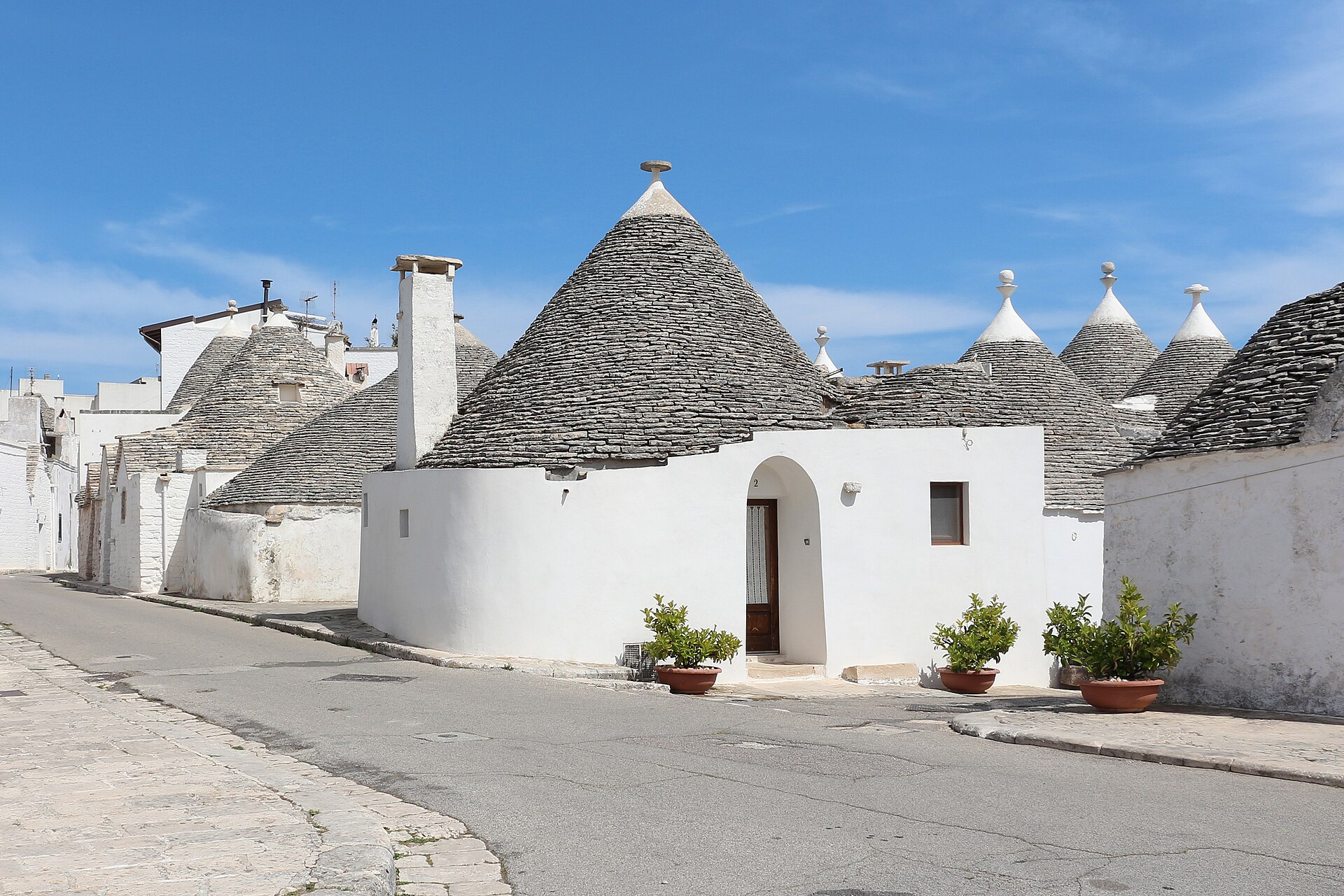
Alberobello is the most concentrated trulli town and the most visited. Go early morning or evening; the daytime crowds around the main Rione Monti district are intense in summer. Stay one night in a trullo if you can find availability — the experience of waking up in a 300-year-old stone cone is not easily replicated elsewhere.
Locorotondo is 10 minutes away: a hill-town of perfect white-washed streets and very good local white wine (DOC Locorotondo) that almost nobody stops in. Have lunch there. Cisternino has the best butcher-restaurants in the valley — the macellerie where you choose your meat at the counter and they grill it for you, on the spot, for prices that feel impossible. Order the bombette (rolled pork parcels with cheese) and do not ask questions.
Polignano a Mare is a 45-minute drive north: a town built on limestone cliffs over a cove, with a beach you reach by descending through a narrow alley. The gelato at Gelateria Polignano is famous, and rightly so. Monopoli nearby has a working port, a medieval old town, and a more local atmosphere than the trulli towns.
Base yourself somewhere in the Valle d’Itria — Alberobello, Cisternino, Locorotondo, or a masseria (farm estate) between them — for two nights, and do day trips by car to Polignano, Monopoli, and Ostuni (the blindingly white hill town visible for miles across the flatlands).
Puglia food note: The cuisine here is different from Naples and different again from Sicily. Orecchiette pasta with cime di rapa (broccoli rabe) is the regional staple and it is worth ordering at every opportunity. Fresh burrata from Andria. Focaccia barese — thick, olive-oiled, dimpled with olives and cherry tomatoes — from a bakery, eaten standing up. The Puglia travel guide goes deeper on the food and the towns.
Day 10–11: Lecce and the Salento Peninsula
Drive south from the trulli belt to Lecce — around 1.5 hours. Lecce is sometimes called “the Florence of the south,” which undersells it; it has its own thing entirely. The baroque architecture here is carved from a soft local limestone called pietra leccese that lets sculptors go to extremes — the façades of Santa Croce church and the cathedral are almost hallucinatory in their detail.
Lecce is also a proper city with a university, good restaurants, and a nightlife that runs late even by Italian standards. Eat pasticciotto (a shortcrust pastry filled with custard cream) for breakfast. Find it in any bar in the centre.
From Lecce, the Salento peninsula extends south — Italy’s heel. The Adriatic side has some of the most intensely blue water in the country: Otranto, Porto Badisco, Santa Maria di Leuca at the very tip. The Ionian side (toward Gallipoli) has broader sandy beaches. Gallipoli old town sits on a small island connected to the mainland by a bridge and has a beautiful baroque cathedral and a fish market worth visiting at dawn.
Two nights based in Lecce lets you see the city properly and drive the peninsula on a day trip. If your priority is beach time, base in Gallipoli instead and use it as your coast base.
Day 12–14: Sicily
Getting to Sicily from Puglia involves a long drive down through Calabria — around 4.5 to 5 hours from Lecce to Villa San Giovanni at the toe of the boot, then a short ferry crossing (around 20–25 minutes) across the Strait of Messina to Messina. The ferry is continuous and takes vehicles; check Caronte & Tourist or Bluferries for current schedules and prices (as of 2026, both run regular services year-round, but confirm at caronte.it or bluferries.com). The full crossing from Lecce to Messina, including ferry, is around 6 hours driving — do it in a day with an early start, or break it overnight in Calabria. Our guide to Italy’s ferries explains how and when to book the crossing.
Alternatively, fly: Palermo (PMO) and Catania (CTA) both receive direct flights from Naples and Bari, and a Puglia → fly → Sicily combination avoids the long Calabrian drive entirely. If your rental car agreement allows cross-regional travel (confirm before you book — some budget agencies restrict this), drive. If not, fly.
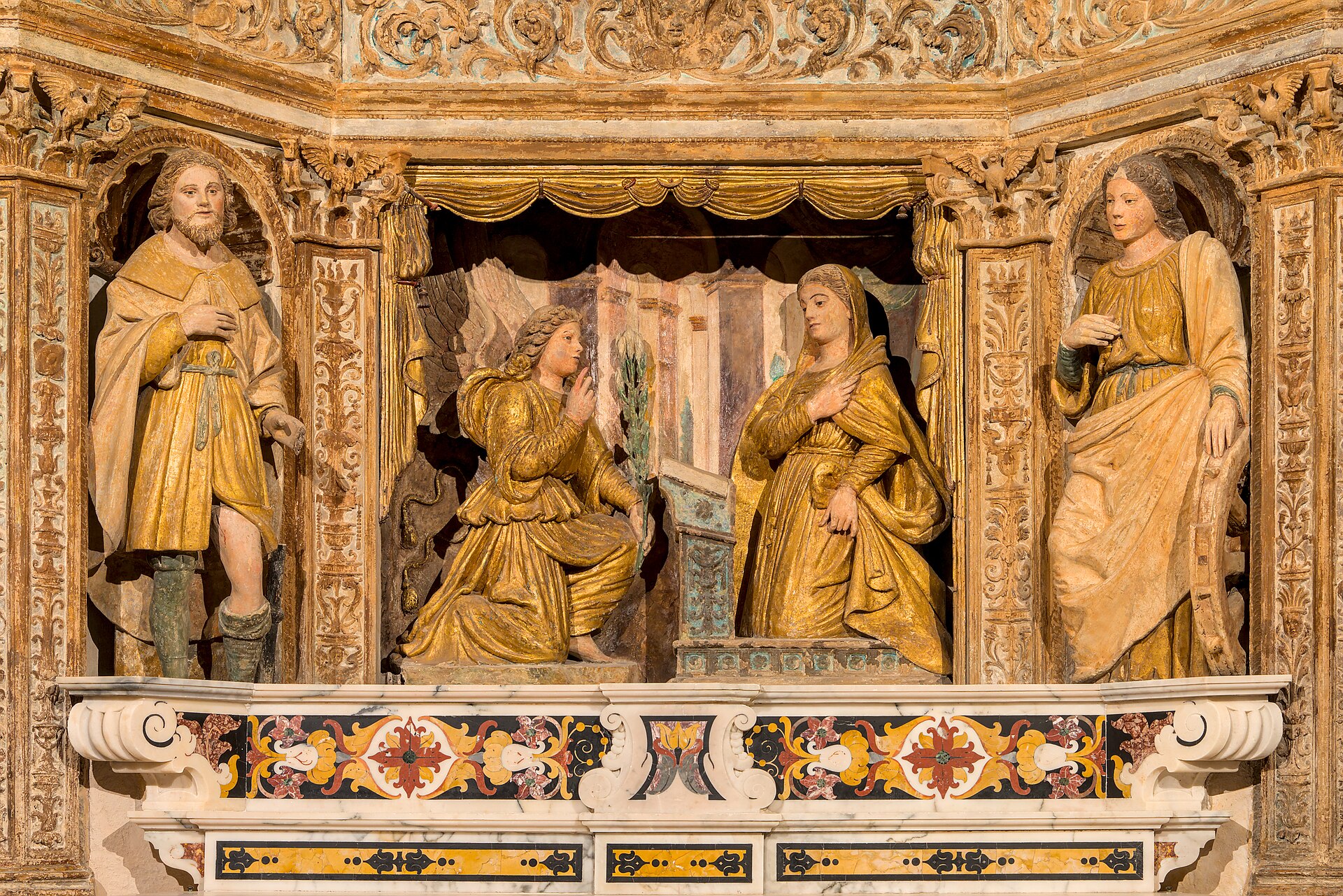
Sicily deserves its own trip. Three or four days only scratches the surface, but it is enough to get a real sense of the island’s distinctive character — the Arabic-Norman architecture of Palermo, the Greek temples at Agrigento (allow a full day), the hill town of Taormina with its ancient Greek theatre suspended over the sea and the shadow of Etna behind it.
If you fly into Palermo: Start in the Ballarò or Capo street markets (the street food here — arancine, panelle, sfincione — is a full meal eaten walking). Drive east through the interior or along the northern coast through Cefalù, then Taormina and the base of Etna for the final nights.
If you fly into Catania: Taormina first (40 minutes north), then a day on or around Etna (cable car to around 2,500 metres; the crater rim hike requires a guide and is weather-dependent), then west.
Three nights is tight for Sicily — if you can squeeze four, do it. Fly home from Palermo or Catania. For the full picture, the Sicily travel planning guide covers the island in detail.
Variations: Shorter Southern Italy Trips
Not everyone has 13 nights. Here are three focused sub-routes that work as standalone trips.
Variation 1: Campania + Puglia (10 days)
Skip Sicily. This is a cleaner trip for people who want depth over breadth. Naples (2 nights) → Amalfi Coast (3 nights) → Matera (1 night) → Valle d’Itria (2 nights) → Lecce (2 nights). End with a flight from Brindisi, which is well-connected and much calmer than Bari airport. This variation has the most coherent driving logic — you move southeast in a single arc.
Variation 2: Campania + Sicily (10 days)
Skip Puglia. Fly Naples → Palermo or Catania at the halfway point. Naples (2 nights) → Amalfi Coast (3 nights) → fly to Palermo → northern coast and Cefalù (2 nights) → Taormina/Catania/Etna (3 nights) → fly home. This works well for travellers who are more drawn to dramatic landscape and archaeology than the quieter pastoral pleasures of Puglia. The Sicily food and wine culture is more North African-inflected than anywhere else in Italy.
Variation 3: Puglia + Matera Deep Dive (8–9 days)
Stay in the south-east entirely. Fly into Bari, out of Brindisi. Bari (1 night) → Matera (2 nights, enough time to do it properly) → Alberobello/trulli belt (3 nights) → Lecce (2 nights) → Salento day trips → Brindisi. No Amalfi Coast, no Sicily. This is the slow version — the kind of trip where you eat at the same masseria twice and learn the name of the person who makes the burrata. Excellent for a second southern Italy trip.
Practical Logistics: Car vs. Train in Southern Italy
The south is not set up the same way as the north. This is not a complaint; it is a fact to plan around.
The high-speed rail network (Frecciarossa/Frecciargento) covers Rome → Naples well — that leg is around 70 minutes and runs frequently. Naples to Bari has a direct intercity service (around 3.5 hours), which is reasonable. But Naples to Matera requires a bus or combination; there is no direct train. Matera is not on the main rail network at all — the nearest station with regular service is Bari, 65 km away, and from there a local bus (roughly 1.5–2 hours) connects to Matera. Getting around the Valle d’Itria, the Salento coast, and rural Basilicata by public transport is possible but slow and requires planning that effectively rules out spontaneity.
The honest recommendation: Pick up a rental car in Naples when you leave the city, keep it through Puglia, and drop it at Brindisi or Bari before flying to Sicily (or driving through Calabria if your agreement allows). The SS7 Appian Way through the interior of Puglia is a spectacular drive. The back roads between trulli towns are the whole point.
ZTL zones: Almost every historic centre in the south — Matera, Alberobello, Lecce, Ostuni, Bari Vecchia — has restricted traffic zones with camera enforcement. The fine for entering without a permit can be €100–300 or more. Park outside the historic zone (these parking areas are always signed and usually free or cheap) and walk in. This is not a hardship; the old towns are small and walking them is the right pace anyway.
Driving in the south: The big roads (autostrade, SS16 along the Adriatic coast) are fine. The Amalfi coastal road (SS163) is genuinely difficult — very narrow, oncoming traffic, buses — but manageable with patience. Puglia’s roads are well-surfaced and mostly flat, which is a relief after the cliff roads of Campania. Petrol stations in rural Basilicata can be sparse; do not let the tank drop below a quarter.
Getting to Sicily: The main options are driving through Calabria and taking the car ferry from Villa San Giovanni to Messina (around 20–25 minutes, vehicles welcome, year-round service) or flying. If you drop the car in Brindisi/Bari and fly, you can pick up a new rental in Palermo or Catania. Sicily’s main attractions are spread enough that a car is useful there too, though Palermo, Taormina, and Catania are manageable without one for a short visit.
For a full breakdown of Italian transport options including trains, ferries, and driving rules, the Italy transportation guide is the reference.
When to Go
The best time for a south Italy itinerary is May to early June or September to October. Temperatures are warm but not punishing, the Amalfi Coast has not yet reached its July-August saturation point, and the light in Puglia in late September is extraordinary.
July and August are viable but come with caveats: Amalfi Coast accommodation books months in advance, prices at the coast spike significantly, and some of the smaller inland towns in Puglia and Basilicata feel deserted during August as locals take their own vacations. Sicily in August is very hot (regularly 35°C+) but it is also when many Sicilians are actually at the beach — which gives certain coastal towns a genuine local energy alongside the tourists.
November through March is quieter and cheaper. The south has milder winters than northern Italy — Puglia and Sicily especially. Lecce in February, with its baroque palaces and the streets mostly to yourself, is a genuinely good trip. Some Amalfi Coast hotels close from November to March, so check ahead. For detailed seasonal guidance, the best time to visit Italy page covers the full picture by region.
The Practical Checklist
- Book Pompeii tickets in advance at pompeiisites.org — the queue without a ticket can be 1–2 hours in summer
- Book Amalfi Coast accommodation 3–6 months ahead for June–August travel
- Reserve a sassi hotel in Matera early — there are not many and they fill
- Confirm your rental car agreement allows travel across all regions (Calabria, Sicily if applicable)
- Memorise the acronym ZTL — do not drive inside a red circle with cameras above it
- Check ferry schedules for Villa San Giovanni → Messina if driving to Sicily (caronte.it, bluferries.com)
- Pack light enough to carry your bags — many of these towns have no parking near the door, and the streets are uneven stone
Final Thoughts
The south is the part of Italy that most guidebooks tell you is harder. The trains are less convenient. The roads are more demanding. The towns close at 1 pm and do not reopen until 5. All of this is true, and none of it is a problem if you expect it.
What you get in exchange is the Italy that has not been fully smoothed for tourism: a Matera hotel owner who insists you try the local olive oil before you even see your room, a Cisternino butcher who will not let you leave without trying a second type of bombetta, a Salento beach in September with water so clear you feel slightly fraudulent for having found it. The south is slower, louder, more disorganised, and more generous than anywhere further north.
Plan it carefully, drive it slowly, eat everything.
For the broader Italy picture, start with the Italy travel guide or look at the full Italy itineraries collection.
Questions travellers ask
Do I need a car for a southern Italy itinerary?
For the full route — Naples, Amalfi, Matera, Puglia, Sicily — yes, a car is effectively required for the middle section. Naples and the Amalfi Coast can be managed by train (Circumvesuviana to Sorrento, ferries between coast towns) and Sicily’s main cities are accessible by public transport. But Matera has no train station, and the Valle d’Itria and Salento coast are not practically accessible without a car. Fly into Naples, pick up the car when you leave for the Amalfi Coast, drop it at Brindisi before Sicily.
How many days do I need for the Amalfi Coast?
Three nights is the right amount for most people. One night is not enough to absorb the pace. Four or more nights is excellent if you want to explore beyond the obvious towns — Vietri sul Mare, Furore, Praiano, a boat trip around the coast. Two nights works if you are pressed for time, but you will spend a disproportionate amount of it in transit. Base in Sorrento for practicality or Positano for atmosphere. Consult the Amalfi Coast guide for accommodation specifics.
Is Matera worth the detour?
Yes, and it is barely a detour if you are driving southeast toward Puglia — it sits almost directly on the logical route between the Amalfi Coast and Alberobello. The city is genuinely unlike anything else in Italy or Europe. One night lets you walk the Sassi at night and at dawn, which is when they are best. If you have any interest in deep history — this place was lived in 9,000 years ago — allocate two nights.
Can I do Puglia and Sicily in the same trip?
Yes, but be realistic about distances. The drive from Lecce to the Sicilian ferry crossing is around 5–6 hours each way. The most practical approach is to fly: budget airlines connect Bari and Brindisi with Palermo and Catania regularly. Drop the Puglia rental car, fly, pick up a new one in Sicily. This adds a logistical step but cuts a full day of driving. Check the Sicily travel guide for how to structure the island portion.
What is the south’s food like compared to the north?
Completely different, and in some respects more interesting for a first-time visitor. Naples invented pizza and espresso as the world knows them. Puglia runs on olive oil (it produces around 40% of Italy’s total), orecchiette pasta, burrata, and raw seafood. Matera has a bread culture — the DOP-certified pane di Matera is baked in wood-fired ovens from ancient durum wheat — and simple cucina povera dishes. Sicily is in a category of its own: centuries of Arab, Norman, Spanish, and Greek influence produce a cuisine unlike any other in Italy. Arancine, caponata, pasta con le sarde, cannoli, granita for breakfast. The Italy food and wine guide goes much deeper.
How do I get from Puglia to Sicily?
Two options: drive through Calabria (around 4.5–5 hours from Lecce to the ferry at Villa San Giovanni) then take the 20–25 minute ferry crossing to Messina, or fly from Bari or Brindisi to Palermo or Catania (under an hour). The ferry is atmospheric — the train version, where the locomotive is loaded onto the boat, is one of the more surreal transport experiences in Europe — but the drive through Calabria is long and not particularly scenic. Flying is faster and often cheaper. As of 2026, ferry operators for the crossing include Caronte & Tourist and Bluferries; check current schedules at their official sites before booking.
Should I add Rome to a southern Italy trip?
If this is your first Italy trip, the pull of Rome is obvious. But the logic of this itinerary is specifically a south-only route — starting in Naples and staying south. Rome and the south pull in different directions geographically and rhythmically. If you want Rome, add it at the beginning (fly Rome → train 70 minutes → Naples) and give it 2–3 nights before picking up the car. Or defer it to a separate central Italy trip. The Italy itineraries hub has the full menu of options.