Puglia and Southern Italy Travel Guide: Bari, Lecce, Beaches, Matera and Road Trips

This Puglia travel guide is about the gap between how simple the heel of Italy looks and how much there is to actually plan. Puglia looks simple on a map until you start planning the actual trip. It is the heel of the boot, so the idea seems straightforward: fly to Bari or Brindisi, see a few white towns, eat orecchiette, swim somewhere blue, visit Alberobello, maybe add Matera, and call it southern Italy. Then the details arrive. Bari, Monopoli, Polignano a Mare, Ostuni, Alberobello, Locorotondo, Lecce, Otranto, Gallipoli, Gargano, Vieste, the Tremiti Islands, Matera and Taranto all begin competing for the same week.
That is where Puglia needs a different kind of planning. It is not hard in the way the Amalfi Coast is hard, with cliff roads and ferry choreography. It is not big in the way Sicily is big, where crossing the island can take over your day. Puglia is tricky because it is spread out, seasonal, and made of different trip styles that people often blend together too casually. A train-based Bari, Monopoli and Lecce trip is not the same as a countryside masseria stay. A Salento beach week is not the same as a Valle d’Itria village route. Gargano is not a quick detour from Lecce. Matera is nearby and absolutely worth considering, but it is in Basilicata, not Puglia.
The good news is that Puglia rewards you when you make those choices honestly. It can be one of the best regions in Italy for a slower second trip: whitewashed towns, olive groves, stone lanes, Baroque churches, easygoing food, less theatrical but very real coastline, and a feeling that you have stepped outside the classic Rome-Florence-Venice script. It is also one of the regions where I would rather plan a little less sightseeing and a little more breathing room. Puglia is at its best when you are not treating every town as a collectible.
The real planning work is deciding how Bari, Lecce, Monopoli, Polignano a Mare, Ostuni, Alberobello, Salento, Gargano, Matera and the wider southern Italy route should fit together. If you are still building the full country plan, start with our full guide to visiting Italy, compare route lengths in our collection of Italy itineraries, check whether the season fits in the best months for an Italy trip, and read the Italy transportation guide before deciding whether to rent a car.
Puglia Travel Guide: How to Plan Your Trip
For most first-time visitors, the cleanest Puglia plan is:
- Spend at least 5 nights if Puglia is a serious part of the trip.
- Spend 7 nights if you want Bari or Monopoli, Valle d’Itria, Lecce and a beach/coast day without rushing.
- Spend 10 nights if you want Matera, central Puglia and Salento.
- Spend 14 nights if you want a slower route with Gargano or deeper beaches.
- Use Bari, Monopoli, Ostuni/countryside and Lecce as the most useful first-trip bases.
- Use Polignano a Mare as a visit or short scenic stay, not automatically as your main base.
- Rent a car for countryside, beaches, masserie, Valle d’Itria villages, Gargano and flexible Salento days.
- Skip the car for a city/coast rail route using Bari, Polignano a Mare, Monopoli, Ostuni, Brindisi and Lecce, if you are comfortable with narrower options.
- Add Matera at the beginning or end if the route allows it, not as a rushed afterthought from deep Salento.
Here is the short version.
| Planning question | Best answer for most visitors |
|---|---|
| Ideal first Puglia trip length | 7 to 10 nights |
| Minimum worthwhile stay | 4 to 5 nights if you focus on Bari/Monopoli, Valle d’Itria or Lecce |
| Best first-time bases | Bari, Monopoli, Lecce, Ostuni/countryside, or a split between central Puglia and Salento |
| Best no-car bases | Bari, Monopoli and Lecce |
| Best car-based bases | Ostuni, countryside masserie, Valle d’Itria, Otranto, Gallipoli, Vieste |
| Most famous day trip | Alberobello, often paired with Locorotondo, Martina Franca or Ostuni |
| Best city for evenings | Lecce for Baroque beauty and restaurants; Bari for old-town energy and transport |
| Best beach zone | Salento for variety, especially Otranto, Porto Cesareo, Gallipoli and the Ionian coast |
| Most overlooked area | Gargano and the Tremiti Islands, mainly because they are far from the classic Bari-Lecce route |
| Biggest mistake | Trying to see all of Puglia, Matera and Amalfi in one short southern Italy sprint |
If you only remember one planning rule, make it this: Puglia is better with fewer bases and more day quality. A trip that gives you Bari, Monopoli, Alberobello, Ostuni, Lecce and one coast day can feel wonderful in a week. A trip that adds Matera, Gallipoli, Otranto, Vieste, Trani, Taranto and two beach clubs into that same week starts to feel like a logistics project.
For the route version, use Puglia Itinerary: 5, 7 and 10 Days when that support guide is the next planning step.
Is Puglia Worth Visiting?
Yes, Puglia is worth visiting if you want a slower, warmer, food-driven version of Italy with towns, beaches, countryside and enough practical friction to keep the trip from feeling packaged. It is especially good for travelers who have already done the classic first route or who know from the beginning that southern Italy is the point.
Puglia is best for:
- Travelers who want whitewashed towns, old ports and countryside.
- Food travelers who care about olive oil, simple pastas, seafood, cheese, bread and wine.
- Couples who want atmospheric towns without only doing Amalfi or Tuscany.
- Families who want beaches and apartment/masseria stays, especially with a car.
- Road-trip travelers who like small towns and rural stops.
- Return visitors to Italy who want a region that feels different from Rome, Florence and Venice.
- Summer travelers who want coast time, if they book early and accept crowds.
- Shoulder-season travelers who want culture, food and warm light more than guaranteed swimming.
Puglia is less ideal if you have only two or three nights and are trying to add it after a packed Venice, Florence, Rome and Amalfi itinerary. It is also not the easiest region for a completely spontaneous summer trip. In July and August, beach parking, popular restaurants, coastal hotel prices and famous towns can become very compressed. The region still has value, but you need to plan like you mean it.
The other thing to understand is that Puglia is not one mood. Bari is a lived-in port city with a serious old town and excellent food. Polignano is a dramatic cliff photo and a busy day-trip magnet. Monopoli is more relaxed and useful. Ostuni and the Valle d’Itria feel like stone, olive trees and white walls. Lecce is honey-colored Baroque architecture and late dinners. Otranto and Gallipoli point you toward two different seas. Gargano feels like its own promontory world. Matera is a cave city in a different region, but it fits many Puglia routes better than some places inside Puglia.
That variety is the reason Puglia works. It is also the reason you should not plan it by copying a single seven-day itinerary without checking whether it matches your travel style.
How Many Days Do You Need In Puglia?
You can taste Puglia in three nights. You can spend two weeks here and still leave out whole areas. Start by deciding whether Puglia is a side trip, the main southern Italy section, or the entire vacation.
| Time in Puglia | Best use | What to avoid |
|---|---|---|
| 3 nights | One base: Bari, Monopoli, Lecce or a countryside stay | Trying to include Matera, Salento beaches and Valle d’Itria equally |
| 4 to 5 nights | Bari/Monopoli plus Alberobello/Ostuni, or Lecce plus Salento | Moving hotels more than once |
| 6 to 7 nights | Central Puglia plus Lecce, with one beach/coast day | Gargano unless it is the focus |
| 8 to 10 nights | Matera, central Puglia, Lecce and Salento | Changing bases every night |
| 11 to 14 nights | A true Puglia route with Matera or Gargano, beaches and slower stays | Treating every white town as mandatory |
| 15+ nights | Deep Puglia plus Gargano, Tremiti Islands, Taranto, Basilicata or Calabria | Assuming every region of southern Italy must be included |
For a first trip, I like 7 to 10 nights. Seven nights is enough for a two-base route: Bari or Monopoli for central Puglia, then Lecce for Salento. Ten nights lets you add Matera without stealing from the region itself. Four or five nights can be excellent if you choose one lane. For example, stay in Monopoli, visit Bari, Polignano, Alberobello and Ostuni, then leave wanting more. That is better than spending five nights constantly apologizing to your suitcase.
If Puglia is part of a bigger southern Italy itinerary, be careful with the handoff from Campania. Naples, Pompeii and the Amalfi Coast already deserve time. Puglia deserves time too. Rome to Naples to Matera to Puglia can be beautiful over two weeks or more. Rome, Amalfi, Puglia and Sicily in two weeks is usually too much unless you are intentionally sampling.
How Puglia Fits Together
The easiest way to understand Puglia is to stop thinking of it as a line from Bari to Lecce and start thinking in zones.
Bari And The Central Adriatic Coast
Bari is the main gateway for many travelers. It has the airport, the largest urban center in the region, the old town, the Basilica of San Nicola, a long seafront, train connections, ferries and some of the best everyday food momentum in Puglia. It is not as instantly pretty as the small coastal towns, but it is more useful and more alive than many visitors expect.
South of Bari, the rail line and coast connect Polignano a Mare, Monopoli, Fasano, Ostuni, Brindisi and Lecce. This is the easiest no-car corridor in Puglia. Polignano gives you cliffs, Lama Monachile and boat trips. Monopoli gives you an old port, beaches, restaurants and a more balanced base. Ostuni sits inland from the sea and works better with a car or local taxi/bus planning because the train station is below the old town.
This zone is best for first-timers, train travelers, short routes and anyone who wants Puglia without immediately committing to a full road trip.
Valle d’Itria And Murgia Dei Trulli
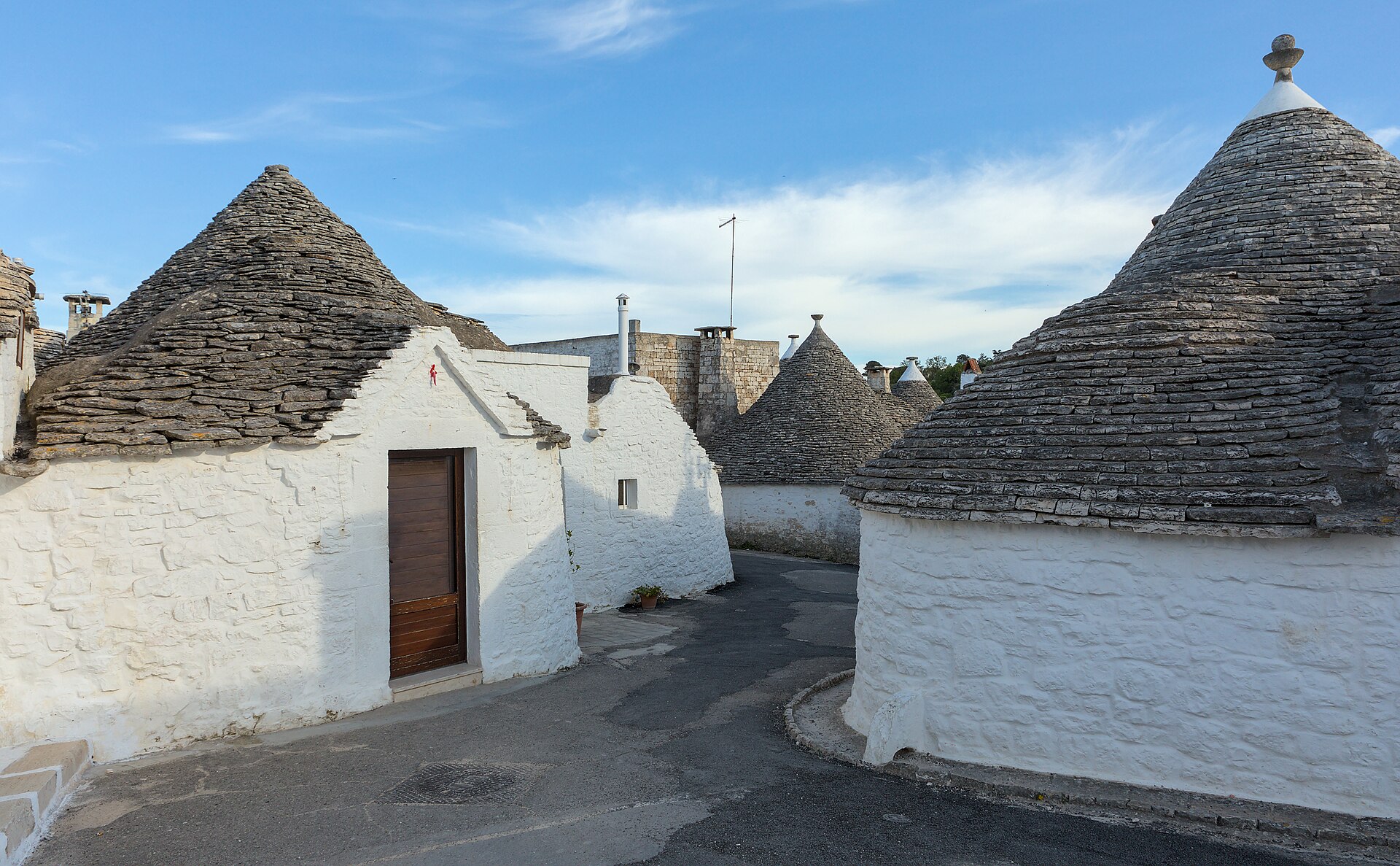
Valle d’Itria is the stone-and-olive-grove heart of many Puglia fantasies. Alberobello is the famous UNESCO trulli town. Locorotondo, Cisternino and Martina Franca are the more relaxed companions. Ostuni often gets grouped here, though it also belongs to the central coast conversation. Countryside masserie and trullo stays turn this area from a sightseeing loop into a slower base.
This is where a car becomes valuable. You can technically reach some towns by train or bus, but the magic is in the flexible movement: stopping for an olive oil tasting, lingering in Cisternino, avoiding the busiest Alberobello hours, returning to a masseria before dinner, and not shaping the day around sparse schedules.
Alberobello deserves respect because the trulli are genuinely unique. It also needs timing. Midday can feel tour-bus heavy. Early morning, late afternoon, and overnight are better if the town matters to you. If you only have one week, pair Alberobello with Locorotondo and maybe Martina Franca or Ostuni rather than trying to add every inland village.
Lecce And Salento
Lecce is the city that often wins people over slowly, then completely. It is not on the sea, but it is the best cultural base for Salento: Baroque churches, warm stone, a strong evening scene, pasticciotto, cafes, restaurants and access to both Adriatic and Ionian coastlines. The official Puglia tourism portal calls Lecce the “Florence of the South,” which is a phrase you will see everywhere. I would not plan it as a miniature Florence. I would plan it as Lecce: smaller, warmer, more southern, more nocturnal, and very good after dark.
From Lecce, Otranto pulls you toward the Adriatic: white lanes, sea walls, the cathedral mosaic, Baia dei Turchi, Alimini and rocky coves. Gallipoli pulls you toward the Ionian side: old town on an island-like limestone core, sandy beaches, sunsets and summer nightlife. Porto Cesareo, Punta Prosciutto, Torre dell’Orso, Santa Maria di Leuca, Castro and other Salento coast stops each solve different beach and scenery problems.
Salento can work without a car if you stick to Lecce plus selected towns by train/bus. It becomes much better with a car if beaches are a priority.
Gargano And The Tremiti Islands
Gargano is the part of Puglia many first-time itineraries skip because it is not conveniently on the Bari-Lecce spine. That does not make it secondary. It is a mountainous promontory with Vieste, Peschici, sea caves, beaches, Foresta Umbra, the Gargano National Park and ferry access to the Tremiti Islands. It can feel more rugged and less like the white-town version of Puglia.
The issue is time. Gargano is best as a dedicated northern Puglia section, not a casual day trip from Monopoli or Lecce. If you have 10 nights and want classic Puglia, I would usually save Gargano for another trip. If you have two weeks, a car, and a strong beach/nature interest, it becomes much more attractive.
Matera And Basilicata
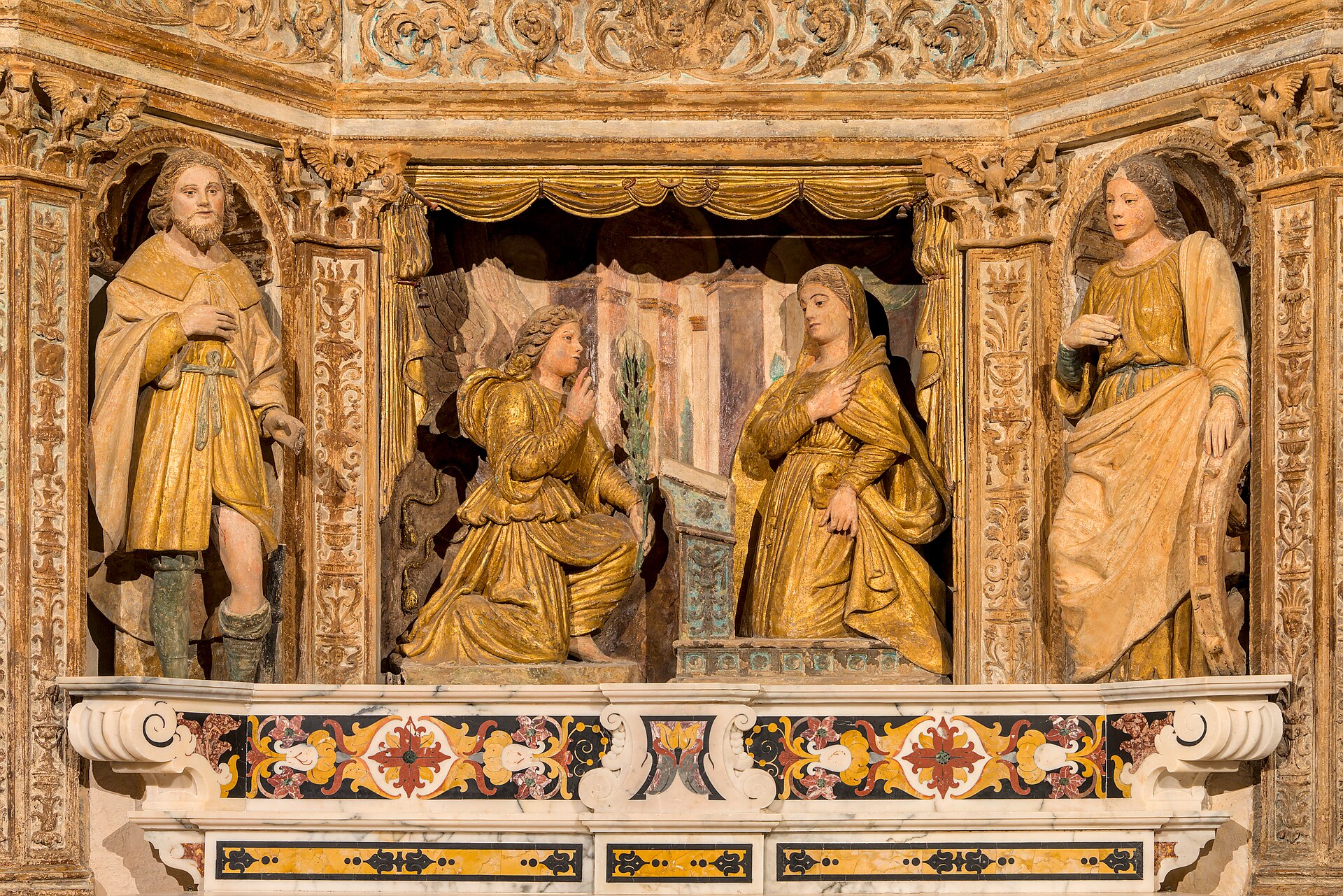
Matera is not in Puglia. It is in Basilicata. You will still see it in Puglia itineraries because it pairs naturally with Bari, Alberobello, Ostuni and the wider southern route. The Sassi and rupestrian churches are a UNESCO World Heritage site, and the city is one of the most memorable places in southern Italy.
The best way to include Matera is to make it a route hinge. Spend one or two nights there at the start or end, especially if you are flying through Bari, arriving by train from Rome/Naples, or renting a car. A day trip is possible, but Matera is much better when you see it in evening and early morning light. If your Puglia plan is already short, do not let Matera steal the day that would have made the rest of the region feel coherent.
Taranto, Trani And Castel Del Monte
Puglia is not only Bari, Lecce and white towns. Trani is a handsome northern coastal stop with a cathedral by the water. Castel del Monte is a UNESCO-listed 13th-century castle near Andria, best handled with a car, driver or targeted tour. Taranto is more complicated and less polished, but it has serious Magna Graecia history and the National Archaeological Museum. These places are excellent for travelers who have more time or want a less standard route.
For a first week, I would not force them in. For a second Puglia trip or a 14-day route, they are exactly the kind of places that keep the region from feeling repetitive.
Where To Stay In Puglia
Where you stay in Puglia matters more than the hotel photo. Choose the base by the job it has to do: trains, car access, beaches, dinners, or a simple route.
| Base | Best for | Tradeoffs |
|---|---|---|
| Bari | Airport, trains, old town, food, short no-car trips | Bigger city feel, less beach-resort atmosphere |
| Monopoli | Coastal charm, restaurants, train access, balanced first base | Busy in summer, smaller than Bari or Lecce |
| Polignano a Mare | Iconic cliffs, short romantic stay, boat trips | Crowded, compact, often less useful than Monopoli |
| Ostuni | White town atmosphere, countryside access, car-based routes | Train station is below town, parking/logistics matter |
| Valle d’Itria/masseria | Slow countryside, trulli, food, couples, families with car | Weak without a car |
| Lecce | Baroque city, Salento dinners, culture, train access | Not on the beach, farther from Bari |
| Otranto | Adriatic coast, beaches, sea walls, summer stays | Seasonal, car helps, smaller evening scene than Lecce |
| Gallipoli | Ionian beaches, sunsets, nightlife, summer coast | Very busy in peak summer, less practical for central Puglia |
| Vieste/Gargano | Nature, beaches, sea caves, Tremiti Islands | Far from the classic route, best with car |
| Matera | Cave city, route hinge, memorable overnight | Not Puglia, needs time to justify the detour |
Bari As A Base
Bari is the practical base. It is best if you are arriving late, leaving early, traveling without a car, or building a short central Puglia route. The old town gives you Basilica di San Nicola, narrow lanes, street food, orecchiette-making streets and evening life. The new town gives you easier hotels, shopping and transport.
Stay in Bari if convenience matters. It works for day trips to Polignano a Mare, Monopoli, Trani, Matera with the right plan, and sometimes Alberobello by train/bus or tour. Do not stay in Bari expecting a quiet beach holiday. Stay there because it is useful and more interesting than its “gateway city” label suggests.
For the city-level breakdown, use Bari Travel Guide.
Monopoli As A Base
Monopoli is one of the best all-around bases for a first Puglia trip. It has an old port, a historic center, restaurants, beaches nearby, and a train station on the main coastal line. It is more relaxed than Polignano, more scenic than Bari, and more useful than a tiny countryside village if you do not have a car every day.
I like Monopoli for travelers who want the coastal version of Puglia without making the entire trip about beach clubs. You can visit Polignano quickly, reach Bari, move south toward Ostuni or Lecce, and still have evenings that feel like Puglia rather than logistics.
Polignano A Mare As A Base
Polignano a Mare is gorgeous and very popular. The cliffside old town above Lama Monachile photographs beautifully, and a boat trip along the caves can be memorable. But Polignano is not automatically the best base. It is small, crowded in season, and often priced around its fame. Food and accommodation value can be better elsewhere.
Stay in Polignano if the view is the point, you want one or two romantic nights, or you found a place you love. Otherwise, visit from Bari or Monopoli and spend your sleeping budget where the trip works better.
Use Polignano a Mare and Monopoli Guide for the side-by-side decision.
Ostuni, Valle d’Itria Or A Masseria
Ostuni and the countryside are for travelers who want the slower Puglia. White streets, olive groves, countryside dinners, trulli, masserie, swimming pools and short drives to towns or beaches. This is where Puglia can feel most different from the classic Italy city route.
The catch is transport. If you choose a rural masseria, you usually need a car. If you choose Ostuni, understand parking and the connection between the station and the historic center. This can be a brilliant stay if you want room to breathe and are comfortable driving. It can be frustrating if you expected easy train travel and late-night spontaneity.
Lecce As A Base
Lecce is the best base in Puglia for travelers who care about evenings, architecture and food as much as beaches. It is beautiful without needing sea views. The Baroque facades glow, the old town is walkable, and dinner feels like part of the city rather than an afterthought.
Use Lecce for Salento, especially if you want a city base with day trips rather than sleeping on the coast. You can visit Otranto, Gallipoli, Galatina, beaches and smaller towns from Lecce with the right transport. A car improves the coast days, but you can still enjoy the city without one.
For the focused plan, use Lecce Travel Guide.
Otranto Or Gallipoli As A Base
Otranto is best if you want the Adriatic side of Salento: historic center, sea walls, coves, Baia dei Turchi, Alimini, the lighthouse at Punta Palascia and coastal drives south toward Castro and Santa Maria di Leuca. It feels more scenic and contained than Lecce, but less city-like.
Gallipoli is best if you want Ionian beaches, sunsets, summer nightlife and a sandy-coast mood. It can be excellent in beach season and intense in peak summer. Choose it because you want that specific coast, not because it looks close to everything.
If this is your first Puglia trip and you are splitting bases, Lecce plus one coastal night can work better than trying to make one beach town serve every purpose.
Do You Need A Car In Puglia?
You do not strictly need a car in Puglia if you build the route around trains and accept a narrower trip. You probably do want a car if your dream includes countryside masserie, Valle d’Itria villages, flexible beach days, Gargano, rural restaurants or a 10-day route with less waiting.
The no-car version works best like this:
- Bari for arrival, old town, food and day trips.
- Polignano a Mare and Monopoli by train.
- Ostuni with station-to-town planning.
- Brindisi or Lecce by train.
- Lecce for several nights.
- Selected Salento trips by train, bus, tour or driver.
The car version works best like this:
- Arrive by train or plane.
- Avoid driving in central Bari, Naples, Rome or other major cities if possible.
- Pick up the car after the city portion.
- Use it for Valle d’Itria, countryside lodging, beaches, Matera, Gargano or Salento.
- Return it before a no-car city stay if parking becomes a burden.
Puglia’s main Adriatic rail corridor is useful, but not every place travelers want is on that corridor. Alberobello, Locorotondo, Cisternino, Martina Franca, many beaches, many masserie and much of Gargano require more work by public transport. Buses exist, but schedules can be thinner, seasonal or awkward for tourists trying to string several stops together.
The most sensible answer is often mixed. Use trains for Rome to Bari, Bari to Monopoli, Monopoli to Lecce, and other easy city links. Rent a car for three or four days for Valle d’Itria, beaches and countryside. That gives you freedom where it matters and avoids paying for a parked car where it does not.
For the national logistics, pair this with Italy Transportation Guide. For accommodation choices, use Where to Stay in Italy and Where to Stay in Puglia: Bari, Monopoli, Lecce or Ostuni.
Best Things To Do In Puglia
Puglia is not a region where I would rank only “top 10 sights.” The better question is what kind of trip each place gives you.
Walk Bari Vecchia And Eat Like You Are In A Real City
Bari is often treated as the arrival point before the “pretty” Puglia begins. That is a mistake. Bari Vecchia has the Basilica of San Nicola, the cathedral, alleys, courtyards, old women making orecchiette, focaccia, panzerotti, seafood, a long seafront and a stronger city pulse than many small towns can offer.
Give Bari at least a half day if you fly or train in. Give it a night if you like cities, food and the feeling of landing somewhere real.
Visit Polignano A Mare, But Do Not Let It Define The Region
Polignano is worth seeing. The cliffs, old town balconies, Lama Monachile and cave boat trips are memorable. It is also one of the places most likely to feel crowded and performance-driven in peak season.
Go early or late. Have a drink with a view if that is your style. Swim only if conditions and crowds make sense. Then move on to Monopoli, Ostuni or Lecce rather than expecting Polignano to carry the whole trip.
Stay Longer In Monopoli Than You Expected
Monopoli does not always win the postcard contest against Polignano, but it often wins the trip. It has enough charm, enough restaurants, enough coastline and enough transport to be useful without feeling like a single viewpoint. It is the kind of place where a second night can improve the whole route.
See Alberobello, Then Balance It With Smaller Towns
Alberobello is famous for a reason. The trulli are not a gimmick invented for tourists. UNESCO recognizes Alberobello for its traditional dry-stone construction and concentration of trulli. Still, timing changes the visitor experience.
After Alberobello, add Locorotondo for pretty lanes and views, Martina Franca for a more substantial town, or Cisternino for food and a quieter feel. Do not treat the Valle d’Itria as one photo stop.
Spend A Proper Evening In Lecce
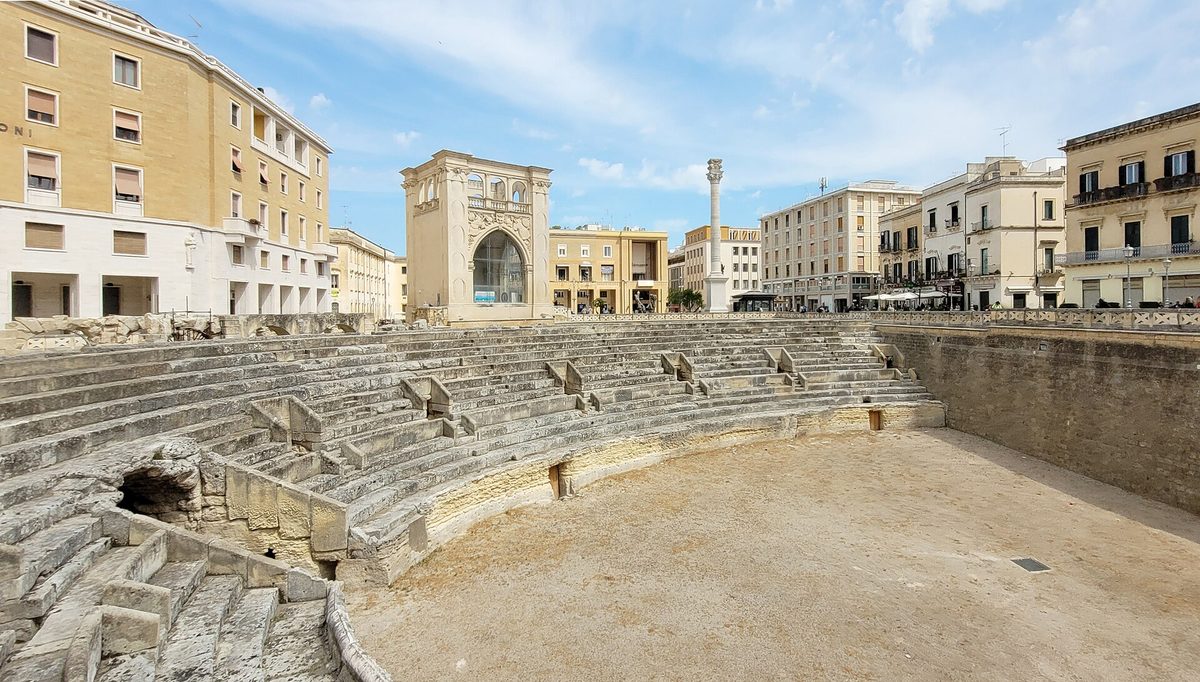
Lecce deserves more than a day trip. The city gets better after heat softens, when people return to the streets and the stone changes color. Walk Piazza del Duomo, Basilica di Santa Croce, Piazza Sant’Oronzo, side streets, cafes and wine bars. Eat pasticciotto in the morning and something long and unhurried at night.
If your Puglia route has one city that deserves two or three nights, Lecce is often it.
Choose An Adriatic Or Ionian Beach Day
Do not plan “the beach” as if all Puglia beaches are the same. The Adriatic side gives you cliffs, coves, clear water, Otranto, Torre dell’Orso, Baia dei Turchi, Castro and dramatic rocky stretches. The Ionian side gives you more sandy beaches, Gallipoli, Porto Cesareo, Punta Prosciutto and warmer sunset energy.
In July and August, choose fewer beach days and book/arrive smarter. Parking can be a real part of the day. Beach clubs can be expensive. Free beach areas can fill. In May, June, September and early October, the same coast can feel much easier.
Add Matera If You Can Give It A Night
Matera is one of the best add-ons to Puglia, especially if you have 8 to 10 nights. The Sassi are not just beautiful; they are disorienting in the best way, with stairs, cave dwellings, viewpoints and evening light. A night in Matera changes the experience.
Use Matera Travel Guide and How to Visit from Puglia for the detailed logistics.
Consider Gargano If You Have Time For A Different Puglia
Gargano is not a checklist item for a short first trip. It is a reason to extend. Vieste, Peschici, Foresta Umbra, sea caves and the Tremiti Islands create a more nature-forward Puglia. If your only week is Bari-Lecce, save it. If you have two weeks and want the coast to feel wilder, include it.
Eat The Region, Not A Generic Italian Menu
Puglia food is one of the reasons to come. Look for orecchiette with cime di rapa, focaccia Barese, panzerotti, taralli, burrata, stracciatella, caciocavallo, bombette in the Valle d’Itria, seafood by the coast, pasticciotto in Lecce, Primitivo, Negroamaro and olive oil. This is not the region where I would chase carbonara or Florentine steak.
For the national food context, use Italy Food and Wine Travel Guide.
Puglia Itinerary Ideas
These are route frameworks, not rigid schedules. Puglia responds well to weather, restaurant finds, beach conditions and your tolerance for driving.
5 Days In Puglia: Central Puglia Without Overreaching
This is the best short route if you fly into Bari or arrive by train.
| Day | Base | Plan |
|---|---|---|
| 1 | Bari | Arrive, Bari Vecchia, seafront, old-town dinner |
| 2 | Bari or Monopoli | Polignano a Mare and Monopoli |
| 3 | Monopoli or Ostuni | Alberobello and Locorotondo, ideally with car/tour |
| 4 | Monopoli or Ostuni | Ostuni and countryside/masseria dinner |
| 5 | Bari | Trani or relaxed coast, departure positioning |
This route is not trying to include Lecce and Salento. That is the point. It gives central Puglia enough shape to feel satisfying.
7 Days In Puglia: Central Puglia Plus Lecce
This is the first route I would recommend to many travelers.
| Day | Base | Plan |
|---|---|---|
| 1 | Bari | Arrive, Bari Vecchia |
| 2 | Monopoli | Polignano a Mare and Monopoli |
| 3 | Monopoli/Ostuni | Alberobello, Locorotondo, Martina Franca or Cisternino |
| 4 | Ostuni or Lecce | Ostuni, countryside, transfer to Lecce |
| 5 | Lecce | Lecce full day and evening |
| 6 | Lecce | Otranto or Gallipoli, depending on coast preference |
| 7 | Bari/Brindisi/Lecce | Slow morning, departure or extra Salento stop |
This can work by train plus targeted tours, but it is smoother with a car for days 3, 4 and 6.
10 Days In Puglia: Matera, Central Puglia And Salento
Ten days is where Puglia starts to breathe.
| Days | Base | Plan |
|---|---|---|
| 1-2 | Matera | Sleep in the Sassi, viewpoints, cave churches, slow evening |
| 3-5 | Monopoli or Ostuni/countryside | Bari, Polignano, Monopoli, Alberobello, Locorotondo, Ostuni |
| 6-8 | Lecce | Lecce, Otranto, Galatina or Gallipoli |
| 9 | Salento coast or Lecce | Beach day, coastal drive or relaxed city day |
| 10 | Bari or Brindisi | Departure positioning |
If you want fewer moves, skip the separate Salento coast night and stay in Lecce. If you want a more romantic route, choose a masseria for central Puglia and accept more driving.
14 Days In Puglia: Add Gargano Or Go Slower
With two weeks, you have two good choices. The first is a classic full route:
- 2 nights Matera.
- 3 nights Monopoli or central coast.
- 3 nights Ostuni, Valle d’Itria or a masseria.
- 4 nights Lecce and Salento.
- 2 nights relaxed coast, Bari, Brindisi or Trani depending on flights.
The second is a deeper route with Gargano:
- 2 nights Bari/Trani.
- 3 nights Gargano or Vieste.
- 1 to 2 nights Matera.
- 3 nights Valle d’Itria.
- 4 nights Lecce/Salento.
Do not add Gargano just because it is “also Puglia.” Add it because you want that northern promontory, beaches, nature and slower road trip.
Best Beaches In Puglia
Define “beach” before choosing one in Puglia. Do you want a dramatic cove, soft sand, a beach club, clear water, easy access with kids, a coastal town, or a quiet shoulder-season swim?
| Beach/coast area | Best for | Watch out for |
|---|---|---|
| Lama Monachile, Polignano | Iconic scenery, quick swim, photos | Crowds, pebbles, limited space |
| Monopoli coast | Easy coastal base, small coves, variety | Some beaches are small or seasonal |
| Ostuni/Fasano coast | Families, beach clubs, countryside combo | Better with car |
| Otranto and Baia dei Turchi | Adriatic scenery, clear water, historic town nearby | Peak-season parking and access |
| Torre dell’Orso/Sant’Andrea | Rock formations, clear water, photos | Crowds in summer |
| Castro and Santa Cesarea Terme | Rocky coves, boat trips, dramatic coast | Less sandy, car useful |
| Porto Cesareo/Punta Prosciutto | Ionian sand, beach days, families | Very busy in July/August |
| Gallipoli and Baia Verde | Sand, nightlife, summer energy | Peak-season intensity |
| Gargano/Vieste | Longer beach stays, sea caves, nature | Far from central/southern Puglia |
| Tremiti Islands | Clear water, diving, island day | Ferry planning, weather and season |
For a first trip with limited time, I would not chase the “best beach” across the region. Choose the coast that fits your base. From Lecce, pick Otranto/Adriatic or Gallipoli/Ionian. From Monopoli/Ostuni, use nearby beaches. From Gargano, make Gargano the point.
For the deeper beach breakdown, use A Guide to the Beaches of Puglia.
Best Time To Visit Puglia
Puglia has a longer useful season than much of northern Italy, but the best month changes with the purpose of the trip: sightseeing, beaches or food.
| Season | What it feels like | Best for |
|---|---|---|
| March to April | Spring, variable weather, lighter crowds | Cities, food, countryside, early flowers |
| May to early June | Warm, bright, before peak beach pressure | Best all-around sightseeing and road trips |
| Late June | Summer begins, beaches improve, demand rises | Coast plus towns if booked well |
| July to August | Hot, busy, beach-focused, expensive in popular areas | Beach holidays, nightlife, families tied to school breaks |
| September | Warm sea, harvest feeling, still popular | Best balance for beaches and sightseeing |
| October | Good for culture and food, less reliable for beach days | Lecce, Bari, Matera, countryside, wine/olive oil mood |
| November to February | Quieter, cooler, more local, some closures | Cities, food, lower prices, not classic beach travel |
My favorite Puglia months for a first trip are May, early June, September and early October. July and August can be wonderful if the beach is the main point and you book early, but they are not the easiest months for a broad sightseeing route. August in particular is when many Italians vacation, and the coast behaves accordingly.
April can be lovely for towns, walking and food, but do not plan it as a guaranteed swimming trip. October can be excellent, especially early, but the beach season becomes less reliable as the month goes on. Winter is quiet and can be good for Bari, Lecce, Matera and food, but it is not the Puglia most travelers imagine from summer photos.
For nationwide timing comparisons, use When to Go to Italy.
Puglia Travel Budget
Puglia can be better value than the Amalfi Coast, Capri, Lake Como or central Venice, but it is not automatically cheap. The best-known coastal towns, masserie and beach areas can be expensive in high season. Bari and Lecce can stretch a budget better. Rural stays can be good value or expensive depending on property style.
Typical cost patterns:
- Bari and Lecce are often the strongest value cities.
- Monopoli and Polignano cost more in high season.
- Masserie range from simple rural stays to luxury hotels.
- Beach clubs, parking and car rental can raise summer costs.
- Restaurants can be excellent value if you avoid the most obvious tourist lanes.
- A car is useful, but not free once you add rental, fuel, tolls, parking and insurance.
- Matera can be costly for atmospheric cave hotels, especially if you want a special stay.
If budget matters, travel in May, early June, late September or October. Choose Bari, Lecce or Monopoli over the most famous beach towns. Rent a car only for the days that need it. Eat regional food in normal trattorias and bakeries. Puglia is a region where simple can be the luxury.
For the countrywide cost framework, use Italy Trip Costs in Detail.
What To Book Early
Book earlier than you think for:
- High-season hotels in Monopoli, Polignano, Ostuni, Otranto, Gallipoli and popular beach areas.
- Masserie with pools and good restaurant access.
- Automatic rental cars.
- Special cave hotels in Matera.
- Beach clubs in July and August if you need a specific lido.
- Popular restaurants in small towns on weekends and peak summer nights.
- Guided tours or drivers for Alberobello/Valle d’Itria if traveling without a car.
- Ferries to Tremiti Islands or seasonal boat trips if they anchor the route.
Also check transport close to travel. In Puglia, the plan is not finished when you choose a route. Regional train, bus, airport shuttle and local service changes matter. Use official operators for final schedules, especially if relying on public transport for smaller towns.
Puglia Food And Wine
Puglia is one of the easiest regions in Italy to eat simply and well. It is not a place where you need every meal to be elaborate. Some of the best food is bakery food, street food, vegetables, cheese, seafood and pasta made from ingredients that do not need much help.
Look for:
- Orecchiette, especially with cime di rapa.
- Focaccia Barese.
- Panzerotti.
- Burrata and stracciatella.
- Taralli.
- Bombette around Cisternino and the Valle d’Itria.
- Seafood in Bari, Monopoli, Gallipoli, Otranto and coastal towns.
- Pasticciotto in Lecce and Salento.
- Rustico leccese.
- Friselle, vegetables, beans and olive oil.
- Primitivo, Negroamaro, Salice Salentino and local rosato.
The rhythm matters too. Many towns are quiet in the hottest part of the day and better at night. Do not panic if a town feels asleep at 3 p.m. in summer. That may be because you are using the wrong hour. Plan early mornings, long lunches, rest time and evenings.
For broader food planning, pair this with Italy Food and Wine Travel Guide.
Puglia For Different Travelers
First-Time Italy Travelers
If this is your first trip to Italy, Puglia can still work, but I would not combine it with too many classic stops. A route like Rome, Naples, Matera and Puglia can be excellent if southern Italy is the focus. A route like Venice, Florence, Rome, Amalfi, Puglia and Sicily is too much for most first visits.
Couples
Puglia is very good for couples when you slow down. Consider Monopoli, a masseria near Ostuni, Lecce, Otranto or Matera. Avoid turning a romantic trip into a driving checklist. A beautiful room, a pool, a few towns and long dinners will usually beat six one-night stays.
Families
Families often do well with a countryside base, a pool, a car and fewer moves. Monopoli, Ostuni/Fasano countryside, Lecce with beach day trips, or a Salento coast base can work. Check beach access carefully: not every pretty cove is easy with small children, strollers or lots of gear.
Solo Travelers
Solo travelers should prioritize Bari, Monopoli and Lecce if they want easy evenings and transport. Rural masserie can be lovely but isolating without a car. Puglia is not difficult solo, but late-night returns and sparse transport need more attention than in Rome or Florence.
Budget Travelers
Bari and Lecce are your friends. Travel outside July and August if possible. Use trains where they work. Choose simple guesthouses, bakeries, markets and trattorias. Be careful with car rental math; sometimes a targeted tour or driver day is cheaper than renting a car for a whole week.
How To Combine Puglia With Southern Italy
Puglia pairs best with places that make geographic sense. The strongest combinations are:
- Rome, Naples, Matera and Puglia.
- Naples/Campania plus Puglia, if you have at least two weeks.
- Puglia plus Matera and Basilicata.
- Puglia plus a slow Sicily trip only if you have enough time or are flying between regions.
- Puglia plus Sardinia only if beaches are the whole theme and flights work.
The most tempting bad combination is Amalfi Coast plus Puglia in too little time. They are both southern, but they are not next door in practical travel terms. Naples to Bari or Matera can work. Amalfi Coast town to Puglia countryside adds more steps: ferry or bus, train/driver, possibly a car pickup, then more driving. It can be worth it, but it is not a casual transfer.
If you are choosing between Puglia and Amalfi, ask what kind of coast you want. The Amalfi Coast, Naples and Campania Travel Guide is better for cliff towns, Capri, Pompeii, Naples and a high-drama short coast trip. Puglia is better for a slower road trip, white towns, beaches, masserie and a less compressed southern rhythm.
If you are choosing between Puglia and Sicily, read the Sicily Travel Guide. Sicily has more ancient-site depth, island scale and dramatic variety. Puglia is easier to fold into a mainland southern route and can feel lighter if you have a week.
If beaches are the whole point, compare with Sardinia and Italy Beaches Travel Guide. Sardinia has some of Italy’s most spectacular beaches, but it is more island-specific and car-dependent.
Common Puglia Travel Mistakes
Trying To See Every Famous Town
Alberobello, Locorotondo, Cisternino, Martina Franca and Ostuni are all worthwhile, but you do not need to give each one a full checklist. Choose a few and leave time to enjoy them.
Sleeping In Polignano Because It Is The Photo
Polignano is beautiful. It is not automatically the best base. Monopoli, Bari, Lecce or a countryside stay may serve the trip better.
Treating Matera As A Quick Puglia Stop
Matera is not in Puglia, and it deserves time. If you include it, give it at least a thoughtful day and ideally a night.
Renting A Car For The Whole Trip
A car helps in Puglia, but it can be useless or annoying in Bari and Lecce historic centers. Rent for the segment that needs it.
Not Renting A Car When The Dream Requires One
The opposite mistake is also common. If you want masserie, beaches, Valle d’Itria villages and flexible rural meals, public transport may frustrate you.
Underestimating Summer
Puglia in July and August is not empty hidden Italy. Beaches, parking, restaurants and famous towns can be very busy. Book early and plan cooler hours.
Adding Gargano Without Time
Gargano is wonderful, but it is far from the classic route. Include it as a real section or save it.
Forgetting The Evening
Puglia is often better after the day-trip rush and afternoon heat. Choose at least one base where you want to be after dinner.
Suggested Support Guides
Use these deeper Puglia guides when you need a narrower decision:
| Guide | Use it for |
|---|---|
| Puglia Itinerary: 5, 7 and 10 Days | Turning the region into a day-by-day route |
| Where to Stay in Puglia | Bari vs Monopoli vs Lecce vs Ostuni base decisions |
| Best Things to Do in Puglia | Prioritizing towns, beaches, food and day trips |
| Which Beaches in Puglia Are Worth the Trip | Choosing Adriatic, Ionian, Gargano or central coast beaches |
| Matera Travel Guide | Adding Basilicata without derailing the route |
| Polignano a Mare and Monopoli Guide | Deciding how to handle Puglia’s central coast |
| Bari Travel Guide | Using the main gateway well |
| Lecce Travel Guide | Planning Salento’s best city base |
Questions travellers ask
How many days do you need in Puglia?
For a first Puglia trip, 7 to 10 nights is ideal. Five nights can work if you focus on central Puglia or Lecce/Salento. Ten nights lets you add Matera and a better split between central Puglia and Salento.
Where should you stay in Puglia for the first time?
The best first-time bases are Bari, Monopoli, Ostuni/countryside and Lecce. Bari is best for trains and arrival logistics. Monopoli is a strong coastal base. Ostuni or a masseria is best with a car. Lecce is best for Salento, architecture and evenings.
Do you need a car in Puglia?
You do not need a car if you stay on the Bari-Polignano-Monopoli-Ostuni-Lecce rail corridor and use tours or buses for harder day trips. A car is very helpful for Valle d’Itria villages, countryside stays, beaches, Gargano and flexible Salento days.
Is Bari worth visiting?
Yes. Bari is worth at least a half day and often a night. It has Bari Vecchia, Basilica di San Nicola, a long seafront, strong street food, old-town energy and the region’s most useful transport connections.
Is Monopoli or Polignano a Mare better?
Polignano a Mare is more dramatic for views and photos. Monopoli is usually the better base because it has more balance: old town, port, restaurants, nearby beaches and useful train access.
Is Lecce worth staying in?
Yes. Lecce is one of the best places to stay in Puglia if you want architecture, restaurants, evening atmosphere and access to Salento. It is not on the beach, but it works very well as a cultural base.
Is Matera in Puglia?
No. Matera is in Basilicata, not Puglia. It still pairs naturally with Puglia routes, especially through Bari or central Puglia, and it is best with at least one night.
What is the best time to visit Puglia?
May, early June, September and early October are usually the best months for Puglia. July and August are best for peak beach energy but bring heat, crowds and higher prices. April and October are better for towns, food and road trips than guaranteed swimming.