Turin Travel Guide: Museums, Cafes and Royal Palaces
The first time I walked out of Porta Nuova station into Turin, I had the strange feeling I’d taken the wrong train and ended up in Paris. Long straight boulevards under stone arcades. Grand cafes with brass and mirrors. A river, hills behind it, and the white teeth of the Alps on the horizon. This was Italy, but a cooler, more buttoned-up, more aristocratic version of it, and I fell for it immediately.
This Turin travel guide is my attempt to talk you into the same trip, with real specifics instead of a generic list. Turin (Torino) is Italy’s elegant first capital, the old seat of the House of Savoy. Picture arcaded boulevards, the Mole Antonelliana and its cinema museum, the world’s second-greatest Egyptian collection, a cluster of royal palaces, and a serious café-and-chocolate habit. It rewards slow, curious travelers more than box-tickers.
Here’s who I think will love it. People who’ve done Rome, Florence, and Venice and want the next, less-obvious thing. Anyone who travels on their stomach and would happily plan a day around chocolate, coffee, and vermouth. Museum lovers. Football fans. And anyone heading to or from the western Alps who wants a refined city base on the way. If that’s you, read on.
A quick honesty note on numbers. Every price and opening time below is approximate and accurate as of 2026. Italian museums shuffle their hours and tickets constantly, so treat these as planning estimates and confirm on the day. I’ll flag where booking ahead genuinely matters.
Turin at a glance: top sights and time needed
Skim this before you plan anything. It’s the fastest way to see what Turin actually holds and how much of your day each thing wants. I’ve ranked them roughly the way I’d send a first-timer.
| Sight | What it is | Time needed |
|---|---|---|
| Museo Egizio | World’s 2nd-best Egyptian collection | 2.5–3 hrs |
| Mole Antonelliana + Cinema Museum | Icon tower, film museum, panoramic lift | 2–3 hrs |
| Palazzo Reale / Royal Museums | Savoy palace, armory, Galleria Sabauda | 2–3 hrs |
| Piazza San Carlo + Piazza Castello | The two great squares + arcades | 1–1.5 hrs |
| Historic cafés (bicerin, gianduiotto) | Coffee, chocolate, people-watching | as long as you like |
| Duomo + Shroud chapel context | Cathedral, Holy Shroud story | 30–45 min |
| Parco del Valentino | Riverside park, mock medieval village | 1–2 hrs |
| Superga basilica | Hilltop church, Alps panorama | half day |
| Aperitivo / vermouth bars | The drink Turin invented | an evening |
You can hit the headline sights in two well-paced days. One day is enough for a strong first taste if you focus. More on pacing further down.
How to use this Turin travel guide (and how long to stay)
Let me set expectations, because this is where most plans go wrong. Turin is not a sprint city. It doesn’t have one show-stopping monument that you photograph and leave. Its pleasure is cumulative: a morning in a world-class museum, a long lunch, an aimless walk under ten miles of porticoes, a chocolate here, a vermouth there. The people who leave disappointed are the ones who treated it like a checklist.
So here’s the honest answer to “how long.” Two days is the sweet spot for a first visit. That gives you one day for the big museums and one for palaces, squares, and a hill. One day works if you’re tight, say on a day trip, and you pick two or three things and accept you’ll miss the rest. If you genuinely love food, art, or the surrounding wine country, you could happily fill three or four days and never be bored.
A simple two-day shape that works:
- Day 1 (museums and the icon): Museo Egizio in the morning, lunch in the Quadrilatero, then the Mole Antonelliana and its Cinema Museum in the afternoon, with the panoramic lift if the sky is clear. Aperitivo in Piazza San Carlo.
- Day 2 (palaces, squares, and a view): Palazzo Reale and the Royal Museums, a wander through Piazza Castello and the arcaded boulevards, a bicerin in a historic café, then Parco del Valentino or the tram up to Superga for the Alpine panorama at sunset.
The rest of this guide goes sight by sight so you can build your own version. If you’re slotting Turin into a wider trip, my broader Italy itineraries and the regional Milan and Northern Italy travel guide will help you fit it together.
The Mole Antonelliana and the National Cinema Museum
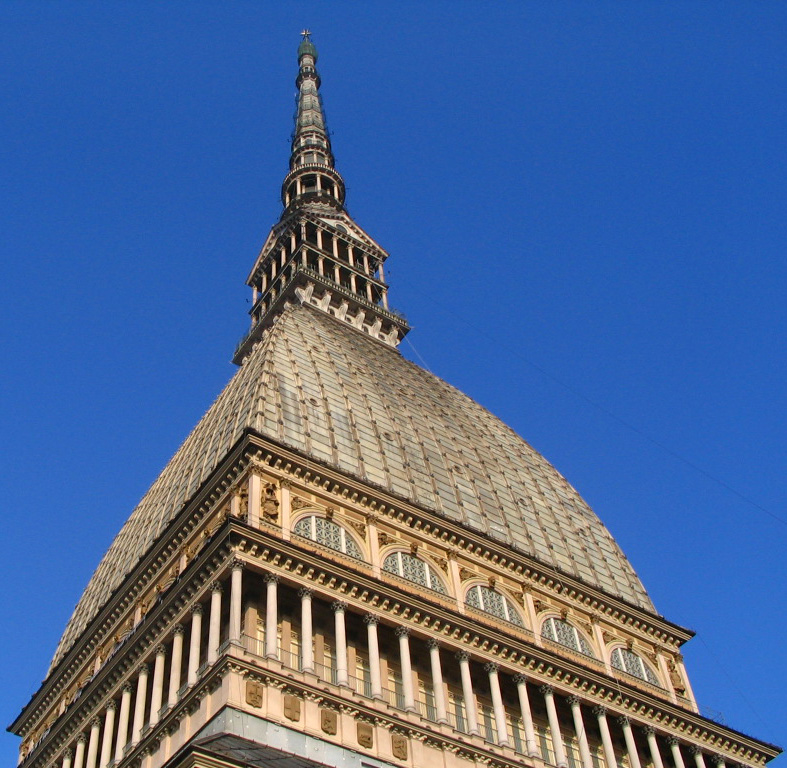
Start with the obvious, because it’s genuinely great. The Mole Antonelliana is Turin’s skyline in one building: a slender brick tower topped by a needle spire, around 167.5 metres tall, that for a while was the tallest masonry building in Europe. It was begun in the 1860s as a synagogue, of all things, ran wildly over budget, and ended up as a civic monument. Now it’s the symbol of the city, the thing on the postcards and the back of the old two-cent coin.
Inside it houses the Museo Nazionale del Cinema (National Cinema Museum), and this is one of the most purely fun museums in Italy. It spirals up around the tower’s vast central hall, where you lie back on sloped chaise-longues under a soaring dome and watch clips projected above you. There are magic lanterns, optical toys, props, posters, and themed sets that walk you from shadow-puppets to modern film. Even if cinema isn’t your thing, the building alone justifies the ticket. Give it two to three hours if you like to linger.
Then there’s the panoramic lift. A glass cabin runs straight up the open core of the tower, a 59-second ride to a terrace around 85 metres up, and the view is the real reward: the grid of the city below, the green hills across the river, and on a clear day the Alps standing white along the whole western horizon. The cabin only takes six or seven people and there’s just the one lift, so queues build. As of 2026 the museum is roughly €15, the lift around €9, and a combined ticket about €20. Book the lift ahead if you can, especially on a clear weekend, and check that the day you want isn’t the Tuesday closure.
The Museo Egizio: the Egyptian Museum that surprises everyone
If you do one thing in Turin, do this. The Museo Egizio is the oldest museum in the world devoted to ancient Egypt, founded back in 1824, and its collection is considered second only to Cairo’s. That’s not regional-tourism puffery; it’s the genuine assessment. You walk in expecting a few mummies and leave three hours later slightly stunned.
What makes it special isn’t just scale, it’s the standard of the staging. There’s a gallery of statues lit so dramatically it feels like a stage set. There are intact tomb assemblies, the famous Tomb of Kha and Merit with its everyday objects preserved down to the food and furniture, papyri, sarcophagi by the dozen, and a re-erected rock temple. Multilingual guides and good labeling mean you actually understand what you’re looking at, which is rarer than it should be.
A few practical tips. Book a timed ticket online in advance; this is the one Turin sight where walk-up queues can genuinely cost you an hour, and as of 2026 entry runs roughly €18. Go first thing or late afternoon to dodge the school groups and tour clusters. And pace yourself, because it’s enormous and easy to hit museum fatigue on level two. It sits right in the center, a couple of minutes from Piazza San Carlo, so it slots neatly into a morning.
Palazzo Reale, the Royal Museums, and the Galleria Sabauda
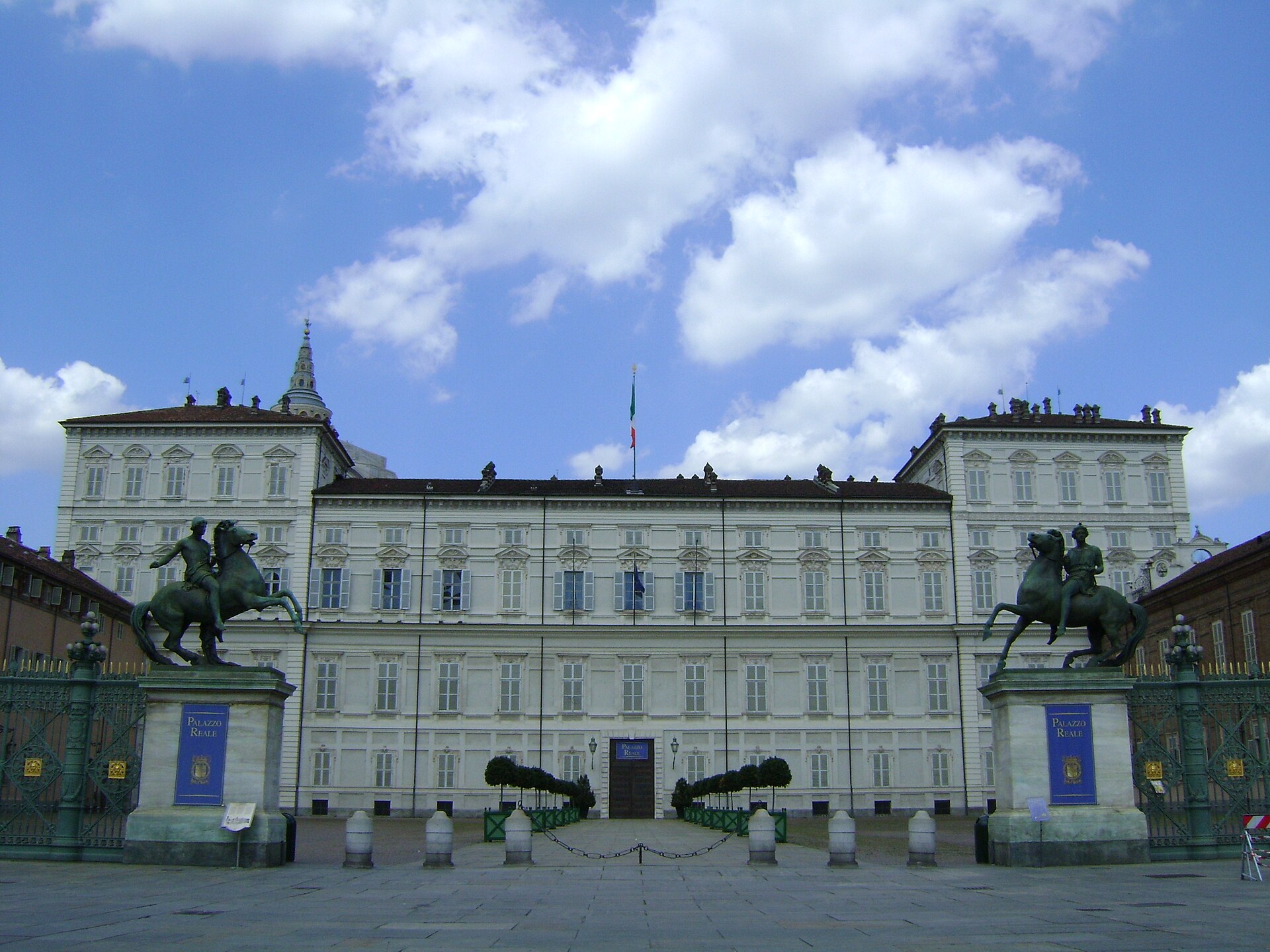
Turin was the capital of the Savoy dynasty, the family that eventually became kings of a united Italy, and they built like it. The Palazzo Reale (Royal Palace) on Piazza Castello was their main residence, and today it anchors a complex called the Musei Reali (Royal Museums) that you can do on a single ticket. This is where you feel the city’s old aristocratic weight.
Inside the palace it’s the full royal treatment: gilded state rooms, frescoed ceilings, the throne room, a grand staircase, and the dazzling Royal Armoury (Armeria Reale), one of the best collections of historic arms and armor in Europe, displayed in a long mirrored gallery that’s a sight in itself. Don’t rush past it; the armory is a highlight even if weaponry isn’t your usual thing.
The same complex holds the Galleria Sabauda, the Savoy picture gallery, strong on Piedmontese, Italian, and Flemish and Dutch masters, plus an archaeology museum and the royal gardens when the weather behaves. Across the square sits Palazzo Madama, a stitched-together palace, half medieval castle, half Baroque facade, that houses the city’s museum of ancient art. The whole royal cluster is UNESCO-listed along with the other Savoy residences ringing the city. Budget two to three hours for the Royal Museums; add more if you’re a palace person.
For the grandest Savoy statement of all, the Venaria Reale, a vast 17th-century hunting palace with gardens to match, sits just outside the city and makes a strong half-day if you have the time.
Piazza San Carlo, Piazza Castello, and the porticoed boulevards
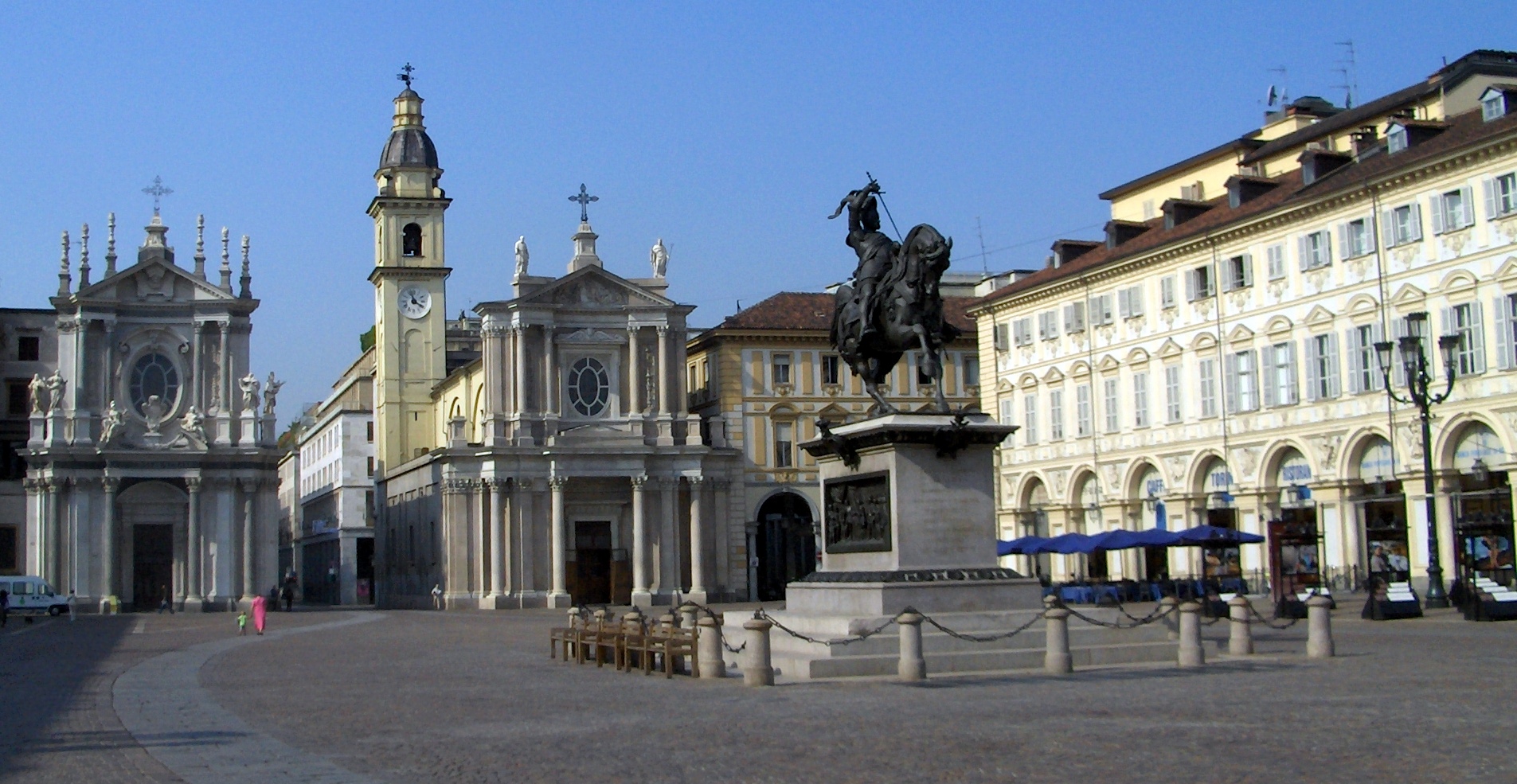
Turin is a city you read with your feet, and its two great squares are where you start. Piazza San Carlo is the one locals fondly call the city’s drawing room: a perfectly proportioned Baroque rectangle with matching arcades down both long sides, twin churches anchoring the south end, and the bronze horseman of Emanuele Filiberto in the middle. Grab a coffee at one of its historic cafés, sit under the arcade, and just watch the city behave.
A few minutes north, Piazza Castello is the civic heart, bigger and grander, ringed by Palazzo Madama, the Royal Palace, and theaters, with arcaded streets radiating off it like spokes. Between and around these squares runs Via Roma, the elegant shopping spine, and a whole network of covered walkways. Turin has something like ten to twelve miles of porticoes, built so the royal family and then everyone else could stroll, shop, and café-hop without ever getting rained on. On a drizzly day this is a superpower.
Two interior spaces are worth ducking into while you wander. The Galleria Subalpina, just off Piazza Castello, is a jewel-box 19th-century shopping arcade of glass, iron, and stucco with a beautiful old café inside. And Porta Palatina, a short walk away, preserves a remarkably intact Roman gate from the city’s days as Augusta Taurinorum, a reminder that under all this Baroque elegance is a Roman grid.
Historic cafés, the bicerin, and Turin’s chocolate tradition
This is the part of the city I love most, and the part page-one guides tend to underplay. Turin practically invented the grand Italian café, and its cafés aren’t a sideshow here, they’re a main event. Many of them have been serving since the 1700s and 1800s, all marble, mirrors, dark wood, and waiters in waistcoats. Stratta, Baratti & Milano (going since 1858, with a mirrored room off Piazza Castello), Caffè Mulassano, San Carlo: these are working time-machines, and an espresso al banco standing at the counter costs almost nothing.
The drink to order is the bicerin. The name means “little glass” in Piedmontese, and it’s a layered marvel: a base of thick hot chocolate, then a shot of espresso, then a cap of barely-whipped cream, served unstirred so you taste each layer in turn. The cool cream, then the warm coffee-spiked chocolate. The Caffè Al Bicerin, open on quiet Piazza della Consolata since 1763, claims to have invented it and guards the recipe. Yes, it’s on every list and there’s often a line, but locals still go, so don’t dismiss it as a trap. It’s tiny; go off-peak.
And then there’s chocolate, because Turin is Italy’s chocolate capital and has been since the Savoys licensed the first chocolate shop in the 1600s. The local hero is the gianduiotto, a small gold-wrapped ingot of chocolate blended with local hazelnut paste, a marriage called gianduja that was reputedly born when cocoa got scarce during the Napoleonic blockade and clever Turinese stretched it with hazelnuts from the Langhe hills. The result is silkier and nuttier than ordinary chocolate, and it’s everywhere. Buy a few from a proper chocolatier, not a souvenir shop, and taste the difference.
Turin invented aperitivo: the vermouth story
Here’s a claim Turin can actually back up: this is the home of vermouth and, with it, the modern aperitivo. In 1786 a distiller named Antonio Benedetto Carpano opened a shop near Piazza Castello, opposite the Royal Palace, selling a fortified, aromatized white wine flavored with herbs and spices. He called it vermouth. The Turin aristocracy went mad for it; the story goes the shop ended up open around the clock, and a crate sent to the Savoy king sealed its status.
From that one shop grew an industry. Turin became the world capital of vermouth, and names you’ll recognize, Martini, Cinzano, Carpano’s own Punt e Mes, all trace back to this city and the hills around it. “Vermouth di Torino” is now a protected designation. The point for you as a traveler is that aperitivo here isn’t a trend imported from Milan; it started in Turin, and you can drink the original where it was invented.
So do. In the early evening, find a historic café or a dedicated vermouth bar, order a vermouth on ice with a twist or a Turin-style cocktail, and let them bring the little plates of olives, chips, and snacks that come with it. Caffè Mulassano and the old cafés around the central squares are a fine place to start. If the food-and-drink rabbit hole appeals, my Italy food and wine travel guide goes deeper on vermouth, Barolo, and the Piedmontese table, and the Italy travel tips page covers how aperitivo etiquette actually works.
The Duomo and the Shroud of Turin
Turin’s cathedral, the Duomo di San Giovanni Battista, is modest by Italian standards from the outside, a plain Renaissance front near the Roman gate. But it’s world-famous for one thing: the Shroud of Turin, the linen cloth bearing the faint image of a man that many believe wrapped the body of Christ. It’s one of the most studied and most debated objects on earth.
Set your expectations, though, because this trips a lot of visitors up. The actual shroud is almost never on display. It’s kept sealed and climate-controlled in the Cappella della Sacra Sindone, the Holy Shroud Chapel, and only shown to the public on rare, announced occasions, sometimes years apart. What you’ll usually see is a high-quality replica and the cathedral itself, plus the dramatic black-marble chapel with its extraordinary spiraling dome by Guarini, painstakingly restored after a fire. There’s also a nearby museum dedicated to the shroud’s history and the science around it. Even without the relic, it’s a 30 to 45 minute stop with real atmosphere.
Parco del Valentino and the riverside
When you need a break from museums and marble, head for the Parco del Valentino, Turin’s big riverside park along the Po, and a beloved local hangout. It’s all leafy avenues, lawns, and grand old plane trees, with students, joggers, and families spread out along the water. On a warm afternoon it’s the nicest free thing in the city.
Two features make it more than a green space. There’s the Castello del Valentino, a French-flavored Savoy palace right on the river, now part of the university. And there’s the Borgo Medievale, a full-scale mock medieval village and fortress built for a 19th-century exhibition, with a real working drawbridge and craft workshops. It sounds kitsch and it half is, but it’s a genuinely charming wander and the kids love it. Pair the park with a stroll along the riverbank for the classic view back to the Gran Madre church and the hills.
Superga, the hill, and the Alpine setting
Turin sits where the plain meets the mountains, and you should get up high at least once to feel it. The classic move is the Basilica di Superga, a domed Baroque church perched on a hill about 10 km east of the center, with a sweeping panorama of the whole city laid out against the wall of the Alps. The fun way up is the historic rack tram from Sassi station, a creaky little railway that climbs through the woods. Reserve a couple of hours and aim for a clear day, ideally late afternoon for the light.
A word on the hill’s history: Superga is also a place of pilgrimage for football, because in 1949 a plane carrying the entire Grande Torino team, then the best side in Italy, crashed into the hillside behind the basilica. There’s a memorial, and Torino fans still make the climb. If you want a quicker, easier viewpoint, Monte dei Cappuccini, just across the river, gives you a lovely city-and-Alps outlook with far less effort.
On the mountains themselves: Turin is the true gateway to the western Alps, the Piedmont and Susa Valley side, with ski and hiking valleys like Sestriere, Bardonecchia, and the Susa Valley reachable in a couple of hours, plus the Gran Paradiso and Monviso massifs not far off. This is a different range from the famous eastern peaks, but the spirit is the same. For that broader mountain world, including the more famous ranges, see my Dolomites and Alps travel guide; just know that Turin’s own Alps are the Piedmontese ones to the west.
Football: Juventus and Torino
You can’t write honestly about Turin without football, because the city breathes it. Turin is home to two historic clubs. Juventus, the most successful and most divisive club in Italian history, plays at the modern Allianz Stadium on the northern edge of the city, and runs a slick museum and stadium tour that’s a genuine draw for fans, often combined with the Juventus Museum. And Torino FC, the older, more romantic, more local club, the team of that tragic 1949 side, plays at the Stadio Olimpico Grande Torino.
The two share a fierce rivalry, the Derby della Mole, and the city splits along it. If you’re a football person, build in a stadium tour or, far better, a match; the atmosphere at a Turin game is something you don’t forget. Even non-fans tend to enjoy the Juventus tour for the sheer scale of the trophy room.
Getting to Turin and getting around
Turin is easy to reach, and the smartest approach for most travelers is the train. The standout is Milan to Turin: fast trains take around an hour, running frequently on the high-speed line, which makes Turin both a brilliant standalone trip and a very doable day trip from Milan if you’re short on time. Trains from Genoa are quick too, and there’s even a high-speed link toward Paris. From Rome, Florence, or Venice there’s usually no direct high-speed train, so you’ll change in Milan; for the full how-to, see my Italy transportation guide.
Turin’s own airport, Caselle, mostly serves European routes, so long-haul travelers often fly into Milan’s airports and connect by train or the direct shuttle bus. Both of Turin’s main stations, Porta Nuova (central and most convenient) and Porta Susa (the high-speed hub), are linked by the city’s single automated metro line.
Once you’re here, walk. The historic center, the Quadrilatero, and the main sights are compact, flat, and stitched together by those covered arcades, so you’ll rarely need transport in the core. When you do, trams, buses, and the metro cover the rest, and taxis and ride-hailing apps fill the gaps. For sleeping, the central districts and the Quadrilatero put you in the middle of everything; my where to stay in Italy guide covers how to think about neighborhoods and booking.
Best time to visit and the Torino+Piemonte Card
Autumn is Turin’s finest season, roughly mid-September through October. The light turns golden, the arcades and hills look their best, and it lines up with the great Piedmontese food calendar: white truffles, the wine harvest, chestnuts, and a festival seemingly every weekend in the surrounding towns. Spring, April to early June, is the other strong window, with mild days and the mountains opening up for hiking.
Summer I’d approach with caution. Turin sits in a bowl below the Alps, and July and August can get genuinely hot, humid, and hazy, with the heat and pollution trapped over the city. Many locals leave. Winter is grey, damp, and cold, but it’s also when bicerin and a warm historic café make the most sense, and hotel prices fall. Whenever you go, those porticoes mean a rainy day rarely ruins a plan. For the wider seasonal picture across the country, see my guide to the best time to visit Italy.
Now, the Torino+Piemonte Card, and whether it’s worth it. This is a sightseeing pass that gives free entry to a large number of museums, palaces, and castles in Turin and the region, plus discounts on some attractions and transport. As of 2026, expect roughly €30 for 24 hours and around €40 for 48 hours, with longer durations available, and note the 24-hour version caps you at a few free museum visits.
My honest take: do the math against your own plan. If you’re a hard-charging museum-and-palace person planning to hit the Museo Egizio, the Mole, the Royal Museums, and a couple of others in a day or two, the card can pay for itself and the skip-the-line convenience is a bonus. If you’re here mainly to stroll, café-hop, and drink vermouth with maybe one big museum, just buy individual tickets. It’s a tool, not a default.
Final thoughts
Turin is the Italy you visit once you think you know Italy. It’s quieter, cooler, and more self-possessed than the headline cities, the sort of place that asks you to slow down and rewards you for it. Spend two days here drinking too much coffee under the arcades, getting lost in the Egyptian Museum, riding the lift up the Mole at sunset, and toasting with the vermouth this city gave the world. Then take the hour-long train back to Milan a little smug about your secret. For the bigger northern picture, my Milan and Northern Italy travel guide ties it all together, and the Italy travel guide covers the rest of the country.
Questions travellers ask
Is Turin worth visiting?
Yes, for the right traveler. Turin won’t out-icon Rome or Venice, and it doesn’t try to. What it offers is a genuinely elegant, under-touristed northern city with a world-class Egyptian museum, the cinema museum in the Mole, royal palaces, grand cafés, and the food and drink culture that invented vermouth and gianduja chocolate. If you value atmosphere and substance over famous-monument selfies, you’ll love it.
How many days do you need in Turin?
Two days is the sweet spot for a first visit: one for the major museums, one for palaces, squares, and a hilltop view. One full day is enough for a focused first taste if you pick two or three priorities. If you’re into food, art, or the surrounding Langhe wine country, you can easily fill three or four days without running out of things to do.
What is Turin famous for?
Turin is famous as Italy’s first capital and the seat of the Savoy royal family, for the Mole Antonelliana and its cinema museum, the Egyptian Museum, and the Shroud of Turin. It’s also Italy’s chocolate capital, home of the gianduiotto and the bicerin, the birthplace of vermouth and aperitivo, the base of FIAT and Juventus, and a gateway to the western Alps.
What is the bicerin and where do I try it?
The bicerin is Turin’s signature hot drink: layers of thick hot chocolate, espresso, and lightly whipped cream, served in a small glass and drunk unstirred so you taste each layer. The most famous place to try it is Caffè Al Bicerin near Piazza della Consolata, open since 1763, though plenty of the city’s historic cafés serve an excellent version with less of a queue.
Is Turin a good day trip from Milan?
It can be, thanks to fast trains that cover Milan to Turin in around an hour. For a day trip, pick two or three things, say the Museo Egizio plus the Mole and a café, and accept you’ll miss the rest. Honestly, though, Turin rewards an overnight: staying lets you do an aperitivo and a relaxed evening, which is half the point of the place.
Do I need to book Turin museum tickets in advance?
For the Museo Egizio, yes, book a timed ticket online; walk-up queues there can genuinely cost you an hour. For the Mole’s panoramic lift, booking ahead is smart on busy clear-weather days because the cabin is tiny. For most other sights you can usually buy on arrival, and the Torino+Piemonte Card can streamline entry if you’re visiting several.
Can you actually see the Shroud of Turin?
Usually not the real cloth. The Shroud is kept sealed and climate-controlled, and only displayed publicly on rare, announced occasions that can be years apart. On a normal visit you’ll see the cathedral, the dramatic Holy Shroud Chapel with its remarkable dome, and a high-quality replica, plus a nearby museum about the relic’s history. Check for any official viewing dates before you build a trip around it.