Verona Travel Guide: Arena, Romance and Wine Country
I came to Verona the first time for one night, almost grudgingly, as a stopover between Milan and Venice. I stayed three days. That’s the thing nobody warns you about: this is a city that quietly outstays its own reputation.
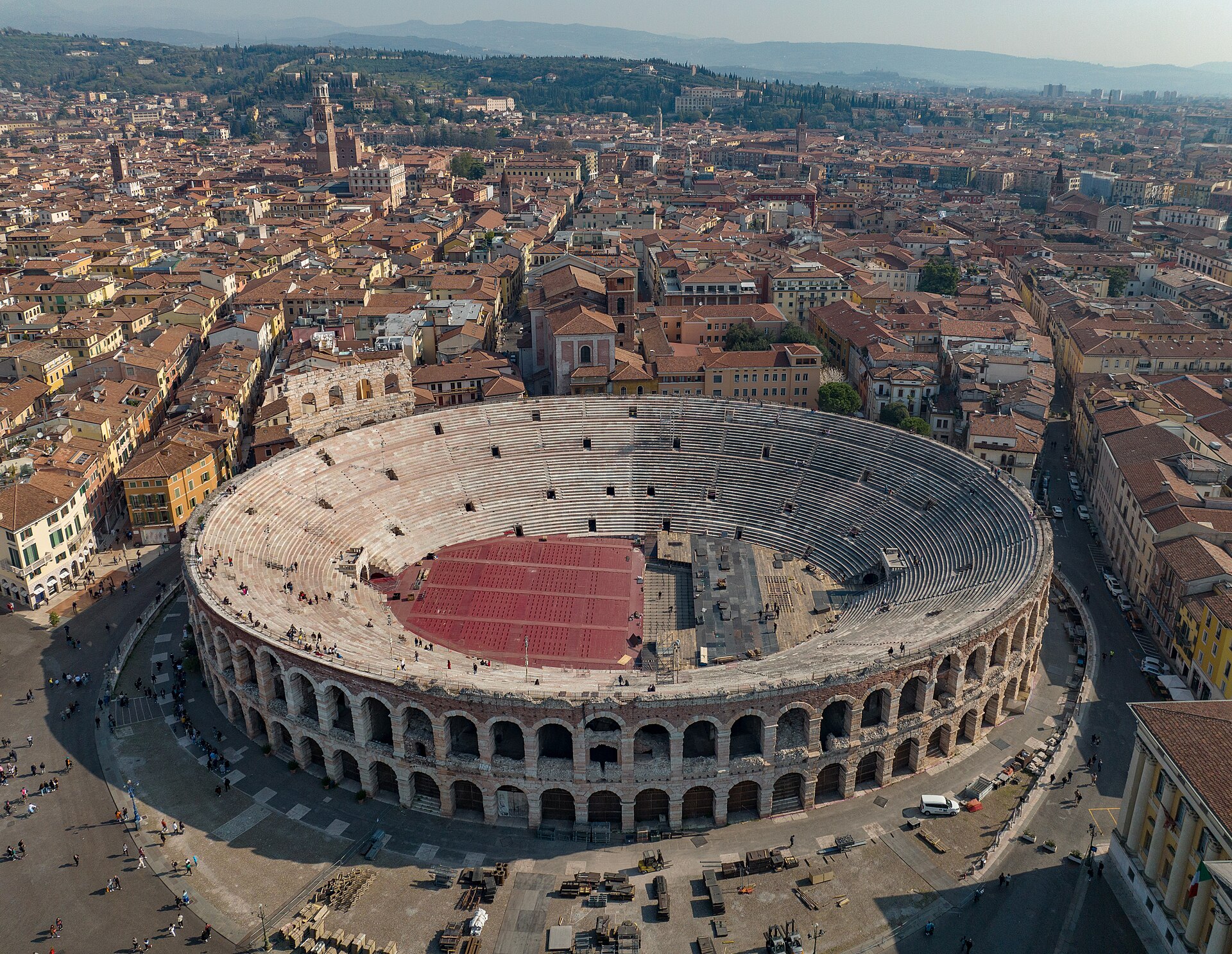
This Verona travel guide is my attempt to give you the honest version. Verona is a compact, romantic Veneto city built around a remarkably intact Roman Arena that still hosts a summer opera festival, easy as a day trip from Milan or Venice and a smart gateway to Lake Garda and the Valpolicella wine country. You can see the headline sights in a day. Give it an overnight and it starts to feel like yours.
Who this is for: travelers routing through Northern Italy who want more than a photo of a balcony, opera lovers chasing a once-in-a-lifetime night under the stars, and wine people who’d happily trade a museum for a glass of Amarone on a hillside. If that’s you, read on.
Verona at a glance: the sights and how long they take
Skim this before you plan anything. It’s the fastest way to see what’s worth your time and roughly how much of it each thing eats. Prices and hours below are approximate and accurate as of 2026; always confirm same-day, especially in opera season when the Arena’s daytime hours shrink.
| Sight | Time needed | Cost (approx, 2026) | My quick verdict |
|---|---|---|---|
| Arena di Verona (daytime visit) | 45–60 min | ~€12 | The reason to come; go early |
| Arena opera performance (evening) | 3–4.5 hrs | ~€25–250+ | A bucket-list night, June–Sept |
| Piazza delle Erbe | 30–45 min | Free | The city’s living room; aperitivo here |
| Piazza dei Signori | 20 min | Free | Quieter, grander, Dante’s statue |
| Casa di Giulietta courtyard | 10–20 min | Free (balcony ~€12) | Free courtyard yes, paid balcony skip |
| Torre dei Lamberti | 30–45 min | ~€6–8 | Best in-town view, lift available |
| Castelvecchio + bridge | 1–1.5 hrs | ~€9 (bridge free) | Underrated; the bridge alone is worth it |
| Ponte Pietra + Roman Theatre | 30–60 min | ~€5 (theatre) | Prettiest bridge; climb above it |
| Castel San Pietro viewpoint | 45 min | Free | The panoramic shot of Verona |
| Basilica di San Zeno | 30–45 min | ~€4 | The best church, a 15-min walk out |
| Giardino Giusti | 45–60 min | ~€10 | Renaissance garden, cypresses, calm |
If you only have a day, you can comfortably hit the Arena, both main piazzas, the Lamberti tower, Castelvecchio, and Ponte Pietra on foot. Everything in the historic center sits inside a tight loop of the Adige River, and you’ll walk almost all of it. Save San Zeno and the Giusti garden for an overnight, or cut them if your feet give out.
A quick word on the Verona Card. There’s a city pass (around €27 for 48 hours as of 2026) that bundles most paid sights plus city buses. If you plan to enter three or more monuments, it usually pays for itself. If you’re a one-day, see-the-outsides traveler, skip it and pay per sight.
The Arena di Verona: the real headline, day and night
Forget the balcony for a second. The Arena is why Verona matters, and it’s the thing page-one guides chronically underplay.
This is a Roman amphitheatre completed around AD 30, in the first century, which makes it roughly contemporary with the Colosseum and, frankly, better preserved in the parts that count. It’s commonly ranked among the largest and best-kept Roman amphitheatres anywhere. The pink-and-white limestone glows at golden hour. Standing inside, on the elliptical floor, with the tiered stone seating rising around you, you get a sense of scale that Rome’s more famous ruin, mobbed and roped off, somehow loses.
Visiting in the daytime
A daytime visit costs around €12 as of 2026 and takes 45 to 60 minutes. Go first thing when it opens, before the tour groups and before the heat. You can walk the floor and climb the surviving tiers. Important caveat: during opera season the stage set and seating rig occupy the arena floor, so daytime hours are reduced and sometimes the interior closes early on performance days. If a daytime walk-through is a priority, check the schedule and aim for a non-performance morning.
The summer opera festival, the part people miss
Here’s the angle most guides bury. Every summer the Arena becomes the world’s largest open-air opera house, and it has done so almost every year since 1913, when a Verona tenor staged Verdi’s Aida to mark the centenary of the composer’s birth. The 2026 season, the 103rd edition, runs roughly from 12 June to 12 September. (Looking further ahead, the 2027 season is slated for around 11 June to 11 September.) The programming leans into the warhorses for good reason: as of 2026 the lineup includes Aida in two different productions, plus La Traviata, Nabucco, La Bohème, and Turandot, alongside ballet evenings and big choral concerts like Carmina Burana.
What makes it special isn’t just the setting. The acoustics are so good that singers perform without microphones, and a voice still carries to the cheap seats on the stone steps. I’ve sat on those steps. You rent a thin cushion, the sun goes down behind the rim, twenty thousand people go quiet, and the first notes land in open air. It’s one of the great live-music experiences in Europe, and you don’t need to be an opera person to be wrecked by it.
Booking an opera night without getting it wrong
A few hard-won pointers:
- Buy from the official source. Tickets come through the Fondazione Arena di Verona (arena.it). Resellers exist and mark up heavily.
- Pick your seat type honestly. The numbered seats in the lower stalls (poltronissime/poltrone) are pricier and more comfortable; the unnumbered stone steps (gradinata) are the cheapest, atmospheric, and hard on the back. Prices as of 2026 span roughly €25 on the steps to well north of €200 for premium seats.
- Bring a cushion or rent one if you’re on the steps. A small one is allowed; big bags are not.
- Mind the start time. Shows begin after dark, often around 9pm in high summer, and run three to four and a half hours. Aida runs long.
- Weather happens. Performances can be paused or postponed for storms; know the rain policy when you buy.
- Dress is relaxed. No tuxedo required, though locals on the good seats do dress up.
One logistics gift: on performance evenings an OperaBus runs from Piazza Bra back to the Lake Garda towns (Peschiera, Lazise, Bardolino, Garda, Malcesine and others), leaving roughly half an hour after the show. If you’re basing yourself on the lake, that solves your night.
How to use this Verona travel guide if you’ve only got a day
Most of you will arrive on a train and leave on one. So here’s the walking loop I’d actually do, in order, no car, no stress.
Start at Piazza Bra and the Arena the moment you arrive (or save the Arena interior for when it opens). Walk the pedestrian Via Mazzini, the glossy shopping street, north to Piazza delle Erbe for coffee. Detour to Piazza dei Signori and the Torre dei Lamberti for the view. Glance at Juliet’s courtyard if it’s on the way, then continue to Sant’Anastasia and down to the river at Ponte Pietra. Cross and climb to Castel San Pietro for the panorama. Loop back along the Adige to Castelvecchio and its bridge for sunset. That’s a full, satisfying day, roughly 4–6 km of flat-ish walking with one short hill.
Got a second day? Add San Zeno in the morning and the Giardino Giusti in the afternoon, or peel off for a half-day in Valpolicella wine country. More on both below.
Piazza delle Erbe and Piazza dei Signori: the two hearts
If the Arena is Verona’s monument, Piazza delle Erbe is its living room. It sits on the footprint of the old Roman forum, and two thousand years later it’s still where the city gathers. Market stalls under big umbrellas, frescoed facades on the Case Mazzanti, the old fountain with its medieval statue at the center, cafe tables spilling out under the Lamberti tower. This is the spot for an early-evening aperitivo, a spritz or a glass of local white, and an hour of watching Verona be itself. It gets busy by midday; come early or near dusk for the magic.
Walk through the arch and you reach Piazza dei Signori, sometimes called Piazza Dante for the brooding statue of the poet in its middle. Dante was exiled from Florence and spent years here under the protection of Verona’s ruling Scaligeri family, and the square has a calmer, grander feel than its noisy neighbor: the elegant Loggia del Consiglio, the old government palaces, fewer stalls, more dignity. I like it precisely because most day-trippers rush through it. Sit on the steps for ten minutes. Just behind, peek at the Arche Scaligeri, the extravagant Gothic tombs of those same lords, an iron-laced fairy tale of spires.
Juliet’s House and the balcony: my honest take
You’re going to ask, so let’s be straight about it.
Casa di Giulietta is, by any historical measure, a 20th-century tourist creation. There was no Juliet; Shakespeare’s lovers are fiction, and he never set foot in Verona. The house is a real medieval building once owned by a family called dal Cappello (close enough to “Capulet” to be useful), but the famous balcony was added in the 1930s, assembled in part from an old sarcophagus, specifically to give the legend a stage. The bronze Juliet statue in the courtyard, whose right breast is rubbed to a shine by visitors hoping for luck in love, is even newer.
So is it worth your time? Here’s where I land. The courtyard is free, brief, and genuinely fun in a slightly ridiculous way: the graffiti-and-love-letters tunnel, the crowd, the statue, the balcony overhead. Pop in, take it in, smile at the spectacle, move on. Paying around €12 to go inside and stand on the balcony, though, I’d skip unless you’re traveling with a true romantic or a Shakespeare fan who’ll treasure it. The interior museum is thin, and the line for the balcony photo is long. Know what it is, enjoy it for what it is, and don’t let it eat your morning. Romeo’s so-called house is a few streets away and you can’t go in anyway.
The deeper point: people come to Verona for a love story and stay for a Roman city. Don’t make the balcony the headline. Make it the footnote.
Castelvecchio and its bridge: the underrated star
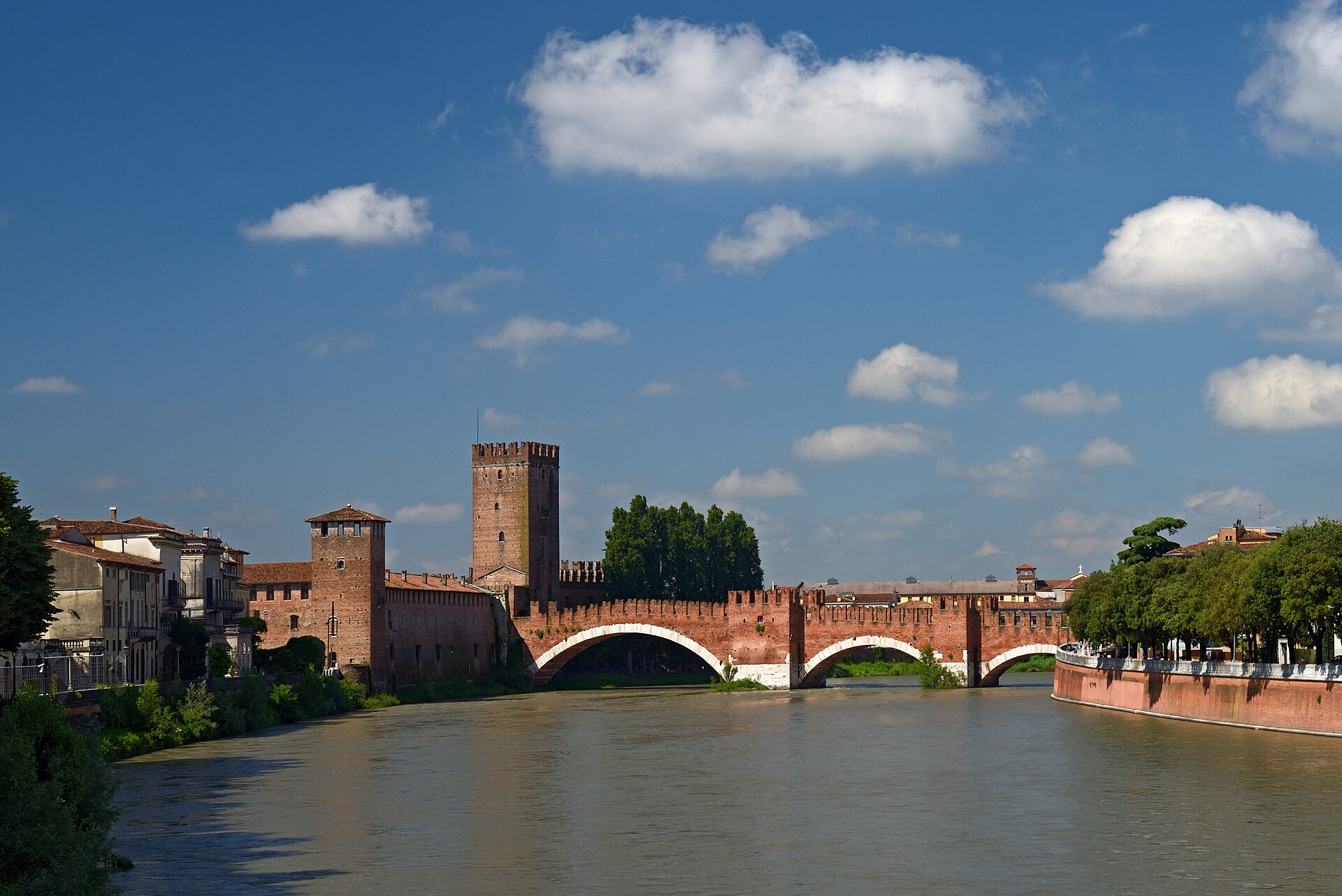
If I had to pick the single most underappreciated sight in Verona, it’s Castelvecchio. This red-brick medieval fortress on the river was built by the Scaligeri in the 14th century, and it now houses an excellent art museum: a beautifully restored interior (the postwar redesign by architect Carlo Scarpa is famous among design nerds) full of medieval sculpture, frescoes, and Venetian-school paintings. Entry runs around €9 as of 2026, and even if you skip the galleries, the castle is a pleasure to walk.
But the real reason to come is the Ponte Scaligero, the castle’s fortified bridge over the Adige. It’s free to walk, its swallowtail battlements are pure storybook, and the view back at the fortress with the river running fast and green beneath you is the best architectural photo in the city. Time it for late afternoon when the brick goes warm. It’s a short stroll from Piazza Bra and an easy bookend to a day’s walking.
Ponte Pietra, the Roman Theatre, and the view from Castel San Pietro
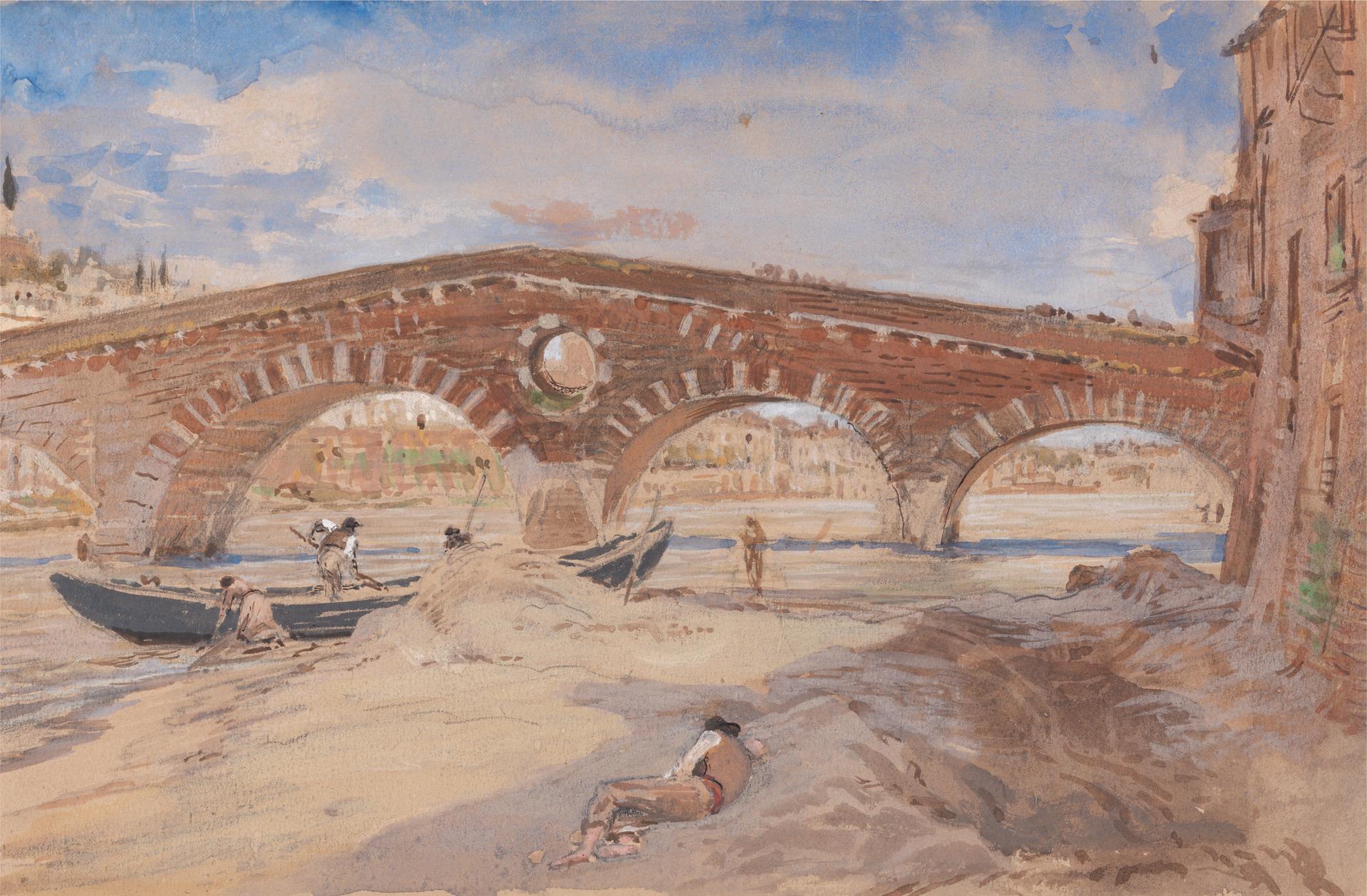
On the far side of the river, the older and prettier of Verona’s bridges is the Ponte Pietra, the “Stone Bridge,” part Roman and part rebuilt (the Germans blew it up in 1945; the locals fished the original stones out of the river and put it back). Its mismatched arches, red brick beside pale stone, are lovely from either bank, and street musicians often play on it at dusk.
Just above it sits the Teatro Romano, Verona’s Roman theatre, older than the Arena and built into the hillside facing the city. It still hosts summer performances and folds in an archaeological museum; entry is around €5. Worth it if you like ruins, skippable if you’re tight on time, because the real prize is higher up.
Climb (or take the short funicular) to Castel San Pietro. You don’t need to go inside anything. The terrace in front delivers the postcard: the whole terracotta sweep of Verona, the river bending below, church towers and the Arena beyond, the hills behind. Sunset here is one of the best free things you’ll do in the Veneto. Go up with a gelato and stay for the light.
Torre dei Lamberti: the in-town view
For a view from the center rather than across the river, climb the Torre dei Lamberti, the 84-meter tower rising over Piazza delle Erbe. There’s a lift partway if stairs aren’t your thing, and tickets run around €6–8 (often bundled with the modern art gallery in the palazzo below). From the top you look straight down into the piazzas and out over the rooftops to the hills. It’s a different, more intimate view than Castel San Pietro, and a good rainy-hour option. If you only do one high point, I’d take the free Castel San Pietro terrace for the panorama and the Lamberti for the get-above-the-rooftops feeling.
Basilica di San Zeno: the church worth the walk
Verona has a lot of churches, and you do not need to enter all of them. The Duomo and Sant’Anastasia are handsome from outside and fine within if you’re a church person; a joint church ticket (around €8 as of 2026) covers several if you are.
But Basilica di San Zeno Maggiore is the one I’d cross town for. It’s about a 15-minute walk west of the center, and it’s one of the finest Romanesque churches in all of Italy: a serene striped facade, a famous rose window called the “Wheel of Fortune,” extraordinary 12th-century bronze door panels telling Bible stories in raised metal, and inside, a luminous Mantegna altarpiece over the main altar. It’s calmer than the central churches because the crowds rarely make the walk. Entry is around €4. If you have any appetite for art or architecture, this is the sleeper highlight of Verona.
Giardino Giusti: a Renaissance garden to slow down in
When the stone and the crowds get to be too much, the Giardino Giusti is the antidote. Across the river behind a grand gated palazzo, this is a classic late-Renaissance Italian garden, laid out in the 1500s: geometric box hedges, mossy statues, a little maze, fountains, and an avenue of towering cypresses climbing the hillside to a viewpoint and a stone grotesque mask. Goethe gushed about it; so did I. Entry runs around €10 as of 2026, which is steep for a garden, but on a hot afternoon the shade and the quiet are worth real money. It pairs naturally with the Castel San Pietro side of the river.
Verona as a base for wine country: Valpolicella, Amarone, and Soave
This is the part that turns a good Verona trip into a great one, and it’s another thing the listicles skim.
Verona sits at the doorstep of some of Italy’s most serious wine. North of the city, the hills of Valpolicella produce a range that runs from easygoing Valpolicella Classico up to the big, brooding, slightly sweet-edged Amarone della Valpolicella, made from partially dried grapes, and its cousin Ripasso. To the east, around the pretty castle town of Soave, you get crisp white Soave from the Garganega grape. You can taste all of it in town at any decent enoteca, and you absolutely should: order a glass of Amarone with a plate of cheese and just sit with it.
But if you have a spare half-day, go to the source. Several wineries in Valpolicella welcome visitors for tastings, usually by appointment, and many sit a 20–40 minute drive from the center amid vineyards and cypress. The easiest way is a small-group tour or a hired driver from Verona; doing it by public transport is fiddly. A morning of sights in town and an afternoon in the hills with a glass in hand is, for my money, the perfect Verona day-and-a-half. For the bigger picture on Italian wine regions and how to taste your way through them, see my guide to Italian food and wine.
Day-tripping to Verona (and beyond) by train
Verona is one of the best-connected cities in Northern Italy, which is exactly why it works as a hub or a stop. Train times and fares below are approximate and accurate as of 2026; confirm on the day.
From Milan. High-speed trains from Milano Centrale reach Verona Porta Nuova in around 1 hour 15 minutes, with frequent departures; cheaper regional trains take longer. Verona is, hands down, one of the best day trips from Milan, and it slots neatly between a few days in the city and the lakes. If you’re building a Northern Italy loop, this whole region sits under my Milan and Northern Italy travel guide.
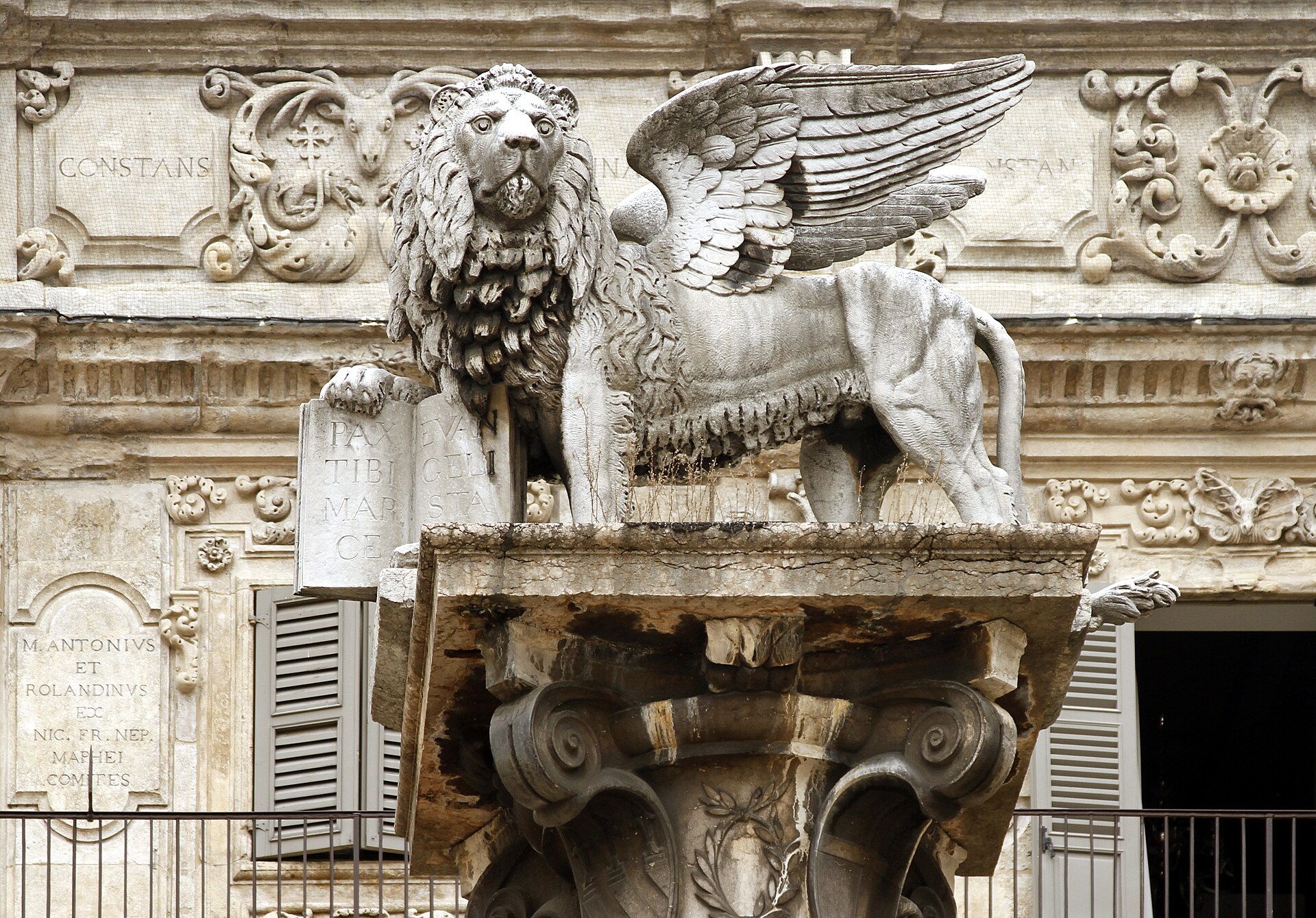
From Venice. Even closer. Trains from Venezia Santa Lucia reach Verona in around 1 hour 10 minutes to 2 hours depending on the service, making a Verona day trip from Venice genuinely easy, or vice versa. The two cities share Veneto DNA, and you’ll spot the Venetian lion of St. Mark all over Verona. For everything on the lagoon and the wider region, see my Venice and the Veneto travel guide.
From elsewhere. Florence is around 1.5 hours by fast train, Bologna under an hour, and Rome roughly 3 hours, so Verona fits well into a longer rail itinerary. For how the whole rail system works (which station, regional vs high-speed, booking), my Italy transportation guide covers it, and if you’re sketching a route, the Italy itineraries hub will help you slot Verona in.
One practical note: Verona Porta Nuova is the main station and sits about a 15–20 minute walk (or a quick bus) south of Piazza Bra and the Arena. There’s a smaller station, Verona Porta Vescovo, but you want Porta Nuova.
Lake Garda from Verona: the easy gateway
Verona is the natural mainland gateway to Lake Garda, Italy’s largest lake, and the pairing is one of the smartest moves in the region. Peschiera del Garda, on the lake’s southern shore, is only about 15–20 minutes from Verona by train, which makes a lake afternoon almost absurdly easy. From Peschiera you can reach the postcard peninsula town of Sirmione (Roman ruins, a moated castle, thermal water) by bus or boat, or hop ferries up the shore.
This is why I often tell people to give the area two or three nights total: a day or two of Verona’s stone and opera, then a day on the water. If you’re chasing an opera night, remember the OperaBus that ferries you back to the Garda towns after the show. For the full rundown of Garda, Como, Maggiore and the rest, see my Italian Lakes travel guide.
Practical specifics: how long, when to go, where it fits
How long do you need in Verona? A full day covers the headline sights comfortably on foot. An overnight is the sweet spot: it gives you a slow evening aperitivo, a sunset from Castel San Pietro, dinner without rushing for a train, and the option of San Zeno, the Giusti garden, or a wine afternoon the next morning. Two nights only if you’re adding Lake Garda or Valpolicella, which I’d encourage.
When should you go? This depends entirely on the opera. The festival, roughly mid-June through mid-September as of 2026, is the bucket-list reason to come, but it’s also the hottest, busiest, priciest window, and the Arena’s daytime interior is partly closed. If a night at the opera is your goal, accept the summer crowds and book ahead. If you’d rather have the city to yourself, come in the shoulder seasons: late April to early June, or September into October. The weather is kind, the light is gorgeous, the piazzas breathe, and hotel prices ease. Winter is quiet and atmospheric (Verona does a lovely Christmas market in the Arena’s shadow), just cold and short on daylight. For the national picture, my best time to visit Italy guide breaks down the seasons.
Where to stay. The historic center inside the river loop is ideal if you can swing it: you’ll walk everywhere and soak up the evening atmosphere after the day-trippers leave. Areas near Piazza Bra are convenient for the Arena and the station. In opera season, book early and far ahead. For the strategic view on choosing a base around Italy, see where to stay in Italy.
A few etiquette notes. Cover shoulders and knees to enter churches like San Zeno and the Duomo. Coffee standing at the bar is cheaper than sitting; a spritz on Piazza delle Erbe carries a view tax and that’s fine. Validate regional train tickets before boarding if your ticket isn’t time-stamped. A handful more of these are in my Italy travel tips, and the big-picture Italy travel guide ties the whole country together.
Final thoughts
Verona is the city that talked me out of my own schedule, and I suspect it’ll do the same to you. Come for whatever brings you, a balcony, an opera, a train you had to change anyway, and let the Roman stone, the river light, and a glass of Amarone do the rest. See it in a day if that’s all you have. But if you can spare a night and a slow morning in the wine hills, take it. Verona rewards the people who stay.
Questions travellers ask
Is Verona worth visiting, or just a quick stop?
It’s worth more than people give it. Many treat Verona as a 90-minute photo stop between Milan and Venice, and you can do that, but it sells the place short. The Roman Arena, two beautiful piazzas, Castelvecchio, the river views, and the surrounding wine country reward a full day at minimum and genuinely shine with an overnight. Come for the balcony if you must; stay for the Roman city.
How many days do you need in Verona?
One full day covers the main sights on foot: the Arena, Piazza delle Erbe, Castelvecchio, Ponte Pietra, and a viewpoint. An overnight is better, letting you enjoy a sunset, a relaxed dinner, and a slower second morning at San Zeno or the Giusti garden. Add a second night only if you’re pairing Verona with Lake Garda or a Valpolicella wine afternoon, which I’d recommend if time allows.
How do you get from Milan or Venice to Verona?
By train, easily. High-speed services from Milano Centrale reach Verona Porta Nuova in around 1 hour 15 minutes as of 2026, with frequent departures. From Venezia Santa Lucia it’s roughly 1 hour 10 minutes to 2 hours depending on the service. Both make simple day trips. Verona Porta Nuova is the station you want; it’s a 15–20 minute walk or short bus ride to the Arena and Piazza Bra.
When is the Verona Arena opera season, and how do I book?
The summer Arena Opera Festival runs roughly from mid-June to mid-September; in 2026 it’s about 12 June to 12 September, the 103rd edition. Buy tickets through the official Fondazione Arena di Verona site (arena.it) rather than resellers. Seats range from cheap unnumbered stone steps (around €25 as of 2026) to premium numbered seats well over €200. Book popular nights like Aida far ahead.
Is Juliet’s House worth visiting?
The courtyard is free, quick, and good fun in a kitschy way, the statue, the letters, the famous balcony overhead, so pop in. But know it’s essentially a 20th-century tourist creation: the balcony was added in the 1930s, and there was no real Juliet. I’d skip paying around €12 to go inside and stand on the balcony unless you’re a devoted romantic or Shakespeare fan. Enjoy it as a footnote, not the headline.
Can you do a day trip to Lake Garda from Verona?
Yes, and it’s one of the easiest in the area. Peschiera del Garda on the lake’s southern shore is only about 15–20 minutes from Verona by train. From there you can reach Sirmione, with its castle and Roman ruins, by bus or boat, or take ferries up the shore. In opera season, an OperaBus even runs from Verona back to the Garda towns after evening performances, which makes basing yourself on the lake practical.
What wine is Verona known for?
Verona is the gateway to two notable wine zones. North of the city, the Valpolicella hills produce reds from easygoing Valpolicella Classico up to the rich, dried-grape Amarone della Valpolicella and its Ripasso. East of the city, around Soave, you get crisp white Soave from the Garganega grape. Taste them at any city enoteca, or visit a winery on a half-day trip into the hills, usually by tour or hired driver.
What’s the best time of year to visit Verona?
It depends on the opera. If a night under the stars at the Arena is your goal, come in summer (roughly mid-June to mid-September) and accept the heat and crowds. For a quieter, more comfortable city with lower prices, target the shoulder seasons: late April to early June, or September into October, when the light is beautiful and the piazzas aren’t packed. Winter is calm and cold, with a charming Christmas market by the Arena.