Lake Garda Travel Guide: Shores, Towns and Castles
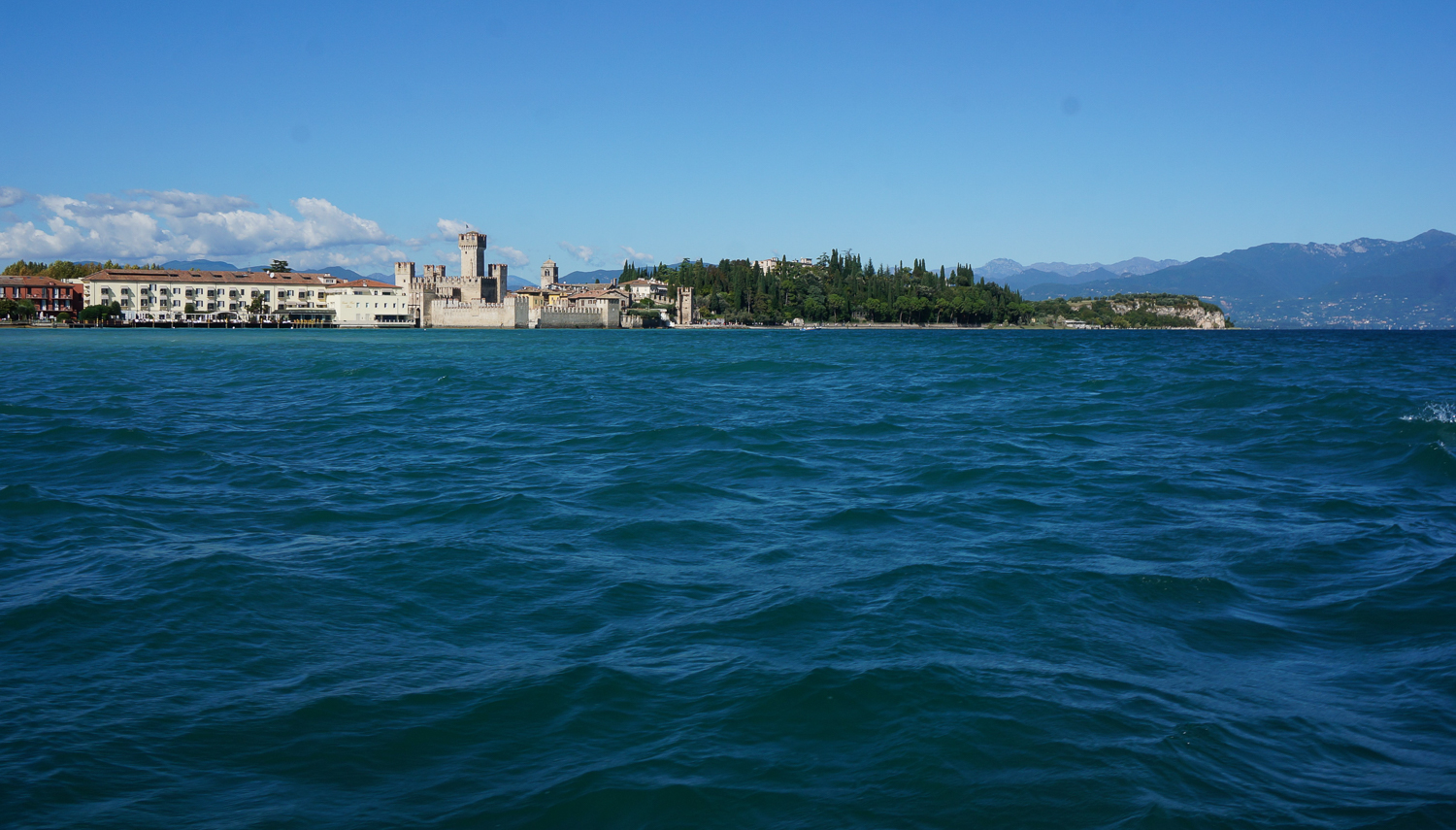
The first time I drove the length of Lake Garda, I genuinely thought I’d crossed into a different country halfway up. I started the morning on a flat, sandy southern beach that felt like the Adriatic, and by mid-afternoon I was staring up at near-vertical cliffs with windsurfers skating below them. That whiplash is the whole point of this place, and it’s exactly what most guides gloss over.
So here’s the honest version. This Lake Garda travel guide is built around one idea: Garda is Italy’s biggest lake, and it’s really four lakes wearing one name. The south is flat, sunny, beachy and family-friendly. The west is a green, sheltered Riviera. The east is a string of castle-and-wine towns. The north is dramatic, mountainous and wind-whipped. Pick the wrong shore for your trip and you’ll spend the whole time wishing you were somewhere else on the same lake.
This guide is for the planner who wants the real shore-by-shore map before booking — which town, which station, which ferry, and how long. If you’re traveling with kids or chasing theme parks, I’ll point you to the deep dives at the right moments rather than padding this one out.
The four shores at a glance
Before anything else, get this table into your head. It’s the single most useful thing I can give you, and it’s the part page-one guides almost never lay out cleanly. Garda’s shores have genuinely different personalities, and the “best base” question only makes sense once you know which one you’re after.
| Shore / area | Character | Best for | Main towns | Gateway station |
|---|---|---|---|---|
| South | Flat, wide, sunny, beachy; seaside feel | First-timers, families, beach days, train travelers | Sirmione, Desenzano, Peschiera | Desenzano or Peschiera (on the line) |
| West | Green sheltered “Riviera,” lemon terraces, cliffs further north | Slow days, culture, gardens, quiet luxury | Salò, Gardone Riviera, Limone sul Garda | Desenzano, then bus/ferry |
| East | Castle towns, vineyards, promenades, lively harbors | Wine, walkable old towns, ferry-hopping | Bardolino, Lazise, Garda, Malcesine | Peschiera, then bus/ferry; or Verona |
| North | Dramatic cliffs, alpine air, world-class wind | Windsurfing, sailing, hiking, mountain access | Riva del Garda, Torbole | Rovereto (rail), then bus; or Verona |
Lake Garda stretches about 50 km (31 miles) north to south, fanning out to roughly 17 km wide in the flat south and pinching to about 2 km in the cliff-walled north. It’s deep too — around 350 m off Torri del Benaco. That pear shape is why the south feels Mediterranean and the north feels like the Alps reached down and grabbed the water. For a wider picture of how Garda sits alongside its neighbors, the Italian Lakes travel guide is the parent overview, and if you’re touring more than one lake, the suggested route through the Italian Lakes handles the cross-lake routing so I don’t have to.
Using this Lake Garda travel guide: how to think about the lake
Here’s how I’d frame your whole trip. Don’t ask “where should I stay on Lake Garda?” first. Ask “what do I actually want to do?” — then the shore picks itself, and the town follows.
Want beaches, easy train access and a base for day-tripping with no car? South shore. Want gardens, a famous eccentric villa and the prettiest lemon-terrace town? West. Want medieval castles, wine tasting and a working cable car up a mountain? East. Want wind in your face, serious hiking and a gateway to the Dolomites? North.
The mistake I see over and over is people booking a hotel in Sirmione because it’s the famous postcard, then realizing they wanted to windsurf, which happens 50 km north. Or basing in Riva for the drama, then spending two hours a day driving south to the beaches and theme parks. Match the shore to the trip first. Everything below is organized to help you do exactly that.
South shore: beaches, the Scaliger castle and the rail hub
The south is where most people should start, especially on a first visit or without a car. It’s flat, the beaches are real, and two of the lake’s only train stations sit right here.
Sirmione — the postcard, with a catch
Sirmione is the image you’ve already seen: a thin peninsula spearing into the lake, with the moated Scaliger castle (Castello Scaligero) guarding the entrance to the old town. You walk in over a drawbridge, which never stops being fun. At the tip sit the Grotte di Catullo, the sprawling ruins of a grand Roman villa on an olive-grove headland with water views in three directions. It’s one of the most atmospheric Roman sites in northern Italy, even though “grotte” is a misnomer — these are villa ruins, not caves.
Sirmione is also a thermal town. There are sulphurous hot springs, and the lakeside Aquaria spa lets you soak with the castle in view. Prices and hours shift, so check the spa’s current site before you bank on it.
My honest take: Sirmione is gorgeous and it knows it. By late morning in summer the single pedestrian lane through the old town turns into a slow shuffle. Go early, or stay overnight so you have the place before the day-trippers and after they leave. If you can only come midday in July, temper your expectations. For a free swim, locals head to Jamaica Beach, the flat limestone shelf near the Roman ruins where the water glows turquoise over pale rock.
Desenzano and Peschiera — your practical gateways
These two are the workhorses, and that’s a compliment. Desenzano del Garda sits on the southwest corner with the busiest ferry terminal on the lake and a train station on the Milan–Venice line. It has a genuinely pleasant old harbor, a Roman villa with excellent mosaic floors, and an easy, lived-in feel. From Verona it’s roughly 19 minutes by fast train. If you’re arriving from Milan without a car, this is often your front door.
Peschiera del Garda, on the southeast corner, is the rail hub for the eastern and northern shores and the closest station to Verona — as little as around 14 minutes on a high-speed train, or roughly 13 to 31 minutes on a regional. The town itself is a star-shaped Venetian fortress town, its walls now a UNESCO listing, wrapped by the Mincio river as it leaves the lake. It’s also the launch point for buses up the east shore and the theme-park corridor just inland.
If you’re coming by train and want to base where the trains actually stop, pick Desenzano or Peschiera. I’d hand Peschiera to anyone planning to roam the east shore, and Desenzano to anyone leaning west or wanting the bigger town. For the full rail picture, Italy transportation covers fast trains versus regionals, and the Verona travel guide explains why Verona is the smartest gateway city of all.
West shore: the green Riviera, a mad poet’s villa and lemon cliffs
The western shore is the lake’s quiet, leafy side. It catches afternoon sun, it’s lush with olives and citrus, and it carries a faintly grand, old-world air. There’s no train here — you reach it by bus or ferry from Desenzano, or by driving the Gardesana Occidentale (SS45 bis).
Salò and Gardone Riviera
Salò has the longest waterfront promenade on the lake and an easy elegance to it. It carries a heavy historical footnote too: in 1943–45 it was the nominal capital of Mussolini’s German-backed Italian Social Republic, the so-called Republic of Salò. Today it’s all gelato and lake breeze, but the history is part of the texture.
Just up the road, Gardone Riviera is home to the strangest, most compelling sight on this shore: Il Vittoriale degli Italiani, the hillside estate where the poet-soldier-provocateur Gabriele D’Annunzio lived from 1922 until his death in 1938. It’s a villa, an open-air amphitheater, terraced gardens, a mausoleum, and — improbably — a full warship’s prow embedded in the hillside and the actual plane he flew over Vienna. Budget about an hour, more if you tour the house interior. It’s bizarre and unforgettable, and it tells you a lot about a certain strand of early-20th-century Italy. Check current prices and hours on the official Vittoriale site.
Limone sul Garda
Keep going north and the west shore turns vertical. Limone sul Garda clings to the cliffs amid terraced lemon groves, with old limonaie (lemon greenhouses) you can visit. The name actually comes from an old word for boundary, but the lemons leaned into the legend, and Limone now grows the prettiest version of itself for visitors. It’s touristy and it’s worth it — narrow stepped lanes, a tiny harbor, and fresh lemonade that’s genuinely hard to find elsewhere in Italy. When I’m based across the water in Malcesine, I hop over on the ferry shuttle (around 10 euros round trip, as of 2026) just for an afternoon there.
East shore: castles, wine and a cable car to the clouds
The eastern shore, all within about half an hour of Verona, is my pick for a balanced first trip. You get walkable medieval towns, serious wine, lake promenades and, at the top, one of the great mountain rides in Italy. You’ll reach it by bus or ferry from Peschiera, or by driving the Gardesana Orientale (SS249).
Bardolino and Lazise — wine and waterfront
Bardolino has the most enjoyable lakefront promenade on the east shore — restaurant-lined harbor, a park, a small skywheel — and it’s the heart of a light, fruity red wine region of the same name. There’s a wine museum and an olfactory gallery at the Zeni winery on the waterfront where you try to name the scents in the glass. Just south, Lazise has a tidy little harbor ringed by a medieval wall and the distinction of being arguably the first free comune in Italian history, granted self-rule and fishing rights back in 983. Both are easy, pretty and lively without tipping into chaos.
This stretch is wine country in earnest — Bardolino on the east shore, Lugana down on the southern flats, Custoza in the morainic hills inland. If tasting your way around is part of the plan, the Italy food and wine travel guide goes deeper on regions, grapes and how to book a cellar visit without overthinking it.
Garda town, Punta San Vigilio and Torri del Benaco
Garda is the unassuming town that gave the whole lake its name — warda, an old Germanic word for a watch post. Nearby, Punta San Vigilio is a private little headland with a romantic villa, a tiny harbor and a famously pretty bay. Torri del Benaco is a smaller castle town and the eastern end of the lake’s car ferry, which I’ll come back to under getting around.
Malcesine and Monte Baldo
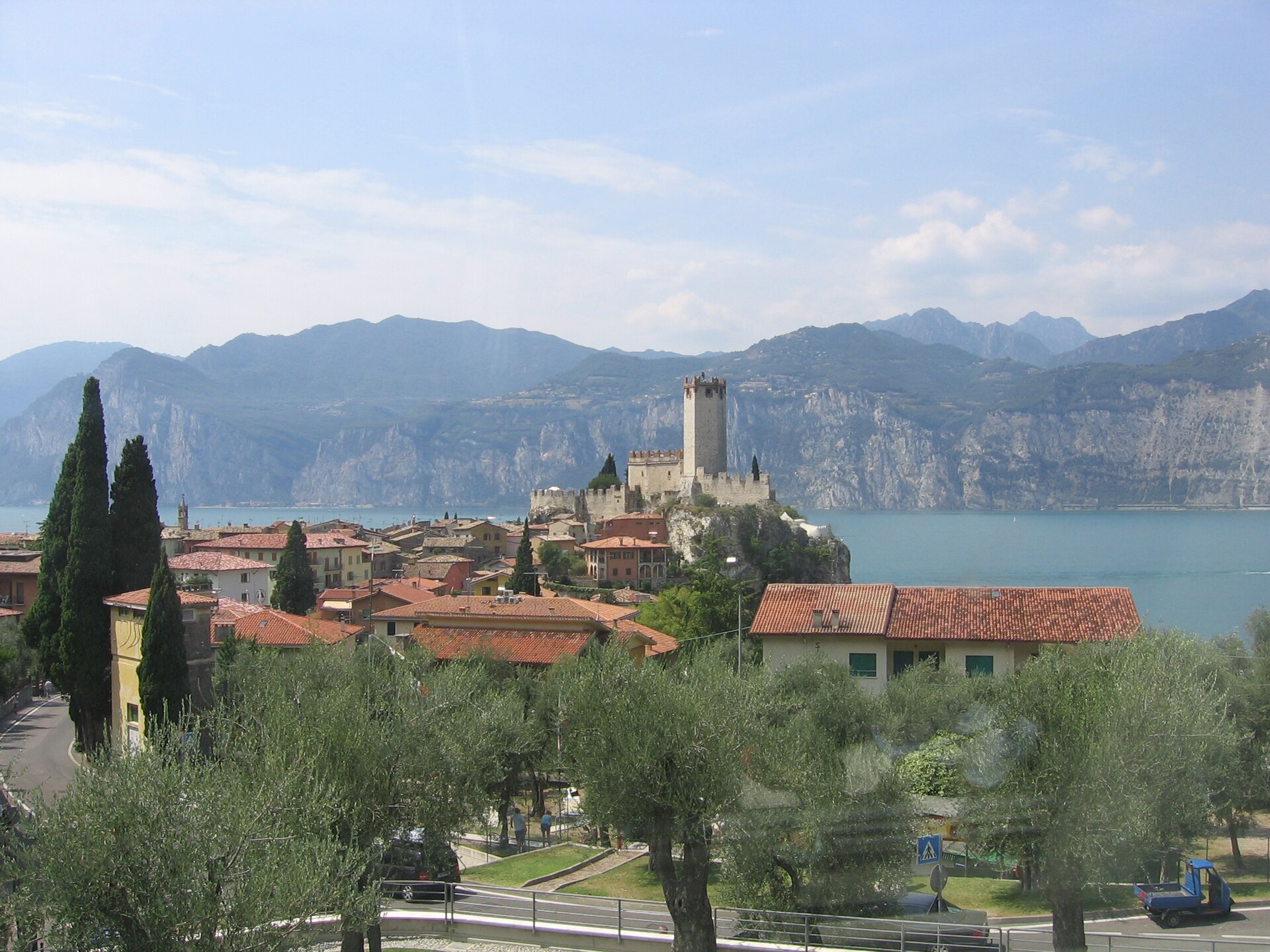
Near the top of the east shore, Malcesine is the one that gets people obsessed. The old town is a pedestrian-only tumble of pastel houses spilling down to the water, anchored by another lakeside Scaliger castle with a tower jutting about 105 feet over the harbor. Goethe sketched here in 1786 and nearly got arrested as a spy for his trouble.
The headline act, though, is the Malcesine–Monte Baldo cable car. A rotating glass cabin lifts you in two stages to around 1,760 m, and on a clear day you can see the Dolomites in one direction and the whole sweep of the lake in the other. Up top there are gentle trails, mountain-bike rentals, rifugi serving hearty mountain food, paragliding launches and even summer truffle hunts. Bring a layer — it’s noticeably cooler up there even in August. Book online for priority (it doesn’t lock an exact time slot), and treat any prices and hours as “around / as of 2026” since they change with the season.
Because Malcesine sits well up the shore, I’d only base here if you’ve got at least three days and you’re happy leaning into the cable car, the castle and ferry hops to Limone. It’s a destination, not a convenient hub.
North shore: wind, cliffs and the doorway to the mountains
The northern tip belongs to the Trentino region, and it feels different the moment you arrive — sheer cliffs crowding the water, an alpine bite to the air, and a faint Austrian accent in the architecture and food. This is where Garda stops being a beach lake and becomes an adventure one.
Riva del Garda and Torbole
Riva del Garda is the grand old town of the north: palm-lined waterfront, a medieval tower and moated keep, pastel facades, and a relaxed Mitteleuropean polish from its Habsburg years. The MAG museum (Museo Alto Garda) walks you through the lake’s history from prehistory to empire, set in vaulted stone halls. I find Riva consistently less frantic than Sirmione, which is a big part of its appeal.
Next door, Torbole is windsurf and sailing central. The north is famous worldwide for two reliable winds — the Peler, which blows from the north in the morning, and the Ora, which swings up from the south in the afternoon — and that metronomic rhythm is why sailors and surfers plan whole trips around this corner. Even if you don’t sail, watching dozens of bright sails crisscross the water under those cliffs is a show in itself.
The north is also the best jumping-off point for the high mountains. The Dolomites and the wider Alps are right there, and a Garda base pairs naturally with a couple of days up high — the Dolomites and Alps travel guide covers that side. The cliffside Ponale road, an old carriage route now a walking-and-cycling path carved into the rock above Riva, is the easiest way to feel that mountain drama without serious effort, and the views back over the lake are absurd.
Theme parks and family days
Garda’s southeastern hinterland is, frankly, the closest thing Italy has to an Orlando. Gardaland, near Peschiera, is one of Europe’s most-visited theme parks, and it’s joined by a water park, a SEA LIFE aquarium, the movie-themed park, and more besides within a short radius. Families pour into the south shore largely for this corridor.
I’m keeping this short on purpose, because there’s a whole guide for it. If theme parks, kid-friendly beaches and family logistics are central to your trip, go straight to Lake Garda with kids — it covers ticket strategy, the best family bases and which parks suit which ages, so I don’t duplicate it here. My job in this guide is the lake itself; that one is your family playbook. Check current Gardaland prices and opening dates directly, as they swing with the calendar.
Getting there: which station, which airport
Garda sits almost dead center in northern Italy, roughly equidistant from Milan and Venice, which makes it one of the most reachable lakes in the country.
By train. The two stations actually on the lake — Desenzano and Peschiera — sit on the main Milan–Venice line, so direct trains from both cities are frequent. From Verona Porta Nuova, Peschiera is as little as around 14 minutes and Desenzano around 19 by fast train, which is why I treat Verona as the real gateway. For the north end, the nearest mainline station is Rovereto, with buses on to Riva and Torbole. Booking and the regional-versus-high-speed distinction are all in Italy transportation.
By air. Verona’s airport is closest, with a shuttle to Porta Nuova and, in summer, a direct airport bus to several lakefront towns. Bergamo, Milan and Venice airports are all within driving range too.
By car. Off the A4 motorway, use the Desenzano, Sirmione or Peschiera exits for the south; off the A22, use Affi for the east or Rovereto Sud for the north. A car is a real asset for the west and north shores — just read the parking and ZTL notes below before you commit. If you’re folding Garda into a bigger loop, the Italy itineraries hub helps you slot it between Venice, Verona and Milan sensibly, and the Verona travel guide and broader Venice and Veneto travel guide cover the cities on either side.
Getting around the lake: ferries, buses and the car question
This is where people overthink things. You have three good tools, and the smart move is mixing them.
Ferries. The public boat service run by Navigazione Laghi connects basically every town on the shore, and crossing the lake by water is the single most pleasant way to move around — and often faster than driving, because you skip the shoreline traffic. There are slow boats that stop everywhere and faster ones that hit only the big towns. You can buy a single ticket, but if you plan to town-hop, a day pass or multi-day pass (whole lake, or just Lower or Upper Garda) gives you unlimited hops from morning till dusk and usually pays off fast. There’s also a car ferry between Toscolano Maderno (west) and Torri del Benaco (east) that saves you a long drive around. Treat all fares and timetables as “around / as of 2026” and confirm on the Navigazione Laghi Garda site before you build a day around the last boat — miss it and you’re scrambling for a bus or taxi back.
Buses. A solid network links the lakefront towns and runs out to Verona, Brescia and Rovereto. Buses are cheap and cover the gaps ferries don’t, especially up the cliffy west shore and to the north. The catch is summer crowds and traffic — you may queue, and a bus stopping everywhere takes far longer than the same trip by car or fast ferry.
Car and the ZTL warning. A car gives you total freedom for the loop and the high villages, but the single lakeside road (the Gardesana, split into Orientale on the east and Occidentale on the west) is two lanes for most of its length and clogs badly on summer weekends. Worse for the unprepared: most historic centers — Sirmione, Malcesine, Limone and more — are ZTL (limited-traffic zones) where driving in without a permit triggers an automatic fine, often weeks later by mail. Park in the signposted lots outside the old town and walk in. My rule of thumb: south-shore-only, train-based trip — skip the car. West-and-north-heavy or rural trip — rent one, and respect the ZTLs. Italy transportation has the full ZTL rundown if you want it.
How long, when to go, and the best base for your trip
How long. A day trip from Verona gets you Sirmione plus a boat ride and little else — fine if it’s all you have. Two to three days lets you cover one or two shores properly. To feel all four faces of the lake without rushing, give it four to five days. Garda rewards slowing down; it punishes trying to “do” the whole thing in a weekend.
When to go. The standout month is September — still warm, water still swimmable, crowds easing, rain still low. May and June are nearly as good. July and August are hot (highs around 29°C/84°F and regularly pushing into the mid-30s) and busy, with Sirmione and the north taking the brunt; the heat and crowds genuinely dented my summer visit, and I’d steer you to the shoulders if you can flex. Winter is quiet and mild for the latitude (daytime highs around 8°C/46°F) but many lakeside businesses wind down. For the bigger seasonal picture across Italy, see the best time to visit Italy guide.
Best base by trip type. Here’s my blunt shorthand:
- No car, want a hub: Peschiera (east-shore and theme-park access, fast Verona trains) or Desenzano (biggest town, west-and-south reach).
- First-timer balance: Bardolino or Garda town on the east shore — pretty, walkable, well-connected, central.
- Romance and old-town looks: Malcesine (if you have 3+ days) or Limone.
- Beach and family: Peschiera or the south-shore camping belt — details in Lake Garda with kids.
- Adventure, wind and mountains: Riva del Garda or Torbole.
- Quiet and refined: Salò or Gardone Riviera on the west.
For a wider strategy on matching Italian regions to travel styles, the best areas to stay across Italy is a useful companion, and if you’re still deciding between the lakes entirely, compare with the Lake Como travel guide and the Lake Maggiore travel guide.
A simple plan: driving the lake loop
If you do have a car and one free day, the full loop is a genuine highlight. The road around the lake runs roughly 160 km, and you can drive it nonstop in about two hours — but that misses the point. Plan on a full, relaxed day with stops.
Go clockwise from the south: up the east shore through Bardolino, Garda and Torri del Benaco to Malcesine (ride the cable car if it’s clear), over the top through Torbole and Riva, then down the dramatic west shore through Limone and Gardone, finishing in Salò or back to the south. The landscape transformation — seaside flats to alpine cliffs and back — is the whole show, and several tree-lined stretches near the water are so cinematic they’ve been used in films and commercials. Use a GPS to dodge the worst summer jams, and remember every old-town center is a park-outside-and-walk-in proposition.
Final thoughts
Garda’s magic is that it refuses to be one thing. In a single day you can drift off a sandy southern beach, walk into a moated castle, taste a fruity east-shore red, and watch sails skim under alpine cliffs in the north. The trick is simply choosing which version you came for, basing yourself accordingly, and letting the ferries stitch the rest together. Get that right and Italy’s biggest lake stops feeling overwhelming and starts feeling like four perfect trips in one. For the wider context, loop back to the Italian Lakes travel guide or the master Italy travel guide and build the rest of your route from there.
Questions travellers ask
How many days do you need at Lake Garda?
Two to three days covers one or two shores comfortably; four to five lets you experience all four faces — the beachy south, green west, castle-lined east and dramatic north — without rushing. A single day from Verona realistically gets you Sirmione and a short boat trip. Garda is large and varied, so more time genuinely pays off here rather than feeling like filler.
What is the best town to stay in on Lake Garda?
It depends on your trip. For train travelers and first-timers, Peschiera or Desenzano in the south are the easy hubs. For a balanced, walkable base, Bardolino or Garda on the east shore. For old-town romance, Malcesine or Limone. For windsurfing, hiking and mountains, Riva del Garda or Torbole in the north. Match the shore to your plans first, then pick the town.
How do you get around Lake Garda without a car?
Easily, with a mix of ferries and buses. Arrive by train at Peschiera or Desenzano, then use the Navigazione Laghi ferries to town-hop across the water and buses to fill the gaps, especially up the west and north shores. A ferry day pass gives unlimited hops till dusk. Just check the last-boat times so you aren’t stranded after the schedule ends.
Is Lake Garda better than Lake Como?
They’re different, not ranked. Garda is bigger, sunnier, more varied and more outdoors-focused, with beaches, theme parks and world-class wind, and it tends to be a touch less expensive and less celebrity-polished. Como is steeper, lusher and more glamorous in a compact way. If you want range and activity, lean Garda; for concentrated drama, see the Lake Como travel guide and decide.
When is the best time to visit Lake Garda?
September is the sweet spot — warm, swimmable, with thinning crowds and low rain. May and June are nearly as good. July and August are hot and busy, with the most pressure on Sirmione and the north. Winter is quiet and mild for the latitude but many lakeside businesses close. Aim for the shoulder months if your dates can flex at all.
How do you get from Verona to Lake Garda?
Fastest is the train: Verona Porta Nuova to Peschiera takes as little as around 14 minutes, or Desenzano around 19, on frequent Milan–Venice services. From either station, buses and ferries fan out across the lake. Verona’s airport also runs a summer direct bus to several lakefront towns, making the city the most convenient gateway to the whole lake.
Can you swim in Lake Garda?
Yes. The water is clean and swimming is one of the lake’s main draws, best from June through September. The south shore has the sandiest, most family-friendly beaches around Desenzano, Peschiera and Sirmione, including the turquoise shelf at Sirmione’s Jamaica Beach. Northern spots are more pebbly and the water is cooler and deeper where the cliffs crowd in.
Is the Monte Baldo cable car worth it?
If the sky is clear, absolutely. The rotating glass cabin climbs from Malcesine to around 1,760 m, opening views to the Dolomites on one side and the full lake on the other, with easy trails, mountain biking and rifugi at the top. Bring a layer for the cooler altitude and book online for priority. Skip it on a hazy or cloudy day — the view is the entire payoff.