Italian Alps in Winter: Ski Towns and Non-Ski Trips
I have spent winters in three different corners of the Italian Alps, and the thing nobody tells you is how different they feel from each other. The Dolomites do not look or feel like the Aosta Valley, which does not feel like Piedmont above Turin.
An Italian Alps winter gives you two trips in one: world-class skiing across four regions, and a quieter non-ski holiday of Christmas markets, thermal spas, snowshoeing, sledding, and long lunches in mountain huts. Season runs roughly December to April. It suits skiers of every level, families, couples, and anyone who just wants snow without ever clicking into a binding.
If you came here for one specific valley, this is the wrong page on purpose. This is the wide-angle view. For the deep stuff, lean on the Dolomites travel guide and its siblings, which I link throughout.
The quick comparison: Italy ski towns at a glance
Before I talk you through each region, here is the shape of it. I have skied or stayed in most of these; the rest I have researched hard. Prices and sizes are approximate and shift year to year, so treat them as bands, not gospel.
| Region / resort | Best for | Vibe | Ski size (approx.) | Getting there | Price band |
|---|---|---|---|---|---|
| Cortina d’Ampezzo (Veneto) | Scenery, see-and-be-seen, non-skiers | Glamorous, cinematic | ~120 km local, Dolomiti Superski beyond | Venice/Treviso + bus via Calalzo | €€€€ |
| Val Gardena / Alta Badia (South Tyrol) | Intermediates, food, the Sellaronda | Tyrolean-Italian, polished | Part of ~1,200 km Superski | Bolzano/Verona/Innsbruck + bus | €€€ |
| Courmayeur (Aosta) | Weekend trips, Mont Blanc views | Chic but low-key | ~36 km local + big off-piste | Turin/Milan/Geneva + bus | €€€ |
| Cervinia (Aosta) | Snow-sure cruising, beginners | High-altitude, open | ~160 km, linked to Zermatt | Turin/Milan + bus via Châtillon | €€€ |
| La Thuile (Aosta) | Quiet pistes, value vs France | Understated, French-flavoured | ~152 km cross-border | Turin/Geneva + transfer | €€ |
| Pila (Aosta) | Families, beginners | Calm, compact | ~70 km | Aosta + cable car | €€ |
| Sestriere / Via Lattea (Piedmont) | Mileage on a budget, beginners | Sporty, weekenders from Turin | ~400 km linked | Turin (closest) + bus/train | €€ |
| Limone Piemonte (Piedmont) | Easy reach from the coast | Relaxed, smaller | ~80 km | Cuneo/Turin/Nice + train | €€ |
| Livigno (Lombardy) | Snowboarders, value, snow-sure | Duty-free, lively | ~110+ km | Milan + long transfer via Tirano | €€ |
| Bormio (Lombardy) | Spa + ski combo, big vertical | Historic spa town | ~110+ km | Milan + bus via Tirano | €€€ |
| Madesimo (Lombardy) | Quiet weekends near Milan | Small, friendly | ~60 km | Milan + train/bus | €€ |
Read the bands like this: €€ is genuinely good value by Alpine standards, €€€ is mid-to-upper, and €€€€ is Cortina being Cortina. Italy as a whole still tends to undercut France, Austria, and especially Switzerland.
What an Italian Alps winter actually offers
Here is the honest framing. People plan a trip to the mountains and assume it has to revolve around skiing. It does not.
On the ski side, you have a genuinely staggering amount of terrain spread across four regions, with two giant linked areas (Dolomiti Superski and the Via Lattea) plus a cluster of high, snow-sure resorts near the French and Swiss borders.
On the non-ski side, you have Christmas markets that feel more Tyrolean than Italian, thermal spa towns where you soak in hot mineral water with snow falling on your head, prepared winter walking trails, sledding runs you can do with kids, snowshoe routes, and the small national religion of the long mountain-hut lunch.
I genuinely think the non-ski half of the Italian Alps is underrated, and most of page one of Google barely mentions it. So I am going to give it real space.
Who this is for
- Skiers and boarders of any level who want better food and lower prices than the French megaresorts.
- Mixed groups where some ski and some do not. The Alps handle this beautifully, because the huts and walking trails are right there next to the lifts.
- Couples wanting a spa-and-snow long weekend (the markets and thermal spas are made for it).
- Families who want sledding, gentle slopes, and hot chocolate without anyone needing to be an expert.
- Christmas-market people who could not care less about lift passes.
The four regions, and how they differ
Italy’s Alps run in a long arc across the top of the country. From east to west, the four big winter regions are the Dolomites (Trentino-Alto Adige and Veneto), Lombardy (Valtellina), Piedmont, and the Aosta Valley. They share snow and pasta and not much else.
The winter Dolomites: scenery, the Sellaronda, and the best non-ski scene
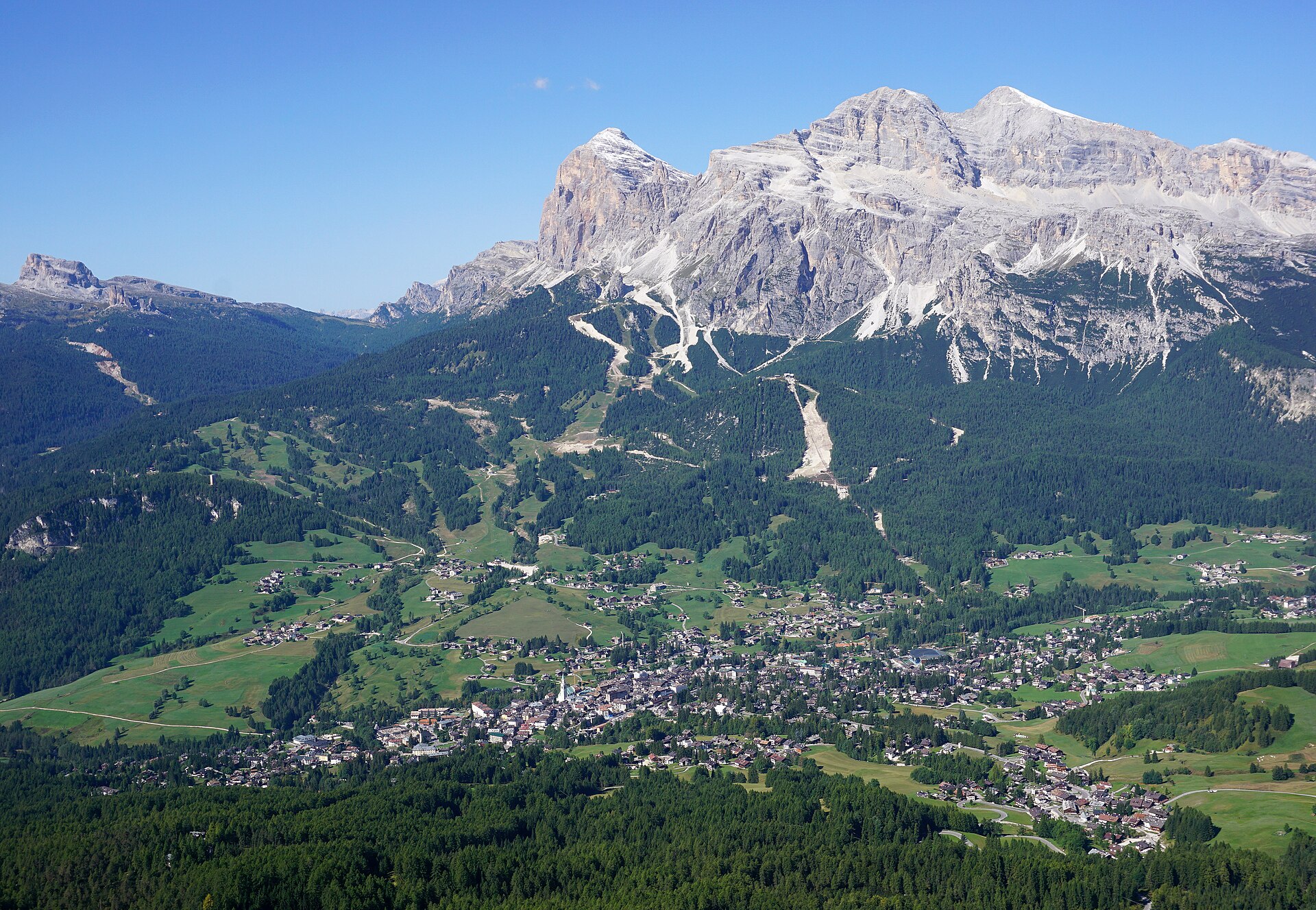
If you have seen a photo of the Italian mountains that made you gasp, it was probably the Dolomites. The pale, jagged limestone towers do not look like normal mountains. In winter, with snow on the slopes and pink alpenglow on the spires at sunset, they are almost too much.
The skiing here lives mostly under one ticket: Dolomiti Superski, which links around 12 ski areas with roughly 1,200 km of slopes and about 450 lifts, as of the 2025/26 season (per dolomitisuperski.com). You buy either a single-resort pass or the full Superski pass; you only need the full one if you want to ski between valleys.
The headline experience is the Sellaronda, a circuit that loops the Sella massif and crosses four resorts (Val Gardena, Alta Badia, Arabba, and Val di Fassa) in a single day, clockwise or anti-clockwise. It is not hard skiing. It is a rite of passage, and it is glorious.
Where to base yourself in the Dolomites is its own decision, so I will not relitigate it here. The where to stay in the Dolomites guide breaks down the valleys, and if you want a structured trip, the Dolomites itinerary does the heavy lifting.
A few quick orientation notes:
- Val Gardena (Ortisei, Santa Cristina, Selva) is the intermediate’s dream: mile after mile of groomed reds and scenic blues, plus the famous Saslong World Cup run. It has its own deep-dive in the Val Gardena travel guide.
- Alta Badia (Corvara, La Villa, San Cassiano) is the gourmet corner. The density of good mountain restaurants here is almost comic.
- Cortina d’Ampezzo sits in its own valley to the east, glamorous and expensive, with cinematic terrain and a town built for window-shopping. It has its own complete guide to Cortina d’Ampezzo.
One housekeeping note, since today is mid-2026: the Milan-Cortina 2026 Winter Olympics were hosted in February 2026, with events spread across Cortina, Bormio, Livigno, and the Trentino valleys. The Games are done; what is left is upgraded infrastructure and, in places, fresh lift and road improvements.
For the summer-hiking version of all this (Tre Cime, the high trails), see the best hikes in the Dolomites guide. In deep winter those high trails are snowbound, so save them for warmer months.
Aosta Valley: Mont Blanc, the Matterhorn, and the snow-sure giants
Tuck yourself into Italy’s far northwest and you reach the Aosta Valley, wedged against France and Switzerland. This is big-mountain country. Forget the soft limestone of the Dolomites; here you are skiing under Mont Blanc and the Matterhorn.
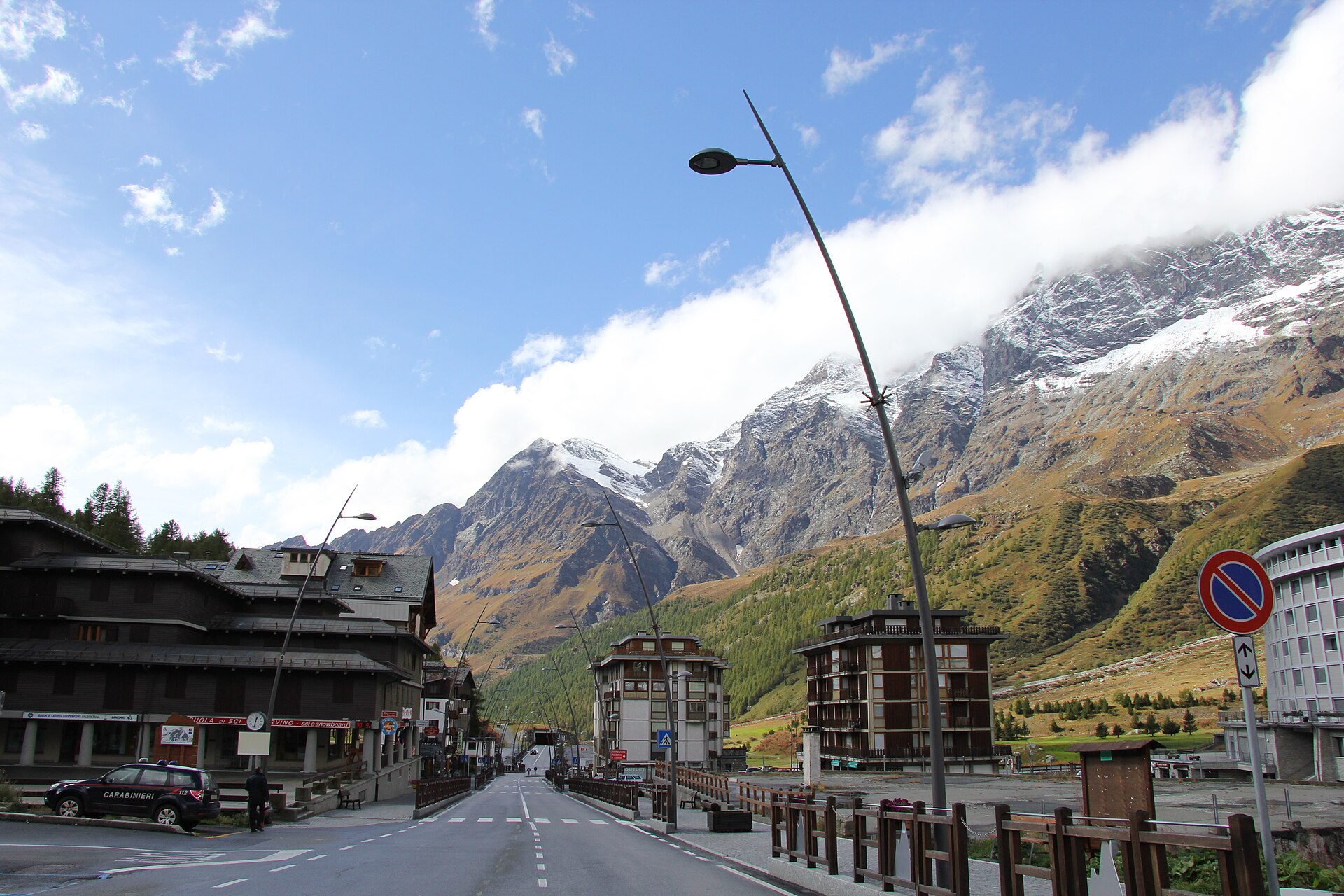
- Courmayeur sits at the foot of Mont Blanc, on the opposite side from Chamonix. The local ski area is modest (around 36 km), which makes it a brilliant long-weekend resort rather than a week-long mileage trip. The town keeps its old character, and the off-piste over towards Chamonix is serious. Stylish, but less show-offy than Cortina.
- Cervinia shares the Matterhorn glacier with Zermatt and claims the highest pisted skiing in Europe. It is high, snow-sure, and full of wide, forgiving runs, which makes it one of the best places in Italy to learn. You can buy a combined ticket and ski over to Zermatt, then come back to the Italian side for dinner at a fraction of the Swiss price.
- La Thuile links across the border with La Rosière in France to form the Espace San Bernardo (around 152 km). It feels half-French, costs less than France, and is reliably quiet.
- Pila rises directly above the town of Aosta and is reached by a cable car straight from the valley. With roughly 70 km of mostly easy terrain, it is one of my top picks for families and nervous beginners.
The Aosta Valley’s official tourism site (lovevda.it) is the place to confirm lift opening dates, which typically run late November or early December through April, glacier areas aside.
Piedmont: the Via Lattea and mileage on a budget
South and west, in Piedmont, the standout is the Via Lattea (the Milky Way), a linked area of around 400 km of pistes spanning five Italian resorts and one across the French border. The marquee town is Sestriere, one of the world’s first purpose-built ski resorts, founded by the Agnelli family of Fiat.
The pitch here is simple: a lot of skiing for not a lot of money. A multi-day Via Lattea pass tends to run meaningfully cheaper than a Dolomiti Superski pass for comparable mileage, which is a big part of the appeal.
Sestriere is the upmarket end; Sauze d’Oulx is the lively, sociable end with a long après history; and the whole area is an easy run from Turin, which means it fills up at weekends and quiets down midweek.
Further south, Limone Piemonte is a friendly, smaller resort close enough to the Ligurian coast (and even Nice) that you can pair sea and snow in one trip. It will not blow your mind on scale, but it is genuinely handy.
Lombardy and the Valtellina: Livigno, Bormio, Madesimo
Northeast of Milan, the Valtellina valley holds three resorts I rate highly for different reasons.
- Livigno sits on a high plateau nicknamed “Little Tibet,” is duty-free (so drinks, fuel, and shopping are cheap), and has one of the best snowparks in the Alps. The season is long, often late November into May, because of the altitude. The catch is the transfer: it is one of the more remote resorts in Italy to reach.
- Bormio is my favourite ski-and-spa combination in the country. It is a historic spa town with three sets of thermal baths fed by hot mineral springs, plus the Stelvio downhill, which delivers about the biggest vertical drop of any resort in Italy. Ski hard in the morning, soak in steaming water by mid-afternoon.
- Madesimo is the quiet one: a smaller, friendly resort that makes a good low-key weekend from Milan without the Livigno trek.
Milan is the gateway for all of these, and the guide to visiting Milan and Northern Italy covers the city end of the trip.
Non-ski winter trips: where the Italian Alps quietly shine
This is the section page one keeps skipping, and it is the reason I would happily send a non-skier to the Alps in winter on their own.
Christmas markets in South Tyrol and Trentino
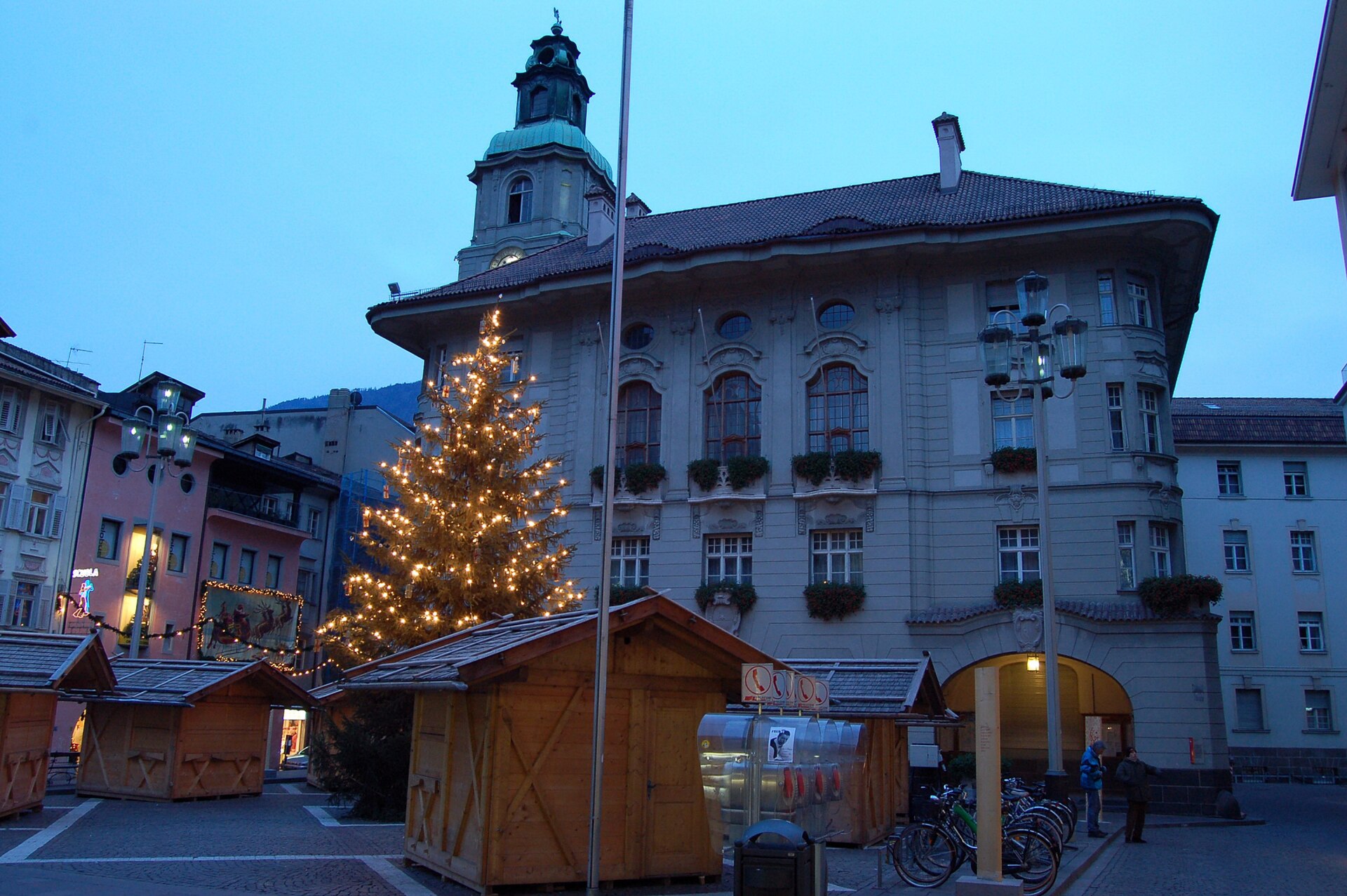
The Christmas markets here are the real thing, not a few stalls in a car park. South Tyrol was Austrian until just over a century ago, and it shows: the markets feel Alpine-Germanic, all wooden chalets, mulled wine, speck, strudel, and hand-carved wood.
The big five, with timing that runs roughly late November to early January (usually closing around January 6, and typically closed on December 25 itself; confirm each year on suedtirol.info and visittrentino.info):
- Bolzano — the largest and most famous, spread across Piazza Walther. Roughly late November to January 6.
- Merano — strung along the river promenade, prettily lit. Similar dates.
- Trento — branded the “Città del Natale,” and often one of the earliest to open (around mid-to-late November) and runs to January 6.
- Brixen/Bressanone — smaller, under the cathedral towers, with an evening light show some years.
- Bruneck/Brunico — a lovely, less-touristed option in the Val Pusteria.
A timing tip I wish someone had given me: the markets are busiest on December weekends and in the run-up to Christmas. Go on a weekday, or in the first week of December, and you get the same glow with a fraction of the crowds.
You will also run into Krampus runs in early December, where locals in terrifying horned costumes parade through town. It is folklore, it is loud, and kids either love it or have nightmares.
Thermal spas: soaking with snow on your head
Two towns stand out for the snow-and-spa combination:
- Bormio (Lombardy) has thermal baths fed by natural hot springs, including outdoor pools where you sit in hot water while it snows. Pair it with a ski day or just go for the soak.
- Merano (South Tyrol) has the big modern Terme Merano complex right in the centre of town, with indoor and outdoor pools and a spa. It is genuinely relaxing and very easy to combine with the Christmas market.
These are the kind of afternoons that turn a good trip into a memorable one, especially for couples.
Winter walking, snowshoeing, and sledding
You do not need skis to spend a full day on the mountain.
- Winter walking: across the Dolomites and beyond, tourist offices groom dedicated winter footpaths that often lead to mountain huts serving lunch. You usually just need microspikes for your boots. Some start from lift stations (buy a single-ride ticket); many start from the valley.
- Snowshoeing: marked snowshoe routes go further into the terrain. For anything off the prepared paths, go with a guide because of avalanche risk; in places like Sexten you can join scheduled guided group snowshoe hikes.
- Sledding/tobogganing: this is huge here, and very family-friendly. Multi-kilometre toboggan runs descend from lift stations, with options ranging from gentle to genuinely fast. South Tyrol alone has dozens of designated runs.
In deep winter, stick to the groomed winter routes rather than the summer hiking trails, which are snowbound.
The long mountain-hut lunch
I am only half-joking when I call eating a sport here. The mountain huts (rifugi, or ütia in Ladin) turn out restaurant-quality food at altitude, and on a sunny day you will see more people lounging outside with a Bombardino (warm egg liqueur with brandy and cream) than actually skiing. Skiers and walkers both reach the good huts. In Alta Badia, a winter tradition pairs Michelin-starred chefs with specific huts each season. Go hungry.
When to go in winter
The season runs roughly from early December to mid-April, with high-altitude and glacier resorts (Cervinia, Livigno, Val Senales) opening earlier and closing later.
Here is how I think about the windows:
- Early-to-mid December: markets are open, slopes are quiet, prices are lower, but snow cover early in the month can be thin (good snow-making covers a lot of this in the bigger resorts).
- Christmas and New Year: magical and packed. Book months ahead and pay peak prices.
- January (after the 6th): my favourite. Cold, reliable snow, low crowds, low prices. The markets have closed, so this is a ski-first window.
- February: prime snow, but it includes school holiday weeks across Europe, so it is busy and pricey.
- March: long, sunny days, soft afternoon snow, fewer crowds, and that intoxicating spring-ski feeling.
If you are still deciding when to come to Italy at all, the best time to visit Italy overview puts winter in context against the other seasons. The Italy in January guide is the natural companion for a deep-winter ski trip.
What it costs
I will not quote exact euros that will be wrong by next season, but here are the bands that have held roughly true.
- Lift passes: a multi-day adult pass in a major linked area generally lands in the mid-to-upper range for Europe. The Via Lattea (Piedmont) tends to be the value play; Dolomiti Superski sits higher for its size; single-resort passes in smaller areas cost less. Always check the official area site (dolomitisuperski.com, the Via Lattea pages) for current pricing.
- Accommodation: this is where Cortina and the smart Dolomites resorts get expensive, especially over Christmas and February half-term. Aosta’s smaller resorts, Piedmont, and the quieter Valtellina towns are notably cheaper.
- Food: eating out is good value by Alpine standards, and mountain-hut lunches, while not cheap, are a fair price for the quality and the view.
- Non-ski trips: a Christmas-market-and-spa weekend can be done relatively affordably, since you skip the single biggest cost (the lift pass) entirely.
For a structured look at money, the Italy travel budget guide helps you sanity-check numbers.
How to reach the Italian Alps in winter (including without a car)
Getting to the mountains in winter is the part people underestimate. Here is the regional cheat sheet.
- Dolomites: fly into Venice, Verona, Innsbruck, or Bolzano. From Venice, trains run towards the mountains with a bus transfer for the final leg (for Cortina, the train goes to Calalzo, then a bus). Verona connects well to the western Dolomites.
- Aosta Valley: Turin is closest; Milan and Geneva also work. Trains reach the Aosta Valley floor, then buses or cable cars (Pila) finish the job.
- Piedmont (Via Lattea): Turin is the obvious gateway, close enough for weekend trips. Trains run to Oulx, with buses onward to Sestriere and Sauze d’Oulx.
- Lombardy (Valtellina): Milan or Bergamo, then the train to Tirano, then a bus up to Bormio or Livigno. Livigno’s transfer is long; plan for it.
Can you do the Italian Alps without a car? Yes, more than people think, though it takes planning and you will lean on bus transfers for the last stretch. The Dolomites without a car guide is the detailed playbook for that region specifically.
If you would rather drive, winter tyres (or chains) are essential, mountain passes can close briefly after heavy snow, and roads get congested around 4-5 pm when the lifts shut. The driving in Italy guide covers the rules, and the trains in Italy guide covers the rail side if you would rather leave the car at home.
Fitting the Alps into a bigger Italy trip
A winter Alps stop slots neatly onto a northern Italy route. You can pair the Dolomites or the Valtellina with Verona, Milan, the lakes (quieter and moody in winter), or Turin. The suggested route through Northern Italy shows how the pieces connect, and you can extend from there if you want a longer northern Italy trip.
Final thoughts
The Italian Alps in winter reward a little planning with an outsized payoff. Pick your region by what you actually want: Dolomites for the scenery and the food, Aosta for big snow-sure mountains, Piedmont for value, the Valtellina for spa-and-ski. And if you do not ski at all, come anyway, because the markets, the thermal baths, and the long lunches are worth the trip on their own. Start with the Dolomites travel guide, and build out from there.
Questions travellers ask
When is the best time to visit the Italian Alps in winter?
For reliable snow with low crowds and low prices, mid-January (after the 6th) is hard to beat. March gives you sunny, soft-snow spring skiing. Christmas, New Year, and February half-term are the busiest and most expensive. Early December is quiet but snow cover can be thin.
Do I need a car to visit the Italian Alps?
Not necessarily. You can reach most regions by train plus a final bus transfer, and resorts like Pila or Cervinia are very doable car-free. A car gives you more flexibility between valleys. If you go without one, plan transfers carefully and see the Dolomites-without-a-car guide for the detailed approach.
Which Italian ski region is best for beginners and families?
The Aosta Valley shines here: Pila above Aosta and Cervinia (wide, snow-sure runs) are both excellent for learning. In the Dolomites, Val Gardena and Alta Badia have gentle, beautifully groomed terrain. Piedmont’s Via Lattea is also beginner-friendly and good value for families.
Are the Italian Alps good for a non-ski winter trip?
Very. You can do Christmas markets in Bolzano, Merano, and Trento, soak in thermal spas at Bormio or Merano, walk groomed winter trails to mountain huts, snowshoe, sled, and eat extremely well, all without ever skiing. A market-and-spa long weekend is one of the best non-ski trips in Italy.
When are the South Tyrol Christmas markets open?
They typically run from around late November to early January, usually closing on or near January 6 (Epiphany), and most close on December 25 itself. Trento often opens earliest, in mid-to-late November. Dates shift each year, so confirm on the official suedtirol.info and visittrentino.info sites before you book.
How much does a ski trip to the Italian Alps cost?
It varies hugely by region. Piedmont’s Via Lattea and the smaller Aosta and Valtellina resorts are the value picks; Cortina and the smart Dolomites resorts are the priciest, especially over Christmas and February. Across the board, Italy still tends to undercut France, Austria, and Switzerland on both passes and food.
Is winter in the Dolomites only about skiing?
No, and that is the point. The winter Dolomites pair excellent intermediate skiing with a deep non-ski scene: winter walking, snowshoeing, sledding, gourmet ski huts, Christmas markets, and Krampus runs. Plenty of people visit in winter and barely touch a pair of skis.
How do I get to the Dolomites in winter?
Fly into Venice, Verona, Innsbruck, or Bolzano. From Venice you can take a train toward the mountains and finish with a bus (for Cortina, train to Calalzo then bus). If driving, you need winter tyres, and passes may close briefly after heavy snowfall. Buses serve the main valleys reliably.