Val Gardena and Ortisei Travel Guide
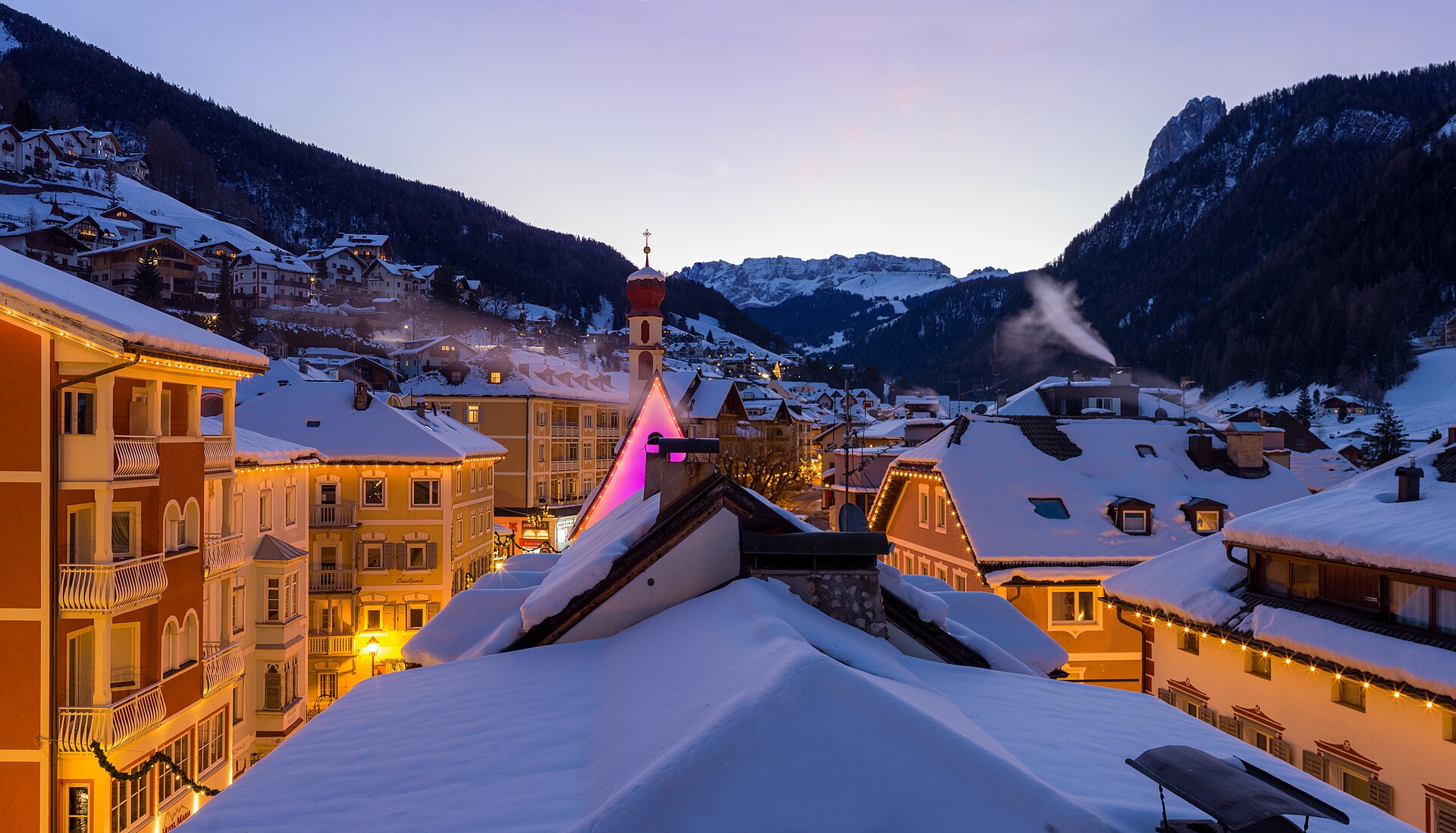
There is a moment, somewhere on the ridge above Ortisei, when the Odle peaks line up like teeth and you understand why people plan an entire Dolomites trip around one valley. That valley is Val Gardena, and this Val Gardena travel guide is about basing yourself here instead of chasing the whole range.
Val Gardena is a single alpine valley in South Tyrol, home to three Ladin-speaking villages (Ortisei, Santa Cristina, Selva) and ringed by famous cable cars up to Seceda, Alpe di Siusi, and the Sella passes. You base here because it pairs world-class scenery with buses and lifts that mean you barely need a car.
It’s for hikers, skiers, families, and first-timers who want big views without a long drive each morning. If you want a wider plan, see the Dolomites travel guide and the Dolomites itinerary. This page stays inside the valley.
Feel free to use my photos, but ple / CC BY-SA 3.0 via Wikimedia Commons
Picking your base: a quick Val Gardena travel guide to the three villages
The valley runs roughly 12 km, gently uphill from west to east, with the three villages strung along it. They are 10 to 15 minutes apart by bus, so wherever you land you can reach the others easily. But they are not interchangeable, and picking the right one saves you a lot of back-and-forth.
| Village | Ladin / German name | Vibe | Best for | Lifts on its doorstep |
|---|---|---|---|---|
| Ortisei | Urtijëi / St. Ulrich | Liveliest; pedestrian center, shops, woodcarving | First-timers, car-free trips, families | Seceda, Alpe di Siusi (Mont Sëuc), Resciesa |
| Santa Cristina | S. Crestina / St. Christina | Quietest; bypassed by the main road | Couples, light sleepers, a calmer base | Col Raiser (to Seceda), Monte Pana |
| Selva | Sëlva / Wolkenstein | Highest; ski-in feel, closest to the passes | Avid hikers, skiers, drivers heading over passes | Ciampinoi, Dantercepies (to Passo Gardena) |
If you only read one row, read Ortisei’s. It is the default answer for most people, and the rest of this guide explains why.
Ortisei travel guide: the valley’s hub
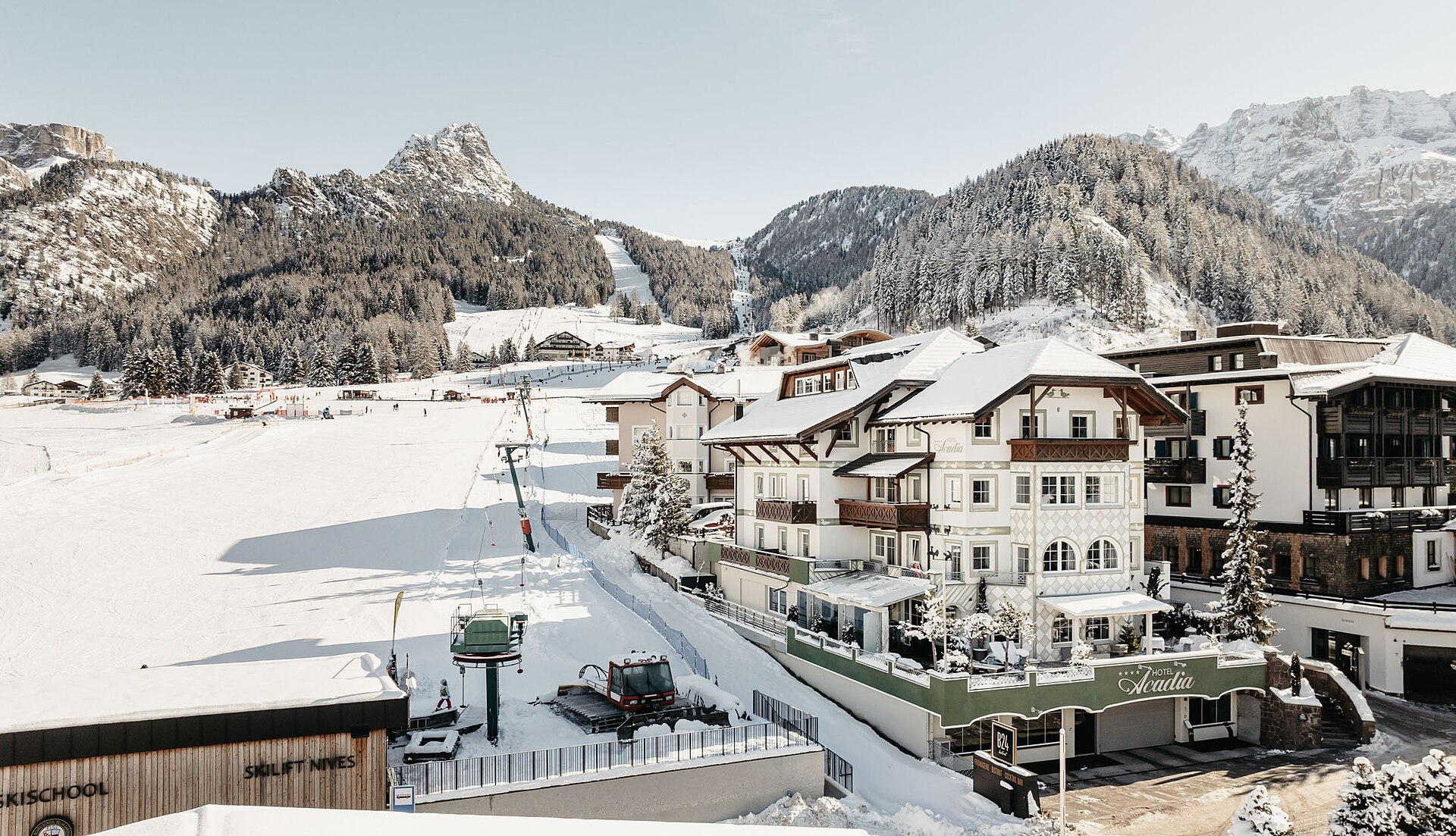
Ortisei sits at about 1,236 m and is the largest and most walkable of the three. The center is pedestrianized, which matters more than it sounds: you can drop your bags, park the car for the week, and not touch it again until you leave. Shops, bakeries, gelato, a handful of good restaurants, and the evening passeggiata are all here.
It also has the best lift hand: three separate cable cars climb straight out of town. The Seceda gondola, the Alpe di Siusi (Mont Sëuc) cable car, and the Resciesa funicular all start within a short walk of the center. No other village gives you that range without a bus first.
This is the heart of any honest Ortisei travel guide. If you are visiting the Dolomites for the first time, want to go car-free, or are traveling with kids who will not tolerate long transfers, stay here. The trade-off is that Ortisei is the busiest of the three in July, August, and over the ski holidays.
The woodcarving and Ladin heart of Ortisei
Ortisei is the woodcarving capital of the Alps, and this is not a gift-shop gimmick. Carving began here in the 17th century as a winter trade and grew into a genuine craft tradition. Walk Via Rezia and you will pass workshops selling everything from tiny carved animals to full nativity scenes (the local presepi), some of it museum-grade.
The deeper story is Ladin. Most people in Val Gardena speak Ladin, a Romance language older than both Italian and German and recognized as South Tyrol’s third official language. You will see it on signs first: Urtijëi, Sëlva, S. Crestina. To go further, visit the Cësa di Ladins in Ortisei, the Ladin cultural center, which houses the valley museum, a library, and a theater. Half an hour here reframes the whole trip. You are not in generic “the Alps.” You are somewhere with its own language, food, and saints.
Santa Cristina and Selva, briefly
Santa Cristina is the one most people skip and shouldn’t dismiss. It is the smallest village, it sits between the other two, and crucially the main valley road bypasses the center, so it is noticeably quieter at night. From here the Col Raiser gondola climbs toward Seceda from the far side, and the Monte Pana lifts open up the Sassolungo side of the valley. Pick it if you want calm and don’t mind a slightly thinner choice of restaurants.
Selva di Val Gardena (Wolkenstein) is the highest village, up around 1,560 m at the head of the valley. It feels the most like a ski resort, and it is the closest base to the two great driving passes, Passo Gardena and Passo Sella. Its Ciampinoi and Dantercepies lifts plug you straight into the Sellaronda ski circuit and the Puez-Odle hiking. Stay in Selva if you are a serious hiker, a skier who wants the Sellaronda on your doorstep, or you have a car and intend to drive the passes.
Seceda Dolomites: the view everyone comes for
If you have seen one photo of the Dolomites, it was probably Seceda. The summit (2,519 m) sits above Ortisei, and from the ridge the grassy slope tilts away while the Fermeda and Odle towers stab up behind it. It is one of the few world-famous viewpoints you can reach with almost no effort, which is exactly why it gets crowded.
There are two lift routes up. From Ortisei, you ride the Ortisei–Furnes gondola and then the Furnes–Seceda cable car; from the top station it is a 10-minute walk uphill to the viewpoint. From Santa Cristina, you take the Col Raiser gondola and then a chairlift, arriving from the other side. A classic low-effort day, and my favorite way to do it: ride up from Ortisei, walk the ridge downhill to a hut like Baita Troier for lunch, then descend to Col Raiser and take the bus back. You see the best of Seceda without retracing a step.
Two things about the Seceda Dolomites lifts you need to know for 2026. First, price: the Ortisei–Furnes–Seceda return runs around €52 per adult as of 2026, which makes it the most expensive cable car in the valley. Second, and more important, summer 2026 brings timed-entry pre-booking. According to seceda.it, you’ll need to reserve a time slot online, with a limited number of tickets every 30 minutes, and walk-up tickets only sell at the valley station if the slot hasn’t sold out. Book ahead. The summer lift season runs roughly late May to early November (around May 22 to November 2 in 2026); confirm dates on the official site before you go.
If you don’t snag a ticket, Seceda is still reachable on foot, most directly from the Cristauta/Praplan car park above Santa Cristina, though that is a real hike of several hours, not a stroll.
The other cable cars, and what each one is for
Val Gardena’s lift network is the whole point of basing here. Here is how I’d match each one to what you actually want to see.
| Cable car | From | You go for | Open season | Price band (2026) |
|---|---|---|---|---|
| Seceda (Furnes–Seceda) | Ortisei | The iconic Odle ridge view | ~late May–early Nov | High (~€52 return) |
| Alpe di Siusi / Mont Sëuc | Ortisei | Europe’s largest alpine meadow | Year-round | Mid (~€39 return) |
| Resciesa funicular | Ortisei | Quiet plateau, easy family walks | Summer | Lower |
| Col Raiser | Santa Cristina | Back route to Seceda; Sass Rigais | Summer/winter | Mid |
| Ciampinoi | Selva | Sassolungo views; Sellaronda | Summer/winter | Mid |
| Dantercepies | Selva | Passo Gardena; Puez-Odle hikes | Summer/winter | Mid |
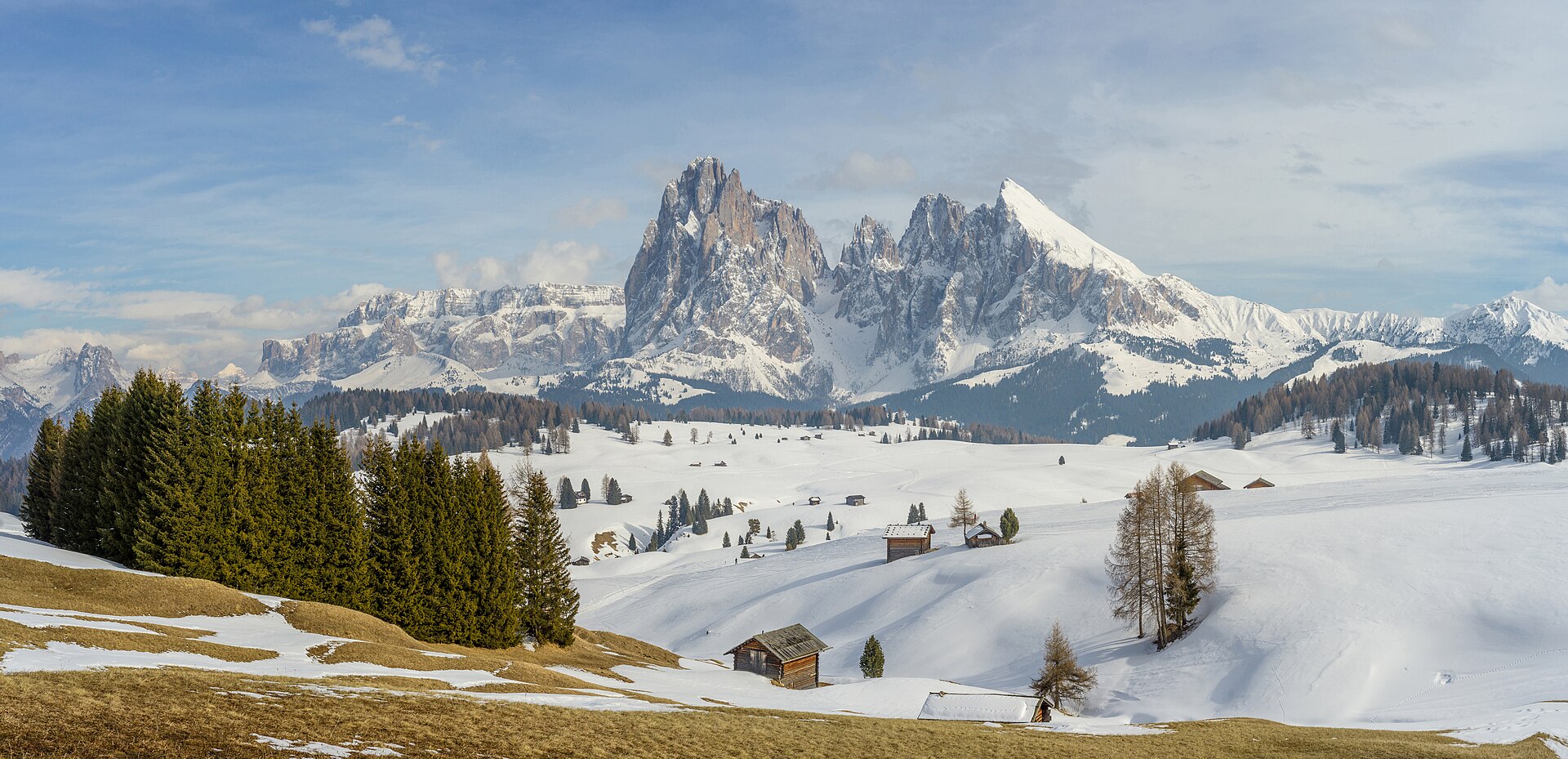
A few honest notes. Alpe di Siusi (Mont Sëuc) is the one I’d ride if Seceda is sold out or socked in with cloud: the Ortisei cable car lifts you to about 2,000 m on the edge of Europe’s largest high meadow, it runs year-round, and at roughly €39 return it’s gentler on the wallet. Note that private cars are restricted on the Alpe itself during the day, so the cable car (or the bus from the village) is the sensible way up. Resciesa is the locals’ quiet option: a funicular to a gentle plateau above Ortisei with easy, pram-friendly paths and a fraction of Seceda’s crowds.
Feel free to use my photos, but ple / CC BY-SA 3.0 via Wikimedia Commons
Summer hiking vs winter skiing
Val Gardena is two different places depending on the month, and it is excellent at both.
Summer (roughly June to October) is for hiking and the high meadows. The lifts do the climbing; you walk the ridges. From Seceda you can stroll the panoramic path toward the Fermeda towers, or commit to the full Puez-Odle terrain. The Sassolungo loop from the Selva/Santa Cristina side is a classic full day. Alpe di Siusi is gentle, wide-open walking suited to families and anyone wanting beauty without burning legs. If you want a proper trail menu, that lives in the sibling best hikes in the Dolomites guide, not here. July and August are the busy, sunny peak; September and early October bring thinner crowds and gold larches, and Italy in September or Italy in October explains the wider seasonal trade-offs.
Winter (December to early April) turns the valley into one of the best ski areas on earth. Val Gardena is part of the vast Dolomiti Superski network (around 1,200 km of pisted runs on a single pass), and it is a key leg of the Sellaronda, the circuit that loops the entire Sella massif. The Sellaronda is roughly 40 km, takes most of a day on skis, and you ride it in either direction (the orange or the green route) linking four Ladin valleys without taking your skis off for long. Selva and Santa Cristina sit right on it; from Ortisei you join via the Seceda or Alpe di Siusi side. Even if you don’t ski, the snow-season scenery is reason enough to come, and Italian Alps in winter covers the broader cold-season picture. For a non-ski but still snowy holiday, December has its own snowbound magic.
How to get to Val Gardena
The valley is easier to reach than its remoteness suggests.
By train, then bus. The nearest mainline station is Bolzano (Bozen), with connections from Verona, Innsbruck, Munich, Venice, and beyond. From Bolzano, SAD bus line 350 runs up into the valley, reaching Ortisei in about an hour and Selva in roughly 1 hour 20. This is the backbone of a car-free trip; the broader picture is in the trains in Italy guide.
By car. Coming off the A22 Brenner motorway, you exit at Ponte Gardena/Waidbruck and climb the valley road. Reckon on roughly 40 minutes from Bolzano, about 1 hour 45 from Innsbruck Airport, and around 2 hours from Verona. The roads are good but mountainous; if you’re not used to alpine driving, read driving in Italy first. For flights, the nearest useful gateways are Verona, Venice, Innsbruck, or Milan/Bergamo.
If Val Gardena is one stop on a larger loop, it slots neatly into a northern Italy itinerary alongside Verona and the lakes.
Getting around the valley (and the guest card that makes it free)
This is where Val Gardena quietly beats most of the Dolomites: you genuinely don’t need a car here.
The Val Gardena bus (lines 350/352/353, often called the Val Gardena Express) runs between Ortisei, Santa Cristina, and Selva roughly every 30 minutes through the day, with each hop taking 10 to 15 minutes. It connects the lift stations, so you can go up one side of the valley and down the other and let the bus close the loop.
The guest card is the trick. Most hotels and guesthouses in the valley belong to the tourist association, and when you check in they hand you a card that gives free use of the local buses between the three villages for your whole stay. If your accommodation includes it, you may never buy a bus ticket. If it doesn’t, you can buy a Val Gardena Mobil Card separately; as of 2026 it runs about €20 for 1 day, €30 for 3 days, and €50 for 7 days for adults, and it covers the wider South Tyrol public transport network, not just the valley. Don’t confuse it with the Gardena Card, which is a lift pass (a set number of cable-car ascents), not a bus ticket. One moves you between villages; the other moves you up mountains.
For the full car-free logic across the wider range, the sibling Dolomites without a car guide goes deeper. Inside Val Gardena specifically, the honest answer is: stay in Ortisei, use the guest card and the lifts, and skip the rental entirely unless you plan to drive the passes or reach far-flung spots like Tre Cime or the lakes.
Where to eat in Val Gardena
Eating here splits into two worlds, and you want both.
Up on the mountain, the rifugi and baite (alpine huts) are half the reason to ride the lifts. Around Seceda, Baita Troier and Rifugio Firenze (Regensburger Hütte) do hearty plates with absurd views; up on Alpe di Siusi the huts serve everything from barley soup to venison ragù. A long lunch at a hut, boots off, is the quintessential Val Gardena meal. Most are summer-and-winter operations that close in the shoulder weeks, so check before you climb.
Down in the villages, the food is Tyrolean-Italian crossover: canederli (bread dumplings), speck, schlutzkrapfen (spinach-ricotta ravioli), strudel, and proper espresso, alongside pasta and pizza. Ortisei has the widest choice; Selva has some of the valley’s best restaurants. Book dinner in high season. If South Tyrol’s distinctive cooking interests you, the cross-pillar Italy food and wine travel guide gives it context.
Where to stay in Val Gardena
Quick version: choose the village first (see the table up top), then the property. Ortisei for convenience and car-free ease; Santa Cristina for quiet; Selva for ski-in access and the passes. The valley skews toward family-run guesthouses (garni) and mid-range hotels, many with small spas, rather than big international chains, and minimum-stay rules are common in high season.
For a full strategy across the whole range, including which valleys suit which trip, that’s the sibling where to stay in the Dolomites guide. If you’re weighing the Dolomites against other Italian bases entirely, the question of where to stay in Italy zooms out further. And if you’re deciding between Val Gardena and the more glamorous resort over the mountains, compare with the Cortina d’Ampezzo travel guide.
A sample first day in Val Gardena
If you only have one full day and want to feel the valley properly, here is the rhythm I keep coming back to. Start in Ortisei with an unhurried breakfast and a short wander along the pedestrian center before the day-trippers arrive. Ride up to the Alpe di Siusi (Mont Seuc) for an easy morning on the high meadow, where near-level paths hand you the Sassolungo and Sassopiatto skyline without a hard climb.
Come back down for lunch in the village, then save the afternoon for Seceda, riding the Ortisei cable car and gondola up to the ridge for the famous tilted peaks. Late-afternoon light is kinder for photos and the crowds thin out, though check the last descent time before you ride up, because missing the final cabin means a very long walk down.
In the evening, the valley slows to a pace I love. Most hotels run a half-board dinner, so you eat well without driving anywhere, and the streets of Ortisei stay lit and gentle for a post-dinner stroll. If you have a second day, point it at one longer hike or the Sellaronda lift circuit and let that be the whole plan.
This is the version for first-timers who want a taste of everything. Hikers will happily swap the meadow morning for a tougher route, and families will linger at the top stations where there is room to run. The point is to ride at least one cable car and resist trying to cram all of them into a single day.
Final thoughts
Val Gardena rewards the traveler who picks one valley and goes deep instead of skimming the whole range. Choose your village, lean on the bus and the guest card, ride Seceda on a clear morning, and give yourself one slow lunch at a mountain hut. Do that and you’ll leave understanding why so many people, myself included, keep coming back to this one valley first. For everything beyond it, the wider Dolomites await.
Questions travellers ask
Is Val Gardena or Cortina better?
Different animals. Val Gardena is a three-village valley with unbeatable lift density, a strong car-free game, and Ladin culture; it’s friendlier for first-timers and families. Cortina is a single glamorous resort town with a chicer, pricier feel. For low-effort big views and easy logistics, I’d point most people to Val Gardena.
How many days do you need in Val Gardena?
Three full days is the sweet spot: one for Seceda, one for Alpe di Siusi, and one for a longer hike or a pass drive, with weather flexibility built in. Two days works if you’re tight and lucky with the sky. A week is easy to fill without repeating yourself and lets you wait out a cloudy day rather than waste a lift ticket on it.
Do you need a car in Val Gardena?
No, and that’s the valley’s superpower. The bus links the three villages every 30 minutes, your hotel guest card usually makes it free, and cable cars climb straight from the towns. A car only helps if you want to drive the high passes or reach distant spots like Tre Cime. The valley is built for it.
Which cable car should I ride first in Val Gardena?
Seceda, for the famous Odle-ridge view, ideally pre-booked for summer 2026. If it’s cloudy or sold out, ride Alpe di Siusi (Mont Sëuc) instead: it runs year-round, costs less, and opens Europe’s largest high meadow. Save the quieter Resciesa funicular for an easy family day with fewer crowds.
When is the best time to visit Val Gardena?
For hiking, June to early October, with September and early October offering thinner crowds and golden larches. For skiing, December to early April. Avoid the shoulder weeks (late April–May and November) when many lifts close between seasons. The wider seasonal picture is national, but Val Gardena follows the mountain rhythm above.
How do you get from Bolzano to Val Gardena?
Take SAD bus line 350 from Bolzano up the valley: about an hour to Ortisei, roughly 1 hour 20 to Selva. By car it’s around 40 minutes via the Ponte Gardena exit off the A22. Bolzano itself connects by train from Verona, Innsbruck, Munich, and Venice, so the train-plus-bus combo is genuinely practical.
What language do they speak in Val Gardena?
Three languages coexist. Most locals speak Ladin, a Romance language unique to a few Dolomite valleys and South Tyrol’s third official tongue, alongside Italian and German. You’ll see Ladin on village names (Urtijëi, Sëlva). English is widely understood in hotels and restaurants, so you’ll manage fine while still feeling somewhere genuinely distinct.
Is Val Gardena good for families?
Very. Base in Ortisei for car-free ease, ride gentle lifts like Resciesa and Alpe di Siusi, and let kids run the meadows. The pedestrian center, gelato, and short bus hops keep logistics painless. For the bigger picture across Italy, the Italy family vacation guide is a useful companion.