Italian Train & Transport Guide
Italy Airports Guide: Where to Fly for Each Region

Italy has no shortage of airports. It has too many, and picking the right one among Italy airports is the real problem. Pick the wrong one and you spend half a day on a bus or an expensive transfer when you could have been eating pasta in a piazza an hour after landing. Pick the right one and your trip starts the moment you clear customs.
The short answer: fly into the airport closest to your first destination, even if it means a connection. If your trip covers more than one region, consider an open-jaw ticket — fly into Rome and out of Venice, for instance — so you move in a straight line instead of doubling back. This guide covers every major Italian gateway, what each one serves, how to get into the city, and when to use it over its rivals.
This is for anyone who has Googled “which airport for the Amalfi Coast” or stared at a booking page wondering whether MXP or BGY is really the smarter call for Milan.
Italy Airports at a Glance: Region → Gateway Table
| Region / Destination | Best Airport(s) | IATA | Getting to the City |
|---|---|---|---|
| Rome & Central Italy | Fiumicino (main) | FCO | Leonardo Express train ~30 min |
| Rome (budget/low-cost) | Ciampino | CIA | Shuttle bus ~40 min to Termini |
| Milan & Italian Lakes | Malpensa (main) | MXP | Malpensa Express train ~50 min |
| Milan (domestic/European) | Linate | LIN | Metro M4 ~15 min |
| Milan (Ryanair/budget) | Bergamo | BGY | Bus ~60 min |
| Venice & Veneto | Marco Polo | VCE | Waterbus ~70 min / water taxi ~35 min |
| Venice (Ryanair) | Treviso | TSF | Bus ~60 min |
| Naples, Amalfi, Sorrento | Naples Capodichino | NAP | Bus ~15 min to city; ~75 min to Amalfi |
| Florence & Tuscany | Pisa (more flights) | PSA | PisaMover + train ~60 min to Florence |
| Florence (closer in) | Florence Vespucci | FLR | Tram ~20 min to city center |
| Bologna & Emilia-Romagna | Bologna Marconi | BLQ | Marconi Express train ~7 min |
| Eastern Sicily (Taormina, Etna) | Catania Fontanarossa | CTA | Bus ~20–30 min to Catania center |
| Western & central Sicily (Palermo) | Palermo Falcone Borsellino | PMO | Bus to Palermo ~45 min |
| Puglia (Bari, Lecce, Alberobello) | Bari Karol Wojtyla | BRI | Train ~15 min to Bari Centrale |
| Sardinia (Cagliari, south) | Cagliari Elmas | CAG | Train ~10 min to Cagliari Centrale |
Use this table as your first decision filter, then read the section below for whichever region applies to your trip. For full detail on getting from Rome’s airports into the capital itself, the breakdown lives at /rome-airport-to-city-center/.
Rome: Fiumicino (FCO) and Ciampino (CIA)
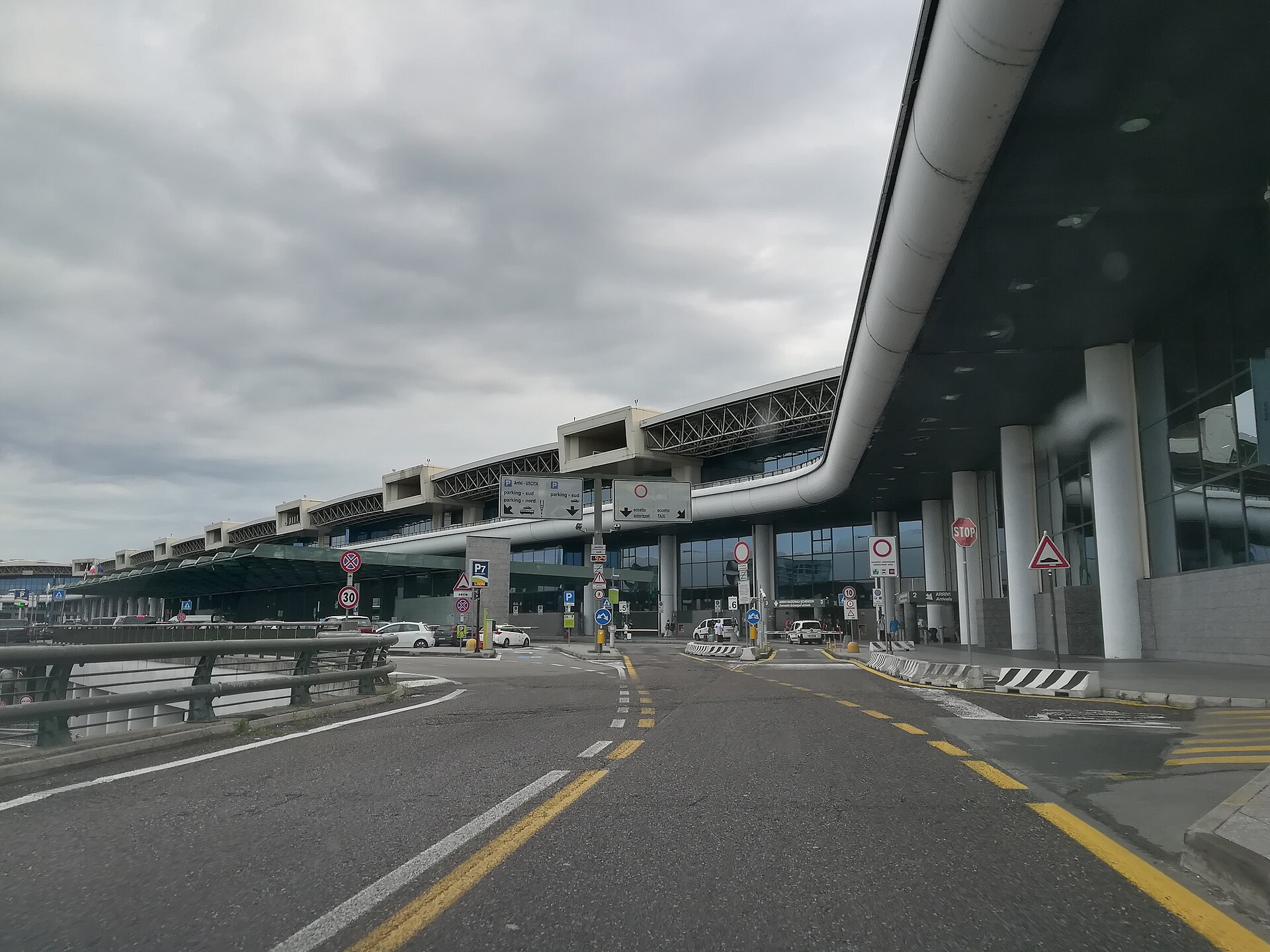
Rome has two airports and the difference matters more than most guides admit.
Fiumicino (FCO) — Leonardo da Vinci Airport
Fiumicino is Italy’s largest airport and, for most travellers flying from North America, Australia, or long-haul anywhere, it is where you will land. It handles the big intercontinental carriers — ITA Airways, Delta, United, Lufthansa, British Airways — as well as most full-service European routes. The airport sits around 30 kilometres southwest of the city centre, which sounds far but is not a problem because the Leonardo Express train is fast, frequent, and direct.
The Leonardo Express runs every 15 minutes to Roma Termini and takes around 30 minutes. As of 2026, the fare is around €14 for adults. If your hotel is near Trastevere, Ostiense, or Tiburtina, the slower FL1 regional train hits those stations for around €8 — useful if you are not staying near Termini. A fixed-rate taxi to central Rome runs around €55. All of this is covered in detail at /rome-airport-to-city-center/.
From an Italy-wide planning perspective, FCO also works as a starting point if you are hitting central Italy before Rome — Umbria, Orvieto, even a first stop in Naples. The intercity train connections out of Termini are excellent. If you are combining Rome with a broader Italy itinerary, FCO is almost always the right place to land.
Ciampino (CIA) — The Low-Cost Alternative
Ciampino is smaller, scrappier, and almost entirely the domain of Ryanair and Wizz Air. It sits about 15 kilometres southeast of the city centre. There is no direct train from the terminal — the nearest station requires a bus connection — so the practical option is a shuttle bus (Terravision, SIT Bus, or similar) that runs to Roma Termini in around 40 minutes, costing around €6 one way.
A fixed-rate taxi from Ciampino to central Rome runs around €30 — notably cheaper than from Fiumicino.
Use Ciampino if you have found a significantly cheaper Ryanair fare from a European city and you are comfortable with the slightly longer, less elegant transfer. For anything transatlantic, you will almost certainly land at FCO regardless of preference.
Milan: Malpensa (MXP), Linate (LIN), and Bergamo (BGY)
Milan is the most confusing airport situation in Italy because the city is served by three separate airports, none of which is called “Milan International.” All three serve different types of travellers. Getting this wrong costs you real time.
Malpensa (MXP) — The Main International Hub
Malpensa is the one to arrive at if you are flying from outside Europe. It is about 50 kilometres northwest of central Milan, and the Malpensa Express train covers the distance in around 50 minutes for about €15. Buses run for around €10 and take roughly the same amount of time. A taxi runs a fixed €104 — worth splitting if you are travelling in a group.
Malpensa is the natural gateway if your trip begins in Milan before heading to the Italian Lakes, the Dolomites, or Piedmont wine country. The complete guide to Milan and Northern Italy has full regional orientation if you are starting there.
Linate (LIN) — The City Airport
Linate is only 8 kilometres from the city centre and is one of the more genuinely convenient airport-to-city situations in Italy. Since 2023 the new Metro M4 line connects directly, with a journey time of around 15 minutes. Linate handles mostly domestic and short-haul European routes — useful if you are connecting through Italy or arriving from another European city. It is not a transatlantic option.
Bergamo (BGY) — Ryanair’s Base
Bergamo Orio al Serio, marketed by some airlines as “Milan Bergamo,” is about 60 kilometres from Milan city centre. The bus from the airport takes around an hour and costs around €10. A taxi runs around €122 — a number that should give you pause if you are price-sensitive enough to have chosen Ryanair.
Bergamo matters for two reasons. First, it genuinely is a budget option for flights from across Europe, and the bus is perfectly serviceable. Second, if you are actually visiting Bergamo’s historic upper town (Alta Città) rather than Milan, this airport is right on the doorstep. Do not be misled by the marketing — it is not “Milan” in any practical sense. Budget an extra 90 minutes versus Linate when planning.
Venice: Marco Polo (VCE) and Treviso (TSF)
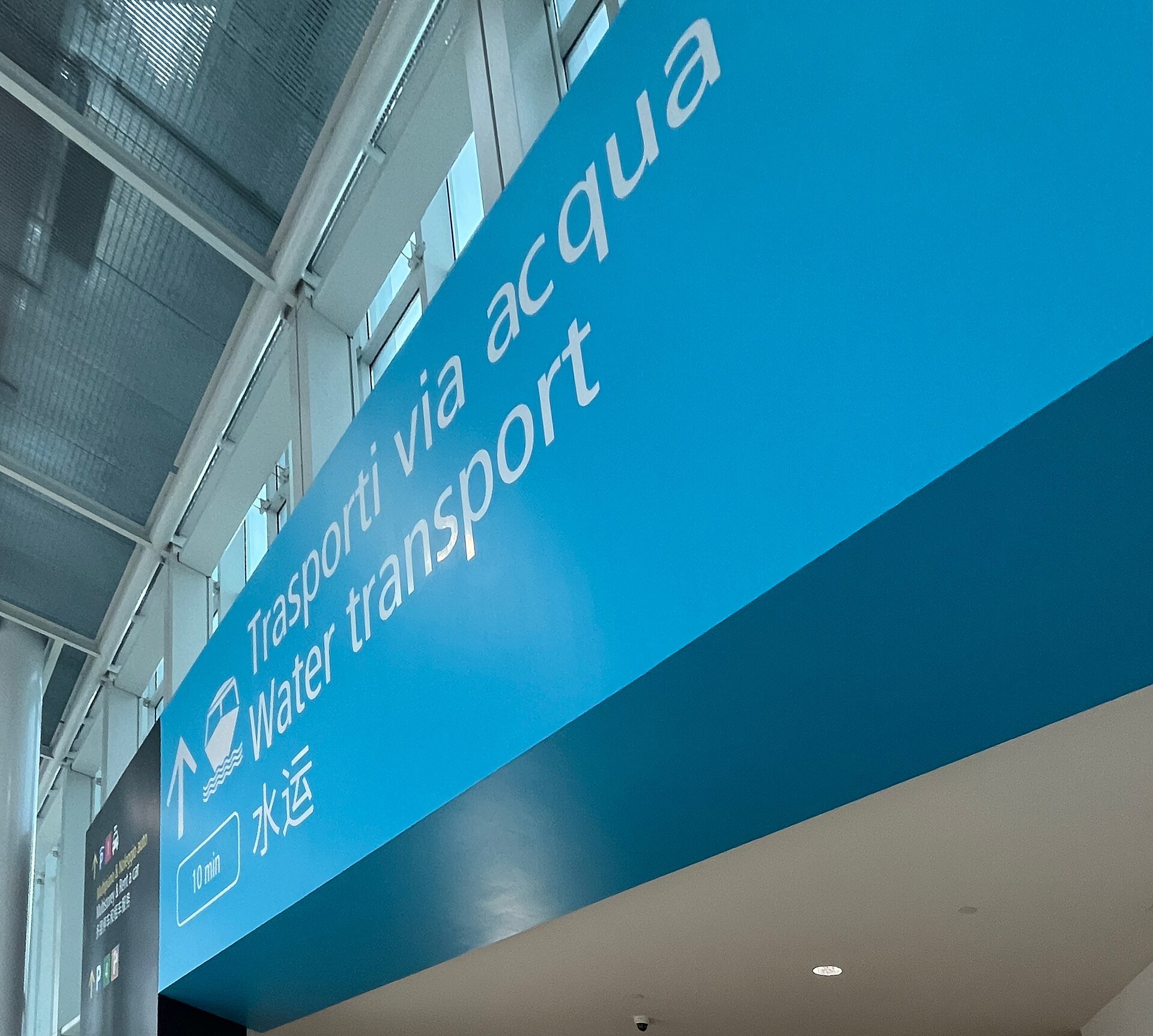
Venice is the only major Italian city where getting from the airport to the centre involves water, and that is either delightful or inconvenient depending on how much luggage you have.
Marco Polo (VCE) — The Right Airport for Venice
Marco Polo sits on the mainland, about 8 kilometres north of Venice proper. The boat dock is around a 10-minute covered walk from the terminal. From there, you have three real options.
The Alilaguna waterbus (vaporetto) runs two lines to central Venice — one via Murano and one direct to the Grand Canal and San Marco. The journey to San Marco takes around 70 minutes, and the ticket runs around €15. It is atmospheric, cheap enough, and involves carrying your bag onto and off a boat, which is less fun with a large roller case.
A shared water taxi takes around 40 minutes. A private water taxi takes around 30–35 minutes and will set you back around €110–130 depending on destination and group size. Worth it for the experience at least once, and the split cost makes sense for two or more people.
There is also a land bus option (ATVO or ACTV) to Piazzale Roma, Venice’s road terminal, for around €8 — fine if you want to catch the free ACTV vaporetto line from there.
If you are visiting the Veneto beyond Venice — Verona, Vicenza, Padua — Marco Polo is still the right choice. Trains from Venice Santa Lucia connect the region efficiently. Plan those legs with the trains in Italy guide.
Treviso (TSF) — The Ryanair Option
Treviso is about 30 kilometres north of Venice and handles Ryanair flights from across Europe. The bus transfer to Piazzale Roma in Venice takes around 60 minutes and costs around €12–15. It runs on a schedule tied to flight arrivals, so it is predictable but not spontaneous.
Use Treviso if the price difference is substantial and you are comfortable with the extra logistics. For a first trip to Venice, Marco Polo is easier and the boat transfer is part of the arrival experience.
Naples (NAP): Gateway to the Amalfi Coast and the South
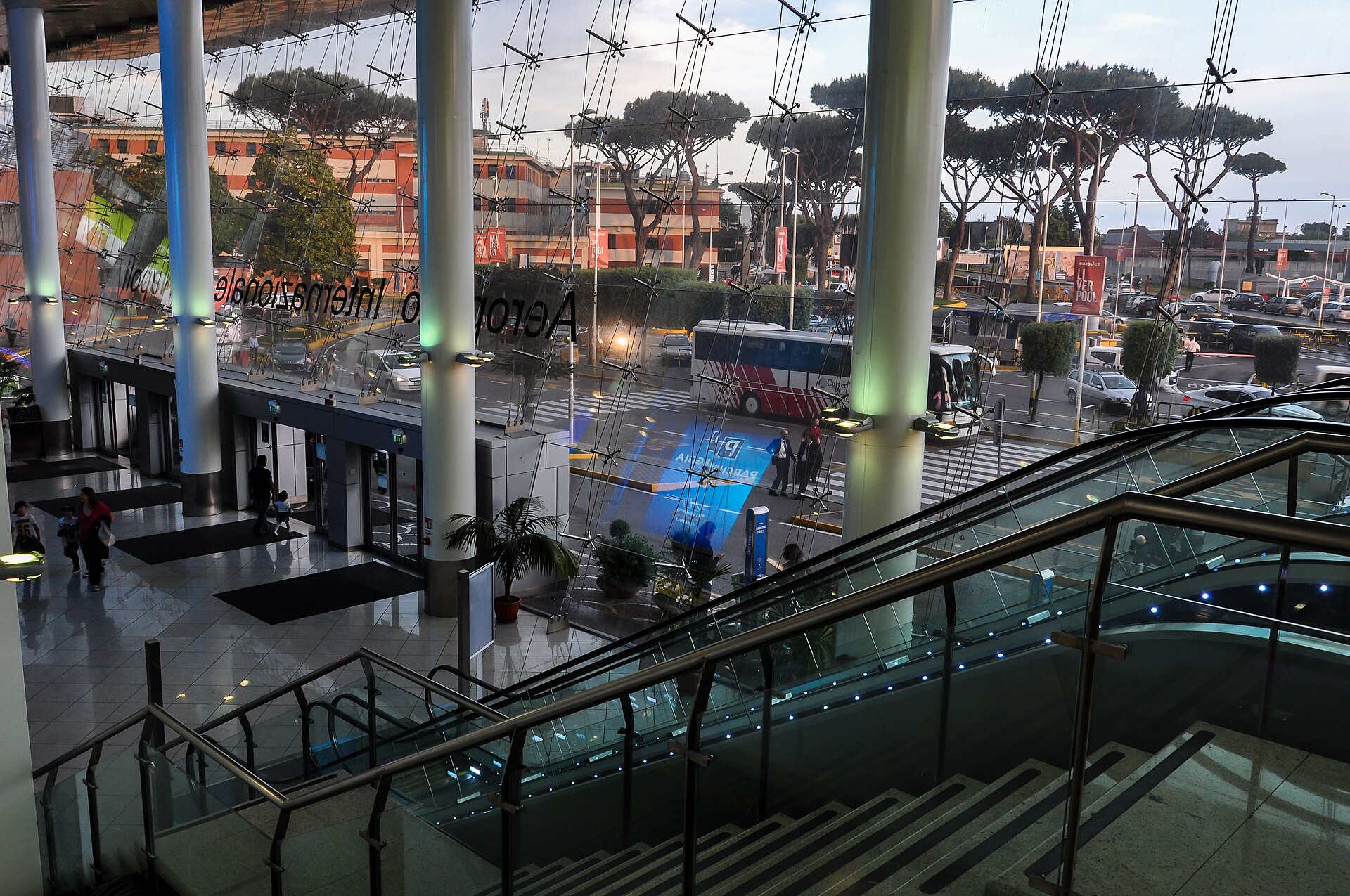
Naples Capodichino (NAP) is a compact, efficient airport sitting less than 7 kilometres north of the city centre. It punches above its size because of what it unlocks: not just Naples itself but the entire southern coast.
The Alibus shuttle runs to Naples Piazza Garibaldi (near the central train station) every 15–20 minutes for around €5, taking about 15 minutes in light traffic. Fixed-rate taxis to central Naples run around €21 to Napoli Centrale.
For the Amalfi Coast — one of the most searched questions about Italian airports — Naples NAP is the answer. Direct coach services from the airport to Amalfi and Sorrento (run by operators like Curreri Viaggi) take around 75 minutes and cost around €25 per person. That is a remarkably direct airport-to-coastline journey by Italian standards. Positano, Ravello, and Amalfi are all within reach from there without a Rome detour. The full logistics of the coast without a car are detailed in /amalfi-coast-without-a-car/.
One note: Salerno’s new Costa d’Amalfi Airport (QSR) began commercial operations in 2024 and offers a growing number of European routes. As of 2026 it is still a small seasonal airport, but worth checking if you are flying from London, Paris, Berlin, or Zurich — it puts you 13 miles southeast of Salerno, even closer to the coast.
Naples is also the right airport for Pompeii, the Cilento coast, and Basilicata. If your southern Italy trip starts in Naples and heads down, land here and start exploring immediately.
Tuscany: Pisa (PSA) vs. Florence (FLR)
This is the most frequently debated airport question in Tuscany, and the answer is less clear-cut than elsewhere.
Pisa Galileo Galilei (PSA) — More Flights, Slightly Farther
Pisa is Tuscany’s main airport and consistently ranks among Italy’s top 15 busiest. It handles transatlantic flights, more low-cost European routes, and generally broader availability than Florence. The catch is that it sits about 80 kilometres from Florence.
The transfer is genuinely manageable: the PisaMover shuttle (around 5 minutes, €5) takes you from the terminal to Pisa Centrale station, and from there frequent regional trains run to Florence Santa Maria Novella in around 50–80 minutes, costing from around €10. Door to door you are looking at around 90 minutes to central Florence, which is fine for a first day. If you are heading to Pisa, Lucca, Livorno, or the Tuscan coast first, Pisa airport is obviously the right call.
Florence Amerigo Vespucci (FLR) — Closer, Fewer Choices
Florence’s own airport sits just 5 kilometres from the city centre, and the new tram line (T2) runs directly to Santa Maria Novella station in around 20 minutes for €1.50. The transfer is slick. The problem is that FLR offers fewer routes, mostly European, and often at higher fares. If your home airport does not have a direct service to FLR, you are looking at a connection — which erodes the time advantage.
The practical rule: search both airports, compare total journey time door to door including layovers, and let the price and schedule decide. If you are renting a car for a Tuscan road trip, the larger Pisa rental desks are also better stocked.
Bologna (BLQ): The Underrated Gateway
Bologna Guglielmo Marconi Airport is one of Italy’s best-kept secrets in the airport world. It is small, civilised, and served by a remarkable train connection. The Marconi Express — opened in 2020 — takes exactly 7 minutes to reach Bologna Centrale station, departing every 10–15 minutes, for around €12.80. It is faster airport-to-city than almost anything else in Italy.
Bologna itself is underrated as a base. It sits at the heart of Emilia-Romagna, the region that gave the world Parmigiano Reggiano, prosciutto di Parma, mortadella, tagliatelle al ragù, and tortellini. Day-trip connections by train from Bologna Centrale reach Modena in 17 minutes, Parma in 45 minutes, and Ferrara in 30 minutes. Florence is 35 minutes away on the high-speed line. Venice is an hour.
If you are doing a food-focused trip or hitting both Tuscany and Venice without wanting to base yourself in either, landing at Bologna and using it as a hub is genuinely smart — and page one of Google barely mentions this angle.
Sicily: Catania (CTA) vs. Palermo (PMO)
Sicily has two main airports, and which one you use should be determined entirely by where on the island you are spending most of your time. They are roughly 240 kilometres apart — about 2.5 hours by bus — so choosing the wrong one is a meaningful inconvenience.
Catania Fontanarossa (CTA) — Eastern Sicily
Catania serves eastern Sicily: the city itself, Taormina (about an hour north), Mount Etna (under an hour), Syracuse (around an hour south), and the Baroque towns of the Val di Noto. The AMT Alibus from the terminal to Catania city centre runs every 25 minutes or so, takes around 20–30 minutes, and costs around €4. This is where most travellers flying from North America are likely to connect through, as Catania has more international-facing routes than Palermo. For everything the east of the island offers, the full Sicily guide is the deeper resource.
Palermo Falcone Borsellino (PMO) — Western Sicily
Palermo handles the capital and western Sicily: Palermo’s magnificent Arab-Norman churches, Cefalù along the northern coast, Agrigento and the Valley of the Temples in the south, and Trapani (with access to the Egadi Islands) in the far west. The Prestia e Comande bus runs to the city centre in around 45 minutes for around €7. A taxi runs around €40.
If your itinerary spans the whole island, fly into Catania and out of Palermo (or vice versa) — this is one of the cleanest examples of the open-jaw strategy applied to a single region.
Bari (BRI): The Door to Puglia
Bari Karol Wojtyla Airport is the obvious choice for Puglia, one of Italy’s most compelling regions for travellers who have already done Rome and the north. The airport sits about 8 kilometres northwest of Bari’s old city, and the airport train to Bari Centrale takes around 15 minutes for about €5.30 — arguably the best value airport transfer in Italy.
From Bari you can reach Alberobello and its trulli in around 90 minutes by regional train. Lecce, the baroque masterpiece of the south, is around 1.5 hours. Matera, technically across the regional border in Basilicata but culturally inseparable from Puglia’s southern circuit, is around 90 minutes by road. For the full regional picture, the Puglia southern Italy travel guide covers it properly.
Brindisi Airport (BDS) is worth checking if you are planning to base yourself in Lecce specifically — it sits closer to the south of the heel and has decent European connections.
Cagliari (CAG): Sardinia’s Main Gateway
Sardinia is an island and behaves like one — you get there by air or by overnight ferry. Cagliari Elmas Airport is the largest gateway on the island, sitting about 7 kilometres north of the capital.
The airport train to Cagliari Centrale takes around 10 minutes for €1.30 — one of the cheapest transfers in Italy. A taxi costs around €25.
Cagliari is the right airport for southern Sardinia: the beaches of Costa del Sud, the dunes of Piscinas, and the Nora archaeological site. For the north of the island — the Costa Smeralda, Olbia, and the Maddalena archipelago — Olbia Costa Smeralda Airport (OLB) is more practical. Alghero Fertilia (AHO) handles the northwest.
The Open-Jaw Strategy: Fly In One End, Out the Other
Italy is shaped like a boot for a reason — it is long. The classic mistake is booking a return flight to the same city and then spending half a day retracing your route to get back for your departure. An open-jaw ticket solves this.
An open-jaw works like a standard return ticket in terms of pricing (you book it as multi-city, not two one-ways) but lands you in one city and departs from another. The most common strategies:
Rome in, Milan or Venice out. This is the classic north-south Italy route in reverse: arrive in Rome, take the high-speed train to Florence and Venice, fly home from Venice or Milan. You see the country in a logical line. The one caveat worth knowing: Venice Marco Polo’s long-haul flights depart very early, sometimes before public transport operates, which can mean a water taxi at 4am — factor in the cost.
Milan in, Rome out. Start in the north — Milan, Lake Como, Cinque Terre, Florence — and finish in Rome. Quieter arrival city, stronger flight options home from FCO.
Pisa or Florence in, Naples out (or reverse). Works well for a Tuscany-to-Amalfi trip without backtracking. Land in PSA, travel the Tuscan circuit, take the high-speed train south to Naples, explore the coast, fly home from NAP.
Catania in, Palermo out (Sicily only). As noted above, this is the cleanest way to see the whole island without the airport-to-airport transfer.
The key to open-jaw planning is to price it correctly: search as a multi-city booking, not as two separate one-ways. The price difference is often marginal, sometimes identical to a standard return. This pairs naturally with a strategic use of Italy’s train network — the trains in Italy guide explains high-speed options between cities in detail, and it’s worth checking the Italy train strikes page before finalising dates around Italian public holidays.
For broader trip planning that incorporates airports and regional flow, the Italy planning walkthrough and the Italy transportation hub have the framework.
Final Thoughts
The right Italian airport is the one that gets you to your destination without wasting time you could spend there instead. Fly as close to your first base as the routes allow, think about the open-jaw option if your trip covers ground from north to south, and do not let “Milan Bergamo” fool you into thinking an hour-long bus ride is the same as landing in the city. Italy’s train network is good enough that a slightly farther airport can still work perfectly — just build the transfer into your first day rather than fighting it. For the full picture on planning a trip around Italy’s regions, the complete guide to visiting Italy is where to start.
Questions travellers ask
What is the best airport to fly into Italy for a first trip?
For most first-time visitors, Rome Fiumicino (FCO) is the safest answer. It has the most transatlantic connections, a fast train into the city, and puts you in easy reach of Rome, Florence by high-speed rail, and the south. If your trip is centred on northern Italy — Milan, Lake Como, the Dolomites — Milan Malpensa (MXP) makes more sense as your entry point.
Which airport is closest to the Amalfi Coast?
Naples Capodichino (NAP) is the right airport. Direct coach services run from the airport to Sorrento and Amalfi in around 75 minutes, making it a remarkably simple transfer for one of Italy’s most dramatic destinations. Rome Fiumicino is technically reachable but adds around 2–3 hours of journey time. The new Salerno Costa d’Amalfi Airport (QSR) is also worth checking if you are flying from a major European hub — it has been adding seasonal routes since opening in 2024.
Is it better to fly into Rome or Milan?
It depends entirely on your itinerary. Rome FCO is the better entry point if you are visiting Rome, central Italy, Naples, or the south. Milan MXP is the right choice for the Italian Lakes, Piedmont, the Dolomites, and Cinque Terre (which is actually closer to the Ligurian coast). If your trip spans the full length of Italy, consider flying into one and out of the other.
What is the best airport for Tuscany?
Pisa Galileo Galilei (PSA) handles more flights and more affordable fares. Florence Vespucci (FLR) is closer to the city but has fewer routes. If you are flying from North America, you will almost certainly connect through a major hub — in which case comparing PSA and FLR on total journey time including layovers is the right approach. The train from Pisa to Florence takes around 50–80 minutes and is easy.
Should I fly into Catania or Palermo for Sicily?
Eastern Sicily — Taormina, Mount Etna, Syracuse, Val di Noto — goes through Catania (CTA). Western and central Sicily — Palermo, Cefalù, Agrigento, Trapani — goes through Palermo (PMO). If you are seeing the whole island, use them as an open-jaw pair: in one end, out the other. The bus between the two cities takes around 2.5 hours if you do need to cross.
What does “open-jaw” mean for Italy flights, and is it worth it?
An open-jaw flight lands you in one Italian city and departs from another, booked as a single multi-city ticket rather than two separate one-ways. It is worth it any time your itinerary runs in a natural line — north to south, or a regional circuit. The cost difference versus a standard return is often small, and the time saved by not retracing your steps can be half a day or more. The Rome-in, Venice-out combination is particularly popular for a classic Italy circuit.
Is Bergamo really a Milan airport?
Bergamo Orio al Serio (BGY) is marketed as “Milan Bergamo” by Ryanair and others, but it sits around 60 kilometres from central Milan. The bus takes about an hour and costs around €10; a taxi is around €120. It is a perfectly functional option if the price saving is significant, but it is not convenient in the way Linate (15 minutes to the centre by metro) is. Think of it as Bergamo first, Milan second.
Can I use Rome Fiumicino as a base for day trips around central Italy?
Yes, but you should not need to return to FCO between destinations. Rome itself is connected by high-speed rail to Florence (1.5 hours), Naples (1.1 hours), and Bologna (2 hours). FCO has its own railway station on the Leonardo Express line, so you could in theory arrive, leave your bags at left luggage, and head to Florence for a day — but a smarter approach is to use Roma Termini as your rail hub rather than the airport. The Italy transportation guide covers how to structure a multi-city Italian rail trip.