How Many Days in Italy Do You Need? A Realistic Guide for First-Timers

The most common Italy planning mistake is not choosing the wrong cities. It is allocating the wrong number of days and only realizing it at the airport on the way home.
The short answer to how many days in Italy: most first-time visitors need at least 10 days in Italy to see the classic trio of Rome, Florence, and Venice without feeling wrecked, and 14 days to add a region like Tuscany or the Amalfi Coast at a pace you will actually enjoy. Seven days works, but only if you accept you are getting a taste rather than a trip. Five days is a sprint to one city. Three weeks is the point where Italy starts to reveal itself in full. Who this guide is for: anyone planning a first Italy trip who wants a clear-eyed answer organized by actual trip length — not a vague “it depends.” Our 7 day Italy itinerary shows the version that actually works.
The Quick Comparison: Italy Trip Length at a Glance
| Trip Length | Realistic Scope | Bases | Pace | What You Skip |
|---|---|---|---|---|
| 5 days | One major city in depth, one day trip | 1 | Relaxed within one city, rushed to get there | Everything outside your chosen city |
| 7 days | Rome + Florence + Venice (bare minimum) | 3 | Fast — 2 nights per city | Day trips, countryside, coastal Italy |
| 10 days | Big three + one extra (Tuscany or Amalfi) | 3–4 | Moderate — 2–3 nights per stop | Lesser-known regions, southern Italy |
| 14 days | Big three + two regions or one region deeply | 4–5 | Comfortable | Sicily, the lakes, Puglia, the Dolomites |
| 21 days | North-to-south arc or a full region focus | 5–7 | Slow travel possible | Almost nothing you actually need to skip |
This table is the framework. Everything below explains it in detail — with the real numbers that itinerary posts on Google tend to leave out.
Why Counting Attractions Is the Wrong Starting Point
Here is the planning rule I would start with: do not plan Italy by counting attractions. Plan it by nights, transfers, and the kind of trip you actually want to have.
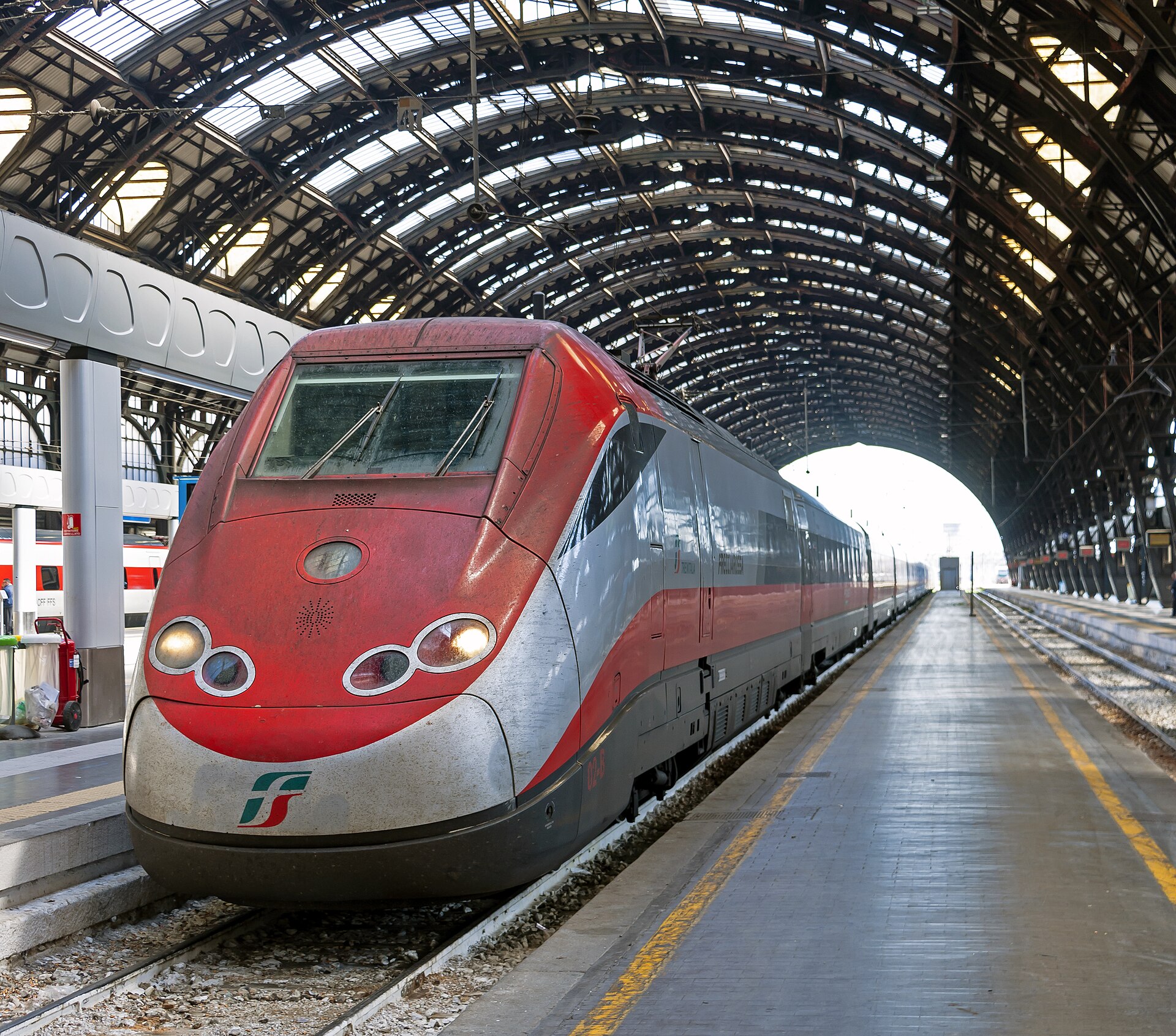
Every hour you spend on a train or in a taxi queue is an hour you are not in a piazza eating cacio e pepe. The Frecciarossa from Rome to Florence takes about 1 hour 30 minutes. Florence to Venice is around 2 hours. Both are efficient and comfortable. But a transfer day is still a transfer day — you lose the morning to checkout, the early afternoon to settling in, and you may not feel like much more than a short walk and a glass of wine by evening. That is not a complaint; it is just the arithmetic. Our things worth knowing before you go go further on protecting your time on the ground.
For a first trip to Italy, the principle is simple: the fewer bases you move between, the more you actually experience each place. Three bases in seven days means you are always half-packed.
A note on what I mean by “day”: I am counting full days on the ground, not travel days. If you fly overnight from New York and land in Rome on Monday morning, that Monday is a travel day. You get from the airport to your hotel, you have lunch, maybe a slow afternoon walk. It counts in your total trip, but it is not a sightseeing day. Factor this in.
5 Days in Italy: One City Done Properly
Five days is not enough to see Italy. It is enough to fall in love with one corner of it.
If you have five days — perhaps as an add-on to a European business trip, or as a standalone city break — the only sane strategy is to pick one city and resist the urge to bolt anywhere else. Rome is the most obvious choice for a first timer. You could spend five days there and still leave with a list of things you did not get to. Florence is a strong second, particularly if art and Renaissance history are your priority. Venice rewards a slower pace and rewards it well, though it can feel exhausting if you push it too hard.
What five days in Rome actually looks like
Realistically: the Colosseum, Roman Forum, and Palatine Hill take the better part of a day if you want to understand what you are looking at rather than just photographing it. The Vatican Museums, Sistine Chapel, and St. Peter’s Basilica take another full day, longer if you go at peak hours without a timed entry. That leaves three days for everything else: Trastevere, the Pantheon, Campo de’ Fiori, the Borghese Gallery, Piazza Navona, the Jewish Ghetto, and the experience of just wandering. Five days is enough to do that without feeling frantic.
What you skip with five days: everything outside Rome. Florence is 1.5 hours away by train, but a day trip to Florence is not worth it — you would spend five hours traveling for four hours of sightseeing. Stay put. Save it for a trip where you can give the city three proper days.
See also our Italy travel budget guide for what five days in a major city will realistically cost you.
7 Days in Italy: A Real Trip, With Real Trade-Offs
Seven days in Italy is the most popular length among first-time visitors, and I understand why — it fits inside a standard annual leave allowance with a weekend on each end. It is doable. It is also fast.
The classic seven-day route is Rome (3 nights), Florence (2 nights), Venice (2 nights). On the Frecciarossa this works on paper. In practice:
- Night 1 (Rome arrival): You land, transfer, check in. Half a day.
- Days 2–3 (Rome): Two full days. Enough for the Colosseum complex and Vatican if you pre-book both. Not enough to slow down and eat properly.
- Day 4 (Rome → Florence): Morning train, afternoon arrival. Half a sightseeing day.
- Day 5 (Florence): One full day. The Uffizi or the Accademia — probably not both, unless you are an early riser who sprints between museums.
- Day 6 (Florence → Venice): Morning train. Half a day in Venice.
- Day 7 (Venice): One full day, then departure logistics.
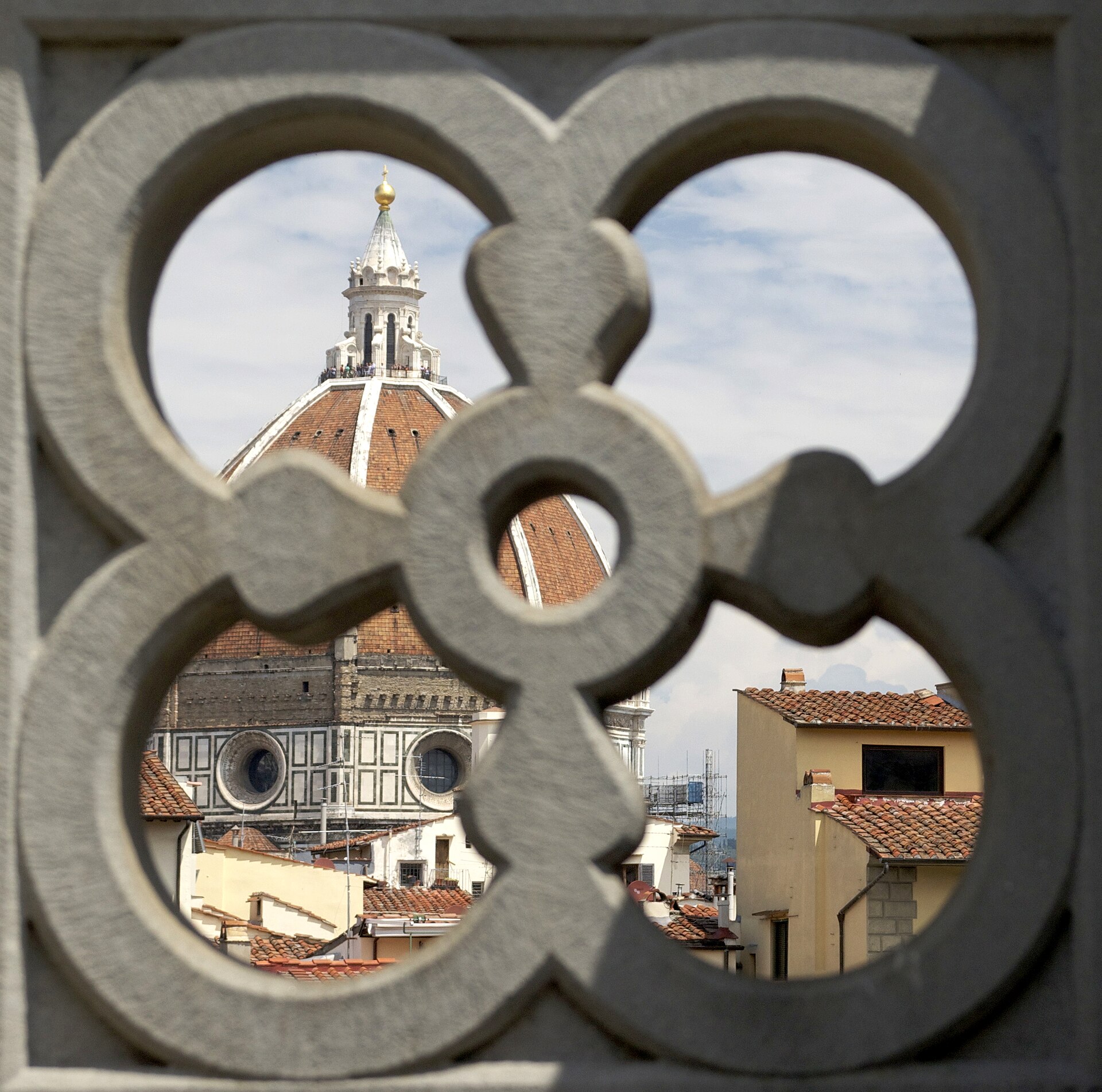
Honestly, seven days is enough only if you accept that you are getting an introduction to three cities rather than a proper feel for any of them. You will not have a lazy Tuesday morning in a Roman neighborhood. You will not stumble on anything unplanned. But you will see the Colosseum and Brunelleschi’s dome and St. Mark’s Basilica, and that is not nothing.
What you skip with seven days: Tuscany, the Amalfi Coast, any coastal Italy at all, slower-paced exploration, day trips, and the experience of actually settling into a place.
For a first-timer’s full route breakdown, including which cities to prioritize and which to save for a return trip, that sibling guide has the full detail. Here I want to focus on time.
10 Days in Italy: The Sweet Spot for First-Timers
Ten days is where the trip starts to feel like a trip rather than a relay race. This is the length I would recommend to most first-time visitors who ask me.
With ten days you can do the classic trio — Rome, Florence, Venice — and add one additional region with actual depth. The most common additions are:
Option A — Add Tuscany (3 nights): Base yourself somewhere like Siena or a rural agriturismo near Pienza, and use that as a base to see the Val d’Orcia, the hill towns, and the Chianti region. This works beautifully if you hire a car for that segment; the countryside requires one.
Option B — Add the Amalfi Coast (2–3 nights): Train to Naples from Rome (about 1 hour 10 minutes on the Frecciarossa), then transfer to Sorrento or Positano. The coast is spectacular and completely unlike anything in northern Italy. The trade-off: transfers to and around the Amalfi Coast are slow and often congested in peak season. Budget a full travel day to get there.
Option C — Add Cinque Terre (2 nights): The five villages are accessible by train and make a good transition point between Florence and Venice. It gets extraordinarily crowded in July and August.
A realistic 10-day breakdown:
– Rome: 3 nights (2.5 full sightseeing days)
– Tuscany OR Amalfi: 2–3 nights
– Florence: 2 nights (1.5 full days)
– Venice: 2 nights (1.5 full days)
Transfer days still eat time. Between Tuscany and Florence, you lose a morning. Between Florence and Venice, about two hours on the train. These are manageable. The overall pace is moderate — you will not feel rushed, but you will also not have unlimited time to linger.
For couples considering this length, the Italy for couples guide has specific recommendations on romantic bases and what to prioritize.
14 Days in Italy: Two Weeks, Done Right
Two weeks in Italy — around 12–13 actual sightseeing days once you account for arrival and departure — is where you can start making meaningful choices rather than forced ones. This is the Italy trip length that allows for two regions beyond the city trio, or one region explored with genuine depth.
What two weeks in Italy can actually include
- Rome: 3–4 nights. Three nights gives you two full days; four nights gives you three, which means you can actually see the Borghese Gallery, visit Ostia Antica on a day trip, and still have time for a quiet afternoon in Trastevere.
- Amalfi Coast or Puglia: 3 nights. Sorrento makes an excellent base for the Amalfi Coast and Pompeii. Puglia (Lecce, Alberobello, Ostuni) takes more travel time to reach but rewards you with fewer crowds and a completely different visual vocabulary — whitewashed, flat, almost Greek-looking.
- Florence: 2–3 nights.
- Tuscany: 2–3 nights based in Siena or the Val d’Orcia.
- Venice: 2–3 nights.
With 14 days, you can also start thinking about a north-to-south structure: fly into Venice, work your way south through Florence and Tuscany to Rome, then end in Naples and fly home. This eliminates backtracking and makes each transfer feel like forward momentum rather than logistics.
What you still skip with two weeks: Sicily, Sardinia, the Italian Lakes, the Dolomites, Puglia if you chose Amalfi, Emilia-Romagna, Umbria in depth. Italy is not a small country. Two weeks is comfortable; it is not comprehensive.
For family travelers, 14 days tends to work better than 10 because you can build in genuinely slow days — no one under twelve wants to do two museums in a day. See the Italy family vacation guide for more on planning with kids.
21 Days in Italy: When the Country Opens Up
Three weeks is the point where Italy stops feeling like a highlights reel and starts feeling like a place you are actually inhabiting.
With 21 days, a genuine north-to-south itinerary becomes possible. You could spend a week in northern Italy (Venice, the Dolomites or the Italian Lakes, Bologna), a week in central Italy (Florence, Tuscany, Umbria, Rome), and a week in the south (Naples, Amalfi, Puglia or Sicily). That structure gives you time to slow down, to take a cooking class, to sit at the same bar three mornings in a row and have the barista know your order.
This length also opens up Italy’s lesser-visited regions that genuinely deserve the attention: Umbria, which is Tuscany without the crowds; Basilicata, with its extraordinary cave city of Matera; Calabria, which barely registers on most itineraries but has some of Italy’s most dramatic coastline.
Twenty-one days is also the point at which solo travelers, in particular, can start to find rhythm. If you are planning solo travel in Italy, that rhythm — arriving somewhere, getting your bearings, making return visits to places you liked — is one of the best parts of the experience.
What you still cannot do in three weeks: all of it. Italy has 58 UNESCO World Heritage Sites. That is more than any other country on earth. You are not finishing Italy in a lifetime of trips; you are choosing which parts of it to love first.
How to Think About Pace: The Real Variable
Trip length matters less than pace, and pace is a personal question. Ask yourself honestly: when you travel, do you want to see more or feel more?
If the answer is see more, you can compress a lot into seven or ten days. You book early entry tickets to every major site, you eat standing up more than you would like, you feel a small pang of guilt leaving each city. This is not a bad trip. Plenty of people come back from a fast ten days in Italy absolutely transformed.
If the answer is feel more, give yourself at least fourteen days and commit to fewer bases. Two or three nights in a place is the minimum before you stop feeling like a visitor. Four nights is where you start to feel like you belong there, a little.
The rule of three nights
I use this as a personal baseline: anywhere I genuinely want to understand, I give three nights. That means I arrive on one afternoon, have two full days, and leave on the morning of the fourth day. Three nights in Rome means I can do the Colosseum on day one, the Vatican on day two, and spend day three just walking — Monti, Pigneto, wherever the mood takes me. Three nights is also the minimum before the hotel staff recognizes you, which is a small but real pleasure.
Two nights is enough for a city I am content to survey rather than understand. Venice can work in two nights if you have been before or if you accept you are seeing the surface. For a first timer who cares about Venice, three nights is better.
For the specific booking sequence — when to book flights, trains, and timed entry tickets — see the Italy planning walkthrough rather than here; that is its lane, not this article’s.
What You Are Willing to Skip: The Honest Question
Every Italy trip is also a list of things you decided not to see. The sooner you make peace with that, the better your trip will be.
Here is a rough framework for what each trip length forces you to leave out:
If you have 7 days in Italy, you are leaving out: coastal Italy entirely, any countryside immersion, most of southern Italy, and the slower pleasures — markets, long lunches, getting lost on purpose.
If you have 10 days in Italy, you are leaving out: Sicily, Sardinia, the Italian Lakes, the Dolomites, and probably either the Amalfi Coast or Tuscany (unless you move very quickly).
If you have 14 days in Italy, you are leaving out: one or two whole regions, and you are probably not spending enough time in any single place to feel truly unhurried.
If you have 21 days, you are still leaving things out. That is fine. That is what a second trip is for.
The most useful reframe I know: instead of asking what you can fit in, ask what kind of Italy you want to experience this time. Art-city Italy, coastal Italy, countryside Italy, and southern Italy are four genuinely different experiences. Pick the one that calls to you most and let that guide your time allocation. You can catch the others on a return trip, and you will want to.
For a detailed read on what is worth prioritizing versus what is actually overrated, the Italy travel mistakes guide is worth your time.
Italy by Trip Type: A Different Way to Think About Length
Sometimes the more useful question is not “how many days” but “what kind of trip.” Here is how Italy trip length maps onto trip type:
Art and history focus
Rome and Florence are non-negotiable and require time. The Vatican Museums alone deserve a half-day; the Uffizi is another half-day, at minimum. Add Pompeii and you are looking at a full day out of Naples. For a serious art-and-history trip: 10–14 days, weighted toward Rome and Florence. Read more about Rome tourism and the Florence and Tuscany travel guide for site-specific depth.
Coastal and relaxation focus
If you want water, sunshine, and a slower pace, Italy delivers — but coastal Italy takes time to reach and more time to appreciate. The Amalfi Coast, Cinque Terre, Puglia, and Sicily are all in very different places geographically. You cannot do all of them in one trip without spending half of it on trains or planes. Pick one coast and give it 3–4 nights. This type of trip works in 10–14 days but is more satisfying in 14+.
Countryside and food focus
Tuscany, Umbria, Emilia-Romagna: these are the regions where Italy slows down and asks you to slow down with it. You need a car, and you need nights. An agriturismo stay outside Siena or in the Val d’Orcia is one of the great pleasures of Italian travel — but it requires at least three nights to justify the journey there. Factor this into your overall trip. A countryside focus sits most comfortably in a 12–14 day trip.
Couples’ trip
Two weeks is almost perfect for a romantic Italy trip: enough variation to feel like an adventure, enough downtime to feel like a holiday. Rome, then a few nights somewhere coastal or rural, then Florence, then Venice. See the Italy for couples guide for specific recommendations on romantic bases and what to book in advance.
Families with children
Children under ten generally find rapid city-to-city movement exhausting. Museums require judgment calls: the Colosseum is genuinely thrilling for most kids; two hours in the Uffizi is not. For families, 14 days with fewer bases — four or five nights each in two or three places — tends to work far better than a whirlwind seven-day tour. More on this in the Italy family vacation guide.
Transfer Times That Actually Affect Your Planning
These are the high-speed train times you need to build your Italy trip around. They come from Trenitalia and Italo timetables (as of 2026 — always check current schedules before booking):
- Rome Termini → Florence Santa Maria Novella: around 1h 30min (Frecciarossa/Frecciargento)
- Florence → Venice Santa Lucia: around 2h 10min (Frecciabianca or Italo)
- Rome Termini → Naples Centrale: around 1h 10min (Frecciarossa)
- Naples → Sorrento (via Circumvesuviana commuter line): around 1h
- Florence → Cinque Terre (La Spezia): around 1h 30–2h depending on the service
- Venice → Bologna: around 35min (Frecciarossa)
- Bologna → Florence: around 35min
The Italy transportation guide at /italy-transportation/ goes deeper into routes, booking platforms, and seat reservations. What matters here is this: the main north-south spine is fast. It is the laterals — Rome to Puglia, Milan to the Dolomites, any route involving ferry crossings — where half-days disappear.
One transfer I want to flag specifically because it surprises people: getting onto the Amalfi Coast from Naples is not quick. Naples itself takes about an hour from Rome. Then a Circumvesuviana train to Sorrento takes another hour. Then road transport along the coast (bus, taxi, or ferry) adds 30–90 minutes depending on your destination. The Amalfi Coast is not a day trip from Rome. It is a destination that earns its own base of at least two nights.
The complete guide to Venice and Veneto has comparable logistics for reaching the lagoon from different entry points — worth reading if Venice is a key stop.
How Many Bases Should You Have?
A base is a place where you unpack, sleep at least two nights, and use as a home point for day activities. Bases are good. They reduce the mental load of travel.
Here is my general rule: one base per 3–4 days of trip length.
- 5 days: 1 base
- 7 days: 2–3 bases (any more and you are exhausted)
- 10 days: 3–4 bases
- 14 days: 4–5 bases
- 21 days: 5–7 bases (with some lasting 4–5 nights)
The temptation on a first trip is to make every night in a different town. Resist it. A night somewhere is not the same as experiencing somewhere. You will spend that night eating a forgettable dinner near the hotel because you are too tired to find anywhere better, and you will leave the next morning having seen almost nothing.
See the Italy countdown checklist for the practical preparation side — documents, transport passes, what to book before you go.
Final Thoughts
The right number of days in Italy is the number that lets you arrive somewhere feeling curious rather than desperate to cram things in.
If I had to give one piece of honest advice to a first-time visitor choosing between trip lengths: err on the side of more time in fewer places. A week in Rome, Florence, and Venice is a better trip than two weeks across eight cities. The richness of Italy is not at the top of its landmark list — it is in the second afternoon in a city, when you stop navigating and start noticing.
Plan your time well, then let Italy do the rest. The main Italy planning guide is a good starting point for the full picture, and the Italy itineraries hub has specific route ideas organized by trip length and region.
Go. Italy is waiting.
Questions travellers ask
How many days in Italy is enough for a first-time visitor?
Ten days is the minimum most first-timers will feel satisfied with, and 14 days is more comfortable. Seven days is technically possible for the classic Rome-Florence-Venice route, but the pace is brisk — you get two nights in each city, which leaves little room for anything unplanned. If you can extend to ten days, the extra three days add a region or allow you to slow down without sacrificing the main cities.
Is 7 days in Italy too short?
Not too short, but tight. The classic seven-day itinerary — three nights in Rome, two in Florence, two in Venice — works if you pre-book all major sites and accept a fast pace. You will not feel relaxed, and you will not see anything outside the big three. If your goal is to experience Italy rather than check off landmarks, push for ten days if you possibly can.
Is 10 days in Italy enough?
For most first-timers, yes — if you keep it to three or four bases. Ten days in Italy lets you do Rome, Florence, and Venice properly and add one extra: Tuscany, the Amalfi Coast, or Cinque Terre. It is the trip length with the best balance of depth and breadth. Just account for the fact that two or three of your ten days will be partial travel days.
How many days do you need in Rome alone?
Three nights minimum, giving you two full days. That is enough for the Colosseum and Roman Forum complex on day one, the Vatican Museums and St. Peter’s on day two, with some time left over for a neighborhood walk. Four nights — three full days — is better, and lets you visit the Borghese Gallery or take a half-day trip to Ostia Antica without rushing.
What is the best time of year for a first trip to Italy?
May, early June, September, and October are the strongest shoulder-season months: good weather, manageable crowds, and reasonable prices. July and August are hot, crowded, and expensive, especially in Venice and the Amalfi Coast. Winter (November through March) has much shorter queues and lower costs but some coastal towns close partially, and the famous Tuscan countryside looks brown rather than green. See the best time to visit Italy guide for a full month-by-month breakdown.
Can you do Italy in 5 days?
Yes, if you focus on one city. Five days in Rome is a genuinely excellent trip. Five days split across Rome and Florence is rushed and unsatisfying — you will spend four hours of your five-day trip on a train, and you will not have time to settle into either city. Pick one, go deep.
Is 2 weeks in Italy too long?
Two weeks in Italy is not too long. Most people come back saying they wish they had more time. Fourteen days gives you enough scope to see the main cities and a region or two at a pace that does not feel like work. If anything, the risk with two weeks is overpacking the itinerary — plan for rest days and give yourself permission to do nothing productive on at least two of them.
How many cities should you visit in Italy in two weeks?
Four to five cities or bases is comfortable for 14 days. More than five and you will spend too much of the trip in transit. A workable structure: Rome (4 nights), Amalfi or Tuscany base (3 nights), Florence (3 nights), Venice (3 nights), with one travel day built in. That leaves a little flex for a day trip or a slow morning.