Italian Coffee, Breakfast and Aperitivo Guide
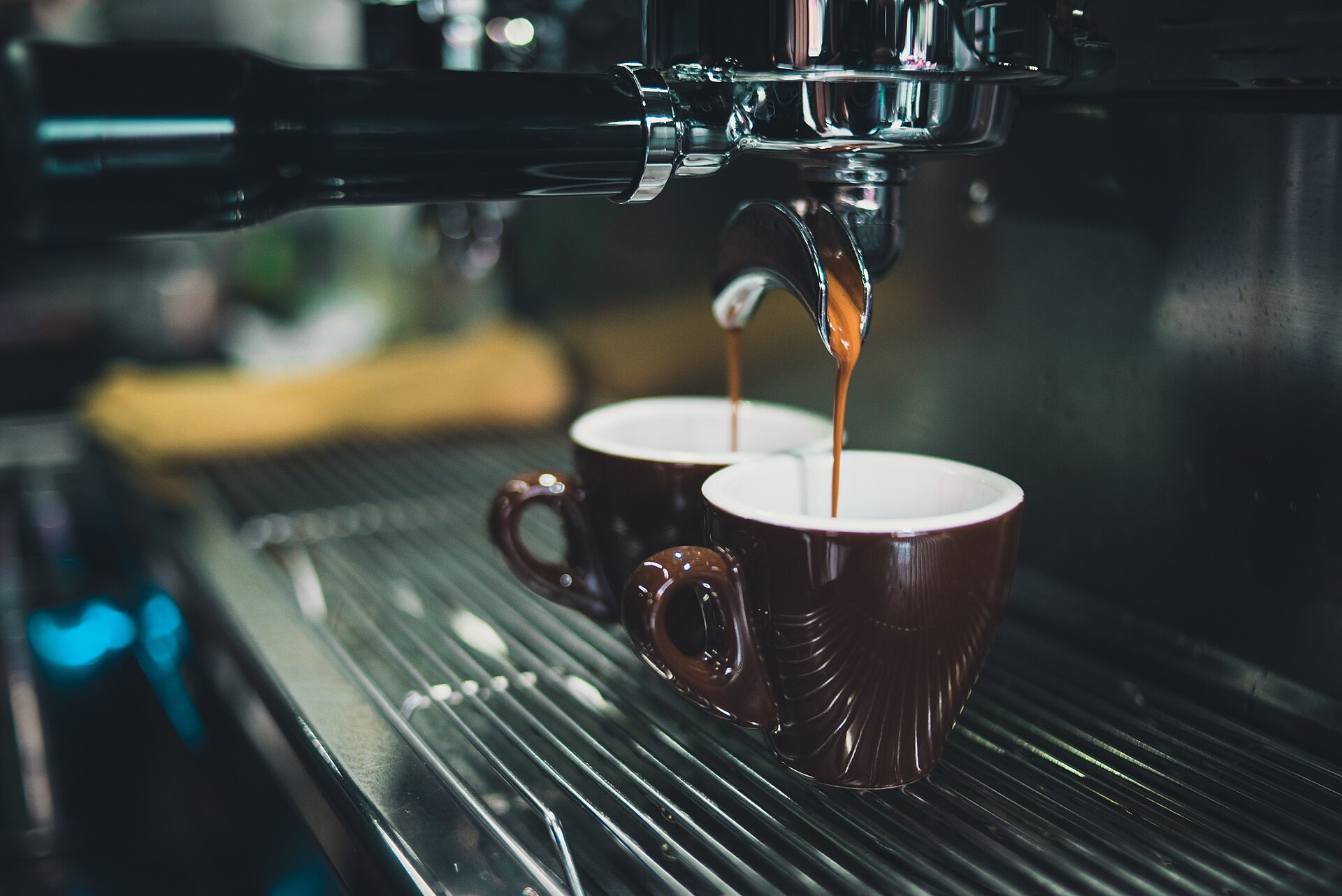
Most people think the hard part of eating in Italy is the food. It isn’t. The food takes care of itself. What trips up visitors is the rhythm of the day, and that rhythm is set by three things you drink and nibble standing up: coffee in the morning, a quick pastry beside it, and a drink with snacks before dinner.
This Italian coffee guide is about exactly that day-shape, not the regional pasta. In short: order coffee standing at the bar (a caffè is an espresso, around 1 to 1.50 euro at the counter as of 2026), eat a light sweet breakfast and stop ordering cappuccino after about 11am, then meet friends for a drink and free snacks roughly between 6 and 8pm. Get those three rituals right and you stop reading as a tourist almost immediately.
It’s for the traveler who wants to move through an Italian day the way locals do, knowing what to say, when to say it, and what it should cost.
The whole Italian day on one table
Before the detail, here is the shape of it. Skim this, then read the section that matches the hour you’re in.
| Drink / item | What it is | When Italians have it | Price feel at the bar (2026) |
|---|---|---|---|
| Caffè (espresso) | A single short shot, no size options | All day, especially after meals | ~1–1.50 euro |
| Cappuccino | Espresso with steamed milk and foam | Breakfast only, before ~11am | ~1.30–1.80 euro |
| Caffè macchiato | Espresso “marked” with a dash of milk | Any time, including after lunch | ~1.10–1.60 euro |
| Marocchino | Espresso, cocoa, milk foam in a small glass | Mid-morning or afternoon treat | ~1.50–2.50 euro |
| Caffè corretto | Espresso “corrected” with a shot of grappa or sambuca | After a meal, often by older men | ~1.50–2.50 euro |
| Caffè shakerato | Espresso shaken with ice and sugar | Hot afternoons in summer | ~3–4.50 euro |
| Cornetto | Soft sweet pastry, plain or filled | With breakfast coffee | ~1.20–2 euro |
| Aperol Spritz | Aperol, prosecco, soda, orange slice | Aperitivo, ~6–8pm | ~6–10 euro |
| Negroni | Gin, Campari, sweet vermouth, equal parts | Aperitivo, for a stiffer drink | ~8–12 euro |
| Ombra | A small glass of wine, Venice’s bar pour | All day in Venice’s bacari | ~2–4 euro |
A quick orientation before we start the clock. In Italy a bar is not a pub. It’s a café that happens to also pour alcohol, and it’s the engine of daily life: coffee and pastries in the morning, sandwiches at lunch, spritzes at dusk, all under one marble counter. You’ll pass several on every street. Learning how one works is the single most useful thing in this whole guide.
Italian coffee culture: how a bar actually works
Walk into any Italian bar and the choreography is the same. There’s a long counter (il banco), a glass case of pastries, a hulking chrome espresso machine, and usually a person behind it who has made ten thousand coffees and can do yours while talking to someone else.
Here’s the core move that saves you money and marks you as someone who gets it: drink standing at the counter. You step up, order, drink your coffee in a few minutes, and leave. That’s al banco, and it’s how the overwhelming majority of Italians take their coffee. It’s fast, it’s social, and it’s cheap.
Al banco vs al tavolo: the price you didn’t see coming
The thing nobody warns first-timers about is the table surcharge. The same espresso costs one price standing at the counter (al banco) and a noticeably higher price if you sit at a table (al tavolo), because table service is a different thing in Italy. At an ordinary bar the counter price might be around 1 to 1.20 euro and the table price two to three times that. In a famous piazza café it can be wildly more.
By law, Italian bars have to display their prices, and you’ll often see two columns on the posted menu: banco on the left, tavolo on the right. The gap between them is the surcharge. None of this is a scam. It’s the cost of renting that chair, that view, and the right to sit there as long as you like. Just decide on purpose: a quick caffè standing costs almost nothing; a slow cappuccino watching the Pantheon is a small luxury you’re choosing to buy.
I do both, depending on the morning. But I never sit down by accident and then act surprised at the bill.
Do you pay first or pay after?
You’ll read confident advice that you must pay at the register (la cassa) first, take your receipt (scontrino), then carry it to the counter and present it to get your coffee. That system is real and you’ll meet it in busy, big, or touristy bars, especially in train stations.
But in practice, in most ordinary neighborhood bars, it’s the other way around: you order at the counter, drink, and pay on your way out. Often the same person makes your coffee and rings you up, so the question is moot. My rule of thumb is simple. If the place is crowded, fancy, or has an obvious cashier station separate from the bar, hang back ten seconds and watch what locals do, then copy them. If it’s a quiet corner bar with one person working, just say buongiorno and order. Nobody will be upset either way.
How to order, in three words
You don’t need much Italian. “Un caffè, per favore” gets you an espresso. Lead with buongiorno (good day) or buonasera (good evening) and close with grazie, and you’ve covered the etiquette. A few useful extras: un bicchiere d’acqua (a glass of water, often given free alongside an espresso to cleanse the palate — drink it first), caldo and freddo for hot and cold, and the numbers due, tre, quattro if you’re ordering a round.
One thing not to do: don’t specify a size. There is no small, medium, or large. The drink dictates the cup. Ask for a caffè and you get a caffè, in a caffè-sized cup, and that’s correct.
The coffee menu, decoded
Every coffee in an Italian bar is built from the same three things: espresso, milk, and occasionally sugar or a splash of liquor. That’s it. No oat-milk-half-caf-caramel anything. Once you see the logic, the menu is easy.
- Caffè — a single espresso. The default, the most popular order in the country. If the barista repeats “un caffè normale?” they’re just confirming you don’t want a giant American drip coffee.
- Caffè doppio — a double shot. Slightly touristy; a local would more likely drink one, then order another.
- Caffè lungo — a “long” espresso pulled with more water. Milder, closer to filter coffee than you’d expect, and the gentlest way in if straight espresso is too intense.
- Caffè ristretto (or corto) — the opposite: even less water, denser, more concentrated. The serious-drinker’s pour.
- Caffè macchiato — espresso “stained” with a dash of milk. The respectable way to have a little milk in your coffee after the breakfast window has closed.
- Latte macchiato — the mirror image: a glass of warm milk marked with a little coffee. Mild, milky, good for kids.
- Cappuccino — espresso under steamed milk and foam, in a proper cup. A breakfast drink, full stop (more on the timing rule below).
- Caffè latte — coffee with hot milk, in a tall glass. And note: order a “latte” on its own and you may literally get a glass of milk, because latte just means milk. Say caffè latte if that’s what you want.
- Americano — espresso lengthened with hot water after pulling. The most touristy thing on the board; you’ll rarely see an Italian drink one.
- Caffè corretto — espresso “corrected” with a shot of grappa, sambuca, or brandy. A cold-morning or after-dinner thing, traditionally an older-man order at the bar.
- Caffè con panna — espresso topped with a dollop of whipped cream. Basically a tiny dessert.
- Caffè shakerato — espresso shaken hard with ice and sugar until frothy, poured into a stemmed glass. Italy’s elegant answer to iced coffee, and a genuinely good summer drink.
- Caffè con ghiaccio — espresso with a separate little cup of ice cubes, so you pour it over yourself. A southern habit, big in Puglia’s Salento.
A word on iced coffee in general: it is not really a thing here the way it is in the United States. If you want your coffee cold, the shakerato or the caffè con ghiaccio are your two civilized routes. Walking around with a giant iced latte is not part of the culture, and in most bars there isn’t even a takeaway cup on the premises. Coffee in Italy is something you stop and drink, not something you carry.
The Italian coffee guide to the cappuccino rule
This is the one everyone has heard, so let’s be precise about it. Italians treat cappuccino, and milky coffees generally, as a morning thing, finished by mid-to-late morning, roughly 11am. The reasoning is digestive: a cup of warm milk is considered heavy, almost a small meal, and not something you’d pour on top of lunch or dinner.
So no cappuccino after a meal. After lunch, an Italian orders a caffè (or a macchiato if they want a touch of milk), never a cappuccino, and certainly not a cappuccino to finish dinner. Will a barista refuse you? No. They serve cappuccinos to tourists at all hours without comment. But if you’d rather not announce yourself, keep the cappuccino for breakfast and switch to espresso or macchiato for the rest of the day. It’s a small thing that quietly signals you know the rhythm.
Breakfast in Italy: small, sweet, and standing up
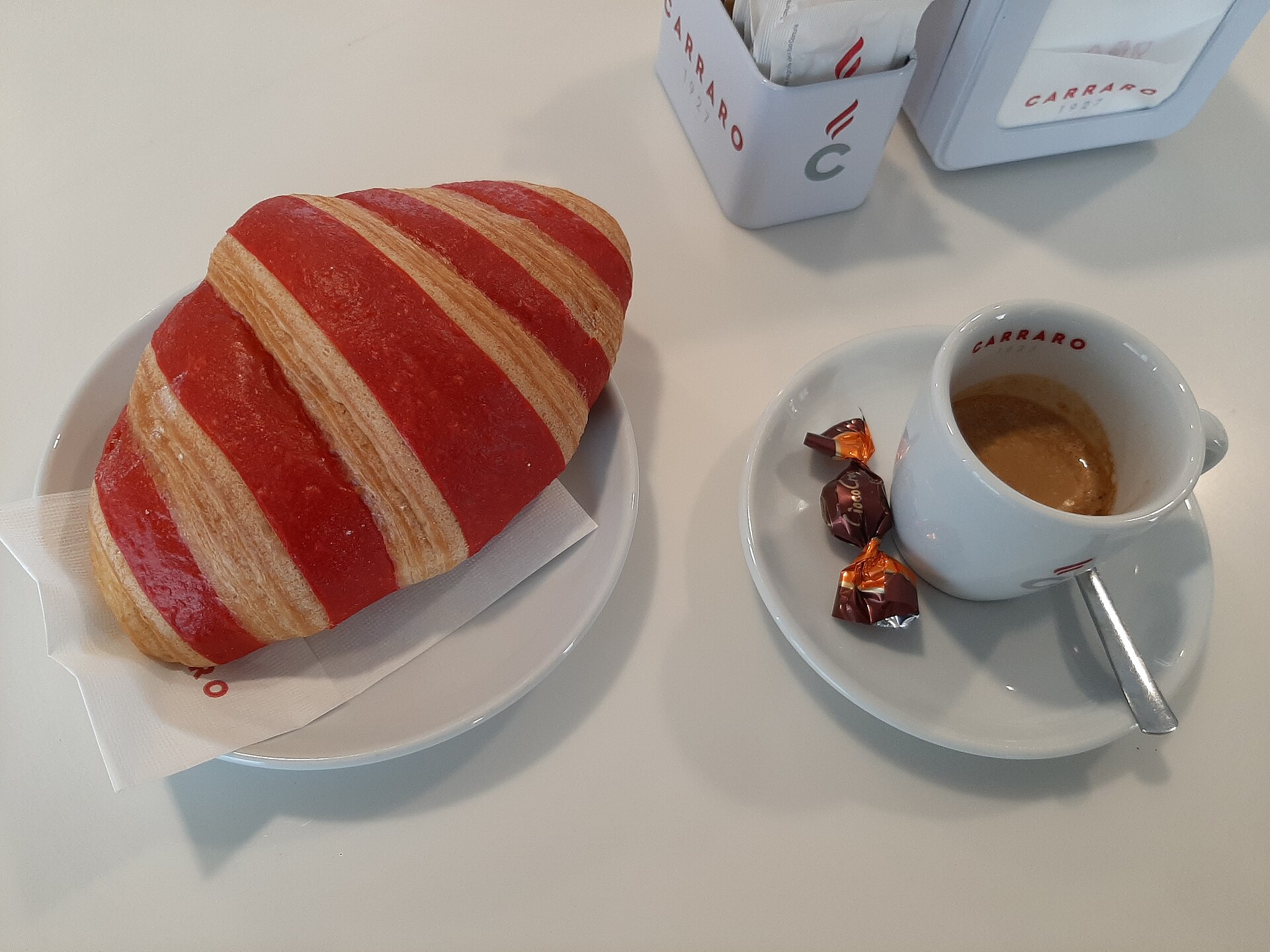
If you arrive expecting eggs, bacon, and toast, recalibrate now. Breakfast in Italy — la colazione — is the lightest meal of the day and almost always sweet. The standard, north to south, is a coffee and a pastry, eaten in under ten minutes, frequently standing at the same bar counter where you take your morning espresso.
That’s it. That’s breakfast. A cappuccino e cornetto is the absolute classic pairing: the milky coffee and the soft sweet pastry, taken together, often while half-reading a newspaper. Many Italians go to the same bar every morning, where the barista already knows the order before they’ve finished saying buongiorno.
Cornetto vs croissant: not the same thing
A cornetto looks like a croissant and is not one. The French croissant is all about butter and crisp, shattering layers. The Italian cornetto is softer, slightly sweeter, often enriched with a little egg, and more tender than flaky. It’s a different pastry doing a different job — built to be the sweet half of breakfast, not a standalone butter bomb.
You’ll order it one of three main ways:
- Cornetto vuoto — “empty,” plain, no filling. Many Italians take it exactly like this.
- Cornetto alla crema — filled with a vanilla pastry cream, soft and pudding-like.
- Cornetto alla marmellata — filled with apricot jam or marmalade.
You’ll also see al cioccolato or alla Nutella (chocolate), al miele (honey), and integrale (whole-wheat) versions. In parts of the north, especially around the lakes and Piedmont, the same pastry is often called a brioche rather than a cornetto, and in Sicily “brioche” means something else again — the soft bun they split and stuff with granita or gelato in summer. Order what’s in the case; it’s all good.
One practical tip: bars usually buy or bake a batch of pastries for the day, and when they’re gone, they’re gone. The cream-filled cornetti and the best-looking things go early. If you’re particular, come before nine.
What about hotel breakfast?
Here’s where expectations and reality diverge. A simple Italian hotel or B&B breakfast often mirrors the local style: coffee, cornetti or other pastries, packaged cake (plumcake), biscuits, maybe yogurt, juice, bread with jam and Nutella, and some fruit. Lovely, light, and very Italian — but if you were hoping for a cooked breakfast, it can feel thin.
Bigger or international hotels, especially in Rome, Florence, Venice, and Milan, lay on a fuller buffet aimed at foreign guests: eggs, cured meats, cheeses, cereals, sometimes bacon. If a real breakfast matters to you, that’s a thing worth checking when you book; it’s covered in the where to stay in Italy guide. Honestly, though, my advice is to skip the hotel spread at least a few mornings and walk to a neighborhood bar instead. The coffee is better, it costs a couple of euro, and standing at the counter with a cornetto is the breakfast you actually came for.
Is breakfast in Italy really just coffee and a pastry?
For most people, on most days, yes. The Italian breakfast is small and sweet by design, and there’s no cultural pressure to eat more in the morning. The big eating happens at lunch and dinner. If you need a heartier start you can build one from a bar — yogurt, fruit, a savory pastry, a tramezzino sandwich — but you’ll be doing your own thing, not following a tradition. For how the rest of the day’s meals are structured, the what to eat in Italy guide lays out the course-by-course rhythm.
Regional coffee oddities worth knowing
Coffee is national, but it has dialects. A few cities do it their own way, and seeking these out is one of the small pleasures of paying attention.
Naples and the caffè sospeso
Neapolitan espresso is its own thing: short, intense, often pre-sweetened, served scaldingly hot. The local instruction is to drink it the way Naples likes it, which old-timers sum up in dialect as comm, cazz, coce — roughly, very, very hot.
But Naples’s best contribution to coffee isn’t a drink, it’s a gesture. The caffè sospeso, the “suspended coffee,” is a tradition said to date to the early days of Neapolitan café culture: you pay for two coffees but drink one, leaving the second “suspended” for whoever comes in later and can’t afford it. They ask if there’s a sospeso waiting, and they drink it for free, no questions, no shame. It’s a small act of anonymous generosity baked into the city’s coffee bars. Plenty of places elsewhere have since adopted it, but it belongs to Naples. There’s more on the city’s food character in the guide to eating in Naples.
Turin’s bicerin and the marocchino
Turin takes coffee and chocolate seriously, and the proof is the bicerin: a layered drink served in a small glass — rich drinking chocolate at the bottom, espresso in the middle, a cap of milk or cream on top, sipped without stirring so you get all three at once. The name means “small glass” in Piedmontese, and the drink is centuries old, tied to Turin’s historic cafés.
Turin (and the north generally) is also home to the marocchino, espresso with cocoa and milk foam in a small glass — same chocolate-coffee instinct in miniature. Confusingly, the same general idea goes by different names around the country: espressino or vetrino in parts of the south, and the lines between marocchino and bicerin blur depending on who’s pouring.
Trieste, where the coffee has its own language
Trieste is Italy’s coffee capital in the literal sense — it’s a major coffee port and the home of roasters like Illy and Hausbrandt — and it has a private vocabulary that confuses even other Italians. Order a “caffè” elsewhere and you get an espresso. In Trieste you order:
- Nero — a plain espresso (literally “black”).
- Capo — an espresso with a little milk foam, served in a cup. The Trieste cappuccino-in-miniature.
- Capo in b — the same, but in bicchiere, in a small glass. The local signature.
- Gocciato — a nero with just a goccia, a drop, of milk foam.
- Deca — decaf, so “un deca in b” is a decaf in a glass.
Walk into a Trieste bar and confidently ask for “un capo in b” and you’ll have passed a small local test. It’s one of my favorite party tricks in all of Italy.
Aperitivo Italy: the evening ritual before dinner
If coffee runs the morning, aperitivo runs the early evening. This is the part of the Italian day foreigners fall hardest for once they understand it, and the part most worth building into your trip.
Aperitivo is a pre-dinner drink, taken with small snacks, designed to open the appetite (the word shares a root with “aperture”). It’s social and unhurried but not a whole night out. The window is roughly 6 to 8pm, bridging the long Italian gap between the end of the workday and a dinner that often doesn’t start until 8:30 or 9. You order a drink, snacks appear, you talk, and then you go to dinner. Budget an hour or 90 minutes, not the entire evening.
The drinks are bitter, low-ish in alcohol, and built to wake up the palate rather than knock you flat:
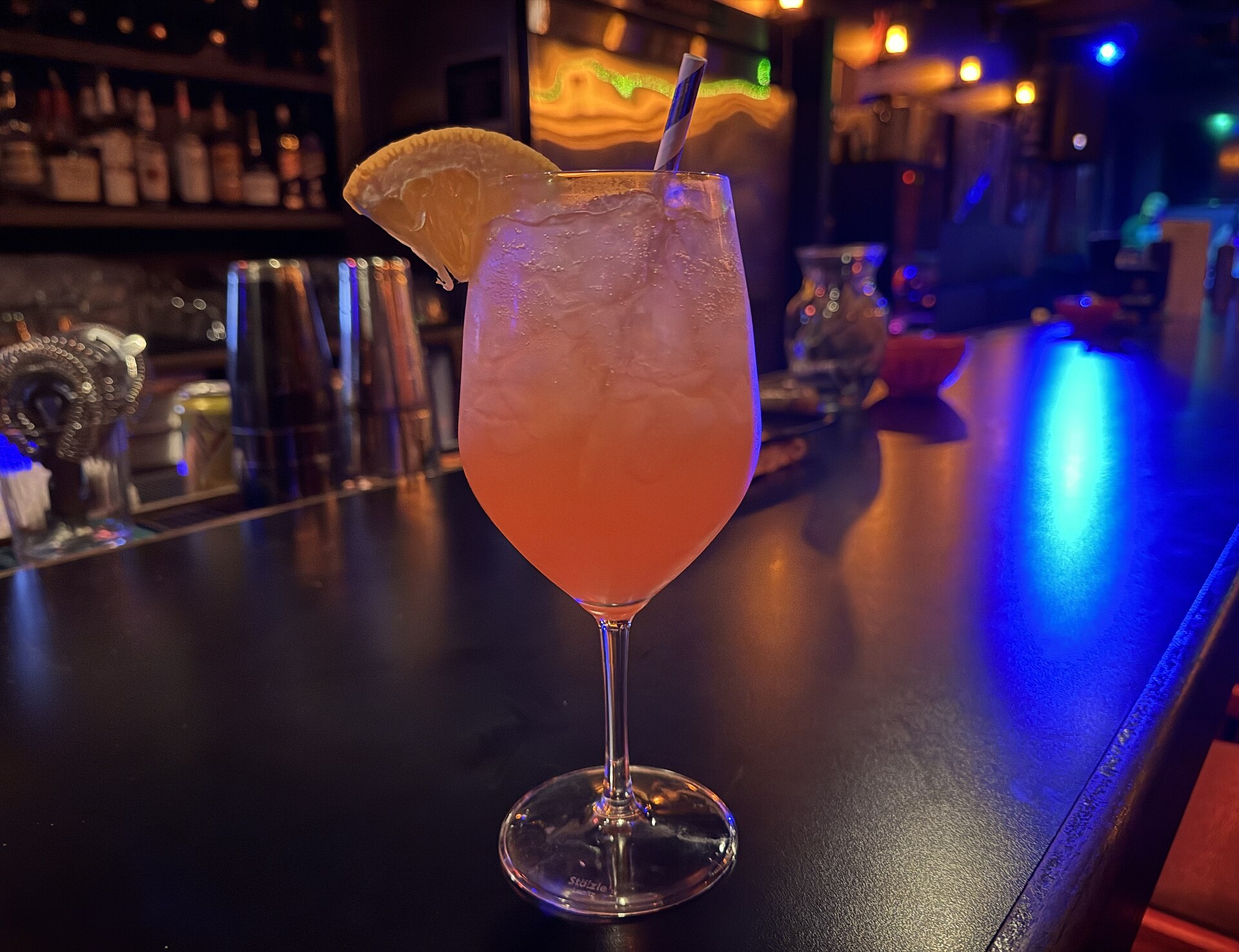
- Aperol Spritz — the famous one. Aperol (bitter-orange, fairly light), prosecco, a splash of soda, an orange slice, over ice. Bright orange, easy, a little sweet. Invented in the Veneto and now the sound of summer all over Italy.
- Negroni — equal parts gin, Campari, and sweet vermouth, stirred, with an orange peel. Strong, bitter, grown-up. A Florentine invention, the story goes.
- Negroni Sbagliato — the “mistaken” Negroni, where prosecco replaces the gin. Lighter and fizzier.
- Americano — Campari, sweet vermouth, and soda. The Negroni’s gentler ancestor, and nothing to do with the coffee of the same name.
- Campari Spritz / Campari Soda — for people who want their bitter straight up; Campari is more aggressively bitter than Aperol.
The food is the other half. A proper aperitivo comes with stuzzichini or cicchetti — little snacks that arrive with your drink, often free with the cost of the drink: olives, chips, nuts, small bites of focaccia, maybe some cured meat or a crostino. At a basic bar it’s a bowl of chips and olives. At a generous one it’s a small spread. This is where the value lives.
Aperitivo vs apericena: know the difference
In Milan especially, aperitivo grew into something bigger: the apericena, a portmanteau of aperitivo and cena (dinner). You pay a set price for your drink and get access to a substantial buffet — pastas, rice salads, cheeses, vegetables, sometimes enough to skip dinner entirely. It’s credited to Milanese bar culture from the 1990s and it’s a genuinely good budget move in an expensive city: one drink and a generous buffet can stand in for a meal. Just know that buffet apericena and the simpler snacks-with-your-drink aperitivo are two different animals, and the buffet style is most associated with Milan and the north. There’s more city context in the guide to visiting Milan and Northern Italy.
Where aperitivo came from, and why the city matters
Aperitivo has deep northern roots, and three cities each own a piece of it.
Turin is the birthplace. In the 18th century a Turinese named Antonio Benedetto Carpano created modern vermouth, the herb-infused fortified wine that became the backbone of the whole pre-dinner-drink idea. Turin still drinks vermouth proudly, neat or on ice, and the city’s grand cafés are where the ritual of the social aperitivo really took shape. If you want to drink where it started, order a vermouth in Turin. The wider story of Italy’s fortified and regional wines is in the Italy wine regions guide.
Milan made it a phenomenon. The Milanese turned aperitivo from a drink into an event, and later into the buffet-heavy apericena. In Milan you start with a Campari-based drink — a Negroni, an Americano, a Campari Spritz — and the spread that comes with it.
Venice does it its own way, and to me it’s the most charming version. Venetian bars are called bacari, and the aperitivo here is cicchetti and an ombra — small bites at the counter and a small glass of wine, the ombra, whose name (literally “shade”) supposedly comes from wine sellers who once followed the shadow of the bell tower across the piazza to keep their barrels cool. You stand, you eat a crostino or a fried thing, you sip, you move to the next bacaro. The local spritz here is often made with the more bitter Select rather than Aperol. It’s cheap, mobile, and the single best way to eat and drink in Venice. For navigating the city more broadly, see the guide to visiting Venice and Veneto, and to time your visit well, the best time to visit Italy guide helps.
How much does aperitivo cost?
It varies by city and how fancy the bar is, but as a feel for 2026: a spritz runs somewhere around 6 to 10 euro, a Negroni or other spirit-forward cocktail a bit more, and the snacks that come with it are usually included in that price. A Milanese apericena with a full buffet might be a set 12 to 20 euro for drink plus access. In a Venetian bacaro you can do it far cheaper, piecing together cicchetti at a euro or two each with a small ombra. Compared to a sit-down dinner, aperitivo is one of the better-value rituals in Italy, which is part of why I lean on it. If you’re watching costs across a whole trip, the Italy travel budget guide puts these numbers in context.
Reading a bar like a local, hour by hour
Put it together and a single Italian bar can carry you through an entire day. Early, it’s coffee and cornetti and a queue of people on their way to work. Late morning, the cappuccinos thin out and the espressos take over. Around lunch, tramezzini and panini appear. Mid-afternoon, maybe a marocchino or a shakerato if it’s hot. Then, as the light drops, the bottles come out, the snacks come up onto the counter, and the same room that sold you breakfast is now pouring spritzes.
The trick is just to match the hour. Cappuccino in the morning, espresso after meals, spritz at dusk. Stand at the counter unless you’re deliberately buying the table. Greet, order, thank. None of it is hard, and all of it makes the days feel less like sightseeing and more like living there for a week. For the bigger picture of moving around the country, the complete guide to visiting Italy and the practical stuff nobody tells you about Italy cover the practical scaffolding, and if you’d rather avoid overpriced tourist-trap spots, the tourist-trap restaurants in Italy guide is blunt about how to spot them.
Final thoughts
The food in Italy is wonderful, but the rituals around it are what make the place feel like itself, and most of those rituals happen standing up with something small in your hand. A caffè at the counter on the way somewhere. A cornetto and a cappuccino before the day starts. A spritz with friends as the light goes gold and dinner waits.
You don’t need to be perfect about any of it. Order the cappuccino at 4pm if you really want it. But if you lean into the day-shape even a little — coffee standing, breakfast light and sweet, a drink before dinner — Italy opens up in a way it never quite does from a restaurant table. That’s the whole secret, and it costs about three euro to start. For where to point the trip itself, the Italy itineraries guide will help you build the days these rituals fill.
Questions travellers ask
Why can’t you order a cappuccino after 11am in Italy?
You can — no one will stop you — but Italians don’t, because cappuccino is considered a breakfast drink. The warm milk is seen as heavy, almost a small meal, and not something to pour on top of lunch or dinner. After mid-morning, locals switch to plain espresso or a macchiato. Ordering one late simply marks you as a visitor, which may or may not bother you.
What is the difference between a cornetto and a croissant?
They look alike but aren’t the same. A French croissant is buttery, crisp, and built on shattering layers. An Italian cornetto is softer, a touch sweeter, often enriched with egg, and more tender than flaky. It comes plain (vuoto) or filled with cream (alla crema), jam (alla marmellata), chocolate, or honey, and it’s made to be the sweet half of a light breakfast rather than a standalone pastry.
How much does coffee cost in Italy?
As of 2026, a standard espresso (caffè) at the bar counter runs roughly 1 to 1.50 euro, sometimes under a euro off the tourist track and a bit more near major sights. Cappuccino is a little more. The key variable is where you stand: counter prices (al banco) are low, but sitting at a table (al tavolo) can multiply the price two or three times, so check the posted menu’s two columns.
What is aperitivo and what time is it in Italy?
Aperitivo is a pre-dinner drink served with small snacks, meant to open the appetite. It runs roughly 6 to 8pm, filling the gap before a late Italian dinner. You order something bitter and light — an Aperol Spritz, a Negroni, an Americano — and snacks like olives, chips, or crostini come with it, often included in the drink price. Plan on an hour or so, not the whole night.
What is the most popular aperitivo drink in Italy?
The Aperol Spritz is the iconic one: Aperol, prosecco, soda, and an orange slice over ice, bright orange and easy to drink. It was invented in the Veneto and is now everywhere in summer. For something stronger and more bitter, Italians reach for a Negroni (gin, Campari, sweet vermouth) or an Americano (Campari, vermouth, soda). In Turin you’ll also see vermouth drunk on its own.
Do you tip for coffee or aperitivo in Italy?
No. Tipping is not expected for coffee at a bar, and aperitivo prices already include service. If you want, you can round up or leave small change for genuinely warm service, but there’s no obligation and no standard percentage the way there is in the United States. Service charges, where they apply at sit-down restaurants, are a separate matter and usually printed on the menu.
Is breakfast included at Italian hotels, and is it good?
It’s often included, but manage expectations. A typical Italian hotel breakfast is light and sweet — coffee, cornetti, packaged cake, biscuits, yogurt, juice, fruit — mirroring how locals actually eat in the morning. Larger and international hotels lay on fuller buffets with eggs and cured meats for foreign guests. If a cooked breakfast matters, check before booking; otherwise, consider walking to a local bar instead for better coffee and atmosphere.
What’s the deal with paying first at Italian bars?
Two systems exist. In busy, big, or touristy bars (and train stations), you pay at the register first, take your receipt, and present it at the counter to get your coffee. In most ordinary neighborhood bars, you simply order at the counter, drink, and pay on the way out — often the same person does both. When unsure, watch what locals do for a moment and follow them; either way, no one minds.