Florence and Tuscany Food Guide
The thing nobody tells you about eating in Florence is that the best meal of my last trip cost four euros and I ate it standing at a metal counter with broth running down my wrist. The second-best cost about ninety and we shared it three ways. Both were perfect. That gap is the whole story.
This Tuscany food guide is the cooking of a frugal, stubborn region: cucina povera at its core, where stale bread, beans, cheap cuts, and good olive oil get turned into food people drive across the country for. It is meat-forward, bread-forward, and almost never spicy. This guide is for anyone who wants to order like a local in Florence and the wider region for a few days instead of eating whatever the menu near the Duomo is pushing.
I will give you the dishes, where and when to eat them, what a steak should actually cost by weight, and the small rules that keep you out of the trap zone. For the wider national picture I keep an Italy food and wine overview and a broader what to eat in Italy primer, but everything below is Florence and Tuscany and nothing else.
The Tuscany food guide cheat sheet
Read this before your first dinner. It is the fastest way to walk into a trattoria, recognize what you are looking at, and order without freezing.
| Dish | What it is | When / where | Notes |
|---|---|---|---|
| Bistecca alla fiorentina | Thick T-bone of Chianina or Maremmana beef, grilled rare | Dinner, sit-down, shared | Priced by the etto (100g); 0.8–1.2kg is normal |
| Ribollita | “Reboiled” bread-and-bean-and-kale stew | Autumn/winter, lunch or dinner | Vegetarian; thick enough to stand a spoon in |
| Pappa al pomodoro | Thick bread-and-tomato soup | Summer especially; room temp or warm | Pure cucina povera; tastes of the tomatoes |
| Panzanella | Stale-bread salad with tomato, onion, basil | Summer only | A bad one is mushy; a good one is bright |
| Crostini di fegatini | Toasts with chicken-liver paté | Antipasto, year-round | The classic Tuscan starter |
| Pici all’aglione | Fat hand-rolled pasta, garlicky tomato sauce | Lunch or dinner; big in Siena/Val d’Orcia | Also served cacio e pepe or with breadcrumbs |
| Pappardelle al cinghiale | Wide egg pasta, wild boar ragù | Cooler months, dinner | Gamier and leaner than Bolognese ragù |
| Lampredotto | Cow’s fourth stomach in a dipped roll | Lunch, street carts | ~€4–6; Florence’s signature street food |
| Trippa alla fiorentina | Tripe in tomato sauce | Lunch, carts and trattorias | The milder cousin of lampredotto |
| Finocchiona | Fennel-seed salami | Antipasto / panini | Best with unsalted bread |
| Pecorino di Pienza | Val d’Orcia sheep’s cheese, fresh to aged | Antipasto, cheese board | Try it with chestnut honey or pears |
| Schiacciata | Flat, salty, olive-oil bread | Anytime; panini base | In autumn, schiacciata all’uva with grapes |
| Cantucci + Vin Santo | Twice-baked almond biscuits, sweet wine | After dinner | Dunk the biscotti; do not eat them dry |
| Cacciucco | Livorno’s red seafood stew | Coast, lunch or dinner | Five fish, the old rule; over garlic toast |
| Panforte / ricciarelli | Dense fruit-nut cake; soft almond cookies | Siena; strongest around Christmas | Sienese, not Florentine |
Prices below are normal-Tuscany ranges as of 2026, and they drift. Treat them as a sanity check, not a quote.
What food is Florence famous for?
Short version: a rare grilled steak the size of a paperback, three or four soups built on stale bread, an offal sandwich locals queue for, and a dessert wine you dunk biscuits in. Florence does not do delicate. It does the quality of a few good ingredients, loudly.
The frame I want you to keep is cucina povera, “poor cooking.” This is the kitchen of people who could not afford to waste anything: yesterday’s bread becomes today’s soup, the cuts the butcher could not sell become the dishes the city is now famous for. Once you see that thread, the whole menu makes sense. The bread soups, the bean sides, the tripe, the offal panini, the way nothing gets thrown out. Florence food is poverty cooking that got so good it outlived the poverty.
A few of these dishes are genuinely Florentine. Most are Tuscan, shared with Siena and the hill towns and the coast, which is why I keep widening the lens as we go. If you are building a trip around this region, my Florence and Tuscany travel guide covers the where-to-go and how-long side; this one is strictly the eating.
Bistecca alla fiorentina: how it is served, and how to pay for it
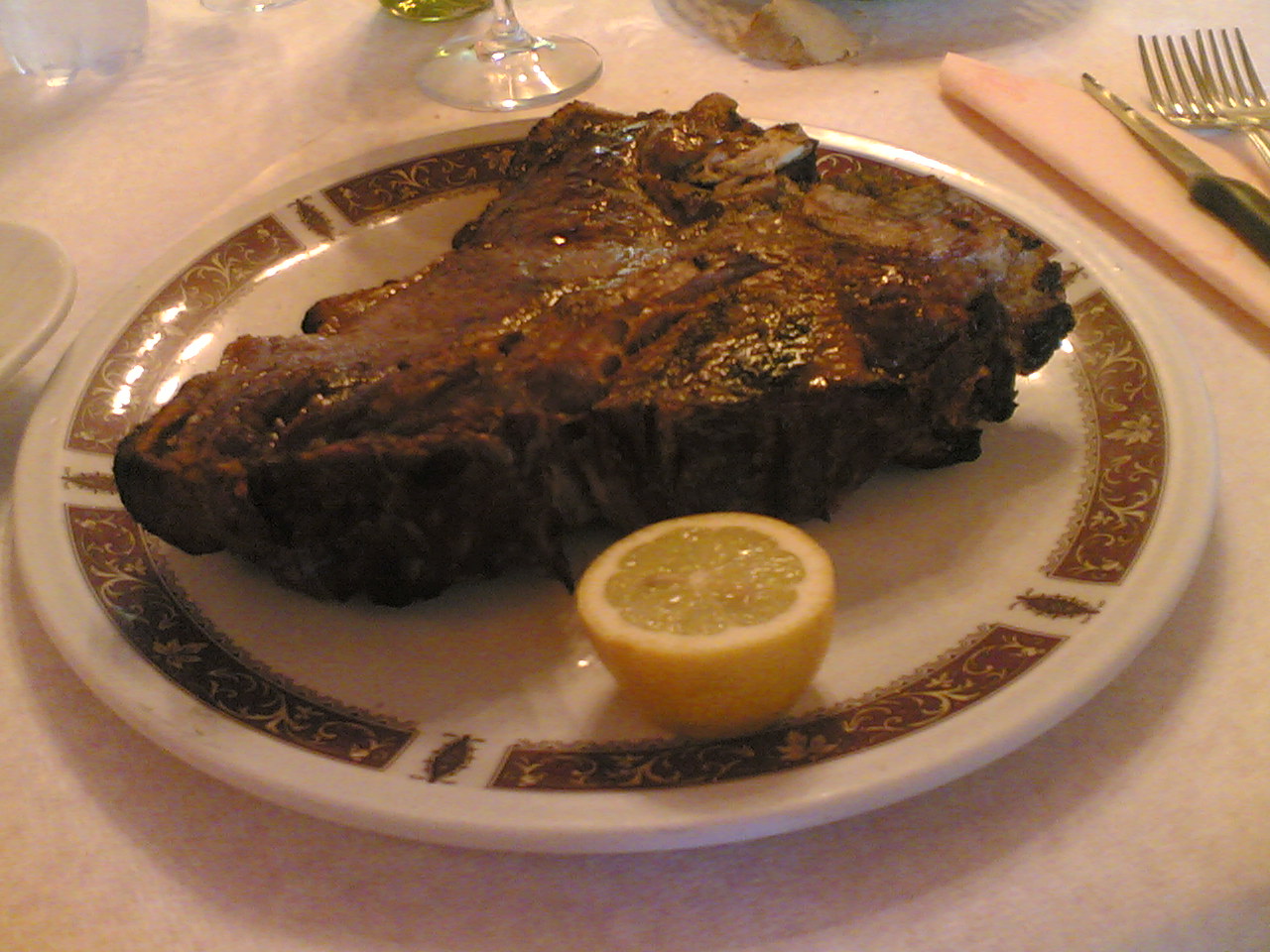
If there is one dish that defines the city, it is the bistecca. A thick T-bone (technically a porterhouse-ish cut, with both the filet and the strip either side of the bone) from a young steer or heifer, traditionally the big pale Chianina breed raised in the Val di Chiana, increasingly the local Maremmana too. It is cut three to four fingers high, grilled hard over wood or charcoal, seared dark outside, and served rare. Properly rare, cool-red-in-the-middle rare. This is not negotiable and you should not try to negotiate it.
It arrives barely seasoned: the meat, the fire, a little salt and maybe rosemary at the end, sometimes a drizzle of oil. No sauce. The point is the beef and the char, and if the beef is good you will not miss anything.
Now the part that trips everyone up: the price on the menu is per etto, not per steak. An etto is 100 grams. So when you see “€8” or “€9” next to bistecca, that is the price for a tenth of a kilo, and the steak you are about to order weighs about a kilo. Do the math before you are surprised by the bill, not after.
Here is the real-world math as of 2026. Decent restaurant bistecca runs roughly €40–60 per kilo. True certified Chianina pushes higher, around €60–80 per kilo. A single steak generally lands between 0.8 and 1.2 kg, because you cannot really cut this thing small and still cook it the right way. So a proper bistecca is usually a €40–80 slab of meat before sides, which is exactly why it is a sharing dish. Two hungry people, or three normal ones, split one steak plus a couple of contorni. If you are quoted something suspiciously cheap, be suspicious: it is probably not the breed or the cut it claims to be.
A few ordering notes I have learned the slightly-embarrassing way:
- They will weigh it for you. A good place brings the raw cut to the table or tells you the weight before cooking. That is normal and reassuring, not theater.
- Do not ask for it well done. Some kitchens will flatly refuse. Rare is the dish. If you genuinely cannot do rare, order something else and let your table have the steak.
- Sides are separate. The classics are fagioli (white cannellini beans, plain or all’uccelletto in a tomato-sage sauce), roast potatoes, or sautéed greens. Order one or two for the table.
- One steak, share it. Ordering one each is a rookie spend. The kitchen expects sharing.
For the wine, a young Tuscan red is the move, and yes, Chianti Classico is the easy and excellent pairing here. I will not go deeper than that line because wine has its own home: see the Italian wine regions guide for Chianti, Brunello, Vino Nobile, and the rest. Back to the food.
What street food is Florence known for? Lampredotto and trippa
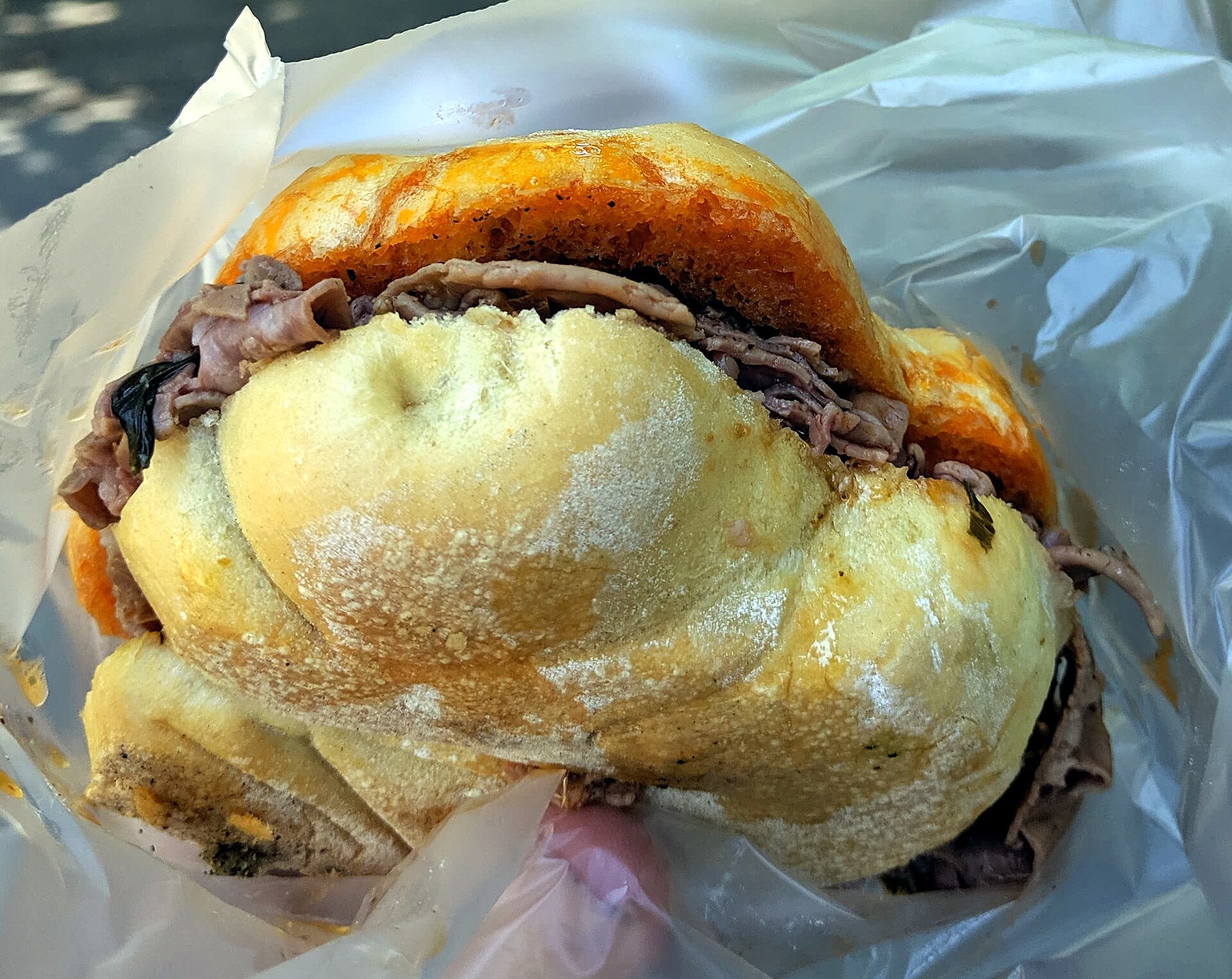
This is my four-euro lunch and the reason I will happily skip a sit-down meal. Lampredotto is the abomasum, a cow’s fourth stomach, simmered for hours in a broth of tomato, onion, celery, and parsley until it is genuinely tender and savory rather than chewy or weird. It gets chopped, piled into a soft roll (a semelle or panino), and the top half of the bread is dunked into the cooking broth so it goes soft and soaks up the flavor. Then you choose your sauces: green salsa verde (parsley, garlic, anchovy, capers), red salsa piccante for heat, or, correctly, both.
You buy it from a trippaio, the street carts and tiny stands scattered around the city and inside the markets. It costs around four to six euros. People walk up, eat it standing, wipe their hands, and go back to work. Most visitors talk themselves out of it because “fourth stomach” sounds like a dare. They are wrong, and they are missing the most Florentine thing you can eat.
Its milder cousin is trippa alla fiorentina: tripe (a different stomach) cut into strips and stewed in tomato sauce, finished with parmigiano. Less broth-soaked, a bit more like a stew you eat with a fork, often served in a cup or a roll the same way. If lampredotto feels like too much for a first go, trippa is the gentler on-ramp. Both are cheap, both are real, and both belong on a serious eat-like-a-local list. Offal panini are one of the few corners of Italy where the cheapest food in town is also one of the most distinctive; I get into that pattern more in the what to eat in Italy primer.
The bread soups: ribollita, pappa al pomodoro, panzanella
These three are the soul of cucina povera, and all three are basically clever ways to not waste old bread. Order at least one. In the right season, order all three across a few days.
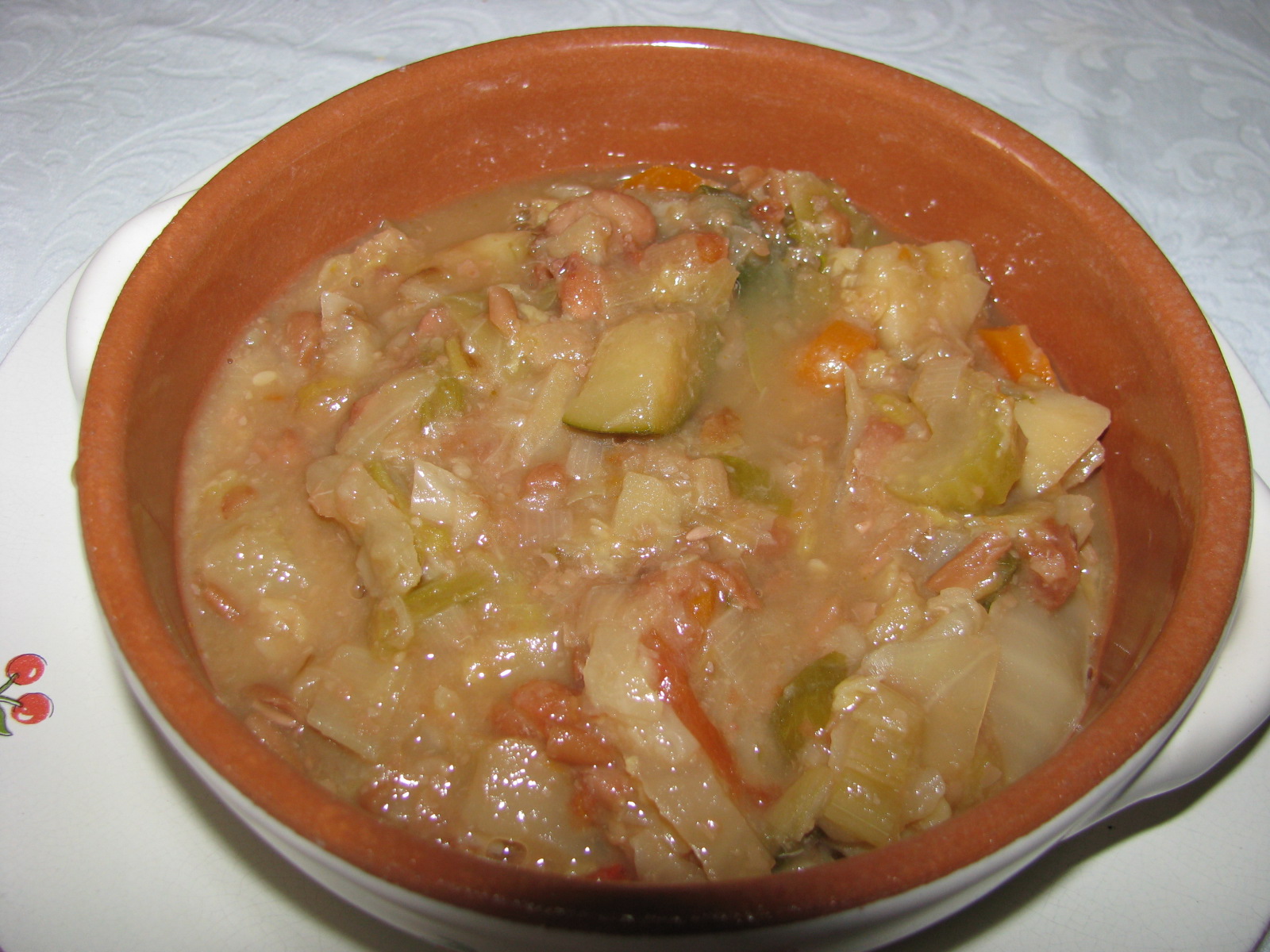
Ribollita. The name means “reboiled,” and that is the origin: yesterday’s vegetable-and-bean soup, thickened with stale bread and cooked again the next day so it goes further. It is built on cavolo nero (Tuscan black kale), cannellini beans, cabbage, carrots, onion, and that torn bread, which dissolves into the broth until the whole thing is thick enough to stand a spoon in. It is a cold-weather dish at heart, best from roughly October through winter, though you will see it year-round. Vegetarian, hearty, and a meal in itself. A good ribollita is one of my favorite cheap-comfort plates in Italy.
Pappa al pomodoro. Bread and tomato cooked down into a thick, almost porridge-like soup (“pappa” literally means baby food, which tells you the texture). Garlic, basil, a lot of good olive oil. It lives or dies on the tomatoes, so it is best in summer, and it is often served warm or at room temperature rather than hot. Simple to the point of looking like nothing on the plate, and then somehow it is the thing you keep thinking about.
Panzanella. The summer one. Stale bread soaked and squeezed, then tossed with ripe tomatoes, red onion, cucumber sometimes, basil, oil, and vinegar into a bread salad. A bad panzanella is a soggy, sad bowl; a good one is bright and textured, the bread holding just enough structure. Strictly a warm-weather dish, so if you see it in January, somebody is cutting corners. When tomatoes are in, it is one of the great light lunches.
Tuscan dishes worth ordering: pasta, pork, and the wild boar
Tuscany is not a pasta-obsessed region the way Emilia-Romagna or the south is, but it has a few you should not miss, and they tend to be hand-shaped and rustic.
Pici is the one to chase. Think fat, hand-rolled spaghetti, just flour and water (no egg, because eggs were for the wealthy), stretched out into uneven, satisfying strands. It is most associated with Siena and the Val d’Orcia, but you will find it in Florence too. The classic dressings: all’aglione (a garlicky tomato sauce made with the big mild “elephant” garlic of the Chiana valley), cacio e pepe Tuscan-style, or con le briciole (tossed with garlicky toasted breadcrumbs, cucina povera’s answer to cheese you could not afford). Chewy, simple, excellent.
Pappardelle al cinghiale. Wide ribbons of egg pasta under a wild boar ragù. The boar (cinghiale) genuinely roams the Tuscan hills, it is hunted, and the meat is leaner and gamier than pork, slow-cooked with red wine until it shreds. This is a cooler-months dish and a special-occasion classic that became a menu staple. If you only eat one Tuscan pasta sit-down, I would make it this or the pici.
On the cured-meat and antipasto side, two things matter. Crostini di fegatini (also called crostini neri) are the quintessential Tuscan starter: small toasts spread with a savory chicken-liver paté loosened with capers, anchovy, and a splash of wine or Vin Santo. The strong, slightly bitter spread is built to play against the bland saltless bread. And finocchiona, the great fennel-seed salami: pork, fennel seeds, red wine, cured for months, with a soft crumbly texture and that aniseed perfume. Historically the fennel was a cheaper local substitute for imported black pepper, which is the kind of resourceful detail this whole cuisine runs on. Get a tagliere (board) of finocchiona and other salumi to start, with that unsalted bread to balance it.
Why is Tuscan bread unsalted?
Because at some point you will tear off a piece, expect bread, and get something that tastes of almost nothing, and you should know that is on purpose.
Pane toscano (also called pane sciocco, where “sciocco” means both “unsalted” and, not coincidentally, “silly”) is made without salt. The most-repeated origin story is a medieval salt tax, often pinned to a 12th-century feud with Pisa, when the coastal republic tried to squeeze Florence by jacking up the price of salt; Florentine bakers simply left it out. Another version is plainer: salt was precious, and country people would rather spend it preserving their prized salumi than seasoning their bread. Either way, necessity hardened into identity, and the saltless loaf is now a protected Tuscan tradition. Even Dante grumbled about exile making him taste “how salty is the bread of others.”
Here is the thing: the bread is not meant to be eaten alone. It is a tool. It exists to carry salty finocchiona, to mop up bean juices and ribollita, to balance the rich liver crostini, to soak in olive oil. Judge it on the plate it was built for, not on its own, and it suddenly makes complete sense.
Pecorino, schiacciata, and the sweet stuff
Pecorino di Pienza is the cheese to seek out, a sheep’s-milk pecorino from the Val d’Orcia town of Pienza, south of Siena. Tuscan pecorino is milder and less aggressively salty than the Roman kind. Fresh, it is soft, milky, and gentle; aged (stagionato), it turns hard, crumbly, and savory, sometimes wrapped in walnut leaves or rubbed with ash. People credit the wild herbs the sheep graze on, the fennel and clover and wormwood, for the flavor. Eat it on a board with chestnut honey or pears, or look for pecorino al forno, baked into a warm gooey mass with bread to scoop it.
Schiacciata is the everyday Tuscan flatbread, an olive-oil dough rolled thin, dimpled, and salted on top, somewhere between focaccia and a cracker but soft and chewy. It is the standard base for a quick panino stuffed with pecorino and salami, and it is a great cheap lunch. In autumn, right after the grape harvest, bakeries make schiacciata all’uva: the same bread studded with small wine grapes and a little sugar, juicy and seedy and only around for a few weeks. If you are in Tuscany in September or October, grab it while you can.
For dessert, the move is cantucci con Vin Santo: hard, twice-baked almond biscuits (what Americans call biscotti) served with a small glass of Vin Santo, the amber “holy wine.” The biscuits are deliberately dry and not very sweet, because you are supposed to dunk them in the wine until they soften. Do not eat them dry and then judge them; the dunk is the whole ritual, and it is a lovely way to stretch the end of a meal. For breakfast, look for budino di riso (a little rice-pudding tart) and bomboloni (Tuscan filled doughnuts) at the cafés. And yes, real gelato is everywhere in Florence; a couple of the city’s old artisanal gelaterie near Santa Croce and across the Arno are worth the walk, and a true gelateria makes it fresh, keeps the colors muted (pistachio is greyish-green, not neon), and stores it in covered tubs rather than the towering whipped peaks aimed at tourists. If coffee is part of your morning ritual, the bar culture is the same here as the rest of the country, and I unpack the rules in the Italian coffee guide.
The markets: Mercato Centrale and Sant’Ambrogio
If you want to eat well and cheaply in Florence and understand the food at the same time, go to a market.
Mercato Centrale in San Lorenzo is the big one, a soaring 19th-century iron-and-glass hall. The ground floor is the working market: butchers, fishmongers, cheese and salumi counters, produce. The upstairs is a modern food hall with stalls cooking everything, and it is genuinely good, open late, and easy if you are with a group that wants different things. The historic lampredotto-and-bollito counter on the ground floor is a Florence institution and exactly where I would point a first-timer for a no-fuss tripe sandwich or a bowl of pasta at a fair price.
Sant’Ambrogio, east of the center, is the smaller, older, more local market, finished in the 1870s and far less touristed. This is where Florentines actually shop. There is a beloved hot-lunch spot in the covered hall serving the day’s home-style Tuscan dishes to a crowd of regulars, and a tiny panini hatch turning out sophisticated sandwiches with boar, truffled pecorino, and the like. If Mercato Centrale is the show, Sant’Ambrogio is the neighborhood, and I prefer it for atmosphere. Hit both: shop and snack at Sant’Ambrogio in the morning, eat upstairs at Mercato Centrale when you want range and late hours.
Markets are also the cheapest honest food in any Italian city, which is half of why I steer people toward them and away from the laminated menus near the monuments. For more on that pattern, the tourist-trap restaurants guide lays out the warning signs across Italy.
Greater Tuscany: Siena, the Val d’Orcia, Maremma, and the coast
Florence is the gateway, not the whole table. If your trip wanders, and it should, the food shifts as you go.
Siena and the Val d’Orcia are pici country (the hand-rolled pasta is at its best here) and the source of the famous sweets. Siena gives you panforte, a dense, chewy, intensely spiced cake of nuts, candied fruit, and honey that goes back to the Middle Ages and peaks around Christmas, and ricciarelli, soft diamond-shaped almond cookies dusted with powdered sugar, lighter and more elegant than they look. You will also see cavallucci, the spiced honey-and-walnut biscuits. This is also the heart of pecorino country; Pienza sits right here.
Maremma, the wilder, marshier southern coast and its hinterland, is cowboy and hunter territory (the butteri are Italy’s own herdsmen), which means lots of game, wild boar, the local Maremmana cattle that increasingly feed the bistecca trade, and rustic soups like acquacotta, a “cooked water” vegetable-and-bread soup with an egg cracked in, cucina povera at its most literal.
Livorno, on the coast, is the great seafood exception in a meat-and-bread region. Its banner dish is cacciucco, a deep red tomato-and-wine fish stew traditionally made with at least five kinds of fish and shellfish (one for each “c” in the name, the old rule says), ladled over garlic-rubbed toast. It is messy, generous, and the thing to order if you have hit the coast and want a break from steak and ragù. The coast also gives you cinque-cinque-style chickpea fare and the cheap, excellent fried-fish counters of a working port town.
The point of widening out is simple: Tuscan food is regional within the region. Eat the bistecca and lampredotto in Florence, the pici and panforte around Siena, the pecorino in Pienza, the cacciucco on the coast. If you are mapping the routes between them, the Italy itineraries and Italy transportation guides handle the logistics; pair this with the Florence and Tuscany travel guide for the day-to-day.
How to order and not get fleeced
A few habits that keep your meals honest, most of which apply across the country but bite hardest in a tourist-heavy city like Florence.
- Walk two or three streets off the main piazzas. Quality goes up and prices go down fast. The places with a host waving menus and photos on the door near the Duomo are not where Florentines eat.
- Look for a short, seasonal, Italian-only-ish menu. Ribollita and panzanella on the same menu in the same week is a small red flag, since one is a winter dish and one is a summer dish. A kitchen that cooks the season is a good sign.
- Read the bistecca price as per etto and budget to share. Covered above, but it is the single most common bill-shock in the city.
- Expect coperto and no table-service tipping pressure. A small cover charge (coperto, a euro or three per person) is normal and not a scam. You do not need to add a big American tip on top; rounding up is plenty. The wider rules are in the Italy travel tips guide, and budgeting your food spend overall is covered in the Italy travel budget breakdown.
- Lunch-only trattorias are often the best value. Some of the most loved old-school spots are open only at midday and serve a tight, cheap, home-style menu to a local crowd. Seek them out.
Final thoughts
The trick to eating in Florence and Tuscany is to hold both ends at once. There is the four-euro lampredotto eaten standing at a cart, and there is the ninety-euro steak shared three ways over a long dinner, and the region treats both with the same seriousness. Neither is the “real” Tuscany at the other’s expense. They are the same idea, good ingredients, no fuss, nothing wasted, at two different price points.
Order the cucina povera dishes without flinching, read the steak price by the etto, get out to a market, and let the food change a little as you move from Florence to Siena to the coast. Do that and you will eat better here, and cheaper, than almost anywhere else in Italy. For the rest of the trip, the Italy travel guide and the Florence and Tuscany travel guide will get you the rest of the way.
Questions travellers ask
What is the most famous food in Tuscany?
Bistecca alla fiorentina, the thick rare-grilled T-bone of Chianina or Maremmana beef, is the dish most associated with the region. Beyond it, the cucina povera classics define Tuscan eating: ribollita, pappa al pomodoro, pici pasta, and Florence’s lampredotto street-food sandwich. The thread through all of them is simple, high-quality ingredients treated plainly.
Is Tuscan food spicy?
No. Traditional Tuscan cooking is not spicy at all. It leans on herbs (rosemary, sage, fennel), good olive oil, black pepper, and the natural flavor of the ingredients rather than chili heat. The main exception you will meet is the optional red salsa piccante offered on lampredotto and bollito sandwiches, which adds a little kick if you want it.
What is the difference between a bistecca alla fiorentina and a regular T-bone?
The cut is the same bone-in shape, but the bistecca is defined by more: traditionally Chianina (or Maremmana) beef, cut very thick (three to four fingers), dry-aged, grilled over wood or charcoal, and served rare with little more than salt. A generic T-bone can be any beef, any thickness, cooked any way. The breed, the thickness, and the rare-over-fire treatment are what make it a fiorentina.
How much does bistecca alla fiorentina cost?
It is priced per etto (100 grams), so the small menu number is per tenth of a kilo, not per steak. As of 2026, figure roughly €40–60 per kilo for solid restaurant bistecca and €60–80 per kilo for certified Chianina. A steak usually weighs 0.8–1.2 kg, so one shared steak plus sides often runs €50–90 for two or three people.
What street food should I try in Florence?
Lampredotto, the slow-cooked tripe sandwich, is the signature: tender, savory, served in a broth-dipped roll with green and/or spicy sauce, for about four to six euros from a street trippaio. Its milder relative is trippa alla fiorentina, tripe in tomato sauce. Schiacciata panini stuffed with pecorino and salami are the other great cheap, walkable bite.
What desserts are typical in Florence and Tuscany?
The classic finish is cantucci, hard twice-baked almond biscuits, dunked in a glass of sweet Vin Santo. For breakfast, look for budino di riso (a small rice-pudding tart) and bomboloni (filled doughnuts). In Siena, seek out panforte (a dense spiced fruit-and-nut cake) and ricciarelli (soft almond cookies). And good fresh gelato is, of course, everywhere worth eating.
Where can I eat cheaply in Florence?
The markets and the streets. Mercato Centrale’s food hall and ground-floor lampredotto counter, the local Sant’Ambrogio market, and street trippai give you full, traditional meals for very little. Lunch-only trattorias a few streets off the main piazzas are the other great value. A lampredotto panino plus a glass of wine is a complete lunch for under ten euros.