Practical Information, Safety & Etiquette
Italy SIM Card and eSIM Guide
I have stood in a phone shop near Roma Termini, passport in hand, watching a very patient TIM employee photocopy my documents while my taxi meter ran outside. I have also landed at Naples, tapped my phone twice on the jet bridge, and walked off already online. Both work. The question is which one fits you. For most travelers an Italy SIM card isn’t even the right answer anymore — an eSIM you buy before you fly is the easiest path, a physical Italian SIM is cheaper per GB but needs your passport and a shop visit, and if you already carry an EU phone number you can often just roam. That’s the whole decision in one breath.
This guide is for the visitor who wants to be reachable and have maps, messaging, and a little streaming the moment they land, without overpaying or fumbling at an airport kiosk. I’ll lay out the options side by side, compare the four Italian carriers honestly, walk through the legal ID rule that page-one results keep glossing over, and tell you plainly what I’d do for each kind of traveler. I’m going to hedge every price and data figure, because Italian mobile deals change constantly and the number you see in June 2026 may not be the number you see when you read this. Confirm specifics on the carrier or eSIM site before you buy. This pairs with the rest of my Italy travel tips if you’re still building the trip.
Your options at a glance
Here’s the entire landscape on one screen. Costs are rough 2026 ballparks in the currency each provider actually uses, and they move around a lot, so treat them as “expect something in this range,” not a quote.
| Option | Typical cost (approx., 2026) | Data | Best for |
|---|---|---|---|
| Travel eSIM brand (Airalo, Holafly, Saily, etc.) | ~$4–$40 USD depending on data and days | A few GB up to “unlimited” with a fair-use cap | Most short-trip travelers who want zero hassle and to land connected |
| Italian physical SIM (TIM, Vodafone, WindTre, Iliad) | ~€8–€35 EUR, sometimes plus a ~€10 SIM/activation fee | Huge — often ~100–250 GB for a month | Longer stays, heavy data users, anyone who wants an Italian number and the lowest price per GB |
| EU roaming (you hold an EU/EEA SIM) | Usually included in your home plan, no surcharge | Your normal allowance, often with a roaming fair-use cap | EU/EEA residents — you frequently need to do nothing at all |
| Pay-as-you-go roaming (US/Canada/Australia/UK plans) | ~$10–$15 USD per day, or steep per-MB without a pass | Capped daily or eye-wateringly metered | Very short trips, or as a backup for your first hour before the eSIM kicks in |
If you read nothing else, read that table. Most people land in one of the top two rows. The rest of this guide is the reasoning behind each choice, the traps, and the setup steps.
eSIM Italy vs a physical SIM card: the real decision
Almost every “best SIM for Italy” article frames this as a price contest. It isn’t. It’s a convenience-versus-control trade, and price is only one input.
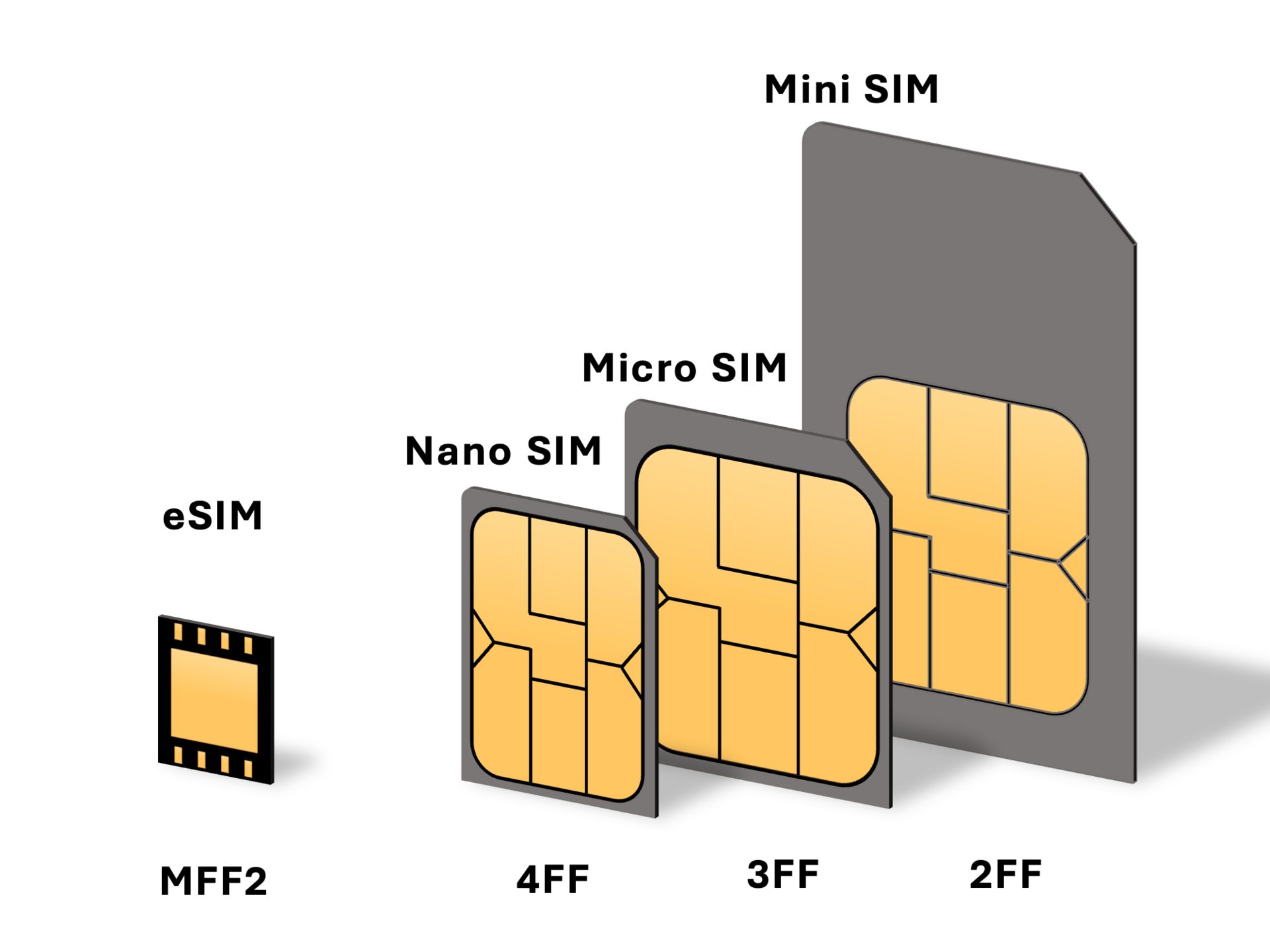
A physical SIM is the small chip you slot into your phone’s tray. In Italy, buying one means a shop, your passport, and a few minutes of registration (more on the legal side below). In exchange you get the cheapest data per gigabyte in the whole equation, an actual Italian phone number, and usually a comically large data bucket.
An eSIM is the same idea with no plastic. It’s a digital profile your phone downloads and stores, so you “install” a carrier rather than insert one. You buy it online — often days before your trip — scan a QR code or tap an in-app button, and it sits dormant until you land, when it connects automatically. No tray, no pin, no kiosk, no passport scan. For a city break that convenience is worth a lot.
What an eSIM actually is, and whether your phone supports one
An eSIM (“embedded SIM”) is a tiny reprogrammable chip soldered into your phone at the factory. Instead of swapping hardware, you load a carrier profile onto it. You can usually keep your home SIM active at the same time — your normal number for calls and texts, the travel eSIM handling data. That dual setup is the killer feature: you stay reachable on your real number while paying Italian-level data prices.
The catch is compatibility, and it’s worth checking before you spend a cent. As a rough guide, eSIM works on iPhone XS / XR and newer, Google Pixel 3 and up, and Samsung Galaxy S20 and up, plus various recent Huawei, Oppo, Motorola, and Xiaomi models. Two non-negotiables: your phone must be eSIM-capable, and it must be carrier-unlocked. A handset locked to your home network won’t accept a foreign profile or a foreign physical SIM. If you financed your phone or got it “free” on contract, check the lock status with your carrier before you fly — this is the single most common reason a traveler’s connectivity plan falls apart at the gate. On iPhone you can glance at Settings, then General, then About, and look for an EID number; if it’s there, you have eSIM hardware.
Install before you fly (this is the whole point)
The reason to choose an eSIM is that you set it up at home, on your own WiFi, with time to read the instructions. Buy the plan, install the profile, and — this matters — leave the actual data line switched off until you arrive, or you’ll start the clock early. When you land in Italy you flip on the travel line and toggle data roaming for that profile, and you’re online before you reach baggage claim. Doing this in your kitchen the night before beats doing it on flaky airport WiFi while jet-lagged. I’ve watched people burn forty minutes at arrivals trying to scan a QR code on a screen they can’t load.
The four Italian carriers: TIM, Vodafone, WindTre, and Iliad
Italy has four mobile networks, and the good news is that competition here is fierce, which keeps prices low and data buckets enormous by international standards. The bad news is that the marketing is confusing and the “tourist” plans shift every few months. Here’s how I read each one as a traveler, with the usual caveat that exact figures drift.
Vodafone is the one I’d point most first-timers toward for the balance of coverage, price, and roaming. Its tourist-friendly plans (sometimes branded around a “Dolce Vita” theme) tend to land around €15 EUR for something like 200 GB in Italy with a healthy chunk — roughly 25 GB — usable as EU roaming, plus calling minutes, often with no activation fee. Coverage is excellent in cities and very strong nationwide. If you’re continuing on to France, Spain, or Germany after Italy, that larger roaming allowance is the deciding detail.
TIM (Telecom Italia Mobile) is the old national incumbent and has consistently solid coverage the length of the peninsula, including good 5G. Its tourist SIM often advertises around 200 GB with unlimited domestic calls and a slug of international minutes for roughly €15 EUR — but watch the fine print, because many TIM stores charge an extra ~€10 EUR for the SIM itself on top of the plan, which quietly changes the math versus Vodafone.
WindTre is the coverage champion in my book. Formed from the merger of Wind and 3 Italy, it has arguably the strongest overall footprint, and it’s the one I’d choose if my trip leans rural — road trips, smaller hill towns, mountain valleys. Its tourist plans run a bit pricier: think around €25 EUR for ~100 GB or around €35 EUR for ~200 GB, with EU roaming in the ~19–32 GB range and unlimited domestic calls. You pay a little more, but for the Dolomites or remote Sardinia that reliability earns its keep.
Iliad is the budget disruptor and, on a spreadsheet, the cheapest by far — plans in the ~€8–€14 EUR range for anywhere from ~120 GB to ~250 GB, with unlimited domestic calls. The asterisks: there’s usually a one-time activation fee of around €10 EUR, the EU roaming allowance is smaller than the others (often single-digit to low-teens GB), Iliad has fewer staffed stores and leans on self-service kiosks, and a recurring complaint is travelers who didn’t realize their prepaid plan auto-renews into a second month. If you go Iliad, confirm out loud that it’s a one-month prepaid with no recurring charge, and set a reminder to cancel.
Coverage reputation and who suits travelers
For 90% of trips — Rome, Florence, Venice, Milan, the Amalfi Coast, the big tourist arteries — all four networks are genuinely fine. You will not notice the difference scrolling maps in a piazza. The gaps only show up off the beaten path. On current coverage maps the rough nationwide ranking runs WindTre and Vodafone neck-and-neck at the top for rural and mountain reach, TIM a strong third, and Iliad excellent in cities but thinner in the countryside. If you’re spending real time in the high Alps or remote islands, lean WindTre or Vodafone; for a city-hopping trip, pick on price.
Where to buy a physical Italy SIM card (and the passport rule nobody explains)
This is the part page one keeps fumbling. If you want a physical Italian SIM, you cannot buy it anonymously. Italy has required ID registration for every prepaid SIM since 2005 (it traces back to an anti-terrorism decree), and it’s strictly enforced. The shop will scan or photocopy your passport and tie the SIM to your name and document number before it activates. Bring your actual passport — not a photo of it, not just your driver’s license. This is normal, it’s quick, and it’s the single biggest reason an eSIM feels easier: a travel eSIM typically needs only an email address, with no ID check at all.
Where you buy changes the price and the experience:
- Official carrier stores in the city are the best value and my default recommendation. Walk into a real Vodafone, TIM, WindTre, or Iliad shop in any city center, hand over your passport, and the staff activate everything in five to ten minutes. Prices are the lowest here, and crucially the staff can explain the EU roaming cap properly if you ask. Search the carrier name on a map near your hotel.
- Airport kiosks are the convenience tax option. They’re genuinely useful if you land at night or need maps and a rideshare app immediately, but tourist packages at airports usually cost more than the same thing downtown. Rome Fiumicino tends to be more reasonable; Milan Malpensa and Venice run pricier. Fine in a pinch, not the value play.
- Electronics stores and tabacchi round it out. Big chains like MediaWorld or Unieuro sell SIMs from multiple carriers, and many small tabaccherie (tobacco shops) and convenience stores carry prepaid SIMs too. Same passport rule applies everywhere — registration is the law, not the vendor’s choice.
One more hardware note: your phone has to be unlocked for any of this to work, same as with an eSIM. A locked handset will reject the Italian SIM entirely.
International eSIM brands: Airalo, Holafly, and the trade-offs
This is the category most short-trip travelers actually want, and it’s worth understanding what you’re buying — because the brands are not interchangeable, and the listicles love to blur them together.
The core trade is this: travel eSIMs are data-only. Almost none of them give you an Italian phone number for regular calls and texts. In practice that bothers people less than they expect, because hosts, tour guides, and restaurants in Italy mostly run on WhatsApp, email, and online booking — you rarely need to place a traditional phone call. But if you specifically need an Italian number (say, to receive an SMS code from an Italian service), a travel eSIM won’t give you one, and a physical Italian SIM will.
A few of the major players and how they differ:
- Airalo is the big, well-known marketplace and a reasonable default. Its Italy plans (the “Mamma Mia” packs) ride on multiple Italian networks rather than locking you to one, which helps coverage, and pricing is metered — you pick a bucket like a few GB for a week starting around $4–$5 USD and scale up from there. Good for travelers who know roughly how much data they’ll use.
- Holafly sells “unlimited” data plans, which is appealing if you stream or tether a lot, with pricing that scales by trip length rather than by gigabyte. The honest caveat: “unlimited” comes with a fair-use policy, and very heavy users (around 90 GB in a month, per their terms) may see temporary speed throttling so one person doesn’t saturate the network. For most people it never bites, but know it exists.
- Saily, aloSIM, and others fill out the field with their own mixes of metered and unlimited plans, app-based management, and occasionally extras like a built-in ad blocker that trims data use. They’re all variations on the same theme: buy online, install before you fly, land connected, no passport.
The trade-offs in plain terms: eSIMs win decisively on convenience and flexibility (no shop, no ID, plans sized to a weekend). A physical Italian SIM usually wins on raw price per gigabyte and is the only way to get a real Italian number. “Unlimited” eSIM plans win for heavy streamers who don’t want to count GB but cost more and carry fair-use throttling. Pick the axis that matters to you.
EU and UK roaming: when you might not need anything at all
Here’s the section that can save a lot of readers from buying anything.
If you hold a SIM from an EU or EEA country, “Roam Like At Home” rules mean your Italian usage is generally billed like domestic usage — no surcharge for calls, texts, or data while you’re in Italy. A French, German, Spanish, Irish, or Dutch SIM typically just works the moment you land, at your normal rates. The one thing to watch is the roaming fair-use cap: your data allowance abroad can be limited even if it’s effectively unlimited at home, so a very data-hungry traveler should check their plan’s roaming ceiling. For most EU residents, though, the correct action in Italy is: do nothing.
The UK is the asterisk, because Brexit ended the guarantee. UK networks were free to reintroduce EU roaming charges, and most did. As a rough 2026 picture, EE, Vodafone UK, and Three tend to charge somewhere around £2–£2.50 per day to use your normal allowance in the EU (Italy included), while O2 has generally still bundled EU roaming at no extra daily fee. Fair-use data caps apply too — commonly around 25 GB, lower on some plans. Plans bought before the charges returned were often grandfathered in with free roaming. So if you’re British: check your specific plan and its sign-up date. If you face a daily fee on a longer trip, an eSIM can undercut it; for a quick weekend, paying the daily charge may be simpler than installing anything.
US, Canada, and Australia: why a local plan or eSIM usually wins
If your home plan is American, Canadian, or Australian, default roaming to Italy is the expensive path. Carriers there typically offer an international day pass at roughly $10–$15 USD per day, which is fine for a three-day hop but adds up fast on a real vacation — a two-week trip can quietly run past $150 USD. Without a pass, raw per-megabyte roaming rates are brutal and can produce genuine bill shock.
For anything longer than a few days, an eSIM or local SIM almost always wins on price, often dramatically — a whole trip’s worth of eSIM data can cost less than two days of a roaming pass. My usual move for North American and Australian travelers: keep your home line active for the odd call and any two-factor SMS codes, but run a travel eSIM for data. You get your real number for emergencies and cheap Italian data for everything else. One nuance worth knowing — some US “unlimited” plans (certain T-Mobile and Google Fi tiers, for instance) include modest international data at no extra cost, which can be enough for light use; check whether yours does before assuming you need to buy anything.
Data-only vs calls and texts, hotspots, and topping up
A few practical mechanics that decide how a plan actually feels in your hand.
Data-only vs calls and texts. Travel eSIMs are data-only; Italian physical SIMs usually include calls and texts plus an Italian number. But here’s the thing — over data you can call and message anyone for free through WhatsApp, FaceTime, Signal, or your normal apps, and that’s how most communication happens in Italy anyway. The cases where you truly need a local number and traditional SMS are narrow: receiving a code from an Italian-only service, or calling a landline that won’t take WhatsApp. For most trips, data-only is plenty.
Hotspots and tethering. If you want to share your connection to a laptop or a travel companion’s phone, confirm tethering is allowed before you buy — most Italian SIMs permit it freely, and many travel eSIMs do too, but a few “unlimited” eSIM plans restrict or throttle hotspot use specifically. If you’re working remotely or traveling as a couple sharing one plan, this is the spec to verify.
Topping up. Prepaid Italian SIMs are easy to recharge (ricarica) — through the carrier’s app, at the same tabacchi and supermarkets that sell SIMs, or at ATMs and kiosks. Travel eSIMs top up right inside their app: if you’re running low mid-trip you tap to add more data without touching anything physical. Either way, you won’t be stranded if you misjudge your usage.
Coverage realities: cities versus the Dolomites and the deep countryside
Let me set expectations honestly, because “Italy has great coverage” is true and incomplete.
In cities and along the popular routes, mobile data in Italy is excellent — widespread 4G/LTE and increasingly 5G, fast enough for streaming, navigation, video calls, and hotspot use without a second thought. Rome, Florence, Venice, Milan, Naples, the Amalfi Coast: all four carriers perform well.
The picture changes in the mountains and remote corners. In the high Dolomites, deep Alpine valleys, parts of rural Sardinia and the southern interior, signal gets patchy and which carrier you chose suddenly matters — this is exactly where WindTre and Vodafone tend to pull ahead. If you’re heading for the peaks, two habits save you: download offline maps for the area before you go (Google Maps lets you save a region for offline use), and don’t count on a live signal on a remote trail. If a Dolomites trip is on your itinerary, my Dolomites and Alps travel guide goes deeper on getting around up there, where a dropped signal is a normal part of the day rather than a crisis.
Public WiFi: useful, but not a plan
You’ll find free WiFi in Italian airports, many trains and stations, hotels, and plenty of cafes and bars. It’s a fine supplement — lean on hotel WiFi for big downloads, backups, and video calls to save your mobile data. But it’s a poor primary strategy. It’s tied to a location, so it’s useless the moment you’re walking a street trying to find a restaurant; it’s often slow when a whole cafe is sharing it; and open public networks carry real security risk. Treat public WiFi as a bonus for heavy tasks when you’re sitting still, not as the thing keeping you connected as you move. If you do use it, avoid logging into anything sensitive on an open network, or use a VPN — it’s the same digital-hygiene logic I cover in my notes on whether Italy is safe and the rundown of common Italy tourist scams, where fake or spoofed networks occasionally turn up. Having your own mobile data is, frankly, the cleanest way to dodge that whole category.
What I’d actually do, by traveler type
Enough options — here’s the blunt version, matched to who you are.
- Short city trip (a week or less), most people: Buy a travel eSIM (Airalo or similar) before you fly, sized to a few GB, and install it at home. Land connected, no shop, no passport. This is the right answer for the clear majority of visitors, and it’s what I recommend by default.
- Heavy streamer or remote worker on a short trip: An “unlimited” eSIM like Holafly so you stop counting gigabytes — just accept the higher price and the fair-use throttle ceiling.
- Longer stay (two-plus weeks) or a real data hog who wants the lowest price: Get a physical Vodafone SIM from a city-center store. Best price per GB, generous EU roaming if you’re touring other countries, and you get an Italian number. Bring your passport.
- Road trip through the mountains or remote south: Physical WindTre for the coverage edge, or Vodafone as a close second.
- Rock-bottom budget, comfortable with a kiosk: Iliad — cheapest on paper — but confirm it’s one-month prepaid with no auto-renew, and mind the smaller roaming cap.
- EU/EEA resident: Probably do nothing. Your home SIM roams in Italy at domestic rates; just check your roaming data cap.
- UK resident: Check your plan’s EU roaming fee and sign-up date. Daily charge on a long trip? Grab an eSIM. Free roaming or a quick weekend? Just use your phone.
- US/Canada/Australia: Keep your home line for calls and 2FA codes, run a travel eSIM for data. Skip the per-day roaming pass unless your trip is only two or three days.
Setup steps, start to finish
For a travel eSIM (the most common choice):
- Confirm your phone is eSIM-capable and unlocked.
- A few days before the trip, buy your Italy eSIM in the provider’s app or site.
- Install the eSIM profile at home on WiFi (scan the QR or tap install), but leave that data line switched off so the validity clock doesn’t start.
- On arrival in Italy, turn on the eSIM line and enable data roaming for that profile. Keep your home line for calls if you want dual SIM.
- Top up in-app if you run low.
For a physical Italian SIM:
- Confirm your phone is unlocked.
- Go to an official carrier store in the city (not the airport, for the best price).
- Bring your passport — registration is mandatory.
- Tell the staff your trip length and whether you’ll travel to other EU countries, so they pick the right roaming allowance.
- Let them activate and test it before you leave the shop; recharge later via the app or a tabacchi.
While you’re squaring away logistics, it’s worth glancing at my Italy entry requirements for the document side of arriving (I’m deliberately staying in my connectivity lane here), and my Italy packing list for the chargers, adapters, and cables that keep all this powered. For broader trip planning, the Italy travel guide, Italy transportation notes, and a realistic Italy travel budget round things out, and if you’re still mapping the route, the Italy itinerary library and where to stay in Italy pages help.
Final thoughts
Staying connected in Italy is genuinely easy once you cut through the affiliate noise. For most visitors, a travel eSIM bought before you fly is the lowest-friction answer, full stop — install it at home, land online, done. If you’re staying a while, burning lots of data, or want a real Italian number, walk into a city-center carrier store with your passport and grab a physical SIM for the best price per GB. EU residents can usually just roam; UK a
Questions travellers ask
Do I need my passport to buy a SIM card in Italy?
Yes, for a physical SIM. Italian law has required ID registration on every prepaid SIM since 2005, and it’s enforced — the shop scans or copies your passport and links the SIM to you before activating it. Bring the actual passport, not a photo. A travel eSIM sidesteps this entirely; it usually needs only your email, with no ID check.
Can tourists buy a prepaid SIM card in Italy?
Absolutely. You don’t need Italian residency. Any visitor can buy a prepaid SIM from TIM, Vodafone, WindTre, or Iliad at carrier stores, electronics shops, airport kiosks, or many tabacchi. The only firm requirement is a valid passport for the mandatory registration, and an unlocked phone. Activation in a city store usually takes well under ten minutes.
Is an eSIM or a physical SIM better for Italy?
For most short trips, an eSIM — you install it before you fly, land connected, and skip the shop and passport scan. A physical Italian SIM wins on price per gigabyte and is the only way to get an actual Italian phone number, which suits longer stays and heavy data users. Match the choice to your trip length and whether you need a local number.
Will my phone work in Italy?
If it’s reasonably modern and carrier-unlocked, yes. Italy uses standard networks compatible with phones from the US, UK, EU, Australia, and beyond. The two things that break this are a locked handset (it’ll reject foreign SIMs and eSIM profiles) and, for eSIM, a device too old to support one. Check both with your carrier before you travel.
How much data do I need for a trip to Italy?
It depends on your habits. Light use — maps, messaging, a little browsing — runs comfortably on a few GB across a week. If you stream video, take a lot of video calls, or tether a laptop, plan for 10–30 GB or more, or pick an unlimited eSIM. Lean on hotel and cafe WiFi for big downloads to stretch whatever you buy.
Does an Italian SIM card work in other EU countries?
Yes. Italian prepaid SIMs include EU roaming, so your data, calls, and texts keep working in France, Spain, Germany, and the rest of the EU at no surcharge. The catch most people miss: the roaming data allowance is usually capped well below your in-Italy bucket — a SIM with 200 GB in Italy might only allow 20–30 GB abroad. Check that cap if Italy is one stop on a multi-country trip.
Is there good 5G coverage in Italy?
Yes, 5G is widespread in 2026 across major cities and tourist areas, with strong 4G/LTE almost everywhere else. WindTre and Vodafone tend to have the broadest overall footprint, TIM close behind, Iliad strongest in cities. The weak spots are high mountains and remote rural pockets, where signal thins out regardless of carrier — download offline maps before heading into the Dolomites.
Should I just use roaming from my home carrier instead?
If you hold an EU/EEA SIM, often yes — it roams in Italy at home rates, so you may need to do nothing. UK travelers should check for a roaming day fee that returned post-Brexit. US, Canadian, and Australian travelers usually find roaming day passes (around $10–$15 per day) pricey for longer trips, where an eSIM is far cheaper; keep the home line only for calls and 2FA codes.