Italy Island Guide: Sicily, Sardinia, Capri, Ischia and Elba
I’ve taken the slow ferry to most of these places, missed a hydrofoil or two, and learned the hard way that the wrong island can sink a good trip. So let me save you that.
The Italian islands split into a handful of clusters, and choosing well comes down to three questions: do you want beaches or culture, glamour or quiet, and how far are you willing to travel from the mainland? Sardinia and Sicily are big, do-everything destinations. Capri, Ischia and Procida are quick hops from Naples. The Aeolians and the smaller archipelagos reward people who like a little effort. This guide is for the traveler standing at the map, unsure where to point.
Below is the cheat sheet I wish someone had handed me years ago. Skim the table, then read the island that catches your eye.
The Italian islands at a glance
| Island / Group | Region | Vibe | Get there | Best for |
|---|---|---|---|---|
| Sardinia | Sardinia | Beaches, wild interior, glamour up north | Fly to Cagliari/Olbia/Alghero; ferries from Civitavecchia, Genoa, Livorno | Beach lovers, road-trippers |
| Sicily | Sicily | Big, cultural, food-obsessed, volcanic | Fly to Palermo/Catania; ferry from Villa San Giovanni | Culture, history, long trips |
| Capri | Campania | Glamour, sea stacks, day-trip crowds | Ferry/hydrofoil from Naples or Sorrento | Romance, a splurge, views |
| Ischia | Campania | Thermal spas, green hills, real beaches | Ferry/hydrofoil from Naples | Spa days, families, slower pace |
| Procida | Campania | Tiny, pastel, lived-in, no cars worth renting | Ferry/hydrofoil from Naples | Atmosphere on a budget |
| Elba | Tuscany | Beaches, hiking, mellow, family-friendly | Ferry from Piombino | Tuscan beach holiday |
| Aeolian Islands | Sicily | Volcanic drama, sailing, island-hopping | Hydrofoil/ferry from Milazzo | Adventurers, hoppers |
| Egadi (Favignana) | Sicily | Bike-and-swim, clear coves | Hydrofoil from Trapani | Cyclists, day-trippers |
| Pantelleria / Lampedusa | Sicily | Remote, windswept, African-close | Fly from Palermo/Trapani | Escapists, divers |
| Ponza (Pontine) | Lazio | Chic but low-key, where Romans go | Ferry/hydrofoil from Anzio, Formia, Terracina | Italians-in-the-know energy |
A quick note before we go on: ferry, hydrofoil and flight times below are approximate and were accurate around 2026, but operators change schedules every season. Always confirm with the ferry company or airline before you commit. I’ll flag the official-source habit again at the end.
How to choose your Italian island
Here’s the framework I actually use, and it’s simpler than the listicles make it look.
Start with your trip length. Got a week or more and want one place to anchor it? Go big: Sardinia or Sicily. They’re islands you road-trip, not islands you “see.” If you’ve only got two or three spare days bolted onto a mainland trip, stay in the Bay of Naples — Capri, Ischia and Procida are all reachable in under an hour by boat.
Then pick your mood. Want beaches that look Photoshopped? Sardinia, full stop. Want history layered three civilizations deep, plus the best food in the country? Sicily. Want to feel glamorous for 48 hours? Capri. Want to soak in a thermal pool and not think? Ischia. Want volcanoes and a sense of adventure? The Aeolians.
Finally, weigh the hassle. Some islands are a flight; some are a short ferry; some are a long ferry after a long drive. Pantelleria and Lampedusa are essentially their own trips. Procida is a 40-minute hop. Match the effort to the time and energy you’ve got.
If you only remember one thing: a focused island trip always beats a frantic one. Two islands done slowly beats five done in a blur.
One more filter worth applying: budget shapes the island as much as the season. Capri and the Costa Smeralda run expensive no matter when you go, while Procida, Elba, the Aeolians and the Egadi stay reasonable even in summer. If you’re watching the wallet, the quieter Italian islands aren’t a compromise — they’re often the better trip, with more space and fewer queues for the same blue water. And if you’re traveling with kids or grandparents, lean toward the islands with real sandy beaches and short transfers rather than the cliff-and-staircase spots.
Sardinia: Italy’s beach champion
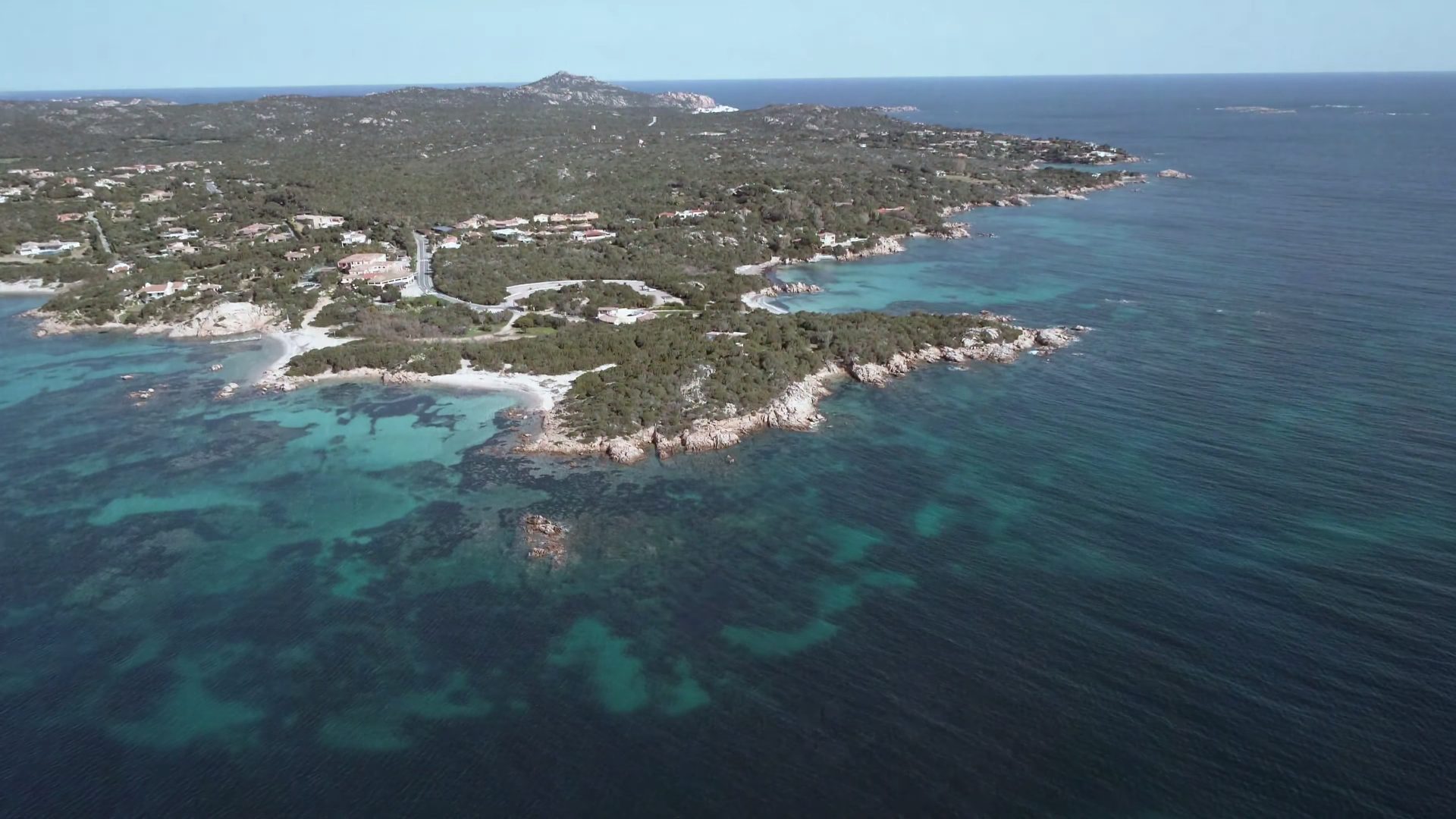
If beaches are why you’re going, this is the answer. Sardinia has water that genuinely looks fake — that glassy, mineral turquoise you assume is a filter until you’re standing in it. The famous Costa Smeralda in the northeast is the glamour strip, all superyachts and Porto Cervo price tags. But the island is huge, and the best swimming is often where the celebrities aren’t.
I’d send first-timers to the northwest around Alghero (Catalan-flavored old town, easy airport) or down toward the wild southeast. The interior is a different planet — granite mountains, sheep, Bronze Age stone towers called nuraghi. Rent a car. Sardinia without a car is a postcard you can’t walk into.
For the deep dives, I lean on our Sardinia beaches travel guide and a focused roundup of the best beaches in Sardinia — La Pelosa, Cala Luna, Cala Goloritzé and the like. To stitch a route together, the Sardinia itinerary lays out a sensible loop.
The Sardinia siblings: La Maddalena and beyond
Off Sardinia’s northeast tip sits the La Maddalena archipelago, a cluster of pink-tinged granite islets you reach by a short ferry from Palau. Spiaggia Rosa on Budelli is closed to footsteps to protect that famous pink sand, but you can sail past it. This is day-trip-by-boat country, and it’s some of the prettiest water in the Mediterranean. If you’ve based yourself in northern Sardinia, build in a boat day here — it’s the natural island-hop within the island. The other siblings worth a mention are Sant’Antioco and San Pietro off the southwest coast, both connected by short ferries and known for tuna, flamingos and a quieter, Ligurian-flavored fishing culture. They rarely make the glossy lists, which is exactly why I like pointing people toward them.
Sicily: the island that’s really a country
Sicily isn’t a beach trip with a side of culture. It’s a full civilization — Greek temples better preserved than most in Greece, Norman cathedrals dripping with gold mosaic, Baroque towns the color of honey, and Mount Etna smoking over all of it. The food alone justifies the flight: arancini, cannoli, swordfish, granita for breakfast.
Give it time. A week is the floor, ten days better. Fly into Palermo for the west (markets, mosaics, chaos in the best way) or Catania for the east (Etna, Taormina, Syracuse). The drive between is doable but long.
Our complete guide to Sicily is the orientation piece, and the Sicily itinerary maps a route that doesn’t try to do everything. Beach-wise, Sicily holds its own — see the best Sicily beaches, from San Vito Lo Capo’s powder to the Scala dei Turchi cliffs. Sicily is also your launchpad for three other archipelagos, which is part of why I love it as a base.

The Bay of Naples trio: Capri, Ischia and Procida
These three sit a short boat ride off Naples and Sorrento, and they’re the easiest islands to fold into a mainland trip. They’re also wildly different in personality, which is the fun of it. Use the Naples travel guide for your base, and the Amalfi Coast beaches if you’re combining this with the coast.
Capri: the glamorous one
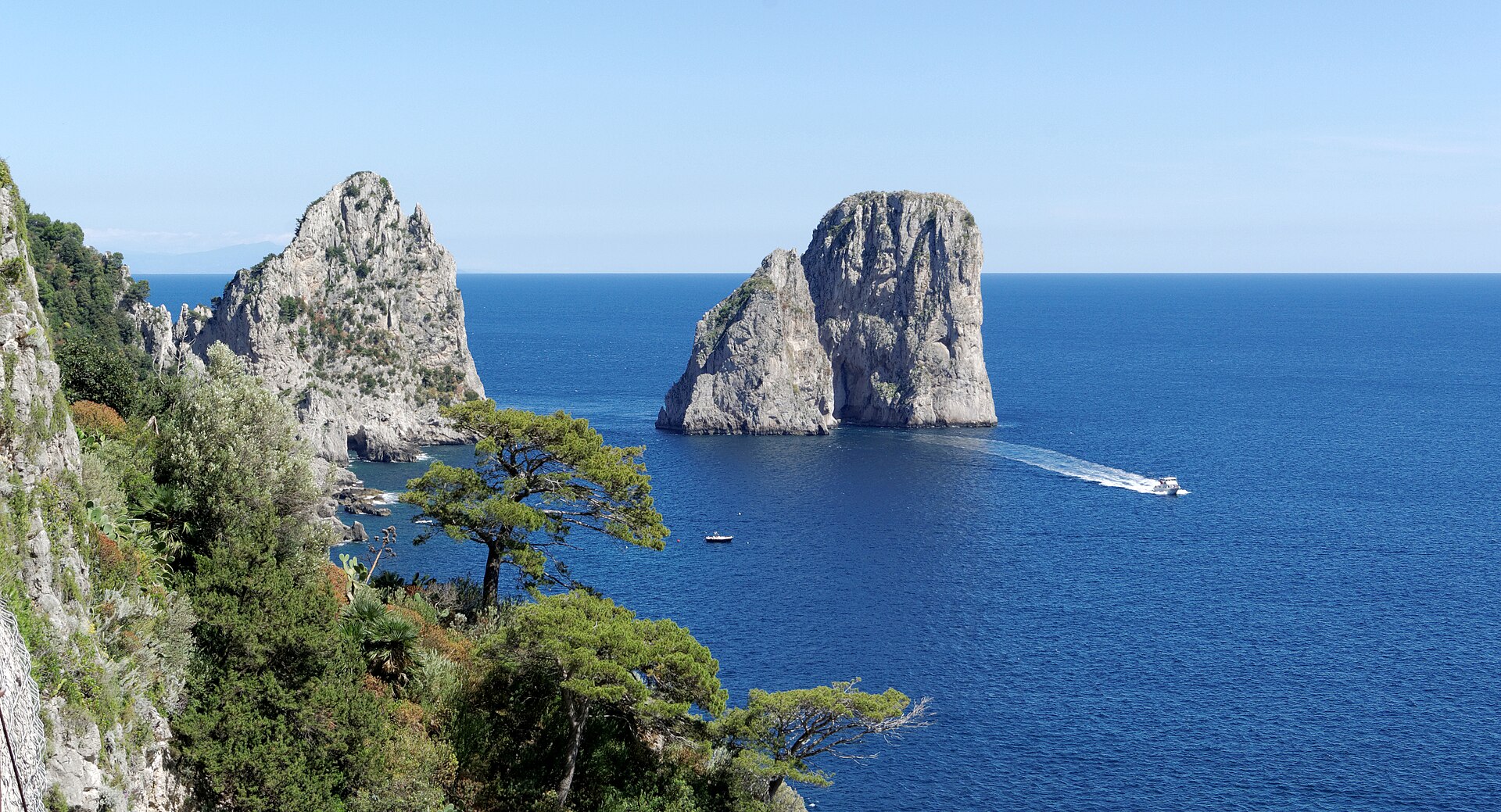
Capri is the supermodel — sheer cliffs, the Faraglioni sea stacks, designer shops, and a piazzetta built for people-watching. It’s stunning, and it knows it. The catch: day-trippers flood in by late morning and the place can feel like a queue. My move is to stay overnight. After the last ferry leaves, Capri exhales, the streets empty, and you get the island the postcards promise.
The Blue Grotto is the headline attraction and a genuine wonder, though weather and crowds make it hit-or-miss. The chairlift up Monte Solaro and a walk through the Gardens of Augustus are the reliable joys. Capri is a splurge — embrace it for a night or two rather than fighting it.
Ischia: the relaxed one
Ischia is bigger, greener and far less precious than Capri. It’s built on thermal water, so it’s spa-island Italy — geothermal gardens, hot springs running into the sea, and proper sandy beaches that Capri lacks. Families love it. So do people who want to do nothing memorably well.
It’s also better value, with more places to stay and more breathing room. If your idea of an island day is a long lunch and a soak rather than a fashion parade, Ischia’s your island.
Procida: the tiny, honest one
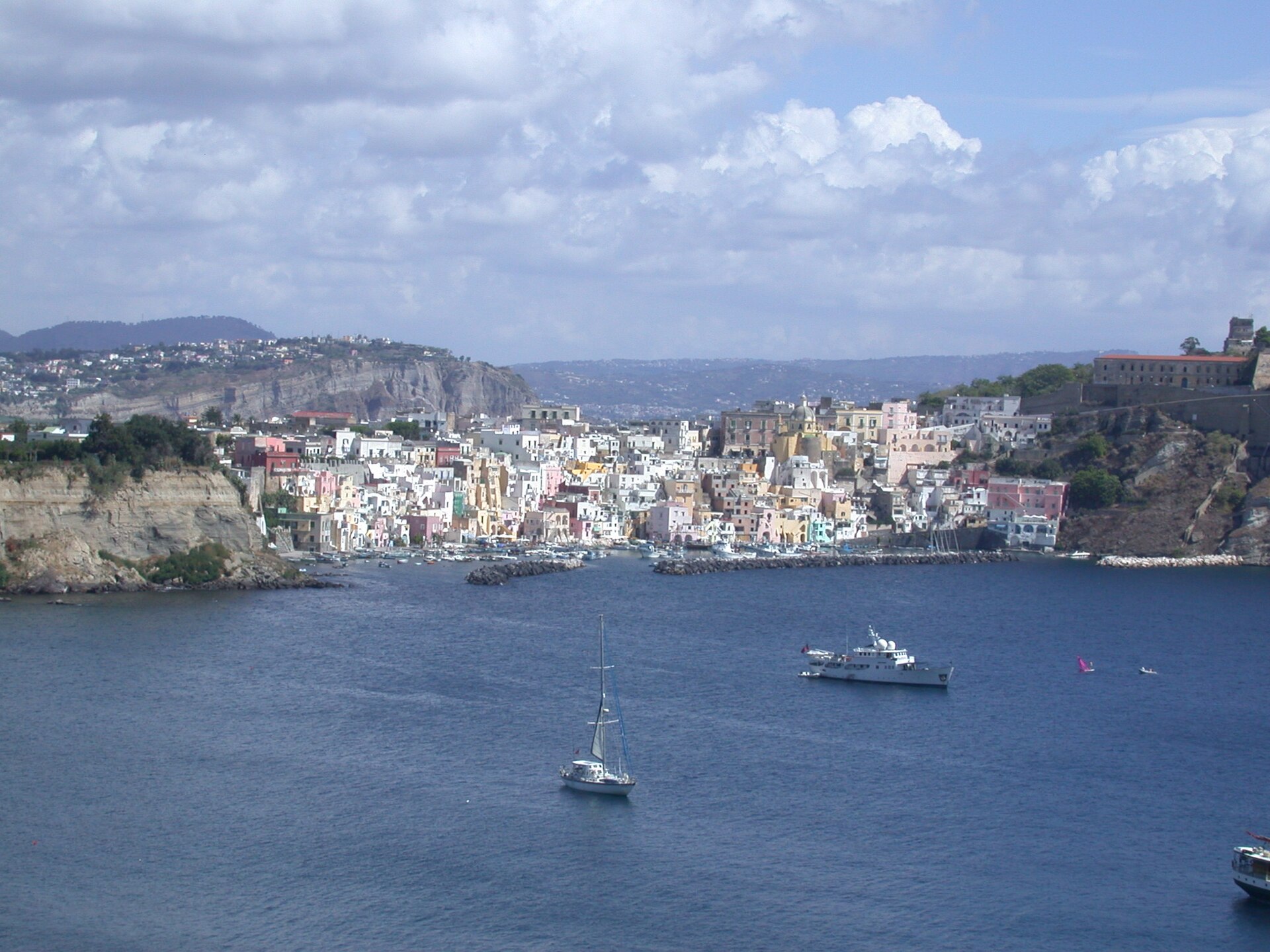
Procida is the smallest and the one that’s stolen my heart. It was Italy’s Capital of Culture in 2022, but it still feels lived-in rather than staged — fishermen, pastel houses stacked above Marina Corricella, no big resorts. You can walk it. There’s nothing to “do” except wander, swim and eat, which is exactly the point. If you want atmosphere without a luxury budget, come here.
Elba and the Tuscan archipelago
Up the Tyrrhenian coast, Elba is Tuscany’s island getaway — the third-largest of the Italian islands and Napoleon’s old place of exile. It’s a beach holiday with a Tuscan accent: more than a hundred beaches, hilltop villages, vineyards, and good hiking, all inside a protected marine park. It’s mellow and family-friendly, with none of Capri’s see-and-be-seen pressure.
You reach it by ferry from Piombino in around an hour. It pairs beautifully with a Tuscany road trip — do your hill towns and wine, then decompress on Elba for a few days. The water’s clear, the crowds are mostly Italian and German families, and the pace drops the moment you dock.
The Aeolian Islands: volcanic island-hopping
Now we’re in my favorite territory for actual Italy island hopping. The Aeolians are seven volcanic islands strung off Sicily’s north coast, and they’re made for moving between by boat. Milazzo is the main gateway — a hydrofoil from there reaches the nearest island in under an hour, with longer ferries carrying cars.
Lipari is the largest and the natural base — a real town, plenty of beds, good ferry connections to the rest. Stromboli is the showstopper: a live volcano that spits fire most nights. Watching it erupt from a boat at dusk is one of the great travel sights in Italy, full stop. Salina is the green, gentle one — capers, sweet Malvasia wine, the island where they filmed Il Postino. Vulcano greets you with a sulfur whiff and mud baths you’ll either love or never repeat.
Spend three or four days here, base on Lipari, and day-trip out. This is the closest thing Italy has to Greek-style island-hopping, and far fewer foreigners do it.
A word on logistics, because the Aeolians trip up the unprepared. Schedules thin out fast in the shoulder season and shut down to a trickle in winter, so you want to come between roughly May and September. Sea conditions also matter — when the wind picks up, hydrofoils get cancelled and you can find yourself stuck on an island an extra day. Build in slack. Don’t plan to catch a same-day flight out of Catania straight after a final Aeolian crossing; give yourself a buffer night on the Sicilian mainland. And if Stromboli’s eruptions are the reason you’re coming, book an evening boat tour that idles offshore at dusk — it’s the single best way to see the fire.
Sicily’s other islands: the Egadi, Pantelleria and Lampedusa
West of Sicily, the Egadi Islands are an easy, joyful add-on. Favignana is the star — flat, butterfly-shaped, ringed with old tuna-fishing coves of shocking clarity. You rent a bike, pedal between swimming spots, and that’s the whole agenda. It’s a quick hydrofoil from Trapani and makes a brilliant day trip or overnight.
Then there’s the deep south. Pantelleria sits closer to Tunisia than to Sicily — black volcanic rock, dome-roofed dammusi houses, hot springs, and serious wind. It’s not a beach island; it’s a moody, dramatic one that draws a quiet, design-minded crowd. Lampedusa, even further south, has some of the most jaw-dropping water in all of Italy (Rabbit Beach turns up on “best beach in the world” lists) but it’s a committed trip — you fly in. Both are for people chasing somewhere genuinely remote.
Ponza and the Pontine Islands: where Romans escape
Between Rome and Naples, the Pontine Islands are Italy’s worst-kept local secret. Ponza is the main event — white cliffs, sea grottoes, hidden coves, and a half-moon harbor lined with houses in faded pinks and yellows. It has chic energy without Capri’s tour-bus crush, mostly because it’s a pain for foreigners to reach and easy for Romans, who keep it pleasantly to themselves.
You get there by ferry or hydrofoil from Anzio, Formia or Terracina. There’s no airport, no big chain hotels, and that’s the appeal. If you want to feel like you’re holidaying with Italians rather than around them, Ponza is the play.
Italy island hopping: which groups actually cluster
The mistake I see most is trying to chain islands that don’t connect. The Italian islands don’t form one network — they form several. Here’s how they really cluster, which matters for any Italy island hopping plan:
- Bay of Naples loop: Capri + Ischia + Procida. All reachable from Naples/Sorrento, all close to each other. The classic 4-5 day hop, doable with zero car.
- Aeolian loop: Lipari + Stromboli + Salina + Vulcano, based out of Milazzo. Self-contained and best done by boat over 3-4 days.
- Western Sicily: Trapani + Favignana (and the Egadi). A day trip or overnight off a Sicily trip.
- Sardinia’s north: Sardinia + the La Maddalena archipelago by boat from Palau.
- Tuscan coast: Piombino + Elba, paired with a mainland Tuscany road trip.
What doesn’t cluster: Sardinia and Sicily are far apart and rarely combined in one trip. Pantelleria, Lampedusa and Ponza are end points, not stepping stones. Don’t try to bridge groups by sea — it’s slow and painful. Fly between regions instead. For the mechanics of getting around, the Italy transportation guide is your friend.
Ferries vs flights: the honest version
For the small islands, ferries and hydrofoils are the only way in, and the gateway ports are worth memorizing: Naples (Bay of Naples islands), Milazzo (Aeolians), Piombino (Elba), Trapani (Egadi), and Villa San Giovanni for the car-ferry hop across to Sicily. Hydrofoils are faster and passenger-only; car ferries are slower but take vehicles and cost less.
For the big islands, fly. Sardinia and Sicily both have several airports, and a short flight beats an overnight ferry unless you specifically want your car or the romance of arriving by sea. As of 2026, low-cost carriers serve Cagliari, Olbia, Alghero, Palermo and Catania from much of Europe. Book ferries ahead in July and August — the popular crossings sell out, and so do the islands. For where to base yourself, see the best areas to stay across Italy.
Approximate crossing times help you plan, even if exact schedules shift each season. As of 2026, Naples to Capri runs around 45 minutes by hydrofoil or roughly an hour and a quarter by ferry, while Sorrento to Capri is shorter still, around 20 to 25 minutes. From Milazzo, the nearest Aeolian island is under an hour by hydrofoil. Treat all of these as ballpark figures and confirm the live timetable with the operator — weather, season and the occasional strike can change everything on the day.
When to go
Late spring and early autumn are the sweet spot — think May, June, September and into early October. The water’s warm enough, the crowds thin, and prices ease off. July and August are gorgeous but brutal: peak heat, peak prices, peak everyone. The Bay of Naples and Sicily’s coast get genuinely crowded, and ferries run packed.
The smaller islands run on a season. Many places on Procida, the Aeolians, the Egadi and Ponza shutter from roughly November to March, with skeleton ferry schedules in winter. Sicily and Sardinia stay alive year-round in their cities, but island life off them goes quiet in the cold months. For the full seasonal breakdown, the best time to visit Italy guide goes deeper, and the broad complete Italy travel guide covers the rest.
Final thoughts
The Italian islands aren’t one decision — they’re a series of small, happy ones. Decide what you’re chasing — beaches, culture, glamour or quiet — match that to how much time and effort you’ve got, and then go slow. Anchor one or two islands, hop within a cluster if the mood strikes, and confirm every ferry and flight against official schedules before you book. Choose for the trip you actually want, and there’s an island here that fits it perfectly.
Questions travellers ask
Which Italian island is best?
There’s no single winner — it depends on what you want. For beaches, Sardinia. For culture and food, Sicily. For glamour, Capri. For relaxation, Ischia. For volcanic adventure and island-hopping, the Aeolians. Pick by mood and trip length rather than chasing a “best,” and you’ll choose right.
What is the most beautiful island in Italy?
Most travelers land on Sardinia for sheer beach beauty — that impossibly clear, turquoise water is hard to beat. Capri wins for dramatic cliffs and sea stacks. For quieter, more authentic beauty, Procida’s pastel harbor and Pantelleria’s volcanic moodiness are stunning in their own right. Beauty here is genuinely a matter of taste.
Can you island hop in Italy?
Yes, and it’s wonderful — but within clusters, not across the whole country. The Bay of Naples (Capri, Ischia, Procida) and the Aeolians (off Sicily) are the two best hopping circuits, both done by ferry and hydrofoil. Sardinia and Sicily are too far apart to combine easily by boat, so fly between regions instead.
How do you get to the Italian islands?
Small islands are reached by ferry or hydrofoil from mainland ports: Naples for the Bay of Naples islands, Milazzo for the Aeolians, Piombino for Elba, Trapani for the Egadi. Big islands — Sardinia and Sicily — are easiest by plane, with multiple airports each. Always confirm current schedules with the ferry operator before you travel.
What is the best time to visit Italy’s islands?
May, June, September and early October are ideal — warm water, smaller crowds and gentler prices. July and August bring the best weather but also peak heat, peak prices and packed ferries. Many smaller islands largely close down from November to March, so off-season trips work best for Sicily and Sardinia’s cities.
Which Italian island is best for families?
Ischia and Elba are the standouts. Both have real sandy beaches, gentle pacing, plenty of accommodation and no see-and-be-seen pressure. Ischia adds thermal parks that double as water playgrounds; Elba offers calm coves and easy hikes. Sardinia also works well if you rent a car and base near a family-friendly beach town.
Is Capri worth it given the crowds?
Yes, if you play it right. Day-trippers swamp Capri from late morning, so the island can feel like a queue. Stay overnight and the place transforms once the last ferries leave — empty streets, quiet restaurants, and the dramatic scenery without the scrum. As a day trip in peak summer, though, it can disappoint.