Best Beaches in Sicily
The first thing nobody tells you about the best beaches in Sicily is that a lot of them are not what an American or British beachgoer pictures as a beach. Some of the most famous swimming spots on the island are rock ledges and pebble coves, not soft golden sand.
So here is the direct answer. If you want long sand under your toes, head west and north: San Vito Lo Capo, Mondello near Palermo, Cefalù, and the dunes around Sampieri and Eraclea Minoa. If you want the clearest water and you don’t mind walking in over rock or pebbles, the Vendicari coves, the Egadi islands, and Taormina’s Isola Bella will floor you. Most spots offer both a free section and a paid beach club.
This is for anyone planning beach days and tired of Instagram photos that don’t mention the 20-minute hike or the razor coral. I’ve grouped everything by coast, with the honest sandy-versus-rock call, what parking looks like, free spiaggia libera versus paid lido cost, and the months that actually work.
Sicily beaches at a glance
Before the detail, here’s the shape of it. Sicily is a triangle with three coasts: the Tyrrhenian in the north, the Ionian in the east, and the long Mediterranean run along the south and west. Each has a different mix of sand and rock, and the offshore islands are a category of their own.
| Beach | Area | Sandy or pebble | Free or lido | Good for |
|---|---|---|---|---|
| San Vito Lo Capo | West (Trapani) | Sandy | Both | Families, long sand, easy swimming |
| Riserva dello Zingaro coves | West | Pebble/rock | Free (park fee) | Hikers, clear water, quiet |
| Scopello (tonnara) | West | Pebble/rock | Both | Scenery, snorkeling |
| Mondello | Palermo | Sandy | Both | Day trip from Palermo, families |
| Cefalù | North coast | Sandy | Both | Old-town views, families |
| Isola Bella | East (Taormina) | Pebble | Both | Snorkeling, the photo, short visit |
| Giardini Naxos | East | Sand/grey pebble | Both | Resort base, sunbeds, sunset |
| Letojanni | East | Grey pebble/sand | Both | Quieter Taormina alternative |
| Calamosche (Vendicari) | Southeast | Sandy | Free (reserve fee) | Clear water, no crowds in shoulder season |
| Eloro / Marianelli | Southeast | Sandy | Free (reserve fee) | Wild dunes, space |
| San Lorenzo | Southeast | Sandy | Both | Shallow water, families |
| Scala dei Turchi | South | White marl + sand | Ticketed | Scenery, the cliff |
| Eraclea Minoa | South | Sandy | Mostly free | Pine-backed sand, space |
| Sampieri | South | Sandy | Both | Long golden sand, dunes |
| Rabbit Beach, Lampedusa | Islands | Sandy | Free (booking) | Best water in Italy, turtles |
| Cala Rossa, Favignana (Egadi) | Islands | Rock | Free | Snorkeling, blues |
| Ficogrande, Stromboli (Aeolians) | Islands | Black volcanic sand | Both | Unusual scenery, swimming |
A note on the two terms you’ll see everywhere. A spiaggia libera is a free public beach where you bring your own towel, umbrella, and water. A lido is a paid beach club where you rent a sunbed (lettino) and umbrella (ombrellone) for the day, with showers, a bar, and often a restaurant. Both sit side by side on most popular beaches. As a rough 2026 guide, a sunbed-plus-umbrella set runs around €15–30 per day depending on the beach and how close you are to the glamorous end, with the most fashionable lidos at Mondello, Cefalù, and Taormina charging more in peak August.
For how these beaches fit into a real trip, I lean on the guide to visiting Sicily for the big picture and the Sicily itinerary for stitching coasts together without driving yourself into the ground.
The West: San Vito Lo Capo, Zingaro, Scopello
The northwest corner around Trapani is where Sicily delivers the postcard most people are chasing, and it’s where I’d send a first-timer who mainly wants sand.
San Vito Lo Capo
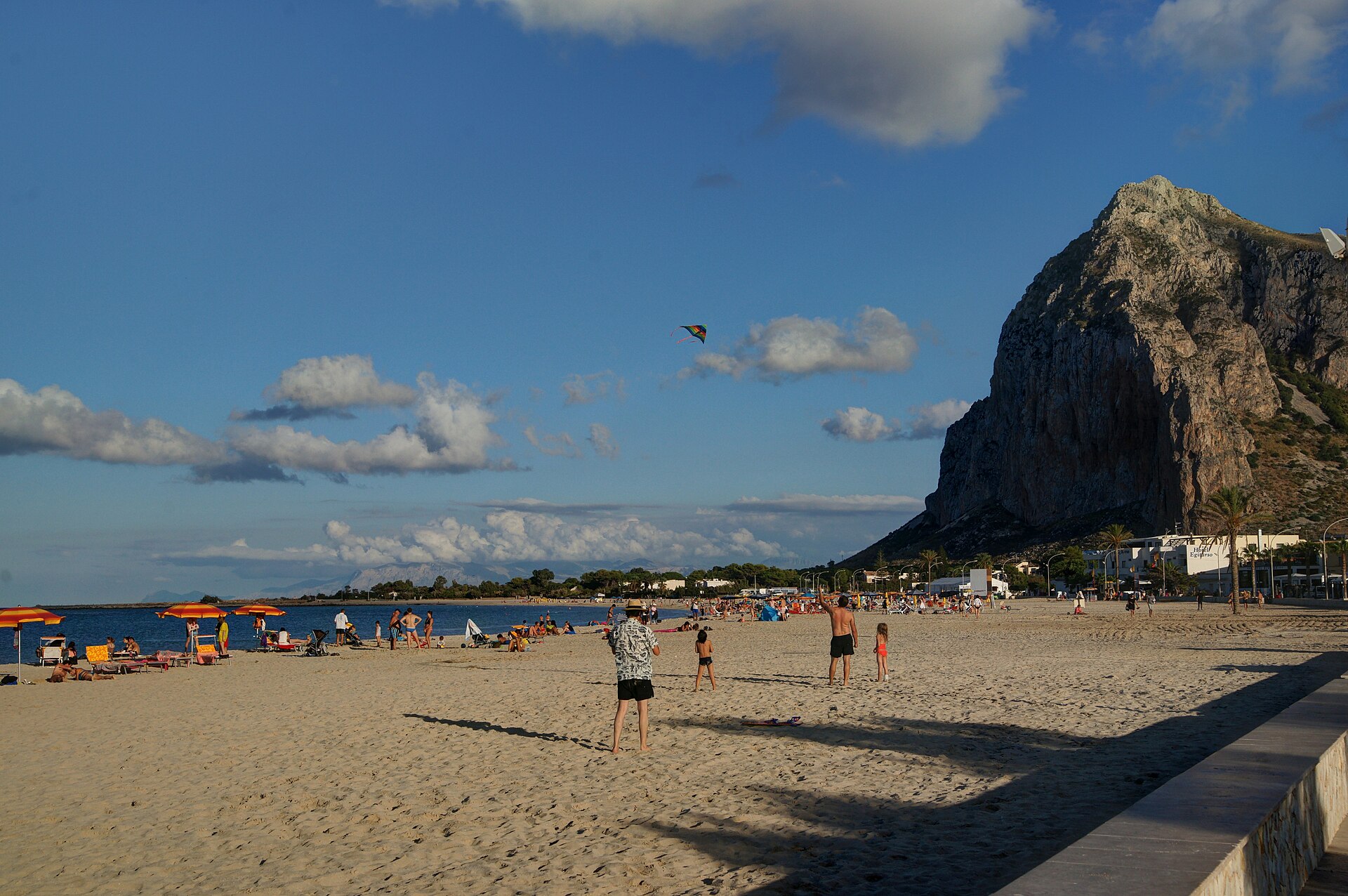
San Vito Lo Capo is the beach that launches a thousand desktop wallpapers, and it earns it. A wide arc of pale, fine sand sits beneath the bulk of Monte Monaco, the water shading from clear shallows to deep blue. It’s properly sandy, gentle underfoot, and shallow a long way out, which makes it one of the best beaches in Sicily for young kids. Blue Flag status, calm most days, and warm water well into autumn.
The catch is popularity. In July and August it fills, and it fills early. There’s a free central stretch plus several lidos toward the edges; if you want a free spot, arrive before mid-morning, or take a lido sunbed (expect roughly €15–25 for two beds and an umbrella as of 2026, more at the smart end). Parking is paid lots and metered street spaces in town, all within a short walk of the sand, so you don’t need to circle for an hour.
Best months are June and September, when the water is warm but the town breathes. The famous Cous Cous Fest lands in late September and is worth timing for if you like a busy, festive edge to your beach week. San Vito is about 45 minutes from Trapani.
Riserva dello Zingaro
Just down the coast, the Zingaro reserve is the opposite experience and my personal favorite stretch of the west. This was Sicily’s first nature reserve, and you can only reach its coves on foot along a coastal path; cars stop at the entrances. That filter keeps the crowds thinner than anywhere as beautiful has any right to be.
The beaches here, like Cala dell’Uzzo and Cala Marinella, are pebble and rock rather than sand, with water so clear it looks fake. There are two gated entrances, north (near Scopello) and south (near San Vito), each with a paid car park, and a small reserve entry fee. The coves nearest each gate are the busiest, so walk fifteen minutes further for space. Bring everything: water, food, shade, and crucially a pair of water shoes for getting in and out over the rocks. There are no lidos, no bars, no sunbeds. Best months are May, June, and September, partly for swimming and partly because the full-sun walk in July heat is no joke.
Scopello
Scopello’s old tonnara (tuna fishery) with its sea stacks is one of the most photographed spots in Sicily, and the little rocky swimming area below it is genuinely lovely for a snorkel. It’s small, it’s pebble and rock with platforms, there’s an entry fee to the tonnara cove, and on an August afternoon it can feel like the whole region showed up at once. I’d treat it as a scenic morning swim rather than a full beach day, and pair it with the Zingaro north entrance, which is right there. The village above is tiny and charming, with a handful of places for a pane cunzato sandwich.
Palermo’s beach: Mondello
Mondello is Palermo’s beach, ten miles from the city center, and on a hot day it can feel like the entire capital has decamped to the sand. The setting is a perfect crescent of white sand between two headlands, with shallow turquoise water and the Art Nouveau bathing pavilion sitting out on stilts.
It is genuinely sandy and genuinely shallow, great for families, and easy to reach without a car on the bus from central Palermo, which matters if you’re following the Sicily without a car approach. The downside is the crowd. Much of Mondello is carved into private lido concessions where you pay for a beds-and-umbrella set, with a free public strip that gets packed on weekends and through high summer. Go on a weekday, go early, and Mondello is a delight; go on an August Sunday and you’ll be negotiating for sand.
If you’re basing yourself in the capital, the Palermo travel guide covers the city itself, and our guide to accommodation in Sicily helps you decide whether a beach suburb or the old center suits your trip better.
The North coast: Cefalù
Cefalù is the rare Sicilian beach town that combines a proper sandy beach with a knockout medieval old town and a giant Norman cathedral, all under a dramatic crag called La Rocca. About 90 minutes east of Palermo, it’s one of the easiest beach bases on the island and one I happily recommend to first-timers.
The main beach, Spiaggia di Cefalù, is a long ribbon of biscuit-colored sand that runs nearly two kilometers, with the most photogenic stretch right below the old town near Porta Pescara. It’s sandy, the water is calm and shallow, and it stays swimmable late, into October most years. As with everywhere popular, there’s a free public section and a string of lidos. Prices vary with location and season; near the harbor in high summer expect to pay up to around €30 for two loungers and an umbrella, dropping to roughly €20 further along the beach, as of 2026. The free beach is real but you have to beat the locals to it on summer mornings.
Cefalù is also a strong rail base, with frequent trains from Palermo, so it pairs neatly with a car-light plan. For ideas on what else to do between swims, the things to do in Sicily guide has the wider region.
The East and Taormina: Isola Bella, Giardini Naxos, Letojanni
The Ionian coast around Taormina has the most theatrical scenery, Mount Etna smoking on the horizon and the town clinging to its cliff, but be honest with yourself about texture: this side trades long sand for pebble and pretty rock.
Isola Bella
Isola Bella is the tiny island linked to the mainland by a thin spit of pebbles below Taormina, and it is the photo everyone wants. I’ll be straight with you, though: it looks better from the belvedere above than it feels down at sea level, where the beach is pebbly, narrow, and crowded with lido concessions. It’s a small nature reserve and a brilliant snorkel, with clear water and fish around the rocks, but it’s a short, scenic stop rather than a lounge-all-day beach.
You have three ways down: walk the steep stairway from Taormina (free but a workout, especially on the way back up), take the cable car from town down to Mazzarò (around €6 one way, €10 return, running roughly every fifteen minutes), or drive straight to Mazzarò and pay for tight parking. Bring water shoes for the pebbles, and a snorkel mask if you have one. The guide to visiting Taormina covers the town in full.
Giardini Naxos
Just down the hill, Giardini Naxos is the practical beach base for this stretch: a long bay of sand and grey pebble with a proper seafront promenade, plenty of lidos and free patches, restaurants, and easy parking. The water deepens a bit faster than the west-coast shallows, but it’s a comfortable, well-served beach with a great sunset over the bay and far better value for accommodation than Taormina up top. If you want a beach holiday with Taormina on your doorstep, this is where I’d sleep.
Letojanni
A few minutes north, Letojanni is the quieter, more local-feeling alternative: a grey-pebble-and-sand beach, a relaxed town, good seafood, and noticeably fewer crowds than Isola Bella. It’s served by the same coastal train line, so you can reach it without a car. Nothing dramatic, just an easy, pleasant beach day with the Etna backdrop. Catania, the gateway airport for this whole coast, is covered in the guide to visiting Catania.
Southeast: the Vendicari reserve, Marzamemi, San Lorenzo
The far southeast around Noto and the Baroque towns is, for my money, the most rewarding beach region in Sicily if you’ll trade a short walk for wild, uncrowded sand and exceptional water. The star is the Vendicari nature reserve.
Calamosche and the Vendicari beaches
Vendicari is a coastal wetland reserve with several beaches strung along it, all reached on foot from gated parking areas. The reserve charges a small entry fee, around €3.50 per person (roughly €7 for a family) as of 2026, with paid parking of about €5 at each entrance, and it’s open daily through the warm season from early morning to early evening. There are five entrances, Cittadella, Vendicari, Calamosche, Marianelli, and Eloro, each with its own car park.
Calamosche is the famous one, a small golden cove tucked between two rocky headlands that shelter it from wind and waves, which keeps the water calm and glass-clear. It was named Italy’s best beach back in 2005 and it still delivers. You park and walk about a kilometer (15–20 easy minutes) through scrubland to reach it; there are no facilities beyond the odd roaming drinks vendor, so come fully stocked. It’s sandy, family-friendly once you’re there, and the snorkeling over the nearby reef is excellent.
Eloro, near the ancient Greek ruins, is a longer, wilder sweep of sand and dunes with an easier, shorter walk from its car park. Marianelli is the most isolated and is popular with naturists. All of them are free to lie on once you’ve paid the reserve entry, and all reward you with the kind of empty, dune-backed sand that’s genuinely hard to find on the busier coasts.
Marzamemi
Marzamemi isn’t really a beach so much as a former tuna-fishing village with one of the prettiest little piazzas in Sicily, where the old tonnara buildings now hold restaurants and the square fills with people eating seafood after dark. There are small rocky swimming spots and bathing platforms around it, and good sandy beaches like San Lorenzo a short drive away. I’d come here to swim off the rocks for an hour and then stay for a long, late dinner.
San Lorenzo
Near the southeastern tip below Marzamemi, San Lorenzo is a long bay of pale sand and shallow, calm, almost lagoon-like water, which makes it one of the better family beaches in this corner. There are lidos with sunbeds plus free stretches, and the gentle gradient means little kids can paddle a long way out safely. It gets busy in August but rarely feels as frantic as the headline beaches up north.
The South: Scala dei Turchi, Eraclea Minoa, Sampieri
The long Mediterranean-facing south coast trades drama for space: wide sandy beaches, dunes, warm calm water, and far fewer crowds, broken up by one genuine wonder.
Scala dei Turchi
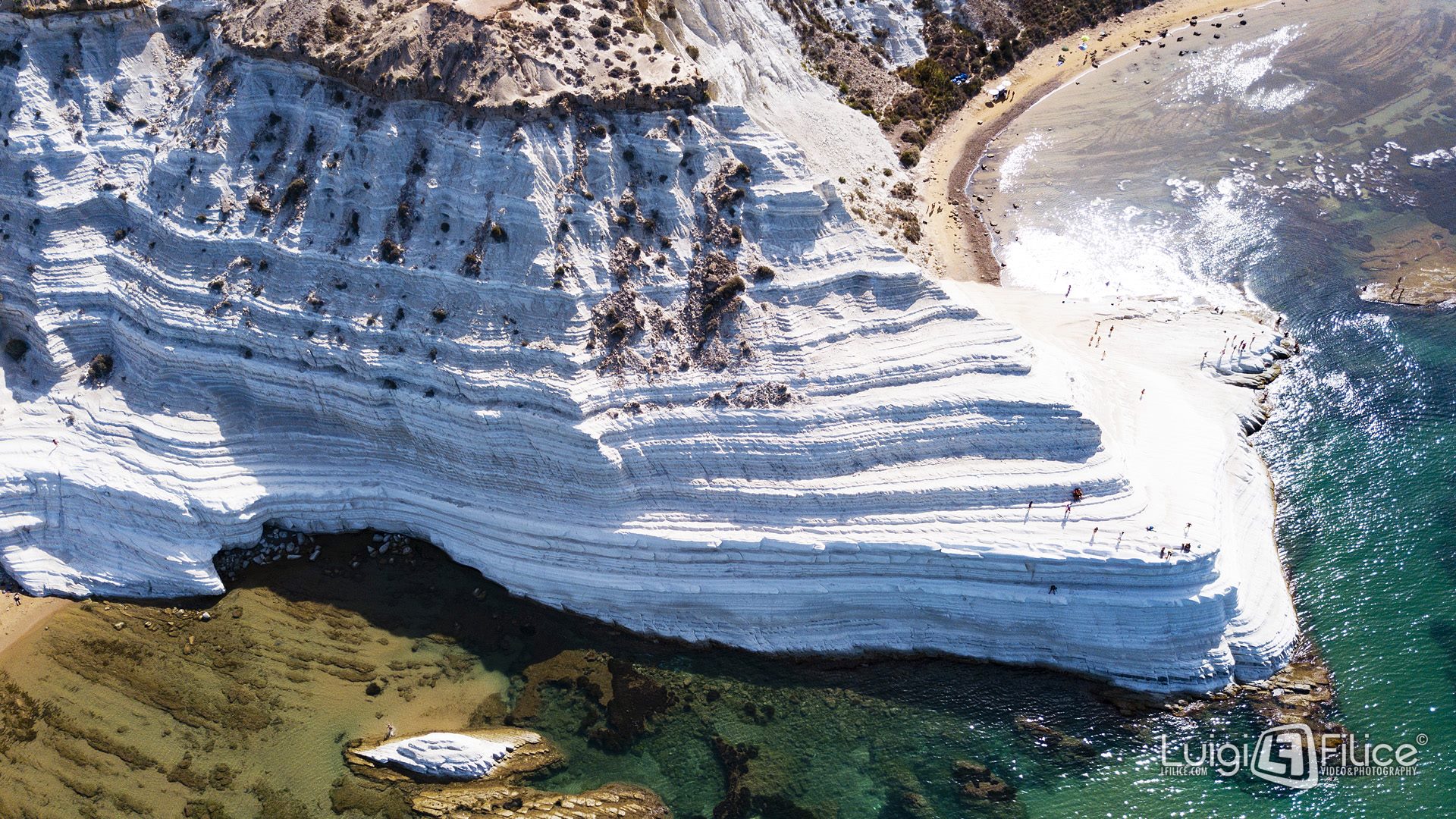
Scala dei Turchi, the “Turkish Steps,” is a blinding-white staircase of soft marl cliff that the wind and sea have sculpted into smooth terraces, dropping into deep blue water near Realmonte, just west of Agrigento. It is one of the most spectacular sights in southern Italy and an easy combination with the Valley of the Temples down the road.
Here’s the important 2026 update: after years of closure for conservation, access onto the white cliff itself is now controlled. As of spring 2026 you need a timed ticket, bought online, for around €5–6 per person, which gives you a 60-minute slot, with a daily cap on visitors to protect the fragile rock. Even without a cliff ticket, you can still enjoy the view and swim from the adjacent beach below, which is how plenty of people experience it. Rules and prices on this one shift year to year, so check the official channel before you go and don’t assume you can just stroll onto the marl as older guides suggest. The cliff surface is slick when wet, so tread carefully.
Eraclea Minoa
West of Scala dei Turchi, Eraclea Minoa is a broad, quiet sweep of pale sand backed by a fragrant pine forest and a pale cliff, sitting below an ancient Greek archaeological site. It’s largely free spiaggia libera with a couple of low-key beach bars, the water is shallow and calm, and there’s enough room that even in summer it never feels crushed. This is the south coast at its best: space, sand, shade from the pines, and no lido scrum. Bring your own kit and plan to make a day of it.
Sampieri
Over toward the southeastern end, near the Baroque towns of Scicli and Modica, Sampieri is a long ribbon of soft golden sand running for nearly three kilometers, backed by low dunes, with the haunting ruins of the old Pisciotto brickworks at one end (fans of the Montalbano TV series will recognize the whole area). It’s properly sandy, the water shelves gently, and there’s a mix of free beach and lidos plus a relaxed little town. For a long, easy, golden-sand day in the southeast, this is the one.
The islands: Lampedusa, Favignana and the Egadi, the Aeolians
Sicily’s offshore islands hold some of its best beaches, but they’re a separate logistical exercise. I’ll keep the boat details light here because getting to them is its own topic, covered in the Italy ferries guide, and routing them sensibly belongs in the day-by-day Sicily plan.
Rabbit Beach, Lampedusa
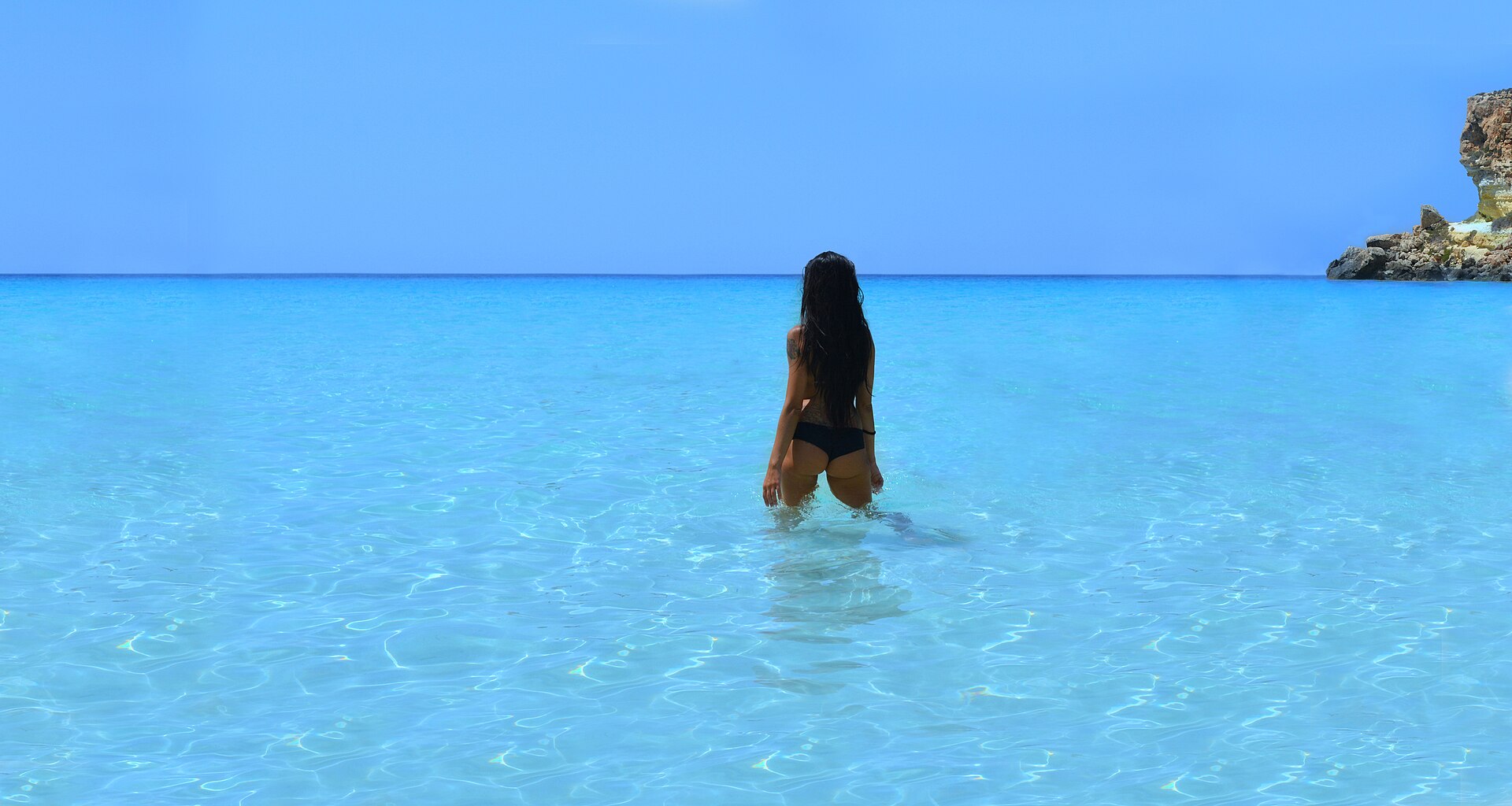
Lampedusa is closer to Africa than to mainland Sicily, and its Spiaggia dei Conigli, Rabbit Beach, regularly tops “best beach in Italy” and even “best beach in Europe” lists. It’s a pale-sand cove with absurdly clear, shallow, electric-turquoise water held between headlands, with a little island just offshore. The water is the reason to make the long trip.
It’s also a protected loggerhead turtle nesting site, so access is tightly managed in summer. As of the 2025 season the beach ran on timed shifts (roughly a morning and an afternoon slot) with a cap of about 550 people per shift, most bookable for free online in advance and a handful held for residents; expect a similar system in 2026, so book ahead. You reach it by walking a rocky path of around 800 meters down to the cove, and sturdy footwear is required rather than flip-flops. There are no facilities at the beach itself. It’s sandy and family-friendly once you’re down there, but the walk and the booking are part of the deal.
Favignana and the Egadi
Off the west coast near Trapani, Favignana is the largest of the three Egadi islands and a summer dream of bicycle-flat roads and Caribbean-blue coves. The honest caveat: most of its famous swimming spots are rock, not sand. Cala Rossa, the island’s most beautiful cove, is a wide bowl of crystal water above old tufa quarries, but you’re getting in over rock and razory stone, so water shoes are essential. Cala Azzurra has a genuine patch of white sand and shallow water that’s better for families, and Bue Marino is a smooth-rock bathing platform that’s pure Sicilian people-watching. Rent a bike, pack a snorkel, and accept that the magic here is the water, not the texture underfoot.
The Aeolians and Stromboli’s black sand
The Aeolian Islands north of Sicily are volcanic, which gives their beaches a striking dark, sometimes black, sand and pebble. On Stromboli, with its live volcano grumbling above, Ficogrande is the most accessible swimming beach, a short walk from the hydrofoil dock: black volcanic sand, clear water averaging a warm 25°C in summer, a gentle slope that’s fine for swimming, and a few beach clubs for sunbeds. The dark sand absorbs heat and gets seriously hot underfoot, so bring sandals and strong sunscreen. It’s not a soft-golden-sand day; it’s an unusual, dramatic, very memorable one. Across the archipelago, Lipari, Vulcano, and Salina each have their own swimming spots, mostly rock, pebble, or dark sand.
Sandy beaches Sicily: where to actually dig your toes in
Because so many of the headline names are rock and pebble, here’s the shortlist if soft sand is non-negotiable. On the west and north coast, San Vito Lo Capo, Mondello, and Cefalù are your reliable, properly sandy, family-friendly classics, all with shallow water and full facilities. On the south coast, Eraclea Minoa and Sampieri give you long, quiet, dune-backed golden sand with far fewer people. In the southeast, the Vendicari beaches (Calamosche, Eloro) and San Lorenzo are sandy and wild, with the trade-off of a walk in or a reserve fee. And for once-in-a-lifetime sand-and-water, Rabbit Beach on Lampedusa.
What you’ll mostly not find is endless flat sand the way you might on parts of Sardinia. If that’s your dream, it’s worth a glance at the Sardinia beaches travel guide, because Sardinia leans harder into long sand while Sicily gives you sand plus volcanoes, Greek temples, and Baroque towns next door. Both islands sit within the wider full Italy planning guide if you’re weighing a bigger trip.
Practical specifics: access, parking, cost, and crowds
A few things that will make or break your beach days here, learned the slightly hard way.
Rent a car if beaches are your priority. The best of them, the Zingaro coves, Vendicari, Eraclea Minoa, much of the south, are awkward or impossible to reach on public transport. The big exceptions, where you genuinely don’t need to drive, are Mondello (bus from Palermo), Cefalù, Giardini Naxos, and Letojanni (all on the train line). If you’d rather skip driving entirely, the Sicily without a car guide leans into those rail-friendly options.
Budget for parking and lidos as real line items. Paid parking at popular beaches is the norm, often around €5 for the day at reserve car parks and more in resort towns. A sunbed-and-umbrella set at a lido runs roughly €15–30 a day across most of the island as of 2026, climbing at the fashionable concessions in Mondello, Cefalù, and Taormina in August. The free spiaggia libera is always an option; you just need your own shade and to arrive early.
Pack water shoes. I can’t stress this enough for Sicily specifically. So many of the best swimming spots, the Zingaro, Isola Bella, Favignana, Scopello, are rock or pebble, and cheap reef shoes turn a wince-inducing entry into a non-issue.
On crowds and timing: July and especially August are hot, busy, and pricier, and Italian families take their own holidays in August, so the popular beaches are at maximum. June and September are the sweet spot, with warm sea, long days, and breathing room. If you’re planning around the calendar, the best time to visit Italy guide has the wider seasonal picture, and the month-by-month notes for Italy in June and Italy in September line up almost perfectly with the best Sicilian beach weather.
Final thoughts on the best beaches in Sicily
The best beaches in Sicily reward a little honesty and a little planning. Decide first what you’re chasing, soft sand or the clearest possible water, because the island rarely gives you both in the same place. Then match the coast to your trip, pack water shoes, aim for June or September, and accept that the most magical coves usually ask for a short walk in. Do that, and Sicily’s coastline is as good as the Mediterranean gets. For the rest of the trip around your beach days, start with the full Sicily guide and build out from there.
Questions travellers ask
Does Sicily have sandy beaches?
Yes, though fewer than you might expect. Long stretches of soft sand are not the island’s default; many famous swimming spots are pebble or rock. For reliable sand, head to the west and north (San Vito Lo Capo, Mondello, Cefalù) or the south (Eraclea Minoa, Sampieri), plus the southeast’s Vendicari coves and San Lorenzo.
Where is the clearest water in Sicily?
The clearest water tends to be where the coast is rock or pebble rather than sand, because there’s less stirred-up sediment. Standouts are the Riserva dello Zingaro coves and Favignana in the west, Calamosche in the Vendicari reserve, Isola Bella at Taormina, and, best of all, Rabbit Beach on Lampedusa, whose shallow water is famously transparent.
Which side of Sicily has the best beaches?
It depends what you want. The west and northwest (San Vito Lo Capo, Zingaro, plus Mondello and Cefalù) have the best sandy, family-friendly beaches. The east around Taormina has the most dramatic scenery but more pebble. The southeast (Vendicari) and south (Eraclea Minoa, Sampieri) offer wild, uncrowded sand. For pure sand, go west.
What is the best month for Sicily beaches?
June and September are ideal: the sea is warm, the days are long, and the crowds and prices sit below the August peak. July is reliably hot and good for swimming but busier. August is the hottest and most crowded, when Italians holiday too. The sea stays swimmable into October on the sheltered south and east coasts.
Are Sicily’s beaches free or do you pay?
Both, usually side by side. A spiaggia libera is free public beach where you bring your own gear. A lido is a paid beach club renting sunbeds and umbrellas, roughly €15–30 a day as of 2026 with facilities included. Nature reserves like Vendicari charge a small entry fee, and a few spots like Scala dei Turchi’s cliff now require a timed ticket.
Can I visit Sicily’s beaches without a car?
Some, yes. Mondello (bus from Palermo), Cefalù, Giardini Naxos, and Letojanni all connect by public transport, and the offshore islands are reached by ferry then explored on foot or by bike. But the wildest beaches, the Zingaro, Vendicari, and most of the south coast, really need a car. Plan your bases around that.
Is Scala dei Turchi open and can you swim there?
As of 2026, the white marl cliff itself is open but access is controlled by a timed online ticket (around €5–6 per person) with a daily visitor cap, introduced after years of closure to protect the fragile rock. You can still see it and swim from the beach below without a cliff ticket. Rules change yearly, so check the official source before visiting.
What should I pack for a Sicilian beach?
Water shoes are the single most useful item, since so many great swimming spots are rock or pebble. Add strong sunscreen, plenty of water (free beaches and reserves rarely have shops), a sun umbrella if you’re skipping the lidos, and a snorkel mask for the clear coves. For reserve beaches like Calamosche or Rabbit Beach, bring everything, as there are no facilities.