Amalfi Coast, Naples & Campania
Naples Travel Guide: Food, History and Safety
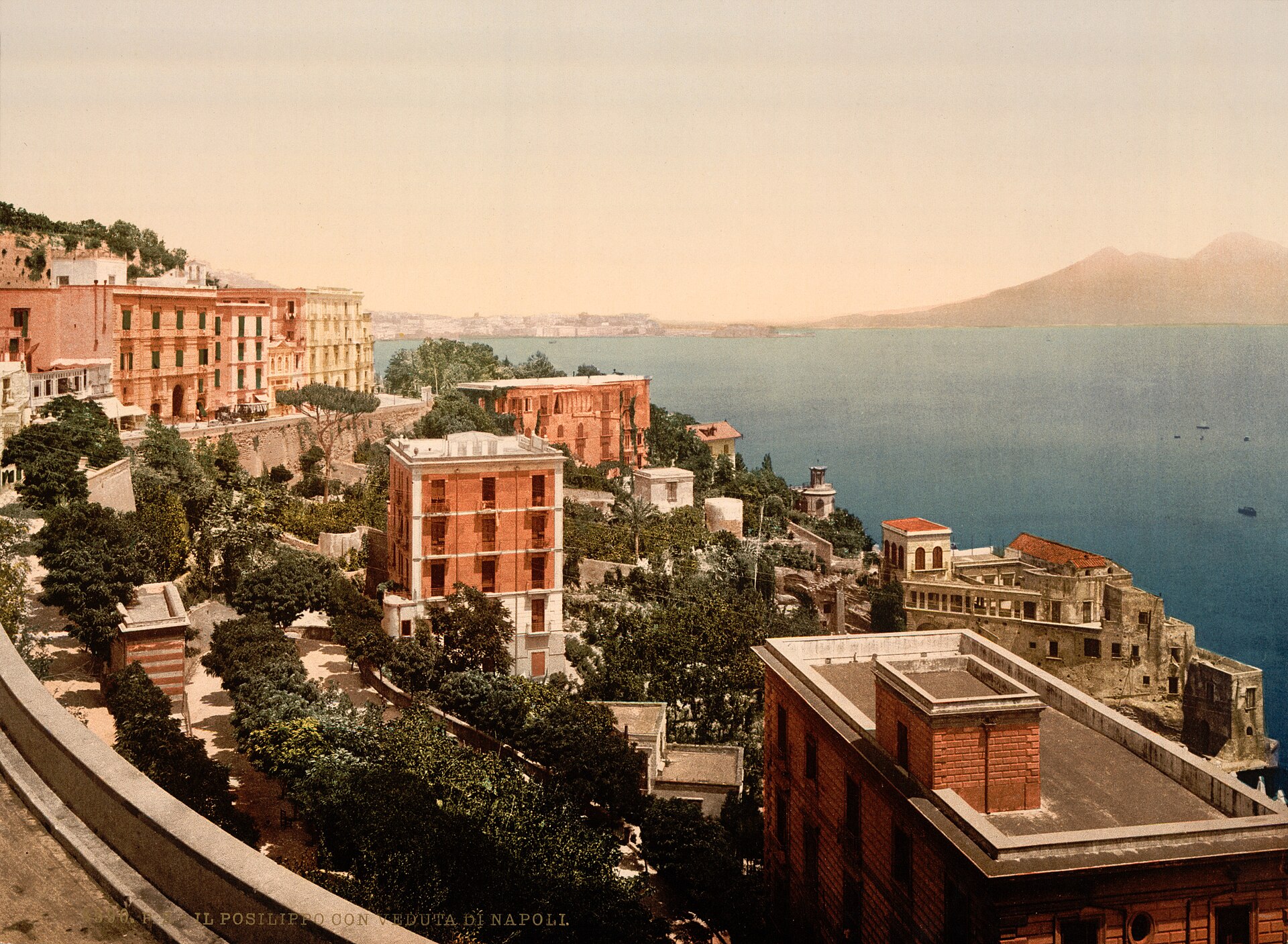
The Naples Travel Guide You Actually Need
Naples is the most misunderstood city in Italy. Visitors arrive half-expecting chaos and end up obsessed — returning two, three, five times. It is loud, alive, and unfiltered in a way that Rome and Florence have long since polished away. The pizza alone could justify the flight.
This Naples travel guide covers what to do, where to eat, how to move around safely, and how long to stay. It is written for someone who is genuinely considering a visit and wants the honest version, not the hedged one.
Naples rewards the visitor who shows up curious. It punishes the one who shows up distracted. Know the difference and you will have one of the best trips of your life.
Who is this guide for? First-timers who want to see the historic centre properly, food lovers chasing the real pizza, anyone nervous about safety who wants facts instead of vibes, and travellers planning to use Naples as a launchpad for Pompeii, Capri, or the Amalfi Coast.
Naples at a Glance
| Area / Sight | What It Is | Practical Note |
|---|---|---|
| Spaccanapoli | The ancient east-west spine of the historic centre | Walk it end to end; allow a full morning |
| Cappella Sansevero | Chapel housing the extraordinary Veiled Christ sculpture | Book tickets online — capacity is strictly capped |
| Naples Underground (Napoli Sotterranea) | 2,000-year-old Greek-Roman tunnels below the streets | Tours run every 2 hours; the most interesting underground option |
| National Archaeological Museum (MANN) | World’s finest collection of Roman artefacts from Pompeii and Herculaneum | Allow 3–4 hours minimum; closed Tuesdays |
| Castel dell’Ovo | Seafront castle on the Borgo Marinari island | Free entry; great at sunset |
| Royal Palace (Palazzo Reale) | Bourbon royal apartments on Piazza del Plebiscito | Very affordable entry; often quieter than other sights |
| San Gregorio Armeno | Street of nativity craftsmen, active year-round | Go mid-morning on a weekday to browse without the scrum |
| Piazza del Plebiscito | The city’s great civic square | Pedestrianised and free; good orientation point |
| Quartieri Spagnoli | The Spanish Quarter grid west of Via Toledo | Best explored without a plan — just wander |
Best Things to Do in Naples
Walk Spaccanapoli and the Historic Centre
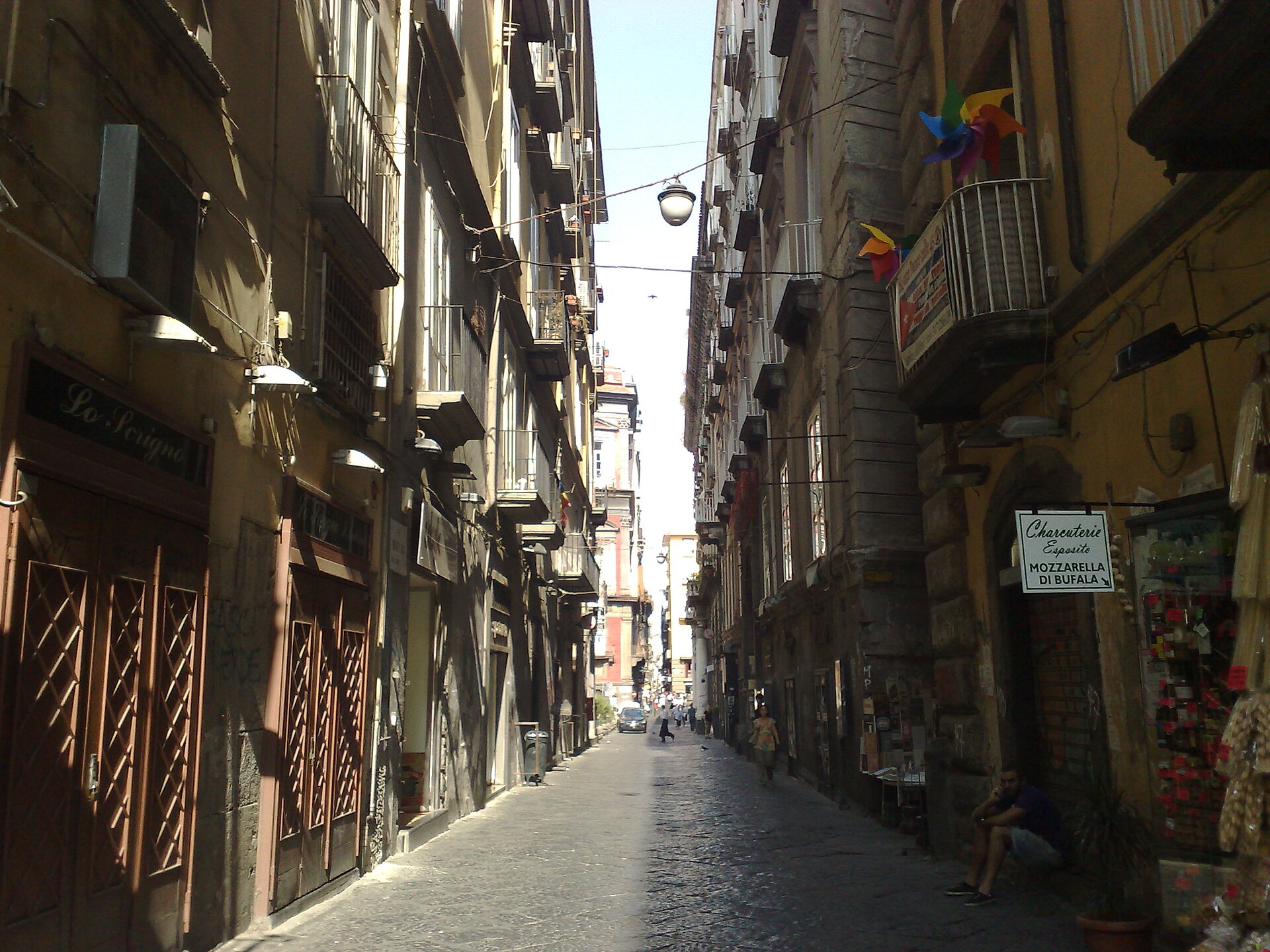
The UNESCO-listed historic centre is where you feel what Naples actually is. Spaccanapoli — literally “Naples splitter” — cuts through it in a dead-straight line that dates back to Greek urban planning around 470 BCE. Walk west from Piazza del Gesù Nuovo toward the Duomo and you pass through twenty-five centuries of layered civilisation without needing a single ticket.
Stop at the Chiesa del Gesù Nuovo for its extraordinary diamond-rusticated facade. Cross the street to the Chiostro di Santa Chiara, whose hand-painted majolica benches are among the most photographed things in the city and somehow still feel like a discovery when you step inside the cloister. Further east, the Duomo di Napoli contains the Chapel of San Gennaro, patron saint of the city, where twice a year thousands gather to watch (and pray for) the liquefaction of his dried blood — one of the stranger and more moving rituals in Catholic Italy.
Then walk south into the Quartieri Spagnoli. The Spanish Quarter is a tight grid of narrow streets west of Via Toledo where laundry crosses five storeys above you, shrines to Diego Maradona compete with shrines to the Virgin Mary, and the sound level is extraordinary. It looks chaotic. It is lived-in, comfortable, and completely safe in the middle of the day.
Cappella Sansevero and the Veiled Christ
If you see one thing inside a building in Naples, make it this. The Veiled Christ — Cristo Velato — was carved by Giuseppe Sanmartino in 1753 from a single block of marble. The veil over Christ’s face is carved stone, not fabric. The detail is so precise that people have spent 270 years assuming it cannot be what it is. The chapel around it is equally extraordinary: a private family mausoleum packed with Baroque sculpture, including two anatomical machines in the basement that look like 18th-century medical nightmares and probably are.
Book your ticket well in advance. The chapel admits small groups and sells out days ahead in high season. Tickets are around €8–10 at time of writing. The visit takes 30–45 minutes and is worth every euro.
Naples Underground (Napoli Sotterranea)
Beneath the historic centre is a labyrinth of tunnels quarried by the Greeks, expanded by the Romans for water cisterns, and used as air-raid shelters during the Second World War. The main Napoli Sotterranea tour (entrance on Piazza San Gaetano) runs every two hours and takes you down 40 metres below street level through passages barely wide enough for your shoulders. The wartime section — with rusted cots and dusty children’s toys still in place — is genuinely affecting.
Allow 90 minutes including queuing. Tickets are around €12. There is also the Galleria Borbonica option near Piazza del Plebiscito if you want a more theatrical experience with a different section of the network.
National Archaeological Museum (MANN)
The Museo Archeologico Nazionale di Napoli is the best reason in Italy to care about Pompeii before you go there. Almost everything excavated from Pompeii and Herculaneum ended up here, including the Alexander Mosaic — a breathtaking floor mosaic from the House of the Faun that depicts Alexander the Great at the Battle of Issus. Then there is the Secret Cabinet, a room of erotic art from Pompeii that was locked away from public view for 200 years and is now one of the most visited sections.
The collection also covers Egyptian antiquities (seven dedicated rooms), the Farnese collection of Greek and Roman sculpture, and the Pompeii mosaics in extraordinary detail. Plan on three hours minimum. The museum is closed on Tuesdays. Entry is around €22 and online booking saves you time at the door.
If you are visiting Pompeii — and you should — come here first. The ruins make far more sense when you have already seen how the inhabitants actually lived.
Castel dell’Ovo
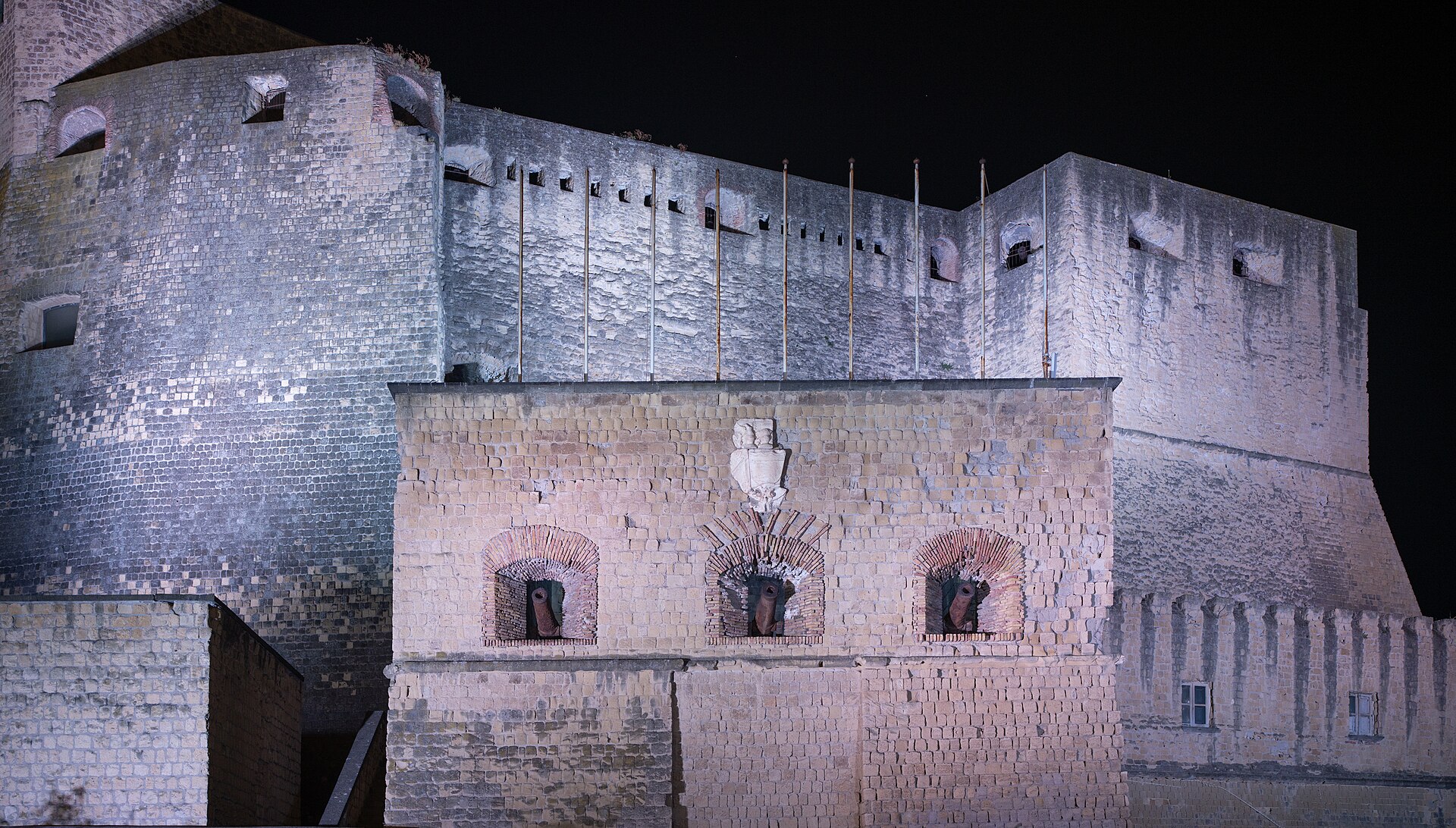
The seafront castle on the Borgo Marinari island is free to enter and commands views across the Bay of Naples toward Vesuvius that are genuinely difficult to leave. The name comes from a legend about Virgil burying a magic egg in the foundations — break the egg, the castle falls, and so does Naples. Entry is free, hours vary by season, and the walk across the small causeway from Chiaia takes ten minutes from the waterfront.
Come at sunset. The light on the bay at that hour is the kind of thing that makes people change their travel plans to stay an extra day.
The Royal Palace and Piazza del Plebiscito
Piazza del Plebiscito is the great civic square of Naples — hemmed in by the Neoclassical arc of the Basilica di San Francesco di Paola on one side and the long ochre facade of the Royal Palace on the other. It was a car park in the 1960s. Today it is pedestrianised, enormous, and the best orientation point in the city.
The Royal Palace (Palazzo Reale) itself is significantly undervisited for what it contains: a succession of restored Bourbon royal apartments with frescoed ceilings, period furniture, a royal chapel, and a monumental staircase. Entry is around €10. It is rarely crowded even in August, which for a building of this quality is almost baffling.
San Gregorio Armeno
One street in Naples is dedicated almost entirely to nativity figures. San Gregorio Armeno has sold hand-crafted presepe figurines since the 18th century, and the artisans work year-round, not just at Christmas. You will find traditional shepherds and angels alongside Pope Francis, Diego Maradona, and whoever is currently dominating the Italian news cycle. The craftsmanship is extraordinary and prices vary enormously — browsing is free and genuinely entertaining.
Go on a weekday morning between October and December and it is packed to the point of impassability. Go in April on a Tuesday at 10am and you can actually talk to the artisans about what they make.
The Pizza and Street Food
Pizza: The Birthplace, Done Right
Naples invented pizza. Not the word, not the concept of flatbread — the specific object that the rest of the world has been imitating ever since. The Neapolitan pizza margherita was officially standardised here in the late 19th century, and the city takes its own product with a seriousness that approaches religion.
The good news: you do not need to queue outside the most famous names to eat an extraordinary pizza. The better news: a pizza in a casual Naples sit-down costs €5–8 for a full, plate-sized pie that no single person should reasonably finish.
Da Michele is the one from Eat, Pray, Love — a hundred-year-old institution on Via Cesare Sersale that serves exactly four pizza types (margherita, marinara, cosacca, marita), issues numbered tickets at the door, and produces a product so consistently perfect that the queue is, arguably, worth it once. Come in the morning before 12:30 or after 14:30.
But the best-kept secret is that Da Michele is far from the only option. Da Attilio near the Pignasecca market serves what many Neapolitan pizza makers themselves consider the finest margherita in the city — a perfectly balanced version with a slightly charred cornicione (the raised edge crust) and sauce that has actual flavour. It is smaller, less famous, and almost never has a long wait. 50 Kalò near Piazza Sannazaro, run by third-generation master pizzaiolo Ciro Salvo, uses extremely hydrated dough that results in a lighter, airier pizza than most and has earned Michelin Guide recognition.
Pizzeria Port’Alba on Via Port’Alba claims to be the oldest pizzeria in the world — operating since 1738 — and the pizza justifies the visit in its own right. Sit outside under the old archway.
The rule of thumb: if there is a tourist menu printed in four languages in the window, keep walking. If the menu is handwritten on a chalkboard or laminated card with three options, you are in the right place.
Street Food You Must Not Skip
Sfogliatella comes in two forms: riccia (the ribbed, layered shell pastry filled with ricotta and semolina) and frolla (a softer shortcrust version). They are a morning food, eaten warm, ideally from Scaturchio in Piazza San Domenico Maggiore or Pintauro on Via Toledo. By noon they have been sitting out for hours. By noon, move on.
Pizza fritta — fried pizza — is the working-class precursor to the baked version. During the post-war period when tomatoes were expensive, Neapolitans deep-fried their pizza dough and topped it with whatever was affordable. Today it is a street snack sold from small shops and market stalls, typically filled with ricotta, salami, and provola. One is enough. Two is a life decision.
Taralli are small ring-shaped crackers made with lard, almonds, and pepper, boiled then baked. They are sold in street kiosks and small bags throughout the old town. They are addictive in the most straightforward way and cost almost nothing.
Cuoppo is a paper cone filled with fried seafood — calamari, shrimp, anchovies — eaten standing up near the port. The standard price is €3–5 for a generous portion and it is one of the better things you can do with five minutes and five euros anywhere in Europe.
Is Naples Safe? The Honest Version
The short answer: yes, Naples is safe for tourists. The slightly longer answer: Naples requires the same awareness you would bring to any major European city, and slightly more than you would bring to a quiet rural village.
The most common crime affecting tourists is petty theft — specifically pickpocketing in crowded spaces and, less commonly, bag or phone snatching from passing scooters. The scooter snatch is the version that gets reported in dramatic terms online. It does happen, particularly around Piazza Garibaldi (the central train station area), in the Quartieri Spagnoli after dark, and along Via Toledo during peak hour. The precaution is simple: do not hold your phone out in the street unless you are looking at it. Do not carry a shoulder bag that sits on the traffic-side of your body. A cross-body bag worn across the chest, or a zip-top bag held in front of you, eliminates almost all of the risk.
For context on the actual numbers: Campania logs roughly 3 pickpocket incidents per 1,000 residents. Milan is around 7 per 1,000. Rome is around 14 per 1,000. Barcelona recorded over 100,000 pickpocket complaints in 2023 alone. Naples has a reputation that significantly exceeds its statistical reality.
The areas that warrant extra attention:
Piazza Garibaldi and the immediate surrounds of Napoli Centrale — the city’s main train station is where you are most likely to be approached by people offering help with luggage, fake taxis, or urgent assistance you did not request. Use the official taxi rank (white Fiat sedans with a Naples city emblem), do not accept any offer of a ride from someone who approaches you inside the station, and keep your bag in front of you on the platform.
Forcella — a small neighbourhood east of the historic centre that borders Spaccanapoli. It is not off-limits and some excellent food is found there, but walk through with purpose and do not wander down unlit side streets at night.
The Quartieri Spagnoli at night — perfectly safe during the day and early evening. After midnight, if you have been drinking, take a taxi back to your hotel rather than walking through unfamiliar alleys.
Common scams:
The most frequent tourist scam is the restaurant without a menu — someone outside pulls you in, you eat, and the bill arrives with unexplained extras. Always ask to see a menu with prices before sitting down. If a menu does not exist or is shown only after you have ordered, leave. The second most common is unofficial tour guides near the Archaeological Museum and Cappella Sansevero who will approach you, attach themselves to your visit uninvited, and then demand payment. If you want a guide, book one in advance through a licensed company.
The bottom line: Naples is a city of 3 million people. Most of them are getting on with their lives and are perfectly pleasant when you make any kind of human contact. The fear of Naples is disproportionate and, frankly, often shaped by a kind of class-based travel snobbery that looks down on cities that are not clean and polished. Go. Be alert in the same way you would be alert in any big city. You will be fine.
Where to Stay and How Long
How Long to Spend in Naples
Three nights is the minimum for doing the city any justice. Four nights is comfortable. Five lets you add a day trip without feeling rushed.
Day one: arrive, walk Spaccanapoli, eat pizza, acclimatise. Day two: MANN in the morning, Cappella Sansevero in the afternoon, aperitivo in Chiaia. Day three: Castel dell’Ovo, the Royal Palace, Piazza del Plebiscito, dinner in the Quartieri Spagnoli. Day four (if you have it): Naples Underground, San Gregorio Armeno, and an evening up in Vomero for the city views from Castel Sant’Elmo.
If you are also doing Pompeii, Capri, and the Amalfi Coast, you need at least six nights based in Naples, or you will be moving too fast to enjoy any of it. The Amalfi Coast itinerary goes into detail on pacing those day trips.
Where to Stay
The historic centre (Centro Storico) is the most atmospheric base and puts you within walking distance of most sights. It can be noisy — Naples streets do not go quiet until after midnight, and motorbikes start early. Bring earplugs or embrace the soundtrack.
Chiaia, the upmarket neighbourhood along the waterfront west of Piazza del Plebiscito, is quieter, more comfortable, and slightly more expensive. It suits travellers who want to be near the sea and the Castel dell’Ovo without being in the thick of the historic centre noise.
Vomero, on the hill above the city, is residential and safe but requires a funicular or taxi every time you go to a museum. It is a good option if you are a light sleeper who prioritises a quiet room.
Avoid hotels in the immediate surrounds of Piazza Garibaldi (the train station area) unless your connection time makes it the only practical choice. The neighbourhood is not dangerous during the day, but it is the least pleasant part of the city to call home for a few nights.
Naples as a Gateway: Day Trips
One of Naples’s best qualities is its location. Pompeii, Capri, Herculaneum, the Amalfi Coast, Sorrento, Procida, and Vesuvius are all within a 90-minute journey. Naples functions as a proper base in a way that, say, Positano does not — it has major transport infrastructure, reasonable hotel prices, and enough city content to fill your non-day-trip hours.
Pompeii is 35 minutes from Naples Centrale on the Circumvesuviana train. Everything you need to plan that visit — tickets, how to beat the crowds, what to actually see inside the ruins — is covered in the Pompeii tickets and visitor guide.
Capri is a 50-minute hydrofoil from Beverello port near Castel dell’Ovo. The island deserves a full day at minimum. The Capri day trip guide covers ferries, the Blue Grotto, the chairlift up Monte Solaro, and how to time the whole thing to avoid the peak cruise-ship crowd.
The Amalfi Coast — Positano, Ravello, Amalfi — is typically visited via the SITA bus from Sorrento, or by hiring a private driver from Naples. The coast’s famously narrow road and heavy summer traffic make timing everything. The Rome to Amalfi Coast guide covers transfers from the capital if you are coming directly.
Herculaneum is 20 minutes on the Circumvesuviana and is smaller and better preserved than Pompeii. If you have already seen Pompeii before, or if walking large open sites is difficult for you, Herculaneum is the better choice.
The parent guide to this whole region — Campania, the Amalfi Coast, and what connects them — lives at Amalfi Coast and Naples: the Campania guide.
Getting To and Around Naples
Naples Capodichino Airport is 7 kilometres north of the city. The most reliable way to the centre is the official taxi rank outside arrivals: fixed fares apply to the city centre (around €23) and must be agreed before you get in. Avoid the unofficial drivers who approach you inside arrivals.
From Rome, high-speed Frecciarossa and Italo trains run Naples Centrale in around 70 minutes from Roma Termini. This is the overwhelmingly practical option if you are combining both cities — and you should be. The Italy travel guide covers the national rail booking system in full.
Within the city, walking covers most of the historic centre. The metro (Line 1 and Line 2) is useful for getting between the station, Via Toledo, and Chiaia. The funiculars connect the lower city to Vomero. Taxis are metered and reasonably priced; agree the fare on the meter before setting off, or confirm the fixed-rate applies.
The one transport you do not need in the city: a car. Naples traffic is notoriously aggressive and parking is essentially non-existent in the centre. If you are planning to self-drive the Amalfi Coast, pick the car up from a suburban depot on your way out, not in the city itself.
For broader context on how this fits into an Italian trip — when to go, how to avoid the worst of the crowds — see the best time to visit Italy guide.
Practical Notes Before You Go
Best time to visit: April, May, late September, and October. Spring and early autumn give you warm days (18–24°C), manageable crowds, and functioning outdoor life. July and August are hot (regularly 32°C+), tourist-heavy, and the Amalfi Coast roads become genuinely gridlocked. December is underrated: the Christmas nativity season on San Gregorio Armeno is spectacular and crowds are thin.
Budget: Naples is notably cheaper than Rome and Florence. A sit-down pizza with a beer is €8–12. A museum entry is €8–22. An espresso at the bar is €1–1.50. A night in a solid three-star hotel in the historic centre runs €80–130 in mid-season.
Language: English is spoken in most tourist contexts but less reliably than in Rome or Florence. Learning five words of Italian — grazie, prego, quanto costa, un caffè per favore, il conto — will get you further than you expect and generate significant goodwill.
Food and drink: Coffee is a serious matter in Naples. The city drinks espresso standing at the bar, quickly, for around €1. Sitting down at a cafe table adds a service charge. The tradition of caffè sospeso — paying for a coffee in advance for someone who cannot afford one — began in Naples. Order at the bar, pay first, collect your cup.
This connects to a wider pattern of Italian food and wine travel that is worth reading before you arrive — understanding the regional logic of why Neapolitan food is the way it is makes eating it significantly more satisfying.
Common mistakes: Not booking Cappella Sansevero in advance (it sells out). Arriving at MANN without allowing enough time (it is enormous). Eating at a restaurant near the Duomo with a laminated tourist menu (there is no reason to). Leaving without trying a sfogliatella riccia while it is still warm from the oven. The Italy travel mistakes guide covers the wider version of this list.
Final Thoughts
The question most people ask before visiting Naples is about safety. The question most people ask after visiting is when they can go back.
This city has been inhabited continuously for nearly 3,000 years and it carries that weight visibly — in the street plan, in the churches, in the underground tunnels, in the faces of the pizza makers who have been doing this exact thing for generations. It is not a museum. It is a city that happens to have extraordinary things in it, and it goes about its business with complete indifference to whether you are photographing it or not.
Come with open eyes and a working awareness of your surroundings. Book the Cappella Sansevero in advance. Eat the sfogliatella while it is warm. Accept that the taxi driver’s radio will be playing Neapolitan pop at volume. And give the city at least three full days.
For the wider picture of southern Italy — the coast, the islands, and how Naples connects to all of it — the Amalfi Coast and Naples guide is the logical next read. For building your full Italian trip around this region, start with the Italy travel guide.
Naples is worth every complicated, loud, beautiful minute of it.
Questions travellers ask
Is Naples safe for solo travellers?
Yes. Thousands of solo travellers visit Naples every year without incident. The standard advice applies: keep your phone in your pocket on busy streets, wear your bag in front of you, and use official taxis at night rather than walking long distances alone in unfamiliar areas. Solo women in particular report feeling comfortable in the tourist-facing parts of the historic centre during the day and in Chiaia and the waterfront area in the evenings.
How many days do you need in Naples?
Three nights is the workable minimum for first-timers who want to cover the main sights, eat properly, and actually absorb the city rather than just rush through it. Four nights is more comfortable. If you are adding Pompeii or Capri as day trips, add a day for each. Five nights lets you do Naples, Pompeii, and Capri without feeling like you are speed-running anything.
What is the best area to stay in Naples?
The historic centre (Centro Storico) is the most atmospheric and convenient base — walkable to most sights, full of food options at every price point, and genuinely characterful. Chiaia suits travellers who want something quieter and more polished. Avoid the Piazza Garibaldi station area unless your travel connections make it necessary.
What is the best way to get from Rome to Naples?
The high-speed Frecciarossa or Italo train from Roma Termini to Napoli Centrale takes approximately 70 minutes and runs frequently throughout the day. Tickets bought in advance (a few days to two weeks ahead) cost €19–45 depending on time and class. On the day prices are significantly higher. Do not drive — the motorway is slow, parking in Naples is a nightmare, and you save no time.
Is the Veiled Christ worth it?
Without qualification, yes. The Cappella Sansevero and its central sculpture, the Cristo Velato by Giuseppe Sanmartino, is one of the most astonishing single objects in Italy — which is saying a great deal in a country with this density of extraordinary art. Book your ticket online several days in advance. The visit is 30–45 minutes. You will think about it for years.
Can I do Pompeii and Naples in one day?
Technically yes, but it does not do either justice. Pompeii alone deserves 4–6 hours of focused walking. Naples alone deserves at least a full day. If you only have one day and you have to choose, choose the city and dedicate a separate return trip to the ruins — or, if the ruins are the priority, do Pompeii as a day trip from Rome and save Naples for a longer visit later. Full planning for the ruins is in the Pompeii guide.
What should I know about eating in Naples?
Order your coffee at the bar, standing up — it is cheaper and more authentic. Pizza is eaten with a knife and fork in sit-down restaurants, folded into a wallet shape on the street (pizza a portafoglio). Lunch is typically 13:00–15:00; dinner rarely starts before 20:00 and most Neapolitans eat at 21:00. Asking for a menu before sitting down is completely normal and the right thing to do.
Is Naples worth visiting?
Completely. Naples is one of the most layered, alive, and genuinely surprising cities in Europe. The food is as good as you have heard. The art history — between the Archaeological Museum, the Cappella Sansevero, and the historic centre — is world-class. The city does not perform for you the way tourist centres sometimes do. It is simply itself, loudly and without apology. That is, in the end, why people keep coming back.