Amalfi Coast, Naples & Campania
The Best Beaches on the Amalfi Coast (and the Pebble Reality)
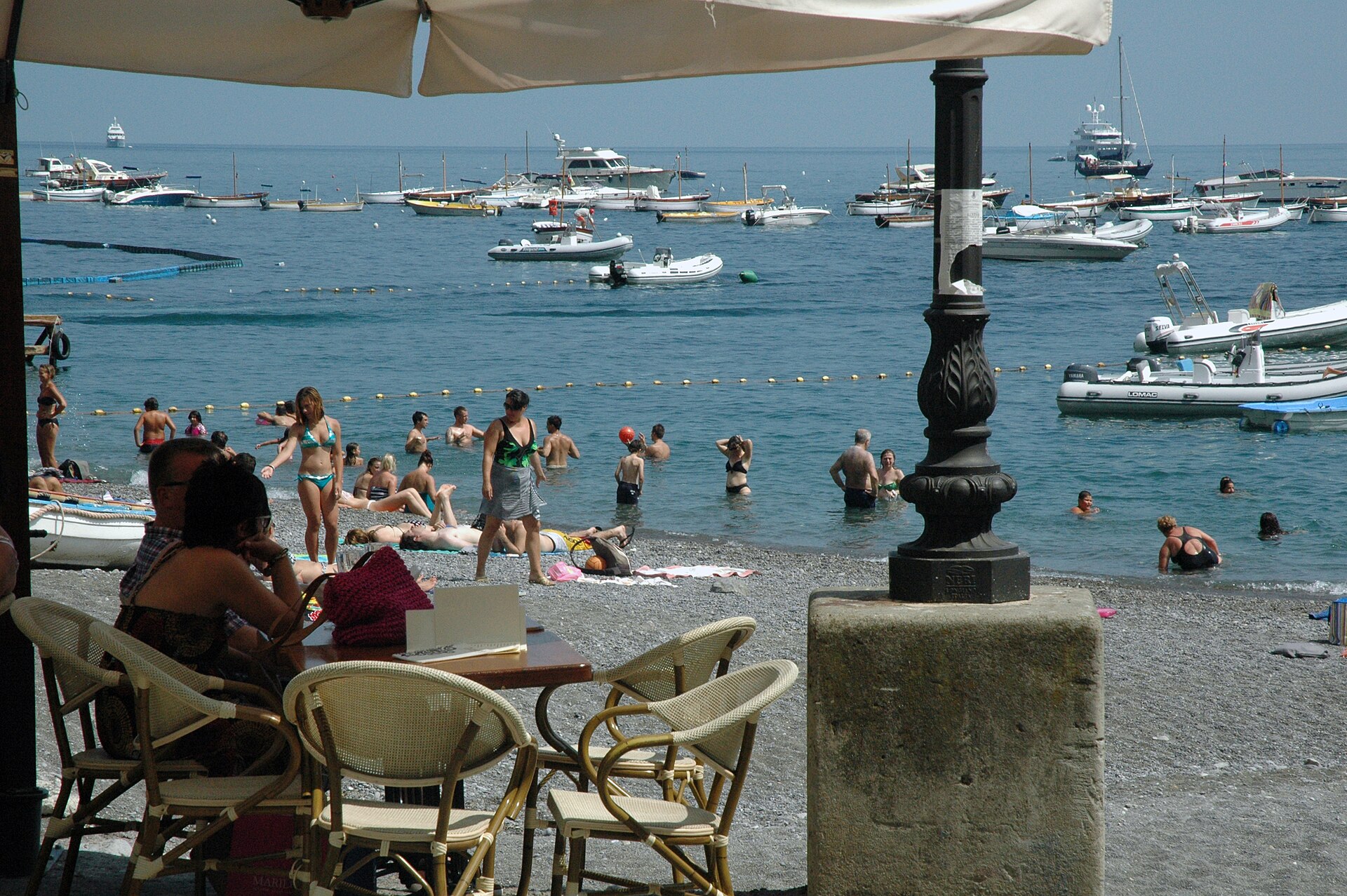
The Amalfi Coast beaches are some of the most photographed in Europe. They are also, for the most part, made of small grey pebbles, hemmed in by beach clubs that charge real money for a sun lounger, and reached by either a boat or a punishing staircase carved into a cliff. If you arrive expecting soft white sand and a free towel of grass to lie on, the reality will sting more than the water shoes you forgot to pack.
That is not a criticism. It is a warning — and once you know what you are walking into, these beaches are genuinely extraordinary. The water is the kind of blue that makes you stop mid-sentence. The cliffs dropping straight into the sea give every little cove a drama that flat sandy beaches simply cannot match. You just need to go in prepared.
This guide covers every beach worth your time on the coast: what it actually looks like, how to get there, free access or paid, what it costs at the clubs, and what to bring. If you are still deciding where to base yourself, our Amalfi Coast where-to-stay guide will help you pick a town that matches your budget and style. And if you are wondering how to move between beaches without a hire car on roads that were not designed for hire cars, read how to do the Amalfi Coast without a car before you book anything.
Quick Reference: Amalfi Coast Beaches at a Glance
| Beach | Town | Free Area? | Best Access |
|---|---|---|---|
| Spiaggia Grande | Positano | Small section | Walk from town centre |
| Fornillo | Positano | Yes (larger) | 10-min cliff path from Spiaggia Grande |
| Arienzo | Positano area | Club only | 300 steps or 5-min shuttle boat |
| Laurito | West of Positano | Club (free shuttle boat) | Boat from Positano pier |
| Marina di Praia | Praiano | Small free section | Steps down from SS163 |
| Fiordo di Furore | Furore | Yes | 200 steps from bridge / bus |
| Marina Grande (Amalfi) | Amalfi | Small section | Walk from town |
| Atrani | Atrani | Yes (most of it) | Walk from Amalfi (15 min) |
| Maiori | Maiori | Yes (both ends) | Bus or ferry |
| Minori | Minori | Yes | Bus or ferry |
| Cetara | Cetara | Yes | Bus or ferry |
The Pebble and Beach-Club Reality (Read This First)
Almost every beach on the Amalfi Coast sits at the foot of cliffs that plunge straight into the Tyrrhenian Sea. There is no gradual slope down to a sandy shore. The coastline is all drama and no beach infrastructure — or rather, the infrastructure that does exist has been wedged into whatever gap the geology allows.
What that means in practice:
The surface. Expect dark grey pebbles ranging from fist-sized rocks to smaller smooth stones. A few places have coarser grit that passes for sand when wet, but Maiori is the only town with anything approaching a genuine sandy beach. Pack water shoes. Not as a luxury — as a basic requirement. The entry into the water is rocky and slippery, and sea urchins occasionally lurk near the edges of the less-visited coves.
The beach clubs. The Italian concept of a lido or stabilimento balneare — a private beach club renting out sun loungers, umbrellas, and towels in organised rows — is standard everywhere here. On the most popular beaches like Spiaggia Grande in Positano, they occupy most of the available space. A pair of loungers with an umbrella typically runs €60–€120 per day depending on the row and the month, with July and August at the top end. Some clubs include a minimum food and drink spend on top. You can go free if you find a public section, but in high season those fill up before 10 a.m.
The access. There is no beach car park. There is barely a beach road. You arrive by steps cut into the hillside, by the coastal ferry, by water taxi, or — in a few cases — by a restaurant’s complimentary shuttle boat. Factor access into your plans. If you are travelling with young children or anyone with limited mobility, some beaches are effectively off the table.
None of this should put you off. It should recalibrate what you are coming for. These beaches reward effort. The ones reached only by boat tend to be the quietest. The ones with the steepest staircases have the clearest water. That is not a coincidence.
Positano: Spiaggia Grande
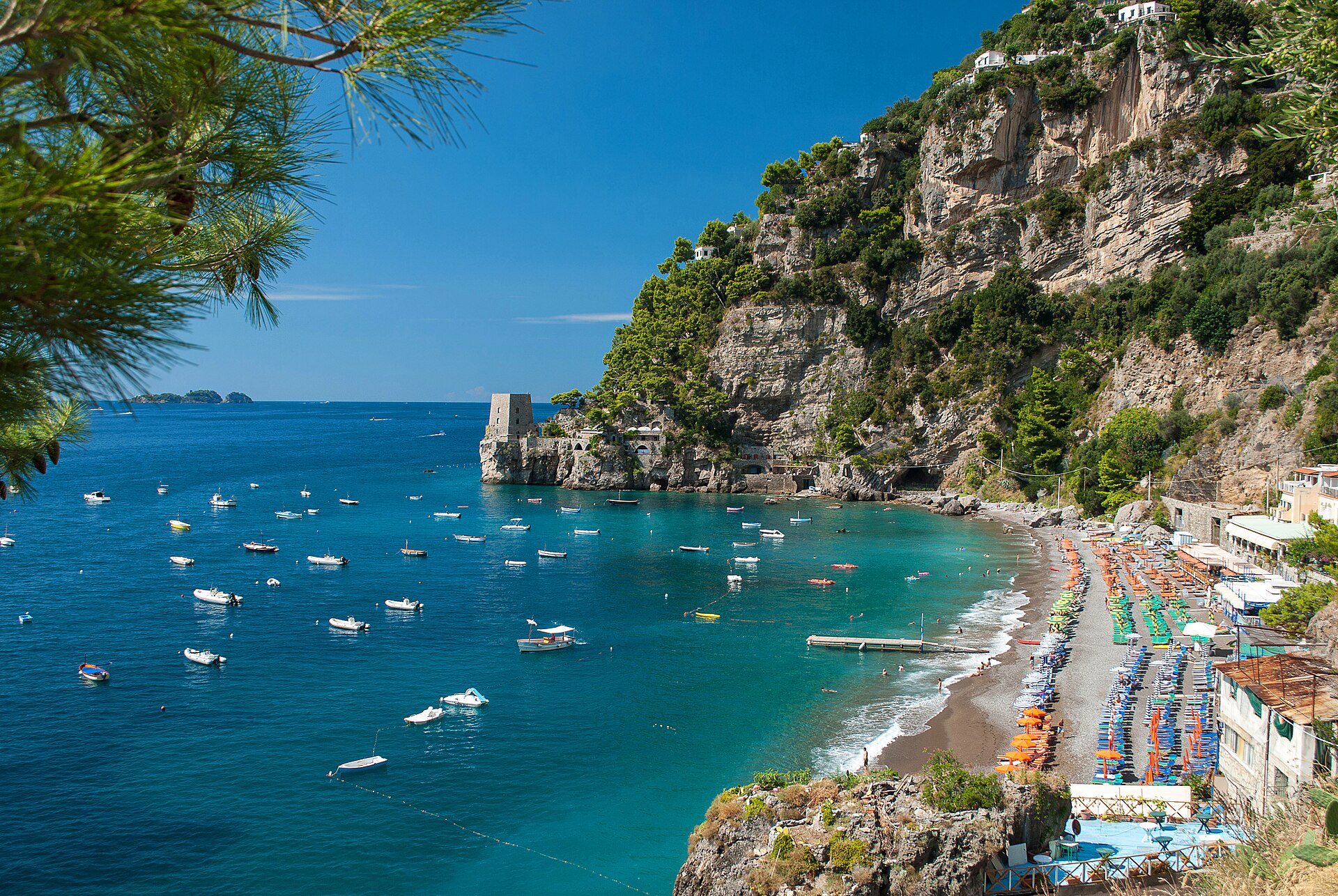
Spiaggia Grande is the beach in every Positano photograph: dark pebbles, coloured umbrellas stacked in rows, and the town’s white-and-terracotta houses rising steeply behind it. It sits right at the base of the village, next to the ferry pier, and it is the most visited patch of water on the entire coast.
It is also perfectly pleasant, provided you manage your expectations. The beach is roughly 300 metres long. A central section is given over to free public access but it fills fast — arrive before 9:30 a.m. in July or August if you want a spot without paying. The majority of the beach is organised into lido rows; prices for a double lounger with umbrella run roughly €70–€120 depending on the establishment and the proximity to the waterline. Front-row spots, with the boats bobbing a metre from your toes, command the highest prices.
The water is clear and reasonably calm. Given how many people are swimming here at any given moment, it is a testament to how good the sea actually is that you barely notice the crowd once you are in it.
Getting there: Walk down from anywhere in Positano — the town essentially funnels you here. Ferry connections from Sorrento, Amalfi, and Salerno arrive at the adjacent pier.
Tips: Go early or go late. The beach empties noticeably after 5 p.m. and the light on the village at that hour is the best of the day. Water shoes are essential. Bags and valuables left on the beach are a target — keep them with you or use the storage at your hotel.
Positano: Fornillo
Fornillo is Spiaggia Grande’s quieter sibling, and for most visitors who make the effort to find it, it becomes the clear favourite. You reach it via the Via Positanesi d’America, a narrow path that hugs the cliff face west of the main beach — the walk takes about ten minutes and the views along the way are worth the trip in their own right.
The beach is smaller, less glossy, and more local in feel. There are a handful of lido establishments, but the public free section is larger proportionally than at Spiaggia Grande, and the atmosphere is noticeably less performative. Families, longer-stay visitors, people actually reading books — these are your neighbours at Fornillo.
The water is marginally calmer than the main beach because of the headland’s protection. The pebbles are similar: grey, medium-sized, slippery at the waterline. Same advice applies — water shoes, go early, watch your things.
Getting there: On foot from Spiaggia Grande via the cliff path (10 minutes). No direct ferry landing.
Costs: Some lidos here start around €15 for a basic spot — considerably less than Spiaggia Grande. In shoulder season (May, June, September), you will often find the public section half-empty even at midday.
Positano Area: Arienzo
East of Positano, before you reach Praiano, Arienzo sits in a steep cove that most people drive past without seeing. It was reportedly Franco Zeffirelli’s favourite beach in all of Italy, which tells you something about the light and the setting.
Access is the thing here. From the coastal road you descend approximately 300 steps — not a gentle meander but a real staircase that will have your legs questioning the decision on the way back up. The alternative is a short shuttle boat from Positano’s pier, roughly five minutes. If your legs are not the issue, the boat makes more logistical sense and the view arriving from the sea is part of the experience.
Arienzo is almost entirely managed as a beach club. Do not expect a free section of any size. The trade-off is that it is less crowded than the Positano beaches and the water quality is excellent.
Positano Area: Laurito (Boat Only)
Further west of Positano, Laurito Beach is the one that rewards people who have done their research. The only practical way to get here is by boat — the walk involves a private road and a staircase steep enough to deter most — and that self-selection keeps the crowds manageable even in August.
The draw is Da Adolfo, a legendary seafood restaurant on the beach that has been here since the 1970s. It runs a free shuttle boat from Positano pier, identifiable by a red fish symbol on the mast. You do not have to eat at the restaurant to take the boat, but given the quality of the grilled fish and the setting, most people do. The beach itself is small pebble, but the overall package — restaurant, clear water, no road noise, only the sound of the sea — is one of the most relaxing afternoons available on this stretch of coast.
If you want to explore the handful of other boat-only coves west of Positano — La Porta, Fiumiciello, the tiny Scogli Piatti — consider hiring a small boat for half a day. The Amalfi Coast without a car covers ferry timetables and boat-hire logistics in detail.
Praiano: Marina di Praia
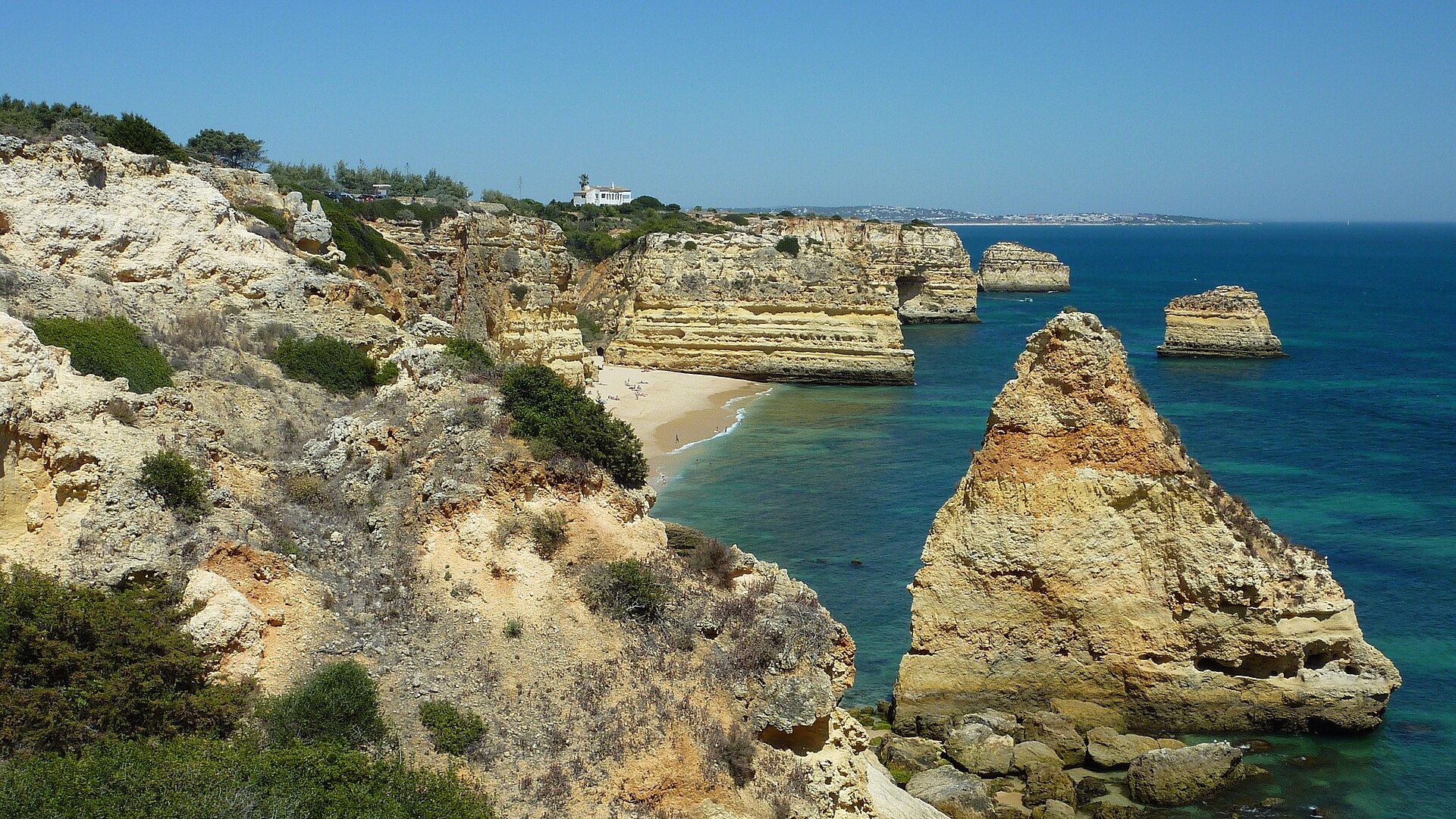
Marina di Praia is the beach village of Praiano — a small cove cut between two rock ridges, watched over by an old Saracen watchtower, and packed with fishing boats hauled up on the pebbles at one end. It feels, more than most beaches on the coast, like it still belongs to fishermen. That is part of its appeal.
The cove faces roughly south-east, which means it catches excellent morning sun. By early afternoon the cliffs begin to shadow the back of the beach, so if you are here primarily to swim and not to tan, that suits you fine. The water is calm, sheltered, and clear, with good snorkelling around the rock faces.
There is a small free section and several lido establishments; umbrella hire runs around €10 apiece. Bring water shoes — the pebbles into the water are large and irregular. Note that jellyfish are a seasonal presence along this stretch of coast; not a reason to avoid it, just worth knowing.
Getting there: Steps lead down from the SS163 coastal road — about 150 steps, manageable but steep. Driving and parking in Praiano is slightly less impossible than in Positano; there is a small car park near the top of the steps. Buses on the Sorrento–Amalfi SITA route stop in Praiano.
Praiano itself is one of the better bases on the coast — quieter than Positano, less touristy than Amalfi town, and with better value accommodation. If you are deciding between towns, the where-to-stay guide makes the case for it properly.
The Furore Fjord (Fiordo di Furore)
Furore is the coast’s most dramatic landscape trick. There is no town at the bottom — the village sits high on the clifftop — just a narrow inlet sliced into the rock, roughly 25 metres of pebbles, and water the colour of deep jade framed by cliffs that make you feel very small.
Visiting here is an exercise in logistics. Access on foot means descending approximately 200 concrete steps from the bridge on the SS163 — the entrance is on the left side of the famous Furore bridge, which itself draws spectators. Parking on or near the bridge is prohibited and fines are applied reliably. The cleanest approach is the SITA SUD bus on the Amalfi–Sorrento line; ask the driver for the Fiordo di Furore stop and the steps are immediately adjacent.
By boat, the situation is slightly odd: boats cannot actually dock at the beach. Small craft can anchor near the bridge and swimmers can reach the shore from there, which is more adventurous than it sounds.
This is not the beach for a full sun-lounger day. It is the beach for an hour in extraordinary water in an extraordinary place. Go, swim, come back up the steps — and treat it as a detour rather than a destination in its own right.
Entry: There is no fee to access the beach. In high summer it gets very busy and the narrow inlet can feel cramped by mid-morning.
Atrani
Atrani sits one kilometre east of Amalfi town and takes about fifteen minutes to walk there along the coast path — far fewer tourists make it than you would expect. The village is Italy’s smallest, technically speaking, squeezed between the cliffs at the mouth of the Dragone valley, and its beach is a small arc of maybe 130 metres backed by a single lane of buildings, fishing boats, and a couple of cafés.
The beach is mostly free. There is one small lido establishment and two public sections, sunny until early afternoon when the surrounding cliffs cast shade. The water is clear, the atmosphere is genuinely local — real Italian families on real summer days — and the absence of the Positano price tag makes it feel like a different world.
Getting there: Walk from Amalfi town (15 minutes on the coast path, mostly flat). Buses between Amalfi and Maiori stop nearby.
Atrani is underrated as a base on the coast. The Amalfi Coast itinerary builds a day here naturally given its proximity to Amalfi town.
Maiori: The Longest Beach on the Coast
Maiori is where the geology finally relents. The valley widening at the back of town allows for the coast’s longest beach — nearly a kilometre — and unlike most of what came before, it has actual sand. Coarser than Caribbean white, darker, mixed with fine grit, but genuine sand that you can walk on barefoot without wincing.
The beach is split into beach club sections in the middle and free public sections at either end. Families dominate here, particularly Italian families who live within an hour’s drive and treat Maiori as their regular summer beach. That mix gives it a relaxed, authentic character that some of the more photographed beaches have traded away.
The town behind the beach is functional rather than pretty — Maiori was badly damaged by a flood in 1954 and the rebuilding was utilitarian — but the beach itself is the best value on the coast. If you want somewhere to spend a full beach day without a taxi, a staircase, or a €100 beach club bill, Maiori is your answer. For travellers who want sand and ease, this section of coast east of Amalfi — Maiori, Minori, Cetara — is genuinely worth considering as a base. See the full where-to-stay breakdown.
Getting there: SITA bus from Amalfi (frequent, cheap). Ferry connections from Amalfi and Salerno.
Minori
Minori neighbours Maiori and is quieter for it. The beach is smaller — perhaps 200 metres — and a mix of fine pebbles and coarse sand. There are beach clubs and a free public section. The town is known for its Roman villa (the Villa Marittima, free to visit) and its pastificio culture — the local pasta shops are worth a stop before or after swimming.
The beach faces south and catches sun for most of the day. The water is calm and clear. Prices at the lido establishments here are noticeably lower than on the Positano end of the coast.
Getting there: SITA bus from Amalfi or Maiori. Ferry from Amalfi.
Cetara
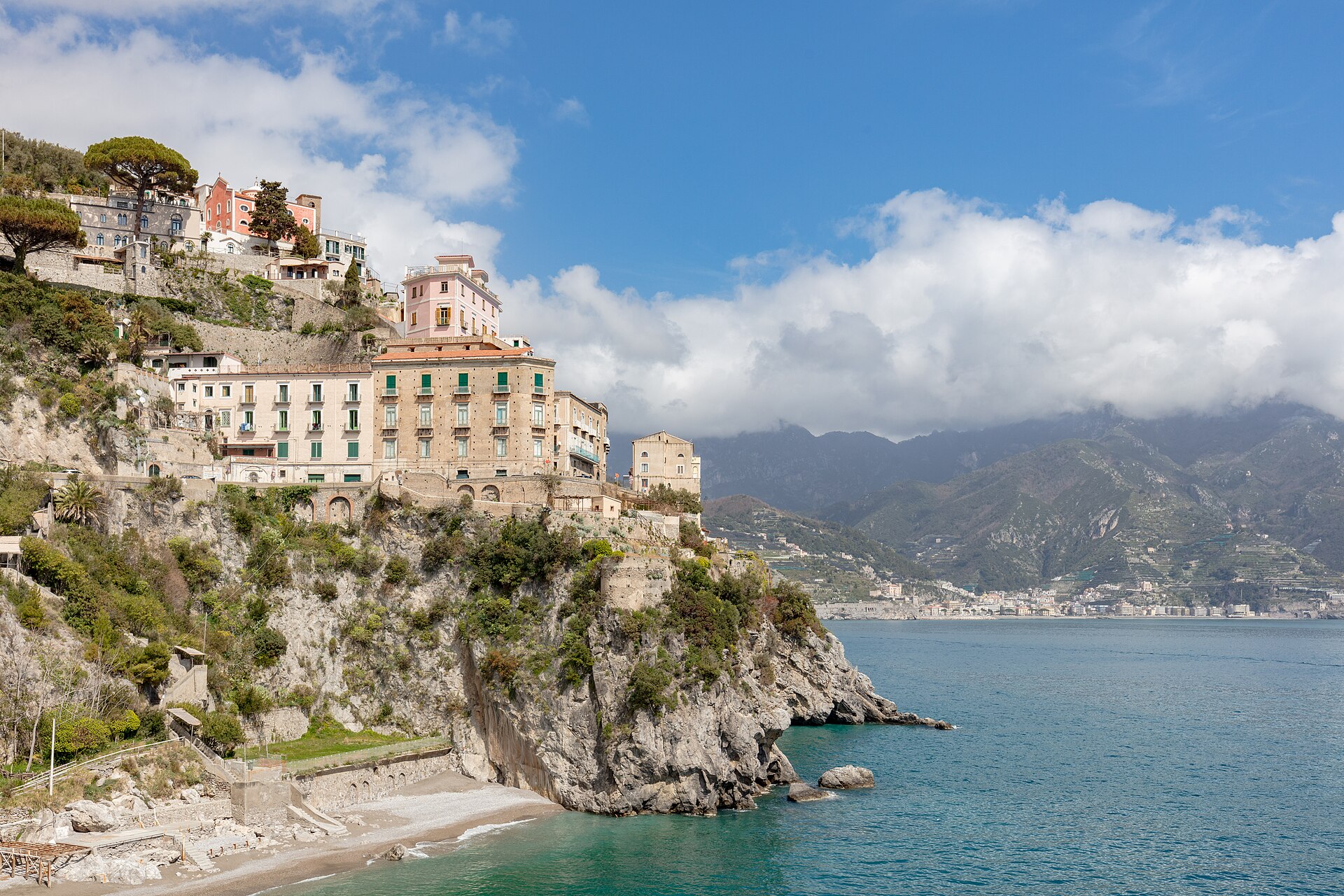
Cetara is the most workaday town on the coast and the one most visitors skip, which makes it one of the best. The village is famous for colatura di alici — an anchovy-based fish sauce with roots going back to ancient Rome — and the fishing boats still go out at night. The beach, or rather the three beaches, share that working character.
Marina di Cetara (the main beach) and the adjacent Porto di Cetara are small, mixed pebble-and-grit, and have both free and paid sections. There is also Lannio Beach, slightly east, which has a sandier character. None of the three is glamorous. All of them are real. The water is just as clear here as at Positano; the fish on the plates in the restaurants above the beach is the same fish the boats brought in that morning.
Come here for the combination of beach and a proper lunch — tuna and anchovy dishes done properly — rather than for an Instagram backdrop.
Getting there: SITA bus from Amalfi. Ferry from Salerno and Amalfi in summer.
Beaches Reachable Only by Boat
If you have a day without a plan and a willingness to rent a small boat — or join a boat tour from Positano or Amalfi — there are several coves that simply cannot be reached any other way.
West of Positano: La Porta is a wider, more open pebble beach flanked by white rock faces. Fiumiciello and the tiny Scogli Piatti (flat rocks) are more properly swimming platforms than beaches but the water quality is exceptional. These spots are never crowded precisely because access filters out anyone without a boat.
East of Amalfi: The coast beyond Cetara has a few rocky inlets accessible by small boat from Cetara or Salerno. These are less visited even by boat-touring operators and best found by asking locally.
Boat hire — small motorboats for self-drive, no licence required below 40 hp — is available at Positano and Amalfi harbours. Prices vary by season; a half-day from Positano runs roughly €150–€250 for the boat. Water taxis cover fixed routes between beaches and towns.
For the full picture on ferries, water taxis, and boat hire up and down the coast, the Amalfi Coast without a car guide is the practical companion to this one.
Practical Tips for Every Beach
Water shoes. Buy them before you come or at one of the shops in Positano. Not optional. The entry into the water on pebble beaches is slippery and irregular, and sea urchins are present near rocks at many spots.
Arrive early. In July and August, free sections on popular beaches are gone by 10 a.m. Either accept paying for a lido spot or be there by 9.
Ferry vs. car. Moving along the coast by ferry is often faster than driving, always more relaxed, and gives you the arrival-by-sea view that roads cannot provide. The ferry and hydrofoil network connects most beach towns. Check Travelmar, NLG, and Alicost for timetables.
Timing. May, June, and September are the ideal months: water warm enough to swim, crowds at a fraction of peak, free sections available. October is pushing the limits of swimming but the coast is at its most beautiful and all but empty. When to visit Italy covers the broader seasonal picture, and our June guide to Italy is worth reading if that month is on your radar.
Jellyfish. Present seasonally — usually late July through August. Not a reason to stay out of the water but worth knowing, especially with children.
Shade. Many of the narrow coves lose direct sun by early afternoon as the cliffs cast shadow. Marina di Praia and Furore are the most pronounced examples. If you need all-day sun, Maiori is your best option.
If you want sand. Be honest with yourself: if a sandy beach is a non-negotiable, the Amalfi Coast will frustrate you. Maiori is the exception. For genuinely sandy beaches in Italy, Sardinia’s beaches are in a different category entirely. Worth building into a longer Italy trip.
For general planning context — transport, money, what to bring — the complete Italy travel guide covers the fundamentals that apply coast-wide.
Final Thoughts
The Amalfi Coast beaches are not what you see on travel posters — those images are shot at 6 a.m. with a wide-angle lens and nobody in frame. What you actually get is small and dramatic and inconvenient and completely worth the inconvenience, provided you come in with open eyes.
The pebbles are real. The beach clubs are real. The 200 steps are real. And the water, the cliffs, the clarity, the feeling of swimming inside a landscape that has been improbably beautiful for two thousand years — that is also real.
Go to Fornillo early. Take the boat to Laurito. Spend an afternoon at Atrani. Swim at Furore and climb back up before the bus comes. Eat anchovies in Cetara. At some point look up from your towel and remember where you are.
If you are still building your trip around the Amalfi Coast, the itinerary guide and the where to stay breakdown are the next things to read. And if all this talk of pebbles has you reconsidering your sand requirements, the Sardinia beaches guide and the broader Italy travel guide will help you build a trip that covers both — because Italy, as ever, gives you more options than you have time to use.
Questions travellers ask
Are Amalfi Coast beaches sandy or pebbly?
Almost entirely pebbly. The geology of the coast — steep cliffs dropping directly into the sea — leaves almost no room for sand to accumulate. Most beaches are dark grey pebbles of varying size. Maiori is the significant exception with the coast’s longest beach and a sandy-grit surface. Pack water shoes wherever you go; barefoot entry into the water is uncomfortable at best.
How much does a beach club on the Amalfi Coast cost?
It varies considerably by location and by the month. At Spiaggia Grande in Positano, a double sun lounger with umbrella runs roughly €70–€120 per day in summer, with front-row positions at the top end. At less visited beaches like Marina di Praia, prices are closer to €40–€50 per person. Fornillo Beach in Positano has some of the lowest-cost lidos in Positano itself, starting around €15 for a basic setup.
What is the best free beach on the Amalfi Coast?
Atrani offers the most genuinely free experience — most of its small beach is public access, the atmosphere is relaxed and local, and it is a short walk from Amalfi town. Maiori has free sections at both ends of its long beach. Fornillo in Positano has a sizeable public section by Positano standards. The Furore Fjord is free to access via the steps from the bridge, though it is tiny.
Can you reach Amalfi Coast beaches without a car?
Yes, and in most cases it is preferable. The coastal road (SS163) is narrow, heavily trafficked in summer, and parking is expensive and scarce. Ferries run between Positano, Amalfi, Maiori, Minori, Cetara, and Salerno from roughly April to October. SITA SUD buses run year-round between Sorrento and Salerno. Water taxis connect beaches and towns for point-to-point trips. Full detail on car-free movement.
When is the best time to visit Amalfi Coast beaches?
June and September are the peak-adjacent sweet spots: the water is warm, the crowds are manageable, and the free sections on beaches have space. July and August are busiest and hottest. May is excellent if you do not mind slightly cooler water (around 19–20°C). October is possible for swimming on warmer days and the coast is almost deserted — a genuinely different experience. See also Italy season by season.
Which beach is best for families with children?
Maiori is the clear answer: long, sandy-ish, with calm water, free sections, easy bus and ferry access, and no 200-step staircase involved. Fornillo in Positano is a second option — calmer water than Spiaggia Grande, slightly easier to manage with small children. Avoid Arienzo and Furore with very young children given the staircase access.
Is the Amalfi Coast worth it for a beach holiday?
That depends on what you mean. If a beach holiday means lying on white sand with cheap drinks and sunbed access, probably not — you are paying a premium for one of the most beautiful coastal landscapes in the world, and the beaches themselves are secondary to the scenery, the towns, the food, and the water. If you are pairing beach time with exploring towns, walking coastal paths, eating well, and taking ferries between villages, then absolutely yes. Pair it with the Amalfi Coast itinerary to make the most of both.
Do I need water shoes on the Amalfi Coast?
Yes. This is not optional advice. Every beach on the coast except possibly Maiori will make you regret going barefoot — both on the pebbles and in the water, where the seabed drops away quickly over sharp rocks and occasional sea urchins. Thin rubber pool shoes are fine; proper water shoes with grip are better.