Taormina Travel Guide
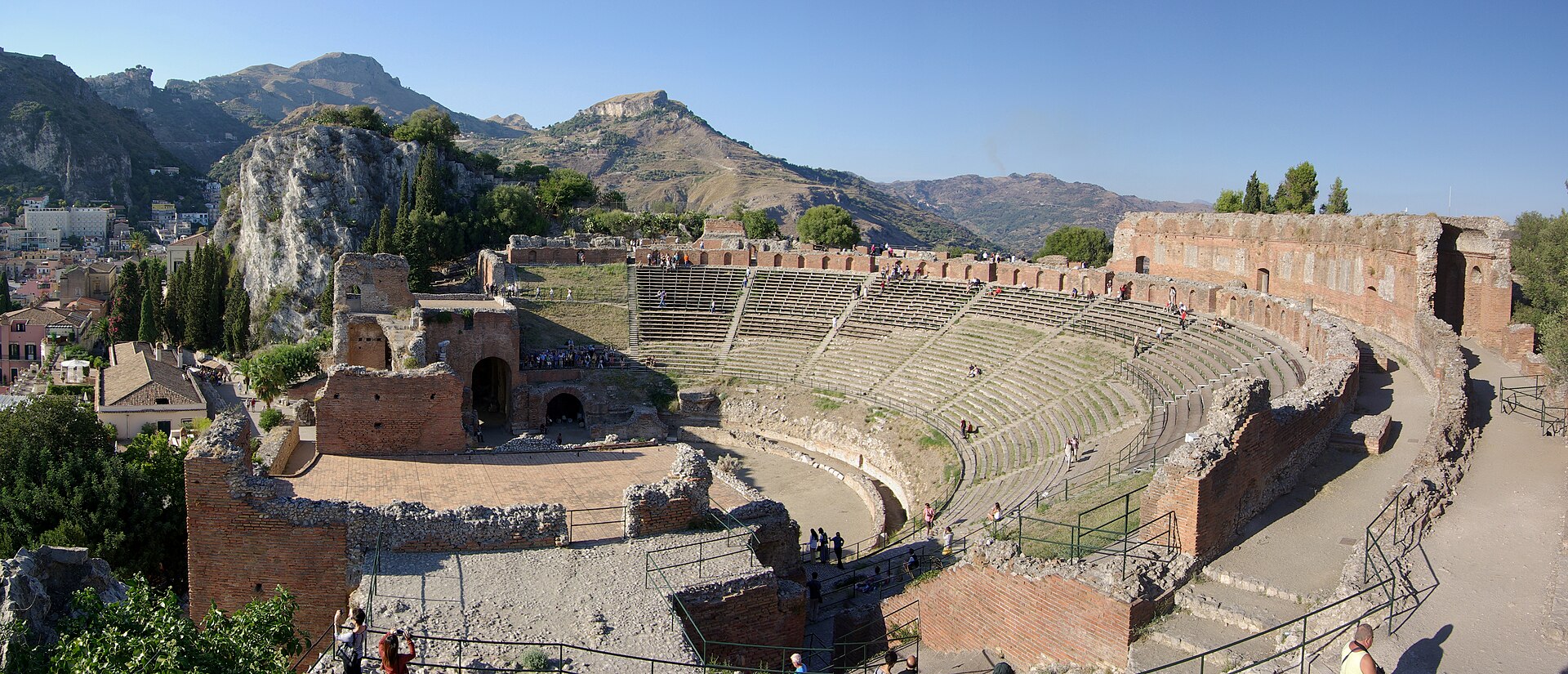
The first time I walked out onto the top row of Taormina’s ancient theatre and saw the stage framing Mount Etna with the sea folded in below, I forgot what I’d been about to say. Then a cruise group arrived, and I remembered exactly why timing matters here.
This Taormina travel guide answers the two questions everyone asks first: how long should you give Taormina, and where should you sleep? Give it two nights, three if you want a beach day or a volcano. Sleep in the old town if you’re here for the scene, the views, and dinner-with-a-drop; sleep down at Mazzarò or Giardini Naxos if you want the beach and better value. It’s the version I wish I’d packed the first time.
This is for travelers who want the most beautiful balcony in Sicily without getting fleeced or stuck in a midday crush. If you want a quiet, undiscovered corner of the island, this is not it — Taormina is gorgeous and it knows it. For the bigger picture, start with my Sicily travel guide.
Why Taormina, and who it’s for
I’ll be straight with you: Taormina is not my single favorite town in Sicily, and it’s also one I’d never tell you to skip. Both things are true.
What it does better than anywhere is the view. The town sits on a terrace of rock about 200 meters above the Ionian Sea, with Etna smoking on the horizon and the coast curling away below. Every other corner here is a postcard, and the light at the end of the day is genuinely special. Add a 2,300-year-old Greek theatre that uses the volcano as its backdrop, and you have one of the great set-pieces in the Mediterranean.
The flip side is that everyone knows this. Taormina is the most touristed town in Sicily, and since season two of The White Lotus was filmed at the San Domenico Palace here, it has only gotten busier. On a summer cruise day the main street can feel like a moving queue. Manage the timing and it’s magic; ignore the timing and it’s a hot, expensive shuffle.
Who should come: anyone who loves beauty, sunsets, and a bit of glamour; couples on a romantic few days (see my notes for Italy for couples); and travelers building an eastern Sicily loop who want one stop that’s pure scenery. If you’re after raw, gritty, full-volume Sicily, that’s Palermo’s job — read my Palermo travel guide for that side of the island.
Top sights in Taormina at a glance
Here’s how I’d triage the headline sights, with rough time needed and ticket cost. Prices and hours move around, so treat everything below as around / as of 2026 and confirm at the official desks before you build a day around them.
| Sight | Why go | Time needed | Cost (approx, 2026) |
|---|---|---|---|
| Teatro Antico (Greek Theatre) | The reason to come — ancient stone framing Etna and the sea | 60–90 min | ~€10–14 (higher during special exhibitions) |
| Corso Umberto + Piazza IX Aprile | The main passeggiata; the famous black-and-white terrace | 60–90 min strolling | Free |
| Public Gardens (Villa Comunale) | Shaded clifftop garden with sea terraces; best free escape | 30–45 min | Free |
| Isola Bella + beach | Iconic islet and pebble beach below town | Half day | ~€4 reserve entry; sun-loungers extra |
| Funivia cable car to Mazzarò | The fast, fun way down to the sea | ~3–5 min ride | ~€6 one way / ~€10 return |
| Castelmola (hilltop village) | Tiny village above town with even bigger views | Half day | Free; bus ~€2 each way |
| Belvedere di Via Pirandello | Best free viewpoint over Isola Bella | 20–30 min | Free |
| Palazzo Corvaja / Odeon | Quick history stops in the old town | 20–30 min each | Free / small fee |
If you only do one thing, make it the theatre — early. If you only have a spare hour, spend it in the Public Gardens with a sea view and no entrance fee.
Things to do in Taormina
Here are the things to do in Taormina I’d put at the top of a first visit, roughly in the order I’d tackle them.
The Ancient Greek Theatre (Teatro Antico)
This is the one. The Teatro Antico di Taormina was carved into the hillside by the Greeks around the 3rd century BC, later reworked by the Romans, and it could seat something like 5,000 spectators. But you don’t come for the seating capacity. You come because the broken arches of the old stage building frame Mount Etna on one side and the sweep of the coast on the other, so the “scenery” of the theatre is literally the volcano and the sea. I’ve seen a lot of ancient sites in Italy and this is the best-sited of all of them.
Tickets run around €10–14 as of 2026 for a standard adult entry, with reduced rates for EU citizens aged 18–25 and free entry for under-18s. Heads up: when there’s a major art exhibition installed in the theatre grounds (there was a sculpture show running into 2026), the ticket has climbed higher — toward €16 — because the exhibit is bundled in. Check the official site (the Parco Archeologico Naxos Taormina, or the Aditus ticketing portal) for the current price and any free-entry Sundays before you go.
My one real tip: go right at opening, around 9am, or in the last hour before it closes (roughly one hour before sunset). Midday is when the cruise groups and the heat both peak, and there’s almost no shade up on the terraces. Early light is softer on Etna anyway. Budget 60 to 90 minutes if you want to climb to the top rows and linger. There’s also a small free museum on the grounds.
If the theatre lights a fire in you for Greek ruins, the even bigger ancient theatre is down in Syracuse — more on that day trip below.
Corso Umberto, the gates, and Piazza IX Aprile
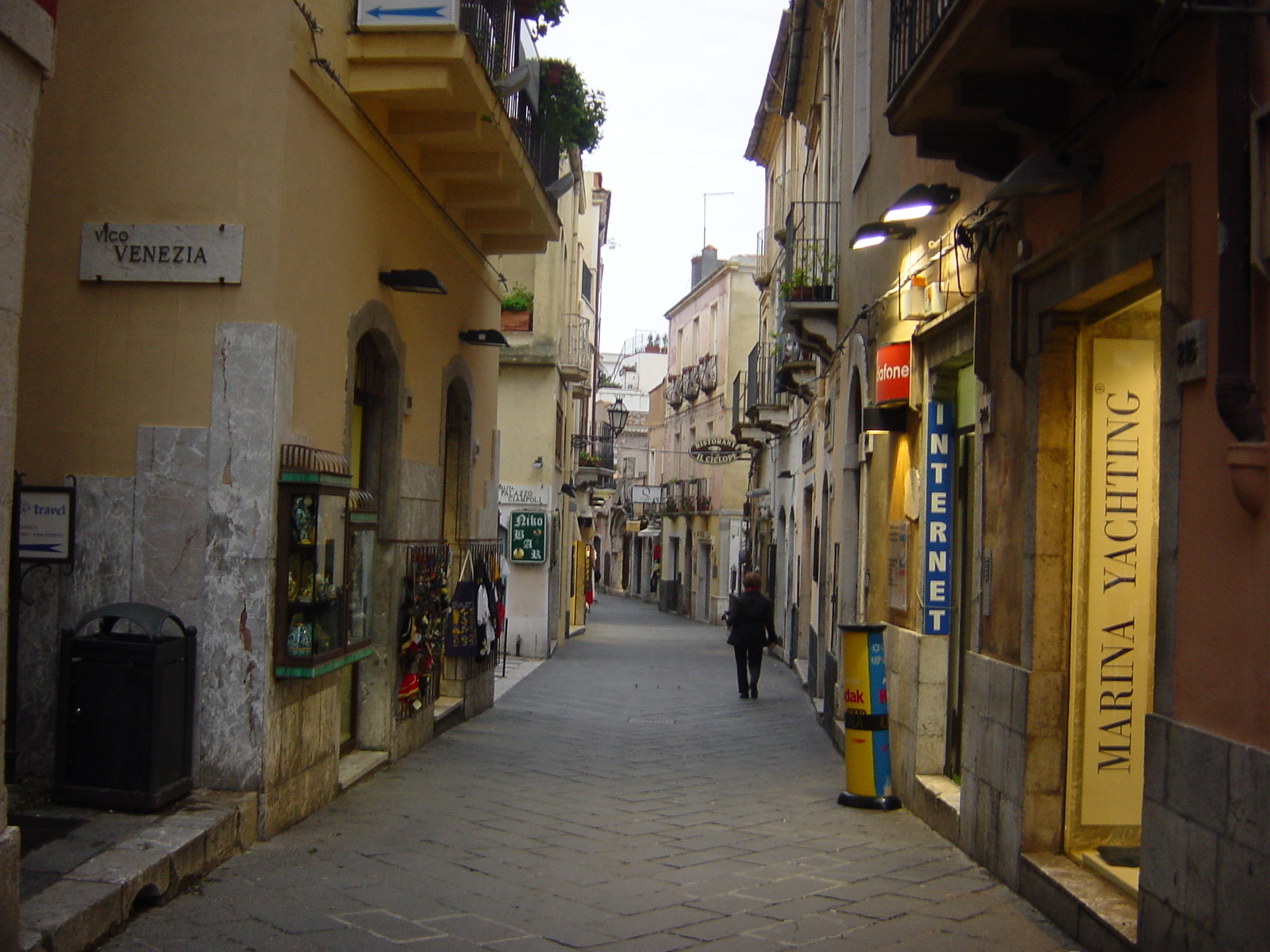
Taormina’s spine is Corso Umberto, a roughly one-kilometer pedestrian street that runs the length of the old town between its two ancient gateways: Porta Messina at the north end (nearest the bus terminal and theatre) and Porta Catania at the south. Walking it end to end is the easiest orientation you’ll get — most of what you want sits on it or just off it.
Midway along, the street opens onto Piazza IX Aprile, the famous terrace with the black-and-white checkerboard paving, the bell tower, and a balustrade that drops straight to the sea. This is the photo everyone takes, and for good reason. It’s also where buskers set up in the evening and where the whole town seems to drift for the sunset passeggiata.
The Corso is lined with boutiques, gelato counters, ceramic shops, and cafés. Be honest with yourself about the prices — this is the most expensive shopping street in Sicily, and you’re paying for the address. I treat the Corso as a place to walk, people-watch, and have one drink with a view, not a place to do serious buying. Two quick free history stops right on it: Palazzo Corvaja, a medieval palace that once housed the Sicilian parliament and now holds the tourist office, and the small Roman Odeon tucked behind a church, free to peek at.
The Public Gardens (Villa Comunale / Parco Duca di Cesarò)
If the crowds get to you — and on a busy day they will — this is my reset button. The Public Gardens, officially the Villa Comunale or Parco Duca di Cesarò, were laid out in the late 1800s by Florence Trevelyan, an Englishwoman who settled here and filled the terraces with exotic plants and odd folly-like brick pavilions she called her “beehives.”
It’s free, it’s shaded, and the terraces on the seaward side give you a clifftop view over the coast with almost none of the foot traffic of the Corso. I’d come here in the heat of the afternoon, sit on a bench under a tree, and let the midday rush pass. The entrance is a couple of minutes’ walk from the center, near the Grand Hotel Timeo. Easily the most underrated free thing in town.
Isola Bella and the beach below town
Isola Bella is the tiny island you’ll see in every Taormina photo, joined to the shore by a thin spit of pebbles that the tide covers and uncovers. It was once Florence Trevelyan’s private garden-island; today it’s a protected nature reserve managed by the region. You can walk across the pebble bar when the water’s low and pay a small entry — around €4 as of 2026 — to wander the reserve’s paths and the old villa grounds.
The beach wraps around the bay on either side of the spit. It’s pebble, not sand, so bring water shoes if your feet are tender, and it’s narrow, so in July and August it fills early. Part of the beach is free public access; the rest is run by beach clubs (lidi) that rent sun-loungers and umbrellas — expect to pay a meaningful chunk for two loungers and a parasol in high season, often more than you’d guess. It’s beautiful, but it is not a quiet, empty cove. For where I’d actually send you to swim across the island, see my best beaches in Sicily roundup — Taormina’s bay is iconic but far from the best stretch of coast on the island.
The Funivia cable car down to Mazzarò
You do not want to walk up from the beach to the old town in August. The old town sits high; the sea sits low; the road between them is a long set of switchbacks and stairs. The civilized answer is the Funivia, the little cable car (a funicular, really) that glides between Taormina center and Mazzarò on the coast.
The ride takes only a few minutes, the cars run frequently (roughly every 15 minutes, with longer evening hours in summer), and the view on the way down — straight out over Isola Bella — is half the fun. Tickets are around €6 one way or €10 return as of 2026, and you can buy single rides or multi-trip passes at the stations. From the bottom station it’s about a 5–10 minute walk to Isola Bella and the beaches. This is genuinely one of the better small pleasures in Taormina, and it saves your legs for the things worth climbing.
Belvedere di Via Pirandello, Madonna della Rocca, and the views
For the classic shot looking down on Isola Bella, the Belvedere di Via Pirandello is a free terrace on the road below Porta Messina — no ticket, just a railing and a jaw-dropping view. Go in the late afternoon when the light swings round and the islet glows.
If you’ve got energy, climb to Chiesa Madonna della Rocca, a small church built into the cliff above town, and the ruined Castello Saraceno just above it. The reward is a top-down view of the whole terrace of Taormina with the sea beyond. It’s a steep stair climb of maybe 20–40 minutes from Porta Messina (Google’s time estimate is optimistic, so allow more), best done near sunset to dodge the heat. The local IN10 bus can drop you near the church if you’d rather skip the uphill grind. I’d happily skip paying to enter the castle ruins — the view from the path up is essentially the same.
Castelmola, the village above the town
Above Taormina, perched even higher on the mountain, sits the small village of Castelmola. It’s only about 5 km up, but it feels like a different, quieter world — a handful of lanes, a ruined castle, and a piazza with a view that somehow tops Taormina’s own.
Getting there is easy. There’s a local Interbus service up from Taormina’s bus terminal that runs several times a day; the ride is short (15 minutes or so) and cheap — around €2 each way. If you’re fit and it’s not blazing hot, the old mule path, the Salita dei Saraceni (Saracen Path), climbs up from near Piazza IX Aprile; many people bus up and walk the prettier route back down. Up top, the famous (and famously cheeky) Bar Turrisi serves the local almond wine with a view, and the piazza cafés are made for a long, slow coffee. Half a day is plenty. I think Castelmola is the easiest “extra” in this whole guide and one of the more rewarding.
Day trips from Taormina
Taormina is one of the best bases in eastern Sicily because the big-ticket day trips are genuinely close. Here are the three I’d prioritize.
Mount Etna
Europe’s largest active volcano fills the horizon from town, and standing on its black lava fields is one of the most memorable things you can do in Sicily. From Taormina you can reach the main southern access (Rifugio Sapienza) by car in well under two hours, or join a guided half-day tour with hotel pickup — the easiest option if you don’t have wheels and want lava caves, craters, and an Etna wine stop folded in.
I’m keeping the volcano short here on purpose, because the deep how-to deserves its own page. For exactly which side to climb, whether to take the cable car and 4×4 up to the high craters, what to wear, and how to do it safely, see my full Catania travel guide, which handles Etna properly. (Catania itself, by the way, is the gritty, foodie counterweight to Taormina and an easy day out — about an hour by train or bus.)
Syracuse and Ortigia
If you only do one cultural day trip, I’d point you south to Syracuse (Siracusa) and its old-town island of Ortigia. Syracuse was once one of the most powerful cities of the ancient Greek world, and its Neapolis archaeological park holds a Greek theatre even larger than Taormina’s, plus the dramatic “Ear of Dionysius” cave. Then Ortigia — the honey-colored island center, with its Baroque Duomo built into a Greek temple, the Arethusa spring, and a seafood market — is one of the loveliest places to wander in all of Sicily.
It’s roughly 90 minutes each way by car. Without a car it’s doable by train or as a guided tour. Go early; give yourself the full day. It’s a real journey and worth every minute.
The Godfather villages: Savoca and Forza d’Agrò
This one’s pure fun. The Sicily scenes of The Godfather — Michael’s exile, the meeting with Apollonia’s father, the wedding — were filmed not in Corleone but in two small hill villages north of Taormina: Savoca and Forza d’Agrò. In Savoca you can sit at Bar Vitelli, preserved much as it appears in the film, order a granita (a few euros), and look at the old photos on the walls; the nearby church served as the wedding location.
You really need a car or a tour for this, since public transport up to the villages is thin. A typical half-day Godfather tour from Taormina runs about four hours — short drives between the villages, time to walk each one, a granita stop — and it’s a lovely, low-key morning even if you only half-remember the movie. One note of respect: the mafia is entertainment on screen, but it’s a real and painful history for many Sicilians, so read the room.
If you’d rather build these into a longer route than day-trip them, my Sicily itinerary shows how Taormina threads into the rest of the island, and the best things to do in Sicily covers the wider menu.
Where to stay Taormina
The big lodging decision in Taormina is simple: up top in the old town, or down by the sea? Here’s how I think about it, because the right answer depends entirely on the trip you want.
| Area | Vibe | Price feel | Best for |
|---|---|---|---|
| Taormina old town (centro) | Glamour, views, evening scene, walk to everything | $$$–$$$$ | Couples, first-timers, sunset-chasers, no car |
| Mazzarò (below town) | Quiet seafront, beach access, cable car up | $$$ | Beach days with quick access to the old town |
| Giardini Naxos | Relaxed beach resort, longer beach, value | $$–$$$ | Families, budget, swimmers who don’t mind a bus |
| Up the hill / steep lanes | Great views, cheaper rates | $$ | Travelers fine with daily uphill walks |
Old town (Taormina centro). This is where I’d stay for a first visit if the budget stretches. You’re steps from the Corso, the theatre, and the sunset terrace, and the town transforms after the day-trippers leave — the lanes empty out and it feels almost exclusive in the evening. The catch is price (Taormina is Sicily’s most expensive town to sleep in) and hills: some lovely small hotels sit up steep, stepped lanes, so check exactly where a place is and whether it offers luggage help. This is also where the splurge icons live, like the San Domenico Palace, the White Lotus hotel.
Mazzarò. Right on the water below town, this is the move if you want to swim daily but still pop up to the old town easily — the cable car does the climbing for you in a few minutes. It’s calmer and more resort-like than the center, with some serious seafront hotels. Slightly better value than the very top, and my pick for a beach-leaning couple’s stay.
Giardini Naxos. Just south along the coast, this is a proper, flatter beach town with a long stretch of sand-and-pebble shore, its own restaurants and nightlife, and noticeably cheaper rooms. It’s the value and family option. The trade-off is that you’re a bus or short taxi ride from Taormina’s old town rather than walking distance. If keeping costs down matters, this is where I’d look first. For how this slots into the island as a whole, see my guide to where to stay in Sicily.
Whatever you pick, book early. Taormina sells out in summer, prices spike, and the best-located old-town rooms go first.
Where and what to eat
Taormina eats well, but the Corso is where you’ll most easily overpay for a mediocre, view-priced meal. A little intention goes a long way.
Start your day the Sicilian way with granita and brioche — a soft, slushy fruit or coffee ice you scoop with a sweet bun, eaten for breakfast. The town’s most famous spot is BamBar, where people queue for the silky granita; caffè con panna (coffee with cream), mandorla (almond), and gelso (mulberry) are the flavors I’d reach for. Yes, it’s touristy; the granita is still very good.
For meals, look for the local classics: arancini (fried stuffed rice balls), caponata (sweet-sour eggplant), pasta alla Norma (tomato, fried eggplant, salted ricotta) which is the signature pasta of eastern Sicily, and fresh fish and swordfish (pesce spada). Step one street off the Corso and prices drop while quality often rises. A few small trattorias near Porta Catania and in the quieter lanes do honest Sicilian cooking; I’d rather eat there than at the headline terraces. For the wider food rundown across the island, see my Sicily food guide.
One opinion: have your one big view-meal or aperitivo on purpose — a terrace drink at sunset is worth it once — and eat your real dinners in the back lanes.
When to go, and how bad the crowds get
Let me be candid about timing, because it makes or breaks Taormina more than any sight.
High summer (July–August) is hot, expensive, and crowded. Cruise ships dock at Messina and Catania and funnel day groups into Taormina; on those days the Corso and the theatre genuinely clog up between roughly 10am and 4pm. The town is still beautiful, but you’ll be sharing it with thousands.
Shoulder season is the sweet spot. I’d aim for May, June, late September, or early October. The sea is swimmable from roughly late May into October, the weather is lovely, almost everything is open, and the prices and crowds ease off the summer peak — late September can knock a real chunk off hotel rates. For the broader month-by-month picture, see my notes on the best time to visit Italy.
Winter (November–March) is the quiet, cheap, slightly shuttered version. Taormina runs on summer tourism, so a number of hotels, restaurants, and shops close down off-season. You’ll have the views nearly to yourself, but less will be open. If you want winter Sicily with a pulse, base in Catania or Palermo instead.
Two crowd tricks that always work: do the headline sights early (theatre at opening, Corso before 10am), and use the lunch hours for shade and the gardens while the groups are at their peak. By the time the cruise crowd leaves in the late afternoon, the town is yours.
Getting there and getting around
From Catania airport (CTA). This is the gateway — most visitors fly into Catania Fontanarossa. The simplest no-car option is the direct Interbus / Etna Trasporti coach from outside the arrivals hall straight to Taormina’s bus terminal. It runs roughly hourly through the day, costs around €7–8 as of 2026, and takes about 70–90 minutes depending on traffic. Buy from the counter inside the airport, online at interbus.it, or sometimes from the driver. A taxi or private transfer is faster and far pricier; a rental car gives you Etna and the Godfather villages on your own schedule but means parking headaches in a town built for pedestrians.
By train. Trains run along the coast to Taormina–Giardini station, which sits down at sea level, well below the old town. From Catania the ride is roughly 40–60 minutes and cheap. The catch is the climb from the station up to the center: drag your bags up and you’ll regret it. Instead, take the local Interbus shuttle that winds up the switchbacks from the station to the town — it’s around €1.50 and runs every 20–30 minutes or so — or grab a taxi for the short, steep hop.
Getting around town. The old town is pedestrian and compact; you’ll walk everywhere on the flat-ish Corso and stairs to the viewpoints. The cable car handles the old-town-to-sea trip. Local Interbus services connect you up to Castelmola and along the coast to Giardini Naxos. You really don’t need (or want) a car inside Taormina itself.
If the logistics of doing Sicily without driving worry you, Taormina is one of the most car-free-friendly bases on the island — I cover the wider approach in getting around Sicily without a car. And for arrival logistics across the country, my Italy airports guide has the gateway details.
A 2-day Taormina plan
This is roughly how I’d spend two nights here, balancing the must-sees against the crowds.
Day 1 — the old town. Be at the Greek Theatre when it opens at 9am, before the heat and groups. Afterward, walk the length of Corso Umberto from Porta Messina to Porta Catania, pausing at Piazza IX Aprile and ducking into Palazzo Corvaja and the Odeon. Granita break at BamBar. Spend the hot afternoon in the Public Gardens in the shade. Late afternoon, ride the cable car down to Mazzarò for a swim and a look at Isola Bella from the Belvedere on the way. Back up for sunset at Piazza IX Aprile, an aperitivo with a view, then dinner in a back lane off the Corso.
Day 2 — go higher or go out. Two good options. Either bus up to Castelmola in the morning for the bigger view and an almond wine, walk the Saracen Path back down, and spend the afternoon at the beach or the gardens. Or take a day trip — Etna with a guided tour, Syracuse and Ortigia by train, or the Godfather villages of Savoca and Forza d’Agrò by tour. Either way, end with one more sunset; you’ll have earned it.
With a third night, add a full beach day at Mazzarò or Giardini Naxos, or the day trip you didn’t do on Day 2. For a longer Italy build, see my Italy itineraries for how Sicily fits a bigger trip.
Final thoughts on this Taormina travel guide
Taormina rewards the traveler who plans around its rhythms instead of fighting them. Hit the theatre at dawn, hide in the gardens at noon, ride the cable car for a swim, and own the streets at sunset once the day-trippers have gone. Do that, and Sicily’s most famous balcony lives up to every photo. For the rest of the island — the volcano, the markets, the beaches, the long routes — keep going with my Sicily travel guide and things to do in Sicily. Buon viaggio.
Questions travellers ask
Is Taormina worth visiting?
Yes — with a caveat about timing. The setting (ancient theatre, Etna, sea) is one of the most beautiful in Italy, and the old town is a genuine pleasure to wander in the evening. It’s also crowded and pricey at midday in summer. Visit early, stay over so you get the quiet evenings, and it’s absolutely worth it.
How many days do you need in Taormina?
Two nights is the sweet spot: one day for the old town and its sights, one for Castelmola or a day trip. A single day works if you’re passing through and just want the theatre, the Corso, and a sunset. Add a third night if you want a proper beach day or a relaxed Etna or Syracuse excursion without rushing.
Is it better to stay in Taormina or Giardini Naxos?
Depends on your trip. Stay in Taormina old town for the views, the scene, and walking to everything — at a higher price. Stay in Giardini Naxos for a longer beach, a relaxed resort feel, and noticeably cheaper rooms, accepting a short bus or taxi up to the old town. Families and budget travelers usually prefer Giardini; couples and first-timers often splurge on the old town.
Does Taormina have a beach?
Yes, but it’s down below the town, not in it. The main beach is at Isola Bella and the Mazzarò bay, reached by the cable car or a steep walk. Beaches here are pebble (bring water shoes) and narrow, and they fill up in summer; part is free, part is run by beach clubs that charge for loungers. Lovely to look at; not the island’s best swimming.
How do you get from Catania airport to Taormina?
The easy way is the direct Interbus / Etna Trasporti coach from the airport to Taormina’s bus terminal — roughly hourly, around €7–8, taking about 70–90 minutes. You can also train via Taormina–Giardini station (then a local shuttle or taxi up the hill), take a taxi or private transfer, or rent a car. Check interbus.it for current coach times.
Is the Greek Theatre ticket worth it?
For most people, yes — it’s the single best thing in town, and the view of Etna through the ancient stone is unique. Expect around €10–14 as of 2026 (more when a special exhibition is installed), with discounts for EU under-26s and free entry for under-18s. Go at opening to enjoy it before the crowds and heat arrive.
Do you need a car in Taormina?
Not for Taormina itself — the old town is pedestrian, the cable car handles the beach run, and buses reach Castelmola and Giardini Naxos. A car only pays off if you want to self-drive day trips to Etna, Syracuse, or the Godfather villages on your own schedule, and even then, sort out parking before you arrive since the town isn’t built for cars.
When is the best time to visit Taormina?
Aim for the shoulder season — May, June, late September, or early October — for warm weather, swimmable sea, open businesses, and fewer crowds than the July–August peak. Avoid midday on summer cruise days if you can. Winter is quiet and cheap but many places close, so it suits view-seekers more than first-timers.