Sicily Without a Car: What Works and What Does Not
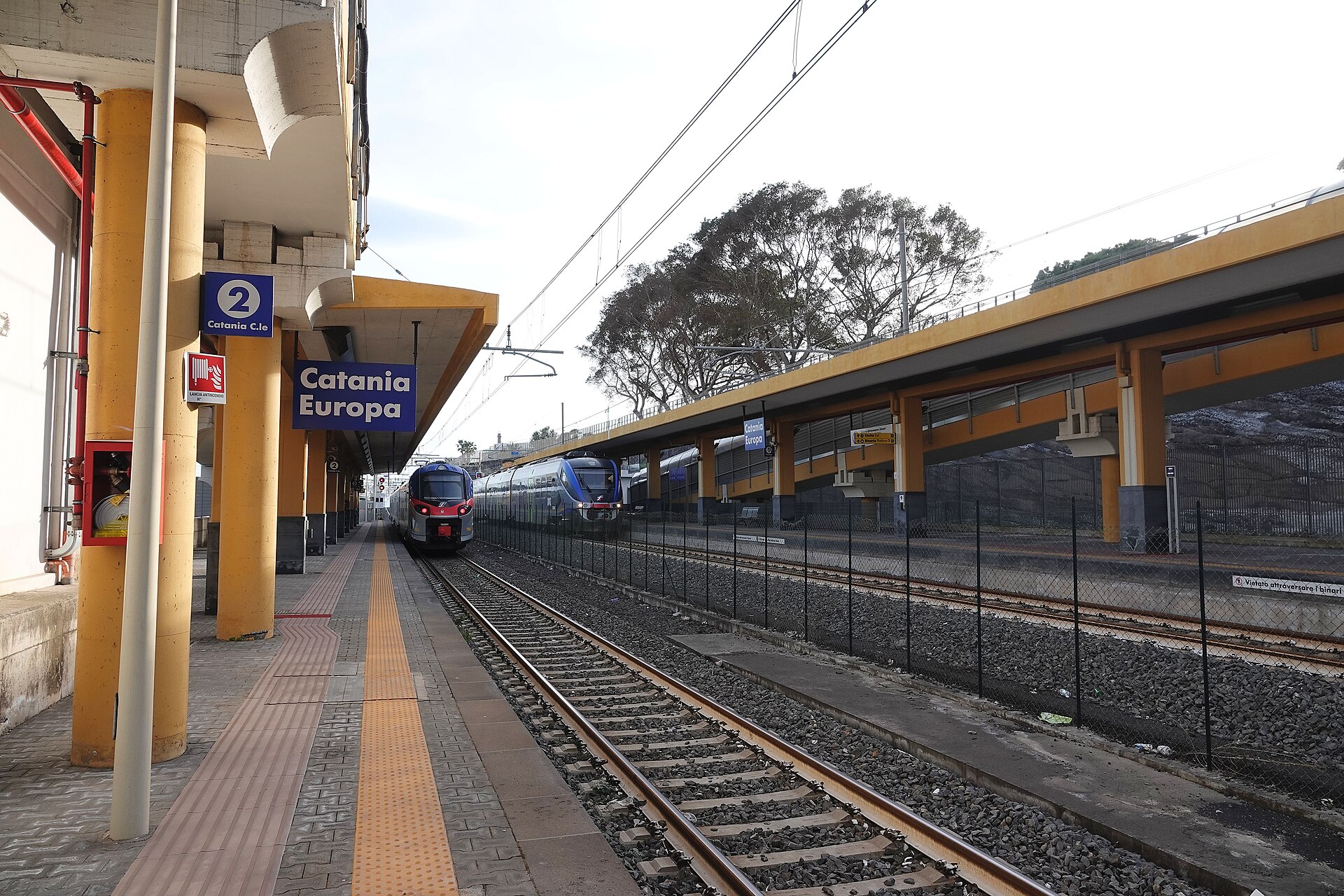
The first time I planned Sicily, every forum told me to rent a car or give up. So I didn’t, and I came back with a different answer.
Sicily without a car works beautifully if you stay on the main triangle — Palermo, Catania, Syracuse, Taormina, Cefalù, Agrigento, plus Etna and an island day trip. You’ll use trains and buses, lean on buses more than you’d expect, and skip the scattered west-coast beaches and the awkward Baroque-town hopping. Plan around that and it’s a great trip.
This is for the traveler who likes cities, ruins, food, and a sea view from a train window, and who would rather read a book on a bus than parallel-park a Fiat Panda on a Sicilian hill town at dusk. If your dream Sicily is empty coves you reach down a dirt track, be honest with yourself — that version needs wheels. Most people’s doesn’t.
I’ll be candid about where the system shines and where it quietly falls apart, because page one of Google mostly won’t tell you. Here’s the honest map of it.
The quick answer: what works car-free, at a glance
Before the detail, here’s the shape of it. “Works” means I’d do it on public transport without a second thought. “Yes-ish” means it works but needs planning, patience, or a tour. “No” means rent a car or hire a driver for that bit.
| Route / sight | Best mode | Rough time | Works car-free? |
|---|---|---|---|
| Palermo ↔ Catania | Intercity bus (SAIS) | ~2h40 | Yes |
| Palermo ↔ Cefalù | Train (regional) | ~45–55 min | Yes |
| Palermo ↔ Agrigento | Bus (or train) | ~2h–2h30 | Yes |
| Catania ↔ Syracuse | Train or bus | ~1h15–1h30 | Yes |
| Catania ↔ Taormina | Train or Interbus | ~50 min–1h15 | Yes |
| Taormina town (from station) | Local bus up the hill | ~10–15 min | Yes |
| Valley of the Temples | Agrigento city bus | ~20 min | Yes |
| Mount Etna (Rifugio Sapienza) | AST bus or tour | ~2h each way | Yes-ish |
| Aeolian Islands (day trip) | Ferry/hydrofoil from Milazzo | varies | Yes-ish |
| Val di Noto (Noto–Modica–Ragusa hop) | Train/bus, sparse | slow, awkward | No-ish |
| San Vito Lo Capo & west beaches | Seasonal bus only | limited | No (mostly) |
| Zingaro / Vendicari reserves | None practical | — | No |
Notice the pattern already: the spine of Sicily — the north and east coast plus Agrigento — is genuinely easy. The trouble starts when you leave it.
Is it easy to get around Sicily without a car?
Yes, on the main routes. No, the moment you go rural. That’s the whole truth in two sentences, and most guides bury it.
Here’s the thing page one underplays: the train, the thing everyone reaches for first, is often not your best tool in Sicily. The network is scenic and cheap and the new Trenitalia regional trains are clean and air-conditioned. But it’s slow, single-track in long stretches, and infrequent on some lines. For several key trips, an intercity bus is faster, runs more often, and costs about the same.
So the real skill isn’t “trains vs car.” It’s knowing, route by route, whether you want the train, the bus, or a ferry — and accepting that you’ll mix all three. I’ll go mode by mode.
If you want the bigger-picture overview of the island first, the Sicily travel guide sets up the regions, and the Sicily itinerary page has route-by-route day plans you can adapt to a car-free version of any of them.
Sicily by train: scenic, cheap, slower than you think
Let me give the train its due, because the ride is half the reason to do this.
Sicilian regional trains are run by Trenitalia, the same network as the rest of trains in Italy. Over the last few years the fleet got a real upgrade — newer carriages, air conditioning, more comfort than the island’s reputation suggests. Tickets are genuinely cheap by Northern European standards. And the coastal lines are lovely: you ride with the sea on one side and, on the east coast, Etna looming on the other.
The lines that actually work car-free:
Palermo–Cefalù. The easy win. Fast regional trains do it in roughly 45 to 55 minutes, frequently, all day. Cefalù station is a short walk from the old town and the beach. This is the single best train day trip in Sicily, no caveats. More on the town itself in the things to do in Sicily roundup.
Palermo–Agrigento. Trains run this inland route in around two hours, sometimes a touch more. It’s not frequent — check times carefully — and buses are often the better call here (more below). But the train exists and works.
The east coast: Messina–Taormina/Giardini–Catania–Syracuse. This is the scenic spine. Coming down from the mainland, your train is literally loaded onto a ferry across the Strait of Messina, which is one of the last places in Europe that still happens. From Messina the line hugs the coast south past Taormina-Giardini, into Catania, and on to Syracuse. Catania to Syracuse takes around 75 to 90 minutes; Catania to Taormina-Giardini around 50 minutes to an hour and a quarter depending on the train.
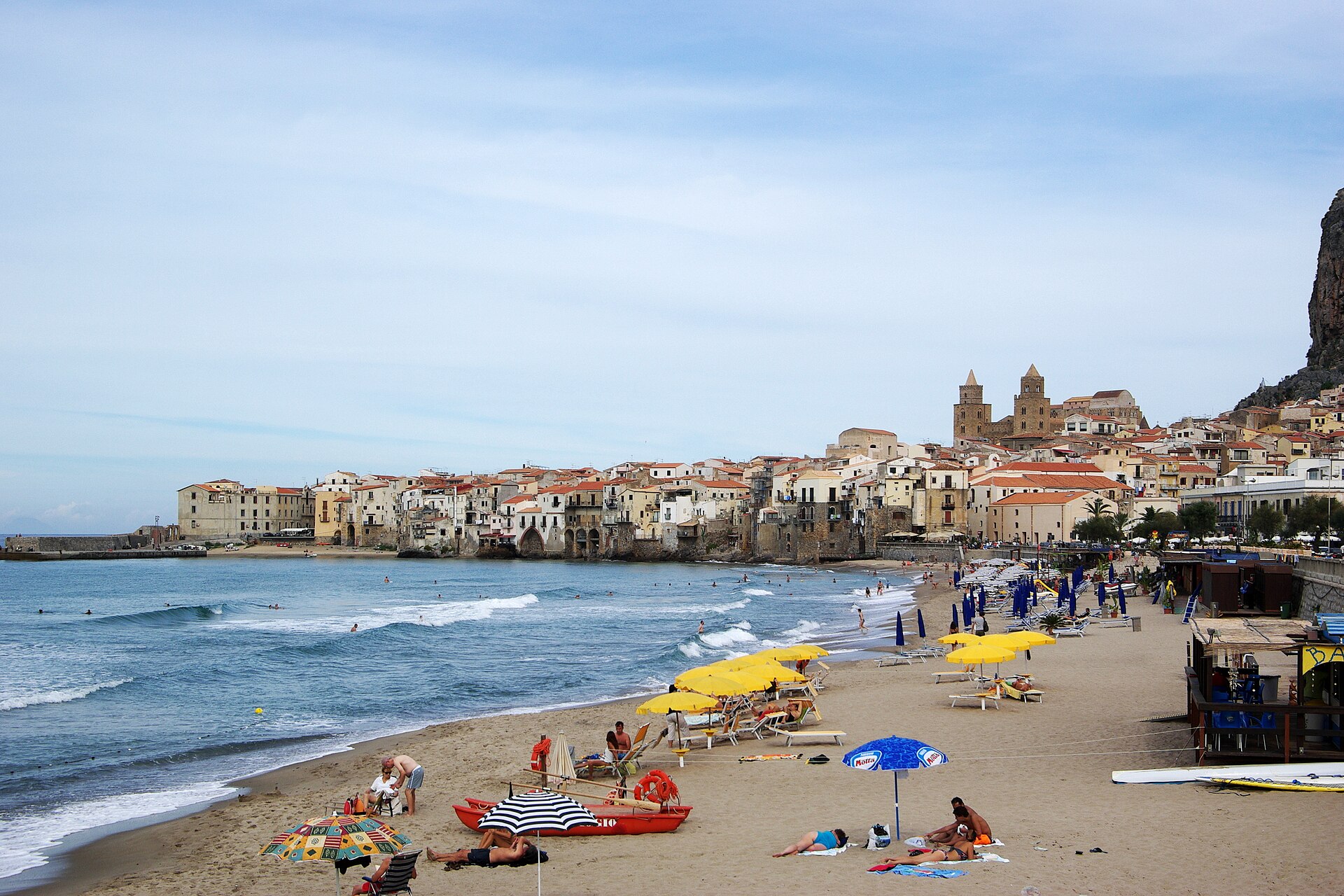
Now the honesty. The network is single-track in places, which means trains wait for each other and delays compound. Frequency drops off sharply in the afternoon and evening on some routes — I’ve seen a “last useful train” leave a place at 3 p.m., which is no good if you wanted a sunset and dinner. And a few station locations are inconvenient (Taormina’s is at sea level, far below the town — I’ll deal with that).
Trenitalia sells regional promo passes that can be worth it if you’re moving a lot: a 3-day regional pass and a 5-day version (priced around €29 and €49 respectively as of 2026, second class only). If you’re city-hopping the spine, do the math against individual fares. For background on how Italian rail pricing works, see Italy train prices.
One rule that trips up first-timers: on regional tickets with an open date, you must validate before boarding — stamp it in the green-and-white machine on the platform, or buy a digital ticket through the Trenitalia app, which is already validated for the train you pick. Skip that and an inspector can fine you even with a valid ticket in hand.
Sicily by bus: the part most guides get wrong
Here’s the heading I wish someone had shouted at me three years ago: in Sicily, the bus often beats the train.
The classic example is Palermo–Catania, the two biggest cities. The train winds inland and takes well over three hours with limited departures. The direct intercity bus runs it in around 2 hours 40 minutes, costs roughly the same or less (often in the low teens of euros as of 2026), and — this is the kicker — there are dozens of departures a day versus a handful of trains. For that route, taking the train is almost a mistake.
So who runs the buses? This is the genuinely confusing bit, and it’s where you need this page. There isn’t one bus company. There are several, each owning different routes:
- SAIS Autolinee — long-distance intercity, the workhorse for big city-to-city runs like Palermo–Catania and Palermo–Messina. Over a century in business.
- AST (Azienda Siciliana Trasporti) — the regional public operator, with both city and intercity lines reaching smaller towns. This is also your Etna bus (below).
- Interbus / Etna Trasporti — strong on east-coast tourist routes: Catania airport, Taormina, Syracuse, Noto.
- Flixbus — the green coaches now cover several major Sicilian intercity routes too, often bookable in advance on the app.
The practical consequence: for any given A-to-B, you may need to check two or three different operators’ timetables to find the best departure, because no single site shows them all cleanly. Aggregators like Omio or Rome2Rio are useful for a first look, but I confirm times on the actual operator’s site before I rely on them. Buses are cheap — many intercity hops sit somewhere between about €5 and €15 as of 2026 — and you usually buy at the bus station ticket window, on the operator’s app, or sometimes from the driver. Where city bus stations and train stations sit apart (Syracuse, for one), give yourself buffer time to walk between them.
For the wider context of how buses, trains, and transfers fit together across the country, the Italy transportation overview is the companion to this page.
City transport and reaching the big sights car-free
The cities themselves are the easy part. Palermo, Catania, and Syracuse all have compact, walkable historic centers where a car is a liability, not an asset. You’ll walk almost everywhere and take the occasional city bus or taxi. Dig into each in the Palermo travel guide, the Catania travel guide, and the Ortigia sections of the broader guides.
The sights that look like they’d need a car but don’t:
Valley of the Temples, Agrigento. You don’t need a car for one of the greatest Greek archaeological sites anywhere. Get to Agrigento city by bus or train, then take the local city bus (or a short taxi) down to the temples. It’s a 15-to-20-minute ride from the center. Easy.
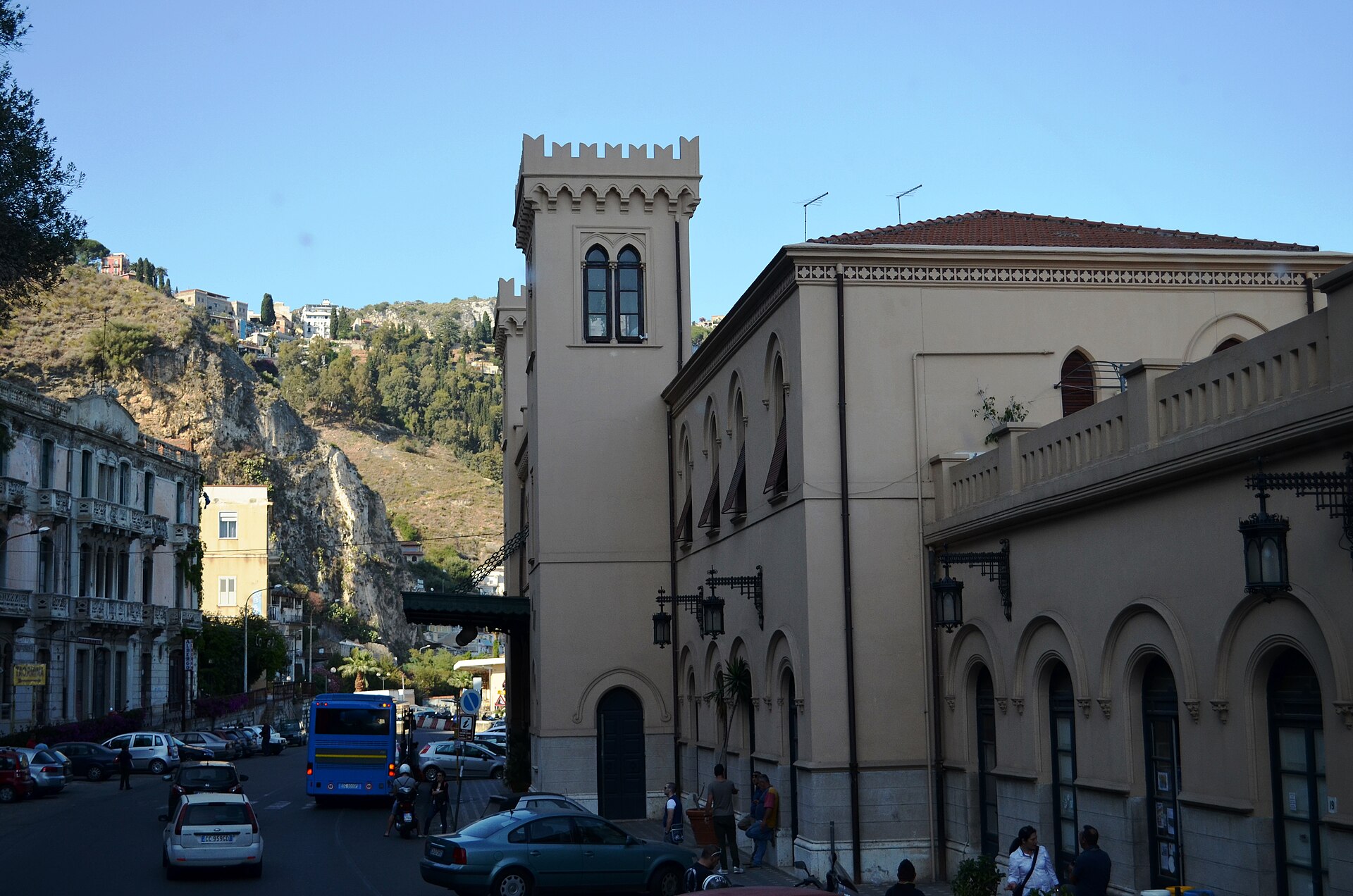
Taormina. The trick everyone needs to know: the train station is “Taormina-Giardini,” down at sea level by Giardini Naxos, not up in Taormina itself. From the station you take a local bus (Interbus) up the switchbacks to the town in 10 to 15 minutes, or a taxi. So Taormina is fully reachable car-free — you just arrive at the bottom and ride up. The full picture is in the Taormina travel guide.
Mount Etna. Yes, you can do Etna without a car — with an asterisk. AST runs one public bus a day from Catania up to Rifugio Sapienza, the gateway at around 1,900 meters where the cable car and summit jeeps start. It leaves Catania’s Piazza Papa Giovanni XXIII (across from Catania Centrale) in the morning, around 8:15 a.m., pauses in the town of Nicolosi, and reaches Sapienza roughly two hours later. The return bus leaves Sapienza in the late afternoon, around 4:30 p.m. The round trip is cheap — on the order of €6 to €7 as of 2026 — but it ties your whole day to that single schedule, and by the time you arrive, the earliest guided summit walks have already set off. In peak summer the bus fills, so queue early.
My honest take: the AST bus is great if you want to explore the lower craters and the cable-car area independently. But for most car-free travelers, an organized Etna tour from Catania or Taormina is the better move — door-to-door pickup, a guide, and timing that actually fits the summit excursions. I usually steer people to a tour for Etna and save the public bus for confident independent hikers.
Ferries and hydrofoils: the islands you can still reach
Car-free doesn’t mean island-free. Some of Sicily’s best day trips and overnights are the offshore islands, and you reach them by boat, not road — so not having a car is no handicap at all.
- Aeolian Islands (Lipari, Vulcano, Stromboli, Salina and more) — hydrofoils and ferries run from Milazzo, on the north coast east of Cefalù. You can reach Milazzo by bus/train, then sail. Doable as a long day trip to one island, better as an overnight.
- Egadi Islands (Favignana, Levanzo) — quick hydrofoils from Trapani in the west.
- Ustica — a single volcanic island reached by ferry/hydrofoil from Palermo, beloved by divers.
Boats are seasonal in frequency and weather-dependent, so build slack into the plan and don’t schedule a flight home the same evening you’re returning from an island. For how ferries work logistically across the country, see the Italy ferries guide.
What does NOT work car-free in Sicily
This is the section page one keeps quiet about, and it’s the most useful thing I can tell you. Knowing what to skip is how you build a car-free trip that doesn’t fall apart.
The west-coast beaches, especially San Vito Lo Capo. That postcard crescent of white sand and turquoise water? Connections are seasonal and thin. In high summer there are some direct buses from Palermo and Trapani; outside the season, getting there car-free ranges from painful to impossible. If beaches are your priority, read the best beaches in Sicily guide with a transport eye, and accept that the easiest car-free swims are at Cefalù, Mondello (near Palermo), and the beaches near Taormina/Giardini Naxos.
Hopping the Val di Noto Baroque towns — Noto, Modica, Ragusa. Individually, Noto is reachable from Syracuse/Catania by Interbus, and there’s a slow scenic train through the area. But chaining Noto, Modica, and Ragusa in a day or two on public transport is genuinely awkward: connections are sparse, slow, and badly timed, and you’ll spend more of the day waiting than sightseeing. This is the one region where I tell car-free travelers to either base in Syracuse and do Noto only, or hire a driver for a single Baroque-towns day. Don’t try to brute-force it with buses.
Nature reserves like Zingaro and Vendicari. The Zingaro reserve on the northwest coast and Vendicari near Noto are spectacular and essentially have no useful public transport to the trailheads. These need a car, a taxi, or a tour, full stop.
Scattered rural beaches and inland hill towns off the rail line. Anything that isn’t on the coastal spine or a named bus route gets hard fast. Piazza Armerina’s famous Roman mosaics, for instance, are a real schlep without wheels.
None of this should scare you off. It should just shape your route. Build the trip around the spine and the reachable sights, add Etna and one island by tour or ferry, and let the rest go. If you genuinely want the reserves and west-coast coves, the honest answer is to rent for a few days — and the driving in Italy guide will prep you for Sicilian roads, which are an experience.
Where to stay so you barely notice the missing car
Car-free travel lives and dies on basing yourself well. The rule: stay in the walkable historic center, near the station or bus hub, so every arrival and departure is a short roll of your suitcase, not a taxi saga.
- Palermo — base near the center/Politeama or Quattro Canti; the train station anchors the south of the old town.
- Catania — stay around Via Etnea / the Duomo; Catania Centrale and the Etna and intercity buses are all close.
- Syracuse — sleep on Ortigia, the island old town, and use the free/cheap shuttle bus that links the station, bus terminal, and Ortigia.
- Taormina — base in the town itself (you’ll arrive via the station-plus-bus combo), not down by the station.
The where to stay in Sicily guide breaks down neighborhoods; just bias every choice toward “near the station, in the walkable core.”
A sample 8–10 day Sicily itinerary without a car
Here’s a real car-free route that chains trains, buses, and a ferry, built around the spine. Fly into Palermo and out of Catania (or reverse) so you never backtrack. Adapt freely — and for more route templates, the Italy itineraries hub has additional shapes.
Days 1–3: Palermo. Settle into the old town. Day-trip to Cefalù by train (45–55 min) — cathedral, old town, a swim. Optionally a half-day to Monreale by city bus. Markets, street food, churches.
Day 4: Palermo → Agrigento. Bus or train down (~2–2h30). Afternoon and evening at the Valley of the Temples via the city bus — go late for golden light and fewer crowds. Overnight in Agrigento.
Day 5: Agrigento → Catania. Cross-island by bus (this is bus country, not train country). Arrive Catania, settle in around Via Etnea, evening fish market aperitivo.
Day 6: Mount Etna. Either the AST public bus from Catania for independent exploring, or — my pick — an organized Etna tour with pickup. Back in Catania for the night.
Day 7: Catania → Taormina. Short hop by Interbus or train to Taormina-Giardini, then the local bus up the hill. Greek theater, the views, a long lunch. Stay up in town two nights.
Day 8: Taormina + a beach or island taste. Beach day at Giardini Naxos/Isola Bella, or a long day trip toward the Aeolians if timing allows (tighter from here — easier if you slot a Milazzo overnight).
Days 9–10: Taormina → Syracuse. Train/bus down to Syracuse; base on Ortigia. Wander the island old town, the Duomo, the sea. Day-trip to Noto by Interbus for the Baroque. Fly out of Catania (easy bus/train connection from Syracuse).
That’s roughly 9 days, all on public transport, hitting Palermo, Cefalù, Agrigento, Catania, Etna, Taormina, an island taste, Syracuse, and Noto — without once touching a steering wheel. Add or trim a night anywhere.
Tickets, fares, and the reality of strikes
A few practical truths to internalize before you go.
Where to buy. Trains: the Trenitalia app or website, or station machines/windows — the app gives you pre-validated digital tickets, which I prefer. Buses: the operator’s own site/app (SAIS, AST, Interbus, Flixbus), the bus station window, or sometimes the driver. Aggregators are fine for comparing, but I confirm on the operator.
Validate regional train tickets. Worth repeating because it’s the most common tourist fine in Italy: a paper regional ticket with an open date must be stamped in the platform machine before you board. App tickets bought for a specific train are already validated.
Fares, hedged honestly. As of 2026, expect regional train hops on the spine to run roughly €5–€14, intercity buses similar (Palermo–Catania often in the low-teens of euros), the Etna AST round trip around €6–€7, and the Trenitalia regional passes around €29 (3-day) and €49 (5-day). Treat all of these as ballpark — prices drift, and I’d rather you arrive expecting a range than quote you a false exact number.
Strikes. Italy has periodic transport strikes (scioperi), and Sicily is no exception. They’re usually announced in advance, often run for a defined window with guaranteed minimum-service hours, and can hit trains and buses alike. Don’t panic about them, but do build a little slack into travel days and avoid scheduling a strike-day journey to catch a flight. For how to check dates and work around them, see the practical advice in things worth knowing before you go.
And the meta-rule from the trenches: leave buffers. If you’re connecting between two different bus companies, or making a ferry or a flight, give yourself 30 to 60 minutes of cushion. Bring a book and some patience. Sometimes everything runs like clockwork; sometimes it doesn’t, and a relaxed buffer is the difference between a funny story and a missed plane.
Final thoughts
Sicily without a car is not a compromise — it’s a specific, satisfying way to travel the island, as long as you build the trip around what the trains, buses, and ferries actually do well. Ride the scenic coast, take the bus when it beats the train, base in the walkable old towns, and let the rural fringes go (or rent for a few days if you can’t). Bring patience and a book. The system has its moods, but the spine of Sicily is genuinely yours without a car — and that spine holds most of the best of the island.
For the bigger picture before you book, start with the Italy travel guide and the timing advice in best time to visit Italy, then come back here to build the route.
Questions travellers ask
Is it easy to get around Sicily without a car?
On the main routes, yes — Palermo, Catania, Syracuse, Taormina, Cefalù, and Agrigento are all well connected by train and bus, and the cities are walkable. It gets hard the moment you want rural beaches, nature reserves, or to chain the Baroque hill towns. Plan around the coastal spine and it’s genuinely easy.
Is the train good in Sicily?
It’s scenic, cheap, and the new regional trains are comfortable — but it’s slow, single-track in places, and infrequent on some lines. Great for Palermo–Cefalù and the east coast. For several routes, notably Palermo–Catania, an intercity bus is faster and runs far more often. Use the train where it shines, not by default.
Bus or train in Sicily?
Depends on the route, and this is the key insight. For Palermo–Catania and most cross-island trips, the bus wins on speed and frequency. For Palermo–Cefalù and short east-coast hops, the train is perfect. The honest approach is to check both for each leg — you’ll end up mixing them, often using several different bus operators along the way.
Can you visit Etna without a car?
Yes. AST runs one daily public bus from Catania to Rifugio Sapienza (departing around 8:15 a.m., back mid-afternoon, roughly €6–€7 round trip as of 2026), which is fine for independent exploring of the lower craters and cable-car area. For most travelers, though, an organized Etna tour with pickup fits the summit excursions better and is my usual recommendation.
Which parts of Sicily do you really need a car for?
The west-coast beaches like San Vito Lo Capo (seasonal connections only), the Zingaro and Vendicari nature reserves, scattered rural beaches, and efficiently chaining the Val di Noto towns of Noto, Modica, and Ragusa. For those, rent for a few days, hire a driver, or take a tour rather than fighting sparse timetables.
How do I get from Taormina station to the town?
Taormina-Giardini station sits at sea level, well below the town. From outside the station, take the local Interbus shuttle up the switchbacks (about 10–15 minutes) or a taxi. Buy the bus ticket at the kiosk or from the driver. So Taormina is fully car-free — you just arrive at the bottom and ride up the hill.
Are Sicily’s trains and buses reliable, or do they run late?
Mostly they run, but delays happen and timetables are best treated as a guide, not a guarantee — single-track lines and multiple bus operators add friction. Build 30–60 minute buffers around connections, ferries, and flights, and check for strike dates. With slack in the plan, the occasional delay becomes a non-event rather than a crisis.
Can I do Sicily without a car as a first-time visitor?
Absolutely, if you accept the trade. Base in walkable centers near stations, ride the coastal spine, do Etna and an island by tour or ferry, and skip the rural reserves and west-coast coves. You’ll see Palermo, Catania, Syracuse, Taormina, Cefalù, Agrigento, and Etna comfortably — a deeply satisfying first trip without ever holding a steering wheel.