Best Places to Stay in Sicily for First-Time Visitors
Sicily looks small on the map. Then you start plotting drives and realize the island is roughly the size of a small country, with a coast road that takes the better part of a day to traverse end to end. So the real question isn’t what to see. It’s where to plant yourself.
If you only remember one thing about where to stay in Sicily on a first trip, make it this: don’t try to base the whole island from one town. Split the east and west. For most first-timers, that means Catania for the east (Etna, Taormina, Syracuse) or Palermo for the west (food, culture, Cefalù, the Trapani coast) — and ideally one base on each side if you have the nights.
This guide is for first-time visitors with somewhere between 5 and 14 days, who want a base they can actually relax in, not a logistics puzzle. If you’re island-hopping all of Italy, start with the broader where to stay in Italy pillar first, then come back here for the Sicily-specific call.
The short version: east or west, one base or two
Sicily has two international airports — Palermo (PMO) on the northwest coast and Catania (CTA) on the east — and which one you fly into quietly decides half your trip. The east packs Mount Etna, the Greek theatre at Taormina, and the baroque southeast into a compact, train-friendly zone. The west is slower, less touristed, and built around Palermo’s food and the beaches out toward Trapani.
Here’s the planning logic in one line: with a week or less, pick one side and go deep. With 10 to 14 days, do both, flying into one airport and out of the other so you never double back. That open-jaw routing is the single biggest time-saver on a Sicily trip, and most airlines price it the same as a round trip.
Where to stay in Sicily at a glance
Five towns do most of the work for first-timers. Here’s how they stack up before we get into detail.
| Base | Best for | Vibe | Nearest airport | Cost |
|---|---|---|---|---|
| Palermo | Food, culture, west Sicily | Loud, raw, real-city energy | Palermo (PMO), ~45 min | €€ (cheapest of the cities) |
| Catania | Etna, east hub, nightlife | Gritty, young, lava-grey baroque | Catania (CTA), ~20 min | €€ |
| Taormina | Scenery, a special splurge stay | Polished resort town, busy | Catania (CTA), ~1 hr | €€€€ (priciest) |
| Syracuse (Ortigia) | History, charm, walkable calm | Elegant, lived-in, golden stone | Catania (CTA), ~1 hr | €€€ |
| Cefalù | A classic seaside few days | Relaxed beach town, photogenic | Palermo (PMO), ~1 hr | €€€ |
Cost markers are relative to each other in peak season, not absolute. Treat them as “Palermo is the value play, Taormina is where you pay for the view,” because that holds true year-round as of 2026.
Catania: the practical east-coast hub
Catania is not love at first sight. It’s built from black volcanic stone, the traffic is chaotic, and parts of the centre look weathered in a way Taormina never would. But it grows on you fast, and for a first-timer it does something no prettier town does: it puts you within easy reach of nearly every must-see in eastern Sicily.
From Catania you can be at the foot of Mount Etna in under an hour, in Taormina by train in about an hour, and in Syracuse in around 70 minutes. The airport sits practically in town, maybe 20 minutes from the centre, so it’s the obvious landing pad if you’re focusing on the east. The food is excellent and noticeably cheaper than Taormina, the fish market in the morning is the real thing, and the nightlife is the best on the island — the pedestrian old centre fills with bars and stays busy late.
I’d base here if you want a working hub more than a postcard. Three or four nights in Catania lets you day-trip Etna, the baroque towns, and the coast without changing hotels. The trade-off is honest: you sleep in a gritty city, not a beauty spot. If that bothers you, use Catania purely as an arrival and departure point and sleep elsewhere.
Palermo: the west’s food-and-culture capital
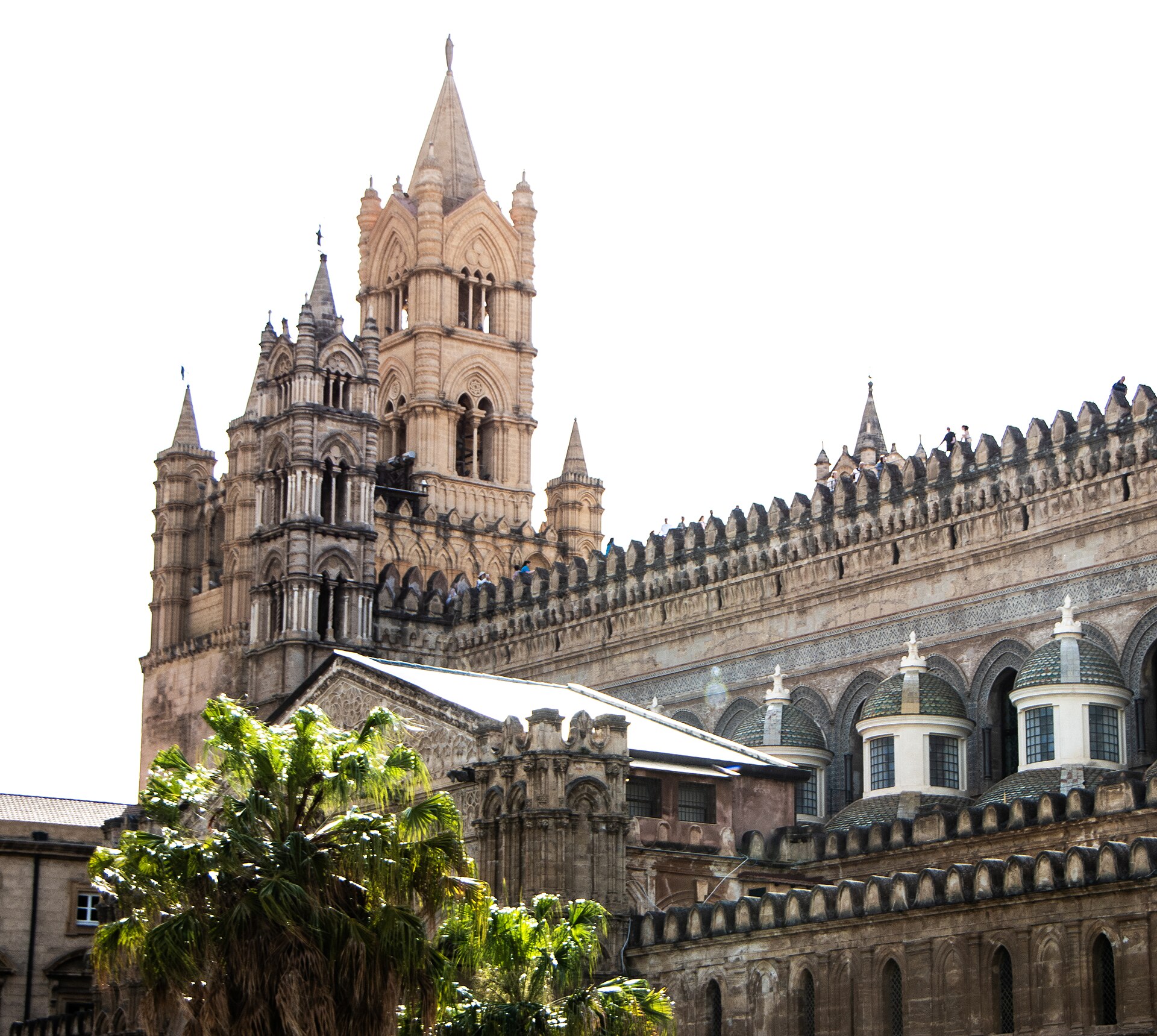
Palermo is intense in a way that some travelers find thrilling and others find exhausting, so know yourself. It’s the biggest city on the island, the streets are loud and tangled, and the layers of Arab-Norman history stack up against street markets that have run for centuries. The street food alone justifies a couple of nights. This is the most “real Sicily” of the major bases, for better and worse.
As a base, Palermo owns the west. Day trips fan out to the golden mosaics of Monreale just up the hill, the medieval hill town of Erice, the salt pans and wine around Marsala, the beaches toward San Vito Lo Capo, and the city’s own beach at Mondello. It’s also the cheapest of the big bases — accommodation and food run maybe 10 to 15 percent below Catania, which adds up over a week.
Palermo is walkable in its core and has buses, so you can stay car-light here and pick up a rental only for the days you head out of town. I wouldn’t run an entire two-week Sicily trip from Palermo, but three to four nights at the start or end of a journey is close to essential if you care about food and history. For the deeper city-by-city picture across the country, the best cities to stay in Italy guide gives useful context on how Palermo compares to mainland options.
Palermo or Catania — which base?
This is the choice most first-timers actually agonize over, so let me be direct. Palermo or Catania is really a question about which half of Sicily you want, because each city is the gateway to its side of the island.
Choose Palermo if your trip is about food, history, markets, and the quieter west — Cefalù, Monreale, Erice, the Trapani coast. It’s the grander, more layered city, it tends to be a touch cheaper, and it’s the better pick for travelers who want culture over volcano. Families and slow-travelers often lean Palermo.
Choose Catania if you want Mount Etna, the baroque southeast, Taormina, and the best nightlife on the island. It’s grittier and younger, the airport is closer to the action, and the east-coast train line makes it the easier base to explore without driving. Solo travelers, younger crowds, and anyone Etna-obsessed usually lean Catania.
On the practical questions people ask: Palermo is marginally cheaper; both are generally safe for visitors with normal city street-smarts; Catania wins on nightlife and Etna access; Palermo wins on beaches (Mondello) and the depth of its old town. Honestly, if you can’t decide, that’s your sign to do both — fly into one, out of the other, and let the open-jaw routing settle the argument.
Taormina: the scenery splurge, not the hub
Taormina is the image most people have in their heads when they picture Sicily — the cliff-top town with the ancient Greek theatre framing Etna and the Ionian Sea, the cable car down to Isola Bella, the smart cafés and the famous granita. It earns the hype. It is genuinely beautiful, and if you want one special, splurge-worthy stay on your trip, this is where to spend it.
But I’d push back gently on using Taormina as your main base. It’s the most expensive town on the island, it’s mobbed in peak season, and it isn’t especially practical for ranging across Sicily — you’re up on a hill, parking is a headache, and you’ll spend longer than you’d like getting in and out. It shines as a highlight, not a hub.
My honest take: give Taormina two or three nights, soak up the views and the theatre, then move on. It connects easily to Catania by train and car, so it slots neatly into an east-coast itinerary between the airport and Syracuse. As a sole base for a week, though, it starts to feel like a gilded cage.
Syracuse and Ortigia: history and walkable calm
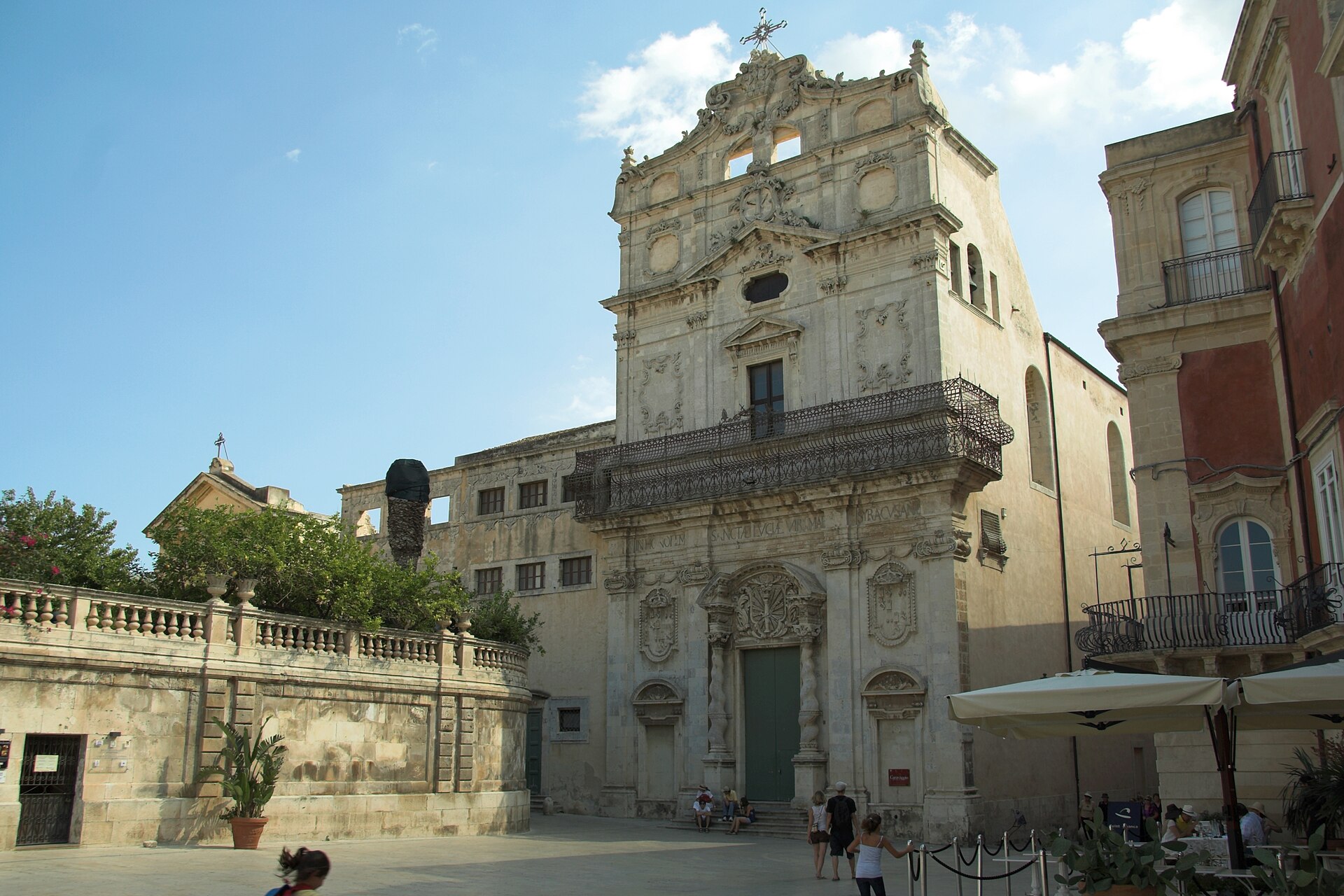
If I had to hand one base to a nervous first-timer and promise they’d be happy, it would be Ortigia — the small island core of Syracuse, connected to the mainland by a short bridge. It does the thing that’s hardest to find in Sicily: balance. It’s beautiful but lived-in, historic but not a museum, lively in the evening passeggiata but never chaotic. You can swim straight off the rocks in the morning and eat well a few steps from your door at night.
What makes Ortigia such a smart base is what’s around it. The baroque towns of the Val di Noto — Noto, Ragusa Ibla, Modica, Scicli — are all within day-trip range, and the east-coast train line means you can reach Catania and Taormina without overthinking the logistics. It’s walkable end to end, which matters when you’ve spent the day driving narrow Sicilian roads.
This is the base I’d choose for a first trip that wants history and charm without the price tag of Taormina or the intensity of Palermo. Three or four nights here, paired with day trips into the baroque southeast, is one of the most satisfying stretches of any Sicily itinerary.
Cefalù: the seaside few days
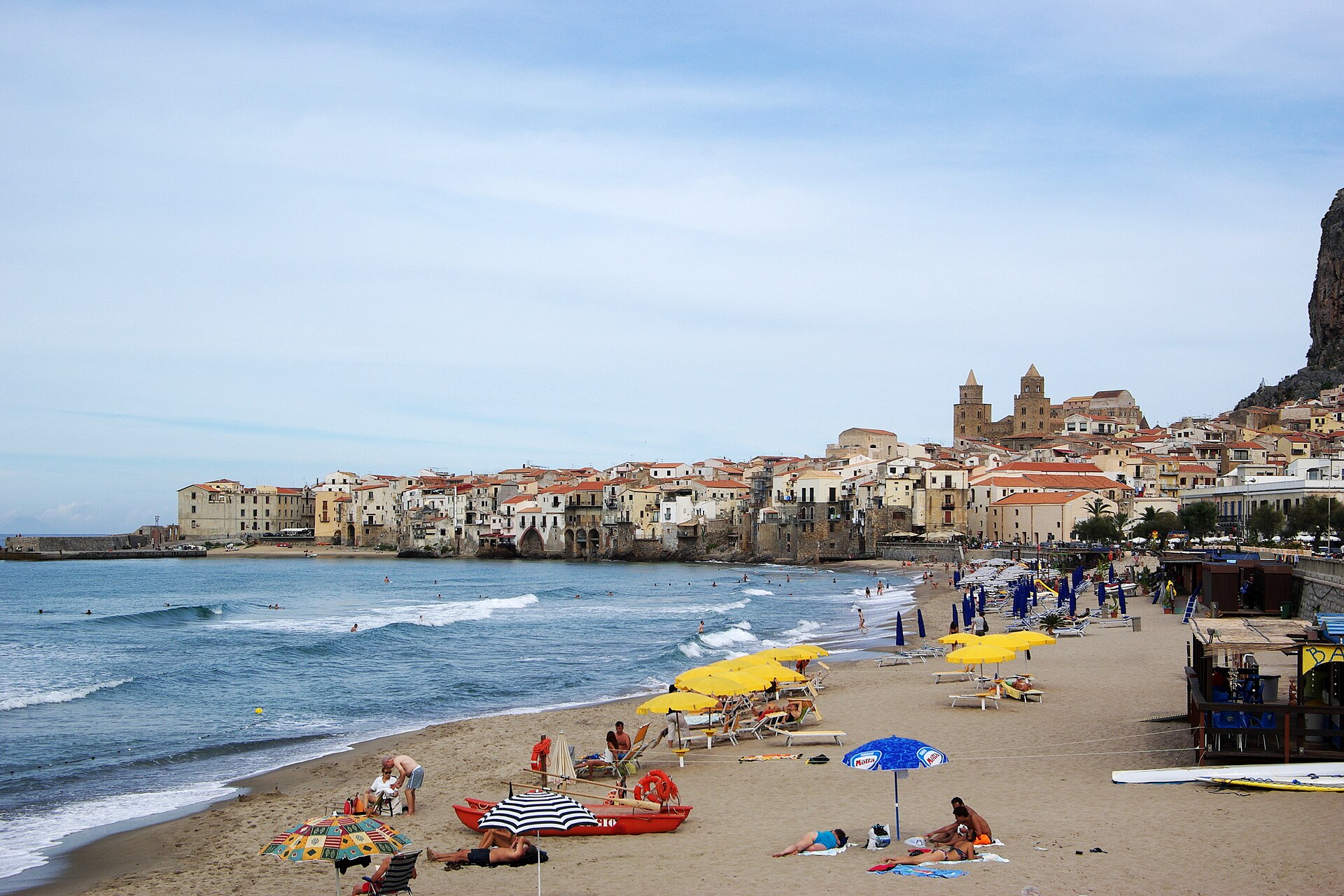
Cefalù is the postcard beach town of the north coast — a tight old centre sitting right on the water, backed by the great rock of La Rocca, with a long sandy beach out front. It’s one of the most photographed places in Sicily, and unlike many beauty spots, it’s genuinely walkable and easy to enjoy without a car.
As a base, Cefalù is best understood as a relaxed coastal interlude rather than a launchpad. It’s a comfortable hour from Palermo by train, which makes the two pair naturally — Palermo for food and culture, Cefalù for slow beach days. The catch is that most other big sights are a long drive away, so it works as one piece of a western itinerary, not the engine of the whole trip.
Stay here if your idea of Sicily includes slow mornings, a swim before lunch, and seaside dinners. Two or three nights is the sweet spot. Any longer and you’ll want a car to break up the beach time with the inland towns.
The west option: Trapani, Marsala and Erice
Most first-timers never make it out to the far west, and there’s a case that this is exactly why it’s worth doing. The Trapani area is quieter, cheaper, and wide open. Trapani itself is a workable seaside base with ferry links; Erice is a medieval stone town floating above the coast, often in the clouds; Marsala brings the salt pans, the windmills, and the fortified wine. The beaches out here — San Vito Lo Capo, the Zingaro reserve — are some of the best in Italy.
I wouldn’t send a first-timer here for their whole trip, and you’ll want a car to enjoy it properly. But if you’ve got 10 days or more on the western side, building in two or three nights around Trapani gives your trip a slower, less-trodden chapter that pairs beautifully with Palermo. It’s the move for a second-time visitor, or a confident first-timer who’d rather skip the crowds than tick the headline sights.
The Aeolian option: islands off the north coast
The Aeolian Islands — Lipari, Salina, Stromboli, Vulcano and the rest — float off Sicily’s north coast and are reached by ferries from Italy, mainly out of Milazzo (closest to Catania’s side) and seasonally from other ports. They are spectacular: volcanic, dramatic, and a different rhythm entirely from the mainland.
Here’s my honest steer for a first trip. The Aeolians are a commitment — a ferry out, a ferry back, and ideally a couple of nights on an island so you’re not spending the whole day in transit. They reward you, but they also eat days. If your first Sicily trip is 7 to 10 days, I’d skip them and save them for a return visit focused on the islands. If you have two weeks and love the idea of slowing right down, tack two or three nights onto the end of an eastern itinerary. Just don’t try to day-trip them from Taormina on a tight schedule; you’ll burn a day for a few hours on the water.
Best base in Sicily for your trip type
There’s no single best base in Sicily — the right one depends on the trip you actually want. Here’s how I’d match base to traveler.
First-timer, one week, want the highlights
Fly into Catania and stay east. Split your nights between Catania (or Taormina for a splurge) and Ortigia. You’ll get Etna, the Greek theatre, the baroque towns, and great food without a single long drive. The east is the most efficient first-trip region in Sicily.
Food and culture over beaches
Base in Palermo and stay west. Add a couple of nights in Cefalù for the beach, and day-trip Monreale and Erice. This is the better half for markets, street food, and Arab-Norman history. The agriturismo in Italy angle is also strongest out here if you want a farm stay between cities.
Slow, romantic, low-stress
Ortigia, full stop. It’s walkable, beautiful, and calm, with day trips on tap when you want them. Pair it with one splurge night in Taormina for the view and you’ve got a gentle, photogenic week.
Two weeks, want it all
Do an open-jaw loop: Palermo → Cefalù → Taormina → Ortigia → Catania (or the reverse), flying into one airport and out of the other. Three bases, no backtracking, and you cover both halves of the island. This is the most complete first-trip structure there is.
Beaches first
West coast — Palermo plus a few nights toward San Vito Lo Capo or Cefalù. Sicily’s standout beaches cluster in the northwest, and Mondello is a short hop from Palermo itself.
How many nights, and how to split between bases
Sicily punishes over-ambition. The fastest way to make this island feel exhausting is to change hotels every night, so build your trip around a few bases and day-trip out from each. As a rule of thumb that holds up well as of 2026:
- 5 to 7 days: one region only. Two bases. Either all-east (Catania/Taormina + Ortigia) or all-west (Palermo + Cefalù). Don’t attempt both halves.
- 8 to 10 days: two regions is possible with discipline. Two or three bases, open-jaw between airports.
- 11 to 14 days: the full loop. Three bases, both coasts, with room for the west or the Aeolians.
Aim for three to four nights per base as a minimum. Two-night stops feel like you’ve only just unpacked. The exceptions are the “highlight” towns — Taormina, Agrigento — where a single well-chosen night to catch the sights at golden hour can be exactly right.
For the broader rhythm of building an Italian trip by nights and transfers rather than by attractions, the Italy itineraries hub and the southern Italy itinerary guide both translate directly to Sicily.
Day trips that earn their place
The whole point of choosing good bases is that the famous sights become day trips instead of overnight detours. The ones worth building around:
- Mount Etna — from Catania or Taormina. Half a day on the lower craters, or a full day higher up with a guide. Europe’s most active volcano, and unmissable on an eastern trip.
- Valley of the Temples, Agrigento — the great Greek temples, best at sunset or early morning. It’s a long haul from the east coast, so most people make it a one-night stop on the way between halves rather than a day trip.
- The baroque southeast — Noto, Ragusa Ibla, Modica — easy day trips from Ortigia. Honey-coloured stone, quiet evenings, and Modica’s chocolate.
- Cefalù — a half-day or overnight from Palermo, train all the way.
- The Aeolian Islands — a multi-day commitment from the north coast, not a true day trip. Save for two-week itineraries.
Do you actually need a car?
Mostly, yes — but not always, and that changes where you should stay. Here’s the honest split.
You can stay genuinely car-light in Palermo, Catania, Ortigia and Cefalù. The east-coast train line ties Catania, Taormina and Syracuse together, buses cover the cities, and Cefalù is an easy train from Palermo. If driving in Italy makes you tense, build your whole trip around those walkable bases and the eastern train spine, and you’ll be fine.
A car earns its keep the moment you want beaches, countryside, hill towns, or the far west — Erice, Marsala, the Zingaro, the inland baroque villages are all far easier with wheels. My tip if you do rent: get the smallest car you can stand. Sicilian streets are narrow, parking is tight, and a compact car turns a stressful day into an easy one. Park at your accommodation in the cities and use public transport in town; driving into Palermo or Catania centres is not worth the stress. For the full rundown on rentals, ZTL zones and Sicilian road habits, see driving in Italy and the broader Italy transportation guide.
When you’re weighing where to actually book once you’ve chosen a base, hotel vs Airbnb in Italy is a useful read — in Sicily’s old centres, a well-located apartment often beats a hotel on both price and atmosphere.
When to go
Timing shifts the math on all of this. Late spring (May to mid-June) and early autumn (September into October) are the sweet spots — warm, swimmable, and without the July-August crush that makes Taormina and Cefalù feel overrun and pushes prices up. High summer is hot and busy but delivers the beach days; winter is quiet, mild, and cheap, though some coastal spots wind down. For a fuller breakdown of seasons across the country, the best time to visit Italy guide carries over neatly to the south. And for everything beyond the where-to-sleep question, the Sicily travel guide covers the rest of the trip.
If you’re sorting out flights between the two airports, or connecting Sicily to the mainland, Italy airports lays out the PMO and CTA options.
Final thoughts
The mistake first-timers make in Sicily isn’t picking the wrong town — it’s picking only one. The island is big, the two halves are genuinely different, and the trip gets easier the moment you stop chasing every sight from a single hotel and start thinking in bases and day trips instead.
So decide the shape first. East or west for a week; both, open-jaw, for two. Slot a splurge stay like Taormina in as a highlight, lean on Ortigia or Cefalù when you want to slow down, and give Palermo or Catania the nights they deserve as your gateway. Get that scaffolding right and the rest of Sicily — the food, the ruins, the volcano, the sea — falls into place around it.
Questions travellers ask
What is the best area to stay in Sicily for first-time visitors?
There’s no single answer, because Sicily splits cleanly into east and west. For a first trip the east is the most efficient region — base in Catania or Taormina plus Ortigia and you’ll reach Etna, the Greek theatre and the baroque towns without long drives. If food and culture matter more, base in Palermo for the west instead.
Is it better to fly into Palermo or Catania?
It depends which half you’re seeing. Fly into Catania (CTA) for the east — Etna, Taormina, Syracuse and the baroque southeast. Fly into Palermo (PMO) for the west — the capital’s food scene, Cefalù, Monreale and the Trapani coast. For a two-week trip, fly into one and out of the other so you never have to backtrack across the island.
Is Palermo or Catania safer?
Both cities are generally safe for visitors as of 2026, with the same common-sense rules you’d use in any large city — watch your bag in crowded markets, stay aware at night, and avoid leaving anything in a parked car. Neither city should put you off. The grit in both is more about appearance and noise than genuine danger.
How many nights do you need in Sicily?
At least seven, and ideally 10 to 14 to do the island justice. With a week or less, commit to one region — east or west — and don’t try to see both. With 10 days you can do both halves with discipline; with two weeks you can run a relaxed three-base loop covering the whole island and still have time to slow down.
Can you visit Sicily without a car?
Yes, in the right bases. Palermo, Catania, Ortigia and Cefalù are all walkable, and the east-coast train line connects Catania, Taormina and Syracuse. You’ll miss the far west, inland hill towns and the quieter beaches without a car, but a car-light first trip built around those four bases works well, especially if driving abroad stresses you out.
Is Taormina a good base for exploring Sicily?
As a base for the whole island, no — it’s expensive, crowded in summer, and impractical to drive in and out of. As a two-or-three-night highlight, absolutely. Treat Taormina as the scenic splurge stay on an eastern itinerary, slotted between Catania and Syracuse, rather than the hub you explore Sicily from.
Which part of Sicily is best for beaches?
The northwest. The standout beaches — San Vito Lo Capo, the Zingaro reserve, Mondello near Palermo — cluster on the western and north coasts. Cefalù has an excellent town beach too. The east has good swimming around Taormina and Syracuse, but if beaches are your priority, base in the west.
Should I split my time between two bases or stay in one?
Split, unless your trip is very short. One base means long daily drives to reach the other half of the island, and Sicily is too big for that. Two bases for a week, three for two weeks, with three to four nights at each. You’ll see far more and spend far less time in the car.