Rome Food Guide: Pasta, Pizza, Gelato and Markets
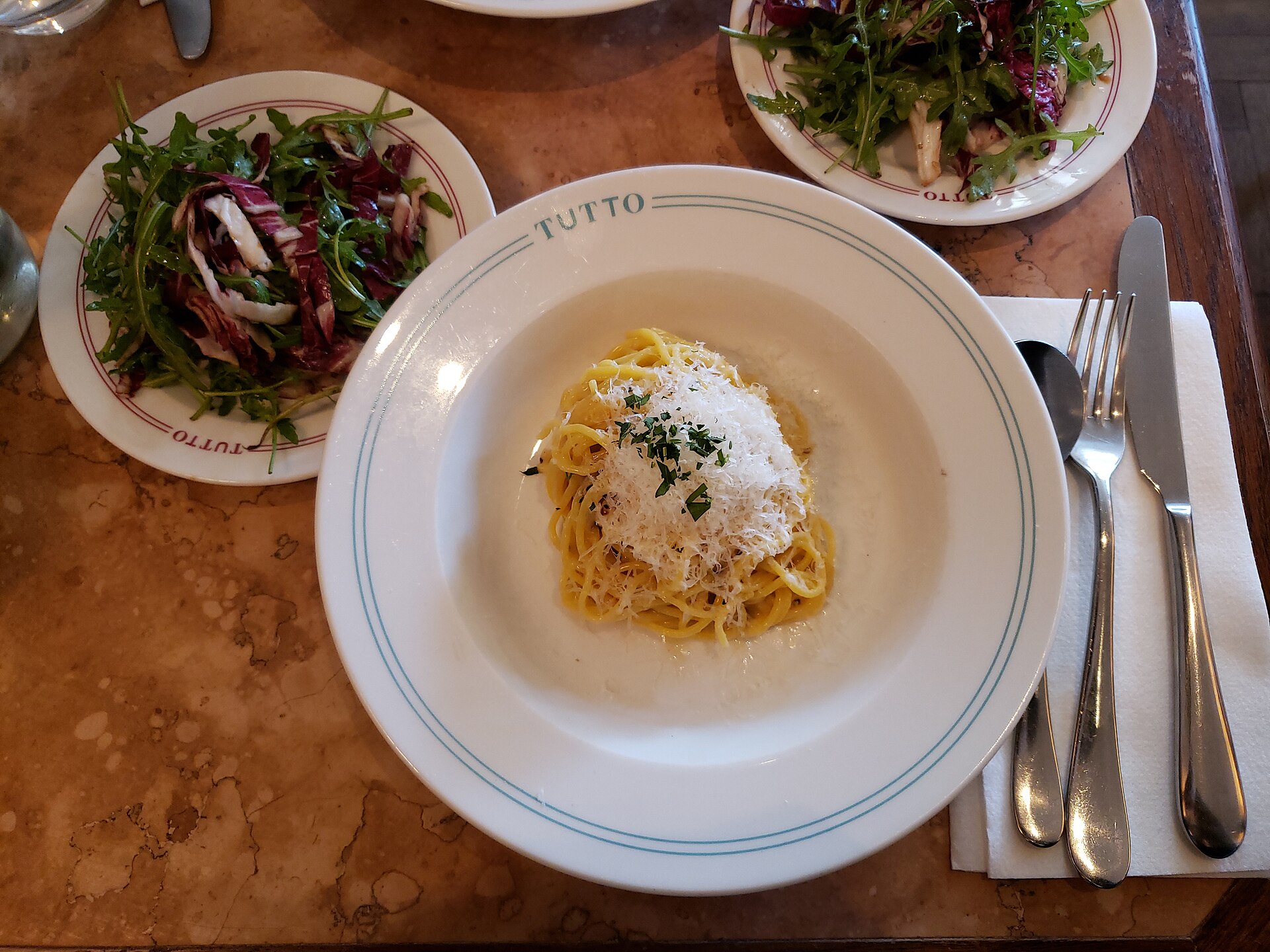
The first time I ate cacio e pepe in Rome, I stood in the street afterward slightly annoyed at every version I’d been served back home. It is two ingredients. It should not be that good.
Rome food is the cooking of the old city and its countryside: four cheese-and-pork pastas, crackly Roman pizza, fried snacks you eat standing up, artichokes done two famous ways, and a whole tradition built on the cheap cuts butchers couldn’t sell. It is salty, direct, and built to be eaten with your hands or a fork and not much else. This guide is for anyone who wants to eat like a Roman for a few days instead of like a tour bus.
I’ll give you the dishes, where to order them, what they should cost, and the small rules that keep you out of the tourist-trap zone. If you want the wider national picture first, I keep a running Italy food and wine overview and a broader what to eat in Italy primer, but everything below is Rome and only Rome.
The Rome food cheat sheet
Read this table before your first dinner. It is the fastest way to walk into a trattoria and order without freezing up.
| Dish | What it is | When to eat it | Where to find it |
|---|---|---|---|
| Cacio e pepe | Pasta with pecorino and black pepper, no cream | Lunch or dinner, any day | Trastevere, Testaccio trattorias |
| Carbonara | Egg, guanciale, pecorino, pepper — no cream | Dinner, often a Saturday classic | Testaccio, city-wide trattorias |
| Gricia | The “white amatriciana”: guanciale and pecorino | Lunch, when you want it simple | Testaccio, old-school trattorias |
| Amatriciana | Gricia plus tomato, usually on bucatini | Dinner | Testaccio, Trastevere |
| Pizza al taglio | Pizza by the slice, sold by weight | Quick lunch, snack, on the go | Everywhere, near markets |
| Pizza tonda romana | Thin, crackly round pizza | Dinner, sit-down | Pizzerias, Testaccio |
| Supplì | Fried rice ball with mozzarella inside | Aperitivo, snack, pizzeria starter | Pizzerias, fritti counters |
| Carciofi alla giudia | Whole artichoke fried flat and crisp | Roughly winter into spring | The Jewish Ghetto |
| Carciofi alla romana | Braised artichoke with mint and garlic | Same artichoke season | Trattorias citywide |
| Coda alla vaccinara | Oxtail stew, slow-cooked | Dinner, cooler months | Testaccio |
| Trippa alla romana | Tripe in tomato with mint and pecorino | Traditionally a Saturday dish | Testaccio, Trastevere |
| Saltimbocca alla romana | Veal with prosciutto and sage | Lunch or dinner | Trattorias citywide |
| Porchetta | Herb-roasted whole pig, in a sandwich | Lunch, market stalls | Markets, panino counters |
| Maritozzo | Brioche bun split and filled with cream | Breakfast or mid-morning | Bakeries, cafés |
| Gelato | Dense Italian ice cream | Afternoon, after dinner | Artisanal gelaterie |
Prices below are normal-Rome ranges as of 2026, and they move. Treat them as a sanity check, not a quote.
What to eat in Rome: start with the four pastas
If you only learn one thing about Roman cooking, make it this. There are four pastas that locals treat as the foundation, and they are basically variations on the same idea: pork fat, sheep’s cheese, pepper, and sometimes tomato or egg. Master the differences and you will order well anywhere.
Cacio e pepe. Pasta (usually tonnarelli, a fresh square-cut spaghetti), pecorino romano, and black pepper. That’s the whole list. No butter, no cream, no garlic. The sauce comes from emulsifying grated pecorino with starchy pasta water until it turns glossy and clings. It is technically the hardest of the four to get right, which is why a great one is a real test of a kitchen.
Gricia. Add guanciale (cured pork jowl, fattier and more intense than pancetta) to that base and you get gricia, sometimes called the ancestor of the whole family. Crisped guanciale, its rendered fat, pecorino, pepper. People call it the “white amatriciana” because it is amatriciana minus the tomato. Underrated, and my pick when I want Roman flavor without the heaviness of egg.
Amatriciana. Take gricia and add tomato. It usually arrives on bucatini, those thick hollow tubes that whip sauce at your shirt if you’re not careful. Slightly sweet, slightly tangy, properly savory. Order it when you want the most crowd-pleasing of the four.
Carbonara. Guanciale, pecorino, black pepper, and raw egg yolk tossed with hot pasta off the heat so the yolk thickens into a silky sauce without scrambling. Four ingredients. No cream — ever. If you see cream, peas, or onion in a “carbonara” in Rome, you are in a tourist place. Romans take this one almost personally; there is even an unofficial Carbonara Day in April.
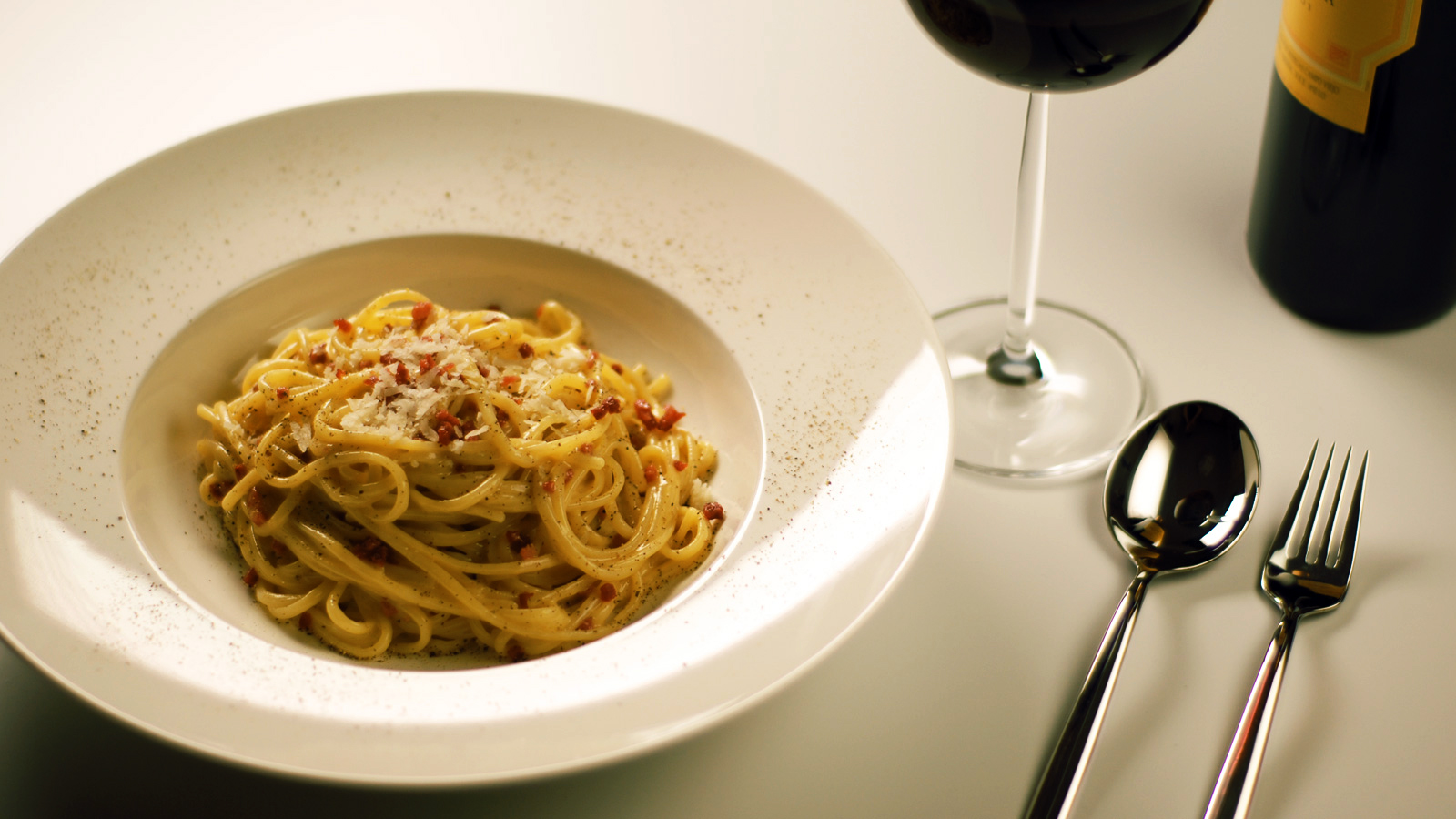
A plate of pasta runs roughly 9 to 14 euros at a normal trattoria as of 2026, a few euros more at the fancier seafood spots. If a “carbonara” costs 22 euros near a major monument, you are paying rent, not for food. My tourist-trap restaurant guide covers how to spot those places before you sit down.
How do I tell the four Roman pastas apart?
Use the building blocks. Cacio e pepe is cheese and pepper only. Add guanciale and you have gricia. Add tomato to gricia and you have amatriciana. Add egg instead of tomato and you have carbonara. Every one of them leans on pecorino romano and black pepper, so once you taste that salty, sharp sheep’s-milk backbone, you’ll recognize the family instantly across any menu in the city.
Roman pizza: two completely different things
People say “Roman pizza” as if it’s one food. It is two, and they barely resemble each other.
Pizza al taglio is pizza by the cut — wide rectangular trays baked in the oven, displayed on a counter, and sold by weight. You point at what you want, the counter person cuts it with scissors to whatever size you ask for, weighs it, and hands it over on paper. You eat it standing up or walking. It is the single best cheap lunch in Rome. Expect something like 2 to 3 euros per 100 grams depending on the toppings, so a hearty slice or two usually lands around 5 to 8 euros. Say “un pezzo così” (a piece this big) and gesture; they’ll cut and weigh.
Pizza tonda romana is the sit-down version: a round pizza rolled thin, almost cracker-crisp at the edge, baked fast and hot. It is the opposite of the tall, pillowy Neapolitan style. If you’ve eaten your way through pizza in Naples, the Roman tonda will feel like a different dish entirely — thinner, crunchier, less about the dough. I cover that southern style separately in the Naples food guide, and the contrast is honestly one of the fun parts of eating across Italy.
A whole tonda at a sit-down pizzeria is usually 7 to 12 euros as of 2026. These places often only open for dinner, because the wood oven needs time to come up to heat. A classic Roman pizzeria dinner means a couple of fried starters, a pizza each, a liter of cheap house wine or beer, and a lot of noise. It is one of the great budget nights in the city.
Fritti: the fried things you order first
Before the pizza arrives, Romans order fritti — fried antipasti — and you should too.
Supplì is the icon: an oval of risotto-style rice cooked in tomato, wrapped around a core of mozzarella, breaded and deep-fried. Tear it open and the cheese stretches in a long string, which is why the classic version is called supplì al telefono — the melted mozzarella looks like an old telephone cord. People ask me constantly how it differs from Sicilian arancini, so here’s the short version: supplì are Roman, oval, tomato-rice, and usually mozzarella-only; arancini are Sicilian, round or cone-shaped, often saffron rice, and stuffed with ragù, peas, or other fillings. Both are fried rice. They are not the same snack. (For the Sicilian side of that story, I go deep in the guide to eating in Sicily.)
The rest of the fritti lineup is worth your attention:
- Fiori di zucca — zucchini flowers stuffed with mozzarella and anchovy, battered, fried. Seasonal, glorious, gone in two bites.
- Filetti di baccalà — a fillet of salt cod in a light batter, deep-fried, served in paper. Arguably the oldest Roman street food, and a Friday tradition rooted in the old Catholic no-meat-on-Friday rhythm.
- Olive ascolane — green olives stuffed with meat and fried. Not strictly Roman, but everywhere.
A round of fritti for the table is usually a euro or two per piece. Order a few, share them, then move on to pasta or pizza.
The Jewish Ghetto and the famous fried artichoke
The old Jewish quarter, the Ghetto, sits along the river between Largo di Torre Argentina and the Tiber, and it holds some of the oldest continuous cooking in the city — recipes that go back centuries. This is where you eat the dish half the internet comes to Rome for.
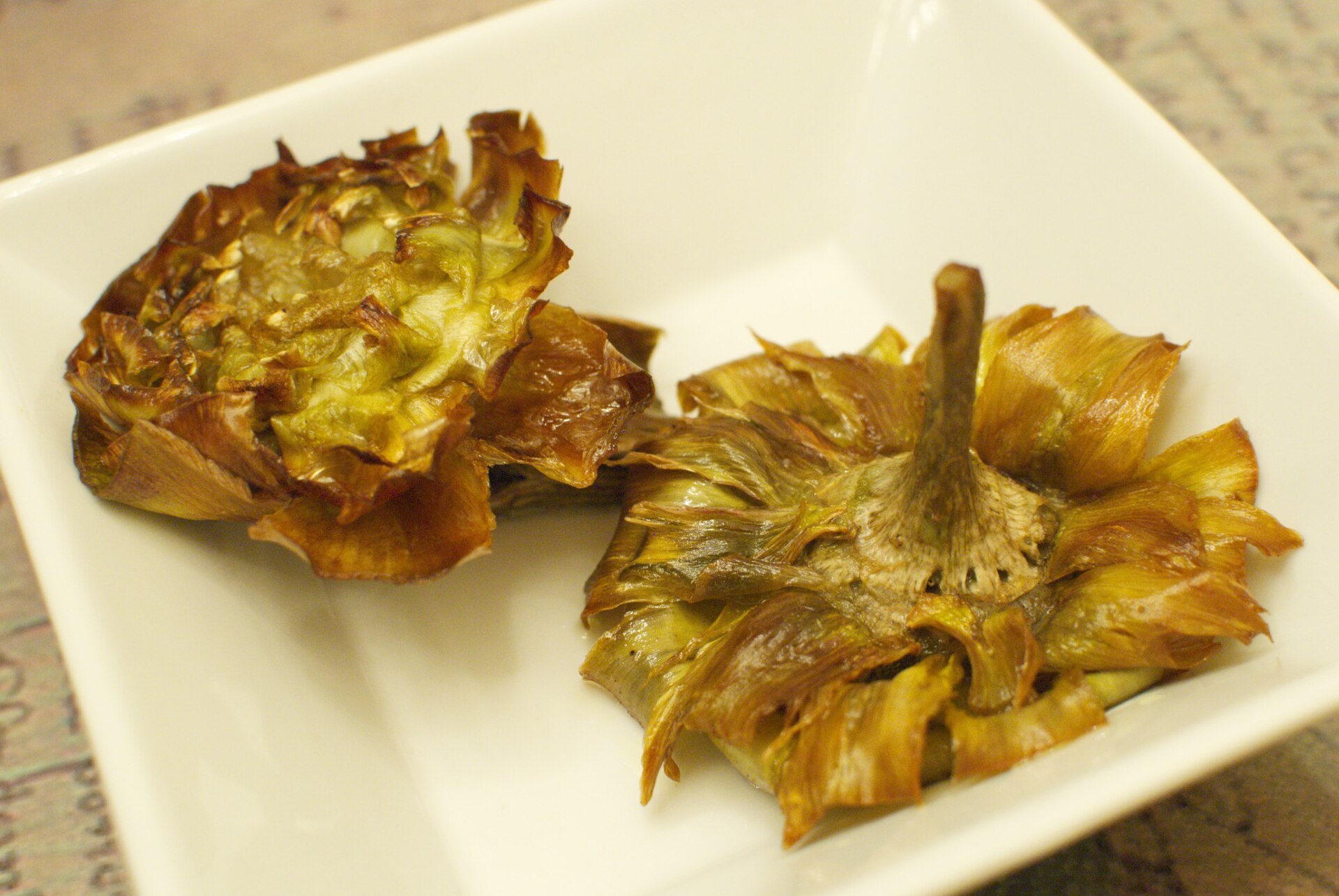
Carciofi alla giudia — Jewish-style artichokes — is a whole artichoke trimmed, pressed open into a bronze flower, and deep-fried twice until the outer leaves shatter like crisps and the heart stays tender. It is salty, crackly, and slightly addictive. You’ll see it in the windows of the Ghetto’s restaurants, golden and fanned out. Eat it there.
Compare it to carciofi alla romana — Roman-style — which is the same Roman artichoke but braised whole with garlic, parsley, mint, and olive oil until silky, served at room temperature. One is crisp and fried, one is soft and herby. Try both if the season allows.
When is artichoke season in Rome?
Roughly winter into late spring — think December through April, peaking around February and March. That window is when the local Roman artichoke (the carciofo romanesco) is in the markets and the fried and braised versions are at their best. Come in high summer and you may find them done with frozen or out-of-region artichokes, which is just not the same. If artichokes are your reason to visit, plan around the cold months — my best time to visit Italy guide breaks down the seasons in more detail.
The Ghetto also gives you ricotta-and-sour-cherry tart, fried salt cod, and a few other dishes you won’t find done the same way elsewhere in the city. It’s a small area; you can walk the whole thing in fifteen minutes and eat your way across it in an afternoon.
Quinto quarto: Rome’s offal tradition
Here is the part that separates curious eaters from the rest. Rome’s most traditional cooking comes from Testaccio, the old slaughterhouse district, and it is built on the quinto quarto — the “fifth quarter,” meaning the offal and odd cuts that were paid out to the workers when the prime meat went to the wealthy. Out of necessity came some of the best Roman dishes there are.
Coda alla vaccinara is oxtail braised for hours with tomato, celery, and sometimes a hint of cocoa or pine nuts and raisins, until the meat slides off the bone. It is rich, deep, faintly sweet, and exactly what you want on a cool evening. The name means “oxtail in the style of the butchers.”
Trippa alla romana is tripe simmered in tomato with mint and a heavy dusting of pecorino. Traditionally a Saturday dish — Romans still half-keep the old weekly menu, and I’ll explain that rhythm below. If you’ve never had tripe, a good Roman version is the place to try it; the texture is the point, and the sauce carries it.
Rigatoni con la pajata uses the milk-filled intestines of an unweaned calf, cooked in tomato until the inside sets into a creamy ribbon through the pasta. It is the most hardcore of the lot. I’m not going to oversell it to a first-timer, but if you’re an adventurous eater, this is a genuine Roman specialty you won’t find on every corner.
You don’t have to love offal. But ordering one quinto quarto dish in Testaccio is the most honest way to understand where this cuisine comes from.
The other Roman classics worth ordering
Not everything in Rome is pork fat and offal. A few more dishes deserve a spot on your list:
- Saltimbocca alla romana — thin veal topped with prosciutto and a sage leaf, pinned with a toothpick, browned in butter and white wine. The name means “jumps in the mouth.” A reliable, lighter second course.
- Abbacchio — milk-fed Roman lamb, usually roasted with rosemary and garlic (alla scottadito means small grilled chops you eat with your fingers, “burning your fingers”). Especially common around Easter.
- Porchetta — a whole pig deboned, rolled with garlic, rosemary, fennel, and pepper, and roasted until the skin crackles. You eat it as a sandwich, sliced into crusty bread, often from a market stall. Juicy, herby, salty, perfect walking food. It actually comes from the towns around Rome (Ariccia is famous for it), but it’s everywhere in the city.
- Gnocchi alla romana — not the potato dumplings you might expect, but discs of semolina baked with butter and cheese until golden. Traditionally a Thursday dish.
Pair any of these with the local white. Rome’s countryside makes crisp, easy Frascati and other Castelli Romani whites that cost almost nothing by the carafe and go down dangerously well with fried food. If wine is your thing, I map the whole country in the Italy wine regions guide, and Tuscany’s table gets its own deep dive in the Tuscany food guide.
Maritozzo, gelato, and the sweet side
Maritozzo is Rome’s great breakfast indulgence: a soft, slightly sweet brioche bun split down the middle and overfilled with unsweetened whipped cream, so much that it bulges. Traditionally eaten in the morning with a cappuccino, standing at the bar. It is having a real moment, and you’ll now find versions filled with everything, but the plain cream one is the classic. Get it before 11am if you want it at its freshest.
That cappuccino, by the way, is a morning-only drink to most Romans — order one after lunch and you’ll mark yourself instantly. The whole espresso culture has its own etiquette, which I lay out in the rules of Italian coffee so you can order like you belong at the bar.
Gelato in Rome is dense, intensely flavored, and served small. A few rules I’d give anyone:
- Skip places where the gelato is piled in tall, fluffy, neon mountains. Real gelato is stored flat or in covered tubs and looks more muted. Bright electric-blue “puffo” and mountainous banana the color of a highlighter are warning signs.
- Look for seasonal fruit flavors and a short, sensible list. Pistachio should be a dull green-brown, not a glowing green.
- A small cup or cone (piccolo) is usually around 2.50 to 3.50 euros as of 2026 and gets you two flavors. You don’t need the big one.
Italian gelato has less air, less fat, and is served warmer than American ice cream, which is why it tastes so much more of the actual flavor. Get it after dinner and walk it off through the streets — that evening passeggiata with a cone is one of the simple pleasures of the city.
Where to eat in Rome by neighborhood
Geography matters here. Each part of Rome has its own eating personality, and planning your meals by neighborhood saves you from the bad blocks near the big sights.
Testaccio is the heart of traditional Roman food. Old slaughterhouse district, working-class roots, home of the quinto quarto. This is where I send people for carbonara, gricia, coda alla vaccinara, and proper Roman pizza, in unpretentious trattorias that have been doing it for generations. It feels lived-in rather than touristy, and it has the best food-to-hype ratio in the city.
Trastevere is the postcard: cobbled lanes, ivy, tiny piazzas, lively at night. The food can be excellent and can also be a tourist trap, sometimes on the same street. Eat here, but choose carefully — look for handwritten menus, Roman classics done simply, and a room full of people speaking Italian. Skip anywhere with a host waving laminated photo menus at you.
The Jewish Ghetto is compact and specific: this is your destination for carciofi alla giudia, fried salt cod, and the Roman-Jewish dishes you can’t get the same anywhere else. Plan a late lunch here.
Prati, near the Vatican, is more residential and where Roman families actually eat. Good for solid trattorias and one of the city’s most famous (and busiest) pizza-by-the-slice spots, without the monument markup. A smart base if you want to be central but eat well — I get into lodging trade-offs in the where to stay in Italy guide.
The historic center around the Pantheon, Piazza Navona, and the Spanish Steps is where you should eat most carefully. The closer a restaurant sits to a famous monument, the more you pay and the worse you tend to eat. Use those areas for sightseeing, then walk ten minutes out for dinner. For the sights themselves, my Rome tourism guide handles the monuments side of the trip.
The markets: Testaccio and Campo de’ Fiori
Two markets, two very different experiences.
Mercato di Testaccio is the one I’d actually shop and eat at. It’s a modern covered market with produce and butcher stalls plus a row of food counters serving some of the best cheap lunches in Rome — supplì, sandwiches built from slow-cooked meats, fresh pasta boxes, and stuffed pizza. It’s where locals eat, it’s busy at midday, and it’s a genuinely fun, low-stakes way to taste a lot of Roman food fast.
Campo de’ Fiori is the famous one, a square that’s been a market for centuries, with a morning produce-and-stall scene. Be honest with yourself about it: it has drifted touristy, and a lot of the stalls now sell overpriced dried pasta and limoncello aimed at visitors. It’s photogenic and worth a wander, but I treat it as sightseeing, not serious food shopping. Buy fruit there if you like; do your real eating elsewhere.
Either way, markets are where you see the seasonal Roman ingredients — the artichokes in late winter, the puntarelle (a bitter chicory dressed with anchovy), the zucchini flowers in summer — that drive the whole cuisine.
How to eat like a Roman: timing and etiquette
A few practical rules that smooth out the whole experience.
The weekly rhythm. Rome historically assigned dishes to days, and traditional trattorias still half-follow it: gnocchi on Thursday, salt cod (baccalà) on Friday, tripe and offal on Saturday. You’ll see daily specials reflect this. If you want gnocchi alla romana or a great trippa, check what day it is.
Meal times. Lunch runs roughly 1 to 3pm, dinner from 8pm on; many kitchens simply aren’t open between. Italians eat late. A trattoria filling up at 7:30 with foreign accents and empty at 9 with locals tells you something. Aperitivo — a drink with a few snacks — bridges the gap in the early evening.
Courses. A full Roman meal is antipasto (often fritti), primo (pasta), secondo (meat or fish) with a contorno (side), then maybe dolce. You absolutely do not have to order all of it. Two courses plus a side is a normal, satisfying dinner. Sharing fritti and each getting a pasta is completely fine.
The cover charge. Most of Italy adds a coperto — a small per-person cover, usually 2 to 3 euros — for the table setting and bread. Technically the coperto is restricted in the Lazio region around Rome, so some places instead charge a separate bread fee (pane) you can decline up front. Either way it’s small; just don’t be surprised by a line on the bill.
Tipping. Not expected the way it is in the US. Service is built into prices. If you had a lovely meal, rounding up or leaving a euro or two per person is a generous gesture, not an obligation. Don’t tip 20 percent; it reads as not understanding how things work here.
House wine. Order the vino della casa by the quarter, half, or full liter. It is cheap, local, usually perfectly good, and the right move with this food. A liter of house white often costs less than a single fancy glass would back home.
If you want help fitting all this eating into an actual trip — how many nights, how to move around, what a day costs — I keep separate guides on ready-made Italy route plans, getting around Italy, and a realistic Italy cost breakdown. And the general Italy travel guide ties the whole country together if Rome is one stop on a longer route.
Final thoughts
The best meals I’ve had in Rome were almost never the planned ones. They were a paper cone of fried artichoke eaten on a Ghetto curb, a 7-euro pizza in a loud Testaccio room, a supplì from a market counter at noon. Rome food rewards the casual and punishes the fancy. Eat where the locals eat, order the four pastas, try one thing that scares you a little, and let the gelato carry you home through the streets at night. Buon appetito.
Questions travellers ask
What food is Rome most famous for?
Rome is most famous for its four classic pastas — cacio e pepe, carbonara, gricia, and amatriciana — all built on pecorino romano, black pepper, and cured pork. Beyond pasta, the city is known for crackly Roman pizza, fried supplì, the Jewish Ghetto’s fried artichokes, and offal dishes like oxtail stew from the old Testaccio slaughterhouse district.
What should I eat on my first day in Rome?
Start with a slice of pizza al taglio for an easy standing lunch, then book a trattoria dinner and order a fried starter (supplì or fiori di zucca) followed by a classic pasta — carbonara or cacio e pepe is the safest, most representative choice. Finish with gelato on an evening walk. That single day hits the core of Rome food.
What is the difference between supplì and arancini?
Supplì are Roman: oval, made with tomato-flavored rice, and usually filled with just mozzarella that stretches like a telephone cord when you tear it open. Arancini are Sicilian: round or cone-shaped, often made with saffron rice, and stuffed with fillings like ragù, peas, or ham and cheese. Both are fried rice balls, but they’re distinct regional snacks.
Is carbonara really made without cream in Rome?
Yes, completely. Authentic Roman carbonara has exactly four ingredients: guanciale, pecorino romano, egg yolk, and black pepper. The creaminess comes from emulsifying the raw egg with hot pasta and starchy water, never from actual cream. If you see cream, onion, garlic, or peas in a “carbonara” in Rome, you’ve found a tourist place, not the real dish.
When is artichoke season in Rome?
Roughly December through April, with the peak around February and March. That’s when the local Roman artichoke is in the markets and both the fried Jewish-style version (carciofi alla giudia) and the braised Roman-style version (carciofi alla romana) are at their best. Visit in summer and you’ll often get out-of-season artichokes, which simply aren’t the same.
How much does a meal cost in Rome?
As of 2026, a pasta course at a normal trattoria runs about 9 to 14 euros, a whole Roman pizza around 7 to 12 euros, and pizza by the slice often 5 to 8 euros for a filling portion. A relaxed dinner of a fried starter, pasta, house wine, and gelato comes in well under 30 euros a person if you avoid the streets right beside the major monuments.
Do you tip at restaurants in Rome?
Tipping is not expected the way it is in the US — service is included in the prices. If you genuinely enjoyed the meal, rounding up the bill or leaving a euro or two per person is a kind gesture, but it’s optional. Watch for a small coperto or bread charge already on the bill; if it’s there, no tip is needed at all.
Where should I eat in Rome to avoid tourist traps?
Eat in Testaccio for the most authentic traditional food, the Jewish Ghetto for fried artichokes, and residential Prati near the Vatican for solid local trattorias. In Trastevere, choose carefully — skip anywhere with photo menus and pushy hosts. As a rule, the closer a restaurant sits to a famous monument, the more you pay and the less Roman the food tends to be.