Florence & Tuscany Travel Guide
Uffizi Tickets: How to Visit the Uffizi Gallery (2026 Guide)
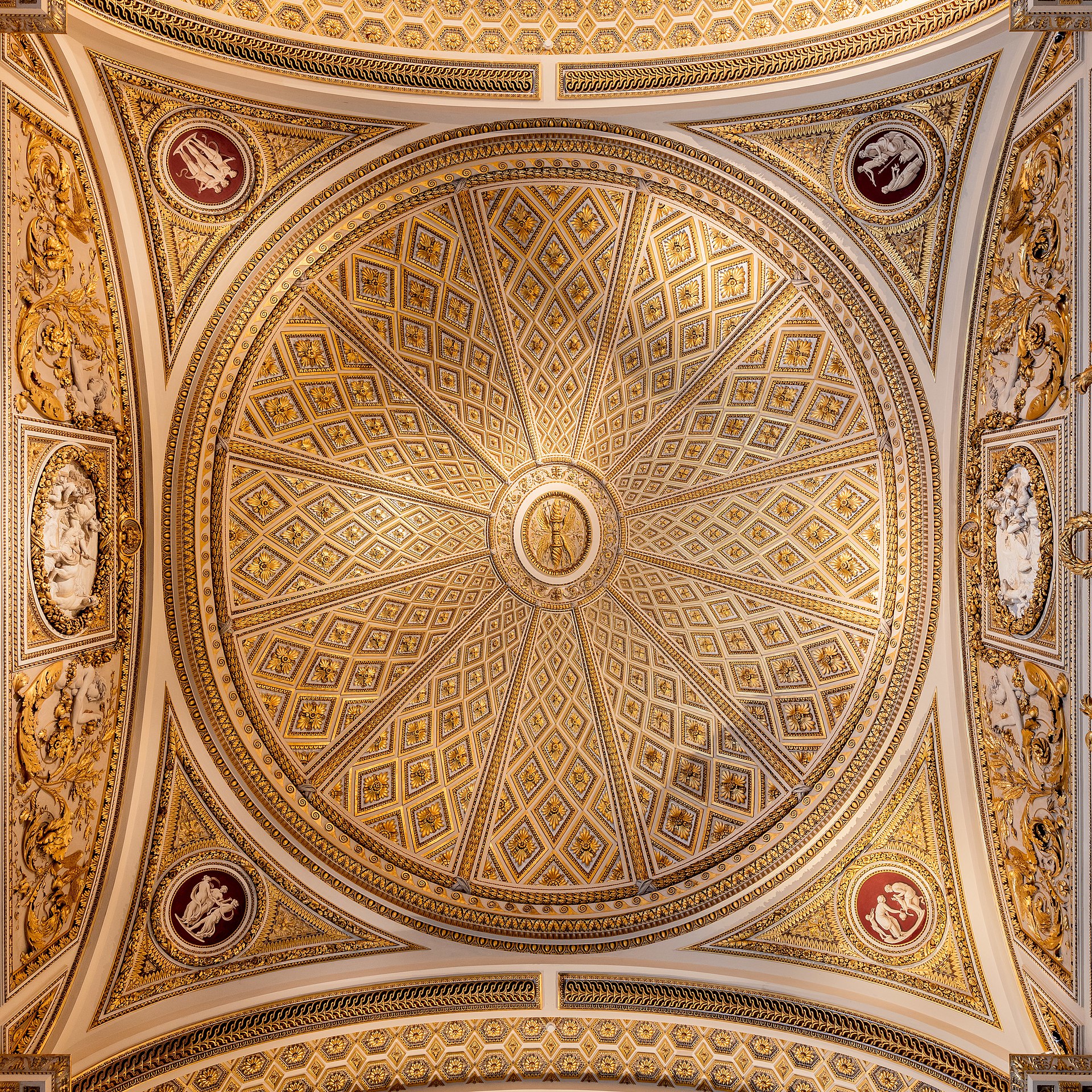
The Uffizi Gallery is one of the most visited museums on the planet — and one of the most misunderstood at the booking stage. Buy your Uffizi tickets early on the official platform at tickets.uffizi.it, choose a timed entry slot, and bring the ID you used at checkout. That is the whole trick. This guide walks you through every ticket type, what things actually cost in 2026 (hedged against the official price list), the PassePartout combo pass, the free-Sunday trap, and exactly what to prioritise once you’re inside.
Planning the rest of your time in the city? See the full Florence and Tuscany travel guide and the top things to do in Florence.
Uffizi Tickets at a Glance: Which Ticket Is Right for You?
Before diving into the mechanics, here is a quick comparison of the main options. Prices are sourced from the official Uffizi price list and are correct as of early 2026 — always check uffizi.it before you book, as seasonal changes do happen.
| Ticket Type | What’s Included | Rough Price (2026) | Best For |
|---|---|---|---|
| Uffizi only — same day | Uffizi Gallery, day of visit purchase | around €25 | Spontaneous visitors, off-season |
| Uffizi only — advance booking | Uffizi Gallery, timed entry, booked before visit date | around €29 (includes €4 booking fee) | Anyone visiting April–October |
| Uffizi + Vasari Corridor — advance | Uffizi + access to the elevated corridor above the Arno | around €47 | Art-focused visitors with more time |
| Pitti Palace only — advance | Palatine Gallery + Modern Art Gallery + Silver Museum | around €19 | Pitti-focused day |
| Boboli Gardens only — advance | Gardens access | around €13 | Garden lovers, quick visit |
| PassePartout 5-Day Pass | Uffizi, Pitti Palace, Boboli Gardens — 5 consecutive days | around €40 | Anyone spending 3+ days in Florence |
| Afternoon discount (Uffizi) | Uffizi entry from 4 p.m. onwards | around €16 | Budget travellers, repeat visitors |
| Annual Pass | All museums, unlimited visits one year | around €80 | Florence residents, multiple trips |
Where to Buy Uffizi Tickets: Official vs Everyone Else
The Only Official Booking Platform
The official and only authorised online booking platform is tickets.uffizi.it, operated by the Gallerie degli Uffizi. The main website for information is uffizi.it. Those are the two URLs you need. Bookmark them, do not stray.
You can also book by phone. The call centre (Società Cooperativa CULTURE, the official concessionaire as of October 2025) handles reservations at:
- 800 615 615 — toll-free within Italy
- +39 055 0354135 — from abroad, mobile phones, or public offices not authorised to use the toll-free number
Lines are open Monday to Sunday, 8:00 a.m. to 7:00 p.m.
Walk-up tickets are available at the physical ticket office under the loggia in the Uffizi square, but peak season means long queues — and the best time slots may already be gone.
The Reseller Problem
Search “Uffizi tickets” and the first page of Google is dominated by reseller sites. Some look official. Names like “uffizi-gallery.org,” “uffizigallerytickets.com,” or variations with “Florence,” “gallery,” or “official” in the domain. None of them are.
What they sell you is either a marked-up ticket bought directly from the official platform, or — in the worst cases — something that will not scan at the door at all. I have heard from readers who paid €45–60 for a ticket that cost €29 on the official site.
Since October 2025, Uffizi tickets are fully nominal (personalised). That means your name is linked to the ticket at the time of purchase. If the name on the ticket does not match the ID you bring to the gallery, you will be turned away. No exceptions, no refunds. This makes reseller tickets from platforms that issue generic QR codes particularly risky — even if the code works, a name mismatch will get you stopped at the door.
The rule: buy from tickets.uffizi.it. That is it.
Ticket Types and Prices in Detail
Standard Uffizi-Only Ticket
The base Uffizi ticket in 2026 costs around €25 if you buy at the ticket office on the day of your visit, and around €29 if you purchase in advance online. The €4 difference is the standard booking fee for advance reservations — it is not optional when booking online, but it buys you a guaranteed timed entry slot rather than the walk-up queue.
For most visitors in peak season (roughly April through October), paying the €4 advance fee is not even a decision — it is the only practical way to see the museum. Slots for popular morning hours sell out weeks or months ahead.
The Afternoon Discount
Since 1 January 2026, the Uffizi offers a reduced admission price — around €16 — for visitors entering from 4:00 p.m. onwards. This is a genuine discount on the official ticket, not a reseller trick. It’s worth knowing if you are on a tighter budget or already have a full morning elsewhere. The trade-off is that you have less time (the gallery closes at 6:00 p.m. on most days), but for a focused two-hour visit to see the Botticelli rooms and move on, it works.
Reduced-Price Tickets
EU citizens aged 18 to 25 qualify for a reduced ticket at around €2. Under-18s of any nationality enter free — but they still need a ticket issued at the entrance, and children younger than 12 must be accompanied by an adult. Bring proof of age.
Other free categories include: scholars and university students with credentials, teachers, accredited tour guides, journalists enrolled in the Italian Association of Journalists, ICOM members, and employees of the Italian Ministry of Culture. Certified disabled visitors plus one accompanying person are entitled to free priority access — bring official documentation of the disability.
The PassePartout: Florence’s Best Museum Deal
If you are spending more than a day or two in Florence and plan to see the Palazzo Pitti or walk through the Boboli Gardens, the PassePartout 5-Day Ticket at around €40 is one of the smarter purchases available in any Italian city.
For that single flat price, you get:
- One admission to the Uffizi Gallery (timed entry — you must select your date and time for the Uffizi when booking, as this is the first museum to visit)
- One admission to the Pitti Palace (Palatine Gallery, Gallery of Modern Art, Silver Museum, Porcelain Museum, Costume Gallery, and Carriage Museum)
- One admission to the Boboli Gardens (accessible from the Pitti Palace or via its own gates)
All three visits must be completed within five consecutive days from your first entry. After your Uffizi visit, Pitti Palace and Boboli Gardens are accessible without a separate reservation, simply within the 5-day window.
Compare this to buying separately: Uffizi (€29) + Pitti Palace (€19) + Boboli Gardens (€13) = €61 in advance, or €51 on the day. The PassePartout saves you roughly €11–21 depending on how you buy, and adds priority entry. For a 3-day Florence itinerary, it covers the major paid attractions in one transaction.
Adding the Vasari Corridor to the PassePartout brings the price to around €58.
How Far Ahead Do Uffizi Tickets Sell Out?
Faster than most people expect.
The Uffizi releases timed-entry slots on a rolling schedule. In high season — April through October, and especially around Easter, summer school holidays, and public holidays — the 8:15 a.m. and 9:00 a.m. morning slots for weekday visits can sell out two to three months ahead. Weekend slots in summer go even faster.
If you are travelling to Florence between June and September and have a fixed date, book the moment you have confirmed your trip. The 90-day window is not an exaggeration for popular slots.
Off-season (November through March, excluding Christmas week), you can often find available slots one to three weeks out, and walk-up tickets at the door are realistic on quieter weekdays. But never count on it.
The call centre can sometimes surface slots the website shows as sold out, particularly if there have been cancellations — worth a try if the online calendar looks bleak.
Guided Tours vs. DIY: What Makes Sense
The Case for Going It Alone
The Uffizi has clear English signage, excellent free floor plan leaflets at the entrance, and the collection is logically laid out through approximately 50 rooms across two main floors. If you have read a little about the collection in advance and you know which rooms to prioritise, a self-guided visit works beautifully — and you move at your own pace.
Download the free official Uffizi app before you go. It has room-by-room audio commentary and lets you filter by collection or artist, so you are not dependent on a signal inside the building.
Budget at least two and a half hours for a focused highlights visit. Art lovers or slower explorers should plan for four or more.
The Case for a Guided Tour
A good guided tour earns its cost in a specific way: it narrows the impossible down to the essential. The Uffizi holds around 90,000 works, of which approximately 2,000 are on display at any one time. A skilled guide turns that from overwhelming to illuminating.
Licensed guides are admitted free to the Uffizi, so what you are paying for is their expertise, not their ticket. Many small-group tours (8–12 people) move through the collection in two to three hours and cover the major rooms without the exhaustion of trying to read every label yourself.
For families with children, guided tours are often transformative — a good guide knows how to make Botticelli’s mythology legible to a ten-year-old. If that description fits your group, a guided tour is worth every euro.
Groups of 11 or more visitors attract an additional flat €70 group fee on top of individual tickets.
What to See Inside: A Prioritised Route
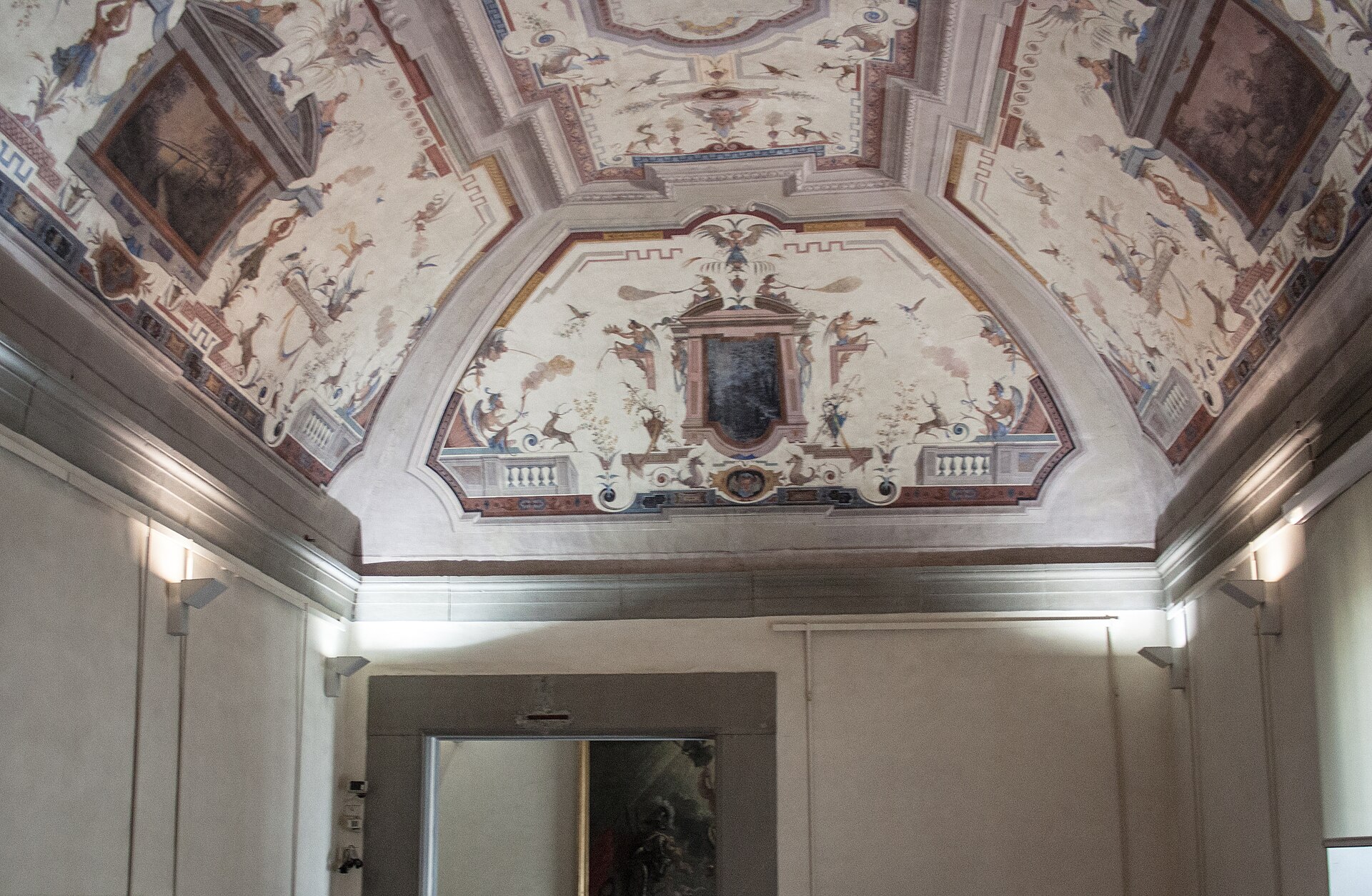
The Uffizi is arranged roughly chronologically, moving from medieval and Byzantine works through the Renaissance and into later periods. Here is what I would prioritise on a first visit.
Room 2: The Medieval Madonnas
The museum opens with three large altarpiece Madonnas by Cimabue, Duccio, and Giotto — all painted within a few decades of each other, all of the Virgin enthroned. Placing them side by side shows you exactly how Giotto broke from the flat, golden Byzantine tradition toward something that had weight, emotion, and space. It is one of the most instructive ten-minute pauses in Western art history.
Rooms 10–14: Botticelli
This is what most people come for, and rightly so. Primavera (c. 1477–1482) and The Birth of Venus (c. 1484–1486) hang facing each other, and together they represent the highpoint of Florentine Neoplatonism — a visual philosophy in which classical mythology and humanist ideals meet. Neither painting makes complete logical sense, and that is partly the point. Stand in front of Venus for longer than feels comfortable. Notice the wind, the shells, the hair.
The orange grove behind the figures in Primavera is identifiable as Citrus aurantium — the bitter orange. Botticelli was that specific.
Room 15: Leonardo
Leonardo’s Annunciation (c. 1472–1475) is here, painted when he was barely 20 and still in Verrocchio’s workshop. It is worth studying for one reason above all others: the angel’s wings, originally painted in proper anatomical proportion and later extended by a later, less talented hand — a change Leonardo himself reportedly complained about. Also here: his unfinished Adoration of the Magi, which shows his working method in a way finished paintings never could.
Room 25: Michelangelo’s Doni Tondo
The Doni Tondo (c. 1507) is Michelangelo’s only completed panel painting, and it does not look like anything else in the gallery. The colours are saturated to the point of strangeness — acid greens, pinks, and oranges that feel more like the Sistine Chapel ceiling than the soft sfumato of Leonardo. The torsion of the figures prefigures Mannerism. It is not an easy painting to love on first sight, but it rewards attention.
Room 18: The Tribuna
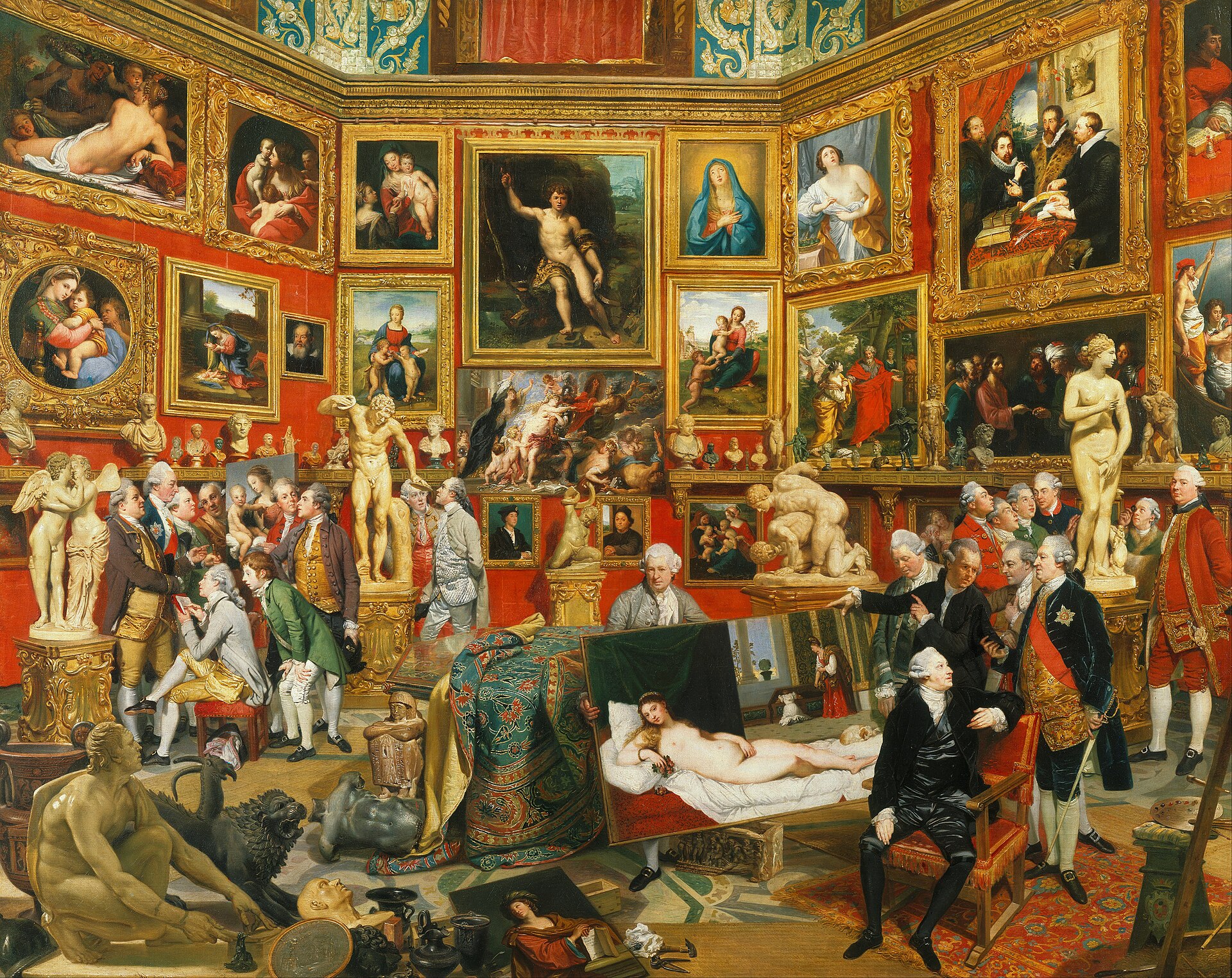
The Tribuna is the one room in the Uffizi that was specifically designed as a cabinet of wonder. Built in 1584 by Bernardo Buontalenti for Francesco I de’ Medici, it has a domed ceiling encrusted with mother-of-pearl, a floor of inlaid marble, and red walls. For centuries it held the absolute cream of the Medici collection. Today it contains the Medici Venus, a first-century Roman marble that once stood here as the room’s centrepiece. Plan five minutes just to absorb the room itself.
Room 83: Caravaggio
Later in the circuit, Caravaggio’s Bacchus and Medusa offer a radical break from what came before. Caravaggio’s realism — the slightly rotten grapes in Bacchus’s wreath, the terror frozen on Medusa’s face — was genuinely shocking in its time. It still lands.
What to Skip on a First Visit
The upper corridor rooms housing the self-portraits collection, while historically interesting, are dense and can wait for a second visit. The same goes for the detailed rooms of Northern European painters unless you have a specific interest. Stay focused on the Italian Renaissance rooms if time is limited.
Free Entry on the First Sunday of the Month
Every first Sunday of the month, admission to all state museums in Italy — including the Uffizi — is free for everyone. No ticket purchase required, no reservation possible. You simply turn up.
The catch is significant: you cannot book in advance on free Sundays. The Uffizi issues free tickets at the entrance immediately after admission, and when the gallery reaches capacity, entry closes for that wave. Priority access for cardholders and pass holders does not apply on these days, with narrow exceptions for disabled visitors and their companions, pregnant women, and EU school groups within the daily quota.
In practice, the first Sunday of any summer month means a queue forming before 8:00 a.m. and waits of two to four hours during peak season. Some visitors find this a reasonable trade. I would rather pay €29 and walk in on a Tuesday morning when the rooms are quiet. But if you are travelling in the off-season — November, December, January — the first Sunday can be genuinely pleasant. Arrive at opening (8:15 a.m.) and you will not wait long.
The 2026 free Sundays fall on: 4 January, 1 February, 1 March, 5 April, 3 May, 7 June, 5 July, 2 August, 6 September, 4 October, 1 November, 6 December.
Best Times to Visit the Uffizi
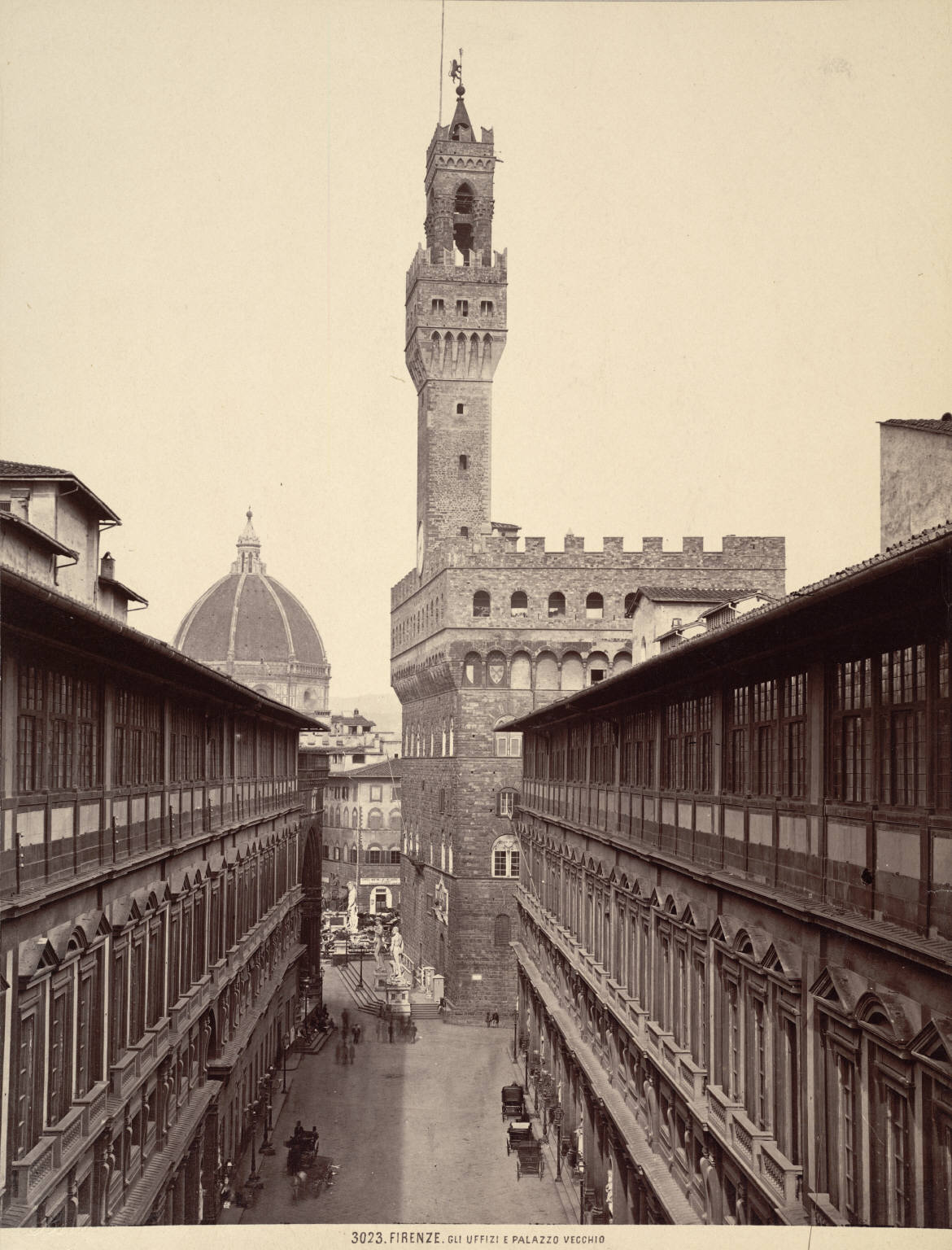
Weekday mornings are the best combination of timing and manageability. Wednesday and Thursday mornings in particular tend to be calmer than Monday (when some people overschedule after a travel day) and Friday (popular with weekend arrivals).
The 8:15 a.m. slot is both the most sought-after and the most rewarding. The Botticelli rooms in the first half-hour after opening, before tour groups arrive, are about as close as a major museum gets to a private viewing. It sells out fastest — book it as early as possible.
Afternoon entry from 4:00 p.m. works well if you have a flexible day and want to save on the price. You get roughly two hours before closing, which is enough for the highlights on a focused route.
Avoid: Saturday and Sunday mornings in June through August, public holidays (Liberation Day on 25 April, for example, floods Florence), and the week around Easter. Also avoid the first Sunday of any summer month unless you have unlimited patience.
The Uffizi is closed on Mondays, as well as on 1 January and 25 December.
For broader thoughts on timing your Italy trip, see best time to visit Italy.
Accessibility at the Uffizi
The Uffizi is substantially accessible, but it requires some navigation. The main entrance for visitors with reduced mobility is via Door 1 under the colonnade, accessible from Via della Ninna rather than the main queuing area. The standard route through the gallery does involve stairs, but lifts suitable for wheelchairs of various sizes are available throughout the building.
Certified disabled visitors plus one companion receive free priority access — bring official documentation of the disability (a medical certificate compliant with your country’s regulations, a European Disability Card, or a valid disabled parking badge with personal data, accompanied by ID).
Wheelchairs and walkers can be borrowed free of charge at the museum, subject to availability, on presentation of a valid ID.
Guide dogs are permitted. Prams and pushchairs are allowed.
For specific accessibility questions before your visit, contact the Uffizi accessibility service: [email protected] or +39 055 2388617 (Monday to Friday, 9:00 a.m. to 4:00 p.m.).
Scams and Pitfalls to Avoid
Fake and Unofficial Booking Sites
This is the most important section of this guide for many people. Search results for “Uffizi tickets” return dozens of third-party sites that look credible and rank well. Most charge significantly more than the official price — often €10–25 extra per ticket — while selling you the same access you can get direct for less.
A few are worse: they issue non-nominal tickets (without a personalised name) or tickets bought under a different visitor’s name, which since October 2025 will get you refused at the door with no refund.
The rule is simple and worth repeating: the only authorised online booking platform is tickets.uffizi.it. Check the URL. The Uffizi’s own website is uffizi.it — there is no “gallery” or “Florence” in the domain. Anything else is a third party.
Legitimate tour operators (Viator, GetYourGuide, and similar) do sell access as part of guided tour products, but those are bundled packages with a licensed guide, not bare ticket resales. Even with those, you will pay a premium for convenience.
Touts Outside the Gallery
Street sellers offering “skip the queue” tickets outside the gallery entrance are operating without authorisation and, in most cases, without valid tickets to sell. Move on.
Nominal Ticket Matching
Since October 2025, your ticket is tied to your name. Make sure the name you enter when booking matches the name on the ID you bring. Bring the same ID to the museum that you provided at checkout. Mismatches are not corrected at the door — the ticket is void.
Reselling Your Ticket
If your plans change and you cannot use your ticket, the standard advance booking fee (around €4) is non-refundable, and the ticket itself is non-transferable given the nominal system. Check the cancellation terms before you book.
Practical Visitor Information
- Address: Piazzale degli Uffizi 6, 50122 Florence
- Opening hours: Tuesday to Sunday, 8:15 a.m. to 6:50 p.m. (last entry 6:05 p.m. approximately). Closed Mondays, 1 January, 25 December.
- Getting there: A 5-minute walk from Piazza della Repubblica or Piazza della Signoria. The nearest car parks are Garage Santa Croce and Garage Parterre. No dedicated metro station in central Florence — see the Italy transport guide for getting around Florence by foot, bus, and taxi.
- Cloakroom: Large bags, wheeled luggage, and selfie sticks must be left in the free cloakroom at the entrance. Plan for five minutes at bag drop.
- Photography: Photography without flash is permitted for personal use throughout the gallery.
- Food: No food allowed in the galleries. There is a café and a shop in the building.
- Time needed: 2.5 hours for highlights; 4+ hours to go deep.
Planning your full Florence trip? The 3-day Florence itinerary covers how to structure the Uffizi alongside the Accademia, the Duomo complex, and the Oltrarno. See also where to stay in Florence to pick a base that minimises walking time to the museum.
Final Thoughts
The Uffizi is not subtle about being one of the great museums of the world, and it should not have to be. But the noise around ticketing — the fake sites, the inflated prices, the reseller confusion — can make booking feel harder than it is. It is not. Go to tickets.uffizi.it, pick your date early, bring your ID, and arrive at 8:15 a.m. if you can manage it. The rest takes care of itself.
For your broader Italy trip, start with the Italy travel guide and the Italy trip planner to see how Florence fits into the bigger picture. If Florence is your first stop in Italy or your first time in Europe, the Italy travel mistakes guide covers the common planning errors that trip people up — several of them apply directly to museum visits.
Questions travellers ask
How do I buy Uffizi tickets?
Buy directly at tickets.uffizi.it — the official and only authorised online booking platform. Select your date, choose a timed entry slot (available in approximately 15-minute increments from 8:15 a.m.), enter your name and identification details, and pay. You will receive a confirmation email with a QR code. Bring the same ID you used when booking.
How much do Uffizi tickets cost in 2026?
As of 2026, a standard adult ticket bought in advance online costs around €29 (€25 base price plus a €4 advance booking fee). On-the-day walk-up tickets are around €25 if available. From 4:00 p.m. onwards, a discounted afternoon ticket is available for around €16. EU citizens aged 18–25 pay around €2. Under-18s enter free. Always verify current prices at uffizi.it.
When do Uffizi tickets sell out?
In high season (April to October), popular morning slots on weekends can sell out two to three months in advance. Weekday morning slots, particularly for summer months, may sell out six to eight weeks ahead. Book as early as your travel dates are confirmed. Off-season (November to March), availability is much better, though Christmas week fills quickly.
What is the PassePartout ticket?
The PassePartout 5-Day Ticket (around €40) covers one admission to the Uffizi Gallery, Pitti Palace, and Boboli Gardens over five consecutive days. You must book your Uffizi date and time at the time of purchase, as the Uffizi is the first museum you visit. Pitti Palace and Boboli Gardens can then be visited in any order within the 5-day window with no further reservation needed. It saves around €11–21 compared to buying each entry separately.
Is there free entry to the Uffizi?
Yes — on the first Sunday of each month, all state museums including the Uffizi are free for everyone. However, advance booking is not possible on these days. Arrive at or before opening (8:15 a.m.) to avoid very long queues. Under-18s of any nationality enter free at all times; certified disabled visitors and one companion also enter free on production of documentation.
Can I buy Uffizi tickets on the day?
Yes, walk-up tickets are available at the ticket office in the Uffizi square. In low season, this is perfectly workable. In high season, the ticket office queue can be long and your preferred time slot may be sold out. Advance booking via tickets.uffizi.it is strongly recommended from April to October.
Is there actually a skip-the-line option?
There is no separate express lane at the Uffizi for premium tickets — all booked visitors use the same entrance. What a pre-booked timed ticket gives you is a shorter, faster-moving queue of visitors with confirmed slots, compared to the much longer walk-up queue. Some licensed guided tour products include fast-track access to a slightly different entry flow, but the essential answer is: booking in advance is the “skip the line” mechanism. There is no magic upgrade beyond that.
What should I not miss inside the Uffizi?
On a first visit: the Botticelli rooms (Primavera and Birth of Venus), Leonardo’s Annunciation, Michelangelo’s Doni Tondo, and the Tribuna room. Allow extra time for the medieval Madonnas at the start — Giotto’s Ognissanti Madonna in particular. Caravaggio’s Bacchus later in the circuit is worth a specific stop. A two-and-a-half-hour visit with these fixed points is a satisfying experience.