Florence & Tuscany Travel Guide
3 Days in Florence: An Art and Food Itinerary
3 Days in Florence: Your Day-by-Day Itinerary
Three days in Florence is the right amount of time for a first visit. You will not see everything — nobody does — but you will see the things that matter: Brunelleschi’s dome, Botticelli’s Venus, Michelangelo’s David, the Arno at golden hour from Piazzale Michelangelo. This itinerary gives you a realistic, geographically logical route for each day, with food stops woven in so that you are eating your way through the city rather than sprinting past it. It is designed for first-time visitors who want to leave Florence feeling like they understood it, not just photographed it.
The shape of it: Day 1 anchors the historic center (Duomo complex and Piazza della Signoria, with an afternoon Uffizi visit). Day 2 heads north to the Accademia, then pivots through San Lorenzo and down to Santa Croce. Day 3 crosses the Arno into Oltrarno — Pitti Palace, Boboli Gardens, Santo Spirito — and ends at Piazzale Michelangelo for one of the best sunsets in Italy. If you are part of the broader Italy trip, check our Italy itineraries hub and the suggested route through 10-day Italy for context on how Florence fits.
At a Glance: 3-Day Florence Itinerary
| Day | Focus | Must Pre-Book |
|---|---|---|
| Day 1 | Duomo complex + Piazza della Signoria + Uffizi | Brunelleschi Dome climb (books out weeks ahead); Uffizi timed entry |
| Day 2 | Accademia (David) + San Lorenzo/Mercato Centrale + Santa Croce | Accademia timed entry (essential) |
| Day 3 | Oltrarno: Pitti Palace + Boboli Gardens + Santo Spirito + Piazzale Michelangelo | Pitti/Boboli combo ticket (advisable in peak season) |
Day 1: The Duomo, Piazza della Signoria, and the Uffizi
The center of Florence is extraordinarily compact. The Duomo, Piazza della Signoria, and the Uffizi entrance are all within a ten-minute walk of each other. On your first day this works in your favor: you can do the big set pieces of the historic core in a single sweep, then reward yourself at the Uffizi in the afternoon when the light softens and some of the morning crowds have cleared.
Morning: The Duomo Complex (2.5–3 hours)
Plan to arrive at the Duomo complex by 8:00 or 8:30 am. Florence’s old town fills up by 10:00, and the area around the cathedral is a pressure cooker by midday. Being there early is not a minor advantage — it is a different city.
The “Duomo” is technically a complex of four buildings: the Cathedral of Santa Maria del Fiore itself, the Baptistery of San Giovanni, Giotto’s Bell Tower (the Campanile), and the Museo dell’Opera del Duomo. Your ticket options from the official Opera del Duomo site let you mix and match, but for a first visit, I would do two things: climb the Brunelleschi Dome and visit the Museo dell’Opera del Duomo.
The dome climb (463 steps, no lift) takes 45 to 60 minutes and gives you one of the great urban views in Europe — plus the vertiginous experience of looking straight down at Giorgio Vasari’s Last Judgment fresco from the narrow internal gallery. The Museo dell’Opera has Ghiberti’s original Gates of Paradise bronze doors (the ones on the Baptistery today are reproductions) and Michelangelo’s unfinished Bandini Pietà, which he carved for his own tomb and then smashed in frustration. It is one of the most quietly devastating rooms in Florence.
The Campanile is the better choice if you have limited stamina for crowds — it tends to be less packed than the dome climb and you get an unusual angle on the cathedral itself. See our full Florence attractions guide for a deeper breakdown of what each ticket level includes.
Pre-booking: The dome climb sells out days to weeks in advance depending on the season. Book as soon as you have fixed dates. The Museo dell’Opera does not sell out, but buying in advance saves queue time.
Gelato note: There is a fine gelateria on Via dei Servi, a quiet street running north from the Duomo, that is worth visiting before the day gets going. Avoid anything within twenty metres of the cathedral’s façade — those shops are trading on location, not quality.
Late Morning: Piazza della Signoria and the Loggia dei Lanzi (45 minutes)
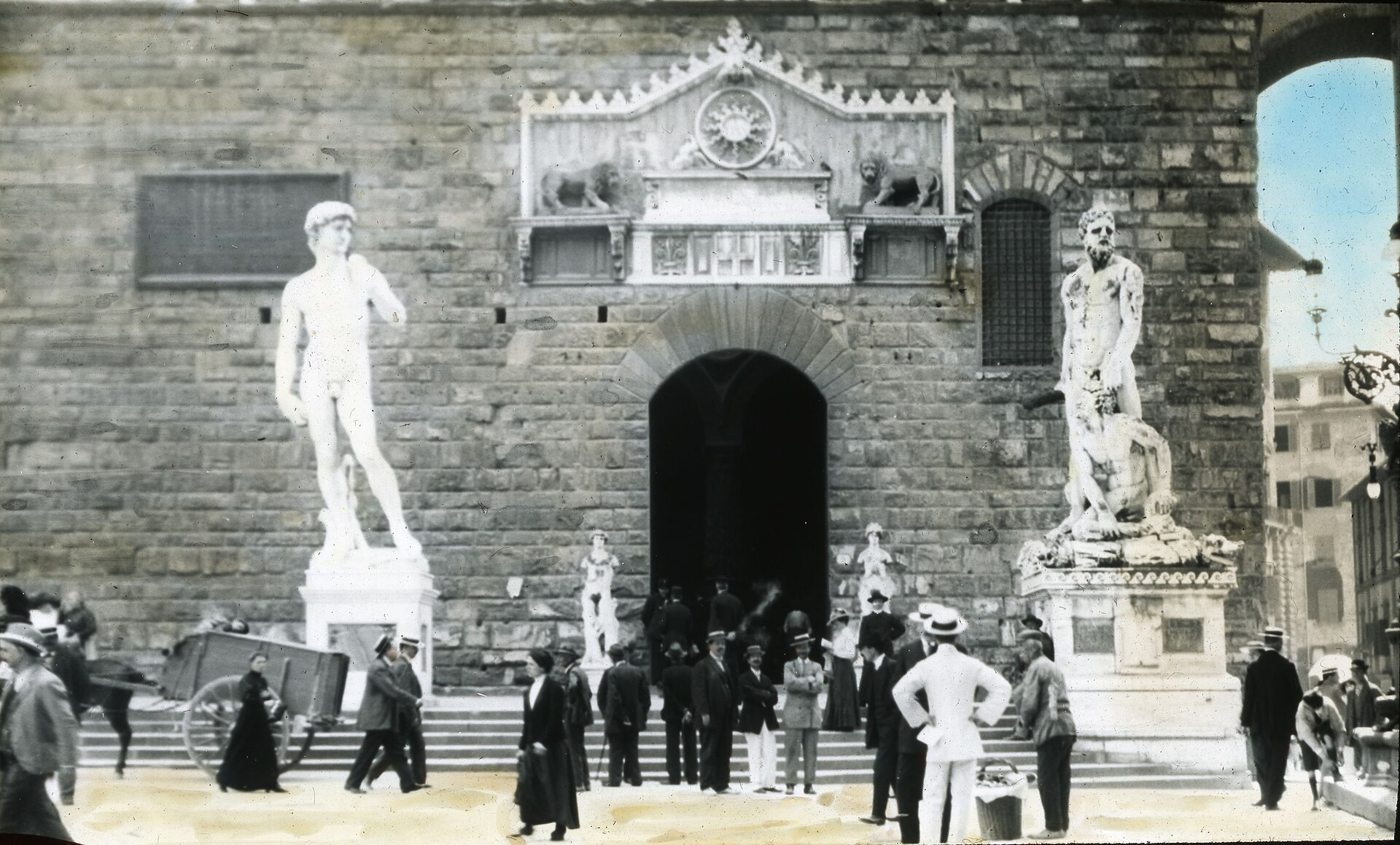
Walk south from the Duomo down Via dei Calzaiuoli — Florence’s main pedestrian artery, lined with churches and shops — and you will arrive at Piazza della Signoria in about eight minutes. This is Florence’s civic heart: the Palazzo Vecchio on one side, the copy of Michelangelo’s David on its plinth, and the Loggia dei Lanzi open-air sculpture gallery taking up the southern corner.
The Loggia is free, always open, and contains some extraordinary work including Benvenuto Cellini’s Perseus holding the head of Medusa and Giambologna’s Rape of the Sabine Women. Most visitors walk past it on their way to the Uffizi without stopping. Take fifteen minutes here.
The square itself tells the story of Florentine political violence in marble. The spot where Savonarola was burned in 1498 is marked in the pavement. Somewhere near the door of the Palazzo Vecchio, Leonardo and Michelangelo were once commissioned to paint competing murals on opposing walls — a commission that came to nothing, the most mythologized non-artwork in history.
If you want to enter the Palazzo Vecchio, allow an extra 90 minutes and book in advance — the painted halls and the view from the tower are worth it. If time is tight, save it for a future trip.
Lunch: Near Piazza della Signoria (45–60 minutes)
A couple of options within a five-minute walk:
Buca Mario, on Via delle Ghiribizze, is one of Florence’s oldest trattorie and consistently good for a simple lunch — ribollita (the Tuscan bread-and-bean soup), pappardelle with wild boar ragù, or a bistecca if you are very hungry. It is not cheap, but it is not tourist-trap pricing either.
All’Antico Vinaio, on Via dei Neri, is the city’s most famous sandwich shop and it will have a queue. If you commit to it, the schiacciata (flatbread) sandwiches stuffed with finocchiona salami, truffle cream, or stracchino and artichokes are genuinely excellent. Get there by 11:30 before the lunch rush hits full force, or go at 2:30 when it has thinned out.
Afternoon: Uffizi Gallery (2.5–3 hours)
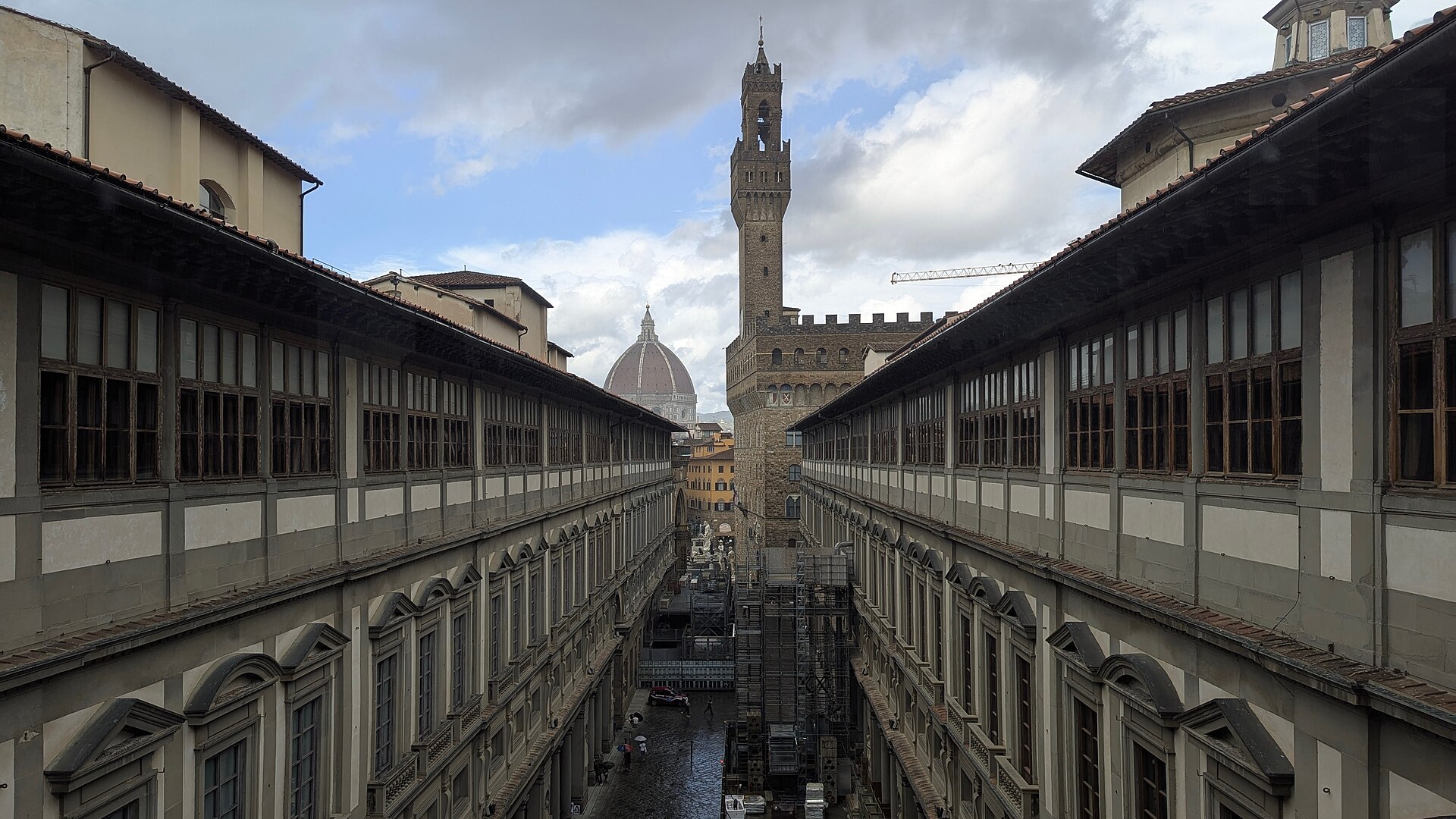
The Uffizi is one of the great art museums in the world, and it requires some strategy. You will not see all of it in an afternoon. You do not need to. Pick three rooms to absorb deeply and let the rest wash over you.
For a first visit, the non-negotiables are: Room 10–14 (Botticelli’s Birth of Venus and Primavera — two paintings you will stop in front of longer than you planned); Room 35 (Michelangelo’s Doni Tondo — technically a Holy Family but painted with a physicality that looks forward to the Sistine Chapel); and Room 66 (Raphael’s portraits, including the remarkable Pope Leo X with Cardinals). The Leonardo rooms are often crowded but worth pushing through.
There is a rooftop café with views over the Arno. It is not the cheapest caffè in Florence, but the view of Ponte Vecchio and the hills beyond is hard to beat at 5:00 pm with an Aperol Spritz.
Tickets should be bought well in advance from the official Uffizi website. For a deeper walkthrough of what to prioritize inside and the various ticket options, see our dedicated guide at /uffizi-tickets/.
Evening: Ponte Vecchio and Aperitivo
Walk from the Uffizi exit along the Arno to Ponte Vecchio, Florence’s medieval bridge lined with goldsmiths’ shops. Best visited in the late afternoon when the light comes off the water at a low angle. Then walk back through the city for dinner — the streets around Via della Vigna Nuova and Via dei Tornabuoni have a good density of serious restaurants without the worst of the tourist markups.
For dinner, Trattoria Mario on Via Rosina is a classic Florentine lunch counter (note: it opens for dinner only some nights — check ahead). Buca dell’Orafo near Ponte Vecchio does a good bistecca alla Fiorentina if you want the quintessential Florentine meat experience on night one.
Day 2: Accademia, San Lorenzo, Mercato Centrale, and Santa Croce
Day 2 loops north of the historic center to the Accademia, then swings through the San Lorenzo market district, and finishes in the Santa Croce neighborhood to the east. Geographically, you start northwest and end southeast — a clean arc that avoids backtracking.
Morning: Accademia Gallery (1.5–2 hours, arrive at opening)
Book the earliest available slot at the Accademia, which opens at 8:15 am Tuesday through Sunday. The David draws crowds that build exponentially through the morning; being there at 8:15 means you will have a few minutes with him in relative quiet before the tour groups arrive.
Michelangelo’s David is one of those things that exceeds your expectations even when your expectations are high. He is bigger than you imagine — 5.17 metres tall — and the tension in the figure (the veins in the hand, the slight turn of the head, the weight on that left leg) is more visible in person than in any photograph. The Accademia is not a large museum, but it also contains Michelangelo’s four unfinished Prisoners/Slaves, partially emerged from raw marble in a way that makes the creative process feel visible. Plan 90 minutes minimum.
Book tickets from the Accademia’s official site as far ahead as possible. In peak season (April–October), same-week tickets can be difficult to find.
Mid-Morning: San Lorenzo and the Medici Chapels (1 hour)
From the Accademia, walk five minutes west to the Basilica di San Lorenzo, the Medici family’s parish church. The New Sacristy, designed by Michelangelo, contains the tombs of Lorenzo and Giuliano de’ Medici — including the allegorical figures of Night, Day, Dawn, and Dusk. These sculptures alone justify the ten-minute walk.
The Medici Chapels (Cappelle Medicee) are technically a separate ticket from the basilica. If art fatigue is setting in, skip the basilica and just do the chapels — the Michelangelo work is in the chapels. Alternatively, spend that hour browsing the outdoor market that surrounds San Lorenzo, one of the oldest street markets in Florence, selling leather goods, linens, and food.
Lunch: Mercato Centrale (45–60 minutes)
Walk one block north of San Lorenzo to the Mercato Centrale. The ground floor is the best working food market in Florence, with stalls of Fiorentino beef, truffles, aged Pecorino, fresh pasta, and the city’s best lampredotto sandwiches (lampredotto being Florence’s proud working-class street food: braised tripe served in a roll, traditionally doused with a green herb sauce). Nerbone, the market’s oldest food stall, has been here since 1872 and is the place to eat standing up.
The upstairs food court is more polished and more expensive. It is not bad, but if you want to eat where Florentines eat, the ground floor is the answer.
Afternoon: Santa Croce (1.5–2 hours)
Walk thirty minutes east from Mercato Centrale — or take a short taxi ride — to the Basilica di Santa Croce in Piazza Santa Croce. This is Florence’s Franciscan church and effectively the national pantheon: Michelangelo is buried here, along with Galileo, Machiavelli, and Ghiberti. The cenotaph for Dante (who died in Ravenna) is on the left nave wall.
The church itself is one of the finest Gothic interiors in Italy, with Giotto’s frescoes in the Bardi and Peruzzi Chapels forming the most important pre-Renaissance fresco cycles in the city. Many visitors walk through Santa Croce quickly because it is “just a church” — that is a mistake. Allow 90 minutes.
The Santa Croce neighborhood around the piazza has some of the best restaurant density in Florence. Eat in the piazza if the weather is fine, or try Osteria del Cinghiale Bianco a few streets away for a serious Tuscan dinner focused on wild boar and hand-rolled pasta.
Evening: Santo Spirito Aperitivo (preview for Day 3)
If you have energy, walk back across the Arno via Ponte alle Grazie (not Ponte Vecchio — that will be crowded) to Piazza Santo Spirito. This is the neighborhood square of Oltrarno and where locals come for aperitivo. The bars around the square serve Negroni, wine, and spritz with small plates of nibbles from around 6:30 pm. Sit outside, watch the neighborhood settle in for the evening, and consider it reconnaissance for Day 3.
Day 3: Oltrarno — Pitti Palace, Boboli Gardens, Santo Spirito, and Piazzale Michelangelo at Sunset
The Oltrarno — literally “beyond the Arno” — is the neighborhood on the south bank of the river. For much of Florence’s history it was where the artisans lived: the goldsmiths, framers, furniture restorers, and leather workers who served the palaces across the bridge. Much of that craft culture survives, especially in the streets around Via Maggio and Via dei Serragli.
Day 3 keeps you entirely on the south side of the river. You will not need to cross back to the centro storico. Cross the Arno via Ponte Santa Trinita (the most beautiful bridge in Florence, and far less photographed than Ponte Vecchio) and begin.
Morning: Pitti Palace and Palatine Gallery (2 hours)
The Pitti Palace is enormous — the biggest palazzo in Florence by some distance — and contains multiple museums under one roof. For a three-day visit, focus on the Galleria Palatina (the former Medici private apartments, hung floor to ceiling with Raphael, Titian, and Rubens) and skip everything else unless a specific collection calls to you. The costume museum and the porcelain museum are for specialists.
The Palatina is less visited than the Uffizi but arguably as rich. Raphael’s Donna Velata and Madonna della Seggiola hang here. So does Titian’s Portrait of a Gentleman, one of the most psychologically penetrating paintings of the Renaissance.
Buy a combined Pitti Palace and Boboli Gardens ticket. In peak season it is worth booking ahead; off-season you can usually buy at the door.
Mid-Morning: Boboli Gardens (1–1.5 hours)
Behind the Pitti Palace, the Boboli Gardens climb the hillside in a series of terraced parterres, fountains, and statuary. They were the model for formal Italian garden design across Europe. Give yourself an hour to walk up to the upper belvedere for a view over Florence’s rooftops toward Fiesole in the hills.
The gardens are large. If you tire easily or the weather is hot, the central amphitheater and the lower half are sufficient. The upper half is wilder and quieter, and the view from the Kaffeehaus (a small pavilion near the top, sometimes open for coffee) is one of the most peaceful spots in the city.
Note: Boboli can be combined with the Bardini Gardens next door on the same ticket. The Bardini has a wisteria tunnel that is famous in spring (March–April) and a terrace view looking directly at the Duomo. Worth twenty minutes if you are there in the right season.
Lunch: Oltrarno Lunch Options (45–60 minutes)
Back down in the Oltrarno streets, lunch options are better and cheaper than in the centro storico. A few reliable places:
Trattoria da Ruggero, on Via Senese, is old-school Florentine — paper tablecloths, simple ribollita, excellent pappardelle with hare. It tends to fill up fast, so arrive by 12:30 pm.
Il Santino, the small wine bar attached to restaurant Il Santo Bevitore on Via di Santo Spirito, does excellent cicchetti (small plates) and a good glass of Chianti Classico. More casual than a full sit-down lunch.
Buca Mario and several other spots near Piazza Santo Spirito are fine too — the neighborhood in general has solid mid-range options without the tourist pressure of the centro.
Afternoon: The Oltrarno Craft Streets and Santo Spirito (1–1.5 hours)
After lunch, walk the artisan streets — Via Maggio, Borgo San Jacopo, Sdrucciolo dei Pitti. The furniture restoration and gilding workshops still operate from the same palazzini they have occupied for generations. You can watch gilders working through their open workshop doors. Several high-quality leather goods shops here stock work that is made locally rather than sourced from factories in eastern Europe.
Piazza Santo Spirito anchors the neighborhood. The Basilica di Santo Spirito on the square is designed by Brunelleschi — his cool, rational nave is one of the finest expressions of Renaissance proportion in the city, and it receives a fraction of the Duomo’s visitors. Entry is usually free or minimal cost. Spend fifteen minutes inside. The square outside has a small market on weekend mornings.
For a complete picture of what the neighborhood offers, our Florence-Tuscany travel guide has more.
Late Afternoon and Sunset: Piazzale Michelangelo (arrive 1 hour before sunset)
From Santo Spirito, walk east along the south bank of the Arno for about twenty minutes, then climb Via dei Bastioni up the hillside to Piazzale Michelangelo. The climb takes about fifteen minutes. Alternatively, you can take bus line 13 from Piazza Ferrucci.
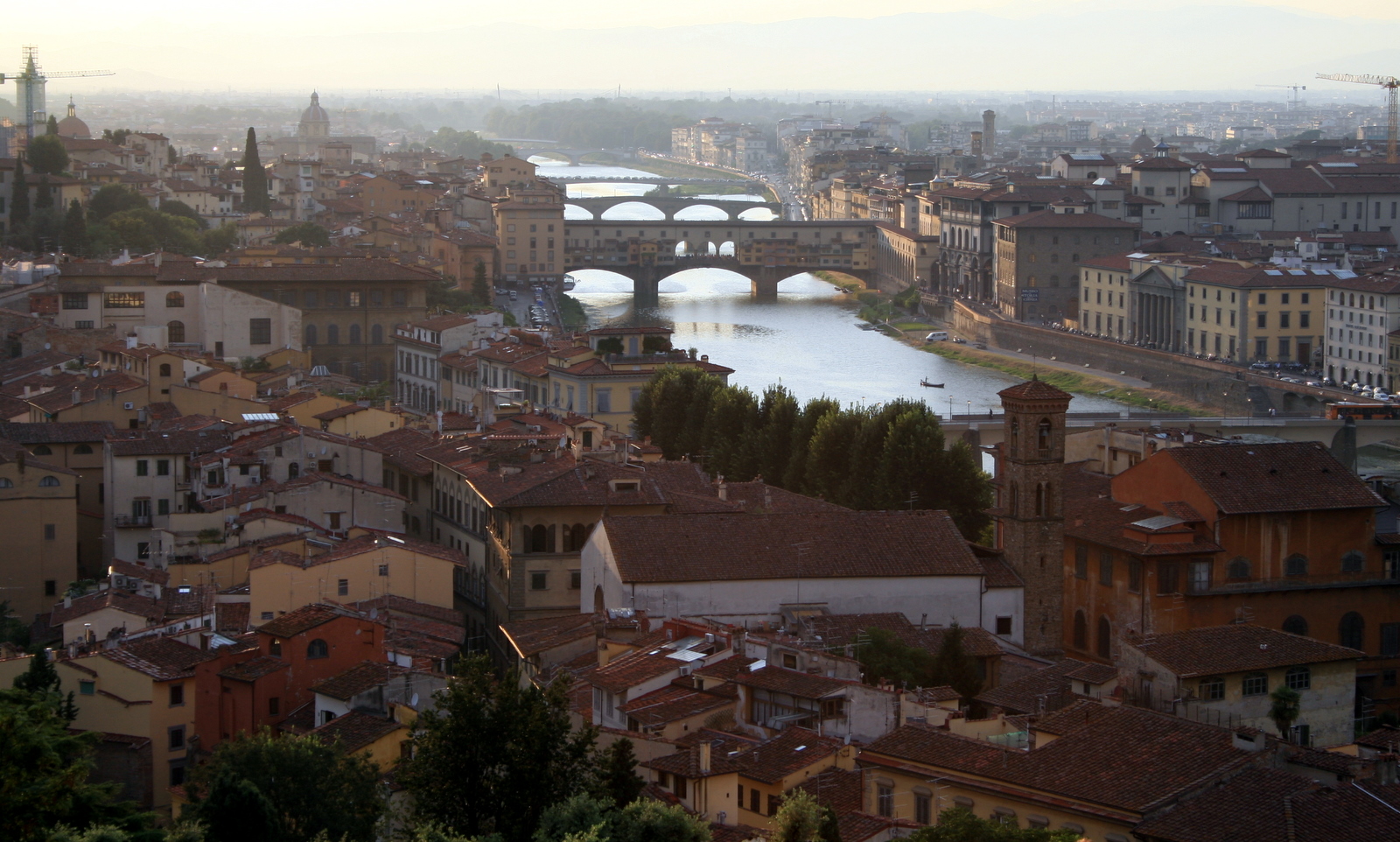
The piazzale is a terrace perched on the hillside south of the Arno, with a bronze copy of the David in the center and a panorama that takes in the entire Florence skyline — Brunelleschi’s dome, Giotto’s campanile, the towers of the Palazzo Vecchio, and Ponte Vecchio below you. It is the photograph that represents Florence.
It is also busy. The trick is to arrive 60 to 90 minutes before actual sunset (not golden hour — actual sunset, which you can look up for your travel dates) and claim a spot along the wall on the left side of the terrace, which gives a slightly better angle on the Duomo. The crowds thin a little after the sun drops and the light goes blue.
Just above Piazzale Michelangelo, a short further climb leads to the Basilica di San Miniato al Monte — a Romanesque church from the eleventh century, mostly marble, with a remarkable floor mosaic and a crypt that still has functioning monks. It closes in the late afternoon so check hours in advance, but if you are early for sunset, ten minutes in San Miniato is ten minutes well spent.
Dinner: Back in Oltrarno
Walk back down into Oltrarno for a final dinner. Buca Mario, Osteria Santo Spirito on the piazza, and Il Santo Bevitore are all strong options within a few minutes of each other. If you want to eat well and have a proper Florentine bistecca alla Fiorentina (dry-aged Chianina beef, at least 600 grams, served medium-rare as a rule), Trattoria Sostanza on Via della Porcellana — north of the river but worth the walk — has been cooking them the same way since 1869.
End the trip with a final Negroni in Piazza Santo Spirito. The square at 10:00 pm, with locals on the church steps and dogs running between tables, is about as close to the real Florence as a visitor can get.
Two Variations on This Itinerary
Variation 1: Add a Tuscany Day Trip
If you are staying three nights and want to see more of the region, one strategy is to use Day 3 for a Tuscany day trip and move the Oltrarno to Day 2’s afternoon (combining it with Santa Croce in the late afternoon, skipping Piazzale Michelangelo until the evening of whatever day you are in the city at sunset).
The best day trip from Florence is Siena and the Chianti wine region combined. A morning in Siena (the shell-shaped Piazza del Campo, the cathedral striped in black and white marble) followed by a drive or tour through the Chianti Classico vineyards in the afternoon — tasting Sangiovese at a small producer — is a genuinely different experience from anything the city can offer.
See our Florence day trips guide and Chianti wine region guide for logistics on getting there and what to book in advance. If you are part of a longer Italy journey, our first time in Italy itinerary covers how to sequence a Tuscany detour into a broader trip.
Variation 2: The Slower, Food-Focused Florence
If art fatigue is real for you, or if you are traveling with a mixed group where not everyone wants to spend six hours in museums, here is the adjusted shape:
Day 1: Do the Duomo dome climb (morning, pre-booked) and the Mercato Centrale for lunch. Afternoon: walk Piazza della Signoria and the Loggia dei Lanzi, then take a cooking class in the late afternoon — several Florentine schools run two- to three-hour pasta and sauce classes that end with dinner at the table. Skip the Uffizi until Day 2.
Day 2: A single focused museum morning — either the Uffizi or the Accademia, not both. Afternoon: the Oltrarno artisan streets, an aperitivo in Santo Spirito, and a food tour of the neighborhood. Several good Oltrarno food tours run at sunset and cover lampredotto, Florentine wine, and street food in the same two hours.
Day 3: Santa Croce in the morning (genuinely beautiful and not rushed). Lunch at Mercato Centrale. Afternoon free for shopping, a Chianti tasting at an enoteca (wine bar) in the Oltrarno, or a final walk along the Arno. Piazzale Michelangelo at sunset.
This slower version still hits the highlights but gives you more breathing room between them.
Practical Notes for Your 3 Days in Florence
Pre-Booking: What Sells Out and When
- Brunelleschi Dome climb: Books out earliest — often two to four weeks ahead in peak season. This is the one to book first, before anything else.
- Uffizi Gallery: Timed entry tickets are available but popular slots (early morning, late afternoon) sell fast in April–October. Two weeks ahead is safe; one week is risky.
- Accademia (David): More tickets are released than the Uffizi but it still sells out. One to two weeks ahead is usually sufficient, three weeks to be safe in peak season.
- Pitti Palace / Boboli: Less likely to sell out but advisable to pre-book in summer.
- Duomo Museum / Baptistery: Rarely sells out completely, but queuing without a ticket in peak season can cost you an hour.
All these can be booked directly from official museum websites. See /uffizi-tickets/ for a full guide to the Uffizi booking process and what the different ticket tiers include.
The Firenze Card: Is It Worth It?
The Firenze Card (currently around €85, though prices change — check the official site) grants timed entry to over 60 museums for 72 hours. It sounds ideal in theory. In practice, it is only worth it if you plan to visit four or more paid museums in three days — which the average first-time visitor does not do. If you are limiting yourself to the Uffizi, the Accademia, the Duomo complex, and the Pitti Palace, you are likely better off buying individual tickets. Do the math with current prices before committing.
Getting Around Florence
Florence’s historic center is small — most of the sights on this itinerary are within a 25-minute walk of each other. You do not need taxis or public transport for most of this plan. The exception is Piazzale Michelangelo, which involves a hill climb; bus 13 from the center makes it accessible without the walk. If you are staying in the Oltrarno, bus line 23 connects to the centro storico.
Cobblestones are everywhere. Wear comfortable shoes.
Where to Stay
For a first visit focused on the itinerary above, the best neighborhoods are:
- Centro Storico / San Giovanni: Closest to the Duomo, Uffizi, and Piazza della Signoria. Most expensive and most touristy.
- Santa Croce / Sant’Ambrogio: Five-minute walk from the main sights, better restaurants, somewhat lower prices, more local character.
- Oltrarno: The most neighborhood-feeling part of central Florence. Involves a river crossing to reach Day 1 and Day 2 sights, but evenings are genuinely better here. My recommendation for travelers who want to feel the city rather than just process it.
See our where to stay in Florence guide for specific hotel picks at different price points in each neighborhood. For broader Italy context, our guide to planning a trip to Italy has accommodation advice for the whole country.
What to Skip on a First Visit
- The Vasari Corridor: Currently under restoration for extended periods. Check if it has reopened before counting on it.
- The Bargello Museum: Excellent sculpture collection (Donatello’s David, Verrocchio’s David, Michelangelo’s early work) but genuinely hard to fit into a three-day itinerary without sacrificing something more important. Save it for a return trip.
- Fiesole day trip: The Etruscan hill town above Florence is lovely, but a half-day commitment. Only do it if you have already been to Santa Croce and the Oltrarno.
- The Palazzo Strozzi: Worth knowing about — this Renaissance palace hosts blockbuster contemporary art exhibitions and is usually excellent — but it is not a first-trip essential.
Final Thoughts
Florence is the kind of city that makes you aware of your own limitations. There is more art in this one city than you can fully absorb in a lifetime of visits. Three days does not fix that — but three days planned well gives you a foundation. You will leave knowing the shape of the place: the weight of the Duomo against the sky, the way the Arno runs copper at dusk, the particular Florentine habit of stuffing extraordinary things into nondescript doorways. That is enough for a first visit. It is the kind of enough that makes you want to come back.
For the full picture of Italy travel, including how a Florence visit fits into a longer journey, see our complete guide to visiting Italy, the Florence-Tuscany travel guide, and the first time in Italy itinerary.
Questions travellers ask
Is 3 days in Florence enough?
Three days is the right minimum for a first visit. You can see all the headline sights — the Duomo complex, the Uffizi, the Accademia, the Oltrarno — without sprinting. You will not exhaust the city; Florence rewards return visits. But three focused days, planned geographically, leaves you with a coherent picture of why the city matters and a genuine feel for the neighborhoods.
What should I not miss on my first visit to Florence?
The Brunelleschi Dome climb, Michelangelo’s David at the Accademia, the Botticelli rooms at the Uffizi, Piazzale Michelangelo at sunset, and at least one meal at the Mercato Centrale. The Loggia dei Lanzi and the Santa Croce basilica are often overlooked but among the most rewarding experiences the city offers. For the full attractions picture, see /things-to-do-in-florence/.
How far in advance should I book Florence museum tickets?
For the Brunelleschi Dome climb: as soon as you have confirmed travel dates, ideally three to four weeks ahead in spring and summer. For the Uffizi and Accademia: two to three weeks ahead in peak season (April through October), one week or less in the quiet months. Same-day tickets exist at the door but specific time slots may be limited or unavailable.
Is Florence walkable?
Extremely. The entire historic center is a UNESCO World Heritage Site and pedestrianized in large parts. The Duomo to the Uffizi is a five-minute walk. The Uffizi to Ponte Vecchio is three minutes. Santa Croce to the Accademia is twenty minutes on foot through some of the most beautiful streets in Europe. The only significant walk that most visitors hesitate on is the climb to Piazzale Michelangelo, which can be done by bus if needed.
What is the best time of day to visit the Uffizi?
First slot of the day (opening, around 8:15–9:00 am) or the last ninety minutes before closing. The museum is busiest from 10:00 am to 3:00 pm. Late afternoon — particularly after 4:00 pm — has noticeably thinner crowds in the major rooms. If your timed ticket is for the late afternoon, that is not a bad outcome.
Should I do a guided tour of the Uffizi and Accademia?
For the Uffizi, a guided tour (small group or private) genuinely adds value if Renaissance painting is not already familiar to you — there is a lot of context that makes the difference between a room of gold-haloed saints and a window into how an entire civilization understood the world. For the Accademia, the David is self-explanatory but a guide adds context for the Prisoners and the rest of the collection. Budget about €30–60 per person for a reputable small-group tour, more for private. Always check the guide-to-participant ratio before booking.
Can I see both the Uffizi and the Accademia in the same day?
Technically yes. Practically, it makes for an exhausting day. Both museums require sustained attention; the Uffizi alone will take two to three hours if you are engaged. Doing both in a day means rushing both. The itinerary above deliberately splits them across Day 1 and Day 2 so that each gets the morning slot, when you are freshest, and you arrive having had a night to process.
What is a good day trip from Florence?
Siena is the strongest single-day option: 75 minutes by bus or 90 minutes by train, a medieval city that looks nothing like Florence (civic Gothic vs. Renaissance), with the Piazza del Campo and one of the best cathedrals in Italy. Combining Siena with a wine stop in the Chianti Classico zone on the way back is the ideal full-day version. See /florence-day-trips/ for the full list of options and /chianti-wine-region/ for the Chianti specifics.
1 comment
Comments are closed.