Italian Train & Transport Guide
How to Get Around the Amalfi Coast Without a Car

Yes, you can absolutely do the Amalfi Coast without a car. In fact, for most visitors — especially anyone arriving between May and October — going car-free is not just feasible, it is genuinely the smarter choice. Base yourself in Sorrento for maximum flexibility, or in Positano if you want to wake up inside the postcard. Use the ferries whenever they run. Fall back on the SITA Sud buses when you need to. This guide covers every moving piece: the train from Naples, the bus system and its real-world quirks, the ferry routes that change everything in summer, where to base for a car-free trip, and an honest account of why driving this coast is far less appealing than it sounds.
This is for anyone planning to spend three to seven days on the coast and wondering whether they truly need a rental car. They almost certainly do not.
The Quick-Reference Table: Routes, Modes, and Times
Use this as your orientation before diving into the details. All times and fares are approximate and as of 2026 — always verify with operators before travel.
| Route | Best Mode | Approx. Time | Notes |
|---|---|---|---|
| Naples (Garibaldi) → Sorrento | Circumvesuviana train | ~70 min | Runs every 30 min; around €5. Campania Express is faster (~50 min), fewer stops, costs more |
| Sorrento → Positano | Ferry (Apr–Oct) | ~35–40 min | Around €20; stunning coastal views. Bus is cheaper (~€2.60) but can take 60+ min in traffic |
| Sorrento → Amalfi | Ferry (Apr–Oct) | ~65 min | Around €20–22. Bus is slower in season but runs year-round |
| Positano → Amalfi | Ferry (Apr–Oct) | ~25–30 min | Around €10–12; Travelmar or NLG |
| Amalfi → Salerno | Ferry (Apr–Oct) | ~42 min | Travelmar runs up to 9 daily sailings; also accessible by SITA bus |
| Amalfi → Ravello | SITA bus (line 5110) | ~25 min | No ferry to Ravello; bus only |
| Amalfi → Maiori / Minori | Ferry or bus | ~10–20 min | Travelmar stops at both; short bus ride too |
| Rome → Naples | Frecciarossa train | ~70 min | Then Circumvesuviana or taxi from Napoli Centrale to Garibaldi |
Getting to the Coast: Naples, Rome, and the Circumvesuviana
Everything on the Amalfi Coast routes through Naples or, more precisely, through Sorrento. That makes the Circumvesuviana train — the old local rail line that links Napoli Garibaldi station with Sorrento — your first piece of the puzzle.
The standard Circumvesuviana runs every thirty minutes, takes around seventy minutes end-to-end, and costs around €5 each way as of 2026. You can buy tickets from the machines inside Napoli Garibaldi station, at tabacchi near the platform, or through the EAV app. Validate on board. The train stops at Herculaneum (Ercolano Scavi) and Pompeii — worth knowing if you want to fold either into your trip.
The service has a reputation for being packed, warm, and occasionally delayed. All of that is true. But it works, and it runs. The one thing to watch: keep an eye on your belongings in the crowded summer cars, particularly around Naples Central.
If you want a noticeably better experience, look at the Campania Express. This is a tourist-oriented service on the same line — fewer stops (Herculaneum and Pompeii only), air conditioning, reserved seating, and around fifty minutes total. The schedule is limited to a handful of departures per day in season, and you need to book in advance on the EAV website. It costs more, but it is worth the difference if you are travelling with luggage or after a long-haul flight.
From Rome, the picture is simple. The Frecciarossa high-speed train from Roma Termini to Napoli Centrale takes around seventy minutes, with frequent departures throughout the day. From Naples, change to the Circumvesuviana at Garibaldi (the underground platform beneath the main station — follow the signs). You can travel from Rome to Sorrento in under three hours total, and that is before you have even seen the water. For a full breakdown of train travel around Italy, see our Italy trains guide.
The SITA Sud Bus: The Workhorse of the Coast
The SITA Sud bus network is the connective tissue of the Amalfi Coast. It goes everywhere — including places the ferries cannot reach, like Ravello, Praiano, and the village of Agerola. It runs year-round. And it is cheap.
The two main routes you need to know:
Line 5070: Sorrento — Positano — Amalfi. This runs along the western side of the coast, the famous stretch of road that clings to the cliffs above the Tyrrhenian Sea. It is also the most crowded corridor in summer.
Line 5120: Amalfi — Maiori — Salerno. This covers the eastern side of the coast, a quieter and flatter section that most tourists underuse. If you want to spend time in Maiori or Minori — both charming, far less hectic than Positano — this line gets you there directly.
Tickets and Where to Buy Them
You cannot buy SITA tickets on the bus itself. You must buy them in advance at a tabacchi (tobacconist), bar, newsstand, or any shop displaying the SITA SUD logo. If you arrive at the stop without a ticket and there is nowhere open nearby, you are stuck.
Prices as of 2026 run roughly:
– Single short hop (two adjacent towns, e.g. Positano to Praiano): around €1.80
– Single medium route (e.g. Positano to Amalfi, or Positano to Sorrento): around €2.60
– 24-hour unlimited pass (COSTIERASITA): around €10, covering all Amalfi Coast SITA routes
The 24-hour pass is excellent value if you plan to move around multiple times in a day. Validate your ticket in the machine when you board — it is not optional.
The Crowding Reality
Here is what most guides soften: in July and August, the buses between Sorrento and Positano are genuinely brutal. By 9:30 or 10am, services are standing-room only, and it is not unusual for a full bus to pull up, open its doors, and drive away without taking anyone from the stop because it physically cannot fit more people. You may wait through two or three buses before getting on.
The practical response to this is not to panic but to plan around it. Leave early — before 9am, the road and the buses are a different experience entirely. Or, in summer, take the ferry instead and save the bus for routes the boats cannot reach. Afternoon services from around 4–6pm are also heavy, when day-trippers head back toward Sorrento and Salerno.
Winter and shoulder season are a different story. From November through March, ferry services largely stop, crowds thin dramatically, and the buses run on reduced schedules — but they are comfortable, on time, and almost pleasant. Check the SITA SUD website for current timetables before you go, as schedules update seasonally.
The Ferries: Often the Better Choice

If there is one piece of advice I would give anyone visiting the Amalfi Coast between May and October, it is this: take the ferry. It is faster than the bus in nearly every case during high season, it sidesteps the SS163 traffic entirely, and the view from the water — the coast rising steeply from the sea, the white and ochre buildings stacked up the cliffs, the colour of the Tyrrhenian in the afternoon light — is the view. This is how the coast is supposed to be seen.
Operators and Routes
Two main operators cover the routes most visitors need:
Travelmar runs the coastal network connecting Salerno, Vietri sul Mare, Cetara, Maiori, Minori, Atrani, Amalfi, and Positano. This is the workhorse service for moving between coast towns. In peak season, Travelmar runs up to nine daily sailings on the Salerno–Amalfi route and eight on Salerno–Positano. Journey times: Salerno to Amalfi around 42 minutes; Salerno to Positano around 75 minutes; Positano to Amalfi around 25–30 minutes.
NLG (Navigazione Libera del Golfo) operates a more limited summer schedule connecting Naples (Beverello pier), Sorrento, Positano, Capri, and Amalfi. This is the line to use if you want to arrive at the coast directly from Naples by sea — a genuinely lovely way to make your entrance. NLG runs roughly June through September.
Sorrento to Positano by ferry takes around 35–40 minutes and costs around €20 one-way as of 2026. Positano to Amalfi is shorter, around 25 minutes, and runs roughly €10–12. Always confirm current schedules on the Travelmar and NLG websites directly, as they update seasonally and services can change. Ferryhopper and DirectFerries are useful aggregators for comparing times.
For a broader picture of Italy’s ferry networks — including connections to Capri, Ischia, and Sicily — see our Italy ferries guide.
Season and Weather
Ferries on the Amalfi Coast operate roughly April through October. Most services thin out significantly from November onwards, and several routes suspend entirely through March. In rough weather — which is rare in July and August but more common in spring and autumn — sailings can be delayed or cancelled. If your schedule is tight and you are travelling in shoulder season, always have a bus backup in mind.
One practical note: ferries drop you at harbourside piers, which means a flight of steps in Positano (everything in Positano involves steps), a short walk in Amalfi, and a very easy arrival in Salerno. Factor this in if you are travelling with heavy luggage.
Where to Base for a Car-Free Trip
This question matters more than most people realise before they arrive. Where you sleep determines how easily you can move, how much time you lose to logistics, and whether you spend your mornings in beautiful places or at crowded bus stops.
Sorrento: The Practical Choice
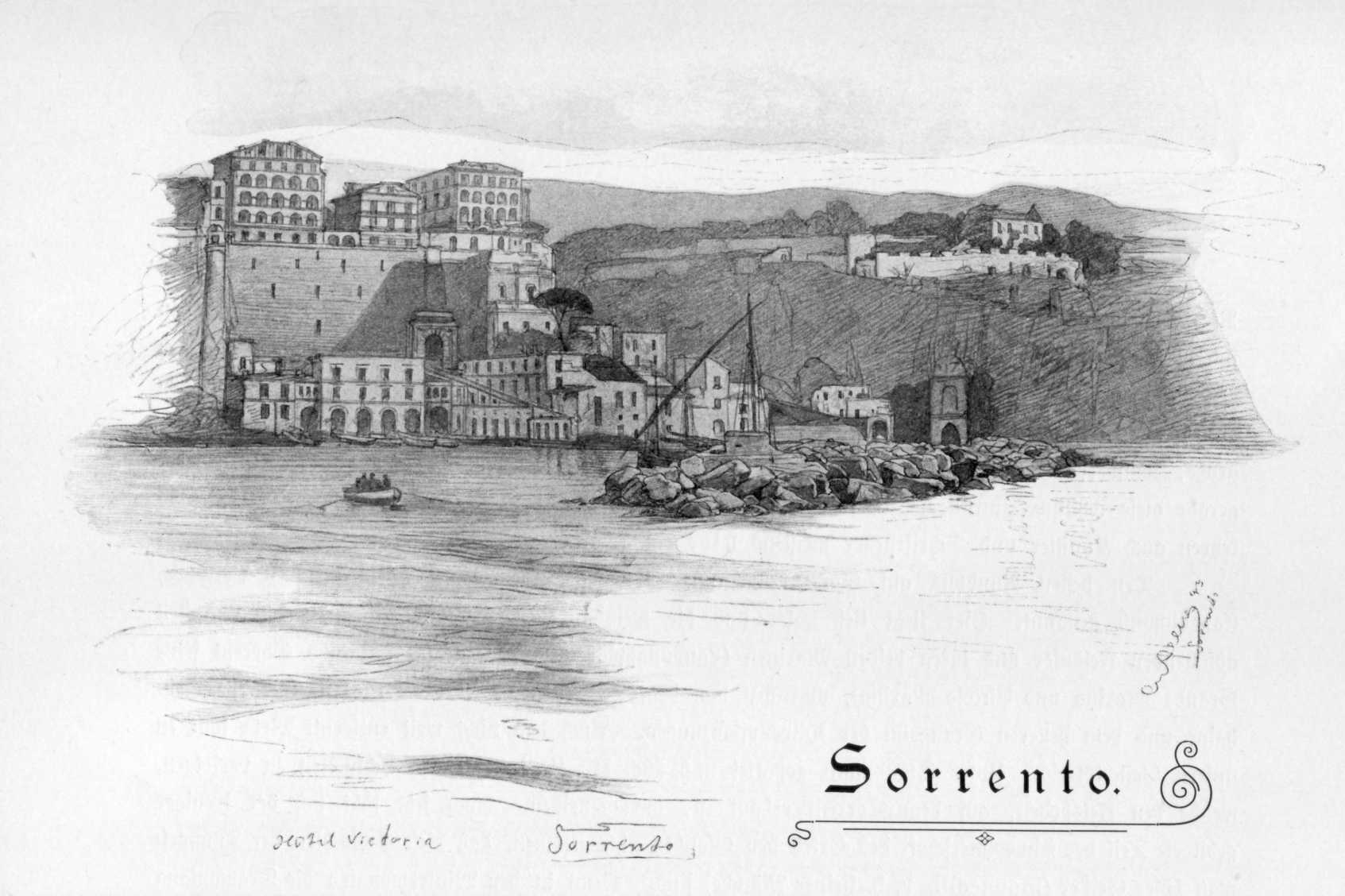
Sorrento is not technically on the Amalfi Coast — it sits on the Sorrentine Peninsula, at the coast’s western end. But it is the transport hub that makes car-free travel work. The Circumvesuviana terminates here, giving you fast train connections to Naples, Pompeii, and Herculaneum. Ferries depart from Marina Piccola to Positano, Amalfi, Capri, and Naples. SITA buses leave from Piazza Tasso. You can be in Positano in forty minutes by ferry, in Naples in seventy minutes by train.
Sorrento is also more affordable than Positano or Amalfi town, with a wider range of accommodation and a functioning town life that does not vanish in October. The trade-off: it is busier and less cinematically dramatic than the coast itself. If you want maximum reach — day trips to Pompeii, Capri, Positano, Ravello, and Amalfi all from one base — Sorrento is the answer.
Positano: The Romantic Choice
Staying in Positano means waking up inside one of the most photographed places in the world. It also means accepting that everything costs more, the terrain is extraordinarily vertical, and getting anywhere useful involves either stairs or a wait at the bus stop in the upper village.
That said, Positano works well as a car-free base if you are content to let the coast come to you — ferry to Amalfi for a day, ferry to Capri, take the bus to Praiano or Sorrento, hike the Path of the Gods. The logistics are manageable. They just require more pre-planning than Sorrento.
If you stay in Positano, book accommodation as close to the beach as possible. The upper parts of the village sit above the bus stop on the main road; the lower parts require descending (and then climbing back) hundreds of steps. Your hotel tier and your leg situation should inform this choice.
Amalfi Town: The Midpoint Base
Amalfi town sits almost exactly in the middle of the coast, which makes it a natural hub for exploring in either direction. Ferries east to Salerno and Maiori, ferries west to Positano, SITA buses in both directions. The town itself is walkable and compact, with the cathedral, the beach, the narrow lanes, and the lemon trees all within a short radius.
The downside for car-free travellers: Amalfi is harder to reach from Naples than Sorrento is (no direct train; you need the bus from Sorrento or a ferry from Salerno). Getting to Pompeii requires a combination of bus and train that can chew up most of a morning. If your trip is purely coast-focused and you are not planning to branch out toward Naples or Pompeii, Amalfi town is excellent. For a broader itinerary that includes more of Campania, Sorrento is more practical.
For the full picture of what each town offers — beaches, restaurants, cultural sites — see our guide to the Amalfi Coast and Campania.
Day-Trip Movements: How to String It Together
Here is how a few typical car-free days on the coast actually work.
Sorrento to Positano and back: Take the 9am ferry from Marina Piccola (around €20). Arrive in Positano around 9:40am — before the day-trippers start arriving en masse. Spend the morning at Spiaggia Grande or walking up to the church of Santa Maria Assunta. Take a late ferry or bus back. Total transport cost: around €22–25 return.
Positano to Amalfi: Ferry takes around 25 minutes (around €10). Walk from the pier directly up to Piazza del Duomo for the cathedral. From Amalfi, you can take the SITA bus up the hill to Ravello — about twenty-five minutes, around €1.80 — for afternoon gardens and views. Return to Positano by ferry or bus, or stay in Amalfi overnight.
Amalfi to Ravello: The bus to Ravello (line 5110) runs regularly from Amalfi’s central bus stop. Ravello is not accessible by ferry or by a flat walk — it sits 350 metres above the sea, connected to Amalfi by a winding road. The bus is the right tool. Buy your ticket at the tabacchi near the bus stop before you queue.
Day trip to Pompeii from Sorrento: Take the Circumvesuviana from Sorrento, get off at Pompei Scavi (the station right outside the archaeological park entrance). The ride takes about thirty minutes. Return to Sorrento in time for an afternoon ferry to Positano. This is one of the genuinely great combinations of the region and one that a car-free traveller can pull off easily. For more on fitting Pompeii and Naples into your trip, see the suggested route through Southern Italy and Italy travel guide.
Why Driving the Amalfi Coast Is Genuinely Miserable
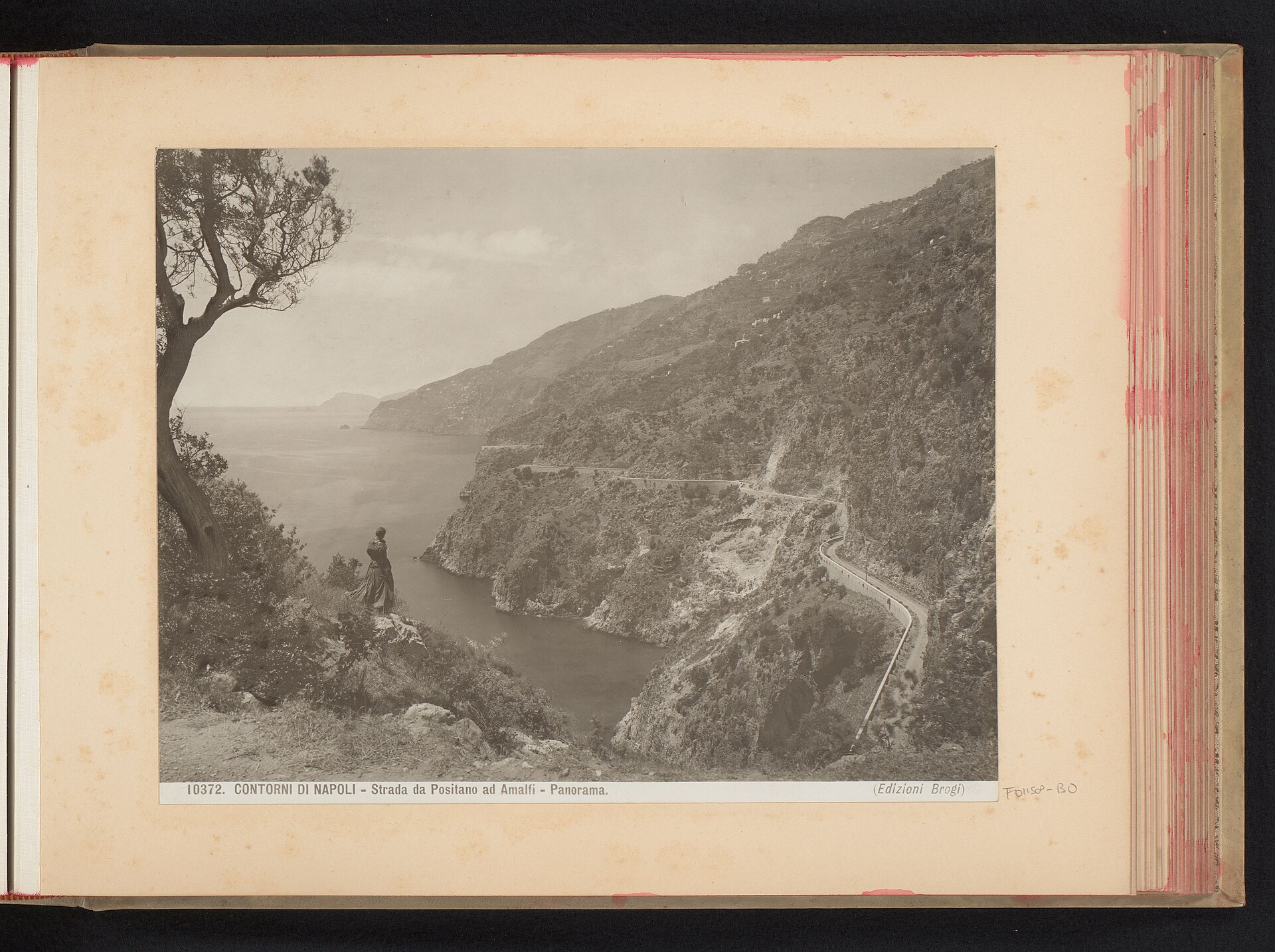
The SS163 — the Amalfi Drive — is a genuinely spectacular road. It is also, between June and September, one of the most congested pieces of tarmac in Italy. The facts are worth understanding plainly.
The road is sixty kilometres long and for long stretches barely wide enough for two vehicles to pass. Cars park along the shoulder, narrowing it further. Coaches — and there are many coaches — require oncoming traffic to reverse into passing bays on hairpin bends. Traffic jams of six kilometres or more are a documented daily occurrence in high summer. What looks like a forty-five minute drive on Google Maps can take three hours.
Parking is, by most accounts, a separate ordeal. In Positano, finding a space is described by those who have tried it as comparable to finding a table at a packed restaurant where nobody leaves. Paid parking in the town costs up to €10 per hour, and the few car parks fill by mid-morning in July and August. In Amalfi, the situation is similar. Budget at least €40–50 per day for parking if you insist on driving.
Then there is the alternating licence plate system, introduced in 2022 and still in effect. From June 15 to September 30 (and in August in its entirety), rental cars with plates ending in odd numbers cannot drive Amalfi Drive on odd-numbered dates, and vice versa. Because you do not know your plate number until you collect the car, planning around this rule is essentially impossible. Locals, taxis, and buses are exempt. You are not.
For the full picture of what driving in Italy involves — including ZTL zones, insurance, and road rules — see our driving in Italy guide.
None of this means driving the Amalfi Coast is impossible. In October, November, or April, the road is quieter, the parking situation is manageable, and the drive itself becomes something close to the experience you imagined. But if you are visiting in summer and wondering whether to rent a car specifically to get around the coast, the answer from someone who has watched buses sail past stationary rental cars on the SS163 is: no. Take the ferry.
Arriving at the Coast from Rome
If you are travelling from Rome, the simplest routing is Frecciarossa to Naples Centrale (around seventy minutes), then the Circumvesuviana or Campania Express to Sorrento. Rome to Sorrento in under three hours total, all on public transport, with no luggage hassles beyond carrying your own bags.
There is also a direct Flixbus service from Rome to Sorrento and occasionally to Salerno, which is slower but cheaper. Worth checking if you are on a tight budget and have more time than money.
If you are arriving by air at Naples Capodichino, the SITA Curreri bus runs directly from outside Arrivals to Sorrento — bypassing Naples city entirely — and takes around ninety minutes. It is a small bus and fills up, so book it in advance online. Alternatively, a shared transfer van to Sorrento or the Amalfi Coast costs more but is door-to-door and skips the station.
For the full range of Italy transportation options including trains, buses, and ferries across the country, our transport hub has everything you need before you book.
What About Shoulder Season and Winter?
The honest picture: the Amalfi Coast works year-round without a car, but the tools change.
November through March: Ferries largely stop. The coast quiets dramatically — hotel prices drop, crowds disappear, and you get to see places like Amalfi and Positano as functioning Italian towns rather than tourist infrastructure. SITA buses still run, but on reduced schedules. Verify times carefully before each journey. The upside is that the bus is rarely full and rarely late.
April and October: Peak spring and autumn. Ferries begin or end their season around here — check operator websites for exact start dates, which vary annually. Crowds are manageable, weather is generally good, and the coast is close to its best. This is arguably the sweet spot for a car-free visit. For timing advice across Italy more broadly, see our guide to the best months to visit Italy.
Final Thoughts
The Amalfi Coast does not require a car. What it requires is a clear plan and an early start. Ferry from Sorrento to Positano before the crowds arrive. Bus from Amalfi up to Ravello when the light softens in late afternoon. Train back to Naples when your days on the coast are done. The logistics are genuinely within reach — and the views from the ferry deck or the bus window, watching that improbable coastline slide past, are part of the trip.
For everything you need on getting around Italy beyond the Amalfi Coast, start with our complete guide to Italian transport. And if you are building out a longer itinerary through southern Italy, the Italy honeymoon itinerary and southern Italy itinerary both work well alongside this guide.
Questions travellers ask
Can you do the Amalfi Coast without a car?
Yes, and for most visitors in peak season, it is the better way to travel. The ferry network covers the main towns from around April to October, and the SITA Sud bus runs year-round to everywhere on the coast including Ravello and Praiano. Sorrento makes the strongest car-free base, with rail connections to Naples and ferry access to the coast. Plan your tickets in advance, go early or take boats in summer, and the logistics are genuinely manageable.
What is the best way to get from Sorrento to Positano?
By ferry, if it is running — roughly April to October. The crossing takes around 35–40 minutes, costs around €20 one-way as of 2026, and gives you a sea-level view of the cliffs that you cannot get from the bus. The SITA Sud bus also connects the two (around €2.60), but the journey takes sixty or more minutes in summer traffic and the bus is often packed by mid-morning. Go by ferry and save yourself the queue.
How do I get from Naples to the Amalfi Coast without a car?
Take the Circumvesuviana or Campania Express from Napoli Garibaldi station to Sorrento (about 70 minutes on the standard service, around 50 on the express). From Sorrento, ferries or SITA buses connect you to Positano, Amalfi, and beyond. In summer, NLG also runs a direct ferry from Naples (Beverello pier) to Positano and Amalfi — check their website for current schedules. You do not need to set foot in a rental car at any point.
How do I get to Ravello without a car?
By SITA bus from Amalfi town — line 5110, journey time around 25 minutes, costing roughly €1.80 as of 2026. Ravello sits 350 metres above sea level on the hillside above Atrani and Amalfi, and there is no ferry service to it. Buy your ticket at a tabacchi or bar near the Amalfi bus stop before you queue, as there is no ticketing on board.
Is it better to base in Sorrento or Positano for a car-free trip?
Sorrento gives you more — more transport connections, more budget-friendly accommodation, and access to Pompeii, Naples, and Capri as easy day trips via train and ferry. Positano gives you atmosphere. If you want to maximise what you can see and do across the region, especially if this is a first trip to Italy, Sorrento wins on logistics. If this is a honeymoon or a deliberately slow trip, based around the coast rather than the region, Positano has the edge on romance and setting.
When do Amalfi Coast ferries start and stop running?
Most services run from approximately April through October, with peak frequency between June and September. Travelmar typically publishes its seasonal schedule by late March each year. NLG’s summer service (Naples–Sorrento–Positano–Amalfi) generally runs June through September. Outside these windows, buses are the primary option. Always verify directly with the operators — Travelmar (travelmar.it) and NLG (navlib.it) — as exact dates vary by year and route.
Do I need to book SITA bus tickets in advance?
No — SITA bus tickets are not bookable online in advance and do not have reserved seats. You buy a ticket before boarding (at a tabacchi, bar, or newsstand), validate on the bus, and travel on the next available service. The 24-hour COSTIERASITA pass (around €10 as of 2026) is worth buying if you plan more than two or three trips in a day. The only thing to “book” is a sensible departure time — early in the morning, before the crowds arrive.
What common mistakes do car-free visitors make on the Amalfi Coast?
Leaving too late in the morning (buses and ferries are packed by 10am in July and August), not buying bus tickets in advance (there is nowhere to buy them on board), underestimating the walking involved in Positano, and assuming ferry services run all year. A broader version of this kind of planning trip — including ZTL zone confusion, ticket machine failures, and tipping customs — is covered in our Italy travel mistakes guide, which is worth a read before you go.