Naples Food Guide: Pizza, Pastries and Street Food
I have eaten my way around a lot of Italy, and I still think Naples is the single best food city in the country. Not the prettiest, not the calmest, but the best to eat in.
This Naples food guide is the one I wish someone had handed me the first time: a plan for true pizza napoletana, the fried street food sold from paper cones, the espresso ritual, and the pastries that make the queue worth it. Order well and a full day of eating here costs less than one mid-range dinner in Rome.
It is for travelers who want to eat like a local, on a budget, without wasting a single meal on a tourist trap.
Naples food guide: the quick cheat sheet
Start here. This is the short version of everything below — the things you should actually put in your mouth, when, and roughly what they cost as of 2026. Prices move, so treat them as a feel, not a promise.
| Food | What it is | Where / when to eat it | Price feel |
|---|---|---|---|
| Pizza Margherita | Wood-fired tomato, mozzarella, basil pizza — the city’s icon | Sit-down pizzeria, lunch or dinner | Around 5–8 euros |
| Pizza marinara | Tomato, garlic, oregano, no cheese — the purist’s pizza | Same pizzerias, any time | Around 4–6 euros |
| Pizza a portafoglio | A small pizza folded into quarters, eaten walking | Street windows, lunch | Around 2–4 euros |
| Pizza fritta | Deep-fried stuffed pizza dough (ricotta, provola, cicoli) | Friggitorie, late morning on | Around 4–6 euros |
| Cuoppo | Paper cone of mixed fried seafood or veg | Friggitorie, afternoon snack | Around 5–10 euros |
| Frittatine di pasta | Breaded, fried pasta “cake” with béchamel | Friggitorie and bars | Around 1.50–3 euros |
| Sfogliatella riccia | Crisp, shell-shaped ricotta pastry | Pasticceria, morning with coffee | Around 2–3 euros |
| Babà | Rum-soaked sponge cake | Pasticceria, any time | Around 2–4 euros |
| Espresso | Short, strong, dark Neapolitan coffee | Standing at any bar | Around 1–1.30 euros |
| Mozzarella di bufala | Fresh buffalo-milk mozzarella, sold dripping | Markets and latterie, eat same day | Around 5–12 euros per kg |
If you only do four things, make them a Margherita at a real pizzeria, a sfogliatella with an espresso, one fried thing from a friggitoria, and a ball of buffalo mozzarella from a market. That is Naples in a day.
Why Naples is the food city it is
Naples eats the way it does because it was poor for a very long time and the soil around it is absurdly good. Those two facts explain everything on the table.
The land here is volcanic. Vesuvius has been feeding the fields for centuries, and you taste it in the San Marzano tomatoes that grow on its slopes — denser, sweeter, less watery than the supermarket kind. The mozzarella comes from water buffalo bred in the plains of Caserta and the Sele river valley. The lemons and the bitter greens come from the same coastline you can see from the city.
The poverty gave Naples its genius for stretching almost nothing into something you remember. Pizza started as cheap food for laborers. Fried street food turned scraps of dough and leftover pasta into a meal. This is cucina povera — poor kitchen — and it is the most generous food I know.
So when I tell you the best things you eat in Naples cost two or three euros, I am not selling you a budget hack. I am describing the entire point of the place. If you want a fuller picture of how regional Italy eats, my overview of what to eat across Italy puts Naples in context, and the broader Italy food and wine travel guide is the pillar this all hangs from.
What to eat in Naples: Naples pizza, first and forever
Let me be blunt. If you eat one thing in this city, it is pizza, and it should be pizza napoletana made the proper way. Naples pizza is not a style you imitate at home. It is a protected thing.
In 2010 the European Union gave Neapolitan pizza an STG label — Specialità Tradizionale Garantita, Traditional Specialty Guaranteed. There is a real rulebook behind that. The dough is only flour, water, salt and yeast. It is shaped by hand by pushing the air from the center to the rim — the “a schiaffo” or slapping technique — never with a rolling pin. The finished pizza is no more than about 35 cm across, the center stays paper-thin, and it bakes in a wood-fired oven at roughly 485°C for 60 to 90 seconds. That blistering heat is what gives you the leopard-spotted char and the puffed-up rim.
That rim has a name worth knowing: the cornicione. It is the airy, blistered edge, and it is how Neapolitans judge a pizza. A good cornicione is light and full of irregular air pockets, slightly charred, never dry or bread-like. Locals don’t leave it on the plate. They eat it. If you find yourself abandoning the crust, the pizza wasn’t very good.
Margherita vs marinara: order both
There are really only two pizzas that matter here, and a first-timer should taste both.
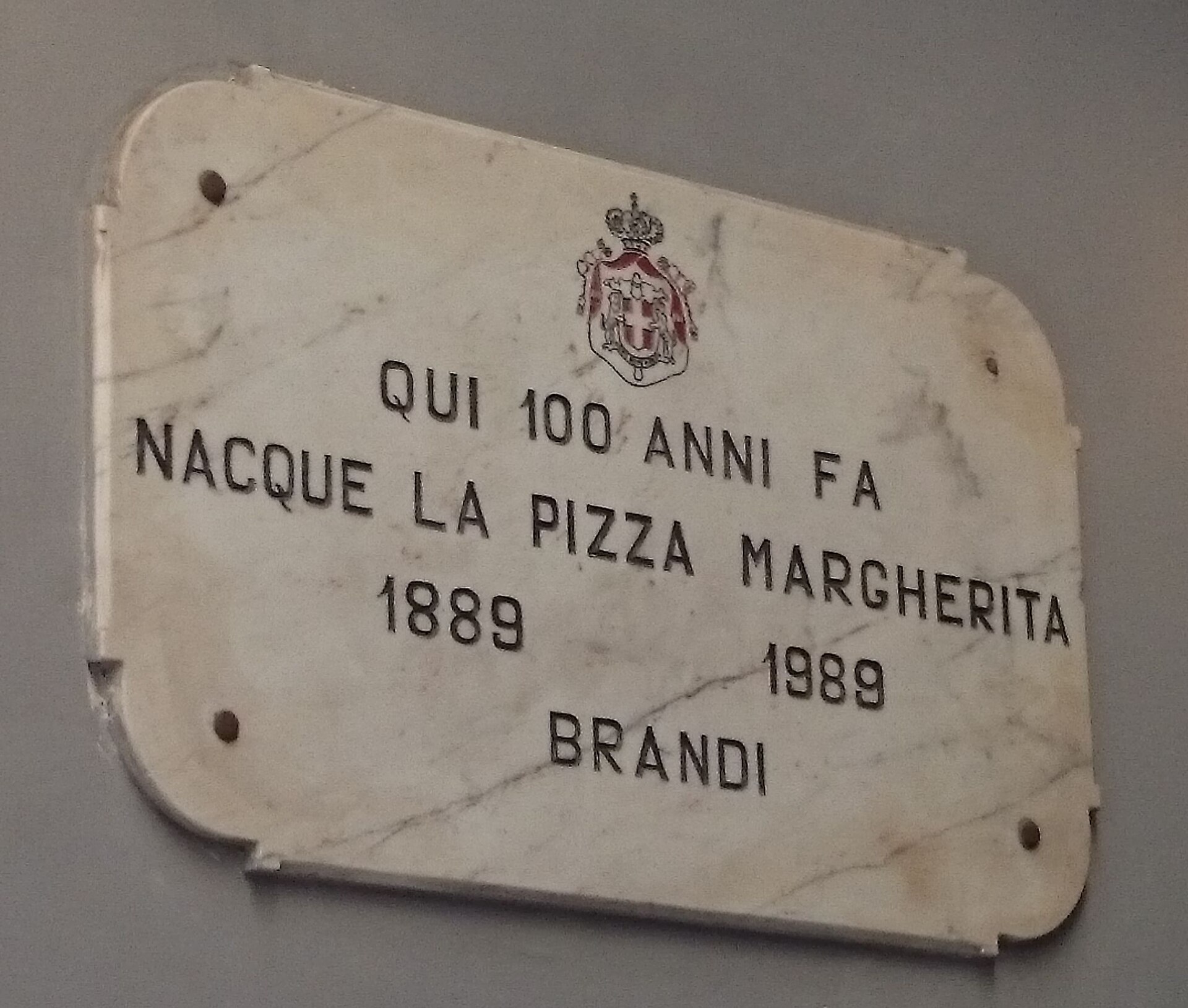
The Margherita is the famous one — San Marzano tomato, mozzarella (fior di latte or buffalo), fresh basil, a thread of olive oil. The story goes it was made in 1889 to honor Queen Margherita, the red, white and green echoing the Italian flag. It’s creamy, slightly acidic from the tomato, and it is the pizza everyone pictures.
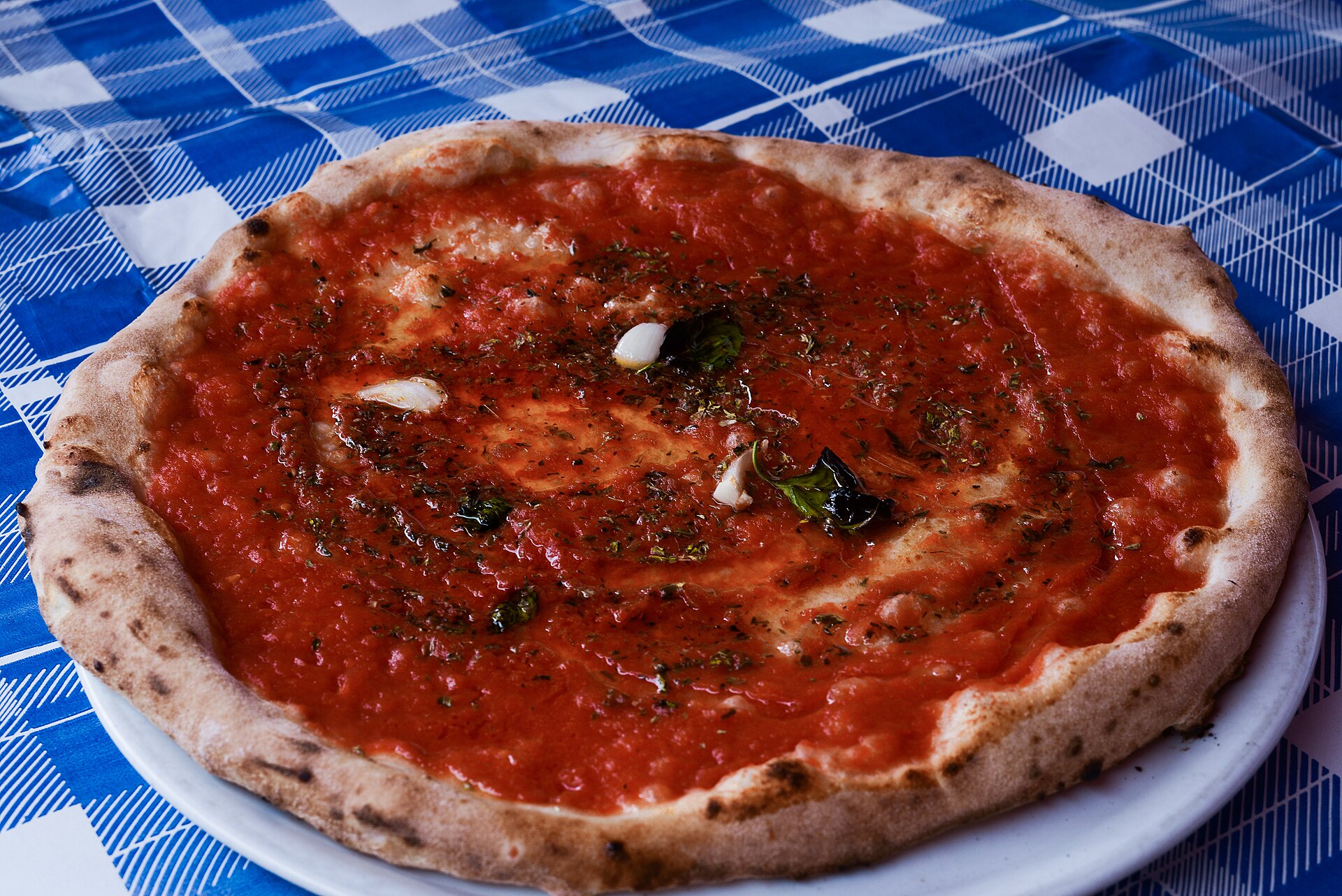
The marinara is older and, to a lot of Neapolitans, purer. Tomato, garlic, oregano, olive oil — no cheese at all. It was named for the fishermen who grabbed it before heading out at dawn. People assume “no cheese” means “less good.” It is the opposite. A great marinara is where you really taste the tomato and the dough, with nothing to hide behind. I order one almost every time, alongside a Margherita to share.
A note on cheese: a “Margherita” made with mozzarella di bufala is sometimes called a Margherita extra, and the buffalo milk makes it richer and wetter. Both are correct. Try them both if you have the appetite.
How to spot good Naples pizza from a tourist trap
This is the part most guides skip, so here is what I actually look for.
Look at the cornicione. If it’s puffed, blistered, a little charred and full of air, you’re in good hands. If it’s a uniform, pale, even ring, walk on. Look at the base — a proper napoletana is soft and a bit wet in the middle, eaten with a knife and fork, not crisp like a cracker. The fact that the center folds is a feature, not a flaw.
Watch where the locals are. The historic pizzerias around Via dei Tribunali in the centro storico — the ones that have been doing this for generations — still draw long Neapolitan queues at lunch. I won’t pretend the famous names don’t have lines; they do. But a line of locals at 1pm is the single most reliable signal in the city. Tables full of only tourists, a laminated menu in six languages, and a tout at the door pulling you in are the opposite signal. For the deeper version of this radar, I wrote a whole guide to avoiding tourist-trap restaurants in Italy — it travels well beyond Naples.
Price is a clue too. A Margherita at a historic pizzeria is often under 5 euros and rarely much above 8 as of 2026. If a “traditional Neapolitan pizzeria” near a major sight is charging 14 euros for a Margherita, you are paying for the location, not the pizza.
Where to eat Naples pizza, in general terms
I’m not going to hand you a single address and call it the answer, because the right pizzeria depends on where you are and how long you’ll queue. But the geography is simple.
The spiritual home of pizza is the centro storico, especially the long straight runs of Via dei Tribunali and Spaccanapoli. This is where the oldest and most famous pizzerias cluster, including the historic one widely credited with inventing the Margherita and the one that claims to be the world’s oldest pizzeria. Expect queues, expect cash-friendly prices, expect to share elbow room with locals.
The Pignasecca market area and the streets around the Sanità district have some of the most respected newer-generation pizzaioli, and slightly shorter lines. If you want a sit-down meal without the centro storico crush, head there.
The portafoglio windows — where they fold a whole pizza into a wallet so you can eat it walking — are everywhere, but the run along the lower city and near the station has the cheapest. Two or three euros, eaten on your feet. It is the most Neapolitan way to eat pizza there is.
Naples street food: the fried world you came for
Pizza gets the headlines, but Naples might be the greatest fried-food city in Europe, and this is where I tell first-timers to spend their curiosity. The shops are called friggitorie — fry shops — and many have been frying the same things since before the war.
Here’s the backstory that makes it click: after the Second World War, ovens and ingredients were scarce, so Neapolitans fried what they had. Dough, leftover pasta, potatoes, a little cheese. What started as making-do became an institution. You will eat better from a paper cone here than from a lot of sit-down restaurants.
Pizza fritta — the fried pizza you didn’t know you needed
Pizza fritta is exactly what it sounds like: pizza dough, stuffed and deep-fried instead of baked. The classic filling is ricotta, provola cheese, and cicoli — little nuggets of rendered pork — sometimes with tomato and a bit of pepper. It puffs up into a golden half-moon, crisp outside and molten inside.
It sounds heavy. It is heavy. It is also one of the great street foods on earth, and at around 4 to 6 euros it’s a meal. Traditionally this was women’s work and women’s business — the pizzaiola fritta selling from a window or a cart — and you’ll still find it sold that way. Eat it hot, the minute it’s handed over, while the cheese is still stretching.
The cuoppo — a cone of fried everything
The cuoppo is the move when you want to graze. It’s a cone of thick paper filled with a jumble of fried things, sold by weight or by size. There are two main kinds. The cuoppo di mare is fried seafood — small fish, calamari, shrimp, the batter thin enough that the seafood still tastes of the sea. The cuoppo di terra (or “frittura”) is the land version: potato croquettes, panzarotti, little fried dough balls, fried vegetables.
A cuoppo runs roughly 5 to 10 euros depending on size, and it’s the perfect thing to eat wandering through the centro storico in the late afternoon. Get it, find a step or a low wall, and watch the city go by.
Frittatine di pasta, crocchè and the rest
A few more you’ll see in every friggitoria window, and should not skip:
Frittatine di pasta are my secret favorite. Take cooked pasta — usually bucatini — bind it with béchamel, salame, provola and peas, shape it into a thick disc, bread it, and fry it. The outside shatters, the inside is creamy. They cost a euro or two and they are absurdly good. Don’t eat one before a pizza unless you want to skip dinner.
Crocchè (the locals also say “panzarotto”) are potato croquettes — mashed potato with cheese, parsley and pepper, sometimes a cube of ham inside, breaded and fried into a torpedo. The good ones stretch with mozzarella when you bite.
Montanara is a small disc of pizza dough that’s fried first, then topped with tomato sauce, a little mozzarella, basil and grated cheese. Crisp underneath, gooey on top — somewhere between pizza fritta and a tiny pizza.
You’ll also spot scagliozzi (fried polenta wedges), pasta cresciuta (savory fried dough fritters, sometimes with seaweed) and the panino napoletano, a savory bread baked with salami and cheese inside. None of it is health food. All of it is worth a bite.
Is street food safe to eat in Naples?
Short answer: yes. The fried food is cooked to order in screamingly hot oil, which is about as safe as food gets. Go where there’s turnover — a busy friggitoria is frying fresh all day, so nothing sits around. Use the same instinct you’d use anywhere: a queue of locals is a good sign, an empty window with food sitting under a heat lamp is a less good one. I’ve eaten cuoppi all over the city and never had a problem.
The coffee: Neapolitan espresso and the caffè sospeso
You cannot understand Naples without understanding its coffee, and tourists routinely get this wrong, so let me save you the rookie mistakes.
Neapolitan espresso is its own animal — short, dark, intense, often a touch sweeter than elsewhere because many locals take sugar as standard. You drink it standing at the bar, in a few seconds, usually after paying at the till first and handing your receipt to the barista. You do not linger over it. You do not order a cappuccino after about 11am if you want to pass as a local (milky coffee is a breakfast thing here, no exceptions in the Neapolitan mind). An espresso at the bar costs barely more than a euro, which is part of why coffee is woven through the whole day.
Then there’s the tradition I love most in this city: the caffè sospeso, the “suspended coffee.” You pay for two coffees but drink one, leaving the second on the books for whoever comes in next and can’t afford it. They ask, the barista nods, and a stranger has a coffee on you. It started in the working-class bars of Naples and it’s a small, quiet piece of generosity that tells you everything about the place. You can leave one yourself — just tell the barista you’d like to leave a sospeso.
If you want to go deeper on espresso, cappuccino timing and the etiquette that applies across the country, my rules of Italian coffee covers the rules in full. Naples just follows them more devoutly than anywhere else.
Neapolitan pastries: sfogliatella, babà and the sweet ritual
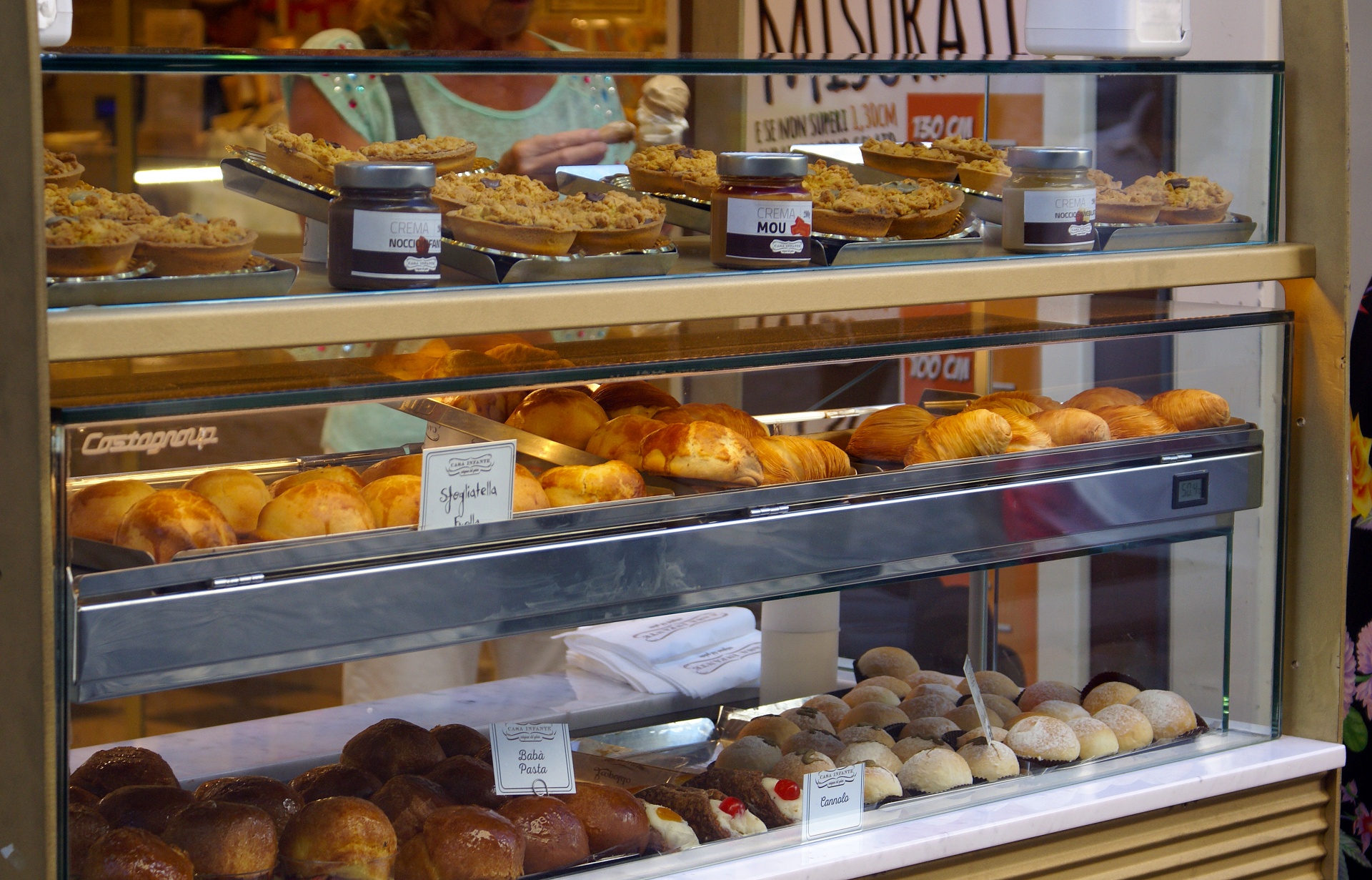
Coffee in Naples comes with something sweet, and the pastry case in a good pasticceria is a serious place. Here is what to order.
Sfogliatella riccia vs frolla — know the difference
The sfogliatella is the icon, and it comes in two forms that confuse first-timers.
The riccia (“curly”) is the famous one: a shell-shaped pastry made from dozens of paper-thin layers of dough, so it fans out like the spine of a clam, shatters when you bite it, and showers you in crisp shards. Inside is a warm ricotta-and-semolina filling, scented with citrus and a little candied peel.
The frolla is the same filling wrapped in shortcrust pastry instead — softer, rounder, no flaky layers, more like a little ricotta-filled cookie shell. Both are good. The riccia is the showstopper; the frolla is the comfortable everyday version. Order them warm if you can — many pasticcerie heat them, and a warm riccia is a different, better thing than a cold one.
You’ll also meet the fiocco di neve (“snowflake”), a more recent invention that went viral: a soft brioche-like bun filled with a cloud of sweetened ricotta and milk cream, dusted white with sugar. It’s not traditional in the old sense, but it’s everywhere now and genuinely lovely.
Babà — the rum-soaked one
The babà is a mushroom-shaped sponge cake soaked in rum syrup until it’s saturated and glistening. It’s so woven into the culture that “sei nu babbà” — “you’re a babà” — is a Neapolitan compliment, meaning you’re sweet and lovely. The texture is the whole point: it should be soaked through, springy, almost dissolving, never dry. Some come split and filled with cream or topped with fruit. Eat one with an espresso and you’ll understand the city a little better.
Pastiera — if you’re here at Easter
If you visit around Easter, find a pastiera napoletana. It’s a lattice-topped tart filled with ricotta, cooked wheat berries (grano cotto) and orange-flower water, fragrant and not too sweet. Families make it days before Holy Thursday so the flavors can settle, and everyone insists their grandmother’s is the best. It’s a spring thing — you’ll see it pile up in bakery windows in March and April. Around Christmas, the sweets shift to struffoli, little honey-glazed fried dough balls heaped into a mound. Naples eats by the calendar, and timing your trip to the right pastry is a real strategy. If you’re still deciding when to go, my best time to visit Italy guide lines up the seasons.
The pasta and the mozzarella you shouldn’t leave without
Naples is not only finger food. Two sit-down things deserve a place on your list.
Ragù napoletano and the mysterious genovese
The ragù napoletano is the Sunday sauce — and it’s nothing like the meat sauce most people picture. Big pieces of beef and pork are browned, then simmered in tomato for hours, sometimes six or more, until the meat is falling apart and the sauce is dark and concentrated. Traditionally the rich sauce dresses the pasta as a first course (paccheri or ziti, often broken by hand) and the meat is served after. It cooks so slowly that the bubbling sauce is said to “pippiare” — to murmur — on the stove all morning. If you see it on a menu, especially on a Sunday, order it.
Then there’s the dish that confuses everyone: pasta alla genovese. Despite the name, it has nothing to do with Genoa and you won’t find it in Liguria. It’s a Neapolitan sauce of beef and a mountain of onions — more onions than meat, by a lot — cooked down for hours with no tomato at all, until the onions melt into a sweet, amber, deeply savory sauce. The name is a centuries-old leftover from when a similar onion stew was shared between Naples and Genoa; it faded out up north and stayed here. It is one of the great underrated pastas in Italy, and ordering it marks you as someone who actually knows the city.
Mozzarella di bufala — buy it at a market and eat it that day
The buffalo mozzarella made in Campania is not the rubbery stuff sold abroad. It’s milky, soft, faintly sour, and it weeps whey when you cut it. The real thing carries the Mozzarella di Bufala Campana DOP seal, and that label matters — loose, unlabeled “bufala” can be cheaper cow’s-milk mozzarella sold at a buffalo price.
Buy it the way locals do: from a latteria or a market stall, the same morning you’ll eat it. Mozzarella is meant to be eaten within a day or two of being made; refrigeration dulls it, so don’t hoard it. The market streets of the Pignasecca, just below the Spanish Quarter (Quartieri Spagnoli) in the Montesanto area, are the classic place to find dedicated mozzarella bars and shops — some will hand you a ball to eat right there with a chunk of bread. Pair it with a few San Marzano tomatoes from the same stall and you have the best two-euro lunch of your trip.
A neighborhood eating plan for Naples
If you want this to be an itinerary and not just a list, here’s how the food maps onto the city.
The centro storico — Spaccanapoli and Via dei Tribunali — is your pizza-and-pastry core. Start with a morning sfogliatella and espresso, queue for pizza at lunch, graze on a cuoppo in the afternoon. You can eat brilliantly here without ever walking more than a few hundred meters.
The Pignasecca is the market. Come hungry and in the morning, when the stalls are full and the mozzarella is fresh. Buy cheese, fruit and olives, and snack on fried things from the friggitorie tucked between the stalls.
The Quartieri Spagnoli (Spanish Quarter), the tight grid of streets climbing up from Via Toledo, is the place to wander and eat what catches your eye — portafoglio pizza, fried snacks, tiny family trattorie. It feels intense and a little chaotic. That’s the point.
For where this fits into a wider trip — and the day trips most people pair with the city — the Amalfi Coast, Naples and Campania regional guide is the cross-pillar companion to this article. If you’re planning the logistics of getting here, Italy transportation covers the trains, and our Italy itinerary library helps you slot Naples into the bigger route. Coming from the capital, the contrast with Rome’s food scene alone is worth the ride south.
Practical tips for eating in Naples
A few things I wish I’d known sooner.
Carry cash. Many of the best, oldest, cheapest places — friggitorie, market stalls, portafoglio windows — are cash-first. Cards are spreading but don’t count on them at the two-euro level.
Eat on local time. Lunch is roughly 1 to 3pm, dinner starts late, often 8:30pm or later. Pizzerias fill up at those hours; go a little early or be ready to queue. Coffee and pastries punctuate the whole day.
Pizza is cut with scissors, eaten with a knife and fork — or folded. A napoletana arrives whole and uncut. Cut it yourself, or fold a slice into quarters and eat it with your hands. Both are normal.
Skip the menu turistico. Anywhere advertising a fixed “tourist menu” in multiple languages near a sight is rarely where you want to be. The good Naples food is cheap and unglamorous; you don’t need a set menu to find it.
You don’t need to tip much. Service is generally included. Rounding up or leaving a euro or two for a good meal is plenty. For the full money picture, see my notes on how much to budget for Italy.
For where to base yourself so all this is on your doorstep, where to stay in Italy has a Naples section, and for the general rhythm of traveling here, the practical stuff nobody tells you about Italy and the master Italy travel guide cover the rest.
Final thoughts
Naples rewards eaters who stay curious and skip the fancy. The best meal you’ll have here probably costs three euros and comes wrapped in paper, eaten standing up on a loud, beautiful street.
Build your days around the food — a morning pastry, a midday pizza, an afternoon cuoppo, a market ball of mozzarella — and you’ll see the city the way it sees itself. Bring an appetite and a few coins, follow the locals’ queues, and let Naples feed you. It is very, very good at it.
Questions travellers ask
What food is Naples most famous for?
Pizza, full stop — Naples is the birthplace of pizza, and the wood-fired pizza napoletana is its defining dish. Beyond that, the city is known for fried street food like pizza fritta and the cuoppo, the sfogliatella and babà pastries, strong espresso, and buffalo mozzarella from the surrounding Campania countryside.
What should I eat in Naples for the first time?
Start with a Margherita and a marinara pizza at a real pizzeria, a sfogliatella with an espresso in the morning, one fried thing from a friggitoria (pizza fritta or a cuoppo), and a ball of mozzarella di bufala from a market. That four-part plan covers the city’s best food and costs very little.
How much does a pizza cost in Naples?
As of 2026, a Margherita at a historic pizzeria is often under 5 euros and rarely above 8. Newer, contemporary pizzerias may charge 7 to 8 euros or a little more. A folded pizza a portafoglio eaten on the street can be as cheap as 2 to 4 euros. Prices shift, so treat these as a feel.
What is the difference between sfogliatella riccia and frolla?
The riccia is made of many thin, crisp layers of dough shaped like a shell, so it shatters and flakes when you bite it. The frolla uses soft shortcrust pastry instead, with no flaky layers — rounder and more like a filled cookie. Both hold the same warm ricotta-and-semolina filling scented with citrus.
Is street food safe to eat in Naples?
Yes. The fried street food is cooked to order in very hot oil, which makes it safe, and busy friggitorie fry fresh all day so nothing sits around. Go where there’s a queue of locals and good turnover, the same instinct you’d use anywhere. Eat fried food hot and fresh from the window.
What is pizza fritta?
Pizza fritta is fried pizza — pizza dough stuffed and deep-fried rather than baked. The classic filling is ricotta, provola cheese and cicoli (crispy pork bits), sometimes with tomato. It puffs into a golden half-moon, crisp outside and molten inside. It was born in post-war Naples when ovens were scarce, and it’s now a street-food staple.
What is the difference between ragù napoletano and genovese?
Ragù napoletano is a tomato-based Sunday sauce, simmering big pieces of beef and pork for hours until the meat falls apart. Pasta alla genovese, despite the name, has no tomato at all and isn’t from Genoa — it’s a Neapolitan sauce of beef and a huge quantity of onions cooked down for hours into a sweet, amber sauce.
When should I visit Naples for the best food?
Naples eats well year-round, but the calendar shapes the pastries. For pastiera, come around Easter in spring; for struffoli, come at Christmas. Spring and autumn also bring the gentlest weather for walking and eating. The pizza, fried food, coffee and mozzarella are excellent in every season.