Catania and Mount Etna Travel Guide
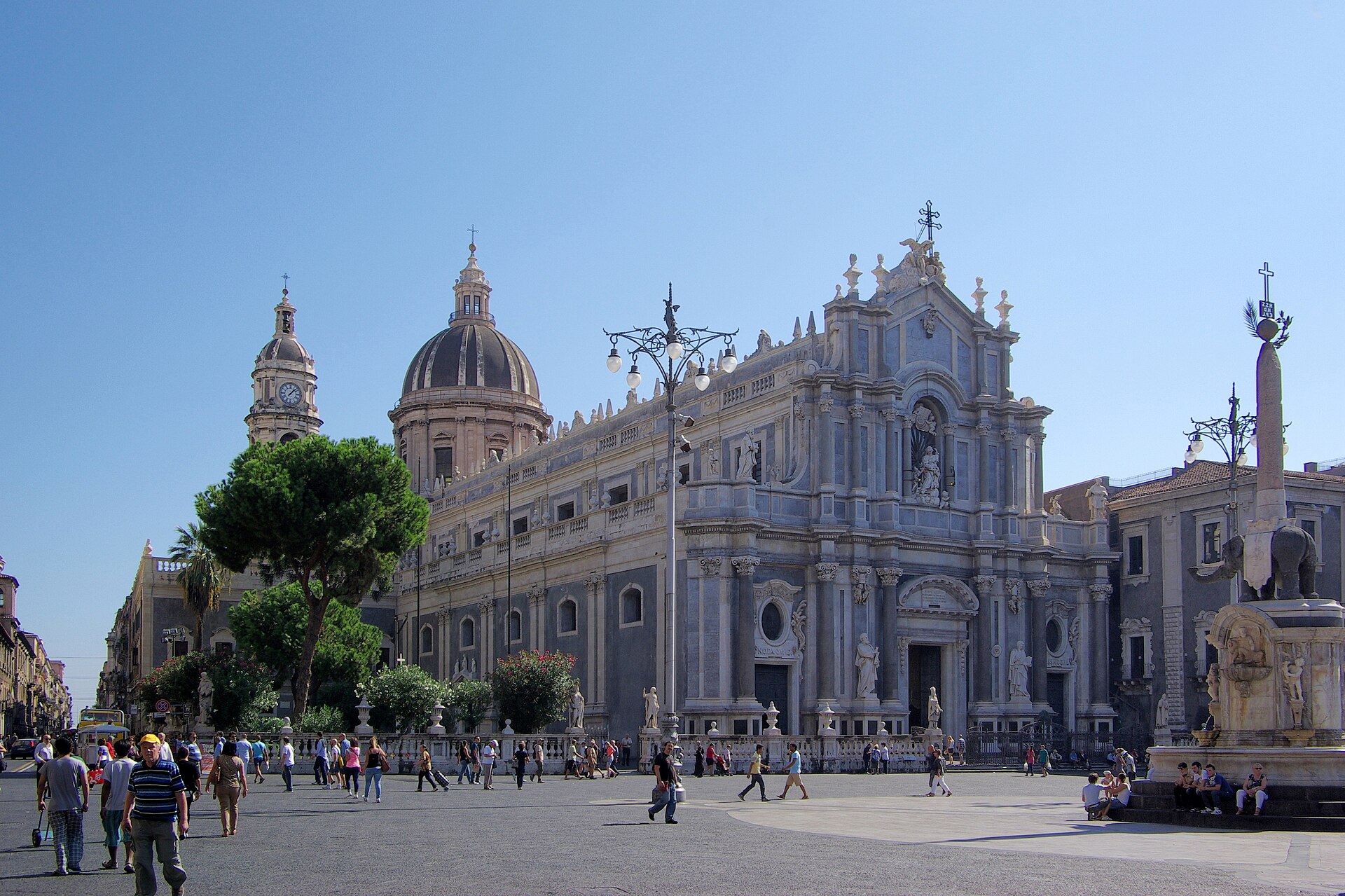
Catania is the only Sicilian city built out of the volcano that keeps trying to bury it, and you can taste the lava in everything from the buildings to the granita. That tension is the whole reason to come.
This Catania travel guide is about pairing the city with Mount Etna, because that is how the place actually works. Give it two full days: one for the black-stone Baroque centre and the fish market, one for the volcano. Add a half-day if you want the coast or the wineries. That combination is the trip.
It is for travellers who like a city with grit under its fingernails and a once-in-a-lifetime mountain on the doorstep. If you want polished and pretty, you may prefer Taormina up the coast. If you want real, stay here.
Why combine Catania and Etna at all
Most people treat Catania as a place to sleep before they “do Etna.” That is backwards, and it makes the trip worse.
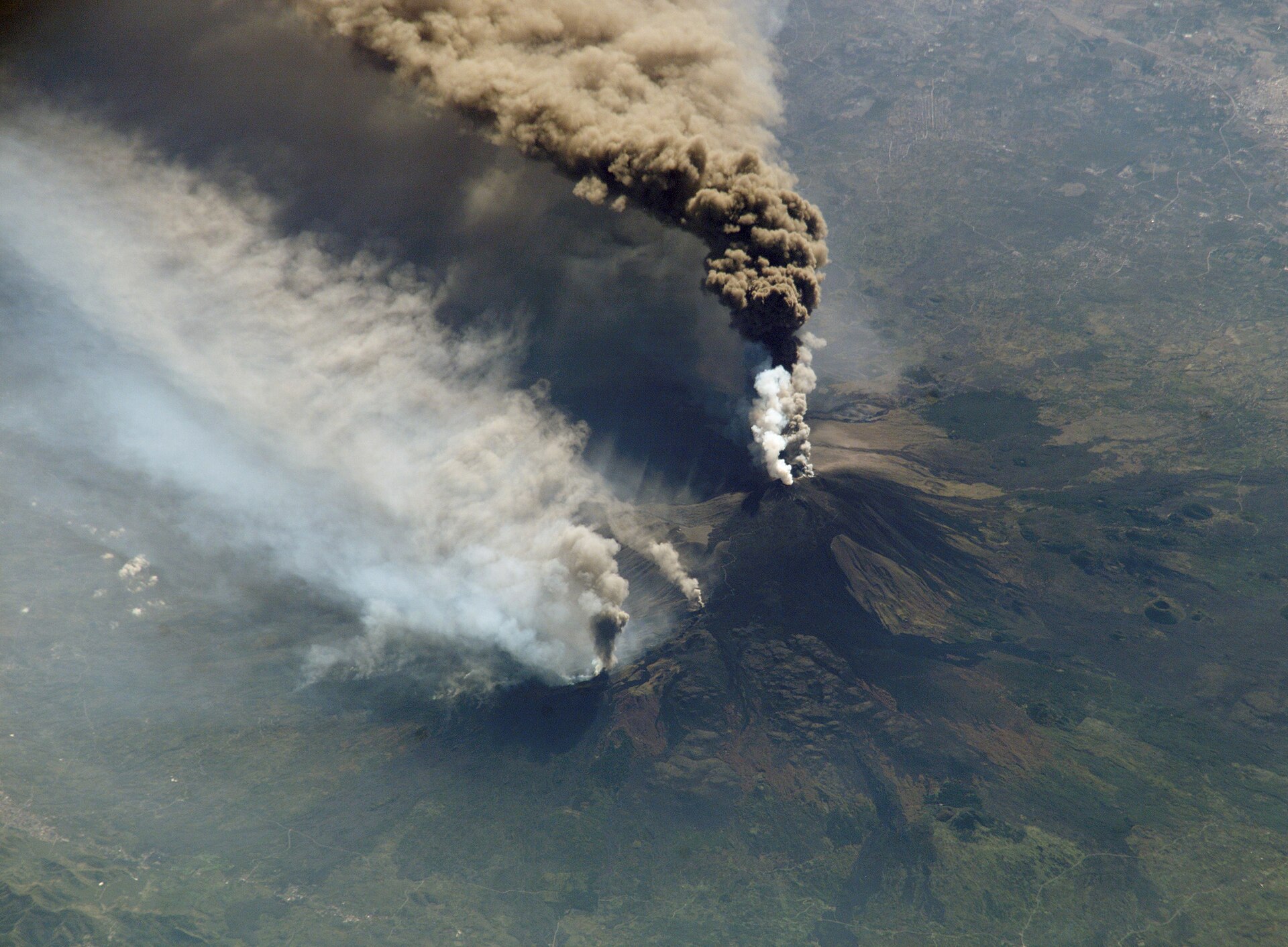
The city and the volcano are one story. Catania was flattened by lava in 1669 and again by the 1693 earthquake, then rebuilt in honey-and-charcoal Baroque using the same black basalt that destroyed it. Walk the centre and you are literally standing on the mountain’s output. Then you go up the mountain and see where the stone comes from. Doing both in sequence is the point.
Practically, Catania is also the best low-cost base on the east coast. The airport is fifteen minutes away, the historic centre is small and walkable, food is cheap and exceptional, and Etna day trips leave from here every morning. You do not need a car to enjoy the city itself, though one helps for the volcano and the coast.
If you are still mapping the wider trip, my guide to visiting Sicily frames where Catania sits against Palermo, the south coast, and the islands, and the Sicily itinerary shows how many nights to give each.
Ways to visit Mount Etna, compared
Here is the part page one fumbles. “Visit Etna” can mean five completely different days out, at wildly different altitudes, costs, and effort levels. Pick the wrong one and you either overpay for a chairlift or get in over your head on a 3,000-metre crater rim in the wrong shoes.
This table sorts it out. Prices are hedged and current as of 2026 — Etna pricing changes and the official operator updates it, so confirm before you go.
| Way to visit Etna | How high you get | Rough cost (2026) | Effort | Best for |
|---|---|---|---|---|
| Walk the Silvestri craters yourself | ~1,900 m (base car park) | Free (just parking/transport) | Low — a short loop | Anyone, families, a quick taste |
| Funivia cable car to the upper station | ~2,500 m | Around €50 return | Low — you ride up | Views without hiking |
| Cable car + 4×4 + guide package | Around 2,900–3,000 m | Around €75–80 | Low to moderate | Getting near the summit zone easily |
| Guided summit trek with alpine guide | Up toward ~3,300 m | Around €80–100+ | High — a real hike | Fit walkers who want the real thing |
| North side, Piano Provenzana | ~1,800 m and up | Varies by operator | Moderate | Quieter side, fewer crowds |
A sixth option is not really a climb at all: the Circumetnea railway loops around the base of the volcano through lava fields and pistachio villages. More on that below. And a Catania-versus-Taormina-as-a-base question sits underneath all of this, which I answer in the FAQ.
The short version: if you only want to say you stood on Etna and saw a crater up close, the cable-car-plus-4×4 package is the easy win. If you want to actually walk on the volcano and feel it, book a guided trek. If you are broke or short on time, the free Silvestri craters at the base are genuinely worth it.
Mount Etna tour: how the south side actually works
The south side, reached from Rifugio Sapienza, is where the famous logistics live, and it confuses everyone. Let me lay it out step by step, because the official setup is simpler than the blogs make it sound.
You drive (or take the morning AST bus from Catania) up to the Rifugio Sapienza car park at about 1,900 metres. This is the base. Two things happen here.
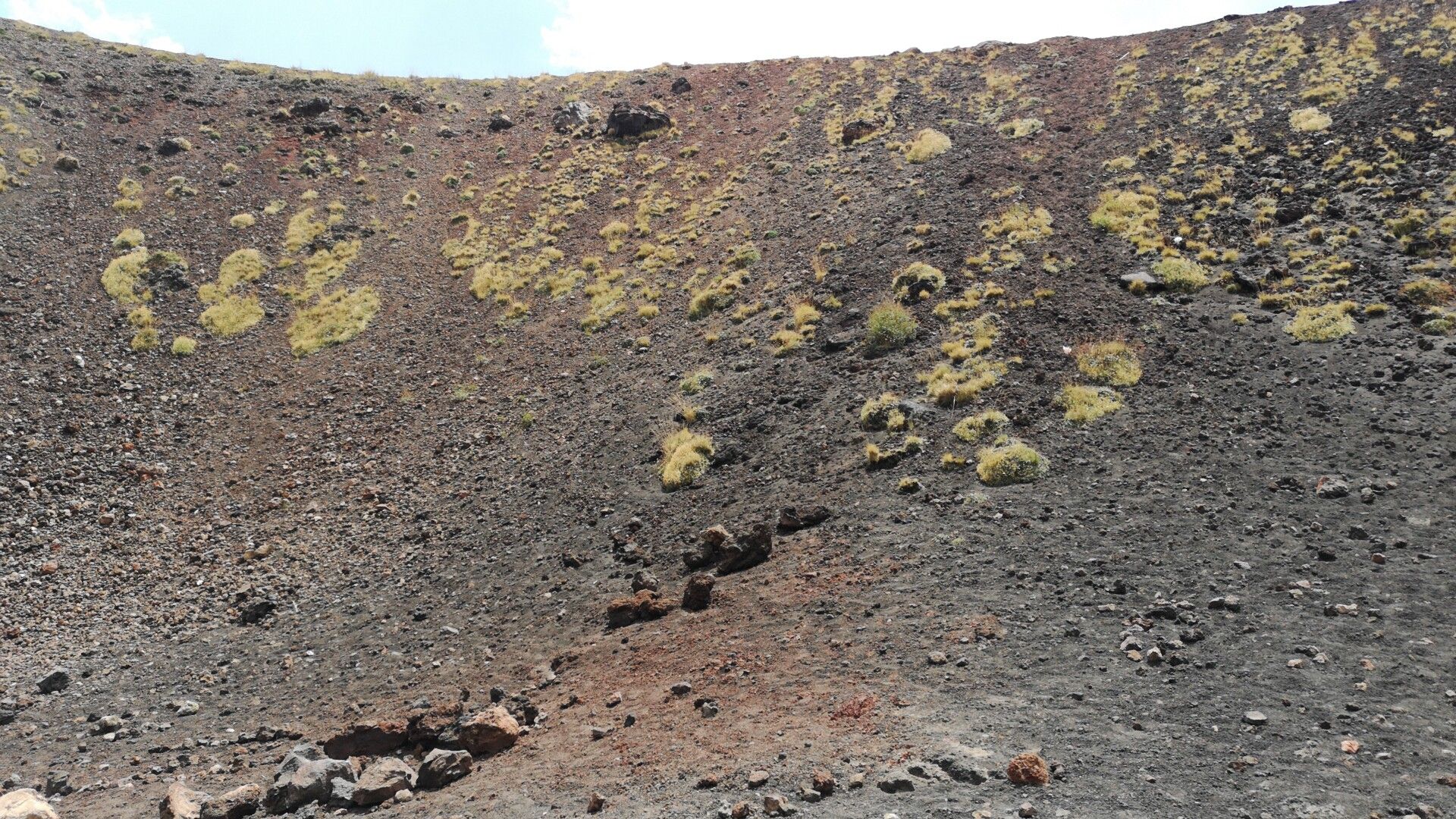
First, for free, you can walk the Silvestri craters — a cluster of old, extinct craters right by the car park with a short, well-trodden loop around the rim. Red and black cinder, big views, no ticket. Honestly, for a lot of people this is enough. You are on Etna, the ground is crunchy and warm-coloured, and it costs nothing.
Second, if you want to go higher, you queue for the Funivia dell’Etna — the volcano’s only cable car. It runs from 1,920 metres up to 2,500 metres. From the upper station you can either walk the marked path up there yourself, or buy the combined ticket that adds a sturdy 4×4 minibus and a certified volcano guide who take you on toward 2,900–3,000 metres, near the active summit-crater zone, for a short guided walk.
On cost, as of 2026: the cable-car-only return to 2,500 m runs around €50, and the full cable-car-plus-4×4-plus-guide package runs around €75–80. I am hedging on purpose — funiviaetna.com updates these each season, and that is the source to check. The official summit, for reference, is 3,403 metres; nobody on the standard tourist tour goes all the way up.
A few honest notes from the way this plays out:
- The cable car runs roughly 8:30 to early afternoon, weather permitting. “Weather permitting” is doing a lot of work — high wind or cloud shuts it with no notice. Go early.
- The €50 cable-car-only ticket gets you to 2,500 m and a self-guided wander. It is fine, but the 4×4 add-on is what gets you near the real craters. If you are paying for the cable car anyway, the upgrade is usually worth it.
- You can drive yourself to Rifugio Sapienza and do all of this independently. You do not need a tour from Catania to ride the cable car. A tour just bundles the transport and a guide.
Guided summit trek versus DIY at the craters
This is the real fork, so decide honestly about your legs.
The guided summit trek is a different animal from the cable-car package. With a licensed alpine/volcanological guide, you hike higher on the volcano — up toward the ~3,300-metre zone, conditions and the volcano’s mood permitting. It is a genuine mountain walk: loose ash, altitude, changing weather. You get explanation, you get safety, and you get the version of Etna that feels like an expedition rather than a viewpoint. Budget around €80–100 or more and most of a day. The Parco dell’Etna restricts the very top zones, and for good reason, so a guide is how you legally and safely get high.
The DIY craters option is the opposite philosophy. Drive up, walk the free Silvestri loop, maybe ride the cable car to 2,500 m and walk the path there. No guide, no booking, no big spend. You miss the summit drama but you keep your money and your schedule.
My take: if you are reasonably fit and Etna is a bucket-list reason you came to Sicily, pay for the guided trek — it is the thing people remember for years. If the volcano is one of several stops on a packed suggested route through Sicily, the cable car or even just the Silvestri craters is plenty.
The north side: Piano Provenzana
The other way up is the north side from Piano Provenzana, above Linguaglossa. It is quieter, greener on the approach, and feels less like a turnstile than the Sapienza side. Operators here run 4×4 trips up the northern flank, and the scenery — including stark zones scarred by past eruptions — is dramatic. It is harder to reach without a car, which is exactly why fewer people bother, and why I like it. If you are renting wheels and want to dodge the crowds, take the north side.
The Circumetnea railway and Etna wineries
Not everyone wants to stand in ash. Two slower pleasures circle the volcano instead.
The Circumetnea is a narrow-gauge railway that loops most of the way around Etna’s base — roughly 110 kilometres from Catania’s Borgo station out to Riposto/Giarre on the coast, taking three-plus hours one way, often with a change around Randazzo. It rattles through lava fields, citrus and pistachio country, and small towns like Paternò, Adrano, Bronte (yes, the pistachio one) and Randazzo. You can ride a stretch and hop off in a village rather than do the whole line. It is a relaxed, local, low-effort way to see the volcano’s flanks. Check current Ferrovia Circumetnea timetables, because service is limited and Sunday runs are sparse. For railway logistics across the island, my guide to Sicily without a car covers how the Circumetnea fits with regular trains.
Then there is wine. Etna’s slopes grow some of Italy’s most exciting reds and whites — Nerello Mascalese and Carricante from old vines in black volcanic soil, often on the north and east flanks around Randazzo, Castiglione di Sicilia, and Milo. A half-day winery visit pairs beautifully with the volcano: you see where the lava goes after a few centuries, and you drink the result. If food and wine is your angle, the guide to eating in Sicily and the broader Italy food and wine travel hub both go deeper on Etna’s bottles.
Safety, weather, and what to wear on Etna
Etna is a real mountain and an active volcano, and the weather at the top has nothing to do with the beach you left two hours ago. People show up at 3,000 metres in shorts and flip-flops every single day, and they are miserable.
What to actually bring:
- Closed, sturdy shoes — trainers at minimum, proper trekking boots if you are doing the guided trek. The ground is sharp volcanic grit. High socks help keep the ash out.
- Layers and a windproof jacket. It can be summer in Catania and near-freezing with brutal wind up top. The temperature drops fast as you climb.
- Sun protection — sunglasses, hat, sunscreen. The light at altitude is fierce, and on snow in winter it is brutal.
- Water and a snack. Options up high are limited and pricey.
On safety: Etna is monitored around the clock by INGV, and the standard, authorised routes (cable car, 4×4 zones, guided treks) are managed with that in mind. Eruptions do happen, and access to the upper craters can close at short notice when activity picks up. That is not a reason to avoid Etna — it is a reason to take a guide for the high zones and to accept that “the cable car is closed today” is a normal Sicilian sentence. Check the webcam and the weather the night before, and have a flexible plan.
One more honest line: if the summit is socked in cloud, going up the cable car to stare at grey fog is a waste of €50. On a bad-weather day, do the city instead and try the mountain the next morning.
What to do in Catania itself
The city earns its own time. The centre is compact, walkable, and built almost entirely from that black lava stone, which gives Catania a look you will not find anywhere else in Italy.
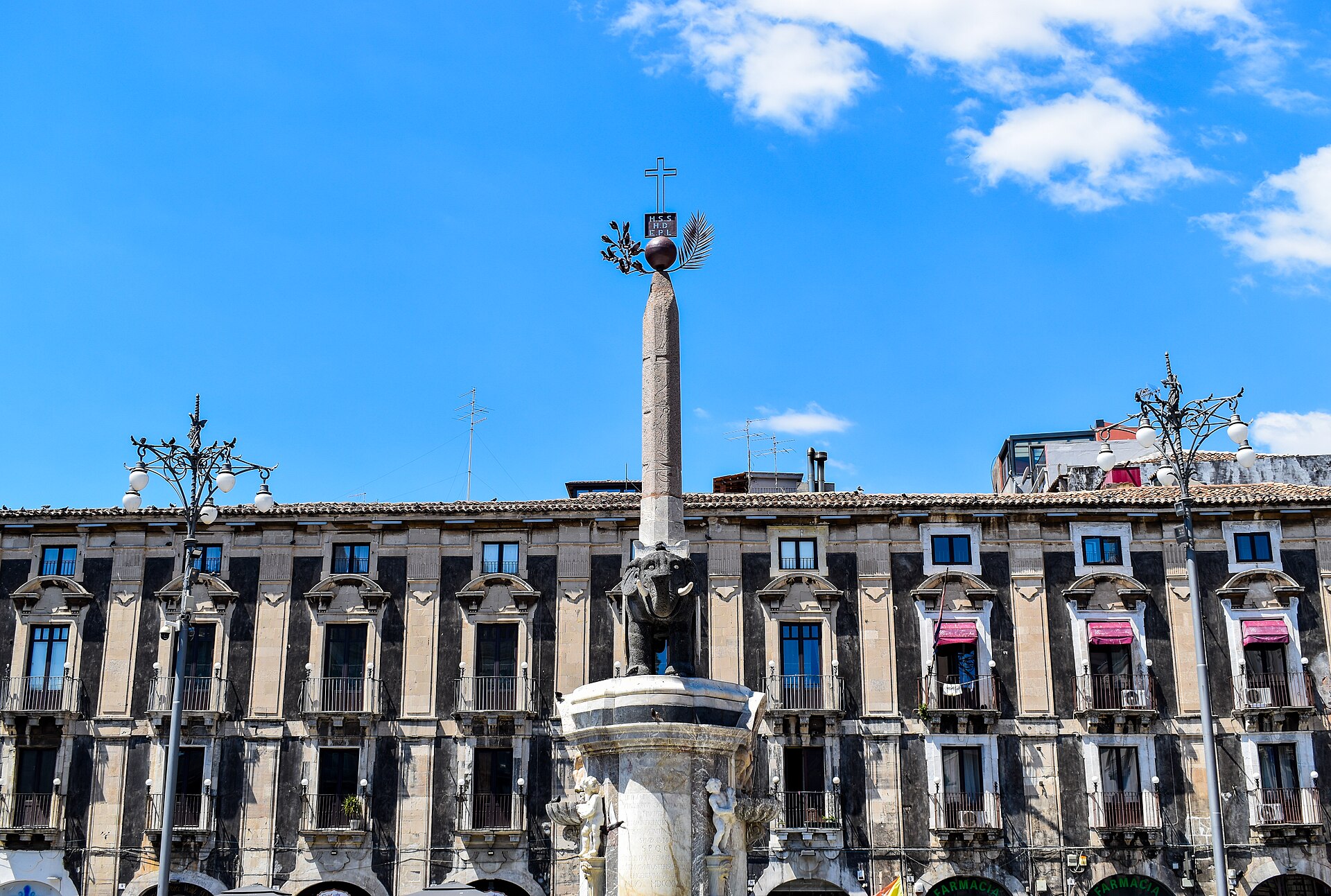
Piazza del Duomo and the Liotru. Start here. The square is pure Sicilian Baroque, and at its centre sits the Fontana dell’Elefante — the Liotru, a little black lava elephant carrying an obelisk, and the symbol of the city. Catanians are weirdly, charmingly devoted to this elephant.
The Cathedral of Sant’Agata. On the same square, the cathedral honours the city’s fiercely loved patron saint and holds the tomb of the composer Bellini, a Catania native. Sant’Agata is not a footnote here — her February festival is one of the biggest religious events in Italy, when the whole city pours into the streets for days around her relics. If you are in town in early February, you will not be able to ignore it, and you should not try.
La Pescheria. Just off the Duomo, down some steps, is Catania’s morning fish market — loud, wet, theatrical, and the best free show in the city. Tuna being butchered, swordfish on ice, vendors shouting, lemons everywhere. Get there in the morning; by lunch it folds up. This is the beating heart of Catania and you should not skip it.
Via Etnea and Via Crociferi. Via Etnea is the long, straight shopping spine that runs north from the Duomo, aimed dead at the volcano — on a clear day Etna closes the view at the end of the street, which is the whole drama of it. A block west, Via Crociferi is a quieter, gorgeous Baroque street lined with churches, and it is the prettiest walk in the city.
Roman theatre and Ursino Castle. Catania has a Roman theatre half-swallowed by the surrounding houses, an eerie reminder of how many cities are stacked under this one. The Castello Ursino, a stout 13th-century fortress, once stood by the sea until the 1669 lava flow extended the coastline and left it stranded inland. It now houses the civic museum.
Giardino Bellini. When you need shade, the city’s main park up Via Etnea is leafy and pleasant — a good reset between churches.
Eating in Catania
Catania is one of the best-value eating cities in Italy, and the food is specific. Do not leave without these.
- Granita con brioche. Crushed-ice granita — almond, pistachio, lemon, coffee — scooped into a sweet brioche bun, eaten for breakfast. It sounds strange and it is perfect. This is the Catania breakfast.
- Pasta alla Norma. The city’s signature dish: pasta with tomato, fried aubergine, basil, and salted ricotta. Named, locals say, after Bellini’s opera. Eat it here, at the source.
- Horse meat. Genuinely a Catania thing — carne di cavallo, often grilled at street stalls and trattorias, especially around the San Giovanni di Galermo area. Not for everyone, but it is authentic and the locals love it.
- Street snacks — arancini, the savoury, and a glass of Etna wine to finish.
For the wider picture of Sicilian eating, the dishes worth seeking out in Sicily maps how Catania’s plate differs from Palermo’s.
The coast: Aci Trezza, Aci Castello, and Acireale
If you have that extra half-day, the coast just north of Catania is the easy add, and it is where Catanians themselves go.
Aci Trezza sits about ten kilometres up the coast and faces the Faraglioni dei Ciclopi — jagged basalt sea stacks rising straight out of the water. The myth says the blinded Cyclops hurled these rocks at the fleeing Ulysses. The reality, columnar basalt half a million years old, is almost as good. There is a small marine reserve, and boat trips run from the harbour for swimming and snorkelling for a modest fee.
Aci Castello, next door, is named for its Norman castle perched on a black lava crag over the sea, reached by a stone bridge. It is small and very photogenic, and the swimming off the rocks below is local-style.
Acireale, a little higher up, is a serious Baroque town in its own right, with grand churches and a famous Carnival — one of the best in Sicily, all flowers and papier-mâché floats in the weeks before Lent. If you are here in carnival season, make the trip.
All three are reachable by local bus or a short drive from Catania, making them an easy coastal counterpoint to a volcano day. For more day-trip ideas across the region, see the best things to do in Sicily, and for where the good swimming actually is, the guide to the beaches of Sicily.
Catania itinerary: two days, city plus volcano
Here is the Catania itinerary I would hand a friend with two full days. It pairs the city and Etna without rushing either, and it assumes you will improvise around the weather.
Day 1 — Catania city. Granita and brioche for breakfast near the Duomo. Walk Piazza del Duomo and the Liotru, step into the Cathedral of Sant’Agata, then drop into La Pescheria while it is still loud. Lunch on pasta alla Norma. Afternoon: wander Via Crociferi and the Baroque streets, see the Roman theatre and Castello Ursino, rest in Giardino Bellini. Evening: aperitivo with Etna wine, then a long dinner. Catania’s nightlife is young and easy.
Day 2 — Etna. Go up the mountain first thing, while the weather is best. Either drive (or take the morning AST bus) to Rifugio Sapienza, ride the Funivia to 2,500 m, add the 4×4 and guide toward 3,000 m, and walk the Silvestri craters for free at the base — or, if you booked it, do the full guided summit trek and give Etna the whole day. Back in Catania by evening for a final dinner.
Got a half-day extra? Spend it on the coast — Aci Trezza and Aci Castello — or on an Etna winery visit, or ride a stretch of the Circumetnea out to a pistachio village like Bronte.
This plugs straight into a longer loop. From Catania, most people continue to Taormina or down toward Syracuse and the southeast; the day-by-day Sicily plan sequences the whole island, and where to stay in Sicily helps you decide which bases earn a night.
Getting in: Catania Fontanarossa airport (CTA)
Catania’s Fontanarossa airport (CTA) is the main gateway to eastern Sicily, and it is refreshingly close to town — only a few kilometres out.
The cheap, easy way in is the Alibus. It runs from outside arrivals to the city centre and the central train station, with a stop near Piazza Borsellino, a short walk from the historic core. As of 2026 the ticket is around €4, buses leave roughly every 25 minutes across a long daily span, and the ride takes about 25 minutes. You can buy on board (cash or card) or from machines at the airport. Validate it, and it covers you on city buses for a window afterward.
Taxis and pre-booked transfers obviously exist and run more, useful with luggage or late arrivals. If you are renting a car for Etna and the coast, the airport is the place to grab it — though I would not want a car for the city centre itself. For the bigger picture on flying into Sicily and connecting onward, see Italy airports and, for rail beyond the Circumetnea, trains in Italy.
A planning note: Catania pairs naturally with Taormina up the coast and with the southeast. I hand off the cliffside resort town to the Taormina travel guide, and the routing south to Syracuse and Noto lives in the Sicily itinerary. For the west of the island, start with the Palermo travel guide.
Final thoughts on this Catania travel guide
Catania is not trying to charm you, which is exactly why it does. You eat granita for breakfast on a square made of cooled lava, you watch tuna get butchered before nine, and then you ride a cable car onto the mountain that built the whole place. Give it two days, take the volcano seriously, wear the right shoes, and let Catania be the loud, smoky, ge
Questions travellers ask
Is Catania worth visiting?
Yes — if you want real Sicily over a postcard. Catania is gritty, young, cheap, and built entirely from black lava, with a fierce fish market, superb food, and Etna on the horizon. It is less pretty than Taormina and more alive than almost anywhere on the island. Give it two days and let the city earn you.
Can you visit Mount Etna on your own?
Yes, up to a point. You can drive to Rifugio Sapienza, walk the free Silvestri craters, and ride the Funivia cable car to 2,500 m entirely independently — no tour needed. But the high summit zones above are restricted for safety, so to legally get near the active craters you need a licensed guide or the official 4×4-plus-guide package.
How much does it cost to go up Etna?
As of 2026, hedge these and confirm at funiviaetna.com: the cable car alone to 2,500 m is around €50 return, and the cable-car-plus-4×4-plus-guide package toward 3,000 m is around €75–80. A full guided summit trek runs around €80–100 or more. Walking the Silvestri craters at the base is free.
Is Catania or Taormina a better base?
Catania for value, food, transport, and a real city; Taormina for beauty, views, and a resort feel — at a higher price. Both reach Etna easily. I base in Catania and day-trip to Taormina, but if you want a romantic, polished stay, flip it. The complete guide to Taormina makes that case.
How many days do you need in Catania?
Two full days is the sweet spot: one for the city and food, one for Etna, with an optional half-day for the coast or a winery. One day works if you only want the centre and the fish market. Add nights if Catania is your base for exploring eastern Sicily more slowly.
When is the best time to visit Catania and Etna?
Spring and autumn are ideal — warm, clear, and quieter, with Etna’s weather kinder than midwinter. Summer is hot in the city but fine up the mountain. Winter brings snow to Etna (and skiing) and the huge Sant’Agata festival in early February. See the best months for an Italy trip for the seasonal picture.
Do I need a car in Catania?
Not for the city — the centre is walkable and the Alibus handles the airport. A car helps for Etna’s north side, the coastal villages, and winery-hopping, but the cable car and many tours run without one. If you would rather skip driving entirely, Sicily without a car shows how.
Is the Etna cable car worth it?
If the weather is clear, the ride to 2,500 m is a quick, low-effort way to high volcanic terrain, and the 4×4 add-on gets you near the craters. If it is cloudy, skip it — you will pay €50 to see fog. On a fit, clear-weather day, the guided trek beats the cable car for sheer experience.