2 Days in Milan: The Perfect Itinerary
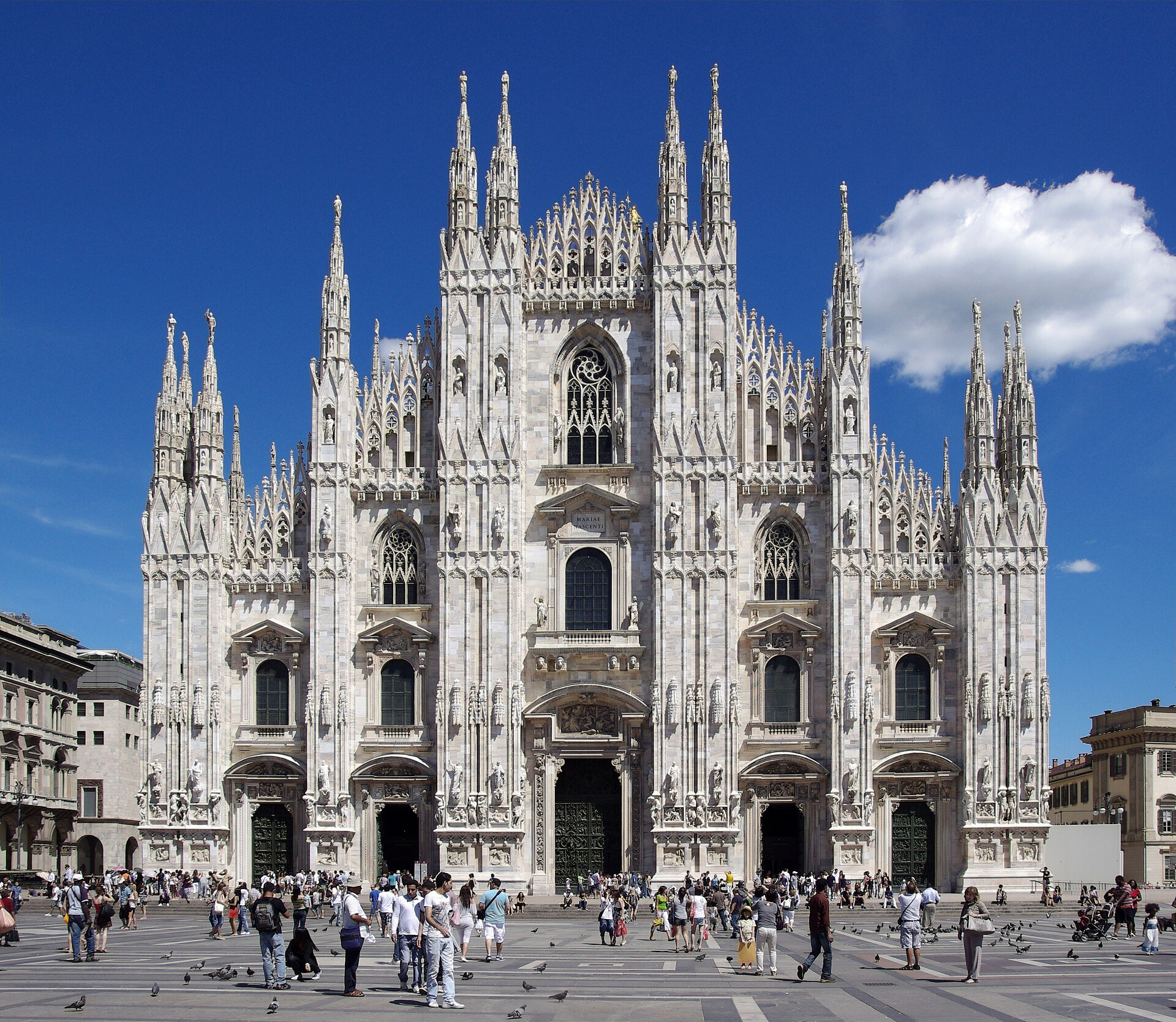
Most plans for 2 days in Milan read like a shopping list. They tell you to see the Duomo, the castle, The Last Supper, and the canals, then leave you to work out how those dots actually connect on a map and at what time of day. That gap is why people arrive with a plan and still spend half the trip backtracking across the city or stuck in a 90-minute queue.
So here is the honest version. Two days is genuinely enough for Milan’s essentials, but only if you book The Last Supper and the Duomo rooftop before you arrive. Spend Day 1 in the historic center around the Duomo, and Day 2 on art, the castle, and the canals. Do that and you’ll see the best of the city without rushing.
This is for the first-timer with a long weekend, a layover stretched into 48 hours, or anyone pairing Milan with the lakes or another Italian city. I’m going to give you a real, geographically sensible plan, not a pile of attractions. If you want the deep dives on each sight, my things to do in Milan guide covers those; here we’re focused on sequencing two good days.
Your 2 days in Milan at a glance
Before the hour-by-hour detail, here’s the shape of the whole thing. Day 1 stays tight around the historic center so you barely touch transit. Day 2 spreads out, so you’ll lean on the metro and a tram or two.
| Morning | Afternoon | Evening | |
|---|---|---|---|
| Day 1 | Duomo interior + rooftop terraces (booked slot), Galleria Vittorio Emanuele II | Lunch near the Galleria, La Scala, Quadrilatero della Moda shopping | Aperitivo and dinner in Brera |
| Day 2 | The Last Supper (booked slot), then Santa Maria delle Grazie | Sforza Castle + Parco Sempione, Brera Pinacoteca or design shopping | Aperitivo and dinner along the Navigli canals |
Two things make or break this plan, and both happen before you land. Read the next section before you do anything else.
Book these first (or the whole plan falls apart)
I’ll be blunt: the single biggest mistake people make with 48 hours in Milan is treating the two headline sights as walk-ups. They are not.
The Last Supper. Leonardo’s mural lives in a climate-controlled room that admits only around 35 people at a time for roughly 15 minutes, on timed entry. That’s it. Slots routinely sell out six to eight weeks ahead, and in peak summer they can go a couple of months out. If you’re reading this with your trip already booked, stop and check availability now, before you read the rest. Standard tickets run around €15 as of 2026 through the official booking site; if those are gone, reputable operators bundle the entry into a small guided walk, which is often the only way in at short notice. Whatever slot you get, build the rest of Day 2 around it rather than the other way round.
The Duomo rooftop. You can usually still get rooftop tickets a day or two out, but the queue at the door is the problem, not availability. A fast-track or timed rooftop ticket booked online can save you something like an hour or more in high season. As of 2026, expect around €16-18 for rooftop-only and roughly €22-26 for a combined cathedral, rooftop, and museum pass, with the lift costing a few euros more than the stairs. Book a morning slot for Day 1.
Everything else on this itinerary you can play by ear. These two you cannot. Get them locked, then relax.
Day 1: The historic heart on foot
Day 1 is the easy one. Almost everything sits within a 15-minute walk of Piazza del Duomo, so you can leave the metro map in your pocket until evening.
Morning: Duomo, rooftop, and the Galleria
Start early. Aim to be at the Duomo for your booked rooftop slot around opening, ideally before 10am. The cathedral plus the terraces is the one sight in Milan that genuinely rewards getting there first, both for the light and for the thinner crowds.
Do the interior first if your ticket includes it, then head up to the roof. The terraces are the part people remember: you walk among the spires and flying buttresses with the city spread out below, and on a clear day you can pick out the Alps to the north. Give it a proper 45 minutes to an hour. Take the stairs up if your knees are willing and the lift back down, or vice versa.
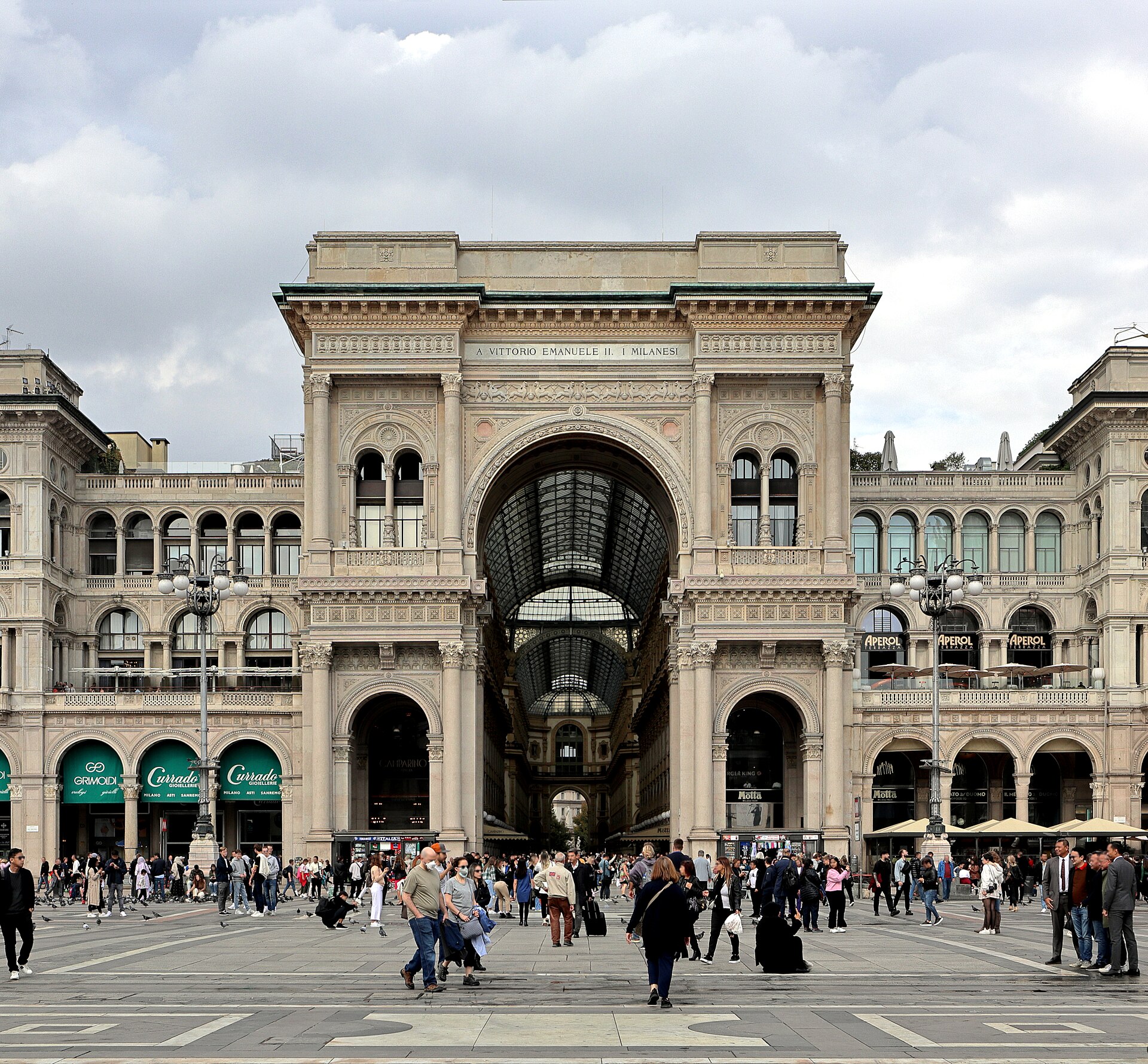
Back at ground level, walk straight into the Galleria Vittorio Emanuele II, the glass-roofed arcade off the north side of the piazza. It’s a two-minute stroll and free to wander. The mosaics underfoot and the iron-and-glass dome overhead are the draw; the Prada and Louis Vuitton flagships are incidental unless you’re shopping. Do the small superstition if you like: spin your heel on the bull mosaic on the floor. Then keep walking, because the Galleria opens directly onto Piazza della Scala on the far side, which sets you up nicely for the afternoon.
Lunch near the Galleria
You’re in the most touristed square in the city, so a little care pays off. For something fast and authentically Milanese, the panzerotti at Luini, a short walk behind the Galleria, are a local institution — fried or baked dough pockets eaten standing up, often with a queue that moves quickly. If you want to sit, step a couple of streets off the piazza rather than eating at the first place with a view of the Duomo; the food a block back is better and cheaper. This is also your chance to try a proper risotto alla milanese, the saffron-gold local dish, or the cotoletta, the breaded veal cutlet. I keep restaurant specifics light here on purpose; the Italy food and wine guide goes deeper on regional dishes if you want to plan meals around them.
Afternoon: La Scala and the fashion quad
After lunch, you’re already at Piazza della Scala, so take a look at Teatro alla Scala. The opera house is famously plain on the outside, and unless you’re catching a performance or touring the museum, ten minutes in the square is enough. Don’t feel you have to force the interior into a two-day trip.
From here, walk northeast into the Quadrilatero della Moda, the fashion rectangle bounded by Via Montenapoleone, Via della Spiga, and Via Sant’Andrea. Even if you have no intention of buying a thing, it’s a pleasant 30-to-45-minute wander past the windows of every major Italian house. The streets are handsome, the people-watching is excellent, and it deposits you naturally toward Brera for the evening.
This stretch of the afternoon is flexible. If shopping bores you, cut it short and spend the saved time back at the Duomo terraces or lingering over coffee. The point of Day 1 is to stay loose; you’ve front-loaded the one timed commitment in the morning.
Evening: aperitivo and dinner in Brera
End Day 1 in Brera, the old artists’ quarter just north of the center and an easy walk from the Quadrilatero. The cobbled, partly pedestrian streets are at their best in the early evening, when the bars fill up for aperitivo.
Aperitivo is the Milanese ritual you should not skip. Order a drink — an Aperol Spritz, a Negroni, a glass of local wine — and a spread of nibbles arrives alongside it, often substantial enough to blur the line with dinner. Find a table around 6:30 or 7pm, watch the neighborhood come to life, and then either roll the aperitivo into a full dinner at a Brera trattoria or wander until something looks right. Brera also happens to be where you’ll start Day 2 if you choose the Pinacoteca, so you’ll get a feel for it tonight.
If you’d rather end your first night by the water, you can swap Brera’s aperitivo for the Navigli canals, which I cover on Day 2 — just don’t try to do both districts in one evening, because they sit on opposite sides of the center and you’ll spend the night on the metro instead of at a table.
Day 2: Art, a castle, and the canals
Day 2 is the spread-out day, and it pivots entirely on your Last Supper slot. I’m writing this assuming a mid-morning entry, which is the most common; if yours is in the afternoon, simply flip the order and do the castle first.
Morning: The Last Supper
Get to Santa Maria delle Grazie early for your timed slot — arrive 15 minutes before, because latecomers are not let in and there is no flexibility. The viewing itself is short and quiet: you pass through a buffer zone, the doors open, and you have your roughly 15 minutes in the refectory with the mural. It’s faded, it’s astonishing, and the brevity is part of why it stays with you. Don’t expect to linger; do expect to be moved.
When you come out, the church of Santa Maria delle Grazie next door is worth ten minutes, and the small piazza in front is a calm spot to regroup. From here, the Sforza Castle is a pleasant 15-minute walk east, or one short tram hop if your slot ran late and you’re hungry.
Midday: Sforza Castle and Parco Sempione
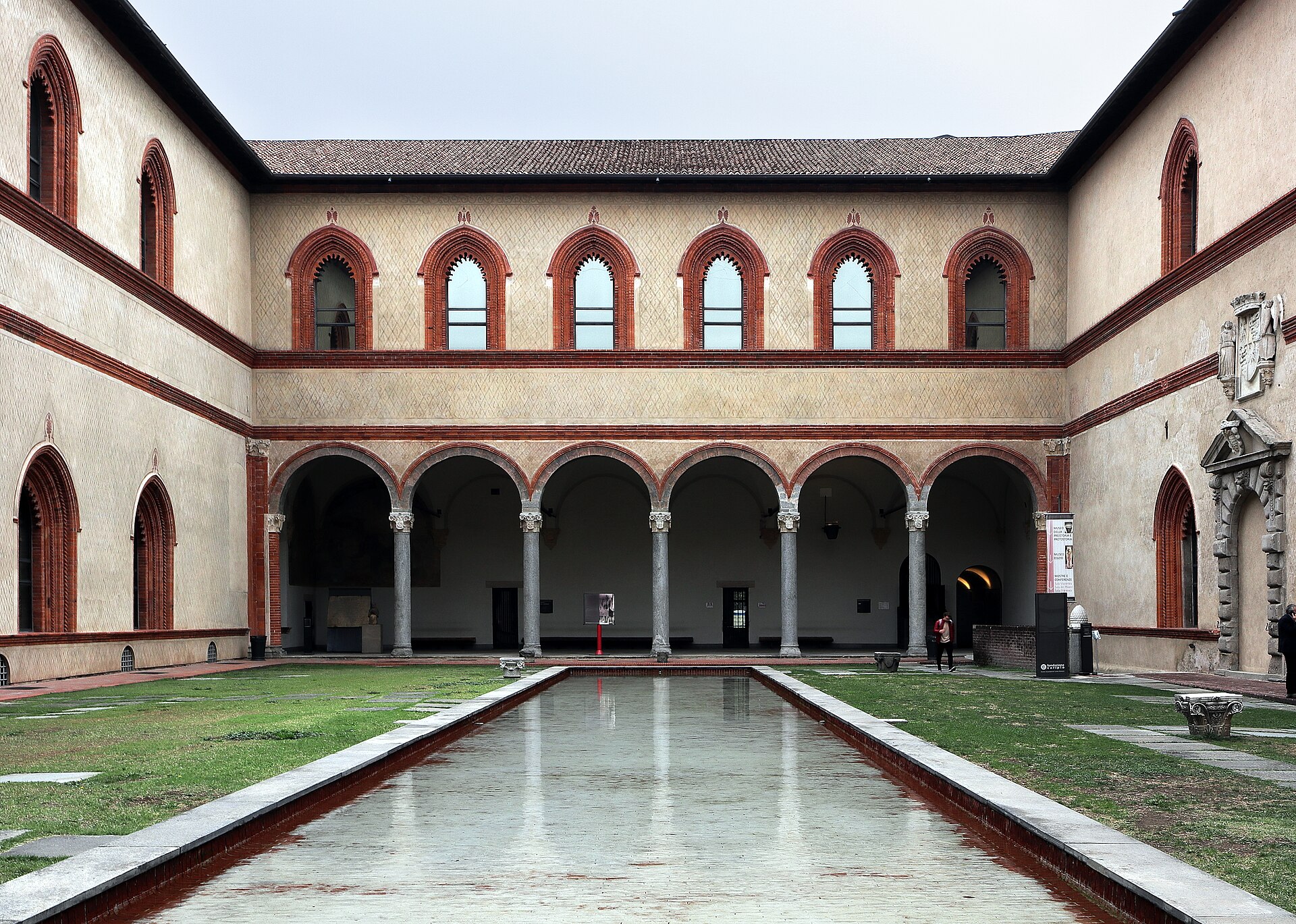
The Sforza Castle is a genuine fortress, all red brick and battlements, and you can walk into the courtyards and along parts of the ramparts without a ticket. The museums inside — including Michelangelo’s unfinished final sculpture, the Rondanini Pietà — are worth it if you have the appetite for more art after the Last Supper, but with only two days I think it’s fine to enjoy the grounds and skip the interior. Trust your energy here.
Walk straight through the castle and out the back and you’re in Parco Sempione, Milan’s central green lung. Cross the park to the Arco della Pace, the triumphal arch at the far end, picking up something to eat on the way if you skipped a sit-down lunch. On a sunny day this is the most relaxed hour of the whole trip; on a hot summer afternoon, the park’s shade is a relief from the city’s heat.
Afternoon: Brera Pinacoteca or Milan’s design side
Now choose your lane based on what you’re into.
If you love art, double back toward Brera for the Pinacoteca di Brera, one of Italy’s great painting collections, with works by Caravaggio, Raphael, and Mantegna. It pairs naturally with a second wander through the Brera streets you sampled on Day 1.
If you’d rather see the Milan that designs the world, point yourself at the city’s contemporary side instead — the design and furniture showrooms, or a contemporary-art space like Fondazione Prada south of the center. This is also a good window for any serious shopping, whether that’s the high-street energy of Corso Buenos Aires or another pass through the Quadrilatero.
Either way, you’re setting up to end the night in the south of the city, by the canals.
Evening: the Navigli canals
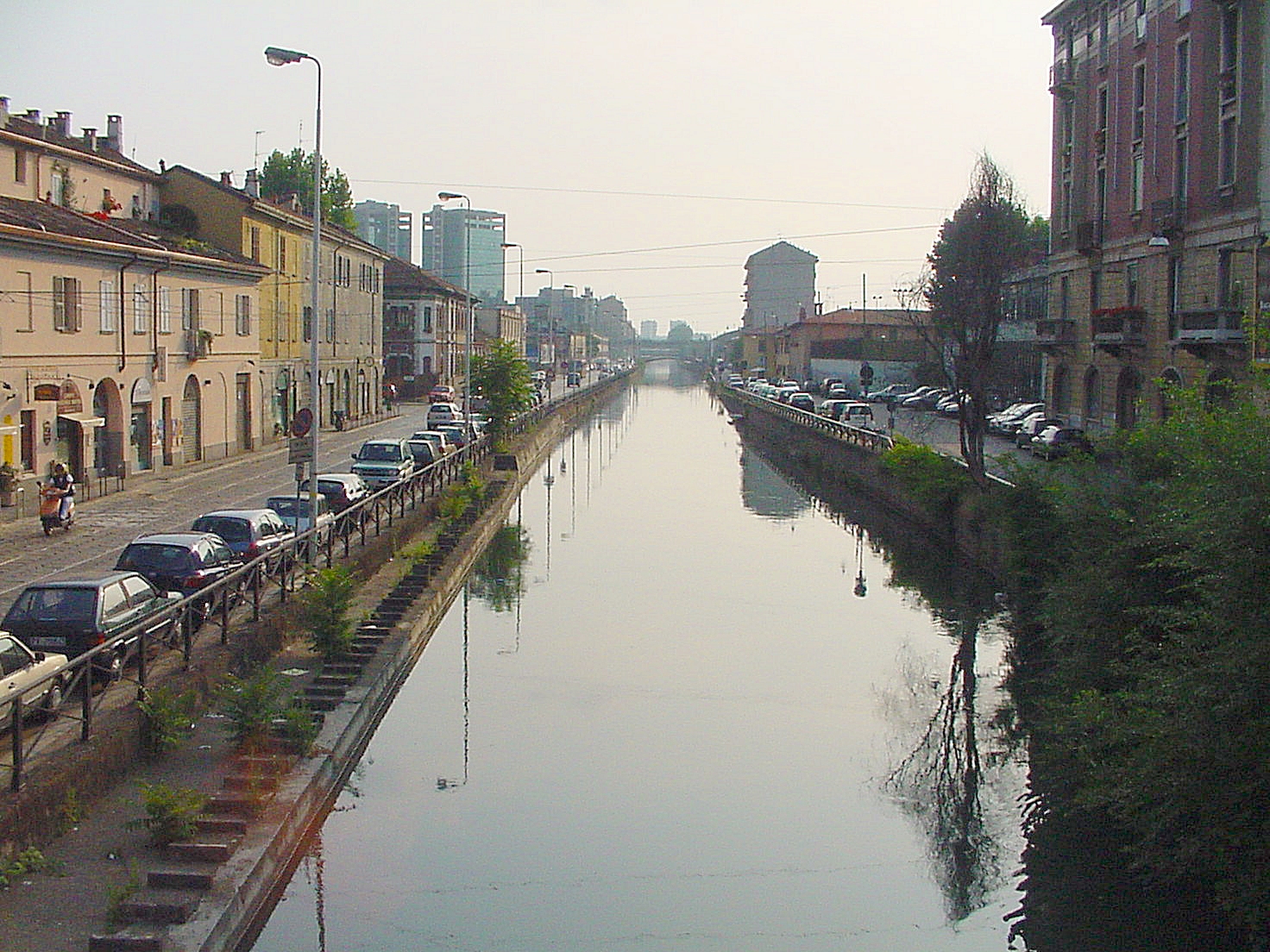
Finish your 48 hours in Milan along the Navigli, the canal district in the south. The fastest way down is the green M2 metro line to Porta Genova, then a short walk; from the center it’s only a few stops. The Naviglio Grande and the Darsena, the old dock, are lined with bars and restaurants, and the whole area turns lively after dark.
This is the other classic aperitivo scene, looser and younger than Brera. Grab a canalside table, order a spritz and whatever small plates come with it, and watch the reflections in the water. It’s the right note to end on — unhurried, a little buzzy, unmistakably Milanese. Linger over dinner here; you’ve earned it, and you’ve seen the city.
If your arrival eats into Day 1
Not everyone lands the night before with two clean days ahead. If your timing is tighter, adapt rather than panic.
Morning arrival, Day 1. If you touch down in the morning, drop your bags and go straight to the Duomo — but in this case book an afternoon rooftop slot rather than a morning one, and use the early hours for the Galleria, lunch, and the Quadrilatero. You’ll still hit everything, just reshuffled. For the fastest route in from the airports, see my Milan airport to city center guide rather than guessing at trains and shuttles.
Late arrival, the night before. This is the ideal setup. Drop your bags, find aperitivo near your hotel, and go to bed early so you can be first at the Duomo. If you have the energy, a short evening walk to a lit-up Piazza del Duomo is a lovely, crowd-free way to start.
Only one real day plus two half-days. If your flights leave you with, say, an afternoon, a full day, and a morning, compress this into a single priority list: book The Last Supper and the Duomo rooftop for the full day in the middle, use the arrival afternoon for the Galleria and Brera aperitivo, and save the castle or canals for the final morning before you leave. The booking discipline matters even more when time is short.
A rainy-day swap
Milan does get wet, especially in spring and autumn, and the good news is that the city handles rain better than most. The Duomo rooftop is the one weather-dependent stop, so if Day 1’s morning is a washout, flip your two days: do the indoor-heavy Day 2 first (The Last Supper, Sforza’s museums, the Brera Pinacoteca are all under cover) and save the terraces for a clearer sky.
For a properly rainy afternoon, lean into the indoor wins. The Galleria is covered. The big museums — Brera, the castle collections, Fondazione Prada — are made for it. The Quadrilatero shopping works rain or shine. Even aperitivo is an indoor sport when it needs to be. The only thing I’d actively reschedule is the rooftop; everything else carries on. If you’re trying to time your trip around the weather in the first place, the best time to visit Italy guide breaks down the seasons.
Add a third day: lake or city day trip
If you can stretch to a third day, Milan’s real luxury is what’s a short train ride away. This is where the city earns its place as a base.
The obvious move is the lakes. Como is under an hour by train, and an easy day of ferries between lakeside towns is one of the best things you can do from the city; the complete guide to the Italian Lakes covers the wider region. Prefer a city? Bergamo’s walled upper town, Turin’s arcades and cafés, or even Verona are all comfortable day trips. I’ve laid out the best options, with timings and how to choose between them, in the day trips from Milan guide — that’s the place to plan a third day properly rather than here.
A third day also takes the pressure off the first two. With the lakes in reach, you can let Milan be a relaxed art-and-aperitivo city break instead of a forced march.
Getting around and other practicalities
A few specifics to keep the two days smooth.
Transit passes. Milan’s public transport, run by ATM, is cheap and genuinely useful. For a 48-hour visit, the easiest buy is the two-day pass, which as of 2026 costs around €13 and gives you unlimited metro, tram, and bus from first validation. It pays for itself quickly once Day 2’s spread-out stops kick in, and it saves you fumbling for single tickets. Tap a contactless card straight at the metro gates also works if you’d rather not buy a pass. For the bigger picture on trains and regional travel, see the Italy transportation guide.
Walking versus metro. Day 1 is almost entirely walkable — keep the pass for the evening. Day 2 is where you’ll actually use it: M2 green line down to the Navigli, and a tram or two between the more distant stops. Milan is flat and grid-like, so walking between central sights is usually faster than it looks on the map.
Beating the queues. The pattern is simple: book the timed sights, and do the unbookable busy ones early. The Duomo terraces are emptiest right at opening; the Galleria is calmest before mid-morning; the Last Supper is whatever your slot is. Midday and late afternoon are the crush, so that’s when I’d schedule lunch, the park, or shopping.
Dressing for churches. The Duomo and Santa Maria delle Grazie are working churches with an enforced dress code: shoulders and knees covered for everyone. In summer that means a scarf or a light layer in your bag, because you will be turned away otherwise. It’s a small thing that trips up a lot of visitors. The Italy etiquette guide covers the wider dos and don’ts, including church manners.
Staying alert. Milan is a safe big city, but the Duomo area and the metro at rush hour are pickpocket territory like any major European hub. Keep your bag zipped and in front of you on crowded platforms and you’ll be fine; the Italy tourist scams rundown is worth a skim before you go.
Where to base yourself. I won’t relitigate neighborhoods here, but for two days I’d stay central — Brera or near the Duomo for walkability, or near Milano Centrale for transit convenience if you’re arriving by train and day-tripping. The full breakdown is in the where to stay in Milan guide, and for the broader region the where to stay in Italy guide helps if Milan is one stop on a longer trip.
If you’re slotting these two days into a bigger Italian route, the Italy itineraries hub and the overarching full Milan and Northern Italy guide will help you stitch it all together.
Final thoughts
Milan rewards a plan. Two days here is plenty for the essentials, but the difference between a smooth trip and a frustrating one comes down to two bookings made before you leave home. Lock The Last Supper and the Duomo rooftop, let Day 1 stay walkable and loose, build Day 2 around your timed slot, and end each evening with a spritz in your hand. Do that and you’ll leave understanding why so many travelers quietly rate Milan higher than its reputation — and you’ll have the lakes waiting for whenever you come back.
Questions travellers ask
Is 2 days enough for Milan?
Yes, for the essentials. Two days covers the Duomo and its rooftop, the Galleria, The Last Supper, the Sforza Castle, Brera, and the Navigli at a comfortable pace, as long as you’ve pre-booked the two timed sights. You won’t exhaust the city’s museums and design scene, but you’ll see what makes Milan, Milan. A third day is for the lakes, not for cramming in more city.
How far in advance should I book The Last Supper?
As early as you possibly can — ideally six to eight weeks out, and up to a couple of months ahead for peak summer dates. Only around 35 people enter per 15-minute slot, so it sells out faster than almost any other sight in Italy. If the official site is fully booked, look at small guided tours that include the entry, which often hold inventory when individual tickets are gone.
Do I need to book the Duomo rooftop in advance?
You can usually still buy a slot a day or two out, but you should book ahead anyway to skip the queue rather than to guarantee a ticket. In high season the walk-up line can swallow an hour or more, and a timed or fast-track ticket bought online lets you walk past it. Book a morning slot for the best light and thinnest crowds.
What’s the best way to get around Milan in 2 days?
Walk Day 1 and use public transport on Day 2. The historic center is compact and flat, so you’ll barely need transit on the first day. For the second, a two-day ATM pass — around €13 as of 2026 — covers unlimited metro, tram, and bus, which is handy once you’re heading to the castle, Brera, and down to the Navigli. Tapping a contactless card at the gates also works.
Should I visit Milan or go straight to the lakes?
Do both if you can. Milan deserves two days for its art, architecture, and aperitivo culture, and Lake Como is under an hour away by train, making it an ideal third-day escape. If you only have time for one, choose based on mood: Milan for culture and city energy, the lakes for scenery and slow ferries. Most people are happiest pairing the two.
Is Milan worth visiting for a first-time trip to Italy?
Absolutely, though it’s a different flavor from Rome or Florence. Milan is modern, stylish, and business-minded, with world-class art and food rather than wall-to-wall ancient ruins. For a long weekend or as a gateway to the north and the lakes, it’s an excellent first taste of Italy — just go in expecting a sophisticated working city rather than an open-air museum.
When is the best time of year for 2 days in Milan?
Spring and early autumn are the sweet spot — mild weather, walkable days, and the rooftop terraces at their best. Summer is hot and busy, and The Last Supper sells out furthest ahead then. Winter is quieter and atmospheric, with shorter museum waits, though some days are grey and damp. Avoid the city during the big fashion and design weeks unless you’re there for them, as prices and crowds spike.
How much should I budget for the main sights over 2 days?
The two headline tickets are the big line items: roughly €15 for The Last Supper and around €16-26 for the Duomo with rooftop, depending on stairs versus lift and which combo you pick, as of 2026. Add the €13 transit pass and a museum or two, and the core sightseeing for two days lands in the modest range before food. Aperitivo, where a drink comes with snacks, is one of the better-value ways to eat.