Cortina d’Ampezzo Travel Guide
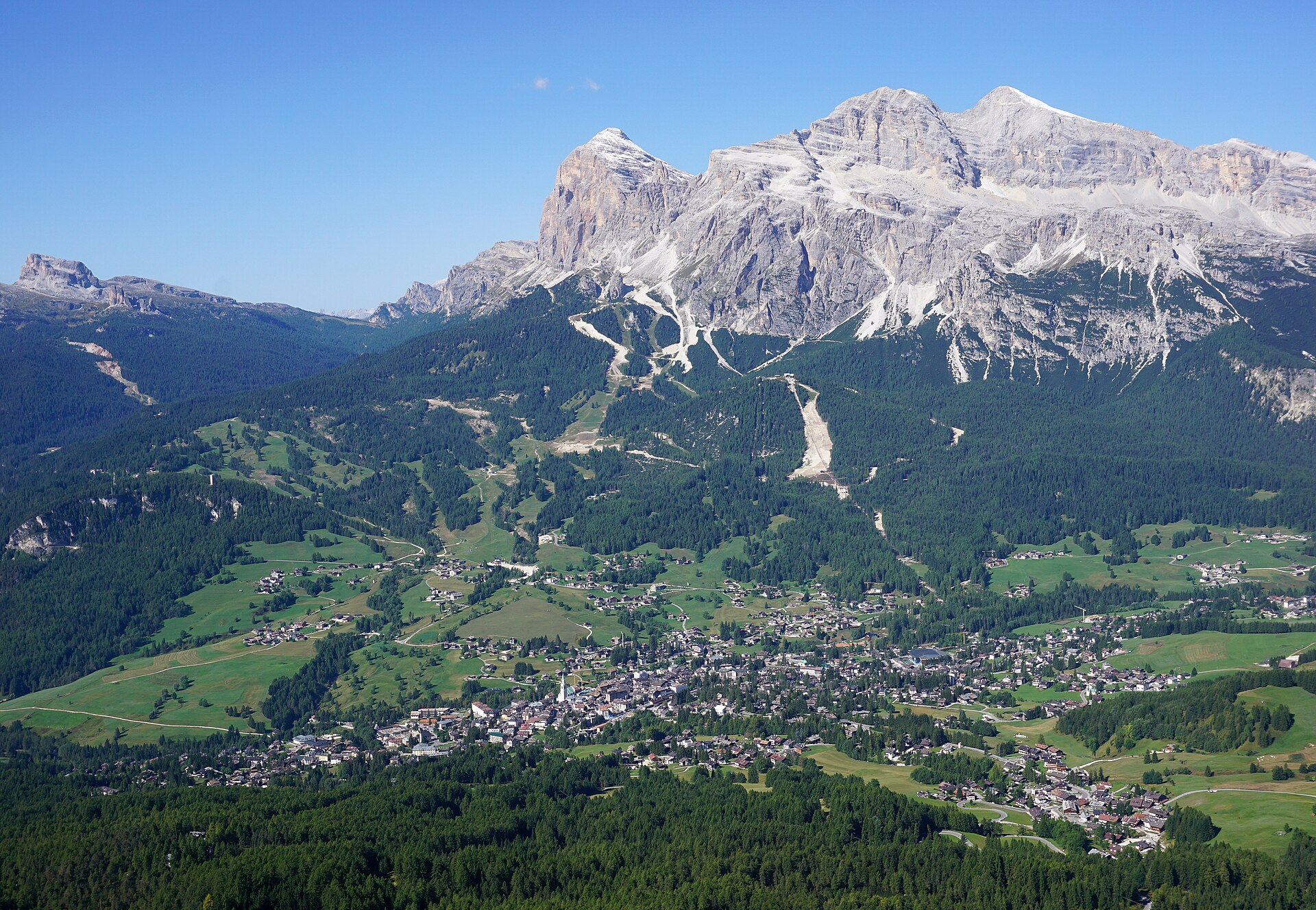
Cortina d’Ampezzo is the kind of place that sells itself in a single photo and then quietly tests your patience when you actually try to get there. There is no train station, the hotels cost more than you expect, and the most famous viewpoints are an hour’s drive away.
So let me make this Cortina d’Ampezzo travel guide do the work the postcards don’t: Cortina is an upscale resort town in the eastern Dolomites of Veneto, ringed by the Tofane, Cristallo and Sorapiss peaks. It suits travelers who want dramatic mountains with a walkable town, good food, and creature comforts, and who don’t mind paying for them.
Who it’s for: hikers and skiers who like a proper town at the end of the day, couples after a romantic mountain base, and anyone curious after the February 2026 Winter Olympics. Who it’s not for: shoestring backpackers, and car-free travelers visiting outside high summer, when the buses thin out fast.
Cortina in one paragraph
Cortina sits at about 1,224 metres in the Ampezzo valley, an old Ladin-speaking community with its own dialect, its own carpentry and craft traditions, and a distinct identity that predates the ski crowds by centuries. The locals are Ampezzani; the surrounding peaks are a UNESCO World Heritage site. It hosted the 1956 Winter Olympics, co-hosted the Milano-Cortina 2026 Games this past February, and has spent the decades in between as Italy’s most fashionable mountain address. Expect fur coats on Corso Italia in January and trail runners in July. Both belong here.
Summer or winter? Pick your Cortina first
This is the decision that shapes everything else, so handle it before you book anything. Cortina is genuinely two different towns depending on the season, and the “best” one depends entirely on what you came to do.
| Summer (late June–Sept) | Winter (Dec–March) | |
|---|---|---|
| Main draw | Hiking, via ferrata, lakes, larch colour in autumn | Skiing on 120 km of Dolomiti Superski pistes |
| Town vibe | Relaxed, outdoorsy, long evenings | Glamorous, dressy, après-ski energy |
| Crowds | Busy in Aug, calmer June & late Sept | Peak at Christmas, New Year, February |
| Car-free? | Workable in July–Aug; bus network runs | Harder; ski areas are fragmented and scattered |
| Cost level | High, peaking in August | Highest, peaking over the holidays |
| Best for | Walkers, photographers, couples | Skiers, snow lovers, see-and-be-seen crowds |
My honest take: summer and early autumn are the sweet spot for most first-timers. The hiking is world-class, the town is lively without being frantic, and September delivers thinner crowds with the larches turning gold. Winter is spectacular but it is a committed ski trip, and Cortina’s slopes are famously spread out, so you need either a central base near the Faloria cable car or a hotel with a ski shuttle.
Things to do Cortina: the town itself
People treat Cortina as a trailhead and skip the town. Don’t. It is one of the few Dolomite bases with a real centre worth an afternoon.
Corso Italia and Piazza Roma
The pedestrian Corso Italia is the spine of town: designer boutiques, pasticcerie, and the slim pale-green bell tower of the parish church rising over it all. You don’t need to buy anything. Get an espresso or an aperitivo, watch the passeggiata, and look up, because the Tofane loom right over the rooftops. Walk to Piazza Roma for the photo of the Olympic rings backed by the mountains, a fixture since 1956 and freshly relevant again.
Eat the local food
Cortina takes its food seriously, and the regional specialty is casunziei all’ampezzana, beetroot-stuffed ravioli with melted butter, smoked ricotta and poppy seeds. Order it at least once. The town has genuinely good restaurants, and many hotels offer half-board dinners that beat eating à la carte every night. Up on the mountain, lunch at a rifugio (mountain hut) is half the point of being here.
Museums and a slower morning
If the weather turns, Cortina has the Mario Rimoldi Modern Art Museum with a strong collection of 20th-century Italian work, plus paleontology and Ladin ethnographic museums. It is not a museum town, but it is enough to fill a wet morning without driving anywhere.
The cable cars: the easy way up
You do not have to hike to stand on a Dolomite summit. Cortina’s cable cars and chairlifts do the climbing for you, and in summer they double as shortcuts to high trailheads. These are the ones that matter:
- Tofana / Freccia nel Cielo — the big one. A cable car system climbs toward Tofana di Mezzo at 3,244 m, the third-highest peak in the Dolomites. On a clear day the view down the valley is the best in Cortina; on a cloudy day you ride straight into the cloud, which is its own strange thrill.
- Faloria — leaves from the edge of town, walkable from the centre, which makes it the convenient one. Panoramic terrace at the top, easy walks, and the natural starting point if you have no car.
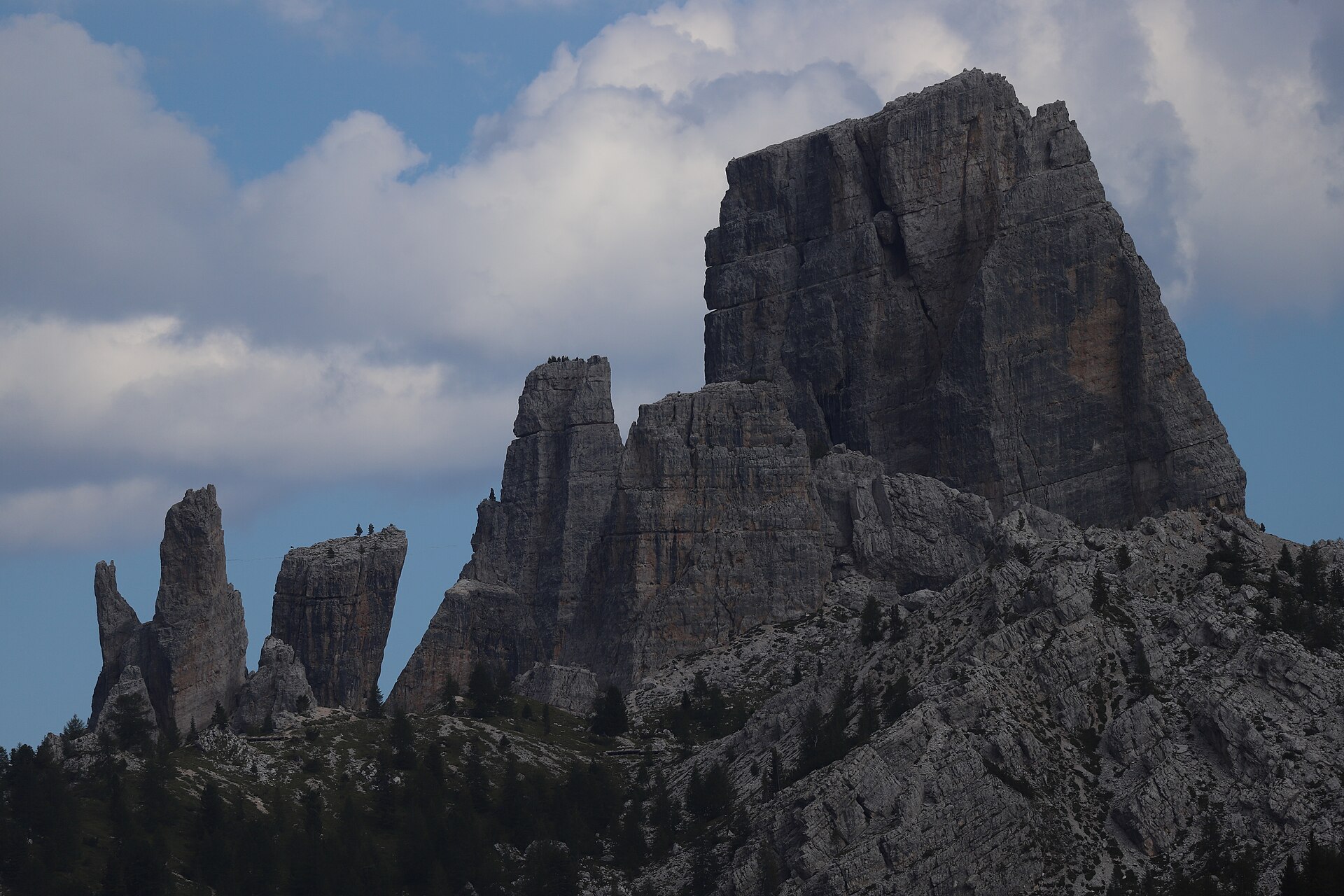
- Cinque Torri (5 Torri chairlift) — access to the five iconic rock towers, beloved by climbers, ringed by open-air WWI trenches you can walk through. The nearby Rifugio Scoiattoli is a classic lunch stop.
- Lagazuoi — technically up at Passo Falzarego, but the most rewarding lift in the area: a summit rifugio at 2,752 m and the WWI tunnels (bring a headlamp). It runs later in autumn than most.
A reminder worth saving you money: as of 2026, most of these cableways stop running by late September, while Lagazuoi tends to stay open longer. Check current dates and fares on the official operator sites before you count on a ride up.
Things to do Cortina in summer: hiking and the lakes
This is why most people come in warm months. I’ll keep it tight here, because the trails deserve their own deep dive, and you’ll find one in my best hikes in the Dolomites guide.
The headline outings from Cortina:
- Lago di Sorapis — the milky-turquoise lake reached from Passo Tre Croci. Stunning and very popular, so go at dawn or you’ll share it with a crowd.
- Cinque Torri and Rifugio Nuvolau — easy walking among the towers, with an optional beginner via ferrata up to a clifftop refuge.
- Tofana di Rozes circuit — a longer loop around Cortina’s signature massif from Rifugio Dibona, quieter and grander than the lake hikes.
- Croda da Lago and Lago Federa — larch-fringed lake that turns spectacular in October, with a rifugio that stays open late.
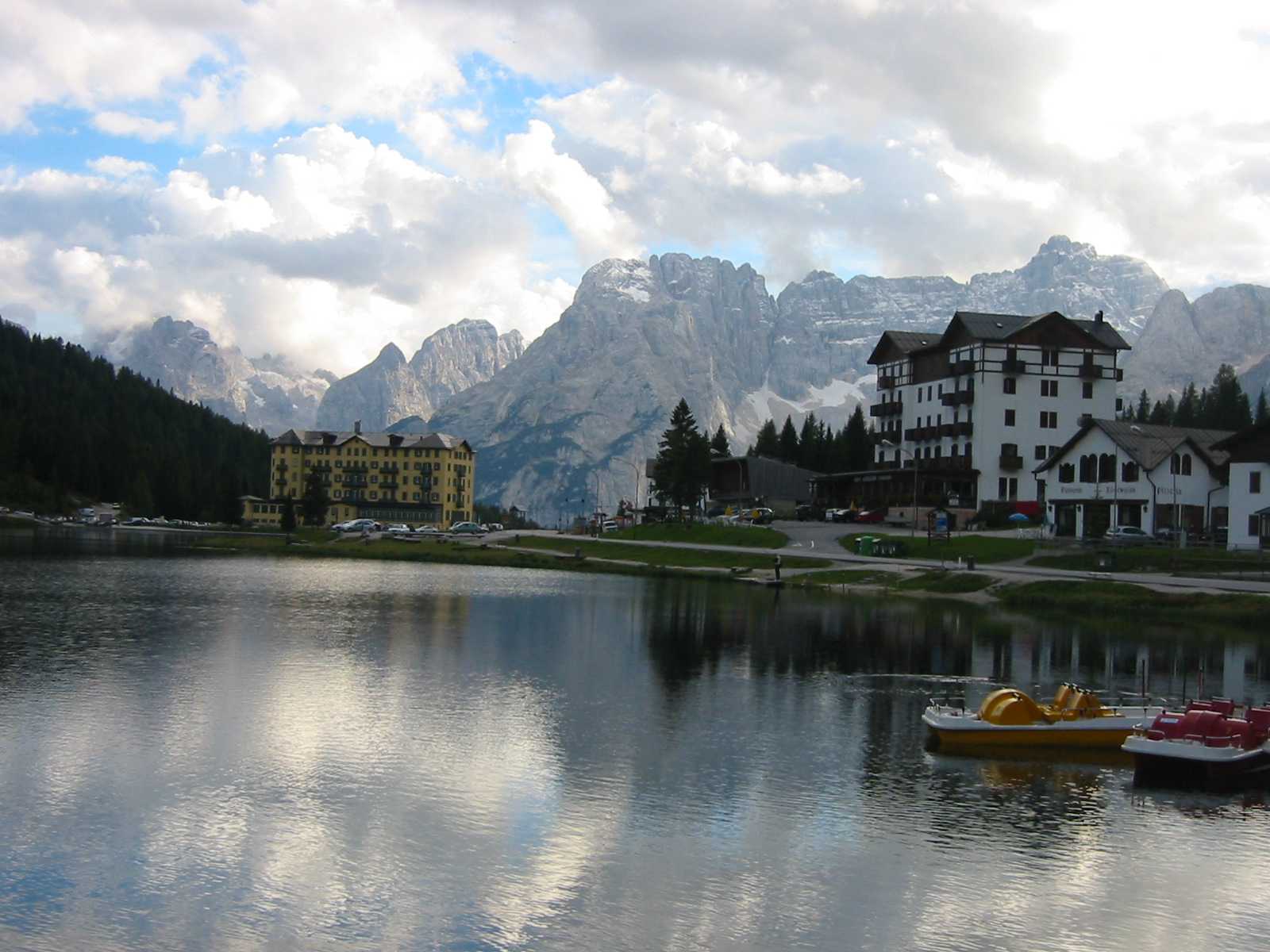
For something gentler, Cortina is a strong base for the famous Tre Cime di Lavaredo, the three peaks an easy drive or summer bus ride northeast via Lago di Misurina. Misurina itself, a mirror-still lake with a grand old hotel, is worth the trip on its own. Both get their own treatment in my Tre Cime di Lavaredo guide, so I won’t repeat the toll-road and parking saga here.
A word on via ferrata: these protected climbing routes, strung with steel cables and ladders, are a Cortina specialty and let non-climbers reach absurdly good viewpoints. Go with a local guide your first time, for the gear and the route knowledge both.
Things to do Cortina in winter: skiing and snow
In winter the trails sleep and the lifts spin for skiers. The Cortina ski area covers around 120 km of pistes across three main sectors, Tofana, Faloria-Cristallo, and Cinque Torri-Lagazuoi, all part of the giant Dolomiti Superski pass that links a dozen valleys.
The catch, and I want to be straight with you: Cortina’s ski terrain is fragmented. The sectors don’t all connect on snow, and there are no slopes running back to most hotels. That makes your base decision critical. Either stay central and walk to the Faloria cable car, or pick a hotel with a reliable ski shuttle. If skiing is your whole reason to come, a stricter regional ski strategy lives in my Italian Alps in winter guide.
Beyond the pistes there’s snowshoeing, fat biking, ski touring on the Sellaronda circuit, and snowmobile excursions from Lago di Misurina. And after February 2026, there is one entirely new thing to do, which brings us to the Olympics.
The Milan-Cortina 2026 Olympics: what’s left now that they’re over
The Games came and went this past February. The Milano-Cortina 2026 Winter Olympics ran 6–22 February 2026, the closing ceremony lit up Verona’s Roman arena under the theme “Beauty in Action,” and in a first for the Winter Games two cauldrons were extinguished simultaneously, one in Milan and one here in Cortina. The Olympic flag passed to France, which hosts the 2030 Games in the French Alps. So if you’re reading this in 2026 hoping to catch the Olympics, you’ve missed them. The good news is what they left behind.
The Cortina Sliding Centre
The single most consequential legacy is the Cortina Sliding Centre (the Eugenio Monti Sliding Centre), the rebuilt bobsled, skeleton and luge track that hosted those events during the Games. It is a full reconstruction of the historic 1923–2008 Eugenio Monti track on the same site, around 1,750 m long with 16 curves, built at a reported cost of roughly €118 million and opened in November 2025. It was, frankly, the most controversial venue of the whole Games; the IOC at one point urged organizers to use an existing track abroad rather than build a new one.
Now that it exists, the plan is for it to remain a working international sliding venue rather than rot like its predecessor did. It has already been lined up as a competition site for the Dolomiti Valtellina 2028 Winter Youth Olympic Games. Whether you can watch a World Cup run or tour it as a visitor depends on the season, so check official Cortina sources for current access.
The infrastructure that outlasts the medals
The less glamorous legacy is the part you’ll actually use: upgraded roads in and out of the valley, refreshed venues, and a town that spent years preparing to host the world. The ski jump and ice facilities were renovated, the town centre spruced up. For a normal traveler, the practical upshot is a Cortina that is a little easier to reach and a little more polished than it was five years ago, with the usual caveat that mountain road works in the Dolomites are never truly finished.
Where to stay Cortina: town centre vs hamlets vs budget base
Here is the truth nobody puts at the top of the page: Cortina is expensive, and genuinely cheap beds barely exist. Budget here means “less eye-watering,” not “cheap.” Plan your accommodation early, especially for August, Christmas, and February, when the good-value rooms vanish first.
| Area | Price band | Best for |
|---|---|---|
| Town centre | High–luxury | Walking to Corso Italia, dining out, no-car convenience, the Faloria lift |
| Outlying hamlets (Pocol, Passo Tre Croci) | Midrange | Trailhead access, mountain views, slightly lower rates, a quieter night |
| Budget bases (2-star guesthouses, B&Bs) | “Budget” for Cortina | Stretching the trip; book months out; expect basic |
In the town centre
Staying central buys you the thing a car can’t: you can walk everywhere, eat out without driving, and reach the Faloria cable car on foot. It is the most convenient choice and, in winter without a car, close to essential. Expect to pay for it. This is where Cortina’s polished four- and five-star hotels cluster, along with a handful of more modest guesthouses if you book ahead.
The outlying hamlets
Just outside the centre, small hamlets like Pocol (west, toward Passo Falzarego) and the area around Passo Tre Croci (east, by the Lago di Sorapis trailhead) trade walkability for mountain quiet, easier trail access, and somewhat softer prices. You’ll want a car here, particularly outside high summer. For some travelers the views and the calm are worth more than a central address.
The budget reality
If you’re watching the budget, the move is a simple 2-star guesthouse or B&B in or near the centre, booked early, with no spa and no half-board. A handful of well-run meublé guesthouses sit walking distance from the bus station. Apartments can undercut hotels if you don’t need breakfast. For the regional lodging picture across the full price range, my where to stay in the Dolomites guide goes deeper than I can here.
Getting there: this Cortina d’Ampezzo travel guide starts with no train station
This trips up more visitors than anything else, so read this part twice: Cortina has no train station. The nearest railheads are at Calalzo di Cadore to the south and Dobbiaco (Toblach) to the north, and from either you finish the journey by bus. For most travelers the simplest answer is to skip trains entirely and take a direct coach.
From Venice (the usual gateway)
The easiest approach is the Cortina Express (and similar coaches) running direct from Venice and Venice Marco Polo Airport. Reckon on roughly 2.5 hours and a fare in the ballpark of €20–30 each way as of 2026, with more departures in summer. Book ahead in peak season. This is the move I’d recommend for most people arriving by air. For getting to Venice in the first place and onward Italian logistics, my Italy transportation overview covers the connections.
From Dobbiaco / Calalzo (the train-plus-bus route)
If you’re coming from the South Tyrol side or already on the rails, take the train to Dobbiaco or Calalzo and connect to a local Cortina Express or DolomitiBus service for the final leg into town. It’s more piecing-together than the direct Venice coach, but it links Cortina into the wider rail network.
Should you rent a car?
Honestly, for summer hiking, yes, a car helps enormously. The best trailheads, the lakes, and Tre Cime are scattered, and bus timetables are limited outside July and August. If you’d rather not drive Alpine passes, it’s doable car-free in high summer using the bus network plus the cable cars, and I lay that out in my Dolomites without a car guide. For winter, weigh the fragmented ski areas against a hotel shuttle before deciding.
Best time to visit Cortina
Short version: July to mid-September for hiking with the huts and lifts open, late September to mid-October for autumn larch colour and thinner crowds, and December to March for skiing. June can still hold snow on high passes, and November is the dead month between seasons when much of the town shuts down.
If you want crowd-and-cost context across the whole country, my best time to visit Italy guide frames it, and the month-by-month detail lives in what Italy is like in September for the autumn shoulder season. My pick for a first visit: the second half of September. Warm enough days, cool nights, golden light, and the summer mob gone home.
How Cortina fits a bigger trip
Cortina rarely stands alone. It is a natural anchor for a wider Dolomites loop, and its proximity to Venice (about 2.5 hours) makes a mountain-and-lagoon combination easy. A few ways to slot it in:
- Pair it with Venice and the Veneto: see my Venice and Veneto travel guide.
- Build a multi-stop mountain route using my day-by-day Dolomites plan.
- Compare it with the Sella-ringed valleys of South Tyrol in my guide to visiting Val Gardena.
For the full regional picture, Cortina is one chapter of my Dolomites and Alps travel guide, which is the parent map this town hangs from.
Final thoughts
Cortina asks more of you than its photos let on. You’ll plan harder around the missing train station, pay more than you’d like for a bed, and drive or bus to the headline views. Do it anyway. Few mountain towns combine this scenery with a centre this civilised, and after the 2026 Games it’s both a little easier to reach and freshly back on the map. Come in late September if you can, eat the casunziei, and give it more days than you think you need.
For the wider region, start with my Dolomites and Alps travel guide, and if Italy beyond the mountains is on the table, the complete guide to visiting Italy ties it all together.
Questions travellers ask
Is Cortina d’Ampezzo worth visiting?
Yes, with one honest caveat. The mountains around Cortina are as good as the Dolomites get, and the town offers a walkable centre, real restaurants, and comfort you won’t find at a remote rifugio. The caveat is cost: Cortina is pricey. If you want drama plus a proper town and you’ll pay for it, it’s worth every euro.
How do you get to Cortina without a car?
Cortina has no train station, so the practical answer is a direct coach. The Cortina Express runs from Venice and Venice airport in roughly 2.5 hours for around €20–30 each way as of 2026. From the South Tyrol side, take a train to Dobbiaco or Calalzo and connect by local bus. Service is best in high summer.
Is Cortina better in summer or winter?
Both are excellent but different. Summer and early autumn deliver world-class hiking, lakes, and via ferrata with a lively but relaxed town. Winter is a glamorous ski trip on 120 km of pistes, though the slopes are fragmented and demand a central base or a shuttle. For a first visit and easier logistics, I’d choose summer.
How many days should I spend in Cortina?
For summer hiking, plan at least four to five days so you can reach the lakes, Cinque Torri, Tofana, and a Tre Cime day without rushing. For a ski trip, a minimum of four nights lets you sample all three sectors. A quick taste is possible in two days, but Cortina rewards a slower pace and you’ll want it.
Did Cortina host the 2026 Winter Olympics?
Yes. Cortina co-hosted the Milano-Cortina 2026 Winter Olympics, held 6–22 February 2026, with Milan. Cortina staged the sliding events (bobsled, skeleton, luge) at the new Cortina Sliding Centre, plus women’s alpine and curling. The Games are over now; the rebuilt sliding track and upgraded infrastructure remain as the lasting legacy.
Is Cortina d’Ampezzo expensive?
Yes, it’s one of Italy’s pricier mountain towns and genuinely budget beds are scarce. “Budget” in Cortina means a simple 2-star guesthouse booked well ahead, not cheap. Costs peak in August, over Christmas and New Year, and around February. Self-catering apartments and half-board hotel deals are the most effective ways to keep spending down.
What is Cortina d’Ampezzo known for?
Cortina is known as the “Queen of the Dolomites,” a fashionable Veneto resort with its own Ladin-rooted Ampezzo heritage. It’s famous for skiing, dramatic peaks like the Tofane and Cristallo, designer shopping on Corso Italia, hosting the 1956 and co-hosting the 2026 Winter Olympics, and a long history as an upscale Italian mountain retreat.
Can you visit Cortina as a day trip from Venice?
You can, and tour operators run day trips, but I wouldn’t. Cortina is about 2.5 hours each way, so a day trip leaves only a few hours on the ground and rushes the best parts. It works as a sampler if your time is tight. To do the town and the surrounding mountains justice, stay at least two nights.