Amalfi Coast, Naples & Campania
Amalfi Coast Itinerary: 3, 5 and 7 Days
The Short Answer: Which Amalfi Coast Itinerary Is Right for You?
A good Amalfi Coast itinerary starts with one honest question: how much time do you actually have? With three days, base yourself in Sorrento and treat the coast as a day trip — you will see the highlights, but it is a sprint. With five days, split your nights between Sorrento and Amalfi town and you get proper time in each place. With a full week, you can add Ravello, the Path of the Gods hike, and either Capri or Pompeii without ever feeling rushed. This guide lays out all three shapes, day by day, for people who want a plan they can actually follow — not a mood board.
For everything on where to sleep, see our guide to where to stay on the Amalfi Coast. If you are traveling without a car, the full ferry and bus breakdown lives at Amalfi Coast without a car. And if you are coming from Rome, Rome to Amalfi Coast has the train, bus, and transfer options.
Itinerary at a Glance
| Trip length | Best base(s) | What you fit |
|---|---|---|
| 3 days | Sorrento | Capri or coast day trip + Pompeii |
| 5 days | Sorrento → Amalfi or Positano | Capri, Positano, Amalfi, Ravello |
| 7 days | Sorrento + Amalfi town | All of the above + Path of the Gods, Atrani, boat tour |
Before You Go: How Movement Works Here
The Amalfi Coast is not a place you drive yourself around unless you genuinely enjoy reversing into passing trucks on a cliff road. Most visitors use two forms of transport: the SITA bus and the ferry.
The SITA bus runs year-round between Sorrento, Positano, Amalfi, and points east toward Salerno. Tickets are bought in advance from tabaccherie, bars, or news kiosks — not on the bus itself. The ride from Sorrento to Positano takes roughly 50 minutes; Positano to Amalfi, another 35–45 minutes. Sitting on the right side heading south gives you the cliff views; left side heading north. If you are prone to motion sickness, a sea-view seat is not worth it — take the aisle.
The ferry is the better option in season (roughly April to October, weather permitting). It is more expensive than the bus, but crossing by boat is one of the genuinely great experiences of the trip — the towns look completely different from the water. Ferries run between Sorrento, Positano, Amalfi, and Salerno, and connect to Capri. Schedules vary by operator and shift seasonally, so always check times the day before. Ferries do not run in rough weather, which is rare in summer but not unheard of. Plan your Capri day first while the weather is holding.
We cover the full logistics — timetables, operators, walking transfers between stops — in detail at Amalfi Coast without a car. The short version: go by ferry when you can, use the SITA bus when ferries do not connect where you are going, and build in buffer time at both ends.
3 Days on the Amalfi Coast
Three days is tight. You will come away having seen the headline towns, but you will not have sat still long enough to feel the coast’s slower rhythms. That is fine — it is still worth it. The key is not trying to do everything.
Base: Sorrento. It sits at the top of the peninsula, connects to Naples by the Circumvesuviana train, and gives you easy ferry access to both Capri and the coast towns further south. You arrive, drop your bags, and go.
Day 1: Positano
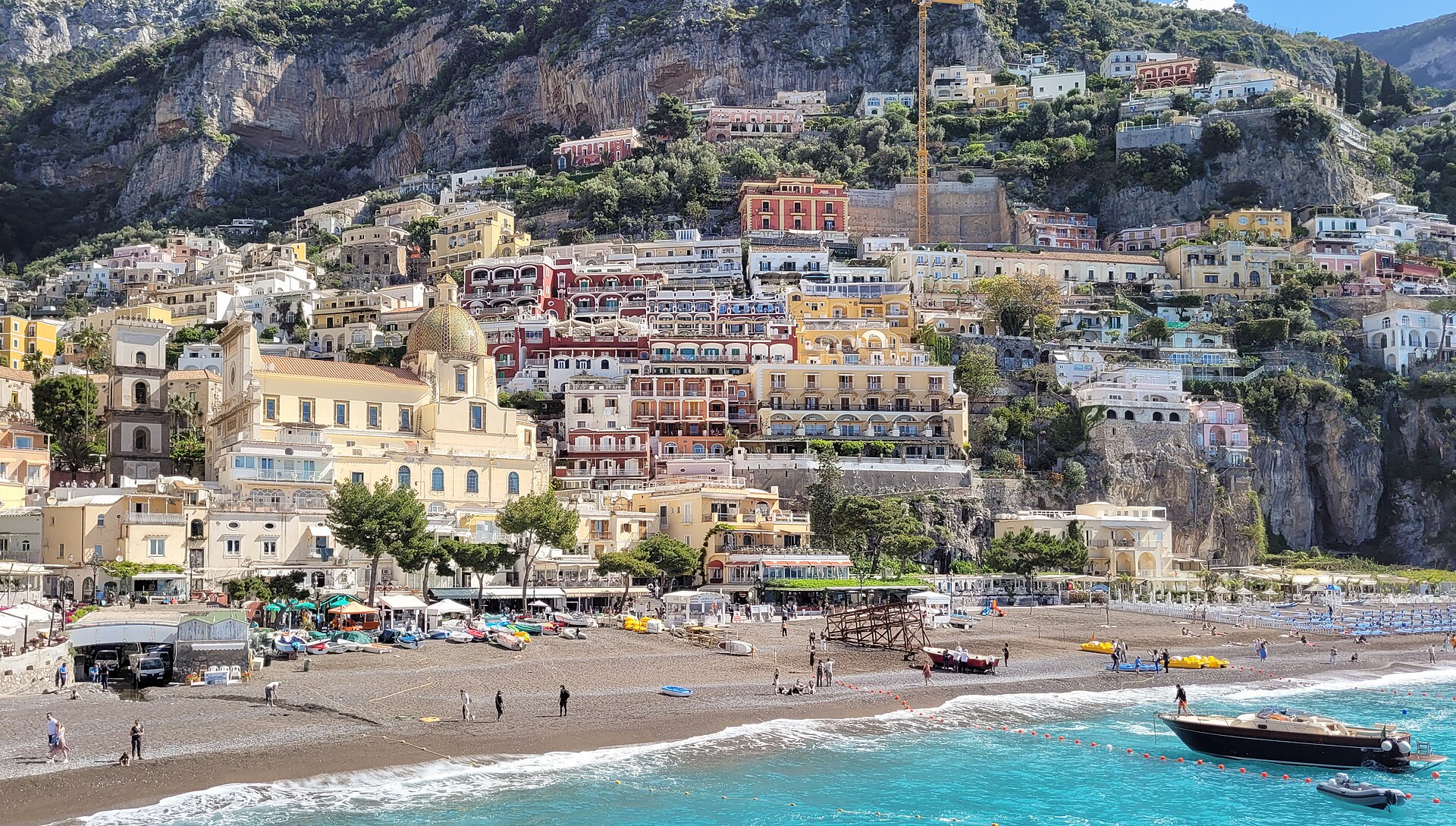
Take the morning SITA bus or a Positano-bound ferry from Sorrento. The ferry takes around 35–40 minutes; the bus takes closer to 50, but runs more frequently and costs less. Either way, get there before 10am if you can — Positano fills up fast, and the light on those stacked pastel buildings is better before the midday glare anyway.
Walk down Via dei Mulini to Spiaggia Grande, the main beach. The beach itself is dark volcanic pebble, not sand, so pack water shoes if comfort matters to you. Swim, eat lunch at one of the waterfront restaurants, then wander the alley shops in the afternoon. Positano is genuinely good for shopping — ceramics, linen, sandals made to order — without being purely touristy about it.
Return to Sorrento by ferry in the late afternoon. The trip back north is worth taking by boat if ferries are still running — watching Positano recede into the cliff as you head out is a proper moment.
Spend the evening in Sorrento. Walk the central Piazza Tasso, have dinner somewhere on Via degli Aranci, pick up limoncello from a shop rather than a tourist stall.
Day 2: Capri
Book this day early in your trip precisely because it is the one that can get cancelled. Ferries to Capri from Sorrento run roughly every 30–60 minutes in high season, with the first departure around 7:30–8am (check current timetables — schedules shift). The crossing takes about 25–30 minutes.
Capri town is the glossy, high-fashion end of the island; Anacapri, reached by local bus from the main port, is quieter and worth the detour. Take the chairlift from Anacapri to the top of Monte Solaro — the views over the Gulf of Naples on a clear day are extraordinary, and the ride itself is slow enough that you can take decent photos.
If you want to see the Blue Grotto (Grotta Azzurra), plan it for the morning before crowds build. Access is by small rowboat from the sea; the light inside is best when the sun is low. Be aware that entry can be closed without warning due to tidal conditions or swell.
A boat trip around the island — taking in the Faraglioni rock stacks from the water — is a worthy half-day add-on if you have the time. Return ferries from Capri to Sorrento run into the evening in high season.
For more on planning this day, see our full Capri day trip guide.
Day 3: Amalfi Town and Pompeii
This day involves a choice, and it is an honest one: Amalfi town and the coast, or Pompeii.
If you have not been to either, Pompeii wins on depth of experience — there is simply nothing else like it in Italy. Take the Circumvesuviana from Sorrento (check the current train schedule; the journey takes about 30 minutes). Book tickets online in advance and hire a guide for at least two hours — the ruins cover 44 hectares and are largely unlabelled, so without context you are just wandering a dead city.
If you have already seen Pompeii or the ruins hold limited appeal, spend the day on the coast. Take the SITA bus east toward Amalfi town. The Duomo di Sant’Andrea, built in the 9th century with its striking Arab-Norman facade, anchors the main piazza. Climb the 57 steps to the entrance; the interior is smaller than you expect but the cloisters behind it — the Chiostro del Paradiso — are genuinely beautiful. Walk the paper museum (Museo della Carta), which tells the story of Amalfi’s medieval paper trade, then take the taxi or local bus up to Ravello for the views from Villa Rufolo’s terrace.
If three days feels rushed — and it will — see whether your travel dates allow an extra night. Two nights Sorrento plus one night Amalfi changes the trip significantly.
5 Days on the Amalfi Coast
Five days is the sweet spot. You get real time in Positano, a proper look at Amalfi and Ravello, Capri without rushing it, and a morning for Pompeii. The shape that works best is two or three nights in Sorrento, then move to Amalfi town or Positano for the remainder.
Bases: Sorrento (nights 1–2 or 1–3), then Amalfi or Positano (nights 3–5 or 4–5). Splitting bases adds a luggage transfer, which is mildly inconvenient and completely worth it. Being based in Amalfi or Positano for your final nights means you are waking up on the coast rather than commuting to it.
For the full picture on base-town tradeoffs — price ranges, ferry access, night-life, family-friendliness — see where to stay on the Amalfi Coast.
Day 1: Arrive Sorrento + Capri
Arrive Sorrento in the morning if possible and head straight to Capri — this front-loads the weather-dependent day and leaves the rest of the trip flexible. All the Capri logistics apply as above.
If you arrive in the afternoon, use the rest of Day 1 to explore Sorrento itself: the old town, the clifftop gardens, the marina. Save Capri for Day 2.
Day 2: Pompeii + Sorrento Evening
Morning train on the Circumvesuviana from Sorrento to Pompeii. Book entry in advance; queues at the gate without a ticket can run 45 minutes in peak season. A guided tour of two to two-and-a-half hours covers the Forum, the bakeries, the Villa of the Mysteries, and the haunting plaster casts of the victims — enough to make sense of the place without exhausting you.
Back in Sorrento by early afternoon. This is a good time for a slow lunch, a swim at one of the cliff-base beach clubs, or picking up the ceramic and lemon-themed shopping that Sorrento does better than most coast towns.
Day 3: Transfer to Amalfi + Afternoon Ravello
Move your bags to Amalfi town in the morning. The ferry from Sorrento to Amalfi takes about 1 hour 20 minutes in high season and gives you a first full view of the coast from the water — sit on deck.
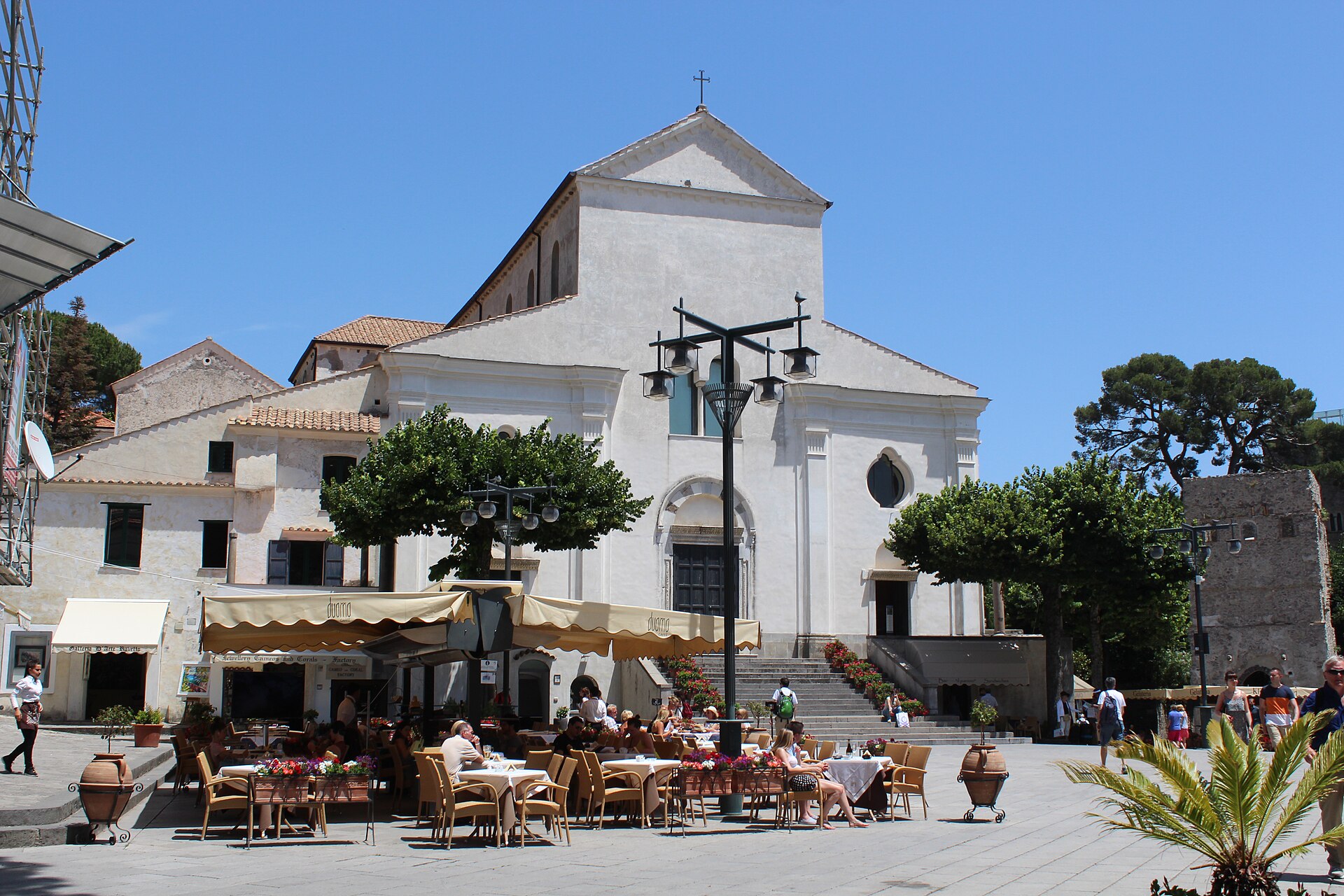
After checking in, spend the early afternoon in Amalfi town: the Duomo, the Chiostro del Paradiso, the paper museum, lunch in the main piazza. In the late afternoon, take the local SITA bus (Line 5110, roughly 25 minutes) up to Ravello.
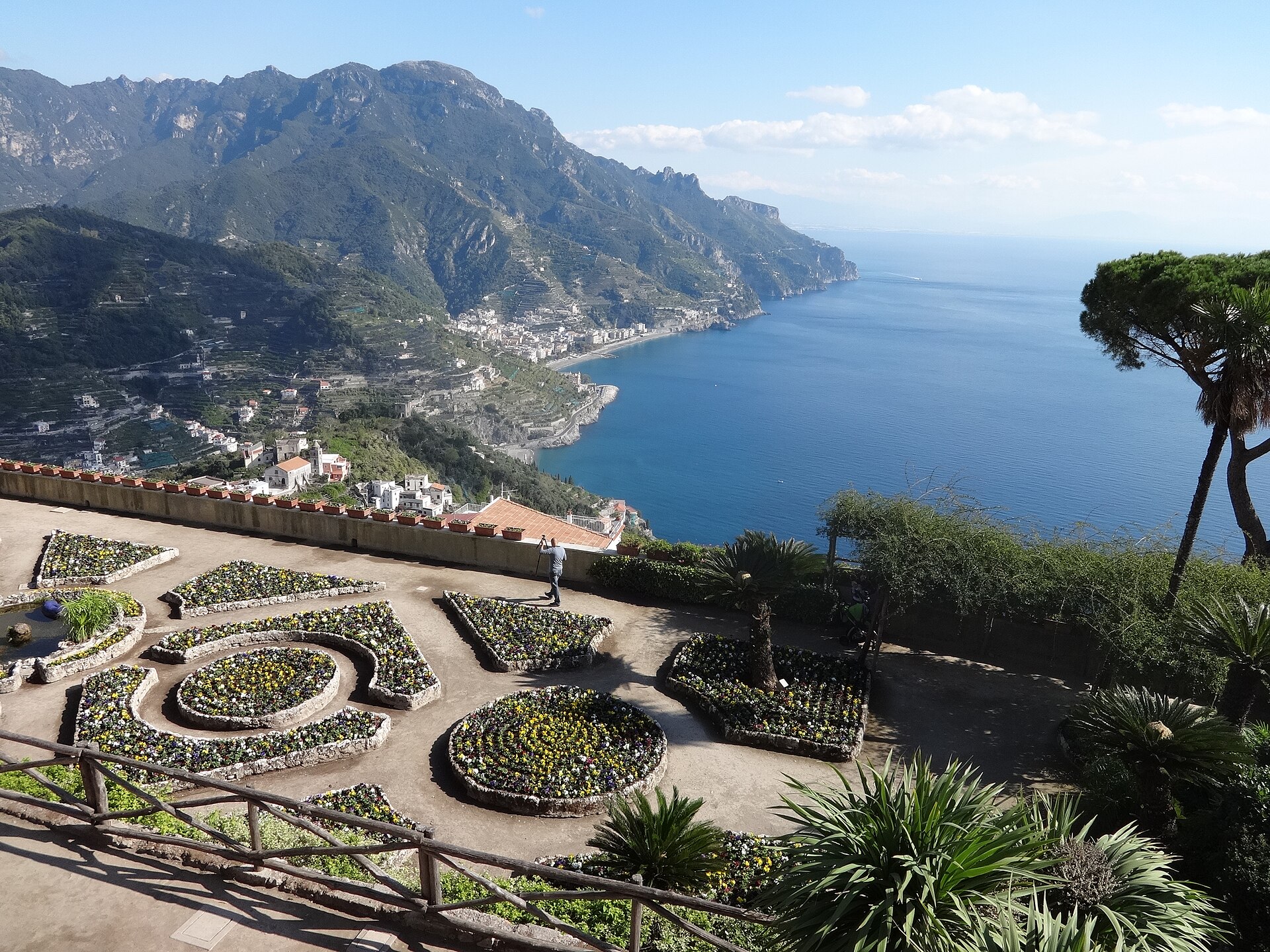
Ravello sits 350 metres above the sea and has been attracting artists and composers since Wagner drafted part of Parsifal here. The Villa Rufolo gardens, with their terrace looking straight down to the water, are the main draw. Villa Cimbrone is a 20-minute walk further into town and worth the extra steps for the Belvedere of Infinity — a terrace with a row of antique marble busts and a view that goes uninterrupted to the horizon. Dinner in Ravello before taking the bus back down.
Day 4: Positano
Take the ferry west from Amalfi to Positano — about 20–25 minutes. This is the Positano itinerary done properly: you have a full day rather than a half-day dash from Sorrento.
Get off the ferry at the main dock (Spiaggia Grande) and walk up into town before it fills. The beach clubs open by 9am; book a sunbed at one of the smaller clubs away from the main beach if you want a quieter spot — Fornillo Beach, a 10-minute walk west around the headland, is worth knowing about.
Lunch somewhere with a sea view. In the afternoon, browse the boutiques on Via Pasitea, look for the Praiano-made sandals that Positano is famous for, and — if the light is right around 5pm — climb a few staircases into the residential quarter above the main drag. The view back down over the dome of Santa Maria Assunta and the bay is the one you will actually remember.
Return to Amalfi by ferry in the evening.
Day 5: Path of the Gods or Coast Slow Day
If you have the legs for it, the Sentiero degli Dei (Path of the Gods) is the single best walk on this coastline. The classic route runs from Bomerano down to Nocelle, about 7.5 kilometres with around 600 metres of descent. The views — across to Capri, down to Positano far below, across the gulf — are available from no other vantage point at this price. Allow two to three hours walking plus time at either end.
Getting there by public transport: SITA bus from Amalfi to Agerola (Bomerano), roughly one hour. From Nocelle, walk or take the 300-step staircase down to Positano, then ferry or bus back to Amalfi.
If a full mountain hike is not your shape of holiday — completely valid — use Day 5 as a slow day. Wander Atrani, the tiny town directly east of Amalfi that most visitors walk past without stopping. It is a 15-minute walk from Amalfi’s main beach along the waterfront path. There is almost no tourist infrastructure and a small, quiet beach.
7 Days on the Amalfi Coast
A week gives you everything in the five-day plan, plus genuine breathing room. The basic shape is the same — Sorrento for the first three nights, Amalfi town for the last four — but you build in a proper slow day somewhere and add at least one of these:
Days 1–5: Follow the Five-Day Plan
Keep the same structure: Capri on Day 1, Pompeii on Day 2, transfer and Ravello on Day 3, Positano on Day 4, Path of the Gods on Day 5.
Day 6: Minori and Maiori
East of Amalfi, past Atrani, lie the towns of Minori and Maiori. They do not have the drama of Positano or the history of Amalfi, but they have something better in high season: a calmer beach, fewer day-trippers, and the Path of Lemons (Sentiero dei Limoni) connecting them through working lemon groves.
Take the ferry or bus east from Amalfi to Minori in the morning (ferry takes about 15 minutes; bus somewhat longer). Walk the Path of Lemons — about 2 kilometres, mostly flat — to Maiori. Maiori has the longest beach on the Amalfi Coast, wide and sandy-ish, and considerably less crowded than Sorrento or Positano. Lunch at a waterfront restaurant, then ferry or bus back to Amalfi.
Day 7: Boat Tour + Cooking Class or Slow Amalfi
A private or small-group boat tour of the coast is a different experience entirely from the ferry crossings — you can stop at sea caves, swim in coves that are inaccessible from land, and get the photographs of Positano and the Faraglioni that the ferry does not allow. Half-day tours depart from Amalfi and can be booked locally or in advance. Morning departures are better for light.
The afternoon is a good slot for a cooking class — pasta or seafood, usually two to three hours, often held in restaurant kitchens or private homes. Several operators in Amalfi and Ravello run classes that end with sitting down to eat what you made, which is the right way to do it.
If you would rather not schedule anything at all on your final full day, that is entirely the right call. Sit at a bar in the main piazza with a caffè and watch the cruise-ship day-trippers arrive and leave, then go to the beach. The coast rewards doing nothing at least once.
For beaches specifically — what each town’s beach is like, which are pebbly versus sandy, which have beach clubs and which are free — see our guide to Amalfi Coast beaches.
Add-On: Capri as Overnight Stay
If your Amalfi Coast itinerary has five days or more and you have not been to Capri before, consider staying one night rather than treating it as a day trip. After the hydrofoils leave in the late afternoon, the island changes completely — quieter restaurants, the evening passeggiata along the narrow streets of Capri town, a bottle of wine somewhere with a view of the Faraglioni lit up in the last of the day.
Anacapri is the more affordable end of the island for accommodation; Capri town proper is more expensive and more fashionable. Either way, a night on the island lets you see the Blue Grotto first thing in the morning before the tour boats arrive.
Full logistics at Capri day trip.
Add-On: Pompeii as a Deeper Visit
Most people give Pompeii a half day. If Roman history is genuinely your thing, give it a full one. The site is large enough that even in four to five hours you are making choices about what to skip. The Garden of the Fugitives, the brothel (Lupanare), the House of the Faun, and the Villa of the Mysteries are the four rooms that tend to make the strongest impression on people who have never been. Book a guided tour and ask your guide to prioritize those if time is tight.
Pompeii connects easily with a visit to Mount Vesuvius — private tours combining both in a full day are widely available from Sorrento and Amalfi. This works well as a standalone long day on a five-day or seven-day itinerary.
Add-On: Ravello Concert or Festival
Ravello hosts one of Italy’s oldest classical music festivals, the Ravello Festival, which runs through summer with concerts in Villa Rufolo’s outdoor arena. Attending a concert there — the stage hangs over the cliff, the Mediterranean below — is one of those experiences you do not forget. Check the festival calendar when booking your trip; popular evenings sell out early.
Even without a festival visit, Ravello is worth a second night on a seven-day itinerary. The town after the day-trippers leave — usually by 6pm — is genuinely peaceful.
How This Itinerary Fits Into a Larger Italy Trip
The Amalfi Coast sits naturally at the end of a southern Italy swing or as a post-Rome detour. From Rome, the high-speed train to Naples takes about 1 hour 10 minutes; from there you connect to Sorrento or take a ferry direct to the coast. We cover all the options in detail at Rome to Amalfi Coast.
If you are building a longer itinerary that includes both north and south, the day-by-day Southern Italy plan and Italy itineraries guides lay out the overall framework. For planning Italy trip timing around crowds and weather, the best months for an Italy trip is worth reading before you book flights.
Honeymooners, note: the Amalfi Coast regularly tops lists for romantic Italy travel, and for good reason. The combination of dramatic scenery, good food, small boats, and slow evenings is genuinely hard to beat. We build it specifically into the romantic version of an Italy trip and the complete guide to visiting Italy.
Everything above also connects to the parent guide at Amalfi Coast, Naples and Campania if you want the full regional picture.
Final Thoughts
The Amalfi Coast is one of those places where the planning matters — not because it is complicated, but because the distances are short enough that you can always squeeze in one more thing, and then suddenly you have spent your trip on buses rather than at the beach. The shape I keep coming back to: fewer towns, longer stays, morning ferries, and at least one evening when you have nowhere to be.
Pick the length that matches your energy, not the length that fits the most sights. The coast will reward you either way.
Questions travellers ask
How many days do you need on the Amalfi Coast?
Five days is the most comfortable minimum if you want to see Positano, Amalfi, Ravello, and Capri without feeling harried. Three days is doable with Sorrento as a base, but you will only get one proper day on the coast itself. A week allows you to add the Path of the Gods hike, Pompeii, and at least one slow afternoon that involves nothing more than a sunbed and a view.
Is Sorrento or Positano better as a base?
They serve different trips. Sorrento is more practical: it has better transport links to Naples, Pompeii, and Capri, and a wider range of accommodation at every price point. Positano is more atmospheric but more expensive, harder to get to and from, and not ideal if you are making day trips to multiple towns. On a five-day trip, using Sorrento for the first half and Positano or Amalfi for the second half is the best of both.
Should I rent a car on the Amalfi Coast?
For most visitors, no. The SS163 coast road is narrow, heavily trafficked in season, and has almost no parking at the main towns — Positano and Amalfi both charge high fees and spaces fill by 9am. The combination of SITA buses and ferries covers everything on this itinerary. A car is more useful east of Amalfi town, toward Ravello, or for exploring the mountains above the coast. See Amalfi Coast without a car for the full breakdown.
Can you do Capri as a day trip from the Amalfi Coast?
Yes. Ferries run from both Sorrento (about 25–30 minutes) and Positano (about 50 minutes) to Capri in season. The island sees a lot of day-trippers, so a morning departure lets you get ahead of the crowds before the big tour boats arrive from Naples. Last ferries back from Capri tend to run in the early evening in high season — always check the current timetable on the day and leave yourself a buffer.
Is the Path of the Gods hard?
The Sentiero degli Dei is rated moderate. The classic direction (Bomerano to Nocelle) is mostly downhill with some short technical sections. It is not a strenuous alpine hike, but it does involve uneven rocky terrain and some exposure, so appropriate footwear matters. Allow two to three hours without stops. The main access challenge is getting to the start: the SITA bus from Amalfi to Agerola takes roughly an hour with a connection. Book a taxi if you want to simplify the logistics.
What is the best way to get around the Amalfi Coast without a car?
Ferry and SITA bus, used in combination. Ferries are more pleasant and better for photography; the SITA bus reaches more towns (including inland Ravello via Amalfi) and runs when ferries do not. Buy bus tickets before boarding from any tabaccheria or bar displaying SITA SUD signage — you cannot buy them on the bus. For the complete logistics guide, see Amalfi Coast without a car.
Is the Amalfi Coast worth it in the shoulder season?
April to early June and September to October are arguably better than peak July and August for most travelers — the coast is less crowded, accommodation is somewhat cheaper, and the heat is more manageable for walking. Ferries still run; most restaurants and hotels are open from Easter. The trade-off is that some smaller beach clubs and boat tour operators run reduced schedules before June and after mid-September. October can bring rain, but it can also bring perfect clear days with golden light.
How do I avoid the worst of the tourist crowds?
Move early. On any Amalfi Coast itinerary, the gap between a 9am arrival in Positano and a 10:30am arrival is not one and a half hours — it is the difference between the town being navigable and the town being impassable. Use ferries rather than tour buses where possible; large coach groups tend to arrive at the main squares around 10am and clear out by 2pm. Staying overnight in Positano or Amalfi rather than day-tripping from Sorrento gives you the towns in the evening, which is their best version.