Amalfi Coast, Naples & Campania
Capri Day Trip Guide: Ferries, the Blue Grotto and What to Do
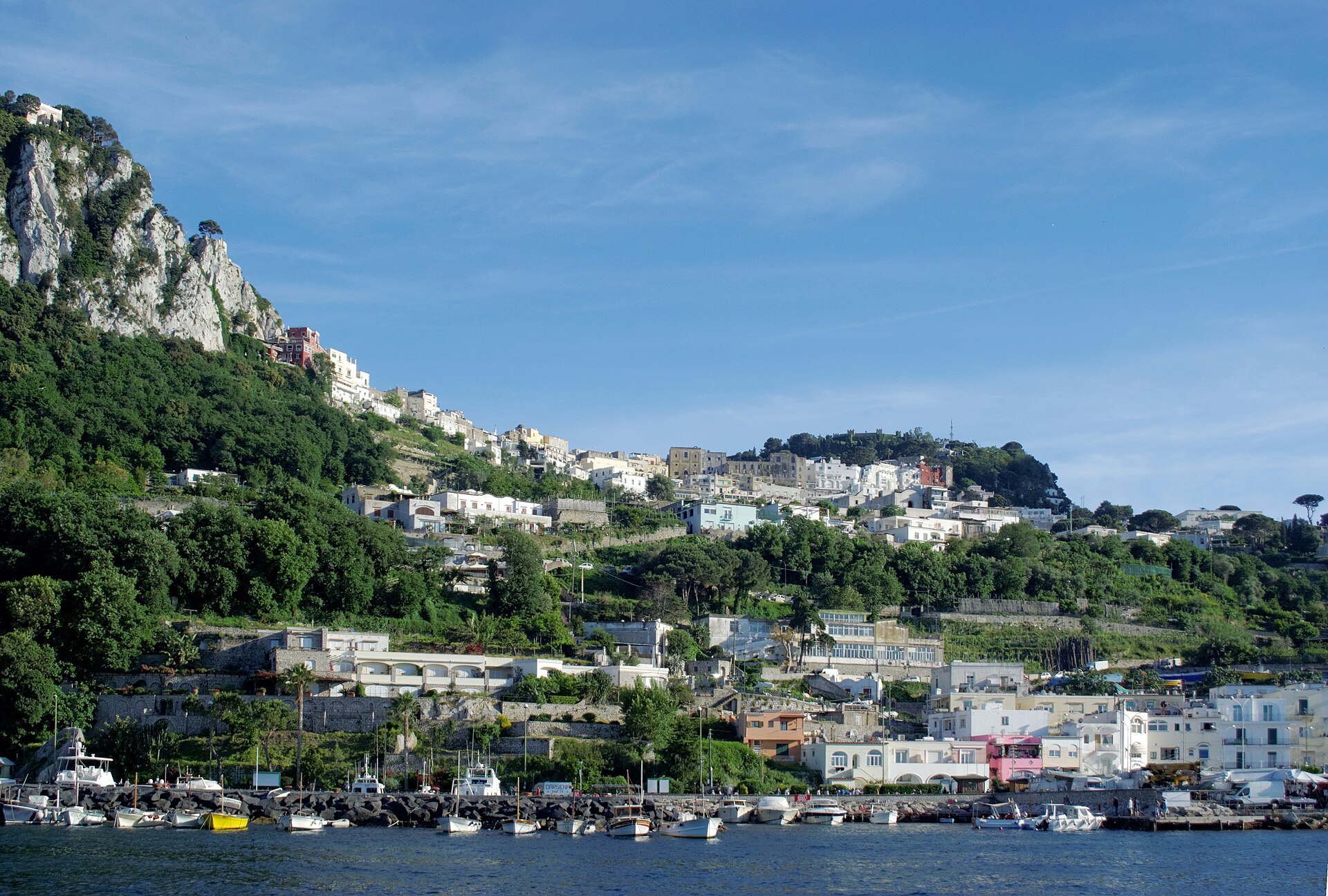
A Capri day trip is one of the best single days you can spend in southern Italy — if you go in with a realistic plan. Take the ferry from Sorrento (around 20–25 minutes) or Naples (around 50 minutes), arrive before 9 am, and fill the day with the funicular to Capri town, the chairlift up Monte Solaro, a boat tour around the island, and, if conditions allow, the Blue Grotto. That last one deserves a longer conversation — which is exactly what this guide is for.
This article is for anyone planning a day on the island as part of a wider trip to the Amalfi Coast and Campania region — Sorrento, Naples, and the Amalfi Coast all work as bases, and each has its own day-by-day Amalfi Coast plan logic. I’ve organised it the way I actually navigate the island: ferries first, then a sequenced plan, then honest talk about the Blue Grotto.
Capri Day Trip: Ferry Quick Reference
| From | Type | Journey Time | Notes |
|---|---|---|---|
| Sorrento | Hydrofoil / fast ferry | ~20–25 min | Most popular route; very frequent in summer |
| Sorrento | Slow car ferry (Caremar) | ~30 min | Reliable in rough weather; carry luggage here |
| Naples (Beverello) | Hydrofoil | ~50 min | More options, slightly cheaper tickets |
| Naples (Beverello) | Slow ferry | ~75–80 min | Budget option; not ideal for day trips |
| Positano / Amalfi / Salerno | Seasonal fast ferry | ~30–60 min | Runs roughly April–October only |
Ferry times and schedules change seasonally. Always verify the latest timetables with operators before you travel — the Italy ferries guide covers the wider bay network if you want to string routes together.
Getting to Capri: Sorrento vs Naples
From Sorrento
Sorrento is the base most visitors use for a Capri day trip, and for good reason. The crossing takes roughly 20–25 minutes on a hydrofoil, the harbour is compact and walkable, and there are enough departures in summer that missing one boat doesn’t ruin your morning. If you have not booked a room yet, weighing Sorrento against the coast towns is worth doing first.
Ferries leave from Sorrento’s Marina Piccola. The ticket offices for the main operators — NLG, Alilauro, SNAV, and Caremar — are all along the same quayside. In peak summer (June through August) there can be a departure every 20–30 minutes from around 7 am, tapering off by 7–8 pm. In spring and autumn, frequency drops and early evening slots book out fast.
What I’d do: Book your outbound and return tickets online the evening before, or at the harbour the morning of your trip. Do not leave the return for when you’re already on Capri — those late-afternoon boats fill up, and I’ve watched people miss their ferries because they were queueing to buy tickets when they should have been boarding. Fares vary by operator and season; treat any number you see online as a guide, not a guarantee.
If you want to read Sorrento itself as a base properly, the Sorrento travel guide has the full breakdown on where to stay and what to do in town.
From Naples
The Naples to Capri crossing runs from Molo Beverello, the main ferry terminal in the city centre. Fast hydrofoils take around 50 minutes; the slower car ferries take 75–80 minutes. For a day trip, stick to the hydrofoil — you don’t want to spend 2.5 hours each way getting there and back.
Naples gives you a slightly wider selection of operators and the slower boat tends to be cheaper, but the crossing is longer and the port is noisier to navigate. If you’re already based in Naples and heading to Capri first thing, the early hydrofoils get you there well before the crowds. If you’re planning to combine Naples sightseeing with a Capri ferry, the complete guide to Naples is the place to plan that day.
From the Amalfi Coast
If you’re staying in Positano, Amalfi, or further along the coast, seasonal services run directly to Capri from April through October — roughly. Journey times vary from around 30 minutes from Positano to over an hour from Salerno. These boats are genuinely scenic and cut out a transfer to Sorrento, but check schedules carefully because frequency is much lower than the Sorrento route. If you’re working the Amalfi Coast without a car, boat-hopping to Capri this way makes a lot of logistical sense.
What to Do on Capri: A Real Day Plan
Capri is organised around two distinct towns: Capri town (reached by funicular from the main harbour) and Anacapri (higher up, on the western part of the island). The most common mistake is treating them as one and running out of time. Here’s a plan that respects the island’s geography.
Arriving at Marina Grande
The ferry drops you at Marina Grande, the main harbour. It’s busy even at 9 am. Before you go anywhere, sort any boat-tour tickets you haven’t already booked — the kiosks for Motoscafisti Capri and Laser Capri are right on the waterfront, and island boat tours sell out by mid-morning in July and August.
The funicular to Capri town runs from the far end of the harbour and takes about four minutes. A single ticket is inexpensive; buy it at the kiosk before you board. If the funicular queue is long, there’s also a bus to Capri town, though the funicular ride itself is part of the experience.
Capri Town and the Piazzetta
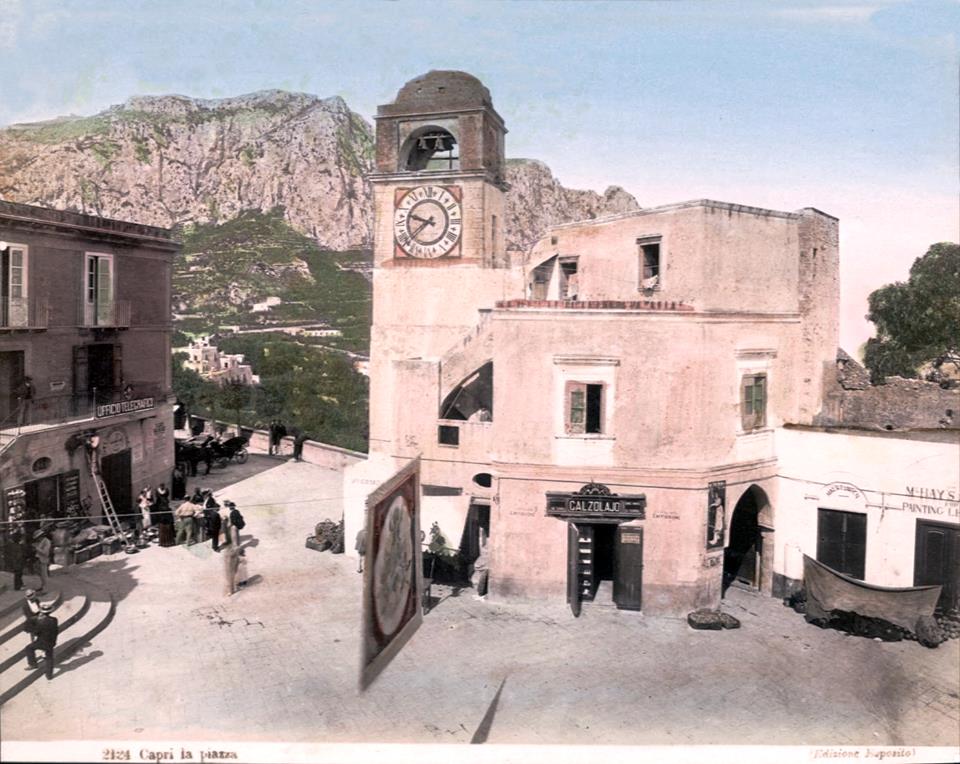
Capri town is compact and walkable. The Piazzetta — officially Piazza Umberto I — is where everyone gravitates, and it earns that status. The four café terraces around it are expensive and worth it once, maybe for an espresso at the start of the day before the worst of the crowds arrive. After 11 am the lanes feeding into the Piazzetta become a slow shuffle.
From the Piazzetta, the walk to the Gardens of Augustus takes around ten minutes through Via Matteotti and Via Federico Serena. The Gardens sit on a promontory south of town and look out over the Faraglioni — three limestone sea stacks rising straight out of the water. The views from here stop most people in their tracks.
Just below the Gardens is the entrance to Via Krupp, a steep switchback path carved into the cliff face in 1902 that drops down to Marina Piccola. It’s one of the most photogenic walks on the island. Note that it has a history of closures due to rockfall risk — check locally before you bank on it being open. Even if it’s closed, you can see it perfectly well from the Garden terrace above.
Monte Solaro and Anacapri
This is, to my mind, the single best thing to do on a Capri day trip — and it’s consistently underestimated. Take the bus from Capri town (or directly from Marina Grande) to Anacapri. The bus takes about 15 minutes on a road narrow enough that you genuinely hold your breath on the hairpin corners.
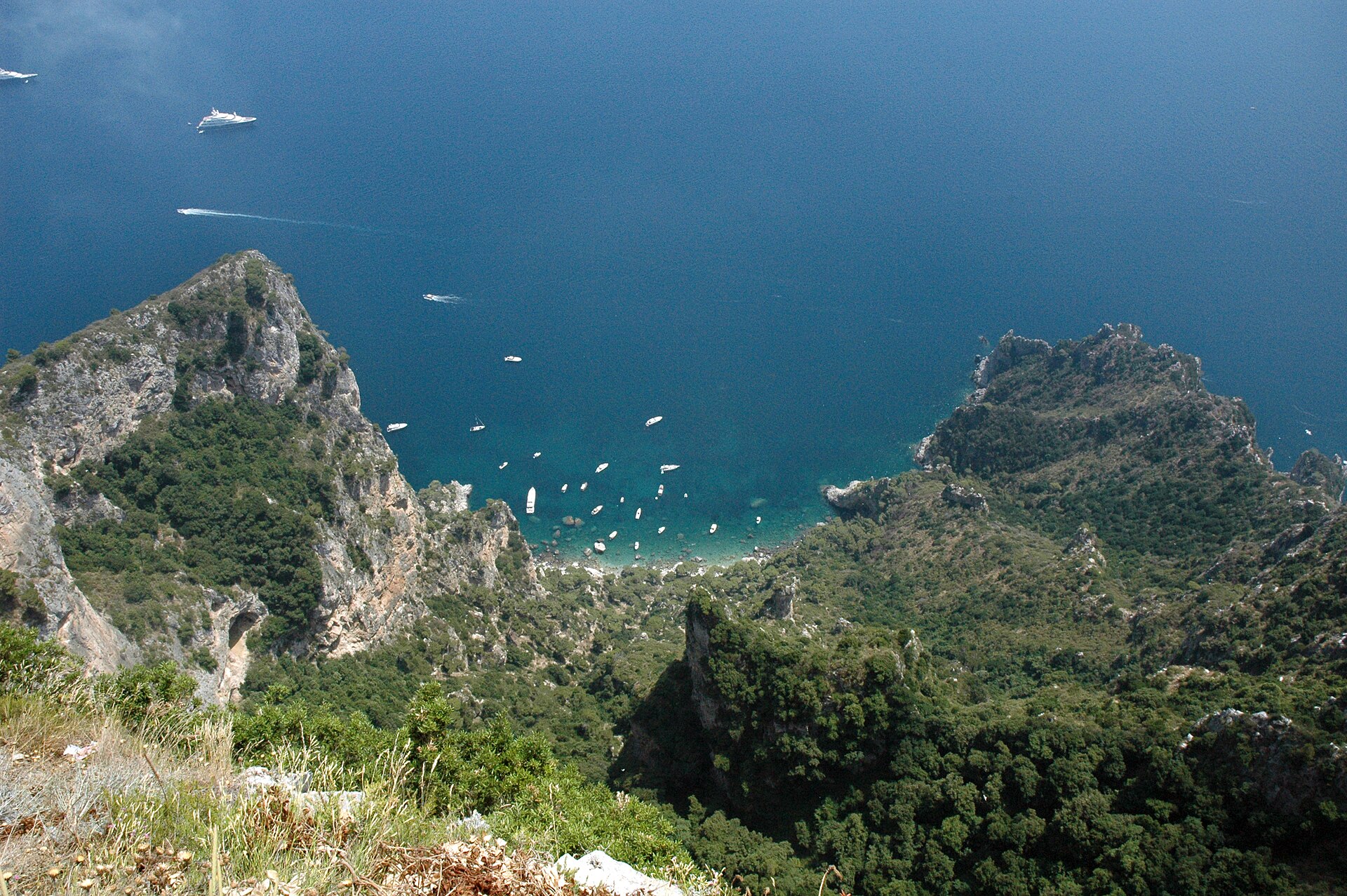
From Piazza Vittoria in the centre of Anacapri, the chairlift to Monte Solaro departs. This is a single-seat open chairlift — no gondola, no enclosure, just you in a suspended metal chair rising slowly through Mediterranean maquis. The ascent takes around 12 minutes and climbs to 589 metres, the highest point on the island.
The summit view is extraordinary on a clear day: the Bay of Naples, Vesuvius on the mainland, the full sweep of the Amalfi Coast, and on exceptional days the outlines of Ischia and Procida. There’s a small terrace and a bar at the top. Give yourself 30–45 minutes up here.
Anacapri itself is noticeably quieter and less polished than Capri town. Have lunch here — restaurants are cheaper and less crowded. The Villa San Michele, a 19th-century Swedish physician’s home with Roman artefacts and remarkable coastal views, is also worth an hour if your schedule allows.
The Faraglioni and a Boat Tour Around the Island
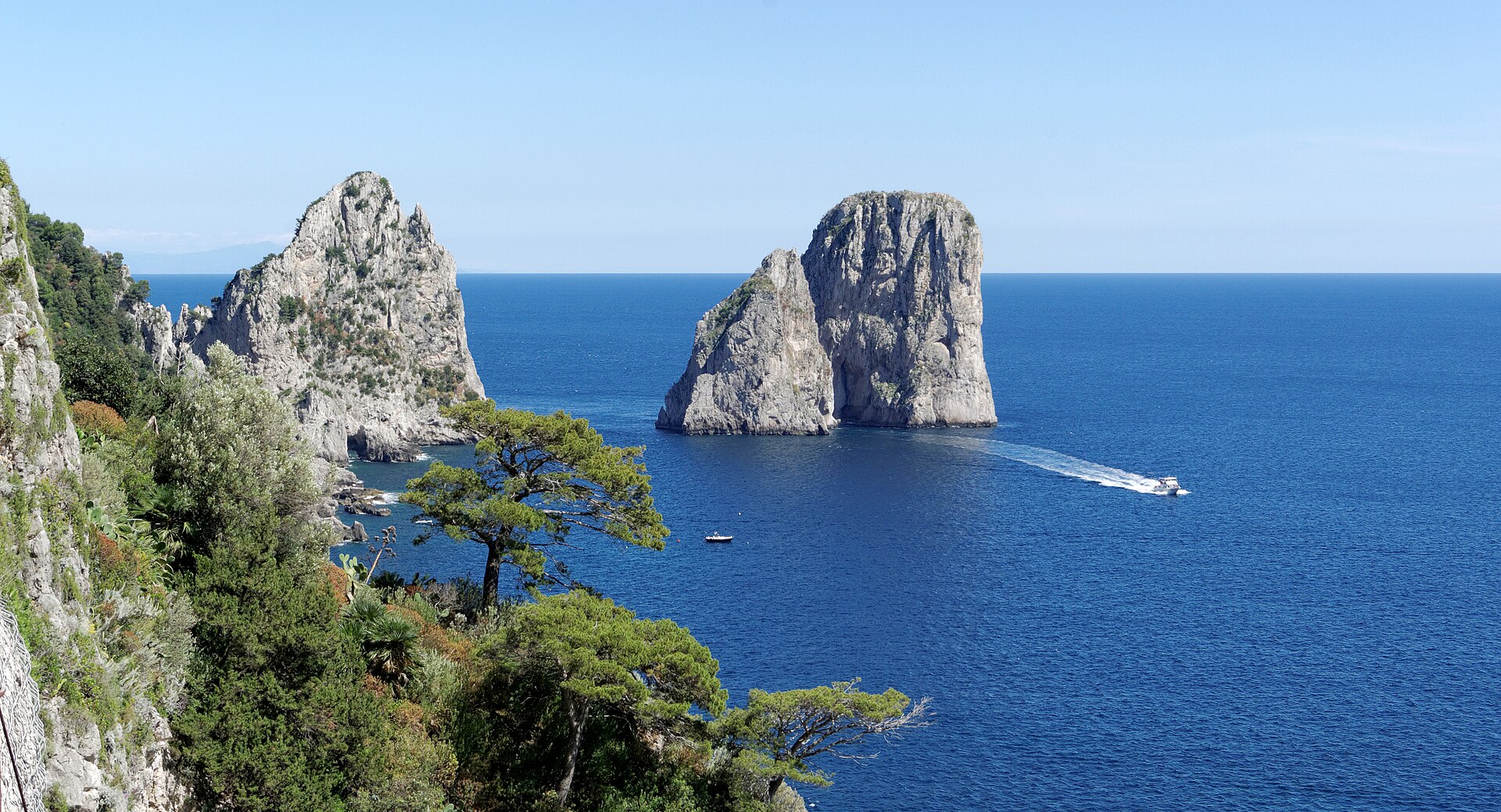
You have seen the Faraglioni from the Gardens of Augustus. Now see them from the water. A boat tour around the island is one of those things that looks like a tourist cliché on paper and turns out to be genuinely impressive in practice.
Two companies dominate: Motoscafisti Capri and Laser Capri, both operating from Marina Grande. A standard circuit takes around 1 hour and 45 minutes to 2 hours. The route goes clockwise or counter-clockwise around the island, stopping at the natural arch, the Grotta Verde (Green Grotto), the Grotta Bianca (White Grotto), and the Faraglioni. Some tours include a swimming stop in a cove that you simply cannot reach from land.
Seeing the Faraglioni from a small boat at water level — the three stacks towering above you, the arches just big enough to pass through — is completely different from any cliff-top view. The boat will typically pass through the arch of the middle Faraglioni, and everyone on board will hold up a phone or camera at the same moment.
Most boat tours also include a stop at the Blue Grotto — or an attempt at one. Which brings us to the most important topic in this guide.
The Blue Grotto: What It Actually Is (and Isn’t)
The Capri Blue Grotto (Grotta Azzurra) is a sea cave on the island’s northwest coast, roughly ten minutes by motorboat from Marina Grande. The famous blue glow comes from sunlight entering through a large underwater opening in the cave floor, the water absorbing the longer red and yellow wavelengths and reflecting pure blue upward. On a sunny day, between roughly noon and 2 pm when the sun is highest, the effect is extraordinary: the water inside glows electric blue, and if you dip your hand in, it seems to radiate light.
That is the pitch. Here is the full picture.
The Rowboat Mechanics
You cannot enter the grotto in the motorboat. The cave mouth sits barely a metre above the water — on a calm day. Visitors transfer into small wooden rowboats, maximum four passengers, operated by local boatmen who use a fixed chain attached to the cave wall to haul the boat through the opening. Everyone lies flat in the bottom of the boat as the opening passes about 30 centimetres above your face. If you are claustrophobic, think carefully before queuing.
Inside, the rowboat circles slowly for three to five minutes. The boatman may sing — this is not entirely a put-on; it’s a long tradition and the acoustics inside are impressive. Then you duck back out through the same opening.
Total time inside: five minutes. Sometimes less.
The Costs
There are two separate charges, and it’s important to understand both:
-
Transport to the grotto — either a direct boat from Marina Grande (around €24 per person as of recent seasons) or as part of a two-hour island circuit. Alternatively, you can reach the grotto entrance by land: bus from Anacapri’s Piazza Cimitero to the top of the cliff staircase, then walk down. The land route is cheaper and works well if you’re prone to seasickness.
-
Rowboat entrance fee — paid separately at the grotto itself, to the rowboat cooperative. This has been around €18 per person in recent seasons. It is cash-only. The boatmen also expect a tip, which is not mandatory but is very much customary and will be clearly requested.
Prices change; verify current fees before you go and bring more cash than you think you need.
The Wait
In peak summer — July and August especially — the wait to enter the grotto can run 30 to 60 minutes on the water. Your motorboat drifts among a flotilla of other motorboats, all waiting to transfer passengers into the small rowboats, all rocking gently in the swell. If you get seasick, this is the moment you find out.
The Blue Grotto closes when the sea is anything but calm. Moderate swell, strong winds, or high water levels mean the entrance is underwater or too dangerous to use. On any given day in summer, the closure rate is not trivial — check the capri.com website the morning of your visit for current status.
Go Early or Go Late — Not at Noon
This sounds counterintuitive given that noon is when the blue effect peaks, but noon is also when every tour boat from Naples and Sorrento converges on the cave mouth simultaneously. Two strategies that actually work:
Early (9–10 am): The light is slightly less intense but still clearly blue. If you are on one of the first motorboats of the day, you may enter within 15–20 minutes of arriving. The effect is still well worth it.
Mid-afternoon (3 pm onwards): Once the big tour boats from Sorrento have started heading home, the queue drops significantly. Readers of other travel sites have reported walking straight in at 3:30 pm on days that had 45-minute queues at noon. The light fades somewhat but remains beautiful. The land route from Anacapri works particularly well for this.
Is It Worth It?
Honestly — it depends on your temperament. If you don’t mind queuing, don’t mind the rocking boat, and understand that you will spend five minutes inside after potentially 45 minutes waiting, it is a genuinely beautiful and singular experience. The blue is real. The cave is peaceful and cool. The rowboatman singing is strange and lovely.
If you hate waiting, get seasick, are visiting on a cloudy day, or have limited time, skip it. The boat circuit around the island is a better use of two hours, and you still see the grotto entrance from outside.
Crowds, Costs, and When to Overnight Instead
The Crowd Reality
Capri gets a lot of visitors. That is not a secret. On a summer weekday, tens of thousands of day-trippers arrive from Sorrento and Naples, and by 11 am the main lanes of Capri town feel like the queue for a popular museum. The Piazzetta loses most of its charm by noon. The Blue Grotto becomes a maritime traffic jam.
The practical antidotes: arrive on the first or second ferry of the day (aim for a 7:30 or 8 am departure from Sorrento), do Monte Solaro and Anacapri in the morning when day-trippers are still queueing for the funicular, and be on your return ferry by 5–6 pm rather than fighting the 7 pm crush.
Shoulder season — May, early June, September, and early October — gives you the same beauty with half the crowds and more reliable weather than people expect.
Budget Reality
A full Capri day trip is not cheap. Working from rough recent figures:
- Return ferry from Sorrento: roughly €40–60 per person (operator and season dependent; verify before booking)
- Island boat tour: roughly €20–25 per person
- Blue Grotto rowboat entrance: roughly €18 per person, cash
- Funicular, buses: a few euros each
- One reasonable lunch in Anacapri: €15–25 per person
- One reasonable espresso at the Piazzetta: considerably more than you expect
Budget north of €100 per person for a full day including the Blue Grotto, less if you skip the grotto or bring food. It is still one of the better-value spectacular days in Italy. The Italy travel guide has broader budget benchmarks if you’re planning the wider trip.
When an Overnight Beats a Day Trip
If you can afford it — and I mean both financially and in terms of schedule flexibility — staying a night on Capri transforms the experience entirely. By 6 pm, the last day-trip ferries have left. The island quiets down in a way that feels almost surreal after the daytime chaos. The Piazzetta at 8 pm, with locals having their passeggiata and the lights coming on, is a completely different place from the noon scrum. Restaurants that are rushed at lunch are leisurely at dinner. The path above the Faraglioni at sunset, with almost no one else on it, is one of those Italy moments.
If your wider trip involves the Amalfi Coast and you’re working through an romantic version of an Italy trip or similar romantic framework, one night on Capri is close to essential. The best time to visit Italy guide can help you calibrate when the island is least overwhelming.
Final Thoughts
A Capri day trip rewards people who go early, manage expectations about the Blue Grotto, and give the island’s two-town structure the time it deserves. Sorrento is the better base for the crossing — fast, frequent, and logistically simple. Monte Solaro from Anacapri will probably end up being the moment you remember most, not the famous cave. And if you get a blue-sky morning, calm seas, and a short queue at the grotto — you will understand immediately why everyone keeps going back.
For the broader Amalfi region, the Amalfi Coast itinerary and the guide to visiting Naples are the natural next reads. And if you’re thinking about how Capri fits into a longer trip around Italy, the Italy travel guide is where to start.
Questions travellers ask
How long is the ferry from Sorrento to Capri?
On a hydrofoil or fast ferry, the crossing from Sorrento to Capri takes roughly 20–25 minutes. The larger Caremar car ferry takes about 30 minutes. Both depart from Sorrento’s Marina Piccola and arrive at Capri’s Marina Grande. Frequency in summer is high — typically every 20–30 minutes at peak times — but return sailings in the late afternoon book up fast. Always secure your return ticket before you leave Sorrento.
How long is the ferry from Naples to Capri?
The hydrofoil from Naples Molo Beverello to Capri takes around 50 minutes. Slower car ferries take 75–80 minutes. For a day trip, the hydrofoil is the only sensible choice. Multiple operators run the route; fares and schedules vary seasonally, so check current timetables via the operator websites or a comparison site before you travel.
Can the Blue Grotto be closed on the day I visit?
Yes — and it happens more often than people plan for. The grotto closes when the sea is rough or the water level is high enough to cover the entrance. This can happen on otherwise sunny days. Even when officially open, individual tours sometimes abandon the wait if the queue is too long. Check the grotto’s current status at capri.com on the morning of your visit and have a backup plan. Don’t make the Blue Grotto the whole reason for your trip.
Is the Capri Blue Grotto worth the money?
For most first-time visitors on a sunny day: yes, provided you go in with calibrated expectations. You will spend about five minutes inside the cave. The blue effect is genuinely spectacular in good light. The total cost — transport to the cave plus the rowboat entrance fee — can add €40+ on top of your ferry and other island costs. If time is tight or seas are choppy, the island boat tour is better value and nearly as impressive visually.
Do I need to book the Capri ferry in advance?
In peak summer (July and August), yes — especially for specific departure times on the return journey. It is entirely possible to turn up and buy on the day in shoulder season, but you risk waiting for the next available sailing or being stuck later in the afternoon than you planned. Book at minimum 24–48 hours ahead in high season, and always have your return ticket in hand before you board the outbound ferry.
What is the best way to get around Capri on the island?
The local bus network connects Marina Grande, Capri town, Anacapri, and the Blue Grotto approach in Anacapri. Tickets are inexpensive and the buses are efficient despite being tiny on narrow roads. The funicular covers the steep climb from Marina Grande to Capri town. Taxis exist but are expensive and the island’s topography means “taxi” often means a convertible jeep on a cliff road. Walking between Capri town and Anacapri is possible but involves serious elevation change — the bus is almost always the better call on a day trip.
How early should I arrive in Capri to avoid crowds?
Aim to be on the first or second ferry of the day — departing Sorrento around 7–8 am. This gets you to Marina Grande before the main wave of day-trippers and gives you the funicular, the Piazzetta, and the boat tour departure times largely to yourself. By 10–11 am, the island’s key bottlenecks (funicular, Blue Grotto, Piazzetta) are operating at full tourist capacity. The shoulder months of May, September, and early October offer meaningfully lighter crowds all day.
Can I visit Capri from Positano or Amalfi?
Yes, seasonally. Fast ferries connect Positano, Amalfi, and Salerno to Capri roughly from April through October, though frequency varies. Journey times run from about 30 minutes from Positano to over an hour from Salerno or Amalfi. This is a genuinely scenic way to arrive and avoids a transfer to Sorrento, but check current timetables carefully — boats do cancel in poor weather and the schedule changes year to year. The Amalfi Coast without a car guide covers this boat-hopping approach in more detail.