The Best Day Trips from Venice: Verona, Padua, Prosecco Hills and More
The Best Day Trips from Venice by Train
Venice will do that to you. You arrive planning two days, the city swallows you whole, and suddenly you’ve booked a third night without quite meaning to. If you find yourself with a spare day — or two, or three — the day trips from Venice are among the best in Italy. Most of the Veneto and beyond is connected by fast, frequent, affordable trains. You can reach Verona in under an hour. Padua in thirty minutes. The Prosecco hills in under sixty. This guide covers the mainland destinations worth the journey, ranked with honest verdicts, so you can choose the right one for the day you actually have.
This is for the visitor who has already done — or is saving — the lagoon islands. The Murano and Burano experience is a completely different kind of day and is covered in full in the day trip to Murano and Burano. Similarly, if you’re thinking about using Padua as a base rather than Venice, that angle is handled separately at Padua to Venice day trip.
At a Glance: Day Trips from Venice by Train
| Destination | Train time (approx.) | Time to give it | Verdict |
|---|---|---|---|
| Padua | 25–50 min | Half day or full day | Top pick for art lovers |
| Verona | 1 hr–1 hr 20 min | Full day | Best all-rounder |
| Vicenza | 40–55 min | Half day | Underrated, beautifully compact |
| Treviso | 30–40 min | Half day | Low-key local favourite |
| Prosecco Hills | ~50 min to Conegliano | Full day | Unique; needs a plan |
| Dolomites / Cortina | 2.5–4 hrs (bus or tour) | Full day (long) | Stunning; skip if short on time |
| Bologna | 1 hr 15 min–1 hr 45 min | Full day | Excellent for food and culture |
| Ravenna | ~2 hrs 45 min (with transfer) | Full day (ambitious) | Spectacular; better with an overnight |
All times are approximate and will vary depending on train type — check Trenitalia or Italo for current timetables. Fares shift constantly, but regional trains often come in well under €10 each way; high-speed services cost more and save meaningful time. For a broader look at how the Italian rail network works, the trains in Italy guide has everything you need before you book.
Verona: The All-Round Champion
There is something quietly satisfying about Verona. It is big enough to feel like a real city — not a museum piece — but compact enough that you can cross its historic centre on foot in twenty minutes. And unlike a lot of Italian day-trip cities, it does not feel like it exists purely for tourists. The morning market in Piazza delle Erbe, the office workers eating lunch at outdoor tables, the locals who could not care less about Juliet’s balcony: Verona has its own life, and you slot into it rather than stand outside looking in.
Getting there: Direct trains from Venezia Santa Lucia run regularly throughout the day. High-speed Freccia and Italo services take around one hour; regional trains take closer to 1 hour 20 minutes. Tickets on regional services typically start around €9–10 each way, though prices move. Book ahead when you can — this is one of Italy’s busiest rail corridors.
What to do: Start at the Arena di Verona, the 1st-century Roman amphitheatre. If you’re visiting in June or July, check the opera season — performances in this space are genuinely unforgettable, though you’d need an evening, not a day trip, for that. From the Arena, walk up through Piazza delle Erbe to the viewpoint at Castel San Pietro for the city’s best panorama. Juliet’s House is worth a five-minute stop even if the balcony is smaller than you imagine; the courtyard is lively and a little absurd in the best way. The Basilica di Sant’Anastasia is often overlooked in favour of the Arena but deserves thirty minutes inside.
Honest verdict: This is the day trip to recommend to almost anyone. The food scene is genuinely good — try bigoli in salsa or risotto all’Amarone — and the city rewards wandering without a rigid plan. Give it a full day. Half a day is possible but leaves you feeling like you rushed it.
Padua: The Best Day Trip for Art Lovers
Padua is thirty minutes away by fast train and contains one of the most important rooms in Western art. That is not an exaggeration. When Giotto frescoed the Cappella degli Scrovegni from floor to ceiling between 1303 and 1305, he essentially invented modern painting. Standing inside it — for the fifteen minutes you’re permitted — is one of those moments that can leave you genuinely speechless.
Getting there: High-speed regional services from Venezia Santa Lucia reach Padua in about 25–30 minutes. The slower regional trains take 40–50 minutes. Tickets on regional services are typically €5–9 each way. Check current prices on Trenitalia.
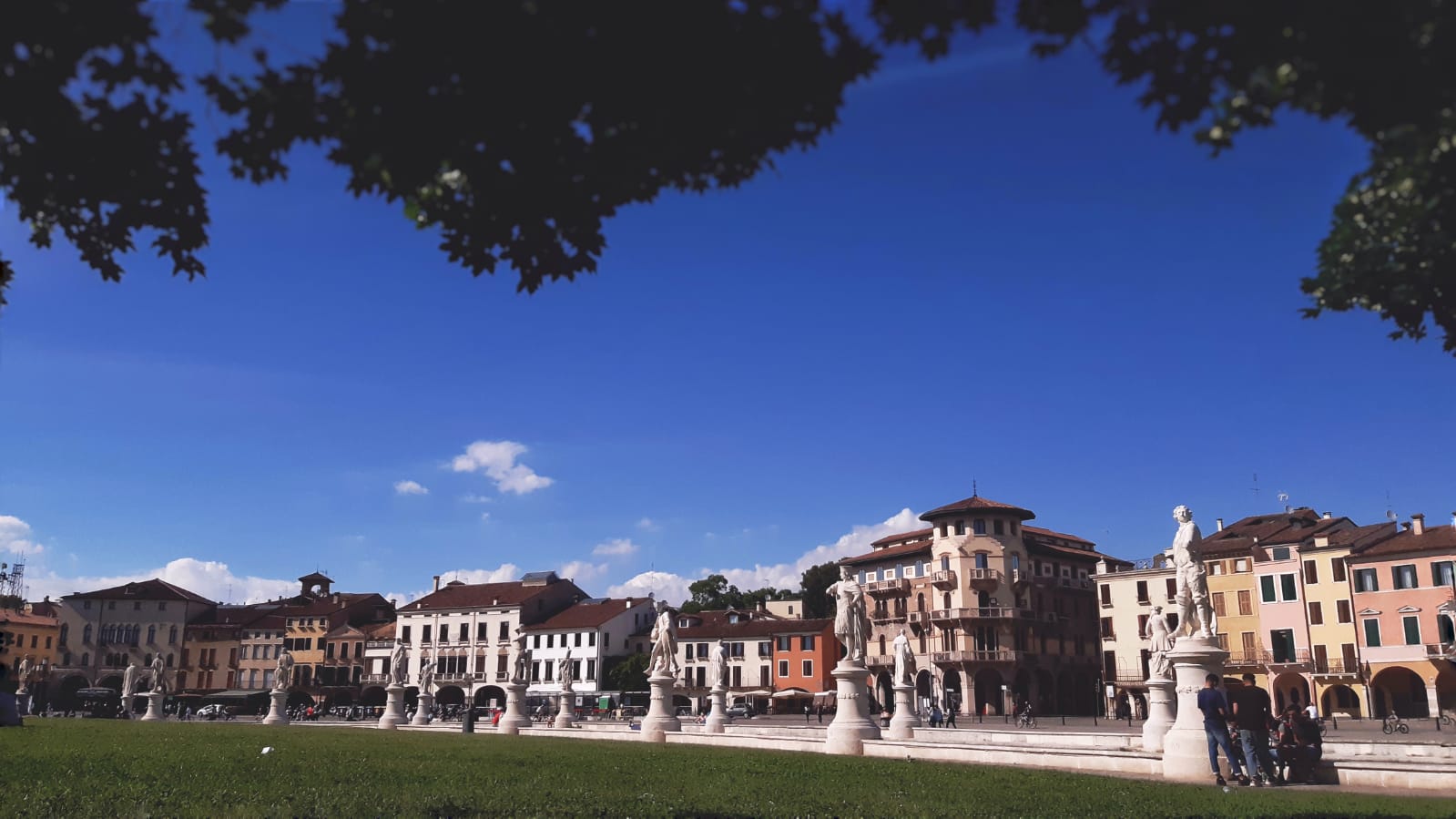
What to do: Book your Scrovegni Chapel time slot before you travel — it is non-negotiable. Entry is strictly timed and capped, and you spend fifteen minutes in a climate-controlled decompression room before entering. The chapel is small. The frescoes are overwhelming. After, walk south to the Basilica di Sant’Antonio (universally known as “il Santo”), where the relics of St Anthony draw pilgrims from around the world. The interior is darker and stranger than a typical basilica, with devotional notes pressed against the bronze tomb. Then find Prato della Valle: one of Europe’s largest squares, ringed by a canal and dotted with 78 statues. It is exactly the kind of place where you sit on a bench, eat something, and reassess your afternoon.
Honest verdict: Padua is the top pick for anyone drawn to medieval art. The Scrovegni Chapel alone justifies the thirty-minute journey. The broader city has a university feel — young, lived-in, not at all curated for tourists — and the food is excellent. A half day is enough; a full day lets you breathe. If you’re considering basing yourself in Padua for a night and doing Venice as the day trip in reverse, the Padua to Venice day trip guide is worth reading.
Vicenza: Palladio’s City
Vicenza does not get the credit it deserves. It sits between Venice and Verona on the same rail line, it takes less than an hour to reach, and it contains some of the most influential architecture in European history. Andrea Palladio worked here in the sixteenth century, and what he built in this mid-sized city changed the way the western world thinks about design — from English country houses to Thomas Jefferson’s Virginia.
Getting there: Direct trains from Venezia Santa Lucia take 40–55 minutes depending on service type. It is the same Venice–Verona line; regional trains cost around €6–9 each way.
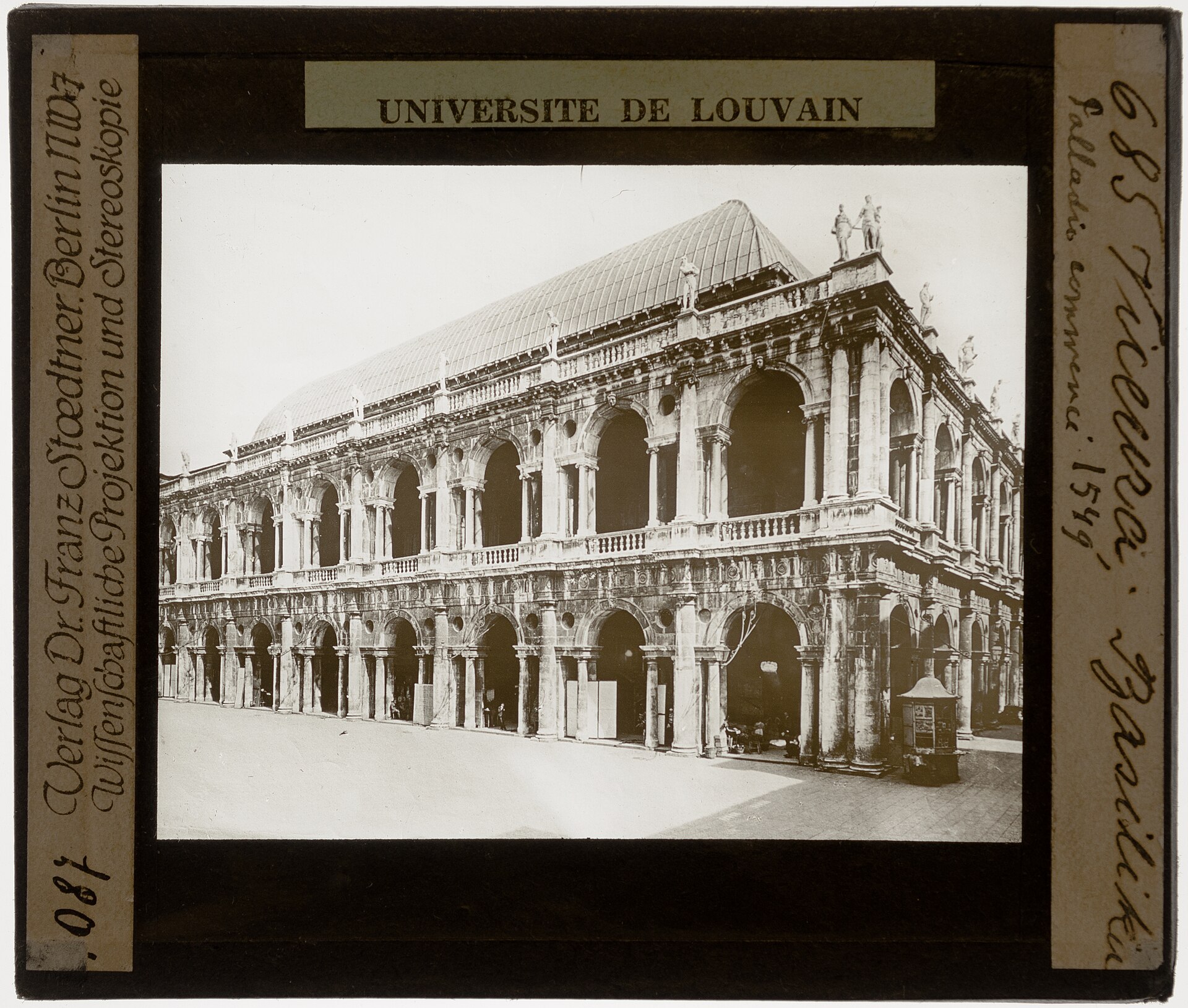
What to do: From the station, it is a twelve-minute walk to the Piazza dei Signori and the Basilica Palladiana, Palladio’s great loggias wrapping a Gothic town hall in white limestone arcades. Between roughly April and September, the rooftop terrace above the basilica is open and serves as a café with panoramic views — this is one of the best simple pleasures in the Veneto. The Teatro Olimpico, Palladio’s last work and the oldest surviving indoor theatre in Europe, is strange and astonishing: a painted perspectival stage set that tricks the eye into seeing a street receding into the distance. It was completed in 1585 and has barely changed since. The Villa La Rotonda, a short drive or taxi ride from the centre, is the building that inspired Monticello and dozens of neoclassical landmarks; it is only open on certain days so check ahead.
Honest verdict: A half day is comfortable for the Piazza dei Signori, the Basilica, and the Teatro Olimpico. Vicenza rewards the architecturally curious visitor enormously and is genuinely quiet compared to Verona or Venice. If you care about design history at all, come here.
Treviso: The Quiet One
Treviso is the local secret on this list — the city that residents of Venice actually visit for a proper lunch and a walk. It is thirty-five minutes from Venice by train, it costs almost nothing to get there, and it has canals, frescoes, and a food culture that punches well above its profile.
Getting there: Regional trains from Venezia Santa Lucia run frequently and take around 30–40 minutes. Tickets are typically under €4–6 each way. See the Italy transportation guide for context on buying tickets.
What to do: The Buranelli canal in the old city is Treviso’s most-photographed street — a narrow waterway with ivy-draped buildings and small footbridges, quieter than anything you’ll find in Venice itself. Piazza dei Signori is the social centre; the local ritual is a spritz at an outdoor table under the porticoes. The Duomo holds Titian’s Annunciation, which most visitors walk past without realising. And Treviso is genuinely the birthplace of tiramisu — several restaurants claim the original, but Al Camin and Le Beccherie are the ones with the most credible claims.
Honest verdict: This is the day trip for someone who wants a slower pace. Treviso is not packed with unmissable monuments, but it is a real Italian city doing real Italian things, and the food is excellent. A half day is ideal; there is not quite enough here for a full day unless you sit down for a long lunch and lean into it.
The Prosecco Hills: The Trip the Others Miss
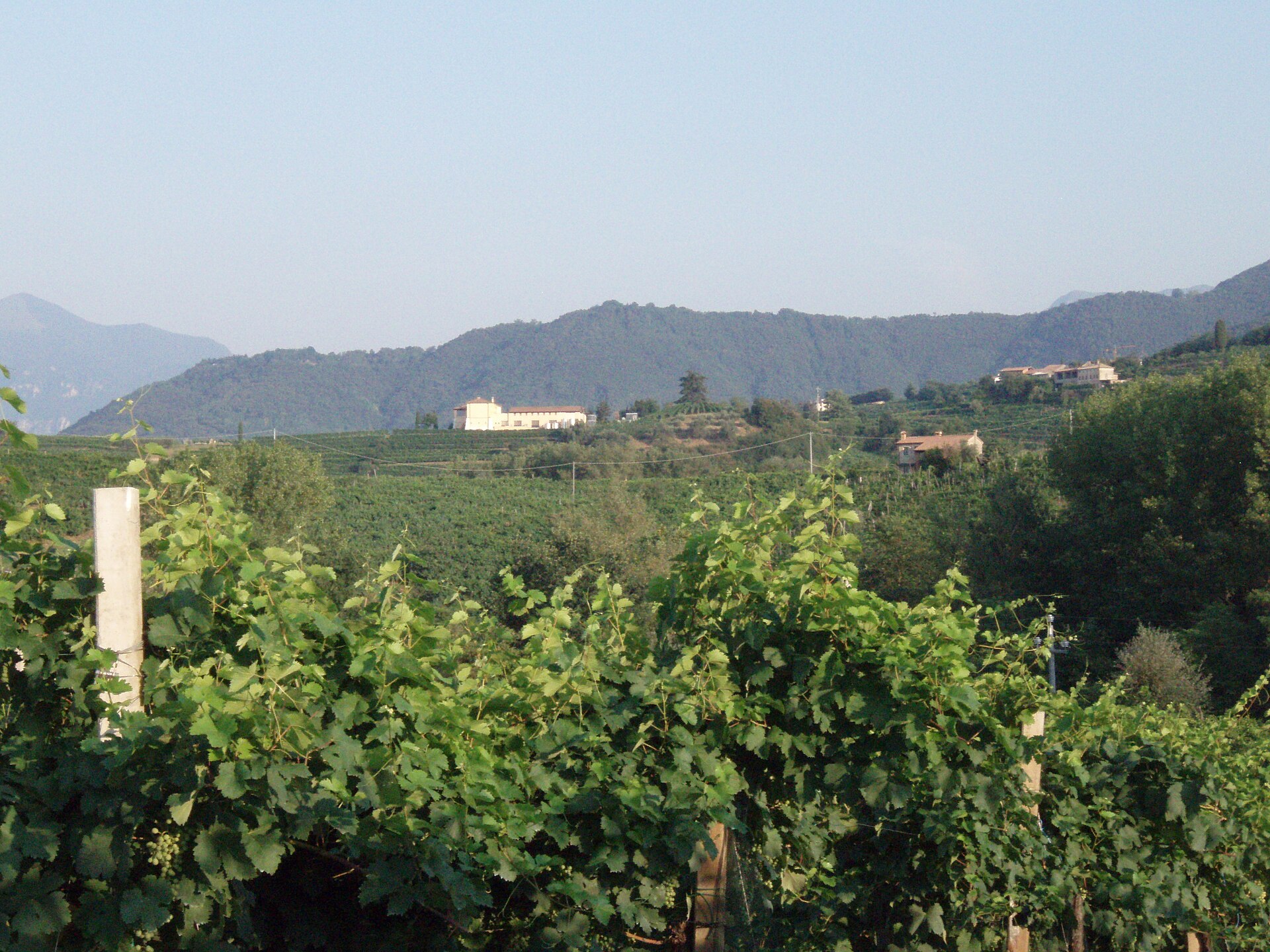
This is the one I want to argue for most strongly, because almost no generic day-trip list gives it the attention it deserves. The hills between Conegliano and Valdobbiadene are a UNESCO World Heritage Site — a landscape of steep vineyard terraces that produce the finest Prosecco Superiore DOCG in Italy. Coming from Venice, the train to Conegliano takes about fifty minutes. Getting deeper into the hills requires planning, but the effort is worth it.
Getting there: Trenitalia regional trains from Venezia Santa Lucia reach Conegliano in around 50–60 minutes. Tickets are typically €7–10 each way. From Conegliano, you will need a taxi, a rental car, or a pre-booked winery transfer to reach the vineyards and viewpoints — public transport within the hills is sparse. A guided tour from Venice is another practical option and typically includes transport, a winery visit, and lunch.
What to do: Conegliano itself has a pleasant old town and the Strada del Prosecco, Italy’s oldest wine route, starts here. If you can get into the hills, the viewpoints above Valdobbiadene — particularly around San Pietro di Barbozza — offer terraced vineyard landscapes that look almost impossibly arranged. Winery visits typically include a tasting of Prosecco Superiore DOCG alongside local cicchetti (small bites). This is not a sightseeing day; it is a slow day in an unusually beautiful countryside.
Honest verdict: Plan this one properly and it will be the best day of your trip. Improvise it and you may find yourself stuck in Conegliano without transport. The Prosecco Hills are uniquely spectacular in autumn, when the vines turn gold, but they are good from spring through early winter. Budget a full day and arrange transport in advance.
The Dolomites and Cortina d’Ampezzo: Big Scenery, Long Day
Strictly speaking, this is a stretch. Getting to Cortina d’Ampezzo from Venice takes somewhere between 2.5 and 4 hours depending on how you travel, and you will give most of a long day to transport. But the scenery on the far end is so completely unlike anything else accessible from Venice that it belongs on this list — with an honest caveat attached.
Getting there: The most practical option is the ATVO express bus from Venice Piazzale Roma to Cortina, which takes around 2 hours 30 minutes and runs a handful of times daily. Fares are reasonable, typically €10–15 each way. Alternatively, a train from Venice toward Calalzo followed by a connecting bus works but adds time. Guided day tours from Venice typically use a private vehicle and take 10–12 hours total, costing €145–250 per person. See the Italy transportation guide for wider context on regional buses and trains.
What to do: In summer, Cortina is a base for hiking: trails leading up toward the Tre Cime di Lavaredo, or the easier walk around Lake Misurina, give you the vertical rock walls and turquoise water that you see in every photograph of the Dolomites. In winter, it is a ski resort. Even arriving without a plan and simply walking the main Corso Italia in Cortina is rewarding — this is a handsome, prosperous mountain town.
Honest verdict: Do this if you have already seen Verona and Padua, if the Dolomites are genuinely on your list, and if you do not mind a long day. If you are considering the Dolomites as a possible multi-night addition to your Italy trip, the northern Italy itinerary guide has better options for doing it properly.
Bologna: Food Capital of Italy, 75 Minutes Away
Bologna is technically in Emilia-Romagna, not the Veneto, but from Venice it is one of the most satisfying long day trips on the high-speed network. The high-speed Frecciarossa and Italo trains cover the distance in around 1 hour 15 minutes, which makes it genuinely manageable.
Getting there: High-speed trains from Venezia Santa Lucia take approximately 1 hour 15 minutes to 1 hour 45 minutes depending on service. Tickets on fast trains start around €15–25 each way, but book early for better prices. See the trains in Italy guide for how to navigate the two main operators.
What to do: Bologna is one of the most underrated cities in Italy, and the reason most people go is the food. This is the city that gave the world ragù, tortellini, and mortadella. The covered market on Via Pescherie Vecchie is worth the trip alone. Beyond eating, the two medieval towers (Garisenda and Asinelli) define the skyline, and climbing the Asinelli gives an extraordinary view across the terracotta rooftops. The porticoes — forty kilometres of covered arcaded walkways, now UNESCO-listed — give the city a distinctive rhythm. San Petronio, the vast incomplete basilica on Piazza Maggiore, is another landmark worth seeing.
Honest verdict: This is a strong choice for anyone with a genuine interest in food, or for anyone who wants an Italian city that feels completely different from Venice. Give it a full day. A half day will leave you frustrated.
Ravenna: The Mosaics Question
Ravenna is in a different category from everything else on this list: it is spectacular, it is genuinely irreplaceable, and it is a stretch as a day trip. The Byzantine mosaics in the basilicas of San Vitale, Sant’Apollinare Nuovo, and the Mausoleum of Galla Placidia are some of the most extraordinary things you can look at in Italy. The problem is getting there.
Getting there: There is no direct train from Venice to Ravenna. You will typically need to change at Bologna, making the total journey around 2 hours 45 minutes each way. With a change and station time factored in, you are looking at six hours of travel for a day trip. Budget tickets vary, but plan for €20–30 each way for a sensible connection.
What to do: The main mosaics are concentrated in a small area and can be seen in two to three hours if you focus. Book the Mausoleum of Galla Placidia and San Vitale in advance — timed entry is required for peak season.
Honest verdict: Be honest with yourself here. If you have never been to Ravenna, one rushed day is better than never going. But if you have any flexibility in your itinerary, one night in Ravenna is dramatically better than a day trip from Venice. The Italy itineraries guide has suggestions for how to route Ravenna into a wider northern Italy trip. The mosaics deserve your full attention, not a tired evening train home.
How to Choose the Right Day Trip
The most useful question to ask yourself is: what kind of day do I want?
If you want art and culture without a long journey, Padua is the answer. The Scrovegni Chapel is one of the most important rooms in Western painting, and the city has genuine character. Book the chapel time slot before you leave Venice.
If you want a proper Italian city with good food, architecture, and things to do without a rigid plan, Verona is the all-round best choice. It rewards wandering and you will not feel like you need a checklist to enjoy it.
If you want architecture and almost no crowds, Vicenza is quietly outstanding. It takes less than an hour to reach and most visitors sail past it on the way to Verona.
If you want a slow, local day with good food and no sightseeing pressure, Treviso is the right call. Go for lunch and a walk.
If wine and landscape are your thing and you are willing to plan ahead, the Prosecco Hills offer something genuinely unique — and largely ignored by other visitors.
If you want dramatic mountain scenery and do not mind a long travel day, the Dolomites are worth it. The ATVO bus to Cortina is the simplest way to go.
For a full day in a food-focused city with fast connections, Bologna is excellent and underused by Venice visitors.
Ravenna is a pilgrimage for anyone who cares about Byzantine art, but go overnight if you can.
For broader Veneto day trips context, the Venice and Veneto travel guide lays out the full region. If you are still planning how to structure your Venice stay itself, the 2 days in Venice and things to do in Venice guides are the logical starting points. And if you’re thinking about how this fits a wider northern Italy trip, the northern Italy itinerary and Italy itineraries pages cover the bigger picture.
Final Thoughts
The Veneto region is one of the most train-friendly corners of Italy, and having Venice as your base gives you access to a remarkable range of day trips in almost any direction. Verona is the go-to for most visitors, and it earns that status. But Padua and Vicenza reward the people who take a few extra minutes to look beyond the obvious. And the Prosecco Hills — genuinely UNESCO-listed, genuinely beautiful, genuinely undervisited — might end up being the day you remember most clearly when everything else fades. Plan the connections, book the Scrovegni Chapel, and pick the day trip that matches the mood you are actually in rather than the one that looks most impressive on an itinerary.
Questions travellers ask
How far is Verona from Venice by train?
Verona is approximately 1 hour from Venice by high-speed train and around 1 hour 15–20 minutes by regional train. Services run frequently throughout the day from Venezia Santa Lucia. High-speed tickets cost more but save meaningful time on what is already a short journey. Regional trains are the budget option and perfectly comfortable for a day trip.
Do I need to book train tickets in advance for day trips from Venice?
For regional trains to nearby destinations like Padua and Treviso, you can usually buy tickets at the station on the day. For high-speed Frecciarossa or Italo services, and especially for Verona or Bologna, booking ahead typically gets you better fares and guarantees a seat during busy periods. Always check both Trenitalia and Italo for the best combination of time and price.
Is Padua worth visiting as a day trip from Venice?
Yes — Padua is arguably the best single day trip from Venice for art lovers and history enthusiasts. The Scrovegni Chapel frescoes by Giotto are among the most significant works of art in Europe. Beyond the chapel, Prato della Valle and the Basilica di Sant’Antonio both justify the journey. The train takes 25–50 minutes depending on service, and you must book the Scrovegni Chapel time slot in advance.
Can you visit the Prosecco Hills from Venice without a car?
You can reach Conegliano — the gateway to the Prosecco Hills — by train from Venice in around 50 minutes. Getting deeper into the vineyard landscape beyond Conegliano is harder without your own vehicle. Options include a taxi from the station, a pre-booked winery transfer, or joining a guided day tour from Venice that includes transport. The tour option is the most practical if you want to visit multiple wineries.
Is the Dolomites day trip from Venice worth it?
If the Dolomites are genuinely a priority for you and your time is limited, yes. The ATVO bus from Venice Piazzale Roma reaches Cortina d’Ampezzo in around 2.5 hours, and the scenery is extraordinary. But it is a long day — plan for 10–12 hours total — and you will not see much beyond one area. If you can add a night in the mountains, you will have a much better experience.
Is Ravenna worth the journey as a day trip from Venice?
Ravenna is entirely worth seeing, but a day trip from Venice requires significant commitment: around 2 hours 45 minutes each way with a change at Bologna, meaning roughly six hours of travel. If you have flexibility in your itinerary, spending a night in Ravenna is dramatically better. If the day trip is your only option, focus on San Vitale, the Mausoleum of Galla Placidia, and Sant’Apollinare Nuovo — and book timed entry in advance.
What is the easiest day trip from Venice?
Padua is the easiest by a clear margin: 25–30 minutes on a fast regional train, compact and walkable historic centre, and the single must-see (the Scrovegni Chapel) is well-signposted from the station. Treviso is similarly easy and takes about 35 minutes. Both can be reached on inexpensive regional tickets without advance planning, though Padua’s chapel always needs an advance booking.