Best Things to Do in Venice: The Complete First-Timer’s Guide
The best things to do in Venice are, in a word, overwhelming — and I mean that kindly. No other city hands you this much beauty per square metre, asks you to do all of it on foot, then cuts the ground out from under you and replaces it with water. Planning what to see in Venice is not hard because there is too little. It is hard because there is too much, and because the city is genuinely disorienting in a way no map quite solves.
This guide is for first-time visitors who want a real Venice experience: the landmarks you cannot miss, the museum corridors worth standing in, the neighborhoods where the tourist current finally slows, and a handful of moments — mostly free — that will stay with you longer than the gondola selfie. It pairs well with the 2-day Venice itinerary if you want a day-by-day structure, and with the Venice vaporetto guide once you are ready to figure out the boats.
Best Things to Do in Venice at a Glance
| Attraction | Why Go | Time Needed | Pre-Book? |
|---|---|---|---|
| St Mark’s Basilica | Golden mosaics, Byzantine detail | 45–90 min | Yes (free skip-queue slot online) |
| Campanile Bell Tower | Best panoramic view in the city | 30–45 min | Recommended |
| Doge’s Palace | Power, art, intrigue, Bridge of Sighs | 2–3 hrs | Yes — lines are brutal |
| Rialto Bridge + Market | Iconic views, morning produce & fish | 30–60 min | No |
| Grand Canal by vaporetto | Free sightseeing on Line 1 or 2 | 45 min one way | No |
| Gondola / Traghetto | The Venice water experience, scaled to budget | 5 min or 40 min | No / Yes for gondola |
| Gallerie dell’Accademia | Greatest Venetian Renaissance collection | 2 hrs | Recommended |
| Peggy Guggenheim Collection | Modern art in a palazzo on the canal | 1.5–2 hrs | Recommended |
| Jewish Ghetto + Cannaregio | History, atmosphere, real neighborhood life | 1.5–2 hrs | Tour recommended |
| Dorsoduro | Art, aperitivo, Zattere sunset | Half day | No |
| Getting deliberately lost | The best free thing Venice offers | Whenever | No |
St Mark’s Square, the Basilica, and the Campanile
Every visit to Venice passes through Piazza San Marco at some point, and most pass through it several times. That is fine. It earns the repetition.
St Mark’s Basilica
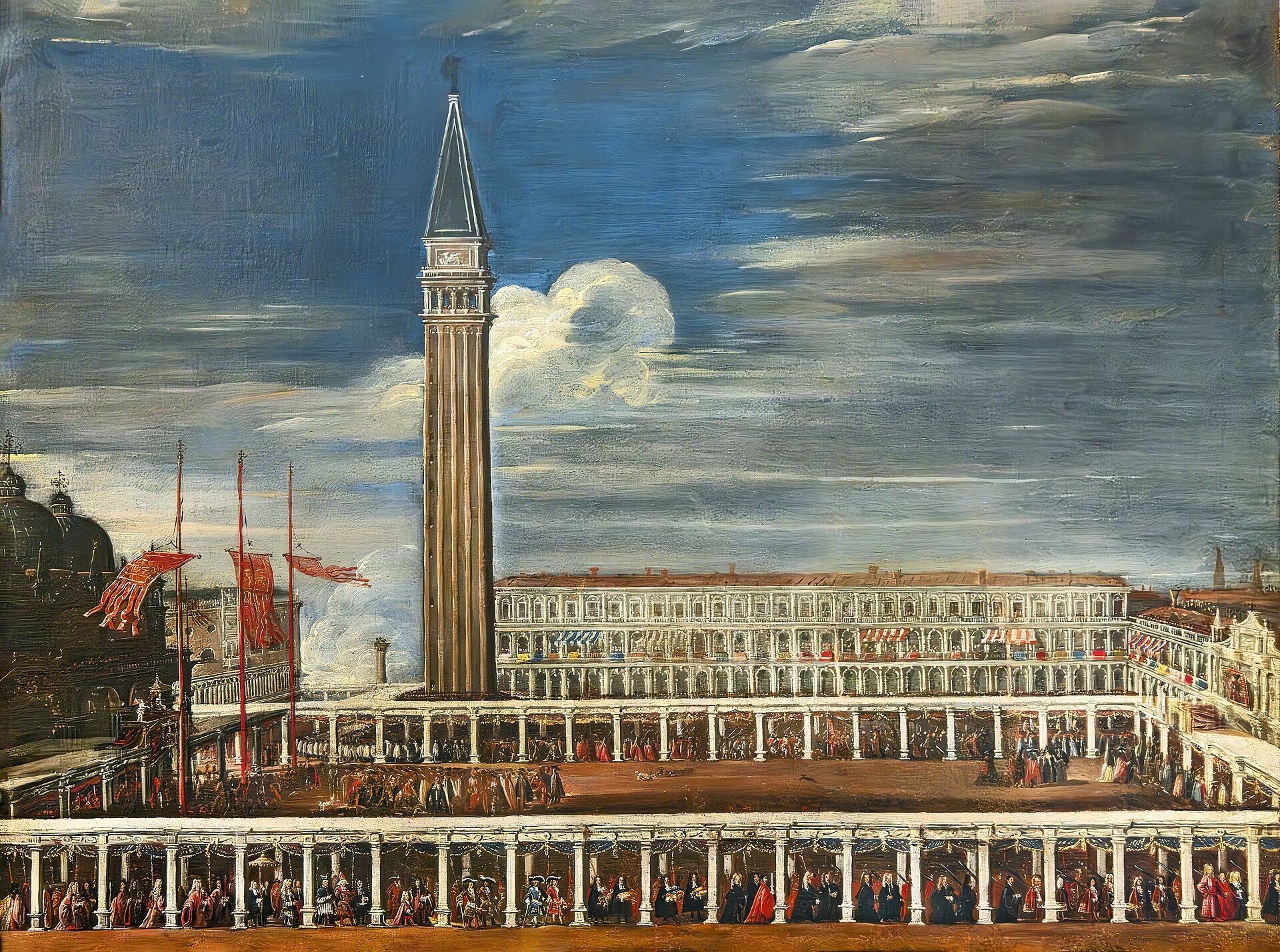
St Mark’s Basilica is the architectural climax of a city full of them. The facade piles five arched portals, each framed in gold mosaic, onto a structure that has been absorbing influences — Byzantine, Gothic, Romanesque, Venetian — since construction began in 828 AD and continued in various forms for centuries after. The interior is covered in roughly 8,000 square metres of gold mosaic. Standing inside on a grey morning with the light filtering through high windows, it is genuinely difficult to believe you are not somewhere sacred.
The main basilica is free. What costs money is the treasury (around €3) and the museum upstairs (around €7), which gives you access to the Loggia dei Cavalli, the terrace balcony directly over the main portal. The views across the square and toward the lagoon from there are worth every cent.
The practical reality: do not try to walk in off the street at 11am in July. The queue can stretch an hour. Instead, book the free timed-entry slot on the official website before you leave home. It takes five minutes, costs nothing, and makes an enormous difference.
One more thing: if you are visiting between June and September, consider the evening entrance — offered on certain dates, usually around 6:30pm. The mosaics glow a different, warmer gold when lit from within at dusk, and the crowds are a fraction of the daytime volume.
The Campanile
The freestanding bell tower at the edge of the square is 99 metres tall, which is improbably high for a city that cannot seem to keep its ground floors dry. The lift runs continuously and the view from the top is the best wide-angle Venice sightseeing experience you will have: red rooftops in every direction, the Grand Canal cutting its S-curve toward the lagoon, the islands of San Giorgio Maggiore and the Giudecca to the south, and — on a clear day — the Dolomites to the north.
Admission is around €10 as of 2026. Tickets sell out on busy days, so booking ahead is sensible. Go early morning or late afternoon; midday light in summer is flat. Day visitors should also check whether their date falls under Venice’s day-tripper access fee.
The Doge’s Palace and the Bridge of Sighs
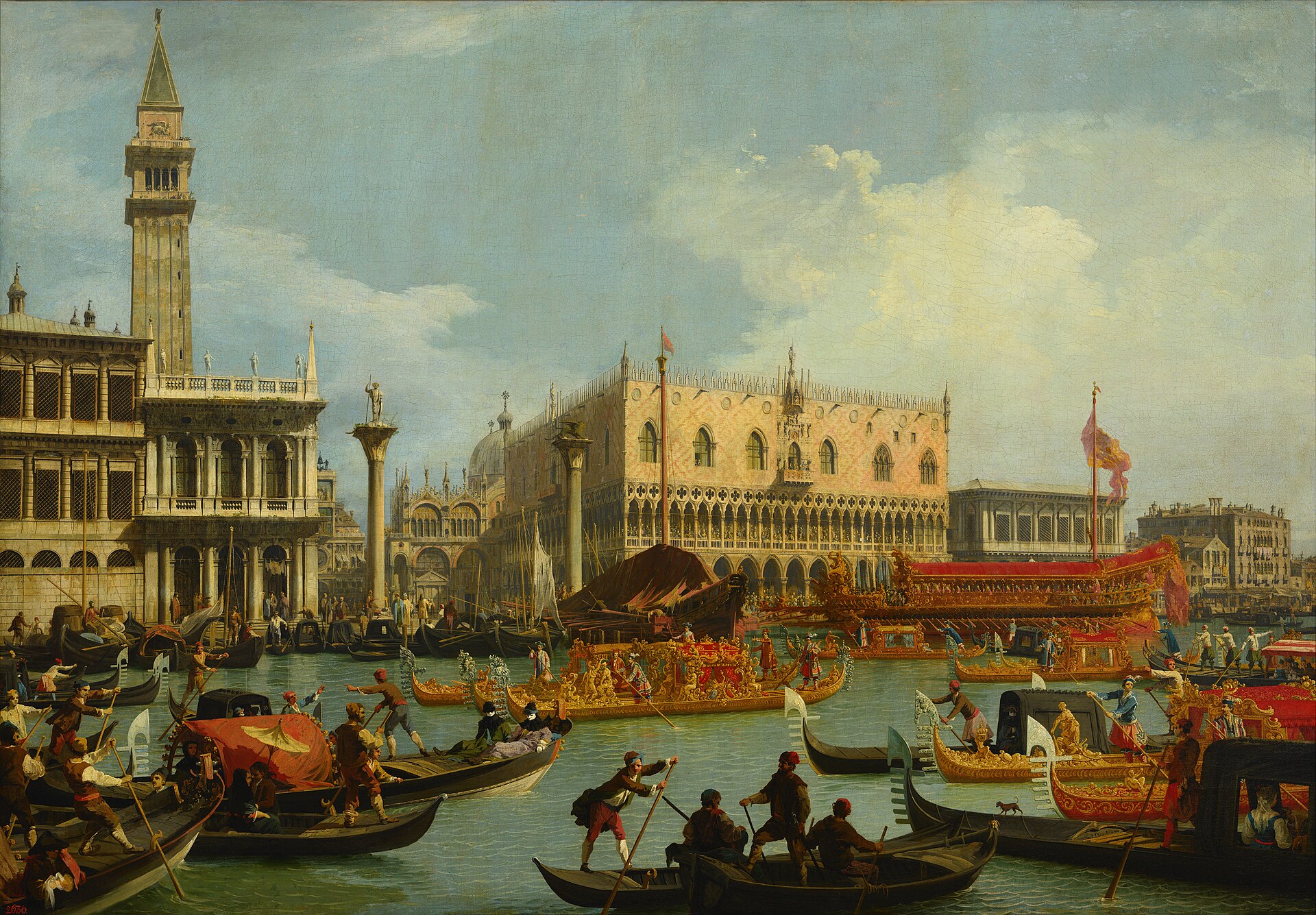
The Palazzo Ducale — Doge’s Palace — is where the Republic of Venice ran itself for nearly a thousand years. That republic was one of the longest-lived in history, and the palace reflects both its ambition and its anxieties. The public rooms are colossal: the Sala del Maggior Consiglio (the Great Council Hall) contains one of the largest oil paintings in the world, Tintoretto’s Paradise, measuring roughly 22 by 7 metres. The ceilings throughout are gilded, painted, carved, and generally excessive in ways that, somehow, never feel cheap.
After the grand halls, a walkway leads across the Bridge of Sighs to the old prisons. The contrast is the point. One moment you are standing in rooms where the most powerful men in Europe made decisions; minutes later you are in a cell with a single barred window. The legend that prisoners sighed at their last view of the lagoon is probably romanticised, but the passage is genuinely affecting.
Tickets are around €30–35 as of 2026. The Secret Itineraries tour (Itinerari Segreti, from around €67) takes you through the administrative rooms and the torture chamber rather than the standard public route — genuinely worth it if history is your thing, and it must be pre-booked. Do not walk up to the ticket desk hoping to get in without waiting; the queue in peak season can eat an hour and a half of your morning.
The Rialto Bridge and the Morning Market
The Rialto Bridge is the oldest of the four bridges across the Grand Canal and the one everybody photographs from the vaporetto. It is also, up close, a proper piece of urban architecture: a single stone arch built in 1591 by Antonio da Ponte, with two rows of shops built into the parapet. Stand on it at 8am and you have it almost to yourself. Return at noon and you will be navigating a slow-moving crowd four bodies deep.
The market on the San Polo side of the bridge — the Rialto Mercato — has been running in some form for over a thousand years. Today it is two sections: the Erberia (fruit and vegetables, closing around 1pm) and the Pescheria (fish market, wrapping up by noon on the days it operates, closed Sunday and Monday). Even if you are not buying anything, the fish market is worth seeing. The range — lagoon crabs, small squid, octopus piled in bowls, silver branzino — is a reminder that Venice exists in an ecosystem, not just as a postcard.
The surrounding sestiere of San Polo is one of the more pleasant places to wander: tighter streets, fewer tour groups, the odd excellent cicchetti bar where the city’s office workers stop for a glass of prosecco and a small plate of fried sardines at 10am without apparent guilt.
The Grand Canal: Do It Properly
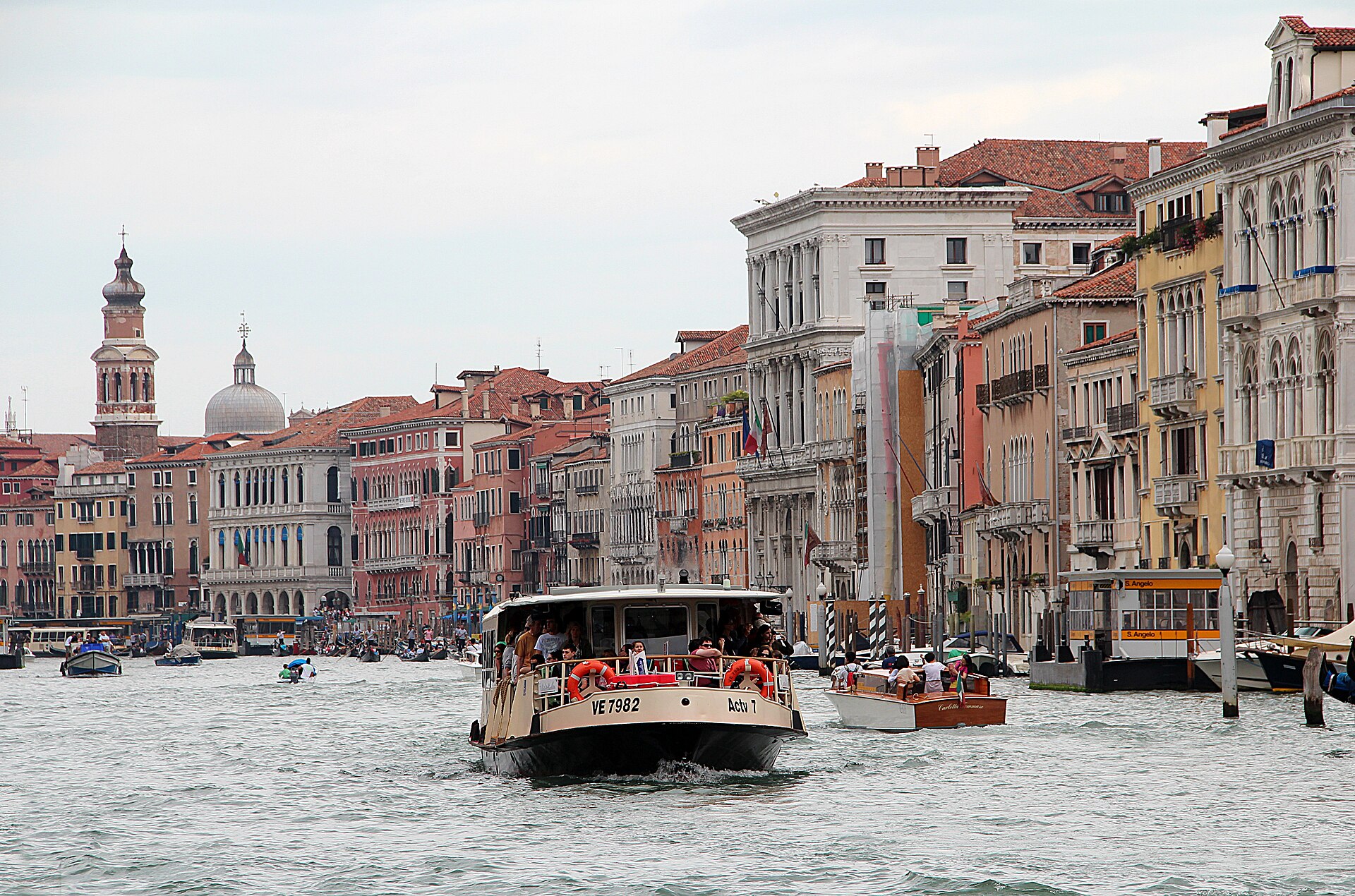
The Grand Canal is not a backdrop. It is the main street of the city, 3.8 kilometres of inverted S-curve flanked by palaces that were built to impress, and still do. The correct way to see it is by vaporetto Line 1, which stops at every landing stage along the full length — from the train station at Ferrovia, past Ca’ d’Oro, Ca’ Rezzonico, the Rialto, and all the way down to San Marco and beyond to the Lido.
This takes about 45 minutes end to end and costs whatever a standard ACTV ticket costs at the time you visit (around €9.50 for a single trip as of 2026, or covered by a 24-hour pass). It is, in effect, the cheapest sightseeing boat trip in Europe. Sit at the front or rear of the boat, not in the middle cabin.
For the full guide to getting around by water, see the Venice vaporetto guide.
Gondola or Traghetto: The Honest Take
A gondola ride is one of the things people talk about wanting to do in Venice before they arrive, and one of the things they most often feel conflicted about once they are there. Let me be direct.
The standard gondola costs around €90 for 30 minutes during the day (around €110 after 7pm) as of 2026. That is per gondola, not per person, so if you split it among four or five people it becomes more reasonable. The ride is almost entirely on the smaller side canals rather than the Grand Canal — gondoliers avoid the heavy vaporetto traffic. The canals in question are beautiful, and drifting through them is genuinely lovely. But 30 minutes goes very quickly, and many people find the experience more disorienting than romantic: you are low in the water, looking up at the undersides of bridges, flanked by stone walls, and your gondolier may or may not sing, depending on the booking.
Worth it? For many people, yes — once. I would not repeat it. But I also think anyone who dismisses it as pure tourist theatre is being slightly too cool about it.
The traghetto, on the other hand, is the best value in Venice. A traghetto is a gondola that serves as a ferry, crossing the Grand Canal at points between the four bridges. You stand up in it (locals always stand; tourists are the ones gripping the gunwale). The crossing takes about five minutes. It costs €2 for tourists. You will be doing it alongside Venetians who have done it ten thousand times and find your wonder at the experience gently bewildering. Operating traghetti cross at Santa Sofia in Cannaregio, San Tomà in San Polo, and a few other points; hours vary by route, so check locally.
The Art: Accademia and Peggy Guggenheim
Venice’s artistic legacy is enormous and could fill weeks. For a first visit, concentrate on two galleries.
Gallerie dell’Accademia
The Accademia holds the most important collection of Venetian Renaissance painting in the world. If you want to understand why Bellini, Carpaccio, Titian, Tintoretto, and Veronese were considered — and still are — among the greatest painters of the European tradition, this is where to come. It is organised chronologically and thematically, which helps, and it is significantly less crowded than the Uffizi in Florence despite containing comparable masterpieces.
Admission is around €15–17 as of 2026. Book ahead, especially in peak season, and go in the late afternoon when tour groups have cleared out. First Sunday of each month is free.
Peggy Guggenheim Collection
Peggy Guggenheim’s palazzo sits directly on the Grand Canal in Dorsoduro — a low, white building that looks almost modest until you are inside and surrounded by Pollock, Ernst, Picasso, Dalí, Brancusi, and Rothko. Guggenheim herself is buried in the garden with her beloved dogs, a detail that tells you something about the person who built this collection. The terrace gives an exceptional view along the canal; stand there at 5pm and it is hard to imagine a better one.
Admission around €18 as of 2026. Closed Tuesdays.
Dorsoduro: The Neighborhood to Know
Dorsoduro — literally “hard back,” referring to the firmer ground on which it sits — is where I would point any first-timer who wants a Venice that feels less like a performance. It contains the Accademia and the Guggenheim (see above), several excellent bars along the Zattere waterfront, and the broad promenade called the Fondamenta delle Zattere, which faces the Giudecca Canal to the south.
The Zattere at sunset is one of the best free moments in the city. The light comes across the water from the west, catches the facade of the Redentore on the Giudecca, and everything turns a colour that is either rose or copper depending on the season. Bring something to drink — there are bars along the waterfront that will sell you an Aperol spritz for entirely reasonable money — and simply sit. No ticket required.
The other Dorsoduro landmark worth visiting on its own merits: the Basilica di Santa Maria della Salute, the baroque church that anchors the tip of the sestiere at the entrance to the Grand Canal. It is free to enter (a small donation is customary), and the interior, though relatively spare by Venetian standards, contains Titian’s ceiling canvases in the sacristy. The view of the Salute from across the canal — from the Punta della Dogana, or from the water on the vaporetto — is one of the canonical images of the city.
Cannaregio and the Jewish Ghetto
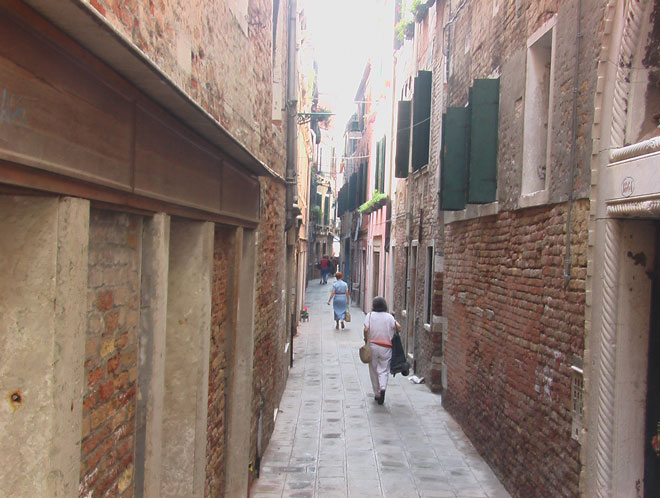
Cannaregio is the northernmost sestiere, closest to the train station and, consequently, the one most visitors walk straight through on their way to San Marco. Stop and stay a while.
The Jewish Ghetto — the original, from which all other ghettos take their name — was established here in 1516. Campo del Ghetto Nuovo is a wide, quiet square surrounded by buildings that are unusually tall for Venice: because expansion outward was prohibited, the Jewish community built upward, sometimes seven or eight stories in a city that typically tops out at four. Five historic synagogues still stand, representing the different communities (Sephardi, Ashkenazi, Italian, Levantine) that lived and worshipped here under severe restrictions for more than two centuries.
The Museo Ebraico inside the ghetto offers guided synagogue tours (around €12–15, conducted in English several times daily) and has a small but genuinely moving exhibition on the deportations of 1943–44. It is closed on Saturdays and Jewish holidays. Even if you do not take the guided tour, the campo itself is worth spending time in. It feels different from the rest of Venice — quieter, more layered, more weighted with what happened here.
Beyond the ghetto, the rest of Cannaregio is a pleasure. The Fondamenta della Misericordia and the Fondamenta degli Ormesini run along two adjacent canals and are lined with casual bacari — the traditional Venetian wine-bar-cum-snack-bar — where locals outnumber tourists by a comfortable margin even in summer. Order an ombra (a small glass of house wine, often very cheap) and a few cicchetti, the small snacks on the bar counter: sardines in saor (sweet and sour), salt cod mousse on toast, meatballs, cheese. This is how Venice eats before dinner, and it is one of the better traditions in Italian food culture.
Getting Deliberately Lost
Every guide to Venice tells you to wander without a map. Every guide is right, and also failing to tell you what actually happens when you do.
You will take a dead end down a calle and find yourself at the edge of a canal with no bridge in sight. You will cross a bridge you cannot find again. You will miss a turn and end up in a campo you never meant to visit — possibly Campo Santa Margherita in Dorsoduro, a wide square full of students and outdoor tables and a kind of local energy that makes you feel, briefly, as if you live here. Or you will land in a quiet corner of San Polo with a church you have not heard of, push open a door, and find a Tintoretto hanging in the dim light, unguarded, unannounced.
This is Venice sightseeing at its best. The city has a ratio of extraordinary things to square metres that still surprises me, and the ratio stays high whether or not you are on the official list of must-sees. The risk of wandering is that you waste time getting somewhere you meant to be. The upside is that you find things you were not looking for. In Venice, the upside almost always wins.
Keep the italy-travel-mistakes guide bookmarked — several of the most common ones (rushing, over-planning, relying on GPS navigation in the wrong mode) apply particularly to Venice.
By Interest: Art, Food, Free, and Romantic
For the Art Visitor
Beyond the Accademia and Guggenheim, add the Scuola Grande di San Rocco in San Polo, where Tintoretto spent two decades covering the walls and ceilings with a cycle of paintings that amounts to a one-man Sistine Chapel. Admission is around €10 and the effect is staggering. The church of the Frari, next door, holds Titian’s Assumption of the Virgin above the main altar — one of the great paintings in any city, in a space designed to make you look up.
For the Food Visitor
Venice’s food culture is distinctive and under-appreciated. The cicchetti circuit — bacaro-hopping through Cannaregio and San Polo in the late afternoon — is the right way to eat in this city. Look for baccalà mantecato (salt cod whipped with olive oil until light and airy), sarde in saor, tramezzini (the local triangular sandwiches, here genuinely excellent), and fried zucchini blossoms in season. Venetian pasta means bigoli (a thick spaghetti-like pasta) in salsa (with anchovy and onion sauce), a combination that sounds humble and delivers considerably more than that.
For the Free Visitor
The best free things in Venice: crossing the Grand Canal on a traghetto (€2), wandering the Rialto market in the morning, sitting on the Zattere at sunset, climbing to the Accademia Bridge for a Grand Canal view, and reading a book in Campo Santa Margherita. Also free: the terrace of the Fondaco dei Tedeschi department store near the Rialto offers a rooftop view across the canal — reserve your free slot online in advance.
For the Romantic Visit
Venice caters almost aggressively to couples, and most of the cynicism about that is unwarranted. The gondola, if you have someone to share it with, is actually lovely; do it on a quieter side canal rather than the Grand Canal. The evening light along the Riva degli Schiavoni facing San Giorgio Maggiore is, in the honest words of a city that trades heavily on aesthetics, genuinely beautiful. A table at a small bacaro in Cannaregio, a glass of local Soave, somewhere in the 6pm hour when the day tours have left and the light is going — that is Venice doing exactly what it does well.
Day Trips and What to Defer
The islands of Murano and Burano are well worth a half-day and are covered in the Murano and Burano day trip guide. Venice itself — with the above — is realistically two full days; the 2-day Venice itinerary maps it out specifically.
For where to sleep, including the San Marco splurge-vs-value trade-off and the best neighborhoods for first-timers, see where to stay in Venice.
Venice sits within the wider Veneto region, covered in the Venice and Veneto travel guide. If you are building an Italy trip around this stop, the Italy itineraries guide and the Italy travel guide are the right starting points.
Final Thoughts
Venice is a city that people either love immediately and completely, or find slightly suffocating — too much water, too many tourists, too much beauty in too compressed a space. If you give it time and move beyond the immediate gravity of San Marco, it almost always converts the doubters. The neighborhoods, the bacari, the art in half-lit churches, the morning light on the Grand Canal before the boats have started properly — these are the things that make Venice irreplaceable in a way that no flat list of attractions quite captures.
Plan carefully enough to get into the places that require booking. Then leave enough time to get properly lost.
For a full picture of what Italy offers beyond Venice, start with the Italy travel guide or explore Italy itineraries built around the places that matter most to you.
Questions travellers ask
Is Venice worth visiting for just one day?
One day is enough to see the main highlights — St Mark’s, the Rialto, a vaporetto ride on the Grand Canal — but it is not enough to feel the city. Venice rewards slowing down. Two days is the comfortable minimum; three allows you to include the art galleries, Cannaregio, and a real morning wander. If you have only one day, go early and stay late.
What is the best time of year to visit Venice?
April, May, and early June are the sweet spot: mild temperatures, longer days, manageable crowds, and the spring light on the water is genuinely extraordinary. September and October are also strong choices. July and August are busy and hot, and the acqua alta (seasonal flooding) typically begins in October and runs through January, though it rarely closes the major sights. Carnival in February is spectacular if crowds are your thing; oppressive if they are not. See the best time to visit Italy for a full seasonal breakdown.
How much does a gondola ride cost in Venice?
The official rate as of 2026 is around €90 for a 30-minute ride during the day, rising to around €110 after 7pm. That is per gondola (which holds up to five passengers), not per person. Prices are set by the gondoliers’ association and are posted at official stands. If someone quotes you significantly more, negotiate or walk to another stand. For a short but authentic gondola experience at a fraction of the cost, take a traghetto across the Grand Canal for €2.
Do you need to book Venice attractions in advance?
For the Doge’s Palace and St Mark’s Basilica: yes, strongly recommended in peak season (April–October). The Doge’s Palace queue without a pre-booked ticket can be 90 minutes. The Basilica’s free timed-entry reservation takes minutes online and is worth it. For the Accademia and Guggenheim, booking ahead is sensible but less urgent. For the Campanile, online booking saves time. In November–March, advance booking is less critical but still avoids friction.
Is Venice expensive?
Venice has a reputation for high prices that is partly deserved. Hotels in San Marco or Dorsoduro command a premium. Restaurant meals near the main sights are notoriously overpriced. But the city is also manageable on a budget if you eat cicchetti at bacari rather than sit-down restaurants, use the vaporetto pass rather than water taxis, and choose accommodation in Cannaregio or Mestre. The major museums are comparably priced to Rome and Florence. Entry into most churches is free or costs a small fee.
What should I avoid in Venice?
The restaurants immediately adjacent to St Mark’s Square — most are expensive relative to quality, aimed entirely at tourist turnover, and surrounded by better options two streets further in. Overloaded selfie gondola shots on the Rialto Bridge. The tacky glass sold everywhere around the tourist trail (most is not from Murano, despite what the label says; buy directly on the island if you want the real thing). And rushing. Venice is small enough to walk across in an hour; the visitors who feel they have not seen it are usually the ones who did it in three hours and moved on.
How do I get from Venice’s train station to the main sights?
On foot, following the signs to San Marco: about 35–40 minutes of pleasant walking across the city, crossing the Rialto Bridge. By vaporetto Line 1 from Ferrovia: around 45 minutes with stops, but you see the Grand Canal in full. Line 2 is faster. Water taxis are expensive (€60–80+) and only worth it with heavy luggage or genuine time pressure. There is no road transport once you are inside the historic centre; everything happens on foot or water.
Is Venice safe for tourists?
Venice is one of the safest cities in Italy for visitors. The typical concerns are pickpocketing in crowded areas (St Mark’s, the vaporetto during peak hours) rather than anything more serious. Keep bags in front of you on the boats. The main tourist inconvenience is disorientation — the street signs are in Venetian dialect (calle, rio, fondamenta, campo) and the numbering system is citywide rather than street-by-street. Download an offline map before you arrive.