Where to Stay in Venice: Best Areas (and When Mestre Makes Sense)
Where to Stay in Venice: The Short Answer
If you only have two or three nights and this is your first time, stay on the island. Dorsoduro or San Polo give you the best blend of access, local atmosphere, and sane pricing. San Marco works if you want everything at your feet and don’t mind paying for it. Cannaregio is your move if you want to keep costs down without leaving the lagoon.
Mestre — the mainland city ten minutes away by train — makes genuine sense in a handful of situations: you’re on a serious budget, you’re travelling with a car, you have a very long trip and Venice is just one chapter of it, or you’ve actually been to Venice before and care more about logistics than atmosphere. For a first visit of two or three nights, though, sleeping on the island is not a luxury. It’s the point.
This guide is for first-time visitors working out which part of Venice to actually book. It covers all six sestieri, plus Giudecca and the Lido, then lays out the Mestre question honestly. For broader Italy lodging strategy, see the where-to-stay-in-italy guide. If you’re weighing whether to base yourself in Padua and commute in, that’s covered in full at Padua to Venice day trip.
At a Glance: Venice Neighborhoods
| Area | Vibe | Best For | Price Feel |
|---|---|---|---|
| San Marco | Grand, central, crowded | First-timers who want everything close | $$$$ |
| Cannaregio | Local, canal-laced, calm | Budget-conscious visitors; longer stays | $$–$$$ |
| Dorsoduro | Arty, young, real | Balance of access and atmosphere | $$$ |
| San Polo | Market-life, food-focused | Foodies; short stays | $$$ |
| Santa Croce | Workaday, convenient | Arriving by train/bus; practical travellers | $$–$$$ |
| Castello | Quiet, residential, huge | Returning visitors; those who walk a lot | $$–$$$ |
| Giudecca | Off-canal, local, peaceful | Seekers of calm; design lovers | $$–$$$$ |
| Lido | Beachy, suburban | Families; Venice Film Festival; summer stays | $$–$$$ |
| Mestre (mainland) | Modern, cheap, functional | Budget travellers; car users; longer trips | $–$$ |
San Marco: Right in the Middle of Everything
San Marco is the sestiere that tourists picture when they picture Venice. St Mark’s Basilica, the Doge’s Palace, the Bridge of Sighs, La Fenice opera house — they’re all here. So are the highest concentrations of day-trippers, the most aggressive café prices, and the loudest suitcase-dragging at 2am. Many of those day visitors now pay the city’s access charge on controlled dates.
It is also genuinely the most central place to stay in Venice. You can walk to the Rialto in fifteen minutes. The vaporetto stops at San Zaccaria (line 1 and line 2) and San Marco Vallaresso put you on the Grand Canal route instantly. If you’re doing two days in Venice and need to hit the highlights efficiently, you’ll lose no time to transit.
What San Marco does well: you’re never more than a short walk from something spectacular. Even the backstreets between the main landmarks contain Gothic palaces, tiny calli that open onto surprise campi, and bacari serving cicchetti to a mixed local-and-tourist crowd.
What San Marco does less well: the main tourist corridor — from the station to Piazza San Marco — is relentless between roughly 10am and 7pm. If you’re staying on that corridor, or anywhere near the piazza itself, you are inside the crowd, not passing through it. Accommodation prices reflect the address: expect to pay considerably more per night here than in Dorsoduro or Cannaregio for similar quality.
Who it suits: first-timers on a short itinerary who want maximum proximity to the classics, travellers with limited mobility who can’t afford to walk far to a vaporetto stop, anyone celebrating a special occasion and willing to invest in the address.
Vaporetto access: San Zaccaria and San Marco Vallaresso are both very central. Line 1 (the slow, scenic line down the Grand Canal) and line 2 (faster loop) are both reachable in under ten minutes from most San Marco addresses. Get the full picture on Venice vaporetto routes and tickets.
Cannaregio: The Best Budget Sestiere (and the Most Underrated)
Cannaregio is the largest sestiere by population and, in the northern part, the most authentically residential. The strip between the train station and the Rialto — along the Lista di Spagna and Rio Terà San Leonardo — is tourist-heavy, but walk five minutes north toward the Fondamente Nuove and you’re in a different city. Washing lines over canals. Elderly men with coffee. Quiet campos where children actually play.
This is also where you’ll find the Jewish Ghetto, the oldest in Europe, with its synagogues and tiny museum that stops most visitors cold. And the Fondamente della Misericordia is Venice’s main nightlife strip — low-key by any non-Venetian standard, but genuinely local.
Price feel: Cannaregio is typically the most affordable of the island sestieri. You’ll find solid three-star hotels and family-run B&Bs at prices that feel almost reasonable by Venice standards — around a third less than equivalent San Marco addresses, as of 2026.
What to know about the station end: if you’re staying within a block or two of Santa Lucia station, you’re convenient but not immersed in anything particularly Venetian. It’s fine for an early departure or late arrival. For a proper stay, push further into the sestiere.
Vaporetto access: Ferrovia (line 1 and 2) is right at the station. Guglie stop is a short walk east. Fondamente Nuove is the departure point for boats to Murano, Burano, and the cemetery island of San Michele — if island day-trips are part of your Venice plan, Cannaregio puts you in perfect position.
Who it suits: budget-conscious travellers, anyone doing multiple nights who wants a base with neighbourhood feel, those planning island day-trips, and anyone who’d rather eat well for €15 than badly for €35.
Dorsoduro: The Best All-Round Sestiere
I keep coming back to Dorsoduro. It’s the part of Venice where the city feels most like a place people actually choose to live — Ca’ Foscari university is here, and the campo life around Campo Santa Margherita is the most genuine you’ll find on the island: a proper piazza with a market in the mornings, students on the steps at aperitivo hour, a handful of bars that haven’t retrofitted themselves for Instagram.
The Gallerie dell’Accademia is one of the best collections of Venetian painting in existence and it’s five minutes from the Accademia Bridge. The Peggy Guggenheim Collection sits right on the Grand Canal. The Punta della Dogana — a converted customs house at the tip of the sestiere where the Grand Canal meets the Giudecca Canal — is a serious contemporary art space with one of the best views in the city.
Price feel: mid-range. Cheaper than San Marco, more expensive than Cannaregio. You’ll find boutique hotels in restored palazzi, smaller family-run locande, and a handful of excellent positions on side canals. As of 2026, a decent mid-range double will run you roughly €150–€250 per night depending on season and how close to the water you are — but hedge that figure and check direct.
Walkability: Dorsoduro is compact enough to walk across in twenty-five minutes. The Accademia vaporetto stop (line 1) puts you on the Grand Canal route within a short walk of most addresses. Zattere stop (line 2 and Giudecca ferry) is along the sunny southern fondamenta — a walk down the Zattere on a January morning, when the sun hits the water and there’s almost nobody about, is the kind of thing that makes people move to Venice.
Who it suits: first-time visitors who want genuine neighbourhood life without sacrificing proximity to the main sights, art lovers, couples, anyone who wants to actually enjoy the city rather than simply tick it off.
San Polo: Small Sestiere, Big Personality
San Polo is Venice’s smallest sestiere and also one of its most alive. The Rialto Bridge and the Rialto Market — the fish stalls and produce market on the San Polo side of the Grand Canal — are the centrepieces. Get there before 9am and you’re watching Venetian merchants doing what they’ve done for centuries. By noon it’s done and the stalls are packing up. By 2pm it’s tourists with selfie sticks.
The Frari church (Santa Maria Gloriosa dei Frari) is here — a Gothic basilica containing Titian’s Assumption, which is worth the entrance fee several times over. The Scuola Grande di San Rocco, with its extraordinary Tintoretto cycle, is a two-minute walk away. And scattered through the calli are some of Venice’s best bacari — small wine bars serving cicchetti — along with a handful of seriously good restaurants.
What to know: San Polo is genuinely central, squeezed between San Marco, Santa Croce, and the Grand Canal. It’s not a quiet sestiere — the market area gets busy and the streets around the Rialto are a main thoroughfare — but it doesn’t have the relentless commercial feel of central San Marco.
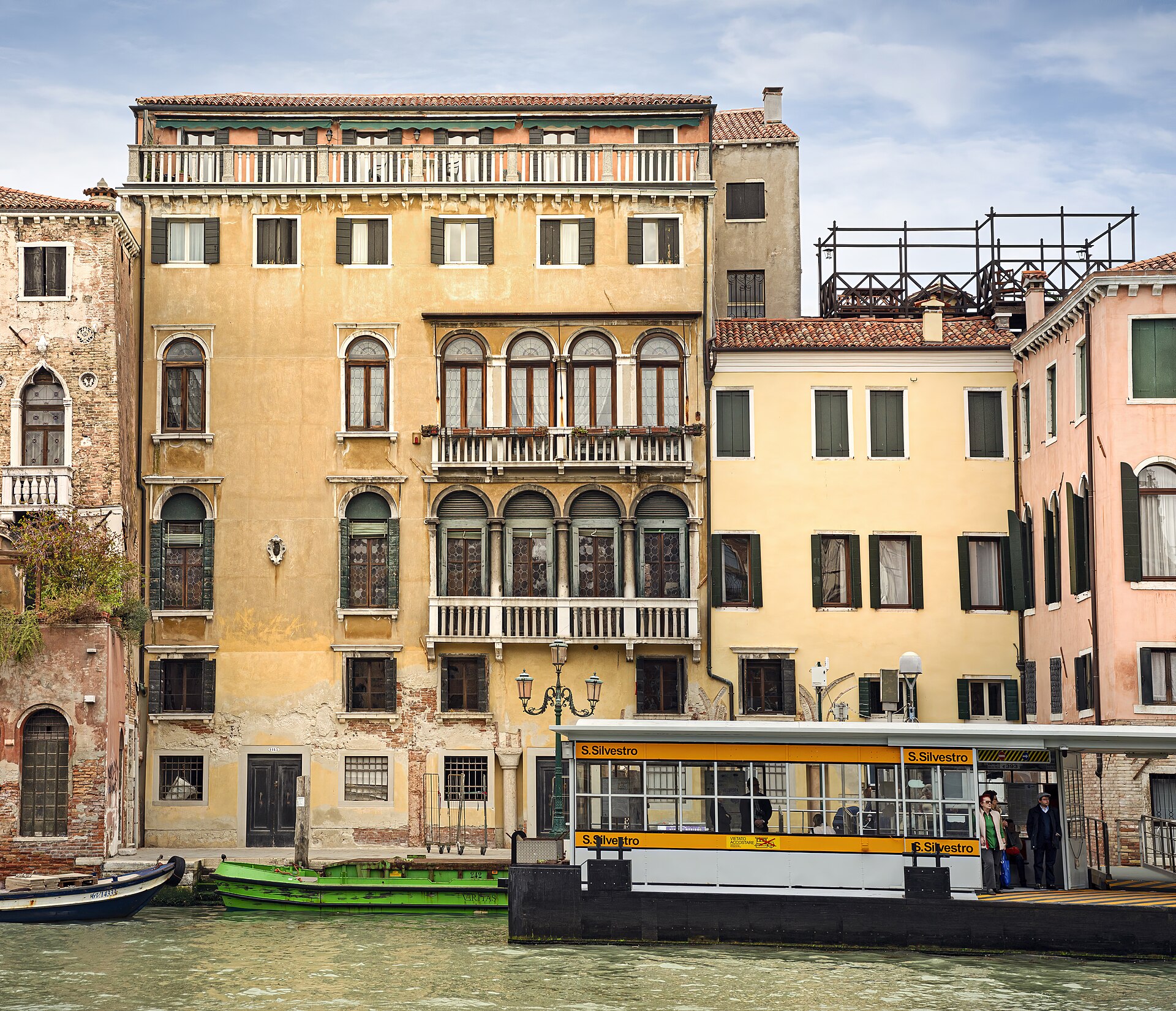
Vaporetto access: Rialto Mercato stop (line 1) is right here. San Silvestro is a couple of minutes further east. You’re well-connected in all directions.
Who it suits: visitors who care about food and want to be close to the market, anyone doing things to do in Venice that are spread across the city, short-stay travellers who want to feel inside Venetian life without paying San Marco prices.
Santa Croce: Practical, Underappreciated, Often Overlooked
Santa Croce sits between the train station and San Polo, along the north-western curve of the Grand Canal. Most travel guides mention it briefly and move on. That undersells it slightly.
The Piazzale Roma — Venice’s only road terminus, where buses and cars end and the lagoon begins — is in Santa Croce. So is the Fondaco dei Turchi, now the Natural History Museum. And once you leave the station-adjacent streets, you find a neighbourhood that’s quieter and more local than its central position suggests.
What to know honestly: Santa Croce is not the most atmospheric sestiere. The area immediately around Piazzale Roma is functional rather than beautiful. But if you’re arriving late, leaving early, or just want a practical base at a sensible price, it works very well. The walk to San Polo takes about eight minutes. San Marco is around twenty-five.
Vaporetto access: Piazzale Roma and Ferrovia stops are right here — you’re at the origin point of line 1, the vaporetto that stops at every landing on the Grand Canal all the way to Lido. Riva di Biasio stop is a pleasant five-minute walk further in.
Price feel: mid-range, trending slightly cheaper than Dorsoduro. Look for hotels set back from the main piazzale for better value and quieter rooms.
Who it suits: early arrivals and late departures, pragmatic travellers, anyone doing day trips to the mainland who wants easy access back without being in Mestre.
Castello: The Biggest Sestiere, the Quietest Option
Castello is enormous. It stretches from the Riva degli Schiavoni — the broad promenade that runs east from Piazza San Marco, lined with grand hotels and the most photographed waterfront in Venice — all the way to the Arsenale, and then on into the far eastern reaches of the island where the streets narrow and the tourists disappear almost entirely.
The western end of Castello, around the Riva, is firmly tourist territory: the hotels are larger and grander, the crowds thick until early evening. Move east past the Arsenale, though, and the character shifts completely. The Campo Santi Giovanni e Paolo (the Venetians say “Zanipolo”) is dominated by one of the great Gothic churches in Italy and a stunning equestrian statue. The Biennale gardens are here. So is the Via Garibaldi, a broad street that feels more like a neighbourhood in Bologna than anything else in Venice — wide enough for café tables, a proper local market, children on bikes.
Price feel: variable. Riva degli Schiavoni addresses command premium prices (and the views earn them). Move east and prices drop appreciably — you can find genuinely good-value hotels in the far reaches of Castello that are still only twenty-five to thirty minutes’ walk from San Marco.
Vaporetto access: San Zaccaria is the main hub for the western end. Arsenale and Giardini stops serve the middle. Giardini is where line 1 and line 4.1 diverge — useful to know when navigating. The far eastern tip is served by the Bacini stop, though most visitors staying there will walk rather than hop a vaporetto for a short trip.
Who it suits: returning visitors, travellers who genuinely want to get off the beaten track without leaving the island, anyone booking the Biennale, and those willing to walk fifteen to twenty extra minutes in exchange for a dramatically quieter and cheaper stay.
Giudecca: Venice Without the Tourist Track
The Giudecca is the elongated island directly south of Dorsoduro, separated from the main island by the Giudecca Canal — wide, deep, and busy with commercial traffic. It is not a sestiere in the technical sense (it belongs administratively to Dorsoduro) but it has an entirely distinct character and deserves its own section.
Giudecca has almost no tourist infrastructure in the conventional sense. There are no major museums and only a handful of restaurants. What there is instead: a long, quiet fondamenta on the south side, former industrial buildings converted into apartments and workshops, a tight-knit residential community, and views back across the water to Dorsoduro and the Zattere that are simply extraordinary.
The Redentore church, a Palladio masterpiece, is here. The Fortuny fabric factory, which has operated since the 19th century and is still producing its distinctive pleated silk, is here. And the Molino Stucky, a converted 19th-century flour mill, is now one of Venice’s larger hotels — expensive, but architectural.
Vaporetto access: the Giudecca line (line 2) crosses the canal from Zattere constantly. It takes about three minutes. From Giudecca you can connect to San Marco, the Tronchetto (the large parking island), and the rest of the city without difficulty. Read the full vaporetto guide before you arrive — understanding the lines makes Giudecca feel much less remote.
Who it suits: travellers who’ve been to Venice before and want a different experience, those who genuinely value quiet and are happy to take a three-minute ferry instead of walking out the door, design-minded visitors, and anyone who finds the main island atmosphere slightly overwhelming.
The Lido: A Genuine Alternative, With Caveats
The Lido is the long, thin barrier island that separates the Venetian lagoon from the Adriatic. It is about 12 kilometres long, has real roads and real cars, and is where the Venice Film Festival takes place every September.
In summer it has a functioning beach — the only one accessible from Venice without a longer trip — which makes it genuinely appealing for families or anyone who wants to split a Venice stay between culture and sea. Hotels on the Lido tend to be larger and more resort-style than anything on the main island.
What to know: the Lido is not Venice in the way the main island is Venice. The vaporetto ride from Lido to San Marco (line 1) takes around forty to fifty minutes, depending on stops. You can also take the faster line 5.1 to Fondamente Nuove in roughly twenty to twenty-five minutes. That’s a real commute. If you’re spending two or three days focused on Venice’s historic centre, the Lido adds friction. But for a longer trip — especially in July or August when you want some combination of culture and coast — it makes more sense.
Price feel: variable. Some of the historic grand hotels (the des Bains, famously the setting for Death in Venice) are in the luxury bracket. More modest hotels exist, and they’re often better value than equivalent San Marco addresses.
Who it suits: families with children, summer visitors who want beach access, Film Festival attendees, travellers on longer trips who want variety.
The Mestre Verdict: Honest, Not Dismissive
Mestre is the mainland city across the causeway from Venice. The train between Venezia Mestre station and Venezia Santa Lucia takes around ten minutes. It runs frequently and costs very little — around €1.60 as of 2026, though check current fares. There is also a bus from Piazzale Roma that crosses the causeway and stops in central Mestre.
I want to be direct about this because most travel advice hedges: for a first visit to Venice, staying in Mestre is a meaningful trade-off, not just a logistical one.
The case for Mestre is real. Hotel rooms are substantially larger and less expensive — you might pay half the price for a room twice the size. There are no luggable bridges to cross, no steep staircases in converted palazzi, no narrow calli to navigate with a wheeled suitcase. Parking is straightforward. There are decent restaurants and the kind of modern services Venice rarely offers.
The case against Mestre is about what you miss. Venice at 6am — when the light hits the canals and there are almost no other people — is one of the rarest urban experiences in Europe. Venice at 10pm, after the day-trippers have gone back to the mainland, is a different city from the one that existed at 2pm. When you stay on the island, you get both. When you stay in Mestre, you have to make a conscious decision to catch the early train or stay late enough to miss the last convenient service — and the last train back to Mestre runs around midnight, with interruptions from around midnight to 5am depending on the day.
When Mestre genuinely makes sense:
– You have a car and driving into Venice island simply isn’t possible
– You’re visiting for five or more nights and Venice is one part of a larger trip that includes destinations on the mainland
– You’ve been to Venice before and prioritise comfort and value over immersion
– You’re travelling as a family with young children and need space, a cot that fits, and an easier morning routine
– Your budget is genuinely constrained — Mestre hotels at €60–€90 per night are not hard to find, versus €150+ for anything decent on the island
If any of those apply, Mestre is a rational choice and not a consolation prize. Plan your days to arrive on the island before the crowds settle in, and leave late enough to catch Venice in the evening quiet. Read the vaporetto guide and learn which lines get you where fastest.
If none of those apply — if this is your first visit, you have two or three nights, and your budget stretches to the island — stay on the island. There is no substitute for waking up in Venice.
A note on Padua: Padua is about 35 minutes from Venice by regional train and has become a popular base for budget-conscious travellers. The old town is excellent in its own right — the Scrovegni Chapel with Giotto’s frescoes alone is worth a stop. If Padua interests you, the Padua to Venice day trip guide covers the logistics in full. For a Venice-focused itinerary, though, Padua as a base adds more friction than Mestre.
How to Choose: A Practical Decision Guide
You’re on your first visit, 2–3 nights, mid-range budget → Dorsoduro or San Polo. Close to everything, real neighbourhood life, not paying San Marco surcharge.
You’re on your first visit, 2–3 nights, splashing out → San Marco, ideally on a side canal rather than the main tourist corridor. You’re paying for convenience and the address.
You’re on your first visit, 2–3 nights, watching spending → Cannaregio (northern part, away from the station strip). Still on the island, still in Venice. Don’t let anyone tell you Cannaregio is less “authentic” — it’s more so than San Marco.
You’ve been before and want something different → Giudecca or Castello east of the Arsenale. You’ll see a side of Venice most first-timers miss entirely.
You’re travelling with children → Lido in summer (beach access), or Santa Croce/Cannaregio on the island year-round (more practical logistics, slightly less stair-heavy navigation). Alternatively, Mestre for the space.
You’re doing a bigger Italy trip and Venice is one stop → Consider your onward logistics. If you’re heading west toward Verona or Milan, the mainland makes sense. If you’re flying out of Marco Polo airport, the difference between Mestre and the island is marginal. Check the full Italy travel guide for how Venice fits into wider itinerary planning.
You want to understand Italy travel costs before booking → The Italy travel budget guide breaks down what Venice actually costs versus the rest of the country.
You want to avoid classic missteps → read common Italy travel mistakes before you book anything. Venice has a specific set of traps — overpriced restaurants near the vaporetto stops, gondola touts, the self-guided tour that somehow ends in a glass factory on Murano — that catch a surprising number of first-timers.
For a broader Italy trip that extends beyond Venice, the Venice and Veneto travel guide covers the full region, and the where-to-stay-in-Italy guide handles lodging strategy across the country.
Final Thoughts
The real answer to where to stay in Venice is: on the island, in a neighbourhood where you’ll feel the city rather than just pass through it. That means Dorsoduro or San Polo for most people, Cannaregio if budget matters, San Marco if proximity to the classics is worth the premium.
Mestre is not a bad choice — it’s a practical one, and there are circumstances where it’s genuinely right. But if you’ve planned a trip to Venice and you’re wondering whether to sleep on the mainland to save €60 a night, I’d push back. Venice at 6am, when you walk out your door and the only sound is water, is what you came for. Staying on the island is how you actually get it.
Before you book, spend ten minutes with the Venice things to do guide to understand what’s where, and read the vaporetto guide so the transit network makes sense before you arrive. The two-day Venice itinerary is worth reading too — it’s built around this exact question of where to base yourself and how to use your time.
Plan it carefully. This city rewards it.
Questions travellers ask
Is it better to stay in Venice or Mestre?
For a first visit of two to three nights, stay in Venice. The early-morning and evening atmosphere — when the day-trippers have left and the canals go quiet — is what makes the city worth the trip, and you can only access it if you’re on the island. Mestre makes sense if you’re on a tight budget, travelling with a car, visiting for five or more nights, or doing a broader trip where Venice is one of several stops.
What is the best area to stay in Venice for first-time visitors?
Dorsoduro is the strongest all-round choice for most first-timers: genuinely central, with excellent vaporetto access, real neighbourhood life around Campo Santa Margherita, and prices that are meaningful below San Marco. San Polo is a close second for food-focused travellers. San Marco is best if you want maximum proximity to the main sights and are willing to pay for it.
Is Venice walkable enough that it doesn’t matter where you stay?
Almost, but not quite. The city is small — you can walk from Santa Lucia station to San Marco in around thirty-five minutes — and the vaporetto fills the gaps. But if you’re staying in eastern Castello or on the Lido and your sights are in San Marco and Dorsoduro, you’ll spend real time on transit. For a short visit, staying within fifteen to twenty minutes’ walk of the Rialto is worth it.
Which Venice neighborhood is cheapest?
Cannaregio (away from the station area) and Castello (east of the Arsenale) are typically the most affordable sestieri on the island. Santa Croce also has competitive pricing. Mestre is the cheapest option overall, but it’s on the mainland — factor in the train time and fare.
Is Cannaregio worth staying in?
Strongly yes — and it’s underrated. The northern part of Cannaregio, away from the Lista di Spagna tourist strip, is one of the most genuinely residential parts of Venice. The Fondamente della Misericordia has good bars and restaurants aimed at locals rather than tourists. The Jewish Ghetto is here. And the Fondamente Nuove puts you minutes from the boats to Murano and Burano. It’s a great base for a longer stay.
How far in advance should I book accommodation in Venice?
Months, not weeks — especially for peak season (late spring through early autumn) and special events like Carnevale in February. Good mid-range hotels in Dorsoduro and San Polo can sell out three to four months in advance during peak periods. Even off-season, the supply of decent accommodation on the island is genuinely limited. Book as soon as your dates are firm.
Is the Giudecca too far from everything?
Not if you understand the ferry. The vaporetto line 2 crosses from Zattere to Giudecca in about three minutes and runs constantly. From Giudecca you can reach San Marco in under fifteen minutes total. The sense of remoteness is psychological, not logistical — once you’ve made the crossing once, you realise it’s easier than navigating many of Venice’s more central calli.
What should I look for in a Venice hotel beyond the area?
Check whether the hotel has porter service to help with luggage — dragging suitcases over Venice’s bridges is one of the things nobody mentions before you arrive. Check the floor: top floors mean more stairs, but often more light and a canal view. Check whether breakfast is included and worth including — Venice cafés are excellent and cheap by comparison. And check the vaporetto stop distance: five minutes is fine, fifteen on a rainy morning with a bag is less fine.