Italy Train Costs: When to Book and How to Save
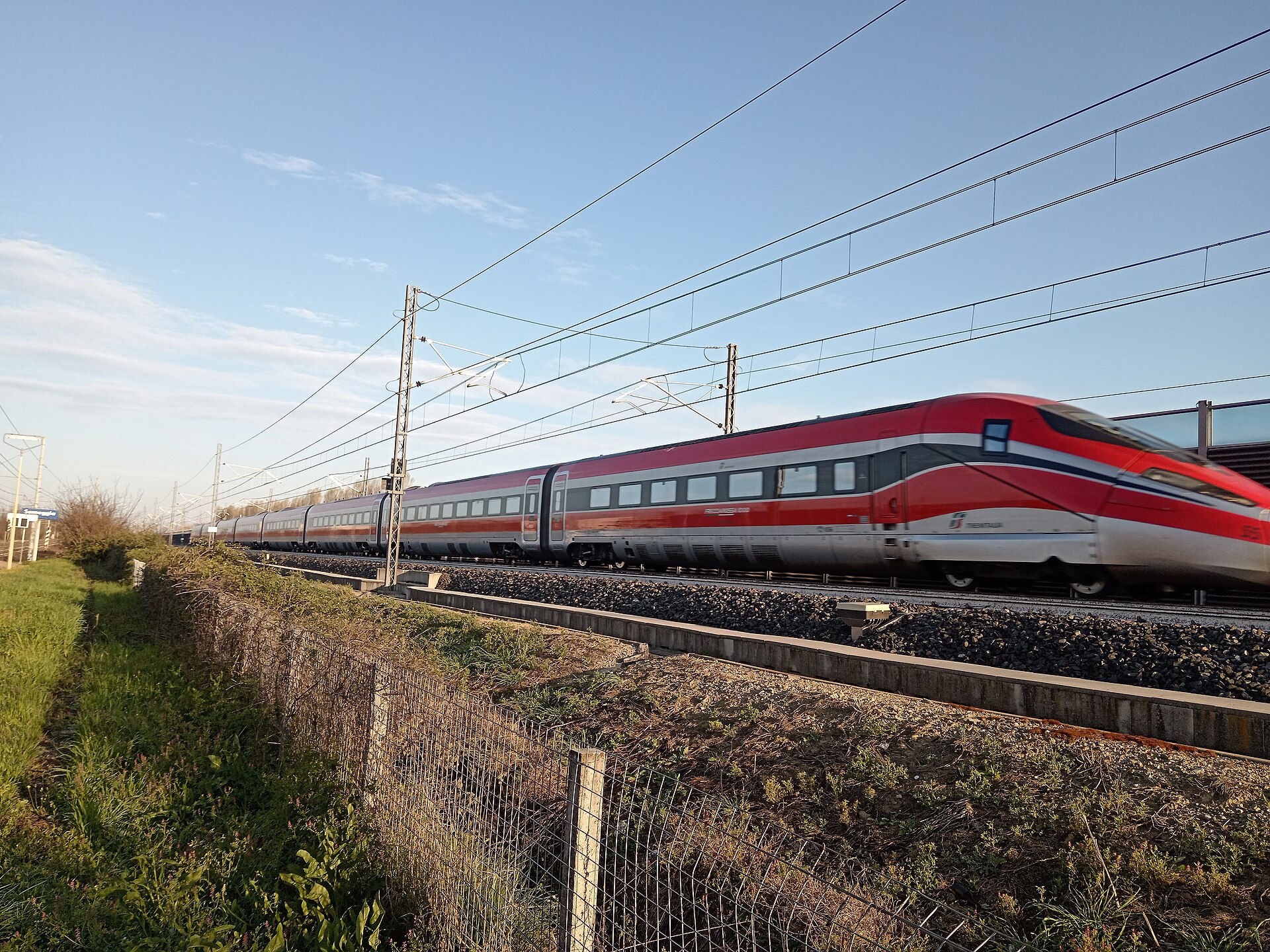
The first time I priced a Rome-to-Florence high-speed ticket, it cost €19.90. The second time, two days before I traveled, the exact same train wanted €68. Same seat, same 90-minute ride, more than triple the price. That gap is the whole story of train fares in Italy, and once you understand it, you stop overpaying.
Quick answer: Italy train prices split in two. High-speed fares are dynamic, like airfare, and run roughly €15-30 booked early or €50-90 walk-up on top routes. Regional trains are fixed-price and cheap (often €4-15), so they never need advance booking. The one rule that saves the most: book high-speed 3-8 weeks ahead.
This guide is for anyone trying to figure out what trains actually cost in Italy and how to pay the lowest honest price. If you want the bigger picture, the complete guide to trains in Italy covers stations, classes, and how the system fits together. Here, we stay laser-focused on money and timing.
Sample Italy train prices on popular routes
Here is a table of realistic fares as of 2026. High-speed prices move constantly, so I’ve given ranges, not single numbers. “Advance” means booked several weeks out into the cheap buckets; “walk-up” means the flexible Base fare you’d pay at the station today. Regional fares are fixed and quoted as a single figure because they genuinely don’t change.
| Route | Advance high-speed (2nd class) | Walk-up high-speed (Base) | Regional / Intercity option |
|---|---|---|---|
| Rome – Florence | ~€20-35 | ~€55-90 | Intercity ~€20-35; no direct regional |
| Florence – Venice | ~€20-40 | ~€55-90 | Intercity ~€25-40 |
| Rome – Naples | ~€15-30 | ~€45-60 | Regionale ~€12-15 (slower) |
| Rome – Venice | ~€30-50 | ~€90-110 | Intercity ~€40-55 |
| Milan – Venice | ~€20-40 | ~€50-75 | Regionale ~€13-25 (much slower) |
| Milan – Rome | ~€30-55 | ~€90-120 | Intercity ~€40-55 (overnight option) |
A few honest caveats. These are second-class (standard) high-speed fares; first class or business runs higher. The very lowest numbers (the €19.90-type fares) exist in limited quantities and sell out, so treat the bottom of each range as “lucky and early,” not guaranteed. And on Rome-Naples or Milan-Venice, the regional train is a real budget play if you have time to spare. More on that trade-off below.
Trenitalia vs Italo: the two operators
Italy has two companies running fast trains, and they compete on the same big routes, which is good news for your wallet.
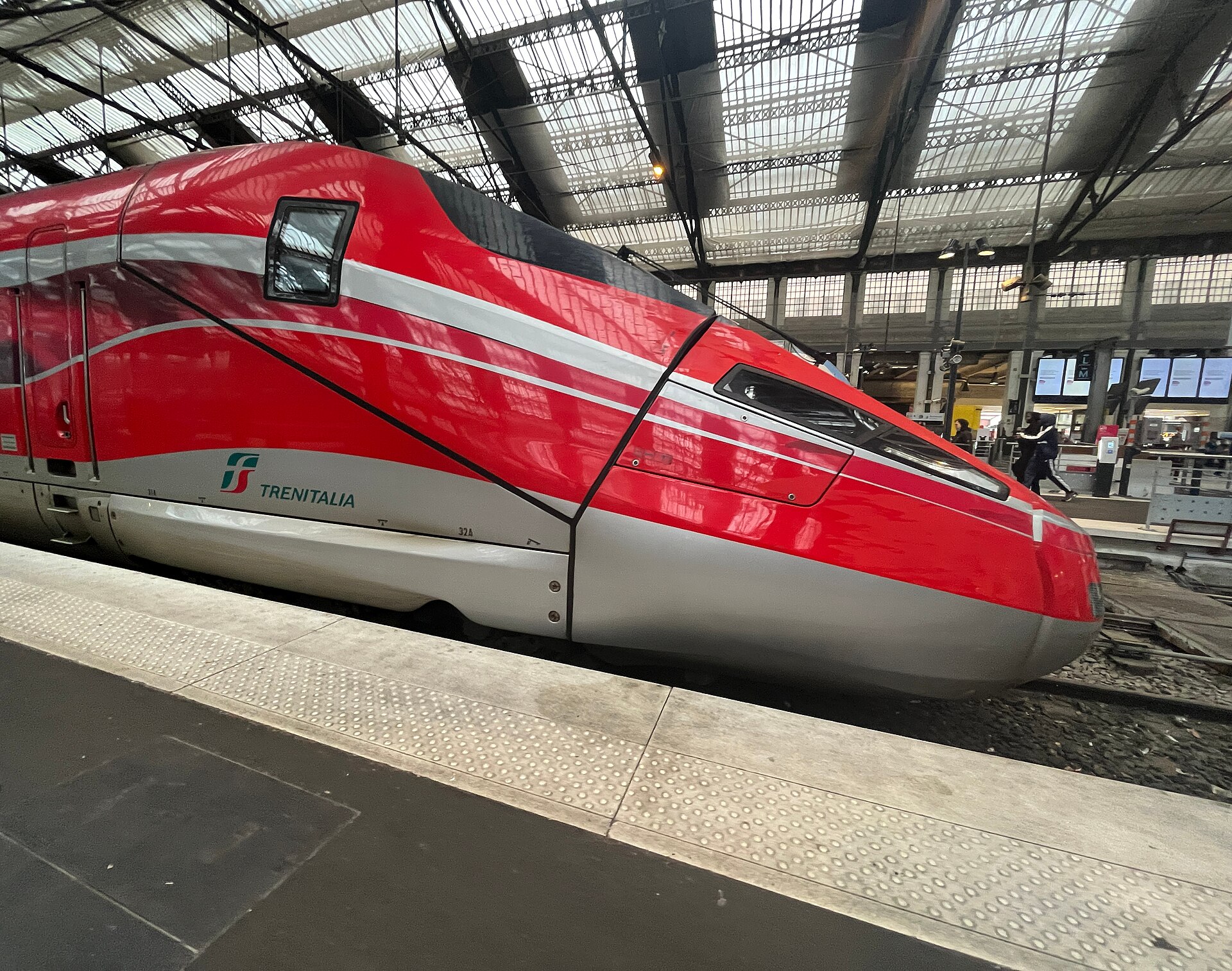
Trenitalia is the state operator and runs everything: high-speed Frecce trains, slower Intercity trains, and the vast network of cheap Regionale trains that reach small towns. If you’re going anywhere off the main spine, you’ll ride Trenitalia by default.
Italo is the private challenger. It runs only high-speed trains on the busy corridors (Milan-Rome-Naples, plus Venice, Florence, Turin, and a handful of others). No regional trains, no tiny towns. But on the routes it serves, it’s often a euro or two cheaper than Trenitalia, and the trains are newer.
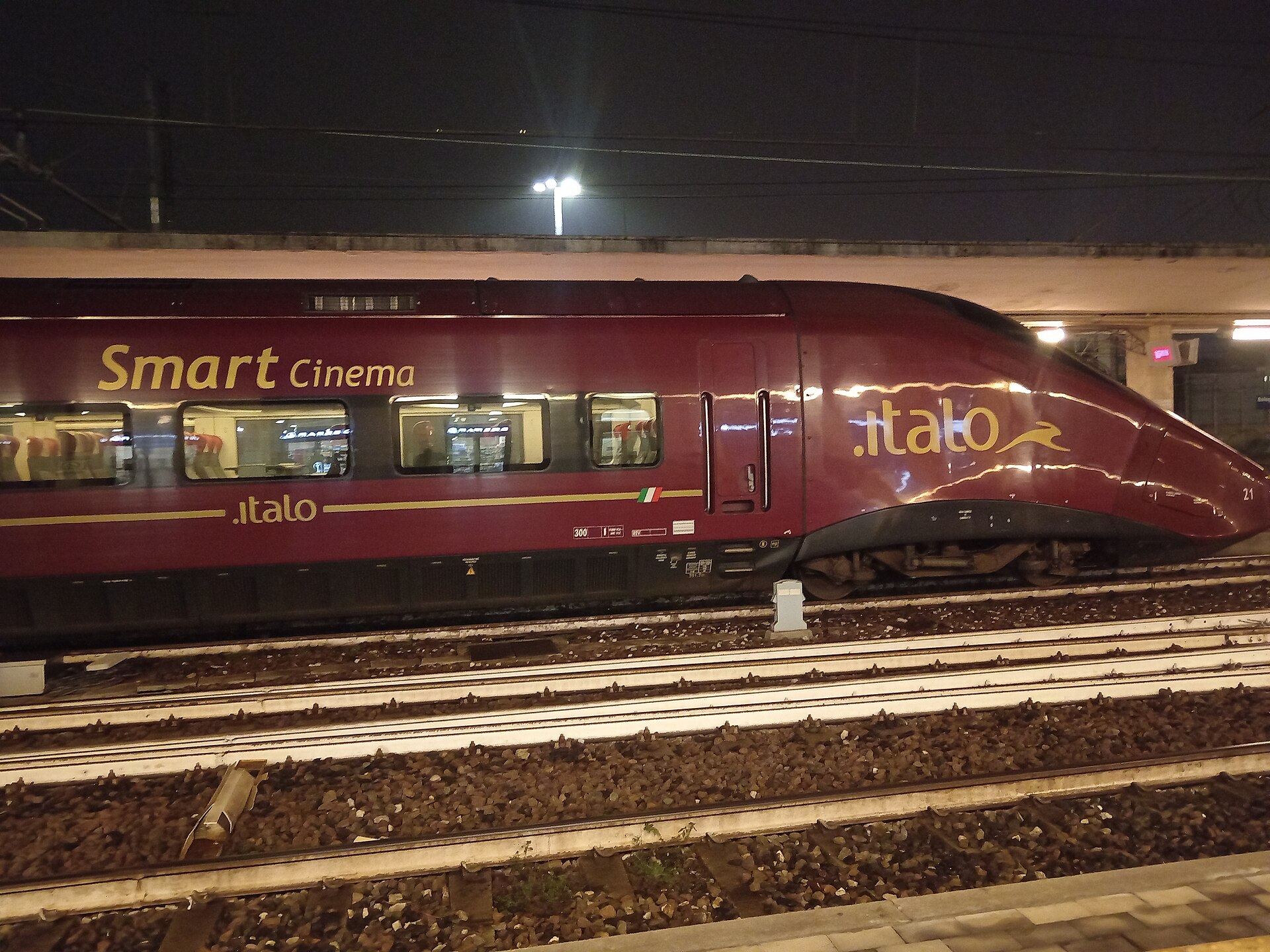
My practical advice: on a major city-to-city hop, check both. They release cheap seats independently, so on any given date one might have €25 left while the other is up at €60. I’ve gone into the head-to-head in detail in Trenitalia vs Italo compared, but for fares alone, the move is simply to price both and book whichever is cheaper for your time slot. For the wider menu of how to get around, the Italy transportation overview puts trains next to buses, ferries, and flights.
Fare tiers explained (the part that saves you money)
This is where most visitors overpay, because the names are confusing. Let me decode them.
Trenitalia high-speed fares
- Base is the full, flexible fare. It’s what you pay walking up on the day. Refundable, changeable as many times as you like before departure (and once up to an hour after). Convenient, expensive.
- Economy is a cheaper advance fare, valid only on the train you booked. No refund, but you can change it before departure if you pay any fare difference. Roughly 40% off Base.
- Super Economy is the cheapest tier, often around 70% off Base. The catch: no changes, no refunds, use it or lose it. This is the fare behind those €19.90 Rome-Florence deals.
There are a couple of niche advance fares too: Speciale Frecce (buy 14+ days ahead, no flexibility) and Insieme (a group fare for 3-5 people). Both are deep-discount, no-flex tickets. If you’re certain of your plans, they can undercut even Super Economy.
Italo classes and fares
Italo layers two things: a fare type (flexibility) and a travel class (comfort).
The fare types are Low Cost (cheapest, changeable only with a 60% surcharge up to 72 hours out), Economy (changeable up to 3 minutes before departure for a 20% fee, 40% refund if you cancel), and Flex (free unlimited changes, 80% refund). For most travelers, Low Cost or Economy is the right call unless your plans are genuinely shaky.
The classes are Smart (standard), Comfort, Prima (first-class-style, wider seats, welcome drink), and Club Executive (premium). Smart is plenty for any journey under a few hours.
Regional fares: one price, no games
Regionale and Regionale Veloce trains use a single fixed fare called Ordinaria. It does not move. A €14 regional ticket costs €14 the same, three months out or thirty seconds before boarding. That single fact reshapes how you should book, which brings us to the most important section.
How dynamic pricing works on high-speed trains
Both Trenitalia and Italo price fast trains like airlines. When a train opens for sale (usually around 120 days before departure, sometimes as little as 30 days right after the June and December timetable changes), the operator drops a limited number of seats into the cheapest bucket. As those sell, the price steps up to the next bucket, then the next.
So the price you see isn’t really about the calendar date, it’s about how many cheap seats are left. A quiet Tuesday mid-morning train booked six weeks out might still have Super Economy seats at €25. A Friday-evening train on the same route, booked the same day, may have burned through every discount seat and sit at €80.
This is why “book early” is a rule of thumb, not a law. Early usually means cheaper because the cheap buckets are still open. But a popular train can sell out its cheap seats fast, while an unpopular one keeps them for ages. Your real job is to grab a cheap bucket before it empties.
When to book trains in Italy (and when not to bother)
Here’s my actual booking calendar, route by route.
Book high-speed 3-8 weeks ahead. For the marquee corridors, Rome-Florence, Rome-Venice, Milan-Rome, this window reliably catches Economy or Super Economy fares. Earlier is fine, but don’t stress about hitting the 120-day mark; the seat buckets matter more than being first.
Book even earlier if your dates are fixed and your train is popular. Traveling on a Friday, a Sunday, around a holiday, or on the most convenient morning departure? Those sell out their cheap seats soonest. If your schedule can’t flex, lock it in as soon as the date loads.
Don’t pre-book regional trains at all. Because the fare is fixed, there’s zero financial reason to commit in advance. Buy a regional ticket on the day, at the machine or in the app, and keep your flexibility. The only exception is a small number of busy regional routes (notably Cinque Terre in summer) where seats are now capped, marked prenotabile; there, buy ahead just to guarantee space, not to save money.
Don’t panic if some trains aren’t showing yet. Trenitalia loads trains in blocks, high-speed first, regional and Intercity later. A “missing” train usually hasn’t been loaded, not cancelled. Wait a few days and check again.
One more reality check: trains in Italy do strike from time to time, and it can scramble your plans. It’s worth knowing how refunds work during disruptions, which I cover in the guide to Italy train strikes.
Regional vs high-speed: when cheap-and-slow wins
Since regional fares are so much lower, it’s tempting to ride them everywhere. Sometimes that’s smart; sometimes you’re trading three hours to save fifteen euros.
Rome to Naples is the classic case. The high-speed train takes about 70 minutes; the regional takes around 2.5-3 hours but costs roughly €12-15 flat. If you booked high-speed late and it’s €55, the regional is a genuine bargain. If you booked high-speed early at €19.90, just take the fast train.
Florence to Venice or Rome to Venice, by contrast, have no quick regional option, you’d change trains multiple times over many hours. There, high-speed or Intercity is the only sensible choice.
My rule: regional trains are for short hops, day trips, and routes where the time penalty is small. For long city-to-city legs, an early-booked high-speed ticket usually wins on value once you count your time. If you’re planning a multi-city loop, the Italy route done entirely by train and the 7-day Italy itinerary both show how to chain these legs efficiently. There’s also a dedicated breakdown of regional trains in Italy if you want the slow-travel details.
Validation rules: the fine you can easily avoid
This trips up first-timers, so read carefully. The rule depends on how you bought the ticket.
Digital and named high-speed tickets: nothing to validate. Your Frecce or Italo ticket is tied to a specific train, seat, and date. Show it on your phone or as a printout when the conductor comes by. Done.
Paper regional tickets bought at a machine or counter: you must validate before boarding. The old system of stamping every ticket is gone, but a paper regional ticket still needs activating. Stick the blank end into one of the green (or green-and-white) validator machines on the way to the platform until it beeps. Skip this and an inspector can fine you, even though you paid, because an un-validated open ticket is treated as unused.
Regional tickets bought in the app or online: these are now tied to a specific departure, so there’s nothing to validate. The validation hassle only applies to old-style paper tickets.
The simple way to never get fined: buy regional tickets in the official Trenitalia app. Digital ticket, specific train, no green machine, no risk.
Refunds and flexibility, tier by tier
Quick reference, because this decides which fare to buy:
- Trenitalia Base: fully refundable and changeable up to departure. Buy this only if your plans are truly uncertain.
- Trenitalia Economy: no refund, but changeable before departure (pay any fare difference). A reasonable middle ground.
- Trenitalia Super Economy / Speciale Frecce / Insieme: no refund, no change. Cheapest, but you’re committed.
- Italo Flex: free changes, 80% refund. The flexible premium.
- Italo Economy: changes for a 20% fee, 40% refund on cancellation.
- Italo Low Cost: changes cost 60% up to 72 hours out; effectively a commitment.
- Regional Ordinaria: change the date free until 23:59 the day before, change the time free until 23:59 on the travel day. Genuinely flexible despite being the cheapest ticket on the network.
The honest takeaway: don’t pay up for flexibility you won’t use. For a fixed sightseeing day, the cheapest no-flex fare is usually the right buy. Italo’s Flex can occasionally cost only a little more than its Low Cost on a quiet train, and it’s then a better deal than a non-refundable ticket, so it’s worth a glance.
Discounts: kids, families, youth, and the railcards
There’s real money here for the right travelers.
Children under 4 ride free on all trains, no ticket needed. Kids under 15 get the child rate on national trains (Frecce and Intercity); on regional trains the child rate applies under 12. Families traveling together should also look for Trenitalia’s family and group promotions, which can beat individual Economy fares for 2+ adults plus kids.
Youth and senior fares exist, but with a twist. Trenitalia’s discounted youth (under 30) and senior (over 60) fares require its CartaFRECCIA railcard, and here’s the candid part: a normal Super Economy fare is often already cheaper than the youth or senior fare. The railcard discounts only pull ahead once the cheap buckets have sold out, and they must be bought at least a day or two in advance. For most visitors on a short trip, skip the card and just book early. If you’re a resident or a frequent traveler, the math can flip.
For families specifically watching every euro across the whole trip, the Italy on a budget guide stacks these rail savings against everything else.
Are rail passes worth it?
Usually not, for a typical visitor doing a few city hops. I want to save you the disappointment of buying one and then discovering the catch.
Interrail and Eurail passes cover all Trenitalia trains, including high-speed, but not Italo. The catch: on Frecce trains, passholders must pay a compulsory seat reservation fee on top of the pass, every leg. So a pass doesn’t make high-speed travel free, it just changes how you pay. Compared with cheap, early-booked Super Economy fares, a pass rarely wins for a standard Rome-Florence-Venice-style trip. Where passes can pay off is heavy, spontaneous, long-distance travel across many countries, or for under-12s who travel free on a pass.
The Trenitalia Pass is the operator’s own version. No reservation fees (a plus), but it covers only long-distance trains, not regional ones, and a Rome-Florence leg burns a whole “journey” the same as a much longer trip. For a few high-speed legs it can work; for short or regional-heavy trips it doesn’t.
My blunt verdict: do the arithmetic before you buy. Price the actual cheap fares for your real itinerary, then compare. For most readers of this guide, booking individual advance tickets beats any pass. The whole question folds into your wider Italy trip costs in detail, and if you’re costing out the trip from scratch, how much a trip to Italy costs puts transport in proportion.
Where to buy without paying markups
You do not need a third-party reseller, and many add a service fee or quietly mark up fares.
Buy direct. Trenitalia tickets on trenitalia.com or the Trenitalia app; Italo tickets on italotreno.com or the Italo app. These are the official channels, the cheapest fares, and zero booking fees. The apps also store digital tickets, so you skip the green validators entirely on regional rides.
Reputable agencies like ItaliaRail or Trainline link into the same Trenitalia system and can be handy if you want one English-language interface, payment in dollars, or simpler navigation. Some charge a small fee, some don’t, but they don’t get you cheaper fares than booking direct, they sell the same seats. The benefit is convenience, not price.
What to avoid: vague resale sites that list “from” prices and tack on fees at checkout, or anyone implying they have special access to cheap tickets. There’s no secret stash. The cheapest fare for your train is whatever’s left in the cheap bucket, and you reach it identically through the official app.
One small tip: set up your account in the official app before you start pricing. When a cheap fare appears, you want to book in seconds, not fumble through registration while the seat slips into the next bucket.
Seat classes: what’s worth paying for
For the budget-minded, the answer is usually “the cheap class.” Second class (standard) on a Frecciarossa, or Smart on an Italo, is comfortable, spacious, and air-conditioned, with plenty of luggage room. You are not roughing it.
First class or business buys you wider seats, more legroom, sometimes a small snack or a glass of prosecco, and quieter carriages. Nice, not necessary, especially on a 90-minute ride. I’ll pay up only when the price gap is small or the journey is long. On a short hop, that money is better spent on dinner.
The exception worth knowing: on busy days, higher classes sometimes keep cheap seats slightly longer than standard, so if standard has sold out of discounts, glance at the next class up before assuming the whole train is expensive.
Final thoughts
Italy’s trains are one of the best deals in European travel, but only if you play the booking game right. Remember the split: high-speed fares reward planning, regional fares reward spontaneity. Book the fast trains a few weeks out into the cheap buckets, buy the slow ones on the day, validate paper regional tickets, and buy direct from the official apps. Do that and you’ll ride the same trains as everyone else for a fraction of what the late-bookers pay. For the full picture of getting around, start with the trains in Italy guide and the broader Italy travel guide, then time your trip with the help of the best time to visit Italy.
Questions travellers ask
How much do trains in Italy cost?
It depends entirely on type and timing. As of 2026, high-speed fares on top routes run roughly €15-30 booked early or €50-90 walk-up, because prices are dynamic. Regional trains are fixed and cheap, often €4-15 for short hops. The single biggest lever on what you pay is how far ahead you book high-speed.
How early should I book trains in Italy?
For high-speed and Intercity, aim for 3-8 weeks ahead on busy routes to catch Economy or Super Economy fares; book even earlier if your dates are fixed or the train is popular. For regional trains, don’t book ahead at all, the fare is fixed, so buy on the day and keep your flexibility. Booking opens up to about 120 days out.
Why are some Italy train tickets so much more expensive than others?
Dynamic pricing. High-speed operators release a limited number of cheap seats per train; as those sell, the price steps up. So the same seat on the same train costs more as departure nears or as demand rises. Regional fares don’t do this, they’re a single fixed price all day, every day.
Do I need to validate my train ticket in Italy?
Only paper regional tickets bought from a machine or counter, which you stamp in the green validators before boarding or risk a fine. High-speed tickets are tied to a specific train and need no validation. App and online regional tickets are also tied to a departure, so nothing to validate. Buying regional tickets in the app sidesteps the whole issue.
Where is the cheapest place to buy Italy train tickets?
Directly from the operators: trenitalia.com or the Trenitalia app, and italotreno.com or the Italo app. They charge no booking fees and offer the lowest fares. Agencies like ItaliaRail or Trainline sell the same seats through the same system, sometimes with a small fee, so they’re about convenience, not lower prices. Avoid resellers that add markups at checkout.
Is a rail pass worth it in Italy?
For most short trips, no. Interrail and Eurail passes still charge compulsory reservation fees on high-speed Frecce trains and don’t cover Italo at all, so cheap advance fares usually win. The Trenitalia Pass skips reservation fees but ignores regional trains and burns a full journey on short legs. Price your real itinerary against actual fares before buying any pass.
Are regional trains in Italy really cheaper than high-speed?
Yes, significantly, because regional fares are fixed and low while high-speed fares float with demand. The trade-off is time: regional trains are slower and stop more. They shine on short hops and day trips, or on routes like Rome-Naples when a late-booked high-speed fare has spiked. For long legs with no quick regional option, high-speed or Intercity is the better value once you count your time.
Do kids travel free on Italian trains?
Children under 4 travel free on all trains with no ticket. Kids under 15 get the child rate on national trains (Frecce and Intercity); under 12 on regional trains. Families should also compare Trenitalia’s family and group fares, which can beat individual advance tickets for two adults plus children. Always check the family option before booking everyone separately.