Italian Train & Transport Guide
Trenitalia vs Italo: Which Is Better for Tourists in Italy?

Choosing between Trenitalia vs Italo shouldn’t take you an afternoon of research. Here’s the short version: if your destination is only reachable by Trenitalia — any smaller city, regional stop, or Intercity route — the choice is made for you. If both operators serve your route, check prices on the day and go with whoever is cheaper. That’s genuinely it for about 80% of trips.
The longer version matters for the other 20%: when you’re crossing Italy on the Rome–Milan corridor, weighing first-class upgrades, or wondering whether your Eurail pass is even valid. That’s what this guide is for.
I’ve ridden both operators more times than I can count — Frecciarossa Executive on a splurge, Italo Smart on a budget dash, and most stops in between. Here’s what I’ve actually found.
Quick Comparison: Trenitalia vs Italo at a Glance
| Factor | Trenitalia (Frecce + Intercity + Regional) | Italo (High-Speed Only) |
|---|---|---|
| Network | National — 300+ cities including rural and regional | ~50 cities; major corridors only |
| Train types | Frecciarossa, Frecciargento, Frecciabianca, Intercity, Regional | AGV (300 km/h) and EVO (250 km/h) |
| Classes | Standard, Premium, Business, Executive | Smart, Prima, Club Executive |
| Lowest advance fares | Around €9.90–€19.90 (Super Economy, as of 2026) | Around €9.90–€19.90 (Low Cost, as of 2026) |
| On-board café | Yes — staffed café-bar on Frecciarossa | No — vending machines only |
| Rail passes (Eurail/Interrail) | Valid — €13 seat reservation required | Not valid |
| Loyalty program | CartaFRECCIA (free to join; 1 point per euro) | Italo Più (free; up to 2 points per euro) |
| Seat configuration (standard) | 2+2 (Standard), 2+1 (Business) | 2+2 forward/backward facing |
| Booking app | Trenitalia app — functional, comprehensive | Italo app — sleek, fewer routes |
| Strike exposure | Higher (state operator — staff strikes affect Trenitalia directly) | Lower (private; less exposed to staff strikes targeting FS Group) |
| Best for | Anyone going beyond main corridors; rail pass holders; families | Budget travelers on major city pairs; solo travelers; modern interiors |
For a deeper look at how Italy’s entire rail network fits together — regional trains, Intercity, night trains — head over to the complete guide to trains in Italy.
Route Coverage: The Single Biggest Difference
This is where the comparison becomes lopsided, and it’s the one thing most articles undersell.
Trenitalia goes everywhere. It runs the Frecciarossa and Frecciargento on the main high-speed spine, yes — but it also operates Intercity trains to mid-sized cities like Bari, Reggio Calabria, Lecce, and Trieste, plus the regional network that fans out to every coastal village, hilltop town, and provincial backwater. If you’re heading from Rome to Orvieto, Florence to Siena (by regional, since no high-speed serves Siena), or anywhere on the Amalfi hinterland, Trenitalia is your only option.
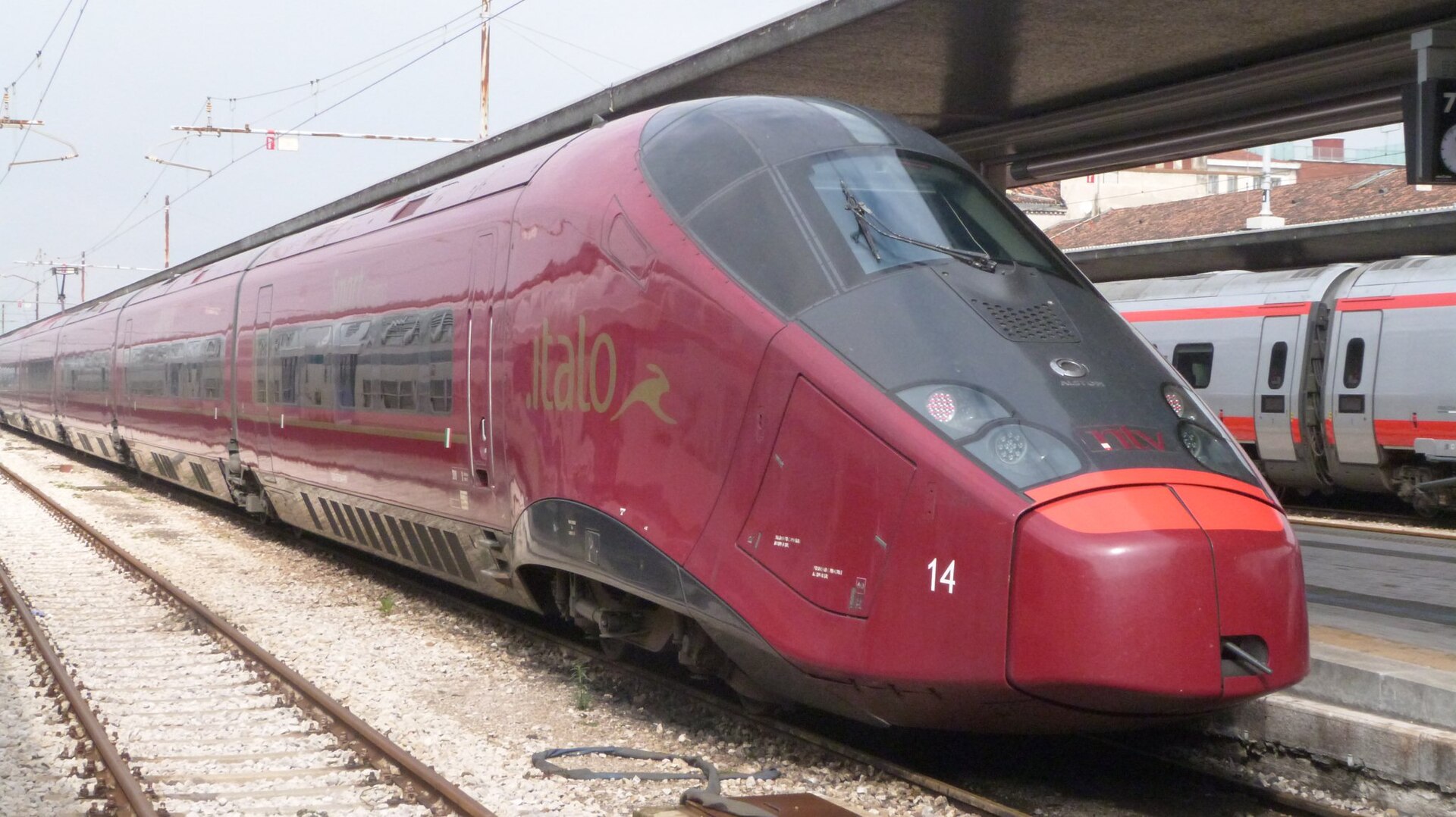
Italo operates on one type of track: the high-speed AV network. Its routes connect Turin, Milan, Venice, Padua, Verona, Brescia, Bologna, Florence, Rome, Naples, Salerno, Bari, Reggio Calabria, and a handful of other stops. That’s a solid list for the classic tourist trail, but it has hard limits. If your trip involves anything off that corridor, Italo simply doesn’t run there.
There’s also a subtler issue with onward connections. Say you arrive on an Italo train in Bologna and need a regional service to Ferrara or Rimini. Those connections are Trenitalia trains, and if your Italo service runs late, Trenitalia will not hold a connection for a competing operator. With Trenitalia, a late Frecce can occasionally connect to a delayed regional on the same network — the system has at least some built-in tolerance for its own trains. That small detail matters if your trip involves a tight transfer.
For route-planning advice on trips that combine high-speed legs with slower trains, the regional trains in Italy guide covers the mechanics in detail.
Prices and How Fares Actually Work
Neither operator publishes flat prices. Both use dynamic yield management, which means a Rome–Milan ticket that costs around €19.90 in January can hit €80 or more on a Friday afternoon in August. The fundamental rule is simple: book early, pay less.
Trenitalia Fare Tiers
Trenitalia’s Frecciarossa fares sit in three main buckets:
- Super Economy — the cheapest, non-refundable, no changes allowed. Prices start around €9.90–€19.90 on popular routes when booked well in advance, as of 2026.
- Economy — one free change permitted; non-refundable (though you can add the “tiRimborso” refund option at checkout for a small fee).
- Base — fully flexible; unlimited changes; 80% refund available. The most expensive tier by a margin.
Trenitalia also runs periodic promos — “Frecciadays” discounting travel on Tuesday, Wednesday, Thursday, and Saturday, and youth/senior offers — which are often listed only on the Italian-language version of the website rather than the English one. If you’re comfortable with a browser translation, it’s worth checking.
Italo Fare Tiers
Italo mirrors this structure:
- Low Cost — one change permitted at 60% of the ticket price; no refund.
- Economy — unlimited changes at 20% charge; 50% refund.
- Flex — unlimited changes at no charge; 80% refund (available as a paid add-on).
Which Is Cheaper?
Honestly, it varies by day. Both operators actively undercut each other on the main corridors — particularly Rome–Milan and Rome–Florence. When one drops a promotional fare, the other typically responds within days. I’ve seen Italo come in €10–€20 cheaper on one morning and Trenitalia beat it the same afternoon on a different departure.
My practical advice: search both sites (or run a quick check on Omio or Trainline which aggregates them) for your specific route and date. Never assume one is always cheaper. Prices as of 2026 are genuinely competitive; the gap between operators is rarely worth booking a worse departure time.
One important note: Eurail and Interrail passes are valid on Trenitalia trains (including Frecciarossa, with a mandatory €13 seat reservation fee). They are not valid on Italo. If you’re traveling Italy on a rail pass, Trenitalia is your only high-speed option.
For broader context on keeping rail costs manageable across a multi-city trip, the Italy travel budget guide has numbers that hold up in 2026.
Comfort and Classes: What You Actually Get
Both operators run clean, modern, air-conditioned trains. The riding experience is comfortable across the board. But the class structures have real differences worth understanding before you upgrade.
Trenitalia Frecciarossa Classes
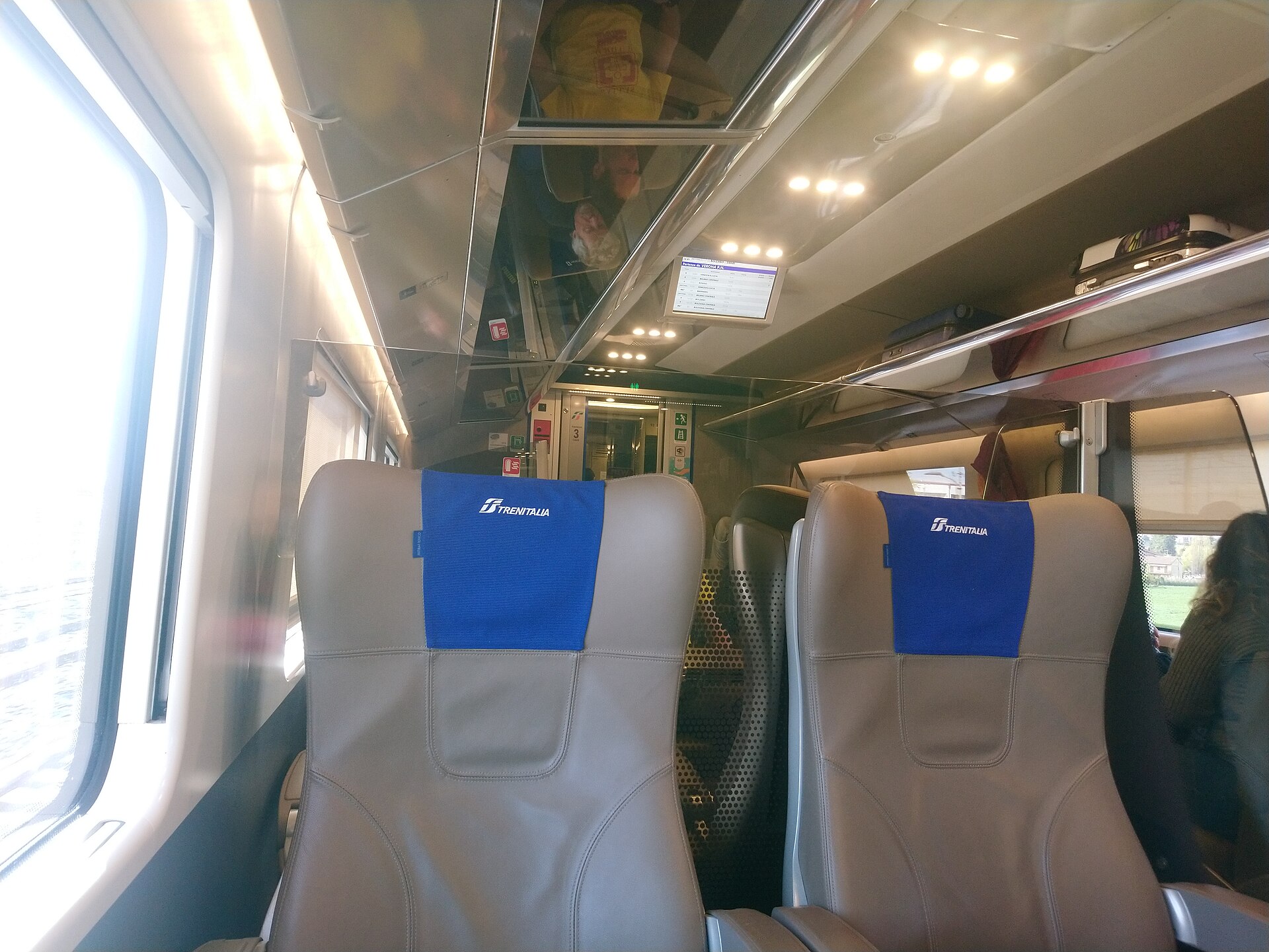
Standard is the baseline — 2+2 seating, cloth or leather depending on the train set, functional and perfectly fine for a 90-minute journey. No complaints.
Premium keeps the same 2+2 layout but adds a welcome drink (water, espresso, or prosecco) and a small snack. Worth a few extra euros if you’re traveling at a meal time and don’t want to queue at the café-bar.
Business steps up significantly: 2+1 seating (the solo seat is a gift for single travelers), lounge access at select stations, and a boxed meal included. If I’m on a 3-hour run and the price difference is under €20, I pick Business every time.
Executive is in a different category entirely. One car per train, just 10 seats, each one a wide rotating recliner in brown leather. Real catering, real quiet. It’s not cheap, but it’s a genuinely special experience for a long journey — say, Turin to Salerno. Book it once, at least.
Italo Classes
Smart is Italo’s standard class. This is where people consistently make the wrong assumption: Smart class on Italo has Poltrona Frau leather seats as standard. That’s the same brand used in Ferrari and Maserati interiors. You get more tactile quality in Smart than in Trenitalia’s Standard, full stop.
The catch is the seat orientation. Italo trains have a fixed 2+2 layout with half the seats facing forward and half facing backward, with some seats in the middle facing each other across a table. You cannot request a forward-facing seat — the app assigns seats automatically and switching is not straightforward. If you get motion-sick facing backwards, this matters.
Prima is Italo’s business class equivalent — lower occupancy, more legroom, and a food service option. I’ve found it comparable to Trenitalia Business in comfort, if slightly less consistent on the catering side.
Club Executive is Italo’s top tier: upgraded catering, access to the Italo Club Lounge at select stations (Naples, Rome, Florence, Milan, Turin, Venice, Bologna), and fast-track boarding where available.
On-Board Food and Drink
Trenitalia wins this one clearly. Frecciarossa trains have a staffed café-bar where you can buy espresso, sandwiches, snacks, and drinks throughout the journey. For anyone who travels with Italian caffeine expectations — meaning you want a real espresso shot, not a pod machine — this matters. Italo has vending machines only (unless you’re in Club Executive). Bring your own coffee or buy at the station before boarding.
Booking: Apps, Websites, and Third-Party Options
Booking Direct
Trenitalia’s website and app handle the full network — regional, Intercity, Frecce — and integrate CartaFRECCIA loyalty points. The English-language site works well for booking high-speed tickets, though some promotional fares appear only on the Italian version. The app is comprehensive but occasionally clunky; the interface has improved substantially over the past few years but still lags behind Italo in terms of polish.
Italo’s website and app are cleaner and more intuitive. The app assigns seats automatically rather than letting you choose, which frustrates some users — particularly on longer journeys where seat orientation matters. Both the website and app accept foreign credit and debit cards with no added surcharges, which is genuinely useful compared to some European rail booking systems.
Third-Party Aggregators
Tools like Omio and Trainline show both operators side by side, which saves time when you’re comparing departures. They may charge a small booking fee (typically €1–€3) but the convenience is often worth it, especially if you’re managing a complex itinerary with multiple operators.
ItaliaRail is worth knowing about — it’s a US-focused booking platform that handles both Trenitalia and Italo tickets with English-language customer service. Slightly pricier than booking direct but useful if you want phone support.
For itinerary logistics — how to sequence cities, how much time to allow between trains — the Italy itinerary by train guide walks through practical multi-city planning.
Reliability and Strikes
High-speed trains in Italy — both Trenitalia’s Frecce and Italo’s services — run on dedicated AV tracks that are physically separate from regional and freight lines. This makes them significantly more reliable than regional services. On normal operating days, both operators achieve punctuality rates above 90% on core corridors, by their own definitions (arrival within 5 minutes of scheduled time).
Strike Exposure
This is a real and often overlooked difference. Italy’s rail workers call strikes several times a year, and the rules matter.
Strikes that specifically target Ferrovie dello Stato (FS) Group employees — the state entity that owns Trenitalia — primarily affect Trenitalia services. Italo, as a private operator with its own staff, is typically unaffected by FS-specific strikes. This has practical consequences: on a day when Trenitalia cancels 40% of its Frecce departures, Italo trains may run normally on the same tracks.
However, when strikes target infrastructure workers at RFI (the track operator, which manages the AV lines used by both operators), both Italo and Trenitalia face disruption. All trains run on the same physical network.
During any certified strike, both operators are legally required to guarantee a minimum level of service on key routes. These guaranteed trains are published 24–48 hours before the strike begins.
For current strike schedules and your rights if a train is cancelled, the Italy train strikes guide keeps updated information.
A Note on Natural Disruptions
Flooding, landslides, and extreme heat can cause line closures that affect both operators equally — particularly on the Florence–Bologna Apennine crossing, which is the most disruption-prone segment of the AV network. Build buffer time into any itinerary that depends on a tight connection.
Stations: Where Each Operator Stops
Both Trenitalia and Italo serve the same major stations in Rome (Termini and Tiburtina), Milan (Centrale), Florence (SMN), Naples (Centrale), Bologna, Venice, and Turin. However, there are nuances.
In Rome, some Italo services stop at Roma Tiburtina rather than Termini. Tiburtina is a legitimate station — metro Line B connects it to the center — but it adds 15–20 minutes compared to Termini. Always check which Rome station your specific departure uses before booking.
In a handful of smaller cities on the AV network, Italo stops at out-of-town high-speed stations rather than the central station. Reggio Emilia AV Mediopadana is the clearest example: it’s a striking Santiago Calatrava-designed station about 4 km north of the town center, connected by shuttle bus. Trenitalia’s regional and Intercity services use the central station. If you’re stopping at a mid-size city, verify whether Italo’s stop is actually convenient before booking on the basis of journey time alone.
Loyalty Programs: Worth Signing Up?
CartaFRECCIA (Trenitalia)
Free to join, open to international visitors — as of 2026 you no longer need an Italian tax code for the digital version. You earn 1 point per euro spent on Frecce, Intercity, Eurocity, and Euronight trains. Points convert to discounts and upgrades from 300 points upward. If you’re spending more than a few days on Italian trains, sign up before your first Frecciarossa ticket.
Italo Più
Also free, also open to foreigners. You earn up to 2 points per euro spent on Italo tickets. New members receive 500 welcome points on sign-up (worth around €5 off a future journey, through October 2026 per current program terms). Higher tiers unlock lounge access, seat upgrades, and free seat selection — the last of which is particularly useful given that standard booking assigns seats automatically.
For a trip of one or two weeks, neither program will transform your costs, but both are free and the points accumulate. If you’re returning to Italy regularly, CartaFRECCIA is the more broadly useful card given Trenitalia’s larger network.
Which Should You Pick? Route-by-Route Verdicts
Pick Trenitalia when…
- Your destination isn’t on Italo’s high-speed corridor (any regional or Intercity stop, full stop)
- You’re traveling with a Eurail or Interrail pass
- You want a staffed café-bar on board
- Your trip involves a tight connection to a regional service — same-operator connections are more forgiving
- You want the widest choice of departure times, especially on less-traveled routes
- You’re going to smaller cities: Siena, Orvieto, Lecce, Matera area, Cinque Terre villages, Amalfi coast connections
- You have a family with children who benefit from the 2+2 face-to-face table configuration
Pick Italo when…
- You’re moving between the major city pairs: Rome–Milan, Rome–Florence, Milan–Venice, Rome–Naples
- You’ve checked prices on both sites and Italo is cheaper (common on advance bookings)
- You prefer the leather-seat upgrade in standard class without paying for a higher tier
- You’re a solo traveler who prefers not to face a stranger across a table
- You’re concerned about Trenitalia-specific strike days
- You want a slightly sleeker booking app experience
Either works fine when…
- You’re doing Rome–Florence or Rome–Naples and want the fastest journey (both operators run comparable times)
- You’re in Business or first class equivalents — quality at that level is close between the two
- You’re traveling during off-peak hours with flexible timing
For itinerary ideas that put these trains into context, the Italy itineraries guide and the Florence and Tuscany travel guide have practical routing you can adapt.
Final Thoughts
The Trenitalia vs Italo question is genuinely less fraught than the internet makes it seem. Italy has two competitive high-speed operators, both running modern trains on the same tracks to the same major cities. That competition is good for you: it keeps fares lower and service standards higher than they would be with a monopoly.
The practical hierarchy is this: check whether Italo even serves your route first — if it doesn’t, Trenitalia it is. If both operators serve you, compare prices on the day for your specific departure. If prices are within a few euros, Trenitalia gives you the café-bar and a wider safety net for onward connections. If Italo is meaningfully cheaper and you’re traveling point-to-point on the main corridor, take Italo.
The trains themselves are fine on both sides. The leather in Italo Smart is a genuine luxury touch that Trenitalia Standard doesn’t match. The staffed café on Frecciarossa is something Italo doesn’t offer. But neither of these differences should drive a booking decision when there’s a €20 price gap in front of you.
Italy’s high-speed network is one of the best ways to see the country. Rome to Florence in 90 minutes. Milan to Venice in under three hours. Naples to Rome in just over an hour. Use it freely, book early, and don’t overthink the operator.
For the full picture on planning a train-based trip across the country, the Italy transportation guide ties everything together — from airport arrivals to island ferries and everything on rails in between. And if you’re building your itinerary from scratch, the Italy travel guide is a good place to start.
Questions travellers ask
Is Italo or Trenitalia better for first-time visitors to Italy?
For a first trip, Trenitalia is the safer default. Its network covers far more ground, its regional connections are seamless within the same operator, and its Frecciarossa trains are exactly what most people picture when they imagine an Italian high-speed train. Italo is excellent, but its limited network means first-timers often need Trenitalia anyway for at least part of their journey. Start with Trenitalia; add Italo when it’s cheaper on a specific leg.
Can I use a Eurail or Interrail pass on Italo trains?
No. Eurail and Interrail passes are not valid on Italo. They are valid on all Trenitalia services, including Frecciarossa, but you’ll need to pay a mandatory seat reservation fee of around €13 per high-speed journey, as of 2026. Regional and Intercity Trenitalia trains have lower or no reservation fees. If a rail pass is central to your Italy trip, Trenitalia is your high-speed operator by default.
Which is more punctual — Frecciarossa or Italo?
On normal operating days, both are reliably punctual on the high-speed network, typically arriving within 5 minutes of schedule more than 90% of the time. Some consumer surveys have found Italo slightly more punctual than Frecciarossa on comparable corridors — one Altroconsumo study found Italo on time in 80% of cases vs. a lower figure for Frecciarossa on the same routes. In practice, the difference is marginal for most travelers. The more meaningful distinction is strike exposure: Italo is generally less affected by strikes targeting FS Group staff.
Are there overnight trains in Italy?
Yes, but only on Trenitalia. The Intercity Notte (night train) is Italy’s overnight rail option, running routes like Rome–Palermo (with a ferry crossing of the Strait of Messina), Rome–Reggio Calabria, and Milan–Naples. Italo has no overnight service. If an overnight journey is part of your plan, Trenitalia is your operator. Details are in the trains in Italy guide.
How far in advance should I book Italian high-speed trains?
Both operators release tickets around 4 months in advance, and the lowest promotional fares go first. For popular routes in peak season (June–August, Easter, Christmas), booking 2–3 months ahead can save €30–€60 compared to buying a week out. For off-peak travel (November–March outside holidays), decent fares are often available 2–3 weeks out. The key rule is that prices on both operators rise as departure approaches and inventory fills — book when you know your dates.
Do I need to print my ticket or can I use my phone?
Both operators support fully digital tickets via their respective apps or by saving a PDF to your phone. Conductors scan QR codes onboard. You do not need to print anything. For regional Trenitalia trains purchased as paper tickets at machines, you must validate (stamp) the ticket before boarding — but for high-speed Frecciarossa and Italo bookings made via app or website, validation is built into the booking and no separate stamp is needed.
Is the food on Italian trains any good?
On Frecciarossa, the café-bar car serves proper espresso, cornetti, panini, and packaged snacks. The espresso is genuinely decent. Italo has vending machines only in standard and business class — Club Executive passengers get catering included. My consistent advice: eat a real breakfast or lunch before boarding either train, buy an espresso at the station bar (usually better and cheaper than on-train prices), and treat the journey as transport, not dining. The stations of Rome, Milan, and Florence all have good food options in the terminal concourse.
What about the Rome tourism and Florence sightseeing — does the train choice matter?
Not directly — both Italo and Trenitalia serve Rome and Florence’s main stations (Termini and SMN respectively). What matters more is planning your city time well. For Rome, the Rome tourism guide covers neighborhoods, logistics, and how to sequence visits. For Florence and the wider region, the Florence and Tuscany guide has practical detail on day trips that may require regional Trenitalia trains rather than high-speed services.