Italian Train & Transport Guide
Trains in Italy: A Complete Guide for First-Time Visitors

How Trains Work in Italy — and Why They Are the Best Way to Travel
Trains in Italy are the single best way to move between cities. I say this without qualification. You step onto a Frecciarossa in Rome, settle into a comfortable seat, and you are standing in the center of Florence before your espresso goes cold — about 90 minutes, city heart to city heart, with no car hire, no toll roads, no parking hunt on the other end.
The rail network covers the entire peninsula. From Turin in the northwest to the tip of Calabria in the south, from Venice on the Adriatic to Genoa on the Ligurian coast, trains connect them all. The system is layered — fast intercity trains on the main spine, slower regional trains threading out to smaller towns — and once you understand those layers, getting around Italy by train is genuinely straightforward.
There is one rule that catches first-time visitors off guard: regional train tickets purchased as paper tickets must be validated in the machine on the platform before you board. High-speed trains do not need this. We will come back to it in detail. But hold it in your mind now, because the fine for forgetting is real and the inspectors are not sympathetic.
This guide covers everything a first-time visitor needs: the types of trains and when to use each, the two main operators, how to buy tickets, how to read the departures board, what to do in the carriage, seat classes, luggage, and the most common routes with realistic times. It is the overview. Where I point you toward a deeper sibling guide, those links will take you there.
If you are still shaping your overall trip, our Italy travel guide is the right starting point before you come back here.
The Three Types of Italian Train — At a Glance
The Italian network divides cleanly into three tiers. The tier that matters for your journey depends entirely on where you are going.
| Train type | Speed / style | Typical use | Book ahead? |
|---|---|---|---|
| Le Frecce (Frecciarossa, Frecciargento, Frecciabianca) | Up to 300 km/h; reserved seating | Rome–Florence–Milan–Venice–Naples spine | Yes — weeks to months ahead for lowest fares |
| Italo | Up to 360 km/h; reserved seating | Same high-speed spine, competing with Frecce | Yes — same logic as Frecce |
| Intercity (IC) | 150–200 km/h; reserved seating | Major and secondary cities off the fast spine | Yes, though less critical |
| Regionale / Regionale Veloce | Slower; no reservation | Smaller towns, coastal routes, rural areas | Usually not needed — walk-up is fine |
Book the fast trains early. Walk up for the regional ones. That is the whole strategy in one sentence.
Le Frecce: Italy’s High-Speed Flagship
Le Frecce — “the arrows” — are Trenitalia’s high-speed services, and they are the trains that most visitors picture when they think about Italy train travel. The name covers three sub-types:
Frecciarossa (“Red Arrow”) is the fastest, reaching up to 300 km/h. It runs the main north-south corridor: Turin–Milan–Bologna–Florence–Rome–Naples–Salerno, with branches to Venice and Reggio Calabria. This is the train you want for any of the classic city hops. Our northern Italy itinerary is built around that spine.
Frecciargento (“Silver Arrow”) uses tilting technology that lets it run at high speed on conventional tracks as well as dedicated high-speed lines. Useful if your destination sits slightly off the main spine — it serves routes like Rome–Venice direct and Rome–Bari.
Frecciabianca (“White Arrow”) is the slowest of the three, running on conventional tracks at around 200 km/h. You are less likely to book one deliberately; it simply fills gaps in the network that the Frecciarossa does not cover.
All Frecce trains have reserved seating. Your carriage and seat number are printed on your ticket. You do not need to validate. Just board, find your seat, and show the QR code on your phone when the conductor comes through.
Italo: The Private Competitor
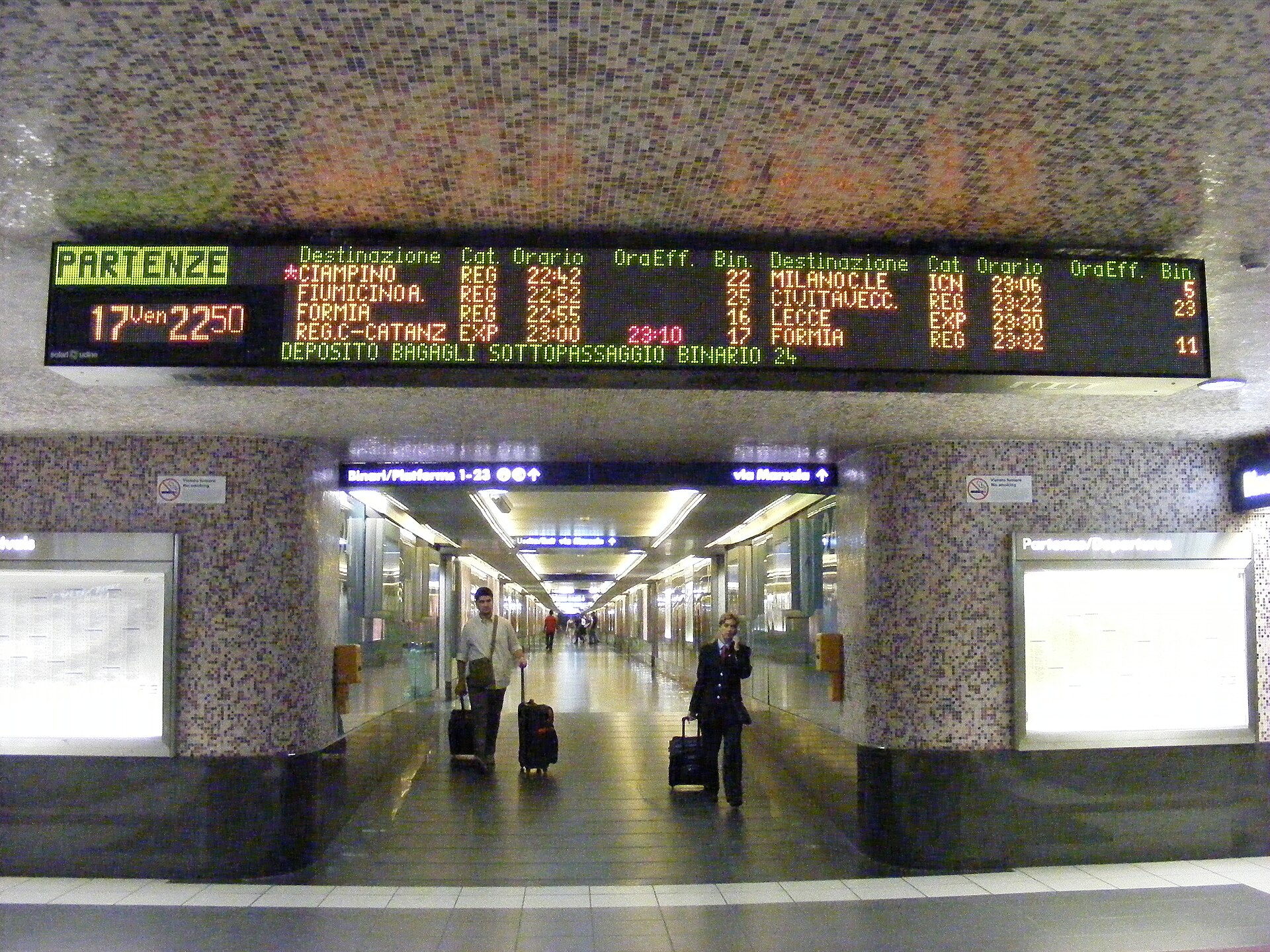
Italo entered the high-speed market in 2012 and now competes directly with Trenitalia on the main spine: Turin–Milan–Bologna–Florence–Rome–Naples, plus Venice and Salerno branches.
The trains are modern, the onboard wifi is solid, and Italo is often cheaper than Trenitalia on the same route — especially midweek or for bookings made several weeks out. When both operators serve your route, check both before buying. The savings can be substantial on a trip covering multiple cities.
The practical difference: Italo operates only high-speed routes. If you need a regional train, Intercity, or anything off the main spine, that will be Trenitalia. For the head-to-head comparison — fares, cancellation policies, classes, apps — see our dedicated Trenitalia vs Italo guide.
Intercity Trains
Intercity (IC) trains bridge the gap between high-speed and regional services. They are slower than the Frecce, stop more frequently, and serve cities that the high-speed line does not reach directly — places like Genoa, Pescara, Reggio Calabria, and some cross-regional routes.
Seat reservations are included in the ticket price. No separate reservation needed. They are a sensible choice when the Frecciarossa does not serve your exact route, or when the price difference is large enough to justify a longer journey time.
Regional Trains: The Workhorse of Smaller-Town Italy
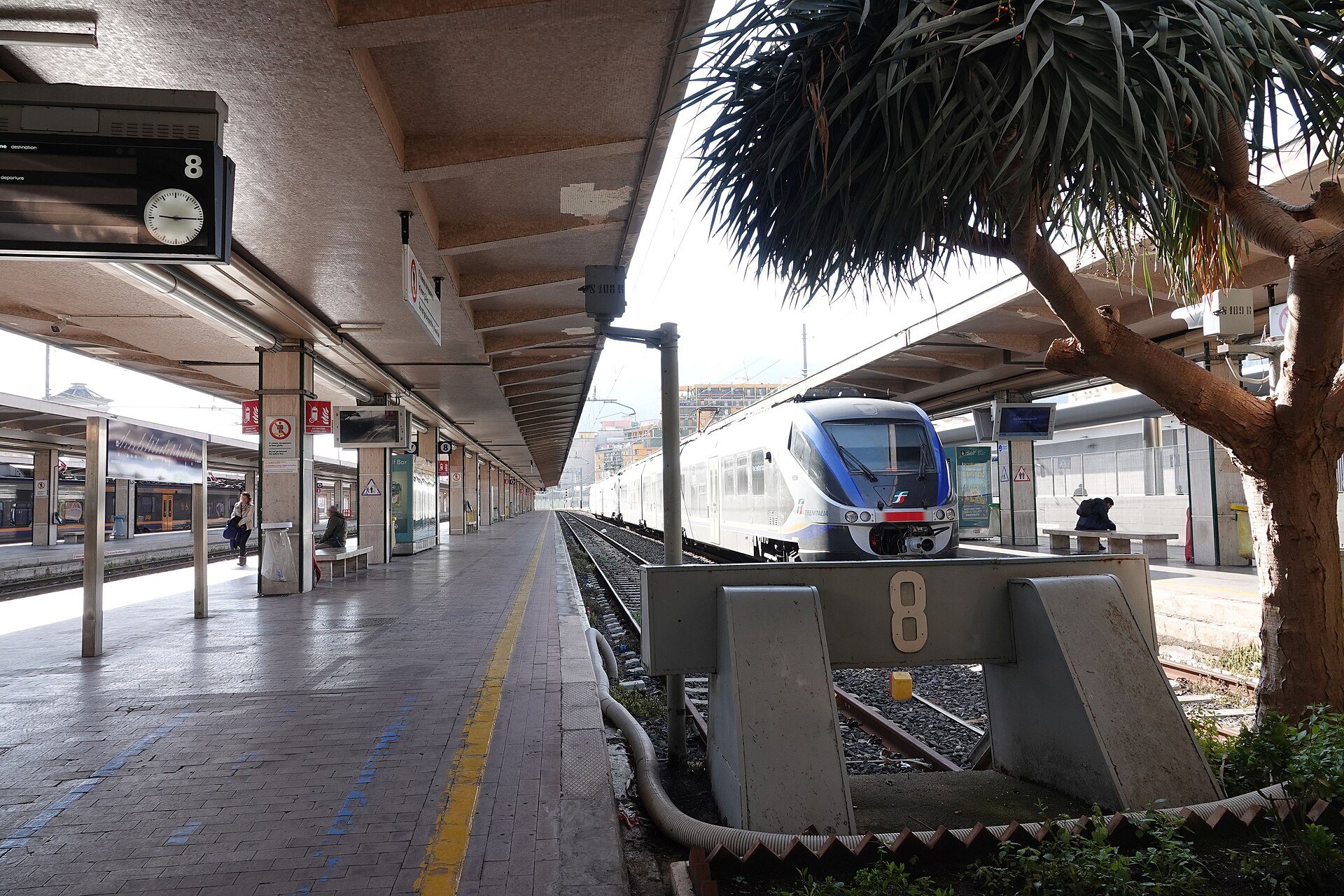
Regionale and Regionale Veloce trains are the backbone of travel beyond the big cities. No reservation required — just buy a ticket and get on any train going your way within the ticket’s validity window.
These are the trains that take you from Naples to Sorrento, from La Spezia into Cinque Terre, from Florence out to Siena or Arezzo, from Rome down to the coast. They are slower, they stop often, and they are essential for seeing Italy beyond the handful of cities on the fast spine.
The one rule you must remember: if you buy a physical paper ticket at a station for a regional train and it does not specify a departure time, you must validate it before boarding. Find the yellow or green validation machines on the platform concourse, insert the ticket, and it stamps the date and time. Do this without fail. The fine for travelling on an unvalidated ticket is steep — typically €50 and up — and claiming ignorance does not help.
Regional tickets purchased online with a specific departure time are pre-validated. Regional tickets bought via the Trenitalia app do not need stamping. The rule applies specifically to undated paper tickets purchased at the machine or window. For a full breakdown of validation rules, fines, and what to do if you make a mistake, our regional trains in Italy guide covers it exhaustively.
How to Buy Italy Train Tickets
You have several options. Each suits a different situation.
The Official Trenitalia and Italo Websites and Apps
Buying direct gives you access to the full range of fares and the most straightforward refund and exchange process. The Trenitalia app (iOS and Android) is reliable and shows platform information before the station boards update — a small but useful edge when your train is about to leave.
One honest caveat: both Trenitalia’s website and Italo’s site can be fiddly with non-Italian payment cards. If you hit a payment wall, try a different card or switch to a third-party platform.
Book at trenitalia.com or italotreno.com.
Third-Party Booking Platforms
Omio and Trainline are the two most widely used aggregators for Italy train tickets. Both show Trenitalia and Italo options side by side, accept international cards reliably, and display schedules in English. There is usually a small booking fee, but for most visitors the simplicity is worth it. If you are combining trains with a bus leg or a ferry crossing, Omio in particular presents all options in a single search.
Station Ticket Machines
Every major Italian station has self-service ticket machines with English-language menus. They accept cards and cash, and they are perfectly adequate for same-day regional journeys. For high-speed trains, buying at the machine the same day means you are paying whatever the machine gives you — which is usually more than an early online booking.
Ticket Windows
The staffed ticket office (biglietteria) at larger stations can handle complex bookings, group tickets, and situations where you need a human. Queues can be long. If you have a specific problem to solve, budget time.
Understanding Fare Types
Italian trains use yield pricing, the same logic as airlines. The earlier you book, the cheaper the ticket. Fares open as early as four months before departure on high-speed routes.
Trenitalia high-speed fare structure:
- Super Economy / Economy: Non-refundable, non-changeable. The cheapest fares on any given train. Target these if your dates are confirmed and your flexibility is zero.
- Base: Allows changes before departure for a fee, with partial refund options. Costs more but protects you if plans might shift.
- Flex: Fully flexible — change or cancel before departure for a full refund. Worth it for the final leg of a trip where an early departure might mean missing a connection.
Italo fare structure:
Italo uses different names — Economy, Flex, and Prima — but the same underlying logic applies. Economy fares are the cheapest and least flexible; Prima fares carry full flexibility and the best onboard service.
Regional trains:
Regional tickets use a fixed, flat pricing structure. No advance-booking discount and no penalty for last-minute purchase. The price is the same whether you buy a week out or five minutes before the train leaves.
At the Station: Reading the Board and Finding Your Platform
The Departure Board (Tabellone)
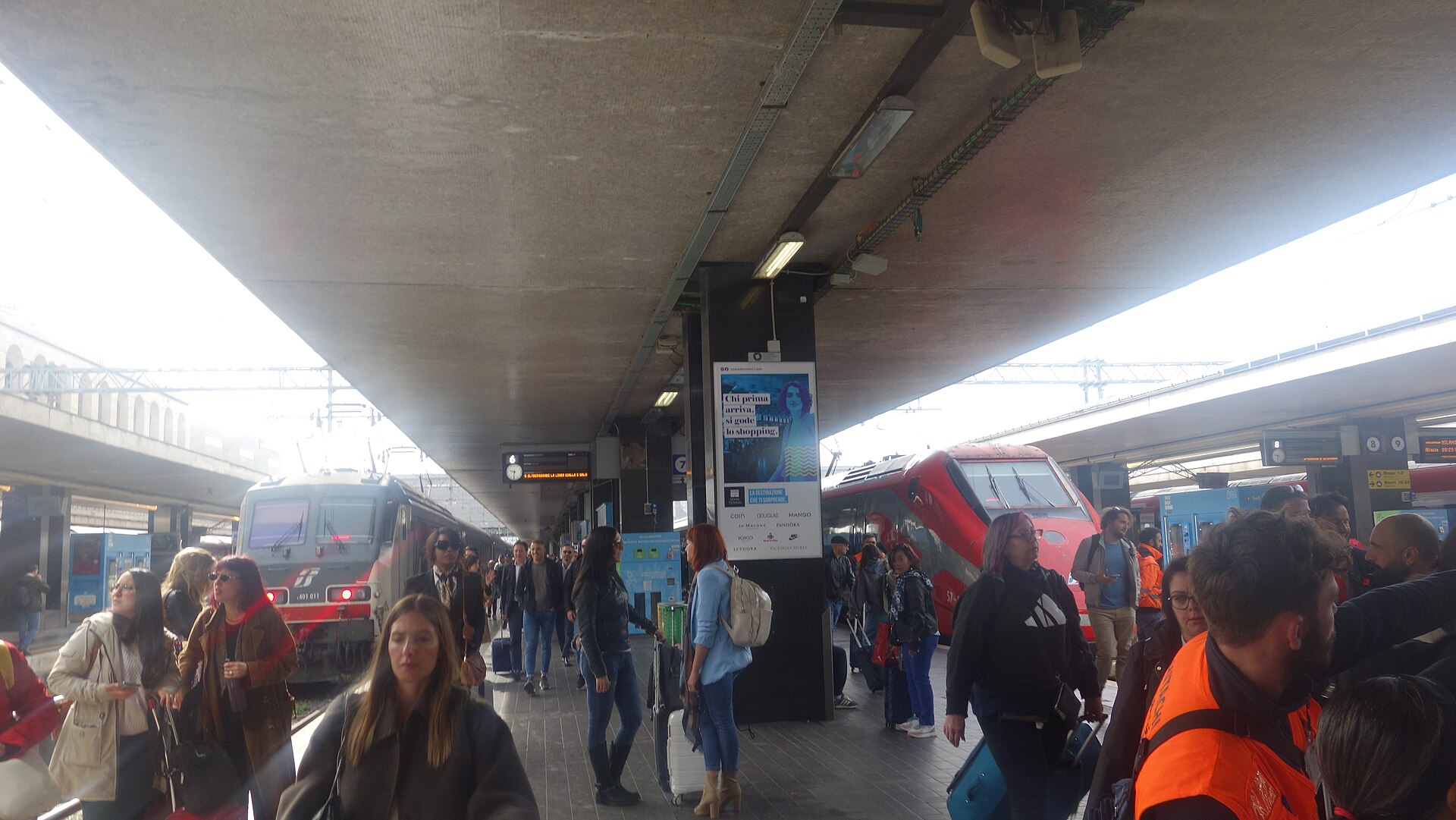
Every Italian station has a large departure board called the tabellone. It lists trains by departure time, showing the operator, train number, final destination, intermediate stops, and the platform (binario).
There is one thing that catches first-timers every time: the platform number often does not appear until 10 to 15 minutes before the train departs. The board may show your train for hours before the binario column populates. Do not camp on a random platform. Watch the board. When the binario appears, move.
Reading the Board
- Partenze = Departures. Arrivi = Arrivals. You want partenze.
- The destination shown is the final stop on that train’s route — not necessarily your stop. Look for trains that list your station as an intermediate stop.
- Ritardo means delay, followed by how many minutes.
- Italian city names differ from their English versions. Roma = Rome. Firenze = Florence. Venezia = Venice. Napoli = Naples. Milano = Milan. Torino = Turin. Genova = Genoa.
Finding Your Carriage
On Frecciarossa and Italo trains, your ticket shows a carriage number (e.g., Carrozza 5) and a seat number. Each platform has position markers showing where each carriage will stop. Find your carriage marker and stand near it before the train pulls in — high-speed trains have limited dwell time and the platform fills up fast.
On regional trains, carriages are not reserved. Get on any door and take any free seat.
Luggage Storage at Stations
Major stations — Roma Termini, Firenze SMN, Venezia Santa Lucia, Milano Centrale, Napoli Centrale — all have a deposito bagagli (left luggage) for a few euro per bag. Useful if you arrive before check-in or want a final afternoon in the city after checkout. Hours vary by station.
Seat Classes and What They Actually Mean
On Frecciarossa
The Frecciarossa has four classes. From cheapest to most expensive:
Standard: A 2+2 seat layout (four seats across the aisle). Air conditioning, free WiFi, USB charging points, and access to the dining car. Perfectly comfortable for most journeys. This is what the majority of visitors book.
Premium: Same 2+2 layout as Standard but with leather seats, a welcome drink (coffee, water, or prosecco), and a small snack. A modest step up — worth considering if you are doing a long journey and want a low-effort treat.
Business: A 2+1 layout (three seats across the aisle). Noticeably more space, a quiet zone (Area Silenzio), a meal service on longer routes, and a generally calmer atmosphere. Worth the premium on journeys over two hours, especially for solo travelers who prefer not to sit beside anyone.
Executive: Typically one car per train, with only about ten seats. Extraordinarily spacious. Includes a complimentary meal on most routes and alcoholic drinks. This is the Italian equivalent of business-class flying — priced accordingly, and worth it if you are celebrating something.
On Italo
Italo offers three classes: Smart (equivalent to Standard), Prima (equivalent to Business/Executive), and Club Executive on select services. Smart is the right choice for most visitors.
On Intercity and Regional Trains
Intercity trains have First and Second class. The practical difference is modest — more legroom and quieter seating in First class. Regional trains are standard class throughout with unreserved seating.
Luggage on Italian Trains
There are no luggage fees and no weight limits on Italian trains. You carry your bags yourself and stow them on the overhead racks or in the dedicated luggage area at the end of each carriage. High-speed trains have proper end-of-carriage luggage bays that fit full-size suitcases without drama.
Regional trains have overhead racks only. If you are traveling with large cases, they will fit, but you may need to manoeuvre around other passengers. The narrower the train, the more this matters.
There is no baggage check-in service anywhere on the Italian network. Everything travels with you.
A practical note on luggage size: the entire logic of Italian train travel — nipping between cities, using regional trains for day trips, moving through historic town centers on foot — works best with bags you can carry comfortably. If you can manage with a medium-sized case or a large backpack, your trip will be measurably easier.
Common Routes and Realistic Journey Times
All times below are for the fastest high-speed option, as of 2026. Check both Trenitalia and Italo for each route — prices fluctuate with demand and time of booking. Fares are broadly indicative based on typical ranges as of 2026; always verify on the official sites before booking.
| Route | Fastest journey time | Approx. fare range (2026) |
|---|---|---|
| Rome → Florence | ~1 hr 30 min | from around €19–€55 |
| Rome → Milan | ~2 hr 55 min | from around €30–€100 |
| Rome → Naples | ~1 hr 10 min | from around €20–€55 |
| Florence → Venice | ~2 hr 00 min | from around €20–€70 |
| Florence → Milan | ~1 hr 45 min | from around €20–€65 |
| Milan → Venice | ~2 hr 30 min | from around €15–€60 |
| Rome → Venice | ~3 hr 45 min | from around €30–€100 |
| Milan → Turin | ~1 hr 00 min | from around €10–€40 |
When to pre-book vs walk up: Pre-book high-speed routes as early as you can if your dates are fixed — Super Economy fares disappear as departure approaches and the same journey can cost three times as much last minute. Regional trains do not follow this logic. The price is flat, the trains run frequently, and walking up to the machine is perfectly fine.
For route ideas that build a coherent itinerary around the train network, see Italy itinerary by train and our broader Italy itineraries guide.
Rail Passes: Are They Worth It in Italy?
For most visitors doing an Italy-only trip covering two to four cities, individual point-to-point tickets bought in advance will nearly always be cheaper than a rail pass. The advance pricing system rewards early bookers significantly, and a rail pass cannot capture those discounts.
Where a rail pass can make sense: multi-country European trips with a fluid itinerary, or situations where you genuinely cannot commit to fixed departure times. Note that high-speed trains in Italy require a paid seat reservation on top of any rail pass — that additional cost chips away at the pass’s value further.
A Note on Train Strikes
Italy has train strikes (scioperi ferroviari), and they happen more often than in most northern European countries. Operators are legally required to run a minimum service during strikes, so you are rarely completely stranded. But delays and cancellations are real and worth knowing about before you travel.
Check for planned strike action on the Trenitalia and Italo websites before any journey, especially on a Friday or the day after a public holiday. Our Italy train strikes guide covers what to expect, what your compensation rights are, and how to stay informed in real time.
How Italian Train Travel Fits Into Your Wider Transport Plan
The train network is excellent between cities but thins out in rural areas. Hill towns in Umbria, farmhouses in the Tuscan countryside, villages on the Amalfi Coast — for the last stretch to places like these you will need a car or a local bus.
The south and the islands also have rail networks, but they are slower and less frequent than in the north. A car gives you far more freedom in Puglia, Calabria, Sicily, and Sardinia. For a full picture of your options — trains, buses, ferries, driving — our overview of transport in Italy covers them all. And if driving is part of your plan, our driving in Italy guide explains ZTL zones, toll roads, and everything else you need to know before you get behind the wheel.
For broader trip planning, the main Italy planning guide and common Italy travel mistakes are both worth reading before you finalize anything. And if Rome is your gateway, Rome tourism covers the city’s own transport in detail.
Final Thoughts
The Italian rail network rewards those who understand it. Book the fast trains early, walk up to the regional ones, and memorize that one validation rule. Do those three things and the trains will transform your trip — faster than driving, cheaper than flying for most inter-city hops, and with the kind of view from the window that reminds you why you came to Italy in the first place.
For the full picture of getting around Italy — including every mode of transport and how they fit together — start at the Italy transportation guide. For building a trip specifically shaped around the rail network, Italy itinerary by train takes it from there.
Questions travellers ask
What is the difference between Trenitalia and Italo?
Trenitalia is the state-owned operator running the vast majority of Italy’s trains — high-speed Frecce, Intercity, and all regional services. Italo is a private competitor running high-speed trains only on the main city routes. Where both operators serve the same route, it is always worth checking both: Italo is often cheaper, especially midweek or with early booking. For a full side-by-side comparison, see Trenitalia vs Italo.
Do I need to validate my Italy train ticket?
Only for regional train tickets that are undated physical paper tickets purchased at a station machine or window. High-speed (Frecce and Italo) and Intercity tickets are ticketless — show the QR code on your phone to the conductor. Regional tickets bought online with a specific departure time are pre-validated. The rule applies specifically to physical, undated regional tickets. Forgetting to validate can result in a fine of €50 or more. See regional trains in Italy for the full validation detail.
How early should I book Italy train tickets?
For high-speed routes, book as early as you can — ideally four to six weeks out, but the cheapest Super Economy fares can appear up to four months before departure. The closer you get to the travel date, the more you pay. For regional trains, booking ahead makes no difference to price; just buy on the day.
Can I travel around Italy entirely by train?
For the classic city circuit — Rome, Florence, Venice, Milan, Naples — yes, absolutely. For smaller hill towns, rural areas, and most of the south, you will need to combine trains with local buses or a hire car for at least part of the journey. The train gets you to a hub; a car or bus gets you into the countryside.
Is there food on Italian trains?
High-speed Frecciarossa and Italo trains have a dining car (bar/ristorante) that serves coffee, snacks, sandwiches, and hot meals. Business and Executive classes often include a meal service. Regional and Intercity trains have a snack trolley on some services, but do not count on it. The smarter move is to buy food at the station bar before boarding — Italian train station bars are genuinely good.
What should I do if my train is delayed or cancelled?
For delays of 30 minutes or more on high-speed trains, Trenitalia and Italo both offer compensation — typically a partial refund as a voucher toward future travel. During strikes, different rules apply. Check the operator’s website or app for updates in real time. Our Italy train strikes guide covers disruption rights in full.
Do children travel free on Italian trains?
On Trenitalia, children under 4 travel free sitting on a parent’s lap; a seat costs 50% of the base fare. Children aged 4 to 15 also pay 50% on high-speed and Intercity trains (up to 12 on regional). Italo offers free travel for children under 3 on a parent’s lap; older children can travel free under family promotions when adults buy flex Smart tickets. Always check the current offer when booking — rules and promotions change.
Are there overnight trains in Italy?
Yes. Trenitalia’s Intercity Notte sleeper trains run long routes like Venice to Palermo, Rome to Reggio Calabria, and Milan to Palermo. They offer couchette compartments and private sleeper cabins. An overnight train saves a night’s hotel cost on long north-south routes and is worth considering if your schedule is flexible enough to book in advance.