Palermo Travel Guide
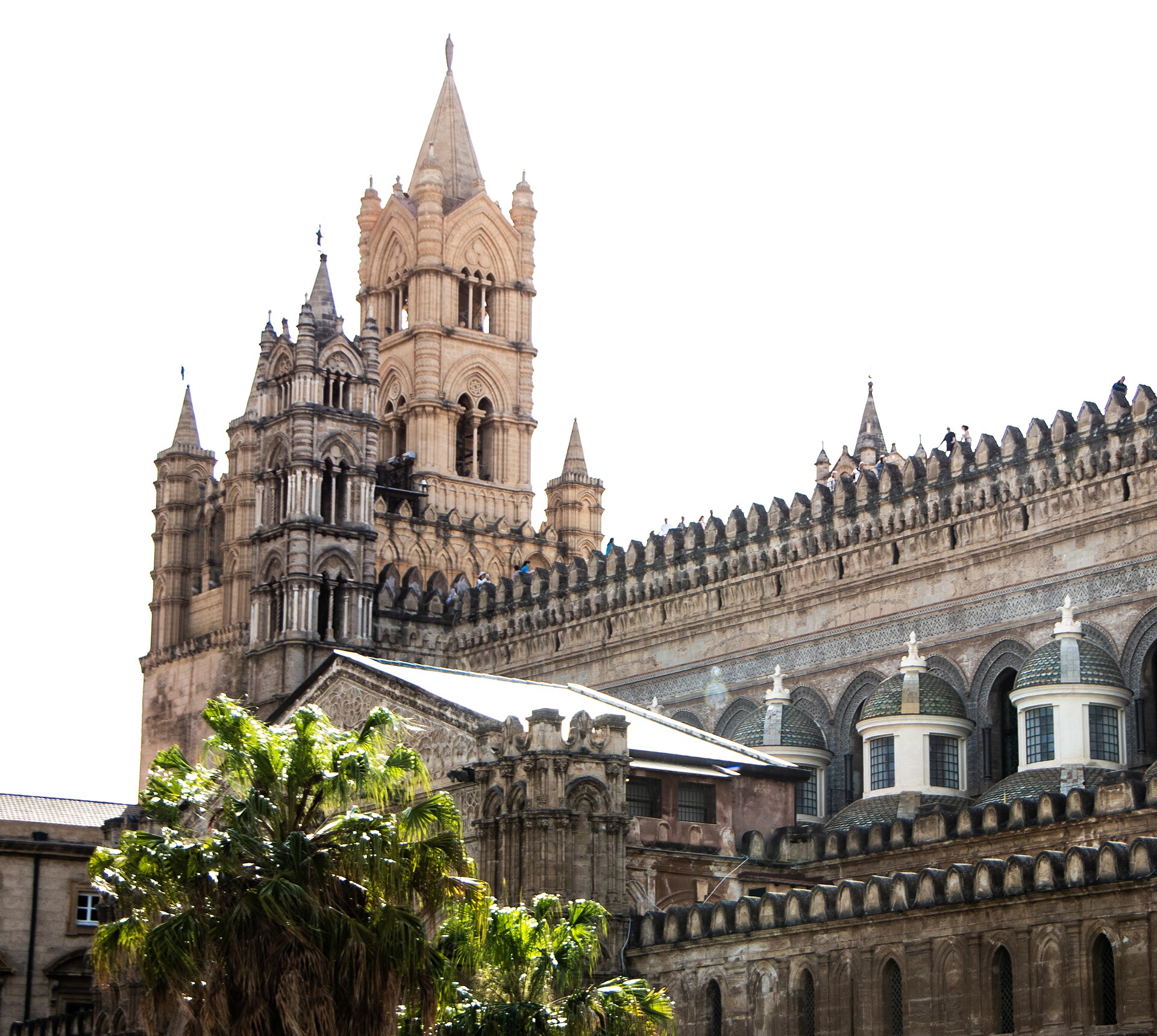
Palermo hit me before I’d even dropped my bag: a wall of fried-chickpea smoke, a Vespa threading the wrong way down a one-way lane, and a 12th-century cathedral glowing gold at the end of it. This Palermo travel guide is the version I wish I’d had on that first chaotic afternoon, written after several trips spent getting it wrong and then getting it right.
How long should you give Palermo? Two full days covers the Arab-Norman UNESCO sights, the three street-food markets, and one big day trip (Monreale or Cefalù). Three days lets you slow down and add the beach. Stay in or near the historic centre, walk almost everywhere, and eat standing up.
This is for travelers who want the real city, not a sanitized one: layered history, loud markets, food that doesn’t apologize, and a bit of edge. If you want polished resort calm, this isn’t quite that. If you want Sicily at full volume, you’re in the right place. For the wider island, start with my Sicily travel guide.
Why Palermo, and who it’s for
I’ll be candid: Palermo divides people. Some travelers find it too gritty, too loud, too much. I find it one of the most alive cities in Europe, and the more time I spend here, the more I’d defend it.
What makes it special is the layering. Phoenicians, Greeks, Romans, Arabs, Normans, Spanish, Bourbons — each ruler left something, and instead of demolishing the last one, Palermo just stacked the new on top. You get a cathedral that’s part mosque, part Norman fortress, part Baroque, with kings’ tombs inside and a Catholic saint who started as Muslim. That collision is the whole point.
It’s also one of the great street-food cities of the Mediterranean, full stop. And it’s cheap by Italian standards — your euro goes further here than almost anywhere on the mainland.
Who should come: history nerds, food obsessives, market lovers, and anyone who likes a city with character over polish. If you’re building a longer trip, Palermo pairs naturally with the west and north of the island — see my Sicily itinerary for how to thread it together.
Top sights in Palermo at a glance
Here’s how I’d triage the headline sights, with rough time needed and ticket costs. Prices and hours shift, so treat everything below as around / as of 2026 and confirm at the official ticket desks before you go.
| Sight | Why go | Time needed | Cost (approx, 2026) |
|---|---|---|---|
| Cappella Palatina (in Palazzo dei Normanni) | The single best thing in the city — wall-to-wall golden Byzantine mosaics | 60–90 min | ~€15–19 combined palace ticket |
| Cattedrale di Palermo | Wild architectural mash-up; royal tombs; rooftop views | 45–75 min | Free nave; ~€7–15 for roof/tombs/crypt combos |
| Monreale Cathedral (day trip) | Arguably the finest Norman mosaics in the world | Half day | ~€5–12 for cloister/terraces; nave often free |
| Catacombe dei Cappuccini | ~8,000 mummified, dressed Palermitani on the walls | 45 min | ~€5–7 |
| Teatro Massimo | Italy’s largest opera house; tour or a performance | 30 min tour / evening show | Tours ~€12–15; opera tickets from ~€20 |
| San Giovanni degli Eremiti | Red Arab domes and a quiet cloister garden | 30–45 min | ~€6 |
| La Martorana | Glittering 12th-century mosaics in a small church | 20–30 min | ~€2 |
| Quattro Canti + Fontana Pretoria | The Baroque crossroads and the “fountain of shame” | 20–30 min | Free |
If you only do one thing, make it the Cappella Palatina. If you only have time for one day trip, I’d send you to Monreale.
The Arab-Norman circuit: things to do in Palermo’s UNESCO core
In 2015, UNESCO listed a string of Arab-Norman monuments across Palermo, Monreale and Cefalù. These are the buildings that explain the city, and most sit within a 15-minute walk of each other. Here are the things to do in Palermo I’d put at the top of any first visit.
Palazzo dei Normanni & the Cappella Palatina
Start here. The Norman Palace was a Punic fort, then a Roman one, then the seat of Arab emirs, then the palace of the Norman kings — and today it houses the Sicilian Regional Assembly, so parts close when parliament sits.
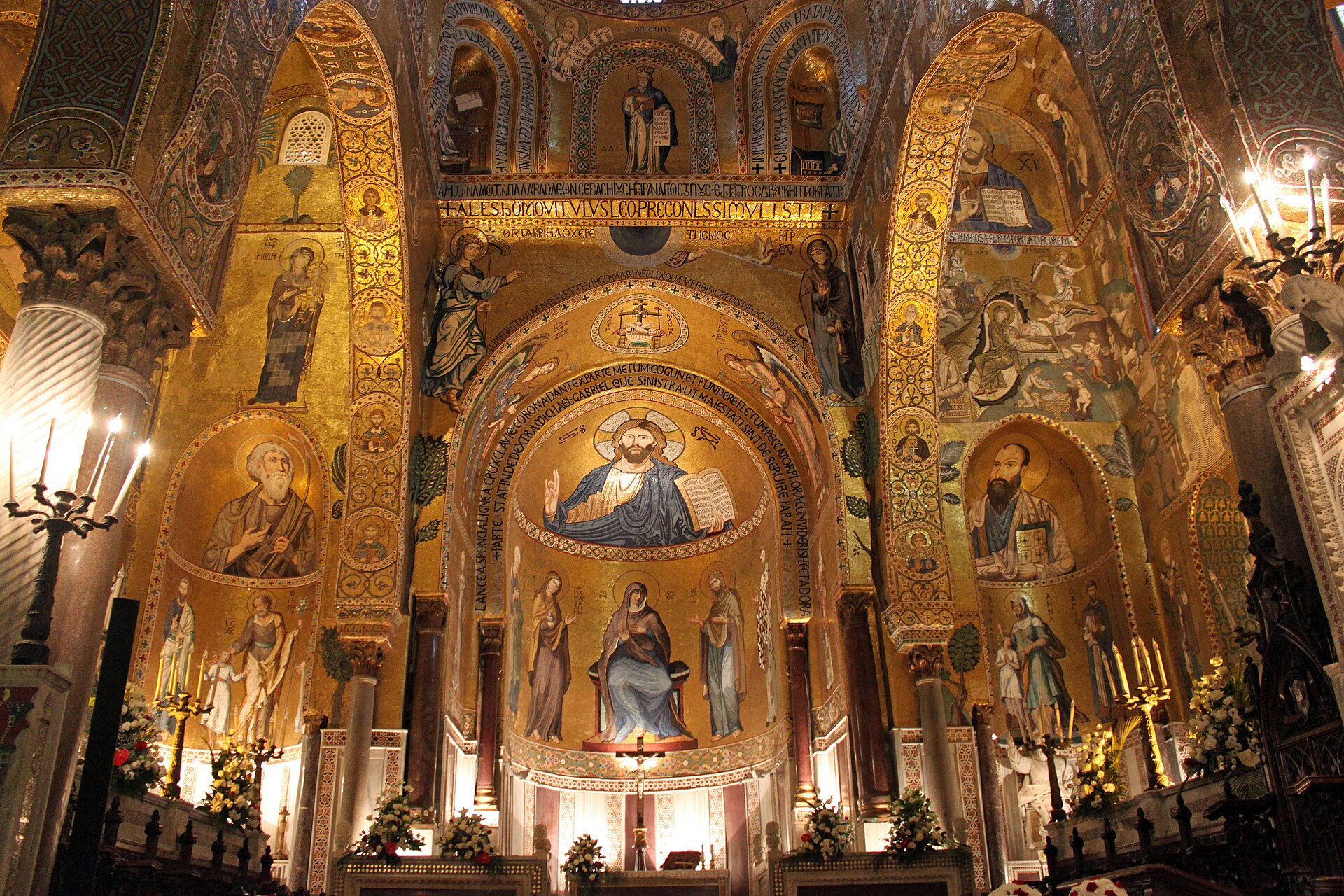
The reason you come is the Cappella Palatina on the middle floor. Roger II’s private chapel, finished around 1140, is a fusion: Byzantine gold mosaics on the walls, a carved Islamic muqarnas wooden ceiling overhead, Norman bones holding it all together. I’ve stood under that ceiling three times now and it still stops me. Go early or late to dodge tour groups; the combined palace ticket runs around €15–19 depending on what’s open that day. Note that the royal apartments and chapel access can vary by day of the week, so check the official site before you build your morning around it.
Cattedrale di Palermo
A short walk down Corso Vittorio Emanuele brings you to the cathedral, and it is a glorious mess — Norman foundations, Arab arches, Gothic porches, a Catalan-Gothic south face, and an 18th-century dome that purists still grumble about. Built from 1184 on the site of a mosque (which itself replaced an earlier church), it reads like a timeline you can walk around.
The main nave is free. Pay the small combined fee and you can climb to the roof terraces for one of the best views in the centre, visit the royal tombs (including Roger II and Frederick II), and see the treasury and crypt. The roof is worth it — budget an extra 30–40 minutes.
San Giovanni degli Eremiti
The five red bulbous domes here are the most photographed Arab silhouette in Palermo, and the cloister garden — citrus trees, a quiet colonnade — is one of the few genuinely calm spots in the centre. It’s a 30–45 minute stop, ticket around €6, and a good place to reset after the crowds at the palace next door.
La Martorana (Santa Maria dell’Ammiraglio)
On Piazza Bellini, this small 12th-century church hides some of the oldest and finest mosaics in the city — including a famous one of Roger II being crowned by Christ. Entry is only a couple of euros. It’s tiny, so 20–30 minutes does it, but don’t skip it; the gold work rivals what you’ll see in much grander buildings. The neighboring church of Santa Caterina, with its over-the-top Baroque interior and a rooftop you can climb, makes a natural pairing.
Quattro Canti & Fontana Pretoria
Where Via Maqueda crosses Corso Vittorio Emanuele, four curved Baroque facades meet at the Quattro Canti — statues of seasons, Spanish kings and patron saints stacked up the corners. It’s the theatrical heart of the old town.
Steps away, the Fontana Pretoria fills its own piazza with a crowd of marble nudes. Locals nicknamed it the “fountain of shame,” supposedly for all that bare flesh facing a convent. Both are free, both take 20 minutes, and you’ll pass them repeatedly anyway.
Teatro Massimo
At the top of Via Maqueda stands Italy’s largest opera house and one of the largest in Europe. You might recognize the steps from the closing scene of The Godfather Part III. You can take a guided tour (around €12–15, roughly 30 minutes, includes the auditorium and the royal box), but if your dates line up, I’d go to an actual performance — tickets start around €20 and operas run with English surtitles. Even a cheap seat under that dome is a memory.
The markets and what to eat in Palermo
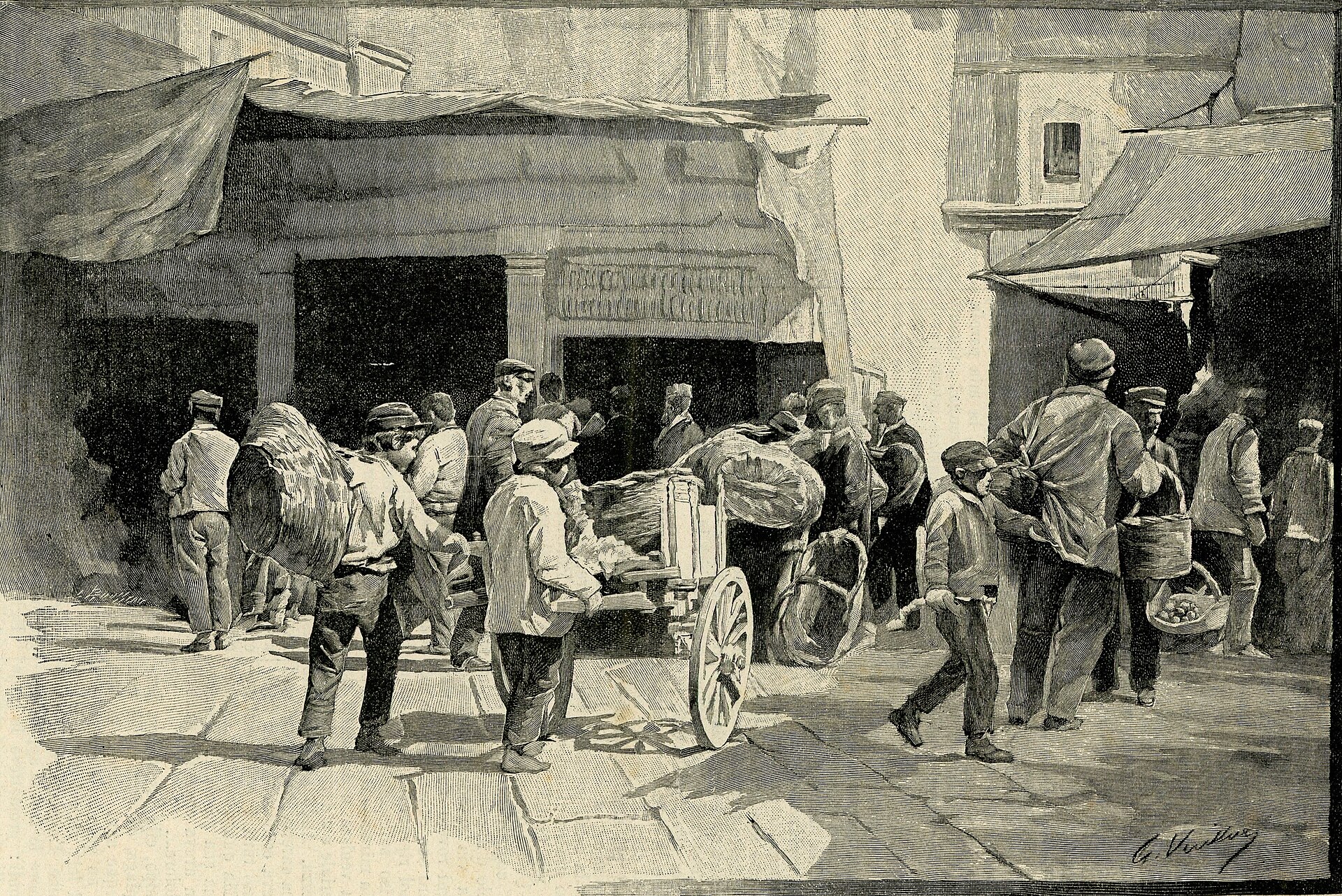
If the Arab-Norman buildings are Palermo’s soul, the markets are its bloodstream. There are three historic ones, generally open Monday to Saturday, busiest and best in the morning. They feel more like a North African souk than an Italian market — narrow, shouting, dripping with fish and citrus.
- Ballarò — the oldest and largest, deepest in the Albergheria district. The most local, the least polished, the best for street food. Go in the morning; by mid-afternoon many stalls pack up.
- Il Capo — winding through the Capo quarter behind the cathedral. Beautiful produce, great for a wander, slightly more compact.
- Vucciria — quieter and smaller by day than it once was, but it transforms at night into an open-air drinking scene where the surrounding bars spill into the square.
Here’s what to actually eat, in roughly the order I’d attack it:
- Arancina — the fried, stuffed rice ball. In Palermo it’s arancina (feminine, rounder); in Catania it’s arancino and conical. Get the classic al ragù (meat) or al burro. This is a low-stakes religious war on the island; pick a side.
- Panelle — chickpea-flour fritters, often crammed into a sesame roll as pane e panelle. Cheap, vegetarian, addictive.
- Sfincione — Palermo’s spongy, oregano-and-onion focaccia-pizza, sold off carts. Different from anything you’ll call pizza at home.
- Pane con la milza (pani ca’ meusa) — a roll stuffed with sautéed veal spleen and lung. This is the brave one. Order it maritata (with ricotta and caciocavallo) and don’t overthink it. It’s a genuine Palermo rite of passage.
- Cannoli — ordered fresh, the shell filled with sweet ricotta on the spot so it stays crisp. If it’s pre-filled and soggy, walk on.
A guided street-food walk on your first morning is honestly money well spent — a local will steer you to the good carts and away from the tourist traps, and explain what you’re chewing. For the wider island’s dishes and wine, I lean on my dishes worth seeking out in Sicily, and for how Sicilian cooking fits into the rest of the country, my Italy food and wine travel notes go further.
Catacombe dei Cappuccini
This is the strangest place I’ve ever paid to enter, and I’d send you anyway. Beneath a monastery a short ride west of the centre, the Capuchin Catacombs hold roughly 8,000 mummified and skeletonized Palermitani, many fully dressed, hung along the corridors and sorted by profession, age and sex. The most famous resident is Rosalia Lombardo, a child who died in 1920 and is preserved so well she’s called the “Sleeping Beauty.”
It’s not gory so much as deeply uncanny, and quietly moving. Entry runs around €5–7, photos are usually not allowed inside, and 45 minutes is plenty. Skip it if mortality genuinely unsettles you; otherwise it’s unforgettable. It’s a little out of the way, so I pair it with Monreale, which lies in the same direction.
Neighborhoods to wander
Palermo’s centre is carved into four historic quarters by the cross of Via Maqueda and Corso Vittorio Emanuele. Each has a different temperature.
- Kalsa — the old Arab quarter toward the sea, war-damaged and then half-reborn. Now it’s the artiest district: galleries, the Palazzo Abatellis museum, leafy Piazza Marina with its enormous banyan-style fig tree (the Ficus macrophylla), and good aperitivo bars. My favorite area to stay.
- Vucciria — gritty and atmospheric, dead-feeling by day, raucous by night around the market square. Great for a drink, light on sights.
- Capo — wrapped around the Il Capo market behind the cathedral, dense and lived-in, more local than touristy.
- Albergheria / Ballarò — rough around the edges, deeply authentic, the place to eat your way through a market morning.
Wandering with no plan is, genuinely, one of the best things to do in Palermo. Just keep your wits about you in the quieter back lanes (more on that below).
Day trips from Palermo: Monreale, Mondello, Cefalù
You can fill two days in the city without leaving it, but a third day cries out for a trip. Three I’d actually recommend:
Monreale — the mosaics
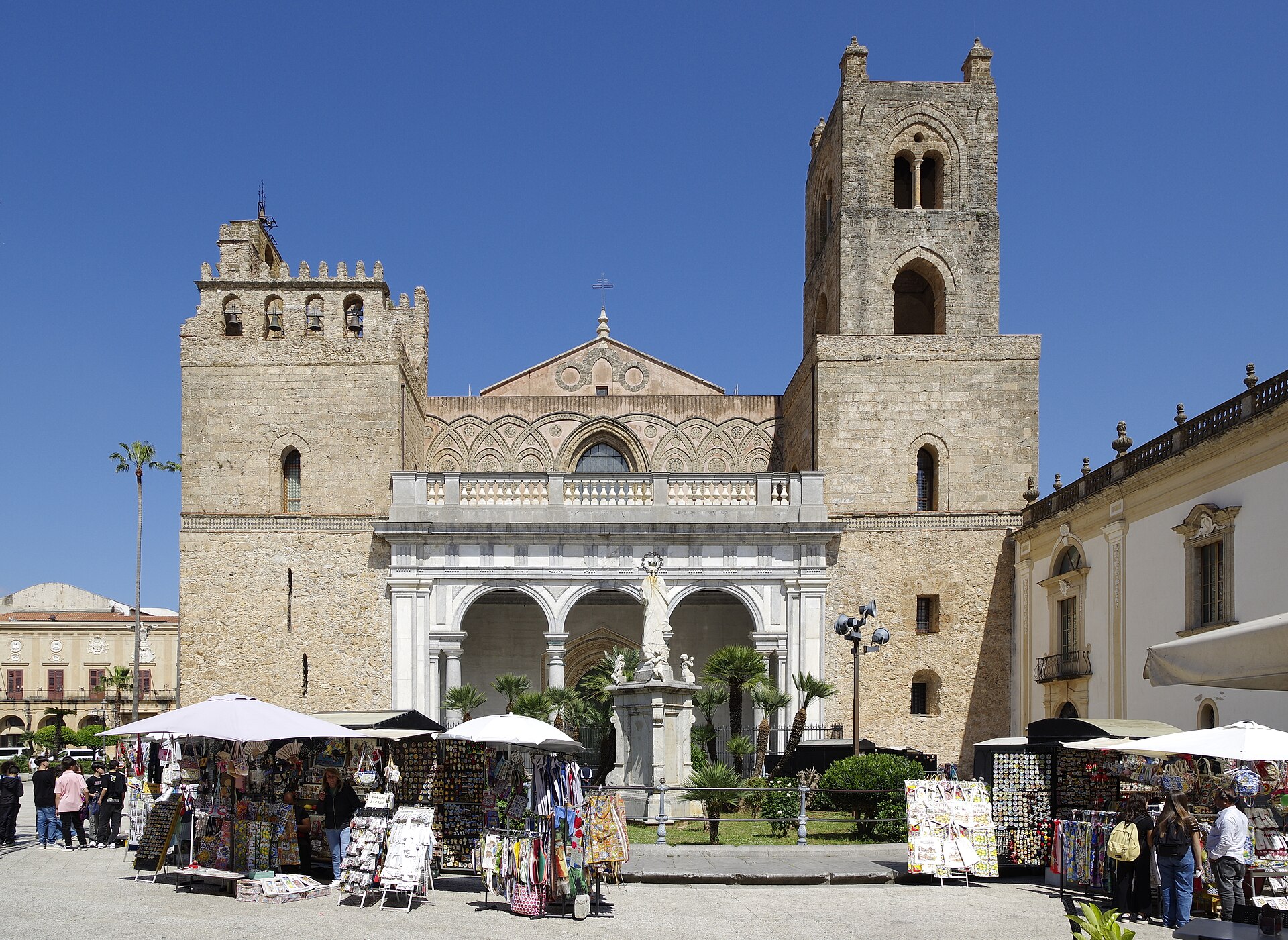
About 10 km uphill from the centre, the cathedral at Monreale holds what many consider the greatest Norman mosaic cycle anywhere — around 6,000 square meters of gold telling the whole Bible across the walls, crowned by a vast Christ Pantocrator in the apse. The cloister, with its 228 carved twin columns, is the other half of the visit and worth the extra ticket.
Getting there: it’s roughly 30 minutes by car, or about an hour by the AST 389 bus from the city. Tour buses also run combined Monreale-plus-Cefalù half-days if you’re short on time. Nave entry is often free; you pay a few euros (around €5–12) for the terraces and cloister. Go in the morning before the coach crowds and the heat.
Mondello — the city beach
When Palermo bakes, the city decamps to Mondello, a wide crescent of pale sand under Monte Pellegrino, about 11 km north. The water is shallow and turquoise, the Liberty-style bathing pavilion is pretty, and you can be there in 30–40 minutes by city bus. It gets packed on summer weekends — go on a weekday, or late afternoon for a swim and a granita. For the island’s better-known stretches of sand, I’d point you to my guide to the roundup of Sicily’s beaches rather than overpromising on Mondello here.
Cefalù — the postcard town
About 60 km east along the coast, Cefalù is the prettiest easy day trip: a golden Norman cathedral (more Byzantine mosaics), a tangle of medieval lanes, a genuinely good sandy beach, and a hulking rock (La Rocca) you can climb for the view. The best part is the train — a direct regional service from Palermo Centrale takes about an hour and drops you a short walk from the old town, so you don’t need a car at all. It makes a brilliant low-effort day.
A practical 2-day Palermo itinerary
Here’s the Palermo itinerary I actually run people through. It’s built around opening hours, which matter more here than in most cities: many museums and palazzi close Mondays, and some shut by around 1pm on Sundays, so try to land your sightseeing midweek and double-check times the day before.
Day 1 — Arab-Norman core and the markets
- Morning: Open at the Palazzo dei Normanni and Cappella Palatina the moment they unlock; this is your priority and crowds build fast. Then walk to San Giovanni degli Eremiti for the domes and the quiet cloister.
- Late morning: Cut into Ballarò market for street food — panelle, an arancina, maybe the brave pane con la milza. This is lunch; eat standing.
- Afternoon: Stroll up to the Cattedrale di Palermo, do the roof terraces and royal tombs, then continue to Quattro Canti and Fontana Pretoria.
- Late afternoon: La Martorana and Santa Caterina on Piazza Bellini for mosaics and a Baroque rooftop.
- Evening: Aperitivo in the Kalsa or drinks in Vucciria as the market square comes alive.
Day 2 — Monreale, the catacombs, and the theatre
- Morning: Head out early to Monreale for the mosaics and cloister before the heat and the buses. Allow a half day with travel.
- Midday: On the way back, stop at the Catacombe dei Cappuccini (they’re in the same direction). Grab lunch near the Capo market afterward.
- Afternoon: Wander Il Capo and the Capo quarter, then visit the Teatro Massimo — a tour, or hold the evening for a performance.
- Evening: A proper sit-down Sicilian dinner — pasta con le sarde, caponata, fresh fish — and cannoli to finish.
Add a Day 3 and I’d give it to Cefalù by train, or a beach afternoon at Mondello, depending on the season. If you’re not driving at all, Palermo is one of the easier Sicilian bases to manage car-free — see my notes on getting around Sicily without a car.
Where to stay in Palermo by area
Stay in or right beside the historic centre. You’ll walk to nearly everything, and you’ll want to be among the life of the place, not stranded in a modern fringe. Quick read on the main areas:
| Area | Vibe | Good for | Watch-outs |
|---|---|---|---|
| Kalsa | Arty, leafy, slowly gentrifying | First-timers who want centre + a bit of calm | Some streets still scruffy at the edges |
| Around Quattro Canti / Via Maqueda | Dead-central, on top of the sights | Short stays, no-car travelers | Noise; pedestrian-busy by day |
| Vucciria | Gritty, nightlife-heavy | Night owls, drinkers | Loud and grungy after dark |
| Politeama / Libertà (new town) | Calmer, smarter, leafy avenues | Travelers wanting quiet and shops | A 15–25 min walk from the old core |
| Capo | Local, market-side, atmospheric | Repeat visitors wanting authenticity | Dense, can feel maze-like at night |
Boutique stays in restored palazzi are a real strength here, and prices are gentle for what you get — doubles in lovely 16th-century buildings often land around €100–180. For the island-wide picture, my where to stay in Sicily guide breaks down bases beyond the capital.
Getting in from Palermo airport (PMO / Punta Raisi)
You’ll fly into Falcone–Borsellino Airport, still widely called Punta Raisi, about 35 km west of the city along a dramatic coast road. Two cheap, easy public options get you downtown, plus taxis. Figures below are as of 2026 and do drift, so reconfirm.
- Prestia e Comandè bus — the airport coach. Runs roughly every 30 minutes from early morning to past midnight, takes about 40–50 minutes depending on traffic, and costs around €6 one-way / ~€12 return. It stops at useful points including Stazione Centrale and Teatro Politeama. You buy onboard or at the desk. This is what I usually take.
- Trinacria Express train — departs from Punta Raisi station directly beneath the terminal, roughly every 30 minutes (service runs from early morning until about 10pm), about 45–55 minutes to Palermo Centrale, around €5.90 one-way. Cheapest option and immune to road traffic, but it stops earlier in the evening and the last leg deposits you at the central station. For how Italy’s regional rail works generally, see my trains in Italy guide.
- Taxi — fixed/typical fares to the centre tend to run roughly €45–55; confirm the price before you get in.
For context on Italy’s airports and how Palermo fits the wider network, I keep a separate Italy airports rundown.
Getting around, and what to skip
The historic centre is compact and flat — walk it. You genuinely don’t need transport for the core sights. For Mondello, Monreale, or the catacombs, city buses (AMAT) cover you, though they can be slow and crowded; tickets are cheap and bought from tabacchi or onboard apps.
I would not rent a car for the city itself. Palermo traffic is a contact sport, parking is a nightmare, and the centre is largely a restricted ZTL zone where cameras will fine you. Pick up a car only on your way out of Palermo if you’re touring the wider island.
What to skip if you’re tight on time: the Archaeological Museum is excellent but a deep dive; if you only have two days, prioritize the living city over it. And don’t overschedule — Palermo rewards aimless wandering more than ticking off a list.
Is Palermo safe? Honest notes
Palermo is safe for ordinary tourism, and I’ve never felt threatened here. The thing to actually manage is petty theft, not the Mafia mythology — organized crime is real in Sicily but it does not involve visitors, and you won’t see it.
What’s real:
- Pickpockets work the crowded markets, busy buses, and the airport bus. Front pockets, zipped bags, hand on your phone in a crush.
- Scooter snatch-and-grabs happen — keep bags on the wall side of the pavement, not the road side, and don’t dangle a phone near traffic.
- Traffic is chaotic. Crossing the street is an act of faith; step out steadily and make drivers see you. Scooters run red lights and one-way rules loosely.
- Quiet back lanes at night in the rougher quarters can feel dodgy — stick to lit, busier streets after dark, especially solo.
None of this should put you off; it’s standard big-southern-city street sense. Solo travelers do fine here — my solo travel in Italy notes go deeper on staying comfortable. When to come matters too: shoulder season (April–June, September–October) is ideal, while July and August are punishingly hot and crowded; my best time to visit Italy guide lays out the trade-offs.
Final thoughts on this Palermo travel guide
Palermo isn’t a city you tidy up and tick off; it’s one you surrender to. Give it two or three days, walk until your feet complain, eat standing in the markets, and let the chaos become the point. Do that, and it’ll be the part of Sicily you talk about longest — the loud, golden, slightly rough heart of the island. For everything beyond the capital, the rest of my Italy travel guide will see you the rest of the way.
Questions travellers ask
Is Palermo worth visiting?
Yes — emphatically, if you want a city with real character. Palermo gives you world-class Arab-Norman art, one of the Mediterranean’s best street-food scenes, layered history you can walk through, and prices below the mainland. It’s gritty and loud, which is exactly why I love it. Polish-seekers may struggle; everyone else will be glad they came.
How many days do you need in Palermo?
Two full days cover the Arab-Norman sights, all three markets, and one day trip such as Monreale. Three days is the sweet spot — it adds Cefalù or a beach afternoon at Mondello and lets you slow down. If Palermo is your gateway to western and northern Sicily, build in extra nights and use it as a base.
Is Palermo safe for tourists?
Generally yes. Violent crime against tourists is rare, and the Mafia doesn’t touch visitors. The genuine risks are pickpocketing in markets and on buses, occasional scooter bag-snatches, and chaotic traffic. Keep valuables zipped and close, stick to lit streets at night, and cross roads assertively. Treat it like any large southern European city and you’ll be fine.
Is Palermo or Catania better?
It depends on your trip. Palermo wins for history, architecture, markets, street food, and as a base for western Sicily and Cefalù — and it’s usually cheaper. Catania is grittier, has livelier nightlife, and sits closer to Etna, Taormina and Syracuse. For culture and food I’d choose Palermo; for a volcano-focused, eastern-Sicily trip, see my Catania travel guide.
What is the best area to stay in Palermo?
For a first visit, the Kalsa or anywhere just off the Quattro Canti crossing puts you on top of the sights and the food. Vucciria suits night owls; the Politeama / Libertà new town is calmer and smarter if you want quieter evenings. Stay central and walkable; you won’t need a car in the city.
What food is Palermo famous for?
Street food, above all. Try arancina (fried rice balls), panelle (chickpea fritters), sfincione (oniony focaccia-pizza), pane con la milza (spleen sandwich — for the brave), and cannoli filled fresh to order. Sit-down classics include pasta con le sarde and caponata. Eat your way through Ballarò or Il Capo in the morning.
Do you need a car in Palermo?
No — and I’d actively avoid one in the city. The centre is compact, flat, and walkable, with cheap buses for Mondello, Monreale and the catacombs. Traffic is intense, parking is brutal, and a ZTL zone fines unauthorized cars. Rent only when leaving Palermo to tour the wider island, picking the car up on your way out.
What’s the best day trip from Palermo?
Monreale, for the greatest Norman mosaics in Sicily, is the standout cultural trip (about an hour by bus or 30 minutes by car). Cefalù is the easiest and prettiest, reachable by a roughly one-hour direct train — a coastal town with a Norman cathedral, medieval lanes, and a good beach. Mondello is the quick city-beach fix. See my wider best things to do in Sicily for more.