Amalfi Coast, Naples & Campania
Pompeii Tickets and Visiting Guide (2026)
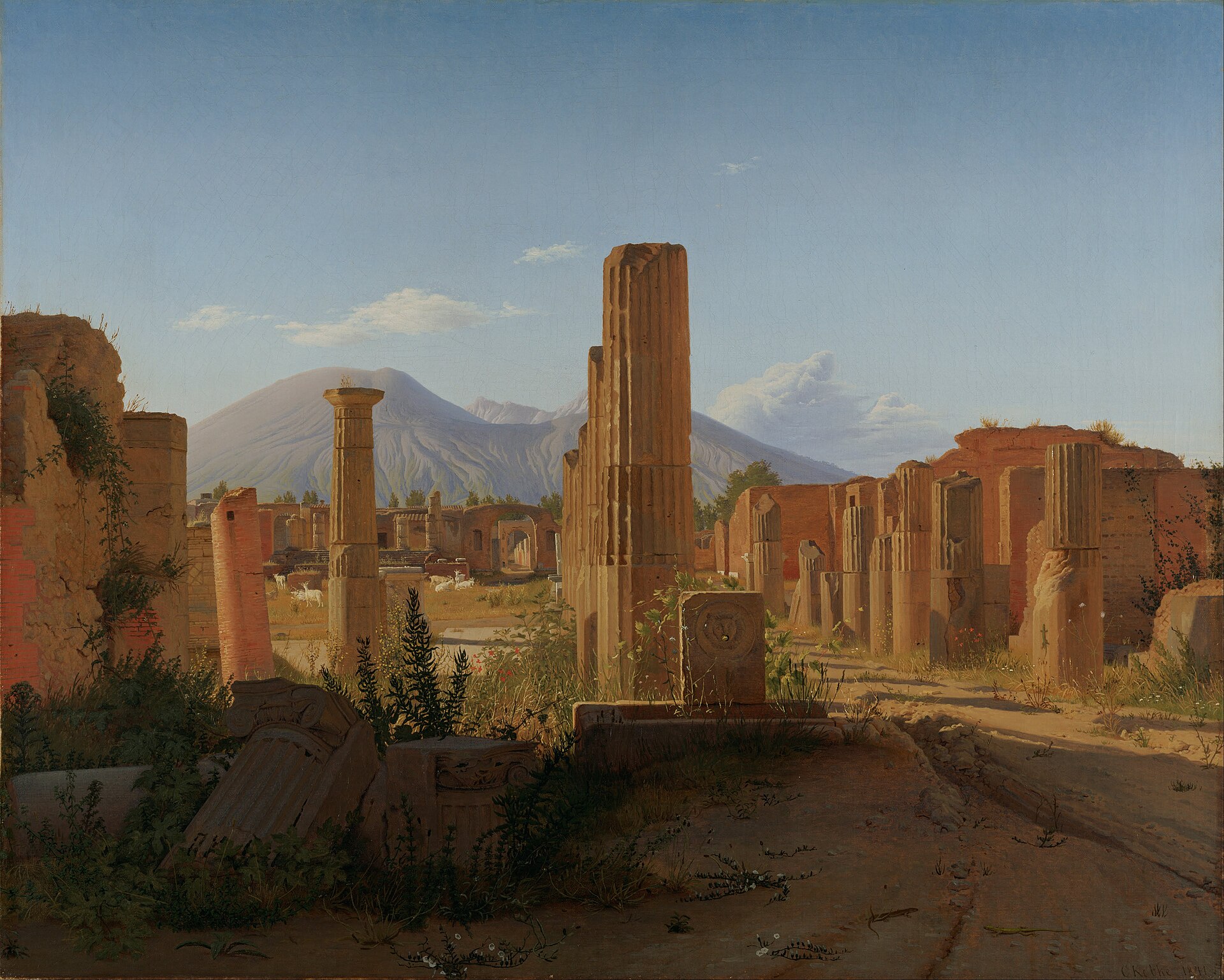
Pompeii is one of those places that works on you. You think you know what you’re walking into — a ruin, a history lesson, a line-item on the bucket list — and then you round a corner and see a bakery counter with the grain grooves still worn into the stone, and you go quiet. Planning a visit is not complicated, but there are a few moving parts that trip people up, mostly around Pompeii tickets. Here is what you need to know.
The short answer: buy official tickets through vivaticket before you go. The standard Pompeii Express ticket runs around €20 per adult as of early 2026 (verify current pricing at pompeiisites.org — it can change). Take the Circumvesuviana train from Naples (around €3.20, about 35–40 minutes) to Pompei Scavi–Villa dei Misteri. Allow a minimum of three to four hours inside; five or six if you plan to see the suburban villas. This guide is for independent visitors planning a Pompeii day trip, whether you are based in Naples, Sorrento, or arriving on a transfer from Rome.
Pompeii Ticket Types at a Glance
The Archaeological Park of Pompeii currently sells four main ticket tiers directly, all via Vivaticket. Note: these are published prices as of January 2026 — check pompeiisites.org/en/visiting-info/timetables-and-tickets/ for any updates before you book.
| Ticket | Rough price (2026) | What it includes | Best for |
|---|---|---|---|
| Pompeii Express | ~€20 full / €2 reduced* | Ancient city only; suburban villas excluded | Most visitors with 3–5 hrs |
| Pompeii+ | ~€25 full / €2 reduced* | City + Villa dei Misteri + Villa di Diomede + Boscoreale | Anyone wanting the complete experience |
| 3-Day Multi-Site | ~€30 | Pompeii+, Oplontis, Stabiae villas, Archaeological Museum of Stabia, Boscoreale, shuttle | Archaeology enthusiasts, multi-day |
| MyPompeii Annual Card | ~€45 (€10 under-25) | All sites, one year of unlimited entry | Repeat visitors or Campania residents |
*Reduced rate applies to EU citizens aged 18–24 (inclusive). Under-18s enter free. Non-EU residents holding an Italian residency permit for qualifying reasons may also qualify — check pompeiisites.org.
Note on the “add-on” shortcut: If you buy the Pompeii Express (€20) and later decide you want the suburban villas, you can upgrade at the Herculaneum Gate–Street of the Tombs entrance for an additional €8 (card payment only, on the day). You cannot buy the villas route as a standalone.
Where to Buy Pompeii Tickets
The official route: Vivaticket
As of 2 March 2026, the only authorised online sales platform for the Archaeological Park is vivaticket. TicketOne, which handled sales until that date, is no longer the official partner — any site still pointing you to TicketOne for Pompeii is out of date.
Buy through Vivaticket via the link on pompeiisites.org. Your ticket arrives as a PDF and you show it on your phone at the turnstiles. Since November 2024, every ticket is nominative — it must match the name on your passport or ID, which is checked at entry. Enter the name exactly as it appears on the document you will be carrying.
Tickets must be purchased for a timed slot: the morning session runs 9:00 to 13:00 (up to 15,000 admissions), and the afternoon session runs 13:00 to 17:30 (up to 5,000 admissions). This time-slot system applies from 16 March to 14 October. In the low season (15 October to 15 March), entry is open 9:00 to 15:30, no time-slot allocation.
Authorised third-party platforms
GetYourGuide, Viator, and Tiqets all sell legitimate Pompeii tickets drawn from separate official allocations. You will pay a small premium — often a euro or two — over the Vivaticket base price, but you get better cancellation policies (typically 24-hour free cancellation) and a more navigable booking interface. These platforms also sell guided tour packages that the official site does not offer.
On the day at the gate
You can buy tickets at the three entrances — Porta Marina, Piazza Anfiteatro, and Piazza Esedra — but with a 20,000-visitor daily cap now in force, this is a gamble in peak season. In July and August, the morning allocation can sell out before 11:00. Do not arrive without a ticket and expect to walk straight in between May and October.
Getting There: Pompeii from Naples (and Beyond)
Circumvesuviana from Naples — the standard route
The Circumvesuviana is the commuter rail line that runs from Naples along the Bay of Naples to Sorrento, and it is the simplest way to reach the site as an independent traveller on a Pompeii day trip from Naples. The city at the other end of that line is worth more than a change of train — Naples rewards a proper visit.
Depart from Napoli Porta Nolana or the underground level of Napoli Piazza Garibaldi (beneath the main Napoli Centrale station — take the stairs down). Board any train on the Sorrento line — not the Sarno line, which goes in a different direction. The destination board matters: check the display before you get on. Journey time is approximately 35–40 minutes. The stop is Pompei Scavi–Villa dei Misteri, and the main entrance (Porta Marina) is directly across the road.
Fare: around €3.20 one-way as of 2026. Tickets are available at the station, via the GoEav app, or through the tap-and-go contactless system on enabled turnstiles. Trains run every 20–30 minutes throughout the day.
The Circumvesuviana is not air-conditioned and gets packed in summer, especially on morning trains carrying day-trippers. If you board at Porta Nolana rather than Piazza Garibaldi you are slightly more likely to find a seat.
Campania Express — the comfortable upgrade
The Campania Express is a premium version of the same Circumvesuviana corridor: air-conditioned, reserved seating, luggage storage. It costs around €15 one-way and runs about four departures daily in each direction. Worth it on a hot August morning if you want to arrive calm rather than sweaty.
Trenitalia from Naples Centrale to Pompei town
There is also a Trenitalia regional service that runs from Napoli Centrale to the town of Pompei (spelled without the ‘i’) on the mainline. The journey takes around 30 minutes and the fare is comparable to the Circumvesuviana. The catch is that the mainline Pompei station deposits you in the modern town, roughly a 10-minute walk from the Piazza Anfiteatro entrance. Slightly less convenient than the Circumvesuviana drop, but useful if you are coming from somewhere on the mainline south of Naples.
From Sorrento
The Circumvesuviana runs the other direction too. From Sorrento to Pompei Scavi–Villa dei Misteri takes about 30 minutes and costs around €2.80. This makes Pompeii very accessible as a day trip from the Amalfi Coast, which is one reason it is covered here as part of the broader Amalfi Coast and Campania guide. For getting to Sorrento from Rome or other entry points, see our guide to driving and travelling the Amalfi Coast from Rome.
Driving
Technically possible, but parking around the site is chaotic and the approach roads around Pompeii town get genuinely gridlocked in summer. Save the car for the Amalfi Coast.
A Self-Guided Route Through the Ruins

Pompeii covers roughly 66 hectares, and only about 80% is excavated. You are not going to see all of it in a day, nor should you try. The site is laid out on a rough grid of ancient streets — the main axis is the Via dell’Abbondanza, which runs roughly east-west — and navigation is more intuitive than maps suggest. Here is a sensible route for a 4-hour visit entering from Porta Marina (the Circumvesuviana side).
1. Porta Marina and the Marine Gate
You enter the ancient city here. The gate itself is worth pausing at — there are two arched passages, one wider (for carts) and one narrower (for pedestrians), still clearly differentiated. You are already thinking about who walked these stones.
2. The Forum
Walk straight up the Via Marina to the Forum, the civic and commercial heart of the city. The columns are gone but the footprint is enormous. At the far end, the Temple of Jupiter frames Vesuvius behind it with an unsettling directness — the volcano is right there, close, still visibly active. The Forum is where you orient yourself. The plaster casts of eruption victims are displayed in the Antiquarium at Piazza Esedra; if you want to see them first, pick up a map at the ticket window and loop back.
3. The Stabian Baths (Terme Stabiane)
Head south from the Forum along the Via dell’Abbondanza, then south again via the Via Stabiana. The Stabian Baths are among the oldest and best-preserved thermal complexes in the Roman world — you can still read the separation of the men’s and women’s sections, the changing rooms with individual alcoves (some with hooks still attached), the plunge pools, and the painted stucco vaults. This is where Pompeii starts to feel genuinely inhabited rather than merely excavated.
4. The Lupanare
Two blocks east of the baths, the lupanare (brothel) is one of the most visited buildings in the entire site — small, sober, and direct about what it was. The stone beds with small raised pillows are still there. The frescoes above each doorway functioned as a menu of services. It tells you quite a lot about how the Romans organised commerce.
5. Via dell’Abbondanza and the Bakeries
Walk east along the Via dell’Abbondanza, the main high street. You will pass multiple bakeries (pistrina), some with millstones intact, one with the oval loaves still cast in resin (the originals are in Naples’ National Archaeological Museum). The counters of the thermopolia — the fast-food counters of the ancient world — still have the round holes where terracotta jars of hot food sat. It is, frankly, astonishing.
6. House of the Faun (Casa del Fauno)
Backtrack northwest of the Via dell’Abbondanza to reach the House of the Faun, one of the grandest private residences in the city. It takes up an entire insula (city block) and dates to the second century BC. The bronze dancing faun in the impluvium is a reproduction (the original is in Naples), but the Alexander Mosaic floor — also reproduced here, original in Naples — is mind-bending in its detail. Even with signs explaining what you are looking at, it takes time to process the ambition of this house.
7. The Amphitheatre and the Garden of the Fugitives
Walk east along the Via dell’Abbondanza to the amphitheatre, one of the oldest surviving Roman amphitheatres anywhere, dating to around 80 BC. It seats 20,000 and is still used for events. The grass arena floor is peaceful in a way that the more famous Colosseum, which is always full of people, rarely is.
Just south of the amphitheatre, the Garden of the Fugitives (Orto dei Fuggiaschi) holds 13 plaster casts of victims, found huddled together, including children. It is one of the hardest things to look at in all of Pompeii. Take a moment.
8. Villa dei Misteri (Pompeii+ ticket)
If you have the Pompeii+ ticket, exit via Porta Ercolano at the northwest corner of the site and walk the Street of the Tombs to the Villa of the Mysteries, about 400 metres outside the city walls. The villa’s claim to fame is a cycle of large-format frescoes depicting a ritual — possibly initiation into the Dionysian mysteries — that are almost shockingly intact in colour and emotional power. This is not a detour. It is worth the upgraded ticket on its own.
Guided Tour vs DIY
The honest answer is: it depends what kind of traveller you are.
Pompeii without context is still extraordinary. You can download the official MyPompeii app and pick up an audio guide at the ticket office (roughly €8, bring your own 3.5mm earphones — Bluetooth guides are not available here). The street grid makes it hard to get lost, and most major buildings have adequate signage.
But a good guide — and there are excellent ones — transforms the visit. They will take you to buildings that are easy to walk past, translate the Latin graffiti on the walls (there is a lot of it, everything from election endorsements to insults), explain what the frescoes are actually depicting, and give you the social and economic context that turns ruins into a city. The site covers 66 hectares. A guide edits ruthlessly and saves you from spending 45 minutes walking to a closed building.
For a small-group guided tour (up to 6–15 people), expect to pay from around €50–65 per person including entry; private tours start higher. Book through authorised platforms like GetYourGuide, Tiqets, or established operators. If you book a guided tour, the entry ticket is typically included in the price — confirm this when booking.
The Italy transportation guide has general advice on how to structure a day-trip without overcomplicating logistics.
Herculaneum: The Quieter Alternative
If Pompeii is the famous older sibling, Herculaneum is the one who is actually more interesting to have dinner with.
Herculaneum was a smaller, wealthier resort town when Vesuvius erupted in 79 AD. Because it was buried by a different material — pyroclastic surge rather than ash — organic materials were preserved in ways that simply did not happen at Pompeii. Wooden furniture, food, papyrus scrolls, cloth. The site is smaller (about 4 hectares) and far less crowded, and the buildings are two and three storeys tall, their upper floors still present.
The stop on the Circumvesuviana is Ercolano Scavi, one stop before Pompei Scavi–Villa dei Misteri (about 20 minutes from Naples). The walk from the station to the entrance is around 10 minutes downhill. Tickets for Herculaneum alone are around €16 as of 2026 — verify at the official Herculaneum site or pompeiisites.org (note: Herculaneum is managed under a different authority, the Herculaneum Conservation Project, not the Archaeological Park of Pompeii).
If you want to do both in one day, it is doable from Naples with an early start — but expect to be genuinely tired. Most people get more out of doing one site properly than both sites in a sprint.
The Vesuvius Combination
You can pair either site with a climb of Vesuvius. The summit crater is accessible via guided walking tour from the car park at around 1,000 metres elevation — the final stretch is a 30-minute walk on loose volcanic rock. Entrance to the Vesuvius summit area is a separate ticket (around €10–15 depending on the operator). Transfers from Naples or Ercolano by bus or organised tour are the practical option as the road is not easy to navigate independently.
Doing Vesuvius plus Pompeii or Herculaneum in a single day is ambitious. Doing Vesuvius, Herculaneum, and Pompeii in one day is possible on a guided combo, but you will not do any of them full justice. If you are weighing options for a Campania trip, read the full Amalfi Coast itinerary for how to spread these across a longer stay.
When to Go and What to Bring
Timing
Pompeii is open year-round except 25 December and 1 January. Summer hours (16 March–14 October): 9:00–19:00, last entry 17:30. Winter hours (15 October–15 March): 9:00–17:00, last entry 15:30.
The best time of day is early morning (be at the gate for opening at 9:00) or early afternoon (around 13:00–14:00), when many cruise-ship groups have left. Midday in July and August is brutal — 35°C on shadeless ancient stone. If you are visiting in high summer and have a choice, April, May, late September, or October are far more comfortable.
Avoid the first Sunday of each month for a leisure visit — free-entry Domenica al Museo days see massive queues and the morning allocation goes fast. Unless you are specifically planning around the free entry, it is one of the worst days to visit in terms of crowds.
The best time to visit Italy page covers the seasonal patterns across the country if you are still fixing your dates.
What to wear and bring
Pompeii’s ancient streets are paved in large, uneven basalt setts. They look beautiful in photographs and are punishing on the feet after four hours. Wear real walking shoes — not sandals, not fashion trainers. Good ankle support matters.
Water: there are public drinking fountains inside the site (look for the Roman-style spigots). Bring at least a litre and a half anyway, especially in summer. There is a cafeteria near Piazza Esedra but queues are long at peak times.
Sun protection: hat, sunscreen, sunglasses. There is very little shade in the Forum area and along the Via dell’Abbondanza.
A light layer in winter — the site can be surprisingly cold in January, with a wind off the bay.
Scams and Things to Ignore
Let me be direct about a few things.
Unofficial ticket sellers outside the station: The area around Pompei Scavi station has kiosks and people with lanyards who present themselves as affiliated with the site. They are not. Official ticket offices are inside the archaeological area, at the three entrances (Porta Marina, Piazza Anfiteatro, Piazza Esedra). Anyone selling you a ticket from a booth or stall on the road outside is charging a markup for no added value. Since tickets are nominative and checked against ID, a third-party ticket bought from a tout at the gate is also a practical problem, not just a financial one.
Lookalike websites: Search for “Pompeii tickets” on Google and at least half the top results are resellers who have built sites designed to look official. The only official ticketing URL is pompeii.vivaticket.it, reached through the link at pompeiisites.org. Any site not reached through that path may be legitimate (GetYourGuide and Tiqets are fine) or may be charging heavily inflated fees for a standard entry ticket.
Guides who approach you outside the gate: There are licensed guides operating perfectly legitimate tours inside Pompeii. If someone approaches you outside the gate offering a guided experience, the tour is likely to be large, rushed, and loosely regulated. If you want a guide, book in advance through an established operator. The Italy travel mistakes guide has more on this pattern across Italian sites.
The TicketOne confusion: Until 2 March 2026, TicketOne was the official Pompeii ticket platform. Any article written before that date will point you to TicketOne. That information is now outdated. The platform is Vivaticket.
Final Thoughts
Pompeii rewards effort. Not hours of pre-trip research — just the modest effort of booking an official ticket before you arrive, getting on the right train, and giving yourself enough time to actually be in the place rather than rushing through it. The people who leave disappointed are almost always the ones who turned up without a ticket, got turned away or waited for an hour, and then had to rush because of a train connection.
Buy through Vivaticket. Take the Circumvesuviana to Pompei Scavi–Villa dei Misteri. Bring water and real shoes. Give it four hours at minimum.
If you are planning the wider trip — Naples, the Amalfi Coast, maybe Positano or Ravello — the Amalfi Coast itinerary and the Italy travel guide both have frameworks for how to fit everything together without overloading a week. The Italy travel mistakes guide is also worth reading before any major Italian site visit; it covers the booking, transport, and scam patterns that catch people every year.
Pompeii has been waiting nearly 2,000 years. It can wait another week for you to book properly.
Questions travellers ask
Do I need to book Pompeii tickets in advance?
In peak season (roughly mid-March to mid-October), yes — advance booking is strongly recommended and effectively necessary. The daily cap is 20,000 visitors, split between morning and afternoon sessions. The morning session (15,000 admissions) can sell out on busy summer days. The afternoon session (5,000 admissions) is smaller. Book at least a few days ahead; for July and August, book a week or more in advance. In the off-season, walk-up tickets are generally available, but booking online still saves time at the gate.
How long do you need at Pompeii?
For the major highlights — Forum, Stabian Baths, Lupanare, Via dell’Abbondanza, House of the Faun, amphitheatre — allow three to four hours. If you want to add the Villa dei Misteri (requires the Pompeii+ ticket) or see the Antiquarium in depth, budget five to six hours. A full day gives you the freedom to slow down, sit with something, and not feel rushed. The site is 66 hectares. Nobody sees all of it in a day.
Can I visit Pompeii for free?
Yes, on the first Sunday of each month, Pompeii participates in the national Domenica al Museo initiative — free entry for everyone, no booking required. You collect a ticket at the gate on arrival. The catch is that these Sundays are consistently the busiest days of the month. In peak season, arrive before 9:00 if you want to guarantee entry in the morning session. Audio guides are not included in the free entry.
Is Pompeii worth visiting on a day trip from Rome?
It is doable but long. Rome to Naples by high-speed train is about 1 hour 10 minutes; from Naples to Pompei Scavi is another 35–40 minutes. You are looking at roughly 2.5–3 hours of travel each way. A guided tour that handles the logistics makes this much less exhausting. That said, combining it with a night in Naples turns it into a genuinely good trip — see the Naples travel guide for where to stay and what else to do while you are there.
What is the difference between the Pompeii Express and Pompeii+ tickets?
The Pompeii Express (around €20) covers the ancient city only. The Pompeii+ ticket (around €25) adds the suburban villas: the Villa dei Misteri and the Villa di Diomede, both just outside the main city walls, plus Villa Regina in Boscoreale with its Antiquarium. The Villa dei Misteri in particular — with its extraordinary cycle of Dionysian initiation frescoes — is worth the extra €5. If you only have a few hours and no real interest in an additional walk, Express is fine. If you want the full picture, go Plus.
Are there lockers or luggage storage at Pompeii?
Large bags and backpacks above a certain size must be stored — there are facilities at the entrance points. The Pompeii Artebus shuttle, which connects the various Park sites, has storage for large luggage but is not wheelchair-accessible. If you are arriving with a rolling bag from your hotel, plan to stow it at Naples Centrale or your accommodation rather than carrying it around the site.
Is Pompeii accessible for visitors with mobility difficulties?
The site offers a dedicated “Pompeii for All” route accessible by wheelchair, entering from the Piazza Anfiteatro entrance. The ancient basalt paving on the main streets is genuinely difficult for wheels and anyone with balance or joint issues, so the adapted route is the practical option. A lift at the Antiquarium connects from Piazza Esedra. Call the infopoint (+39 081 8575 347) or email [email protected] ahead of your visit to confirm current access conditions.