Dolomites Without a Car
People keep telling you that you need a car for the Dolomites. You don’t.
You can absolutely do the Dolomites without a car. The backbone is simple: take a train to a valley gateway (Bolzano, Bressanone, Fortezza, or Dobbiaco in the north; Calalzo or Venice in the south), switch to a regional bus or a cableway, and base yourself in a walkable village where the lifts and trailheads come to you. In high summer it works beautifully. In the shoulder weeks it gets thin.
This is the logistics article. If you want a day-by-day plan, a list of hikes, or where to sleep, I link those further down. Here I’m answering the question people actually lose sleep over: how do I get there, and how do I get around once I do, without a steering wheel in my hands?
The honest version, in one table
Here’s how the main car-free bases stack up. I rate them on how much you can actually reach without renting anything, not on how pretty the village is.
| Base town | Train access | Key buses / lifts | What you reach car-free | Car-free rating |
|---|---|---|---|---|
| Ortisei (Val Gardena) | Train to Bolzano or Bressanone, then bus | SAD 350 / 360; cableways to Seceda, Alpe di Siusi, Resciesa | Seceda, Alpe di Siusi, Resciesa, valley villages, Passo Sella/Gardena by bus | Excellent |
| Siusi / Fiè (Alpe di Siusi) | Train to Bolzano, then bus 170 | Bus 170 + Alpe di Siusi cableway to Compatsch | Alpe di Siusi (which bans cars by day anyway), Castelrotto | Excellent |
| Cortina d’Ampezzo | Train to Calalzo or Dobbiaco, then bus; or Cortina Express from Venice | Cortina Express; DolomitiBus to Misurina, Tre Cime, passes | Tre Cime, Cinque Torri, Misurina, town-side trails | Very good |
| San Candido / Dobbiaco (Alta Pusteria) | Direct train on the Pustertal line | Bus 444 (Tre Cime), 442 (Braies), 446 (Fiscalina) | Lago di Braies, Tre Cime, Val Fiscalina, Prato Piazza | Very good |
| Bolzano (city base) | Direct trains from Verona, Venice, Munich | Local buses, Renon funicular, bus 170 | Renon, day trips up to Alpe di Siusi and Val Gardena | Good (day-trip style) |
| Corvara / Alta Badia | Train to Bressanone or Brunico, then bus | SAD valley buses, lifts | The valley itself; harder to reach from outside | Fair (deep in) |
The pattern is clear. The Val Gardena / Alpe di Siusi corner of South Tyrol is the easiest place on earth to be a car-free hiker, because the local transport authority runs a tight, frequent network and the guest cards make it nearly free. The further east you go toward Cortina and the Belluno side, the more you’re stitching together separate systems, and the more a missed connection costs you.
Getting there: the rail gateways
You don’t take a train to the Dolomites. There’s no station in the middle of the mountains. You take a train to the edge, then transfer. Knowing which edge is the whole game.
There are two front doors, north and south.
From the north (the Brenner railway). This is the main line running down from Innsbruck and Munich through the Brenner Pass to Bolzano and on toward Verona. Fast EC and regional trains stop at the South Tyrol gateways:
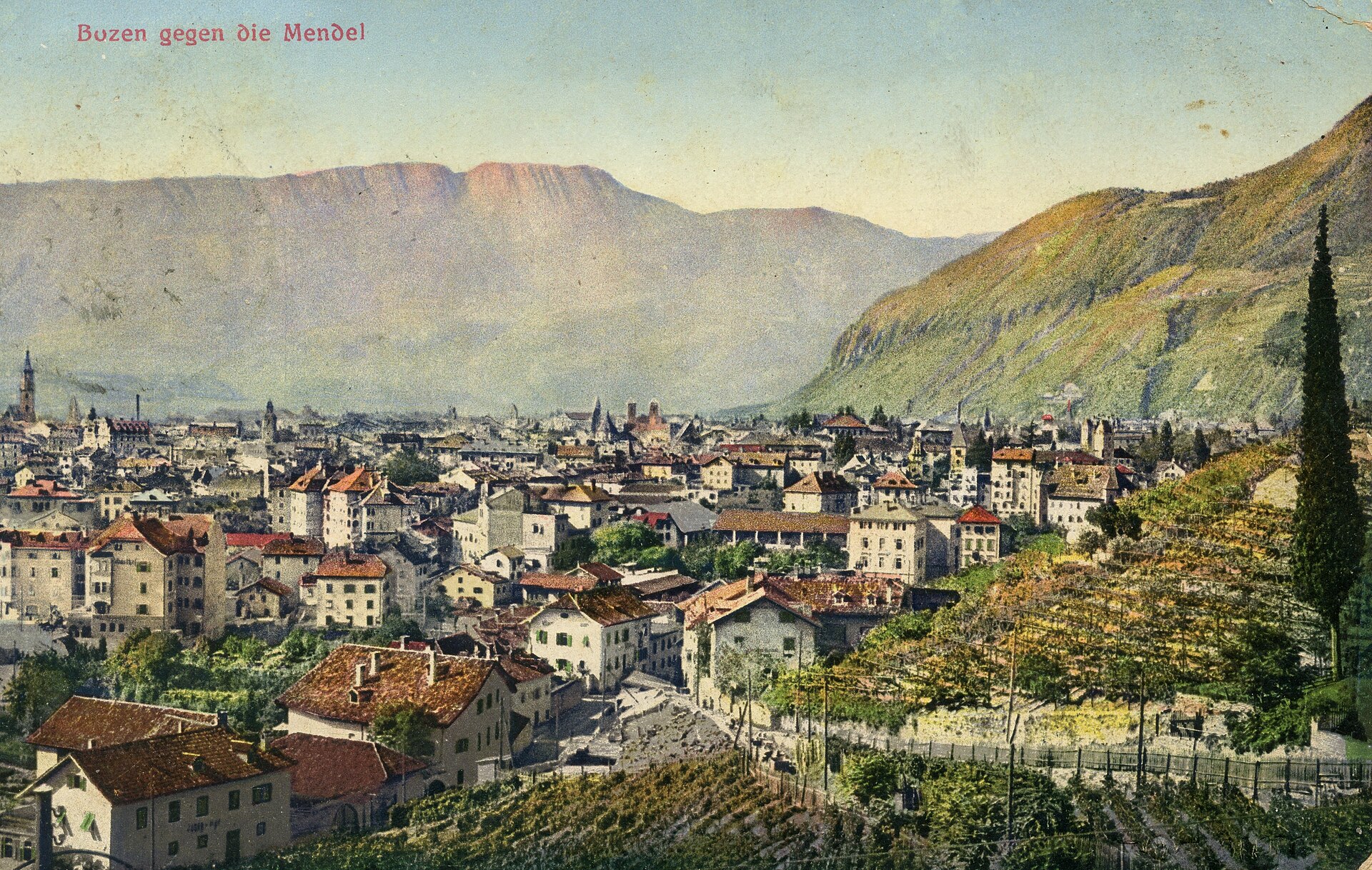
- Bolzano / Bozen — the big one. Direct trains from Verona, Venice, Munich, and (with one change) Florence and Rome. The bus station is a five-minute walk from the platforms. This is your gateway for Val Gardena, Alpe di Siusi, and the whole Sciliar area.
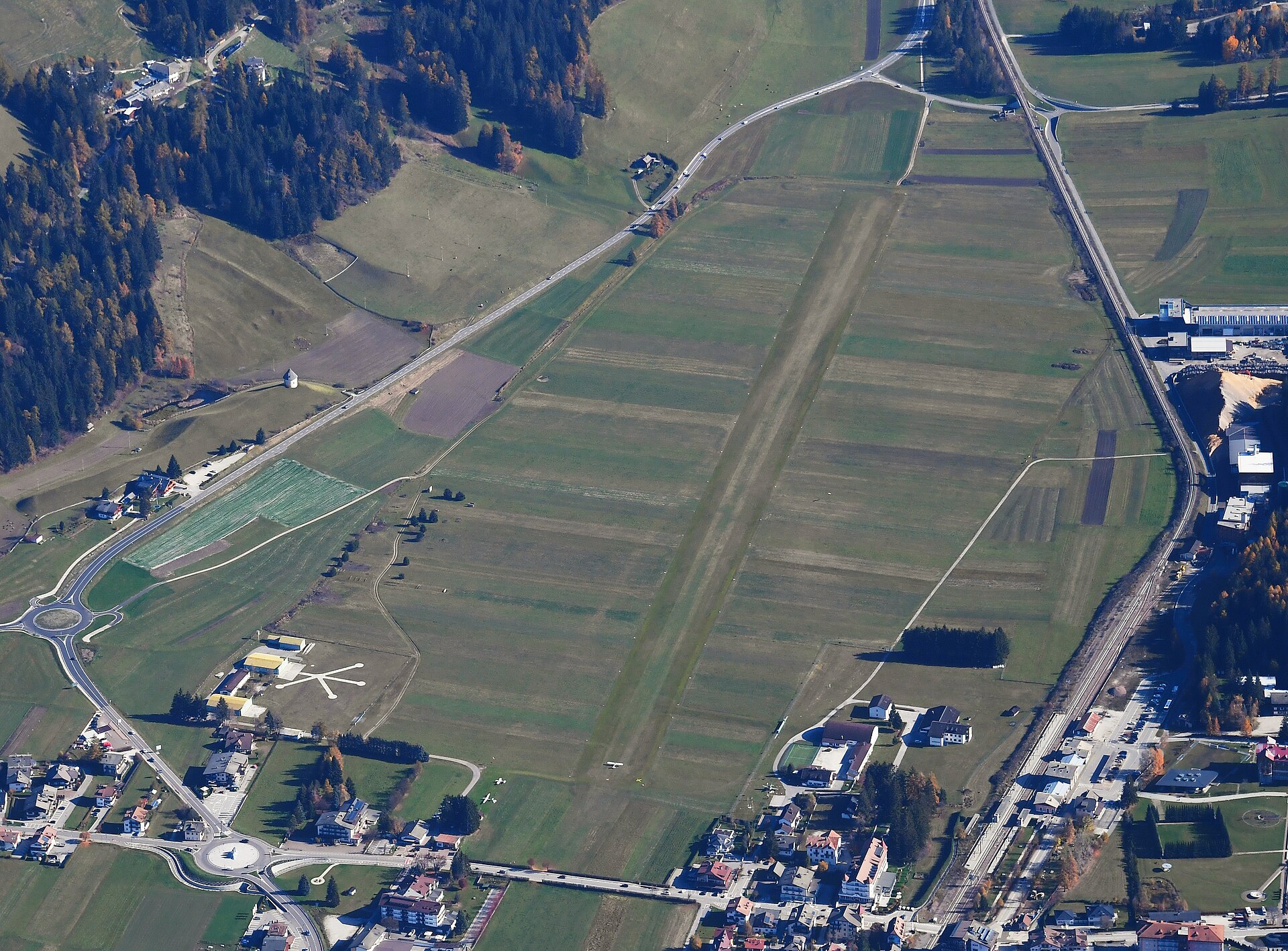
- Bressanone / Brixen — one stop north of where the Pustertal line branches off. A clean gateway to Val Gardena (bus 360) and the start of the road into Val Badia.
- Fortezza / Franzensfeste — not a place you stay, but the junction where the Pustertal line splits east off the Brenner main line. You’ll often change trains here when heading toward Dobbiaco.
Along the Pustertal (Val Pusteria line), running east from Fortezza:
- Brunico / Bruneck — gateway to Val Badia (bus toward Corvara).
- Dobbiaco / Toblach — the launch point for the eastern Dolomites: the Tre Cime shuttle, Lago di Braies, and onward buses to Cortina.
- San Candido / Innichen — the last major stop, lovely town, gateway to Val Fiscalina and Sesto.
From the south:
- Calalzo di Cadore — officially Calalzo-Pieve di Cadore-Cortina, the rail terminus on the Venice line for the Belluno side. From here DolomitiBus line 30 runs up to Cortina. As of 2026 there’s also a seasonal direct Venice–Auronzo coach in summer (roughly mid-June to early September), which simplifies the southern approach considerably.
- Venice itself — for Cortina, you may skip the train entirely and take a direct coach. More on that below.
My rule of thumb: if you’re heading anywhere in South Tyrol (Val Gardena, Alpe di Siusi, Alta Badia, Alta Pusteria), think trains. If you’re heading straight to Cortina from a Venice airport, think coach.
Dolomites public transport, demystified
Here’s the thing nobody tells you up front, and it explains most of the confusion online: the Dolomites are split across five provinces, and they do not share one transport system. There’s no single app, no single ticket that does everything seamlessly across the whole range.
In practice you deal with two main worlds:
The South Tyrol world (Südtirol Mobil / SAD). This covers Bolzano, Val Gardena, Alpe di Siusi, Alta Badia, and the Pustertal valley up to Sesto. It’s the gold standard — frequent buses, regional trains, and select cableways all under one roof. The planning tool is suedtirolmobil.info and its app, which is genuinely excellent: real-time departures, route planning, ticket purchase. In the South Tyrol world, treat suedtirolmobil as your bible and trust it over Google Maps.
The Belluno / Veneto world (DolomitiBus). This covers Cortina, Auronzo, Misurina, Arabba, and the southern valleys. DolomitiBus runs the buses here, and helpfully its lines are synced to Google Maps, so for Cortina-area planning, Google Maps actually works. Separate from that, Cortina Express runs the long coaches between Cortina and the Venice airports.
The seam between these two worlds is real, and it’s the single biggest gotcha in planning the Dolomites without a car. I’ll come back to it.
One more universal truth: this network is seasonal. The dense web of tourist buses and lifts runs roughly from late May/early June to mid-October, and again for the winter ski season. In the in-between weeks — late October through early December, and April into early June — services thin out dramatically or stop. If you’re going car-free, go in peak season. I mean that as a hard constraint, not a suggestion.
The cards: Mobilcard, guest passes, and what they actually cover
This is where you save real money, and where a lot of travelers overpay because they didn’t ask.
The Südtirol Mobilcard. This is the workhorse pass for the South Tyrol side. You buy it for 1, 3, or 7 consecutive calendar days, and it covers all public buses, the regional trains within South Tyrol, and a set of cableways and mountain railways (think Renon, Mendola, and similar). As of 2026 the 7-day adult card runs around €52, with kids 6–13 roughly half that and under-6s free. You validate it before each journey — and for trains, before you board. For a week of bouncing between valleys, it pays for itself fast.
The guest pass (the one you might get free). If you stay in a participating hotel or B&B in South Tyrol, you’ll often be handed a free guest card at check-in. Depending on the area it’s called the Südtirol Guest Pass, the Val Gardena Mobil Card, the Alta Badia Guest Pass, or similar. In Val Gardena especially, this gives overnight guests free, unlimited bus travel for their whole stay, and it extends across South Tyrol on SAD buses. Crucial caveat: these guest passes generally cover buses and some regional trains, but not the cable cars and chairlifts — you pay for lifts separately. Always ask your accommodation before you buy anything. It’s frequently included and people don’t realize.
Lift passes (a different animal). If you’ll be riding a lot of cableways for sightseeing or to shorten hikes, look at the Dolomiti SuperSummer card, which covers around 140 lifts across the range. Honest take: it’s priced for heavy users. If you’re only riding a lift here and there, or doing one-way ascents, buy lift tickets as you go. And note a 2026 change worth flagging — the Ortisei–Furnes–Seceda cableway has moved to a timed-entry booking system, and the SuperSummer card is not accepted on it, so book Seceda online in advance regardless.
So the smart stack for most car-free trips: free guest pass for buses (ask your hotel) + a Mobilcard if you’re not getting a free pass + pay-as-you-go lift tickets, pre-booked where required.
Reaching the lakes and trailheads by bus
This is the part of the Dolomites without a car that separates a smooth trip from a frustrating one. Many of the famous spots have, in the last few years, restricted private cars precisely to push people onto buses — which is great news for you, but only if you understand the booking rules. Several of these shuttles now require advance online reservation, and “sold out” means you don’t get on. Don’t show up assuming you can pay the driver.
Lago di Braies (Pragser Wildsee)
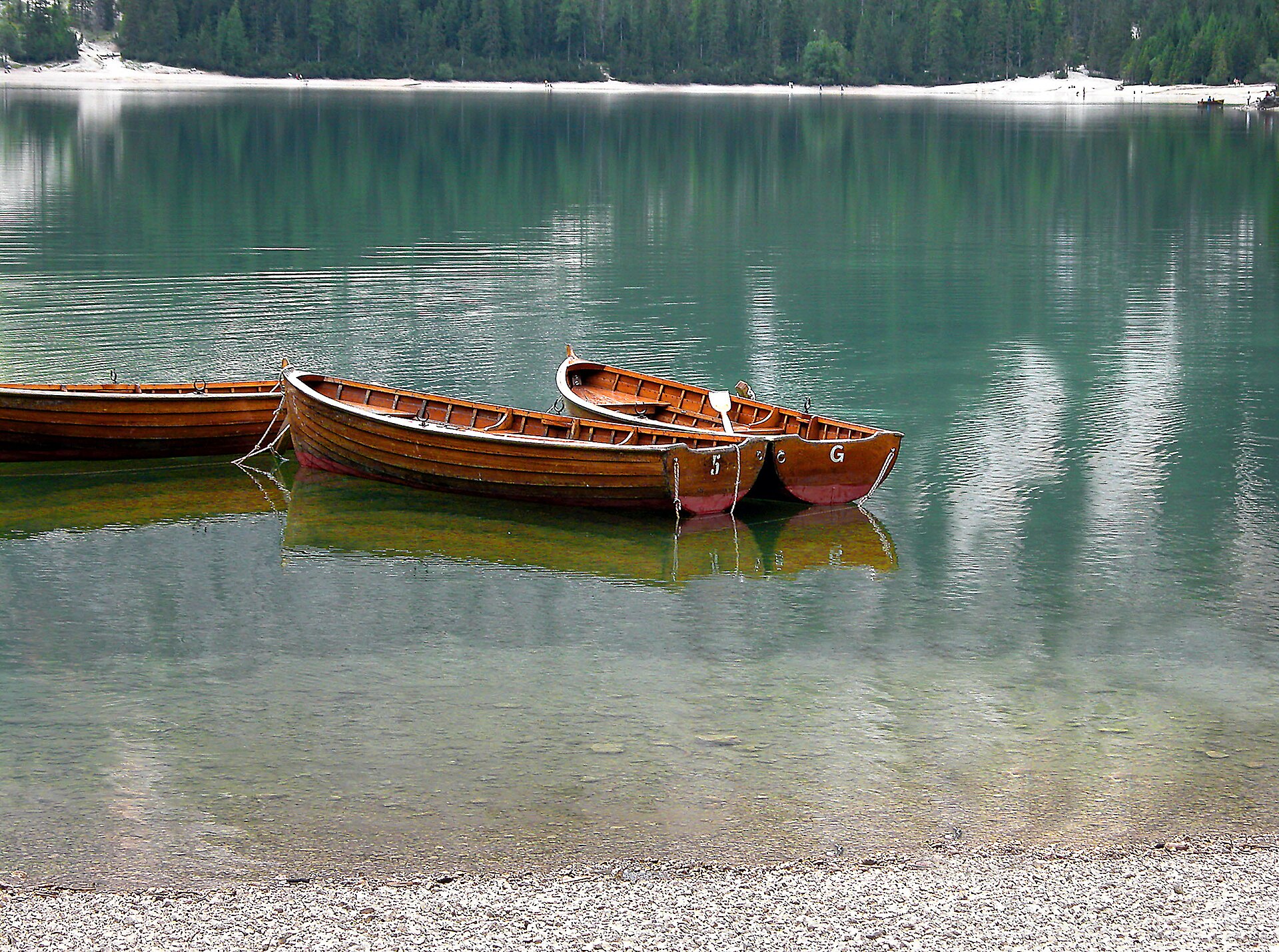
The poster lake, and the one with the strictest rules. As of 2026, from roughly July 1 to September 15, the valley road to Braies is closed to private cars between about 9:00 and 16:00 — you can only arrive by bus, on foot, by bike, or with a pre-booked reservation. The shuttle buses are line 442 from Dobbiaco/Toblach and line 439 from the Welsberg/Monguelfo train station, and in that summer window they require advance online booking and prepayment. Once a bus is full, it’s full. There’s a small saving grace: holders of the südtirolmobil/Mobilcard pass get a handful of seats per trip held back without reservation, but I wouldn’t bank a whole day on it. Book ahead.
Alpe di Siusi (Seiser Alm)
The easiest big-name destination to do car-free, almost by design. The road up to Compatsch on the plateau is closed to private cars from 9:00 to 17:00 in season — so even people with cars can’t drive up by day. From Bolzano you take bus 170 to Seis/Siusi (around 40 minutes, roughly €5), then the Alpe di Siusi Aerial Cableway up to Compatsch, where electric shuttle buses fan out across the meadow. If you’re based in Ortisei, there’s a direct cableway up to the Alpe from the village. This is the place where not having a car is genuinely an advantage.
Tre Cime di Lavaredo
The icon. The trailhead at Rifugio Auronzo sits at the top of a toll road, and you reach it car-free on shuttle bus 444 from Dobbiaco, which runs roughly late May to mid-October (about 14 runs a day at peak, first bus out of Dobbiaco around 07:45). As of 2026 it requires online booking with prepayment for the whole season, costs around €22 round trip, and — important — it does not stop in Misurina, so don’t plan to hop off there. From the Cortina side, DolomitiBus also runs seasonal services up toward Misurina and the Tre Cime area; check the day’s timetable on Google Maps.
The rest
For Cinque Torri, the Lagazuoi cable car, Passo Falzarego, and the passes around Cortina, DolomitiBus runs seasonal lines from the Cortina bus station — these are your day-hike feeders, and because they’re on Google Maps, planning them is painless. For Val Fiscalina near Sesto, bus 446 connects from San Candido. The consistent lesson: pick a base, then check which named line serves your target hike, and check whether that line needs a booking.
The Dolomites by bus: the route chains that actually work
Let me give you the concrete chains, the ones I’d actually ride, rather than vague reassurance. Names and exact times shift year to year, so treat these as the logic; confirm the day’s timetable on suedtirolmobil (South Tyrol) or Google Maps (Belluno).
Venice/Verona → Val Gardena (Ortisei). Train to Bolzano. Walk five minutes to the bus station. SAD bus 350 to Ortisei (around an hour). Done — you’re in a walkable village with cableways at the edge of town. From the north, you can instead train to Bressanone and take bus 360.
Bolzano → Alpe di Siusi. Bus 170 to Seis/Siusi (~40 min), then the Aerial Cableway to Compatsch. If you’re staying in Fiè/Völs or Castelrotto, local buses link them in.
Val Gardena → Alta Badia (Corvara). Connect via the passes in summer — a short hop on a valley bus to Plan de Gralba, then onward over Passo Gardena toward Corvara. It’s two buses and depends on the high-season pass routes running, so check the date. Out of season you instead loop out via Bressanone/Brunico by train and bus.
Venice airports → Cortina. This is where you skip the train. Cortina Express runs coaches from Venice Marco Polo and Treviso airports (via Mestre) up to Cortina in around two and a half hours; ATVO and Flixbus run comparable services. Book the coach online, especially in summer and ski season. This is by far the simplest car-free arrival for Cortina.
Train → Cortina (the rail way). If you prefer rail, take the train toward Calalzo di Cadore (the Venice line) and connect by DolomitiBus line 30 up to Cortina; or come over the top to Dobbiaco and take a bus down. Both work; the Cortina Express is usually faster and simpler from a Venice airport.
The connection that doesn’t exist — plan around it
Here’s the honest limitation, the thing I promised to come back to. In summer there is no direct, quick bus between Val Gardena and Cortina. They’re geographically close and feel like they should be linked, but they sit in different transport worlds (South Tyrol vs. Belluno) separated by high passes. To get from Ortisei to Cortina by public transport in summer, you route the long way around — out through the Pustertal by bus and train, then back down — and it eats most of a day (think 3.5 hours or more). In winter the Cortina Express connects Cortina to Alta Badia, which is bus-linked to Val Gardena, so it’s a bit easier.
What this means for your plan: don’t design a car-free trip that hops casually between the Val Gardena side and the Cortina side mid-trip. Pick one cluster (South Tyrol or Belluno), go deep, and if you must do both, treat the move between them as a planned travel day, or break it with a night in the Pustertal.
Basing yourself in a walkable village (the real secret)
Everything above gets ten times easier if you make one good decision: base in a village where you can walk to a lift station and a bus stop, and where you don’t need transport for dinner.
That’s the whole trick. Car-free in the Dolomites isn’t about heroically bussing everywhere — it’s about choosing a base where the mountain comes to you, and using buses for the occasional bigger outing.
The villages that nail this:
- Ortisei — my top pick. Cableways to Seceda, Alpe di Siusi, and Resciesa all leave from the edge of a flat, walkable town center. You could do four days of world-class hiking and never board a bus.
- Siusi allo Sciliar / Fiè allo Sciliar — small, walkable, with the Alpe di Siusi cableway right there.
- Cortina d’Ampezzo — a real town with restaurants and shops in walking distance and the main bus station central, so day trips to Tre Cime, Cinque Torri, and Misurina launch easily.
- San Candido — the loveliest base in Alta Pusteria, on the train line, well-linked to the Braies and Tre Cime shuttles.
The base I’d gently steer car-free travelers away from is deep Alta Badia (Corvara, San Cassiano) for a short trip — it’s gorgeous, but you spend real time getting in and out, and locals there lean on cars. For a longer stay it’s fine; for three days it’s a poor use of your hours. For the full reasoning, see where to stay in the Dolomites.
What you can actually do in the Dolomites without a car
Let me be candid, because the breezy “you don’t need a car!” posts skip the trade-offs.
Very doable car-free: Basing in Val Gardena or Alpe di Siusi and hiking for days. Reaching Tre Cime, Lago di Braies, and Alpe di Siusi via their shuttles (booked ahead). Day-tripping around Cortina. Sunrise at a cableway-served viewpoint if the first lift is early enough. A one-way hut-to-hut hike that ends at a different village — actually easier without a car, because you’re not tethered to a parked vehicle.
Awkward or not realistic car-free: Sunrise photography at a lake before the first bus runs (Braies, Misurina at dawn). Reaching the handful of trailheads and small lakes with no bus at all. Hopping spontaneously between the Val Gardena and Cortina sides. Visiting in the shoulder weeks when the seasonal buses and lifts aren’t running. Moving a large family with heavy luggage between multiple bases every two days — possible, but you’ll spend your trip loading bags on and off.
If your dream trip is dawn light on empty lakes and total spontaneity across the whole range, rent a car for those days and read renting and driving a car in Italy first. If your dream trip is hiking from a comfortable base with the lifts and buses doing the work, go car-free and don’t think twice.
A few practical habits that save the day
A handful of small things that consistently separate a smooth car-free trip from a stressful one:
- Watch the last bus. Seasonal lines stop early. Always know the last departure from your trailhead before you set off, and build in a margin. Missing the last bus down is the classic Dolomites mistake.
- Learn both names. Every place has an Italian and a German name (and sometimes a Ladin one). Bolzano is Bozen, Bressanone is Brixen, Alpe di Siusi is Seiser Alm, Lago di Braies is Pragser Wildsee. Bus signs may show only one. Know both.
- Pre-book the booking-required shuttles. Braies (439/442), Tre Cime (444), and the Seceda cableway all need advance online reservations in 2026. Do it before you leave home, or at least the night before.
- Pack light. You’ll be lifting bags on and off buses and trains. This is the single biggest argument for a small bag.
- Don’t overstuff your days. One major outing per day is plenty when buses and lifts are involved. Trying to bag three valleys in a day means you live by the timetable and enjoy nothing.
Where this fits in your bigger plan
This article is one piece. For the rest of the Dolomites, lean on these:
- The full overview: the Dolomites travel guide.
- Sleeping smart: where to stay in the Dolomites.
- A day-by-day plan: the suggested route through the Dolomites.
- The trails themselves: the best hiking in the Dolomites and the icon, Tre Cime di Lavaredo.
- The car-free villages in depth: the Val Gardena travel guide and the Cortina d’Ampezzo travel guide.
- Going in winter: the Italian Alps in winter.
And on the getting-around-Italy side, which feeds directly into all of this:
- The big picture: Italy transportation and trains in Italy — the slow regional lines you.ll ride out to the gateways.
- Flying in: Italy airports — Venice and Verona are your nearest.
- Pairing it with the lowlands and timing the trip: the complete guide to Venice and Veneto and Italy in September, peak car-free season in the Dolomites.
Final thoughts
The “you need a car” advice is half true and half lazy. For dawn lakes and total spontaneity, sure, rent one. But for the trip most people actually want — hiking from a beautiful base while the buses and lifts do the heavy lifting — the Dolomites are one of the easiest mountain regions in Europe to enjoy without driving. Pick a walkable village in the right valley, go in season, pre-book the few shuttles that demand it, and let the steering wheel stay at home.
Questions travellers ask
Can you really visit the Dolomites without a car?
Yes. Base yourself in a walkable South Tyrol village like Ortisei or Siusi, reach it by train to Bolzano or Bressanone plus a bus, and let the cableways and seasonal shuttles handle the rest. It works best from roughly June to mid-October, when the full bus and lift network is running. Outside those months, going car-free gets much harder.
How do I get from Venice to the Dolomites without a car?
Two ways. For Cortina, take a direct Cortina Express, ATVO, or Flixbus coach from Venice Marco Polo or Treviso airport — around two and a half hours. For the South Tyrol side (Val Gardena, Alpe di Siusi), take a train from Venice to Bolzano, then a regional bus into the valley. Choose by which side of the Dolomites you’re staying on.
What is the Dolomites public transport like — is it reliable?
On the South Tyrol side it’s excellent: frequent SAD buses, regional trains, and the suedtirolmobil app with real-time info. On the Belluno/Cortina side, DolomitiBus is solid and synced to Google Maps. The big caveat is seasonality — service is dense in summer and winter and sparse in the shoulder weeks, so timing your visit matters more than anything.
Do I need to book buses in advance in the Dolomites?
For most regular routes, no — you just board and pay or tap your pass. But several popular shuttles now require advance online booking and prepayment, including the Lago di Braies shuttles (lines 439 and 442) and the Tre Cime shuttle (line 444), as of 2026. The Seceda cableway also moved to timed-entry booking. Reserve those ahead; the rest you can ride spontaneously.
Is the Mobilcard worth it?
If you’re not getting a free guest pass and you’ll be moving between valleys, yes. The Südtirol Mobilcard covers buses, regional trains, and select cableways for 1, 3, or 7 days — the 7-day adult card is around €52 as of 2026. But first ask your hotel: many South Tyrol accommodations hand guests a free transit card at check-in that covers buses, which can make the Mobilcard unnecessary.
Can I reach Lago di Braies by bus?
Yes, on shuttle lines 442 (from Dobbiaco) and 439 (from Welsberg/Monguelfo station). The catch: in the core summer window — roughly July 1 to September 15, 2026 — the valley road closes to cars by day and the shuttles require advance online booking. Once a bus fills, you can’t board. Reserve ahead, and consider an early or late visit to dodge the busiest runs.
How do I get to Tre Cime di Lavaredo without driving?
Take shuttle bus 444 from Dobbiaco up to Rifugio Auronzo, the trailhead for the famous loop. It runs roughly late May to mid-October, costs around €22 round trip, and requires online booking with prepayment for the whole 2026 season. Note it does not stop in Misurina. From the Cortina side, DolomitiBus also runs seasonal services toward the Tre Cime area.
Which Dolomites base is best without a car?
Ortisei in Val Gardena, for most people. Cableways to Seceda, Alpe di Siusi, and Resciesa leave from the edge of a flat, walkable town, so you can hike for days without a bus, and the SAD network handles bigger outings. Siusi and San Candido are strong runners-up. I’d avoid deep Alta Badia for a short car-free trip — you lose too much time getting in and out.