Puglia Itinerary: 5, 7 and 10 Days
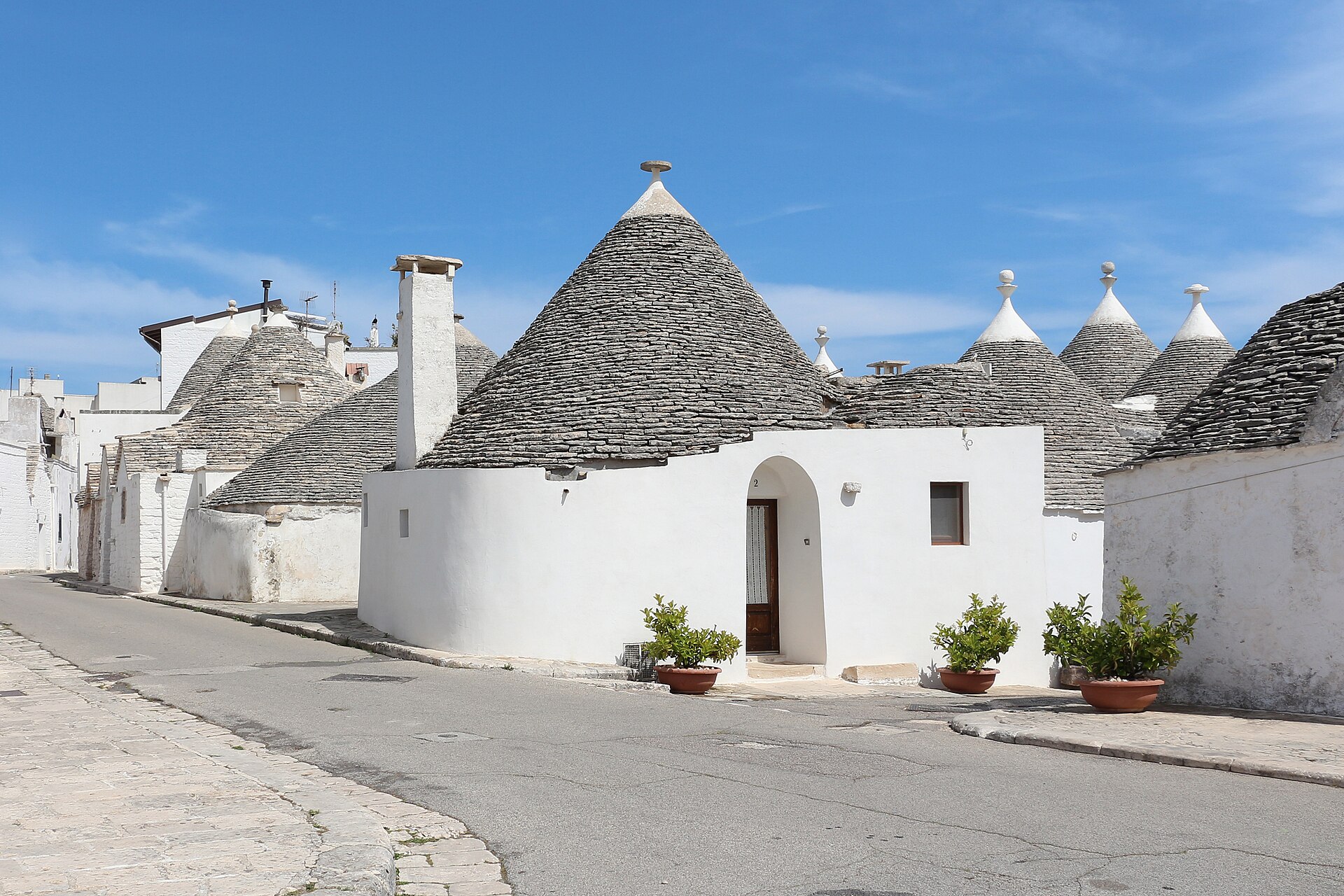
The first time I drove out of Bari airport toward the Valle d’Itria, I did the thing everyone does. I tried to see all of it. Polignano at breakfast, Lecce by lunch, a beach near Otranto by five, trulli at golden hour. I spent the day in the car and remember the autostrada better than any of the towns.
So here is the honest version. The best Puglia itinerary is not the one with the most pins on the map. It is the one that picks a handful of bases, parks the car for two or three nights at a time, and lets you actually sit in a piazza after dark. Below are three routes — a tight 5-day loop, a comfortable 7 days in Puglia, and a slow 10-day version that adds the Salento coast and a second beach base. Pick by how many nights you really have, not by how many towns you can name.
This is for road-trippers: people flying into Bari or Brindisi, renting a car, and treating the heel of Italy as a driving holiday. If you want the deep-dive on a single town or a ranked list of beaches, I link out to those as we go — this page is about the route.
The three routes at a glance
Here is the whole decision on one screen. Bases are where you sleep; everything else is a day trip or a stop on a transfer day.
| Trip length | Route (in order) | Bases / nights | Best for |
|---|---|---|---|
| 5 days | Bari → Valle d’Itria → Matera → Bari | Valle d’Itria (3), Matera (1) + 1 near airport | First-timers, trulli + white towns, a taste of Matera |
| 7 days | Bari → Monopoli/Polignano → Valle d’Itria → Matera → Lecce | Valle d’Itria (3), Matera (1), Lecce (2) | The classic — coast, countryside, two cities, no rush |
| 10 days | Bari → coast → Valle d’Itria → Matera → Lecce → Salento coast | Valle d’Itria (3), Matera (1), Lecce (3), Salento beach (2) | Slow travel, beaches, Otranto/Gallipoli, a real holiday |
A few things to notice before you commit. All three are loops or near-loops that start and end around Bari, so you never drive the same road twice. All three put the Valle d’Itria (Alberobello, Locorotondo, Cisternino, Ostuni, Martina Franca) at the center, because it is small, central, and stuffed with the postcard towns. And all three include Matera, which is technically in Basilicata, not Puglia — but it is a 1-hour drive from the Valle d’Itria and skipping it would be a mistake.
For the full regional overview and how Puglia fits into a bigger trip, the Puglia & Southern Italy travel guide is the parent to everything here.
Why I plan Puglia by nights, not by towns
Puglia is bigger than it looks on a map. The temptation is to base in one place — say, a pretty trullo near Ostuni — and day-trip to everything. That works for the Valle d’Itria, where the towns are 15 to 30 minutes apart. It falls apart the moment you try to reach Lecce or the Salento beaches, which are 60 to 90 minutes south.
So I split every Puglia trip into two or three “zones” and sleep inside each one:
- The Valle d’Itria + nearby coast (Alberobello, Locorotondo, Cisternino, Ostuni, Martina Franca, plus Monopoli and Polignano on the water). This is your countryside base.
- Matera, one night, on its own — because the Sassi at night and the Sassi at dawn are two different things, and a day trip robs you of both.
- Lecce and the Salento (Lecce city, Otranto, Gallipoli, the southern beaches). This is your “deep south” base, and it only earns its place at 7+ days.
Change hotels two or three times across a week, no more. Every hotel change costs you a half-day to check out, drive, find parking, and re-settle. Three bases over seven nights is the sweet spot. For where exactly to sleep in each zone — trullo vs masseria vs town apartment — I keep a running breakdown in where to stay in Puglia.
The 5-day Puglia itinerary (trulli, white towns, a night in Matera)
Five days is a long weekend stretched. You can’t do the Salento and you shouldn’t try. Stay north, stay central, and accept that this is a “greatest hits of the Valle d’Itria + Matera” route. It is honestly a lovely trip and the one I’d give a first-timer with limited time.
Fly into Bari. Pick up the rental car at the airport — not in the city — so you skip Bari’s traffic and one-way maze on day one. (More on the car in a moment.)
Day 1 — Arrive, drive to your Valle d’Itria base (about 1 hour). From Bari airport it’s roughly an hour to the area around Locorotondo, Cisternino, or Martina Franca. Drop the bags, do nothing ambitious. Walk the nearest town at the evening passeggiata, eat early, sleep. Base here for three nights.
Day 2 — Alberobello and the white towns. Start early at Alberobello before the tour buses (it gets busy by mid-morning; go at 8:30 and you’ll have the trulli lanes nearly to yourself). It’s 15 minutes from there to Locorotondo, another 15 to Cisternino, and about 25 more to Ostuni, the White City on its hill. That’s a full, satisfying loop with short drives between each. Siesta in the afternoon like the locals — the towns half-close from roughly 1 to 4 anyway.
Day 3 — Coast day: Polignano a Mare and Monopoli. Drive down to the water (around 40 minutes from the Valle d’Itria). Polignano a Mare is the cliff-top showstopper with the famous beach wedged in a ravine; Monopoli just south is the quieter, lived-in fishing town I prefer for lunch. If you want to actually swim and lie on sand, check the best beaches in Puglia for which coves are worth the detour.
Day 4 — Matera (about 1 hour from the Valle d’Itria). Drive over in the morning, park at the top (you cannot drive or park inside the Sassi — leave the car in a garage or lot in the upper town and walk down). Spend the day wandering the cave city, then stay the night. Sleeping in a cave hotel and seeing the Sassi lit up after the day-trippers leave is the whole point. Full detail in the Matera travel guide.
Day 5 — Matera to Bari, fly out. Dawn over the Sassi if you can wake for it, then the 1-hour-or-so drive back toward Bari airport. If your flight is late, an hour in Bari’s old town — focaccia, the fish market, Basilica di San Nicola — is a fine send-off.
What you’re skipping at five days: Lecce, Otranto, Gallipoli, and the southern beaches. That’s fine. That’s literally the 7- and 10-day routes.
7 days in Puglia: the route I’d actually book
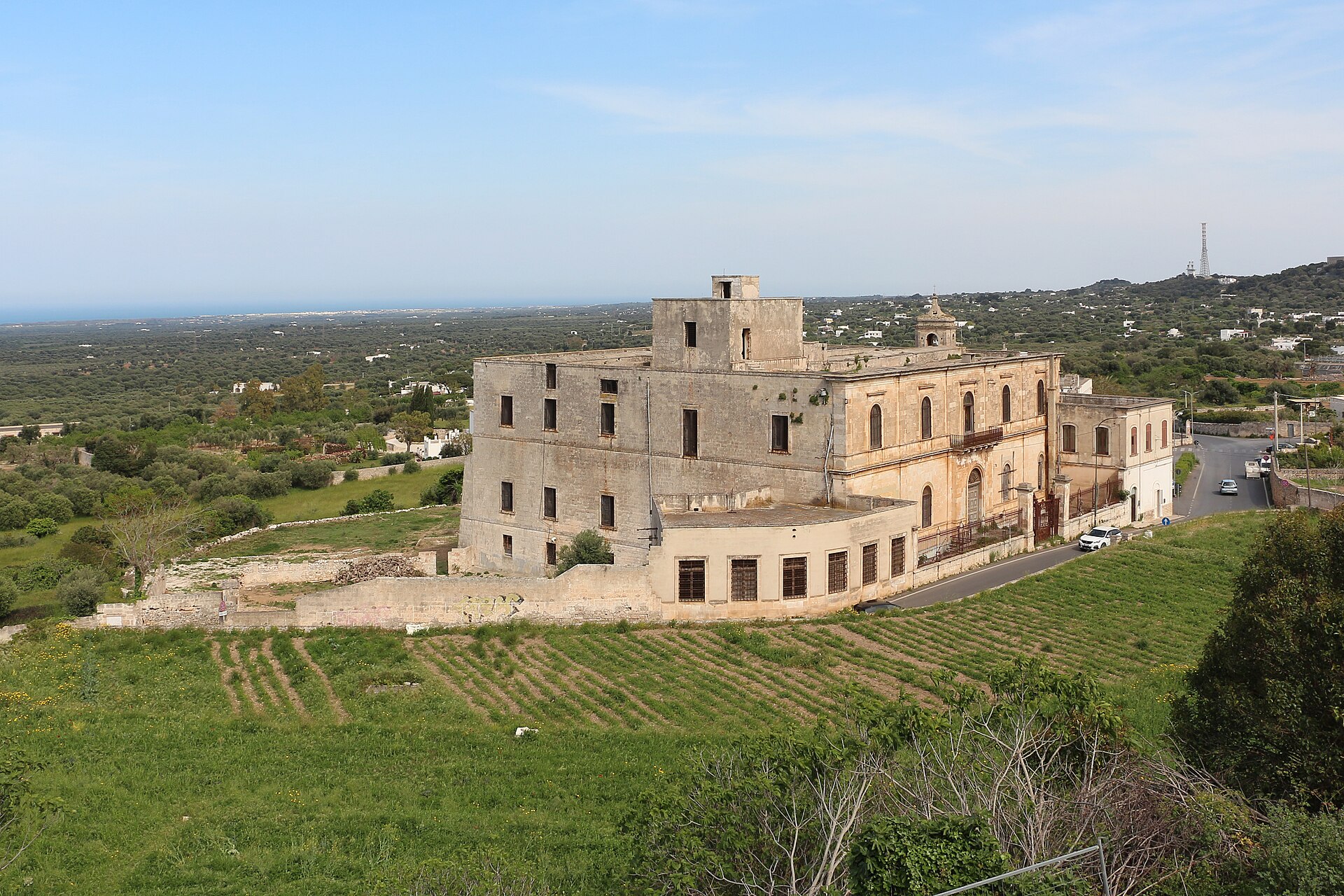
Seven days is the one most people should book. It is enough to add the coast at the start and Lecce at the end without ever feeling like you’re racing. This is the classic Puglia road trip, and it’s the version I send friends.
Here’s the night-by-night, built as a clean loop from Bari so you don’t backtrack:
- Day 1 — Bari to Monopoli/Polignano, then up to the Valle d’Itria. Land, grab the car, and head for the coast first. It’s about 40 minutes from Bari airport to Monopoli. Spend the afternoon on the lungomare, then drive 30–40 minutes inland to your Valle d’Itria base for the night. (Base here three nights.)
- Day 2 — Alberobello, Locorotondo, Cisternino, Ostuni. The white-town loop from the 5-day plan above. Short drives, long lunches.
- Day 3 — Slow day in the countryside. Martina Franca’s baroque center, a masseria lunch, a swim if it’s warm, a pasta-making afternoon. Don’t schedule it tight. This is the day you’ll remember.
- Day 4 — Drive to Matera (about 1 hour), overnight in the Sassi. Same as the 5-day version — park up top, walk down, stay the night.
- Day 5 — Matera to Lecce, via the Valle d’Itria if you skipped anything. It’s roughly 2 to 2.5 hours Matera to Lecce. Break it up: a stop in Alberobello if you missed it, or in Grottaglie for ceramics. Arrive in Lecce by late afternoon and base here two nights.
- Day 6 — Lecce, the “Florence of the South.” The baroque is genuinely jaw-dropping — Basilica di Santa Croce, Piazza del Duomo, the Roman amphitheater in the main square. Eat rustico leccese and pasticciotto. Park outside the ZTL (the limited-traffic zone in the old town) and walk in.
- Day 7 — Beach or Gallipoli, then fly out of Brindisi. Gallipoli’s old town is a 30-minute drive from Lecce; the beaches around Porto Cesareo are similar. Then drop the car and fly home from Brindisi, which is closer to Lecce than Bari is. Book the rental as a one-way (Bari pick-up, Brindisi drop-off) — it usually costs only a little more and saves you a long drive back north.
That last point matters and the listicles often miss it: fly in and out of different airports. In on Bari, out of Brindisi, with a one-way car. It turns the whole trip into a smooth south-bound arc instead of a loop that forces you back to where you started.
If you’d rather see the city first, you can flip it — start with a night in Bari and end in the countryside — but I think the coast-then-countryside-then-Lecce flow builds better. For more on sequencing a week, the broader Italy itineraries hub has the same logic applied to other regions.
The 10-day Puglia itinerary (add the Salento and a beach base)
Ten days is where Puglia stops being a tour and starts being a holiday. You keep the whole 7-day spine and add a proper beach base in the Salento plus an extra day or two in Lecce. This is the version where you finally get lazy mornings.
Build it like this:
- Days 1–4: Identical to the 7-day plan. Coast on arrival, three nights in the Valle d’Itria, then over to Matera for a night.
- Days 5–7: Lecce, three nights. With three nights you can give Lecce a full day, day-trip to Otranto on the east coast (about 35–45 minutes), and drive the coastal road down toward Santa Maria di Leuca, Italy’s southern tip, stopping for swims along the way. Otranto’s mosaic-floored cathedral and Aragonese castle are worth the trip on their own.
- Days 8–9: A Salento beach base, two nights. Move down to the coast properly — around Gallipoli on the Ionian side, or near Otranto/Torre dell’Orso on the Adriatic. This is your do-nothing stretch: beach clubs, long seafood lunches, sunset aperitivo. Pick your stretch of sand from the guide to the beaches of Puglia.
- Day 10: Drive back to Brindisi (or Bari) and fly out. Brindisi is close to the Salento; if your flight only works from Bari, it’s about 2 hours north from the deep south, so leave time.
If you have a couple of extra days beyond ten, the honest place to spend them is more beach and more slow countryside — not a sprint north to the Gargano peninsula. Which brings me to the thing every Puglia route has to decide.
What I’d skip (and why the north is a trap on a short trip)
The Gargano (the “spur” above Bari — Vieste, the Foresta Umbra, the Tremiti islands) is beautiful. It is also a separate trip. Vieste is around 2.5 hours from Bari and roughly 4 from Lecce, and there’s no airport closer than Bari to start from up there. Tack it onto a 7-day southern loop and you’ll spend two of your seven days just driving to and from it.
Same logic for Trani, Andria, and Castel del Monte north of Bari: lovely, but they pull you the wrong direction. On 5 or 7 days, skip them without guilt. Save the north for a dedicated Gargano trip later. The full list of what’s worth your limited hours is in things to do in Puglia.
The other thing I’d skip: trying to “do” a beach catalogue. Puglia has a hundred good beaches and you will see maybe four. Pick one or two on the way to somewhere else rather than driving to a “best” beach 90 minutes off your route.
Car vs train: do you actually need to drive?
Short answer: for the route above, yes, rent a car. The whole appeal of Puglia is the countryside between the towns — the olive groves, the trulli in the fields, the masseria you didn’t plan to stop at. Public transport only connects the dots; the car is the trip. That’s why I frame this as a road trip.
But you can do a no-car version if you skip the rural Valle d’Itria interior and stick to places on the rail line. Here’s the honest transport picture as of 2026 (always reconfirm on the operator sites):
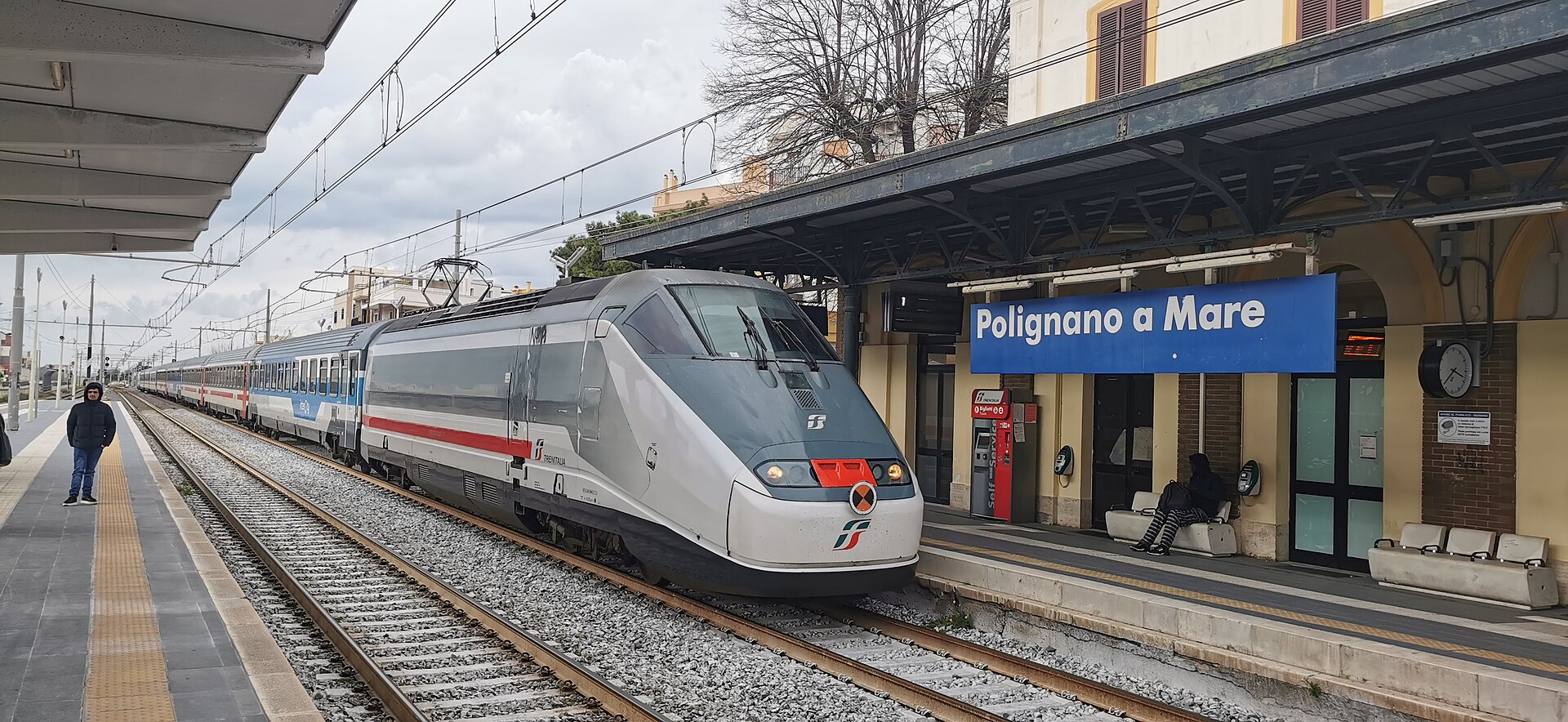
- Bari to Lecce runs frequently on Trenitalia — roughly hourly, around 1h20 on the fast trains and up to ~1h45 on regionals, with regional services stopping at Brindisi (per Trenitalia). So Bari, Brindisi, and Lecce are easy without a car.
- Bari to Matera is the awkward one. It’s on a separate regional line, Ferrovie Appulo Lucane (FAL), with a change at Altamura, taking around 1h45 to 2 hours, and — this is the catch — service is much reduced on Sundays (check the Ferrovie Appulo Lucane site before you rely on it).
- The Valle d’Itria towns (Alberobello, Locorotondo, Martina Franca) sit on the Ferrovie del Sud Est (FSE) line, which works but is slow and infrequent. Day-tripping the white towns by train is doable but eats time.
- Getting from Rome by high-speed train to Bari is around 4 hours (per Trenitalia); Brindisi is a touch further.
So: car for the real road trip; train-only is possible if you base in cities (Bari, Lecce) and accept skipping the rural interior. For how Italian trains, regional lines and ZTLs actually work, see Italy transportation. And if you’re weighing the cost of a rental against rail passes, the Italy travel budget page lays out the trade-offs.
Driving and parking in Puglia: the stuff nobody warns you about
The driving itself is easy — open roads, light traffic outside Bari, short hops. The friction is parking and the ZTL.
ZTL (Zona a Traffico Limitato). Most historic centers — Lecce, Ostuni, Martina Franca, Polignano — have limited-traffic zones where driving in without a permit triggers a fine that arrives by mail months later. The rule: park outside the old town in a marked lot or on the blue lines, and walk in. Never follow your GPS straight into a medieval centro storico.
Blue lines vs white lines. Blue-lined spaces are paid (pay at the meter or via an app); white lines are free; yellow are reserved. Keep a few euro coins in the car for meters that don’t take cards.
Matera parking specifically. You cannot park in the Sassi. Leave the car in a garage or lot in the upper town — many cave hotels have an arrangement with a nearby garage and will shuttle your bags down. Confirm this when you book.
Rental logistics. Pick up at the airport, not in town. Most people pay somewhere in the ballpark of a few tens of euros a day for a small car, though rates swing hard by season — expect a premium in July and August and book early (rates and availability as of 2026 vary widely, so compare). A small car is genuinely better here: the lanes in the old towns and the masseria driveways were not built for an SUV.
Bari vs Brindisi: which airport to fly into
Both are small, both have good European connections (and neither has direct North American flights — you’ll connect through Rome, Milan, or another European hub). The choice is about geography:
- Bari is the bigger airport with more flights, and it’s the right arrival point for almost every itinerary here because it sits closest to the Valle d’Itria, where you’ll spend the most nights.
- Brindisi is smaller but much closer to Lecce and the Salento. It’s the ideal departure airport if your trip ends in the south.
My default for 7+ days: in on Bari, out of Brindisi, one-way rental car. For a 5-day loop that returns north, Bari round-trip is simpler. If you’re stitching Puglia onto a wider Italy trip, the Italy travel guide covers how it connects to the rest of the country, and Amalfi Coast & Campania is the natural pairing if you’re coming from the Naples side.
How to sequence the towns so you never backtrack
The single biggest thing that ruins a Puglia itinerary is doing it as a series of out-and-back day trips from one hotel. You end up driving the same 40 minutes twice a day.
The fix is to think of the trip as a one-way line that bends south:
Bari (north) → coast (Polignano/Monopoli) → Valle d’Itria (center) → Matera (a westward dip) → Lecce (south) → Salento beaches (deep south) → Brindisi (fly out).
Every base is roughly “further along the line” than the last. Matera is the one westward detour, and it’s worth it. Done this way, your luggage moves with you, you’re never retracing, and each drive is a transfer toward the next place rather than a round trip from a fixed point. That’s the difference between a relaxed week and a week in the car.
For the bigger-picture version of this — pacing, transfers, and not over-scheduling across all of Italy — the Italy travel tips page is the companion read.
When to go
Quick version, since timing changes everything about a beach-heavy region. Late May to mid-June and mid-September to October are the best windows: warm enough to swim, the countryside green, prices and crowds well below the July–August peak. I lean toward early autumn if swimming matters — the sea is at its warmest after a summer of heating.
July and August are hot (often well into the 30s C / 90s F) and the coast and Gallipoli get packed with Italian holidaymakers; everything is open and lively but you’ll pay peak rates and fight for beach space. Winter is quiet and cheap, with many seaside spots shuttered — fine for the towns and food, not for the beach. For the month-by-month picture across the whole country, see the month-by-month guide to Italy.
Where the food fits into all this
I won’t turn this into a restaurant list, but a route note: Puglia’s food is regional down to the town. Bari does focaccia and raw seafood; the Valle d’Itria does bombette (stuffed pork rolls) at the butcher-grills of Cisternino; Lecce does pasticciotto and rustico; the coast does sea urchin and whatever came off the boat. Build a long lunch into each base rather than treating meals as fuel between sights. Deeper on the regional specialties and where they come from in Italy food & wine travel.
Final thoughts
The Puglia trip people remember isn’t the one that ticked every town. It’s the one where they parked the car in a trullo driveway for three nights, learned which café in Cisternino did the best bombette, and watched Matera’s Sassi go gold at dusk because they stayed the night instead of rushing back.
So plan by nights. Three bases for a week, four for ten days, an in-on-Bari-out-of-Brindisi arc that never doubles back. Drive short, eat long, skip the north this time. Do that and Puglia gives you exactly what it’s good at — slow, sun-warmed, and far less crowded than the Italy everyone else is fighting over.
Questions travellers ask
Is 7 days enough for Puglia?
Yes — seven days is the sweet spot for a first trip. It’s enough to see the coast (Polignano, Monopoli), the Valle d’Itria white towns, a night in Matera, and Lecce with a beach day, all without rushing, if you base in three places. It’s not enough to add the Gargano in the north too; save that for a separate trip.
Do you need a car in Puglia?
For the countryside, effectively yes — the Valle d’Itria’s trulli towns, masserie, and quiet beaches aren’t well served by transit, and the drives between them are the best part. You can do a city-only version by train (Bari, Brindisi, Lecce are well connected), but you’ll miss the rural interior that makes Puglia special. Rent the car at the airport.
What is the best month to visit Puglia?
May, June, September, and October. Late spring and early autumn give you warm weather, swimmable sea (warmest in September), green landscapes, and far smaller crowds than July and August. Early autumn is my pick for beach trips. Peak summer is hot and packed, especially around Gallipoli and the Salento beaches; winter is quiet with many coastal spots closed.
Should I fly into Bari or Brindisi?
Bari for most itineraries — it has more flights and sits closest to the Valle d’Itria where you’ll spend the most nights. Use Brindisi as your departure airport if your trip ends in Lecce or the Salento, since it’s much closer to the south. The ideal setup for a week or more is in on Bari, out of Brindisi, with a one-way rental car.
How many days do you need in Puglia?
Five days covers the trulli towns and Matera as a fast first taste. Seven days is the comfortable standard, adding the coast and Lecce. Ten days lets you add the Salento, Otranto, and a proper beach base for slow days. Beyond ten, spend the extra time on more beach and countryside rather than racing north to the Gargano.
Is Matera in Puglia?
No — Matera is in the neighboring region of Basilicata. But it sits about an hour’s drive from the Valle d’Itria and is on the FAL train line from Bari (with a change at Altamura), so nearly every Puglia itinerary includes it. Stay a night to see the cave-city Sassi lit up in the evening and quiet at dawn; a day trip doesn’t do it justice.
Can you do Puglia without a car using trains?
Partly. Trenitalia connects Bari, Brindisi, and Lecce frequently (Bari–Lecce is roughly hourly), so a city-focused trip works. Matera is reachable on the separate FAL line but with reduced Sunday service, and the rural Valle d’Itria towns sit on slow, infrequent Ferrovie del Sud Est lines. You can see the highlights car-free, but you’ll trade away the countryside and a lot of flexibility.
How far is Lecce from Bari?
By car it’s about 1.5 to 2 hours on the autostrada. By train it’s faster and easier — roughly 1h20 on the quickest Trenitalia services and up to about 1h45 on regional trains, running close to hourly through the day (per Trenitalia, as of 2026). That’s why Lecce works as the southern anchor of a Puglia road trip: easy to reach, then a great base for Otranto, Gallipoli, and the Salento.