Best Places to Stay in Puglia
Puglia is the heel of Italy, and it is long. Longer than people expect, and the part that makes it special, the trulli and the white towns and the Maldives-blue beaches, is spread out across that length in a way that quietly punishes anyone who books one cute hotel and assumes they’ll see it all from there.
So here is the honest answer on where to stay in Puglia: for a first trip, base in the Valle d’Itria (Ostuni or a nearby masseria) for trulli, white towns, and easy reach of both coasts, and add a second base in Lecce if you want the baroque and the best southern beaches. Split the region north and south. Rent a car. That covers most people. This guide is for the traveler choosing a town, not someone who just wants a list of things to do.
If you have only three or four nights, one base is fine. More than that, use two. And if you genuinely cannot or will not drive, you can still have a wonderful time, but you’ll plan around the train line, and your map of Puglia shrinks to its coast.
The quick comparison: six bases at a glance
I’ll go deep on each below, but if you want the shape of the decision first, here it is. “Car needed” is my read as of 2026, based on how the trains and buses actually run, not how the map looks.
| Base | Best for | Vibe | Car needed? | Cost |
|---|---|---|---|---|
| Bari | Arrival, transport hub, a real working city | Gritty, lively, un-touristy old town | No (best no-car base) | €€ (city prices) |
| Monopoli | Coast + culture without a car | Pretty port town, sandy coves nearby | No | €€€ |
| Polignano a Mare | The famous cliff cove, a short stay | Postcard-gorgeous, busy, small | No | €€€€ |
| Ostuni | First-time all-rounder, white town + both coasts | Whitewashed hilltop, polished, popular | Strongly yes | €€€ |
| Valle d’Itria (masseria/Locorotondo/Cisternino) | Trulli, slow countryside, central touring | Olive groves, farmhouse stays, quiet | Yes (essential) | €€–€€€€ |
| Lecce | Baroque city + Salento beaches | Golden stone, students, great food & bars | No to reach, yes for beaches | €€ |
| Gallipoli / Otranto | Pure beach holiday, deep south | Seaside resort energy, summer buzz | Yes (mostly) | €€€ |
The pattern you’ll notice: the no-car options cluster on the Adriatic coast, and everything that involves trulli, the prettiest hill towns, or the famous Ionian beaches quietly assumes you’re driving.
First, the only two questions that matter
Before you fall in love with a specific hotel photo, answer these two, in order. They decide everything else.
How many nights? Three or four, pick one base and day-trip. Five or more, take two bases, one in the north (Valle d’Itria) and one in the south (Salento). Trying to see Lecce and Polignano and Alberobello from a single hotel means you spend your holiday in the car instead of in Puglia.
Will you have a car? This is the one people underestimate. Public transport in Puglia is fine along the coast and genuinely poor everywhere else. With a car, the whole region opens up and a countryside Puglia base becomes the dream it looks like online. Without one, your good options drop to a handful of towns on the main train line, and you’ll accept some compromises, slower indirect journeys, walks from far-flung stations, and bus timetables that thin out on Sundays.
I’ll come back to the car decision in its own section because it’s that important. But hold those two answers in your head as you read the bases below.
Bari: where most people land, and an underrated first base
Most flights land at Bari (BRI), the region’s main airport, with low-cost carriers like Ryanair and easyJet flying in from across Europe, plus connections to the rest of Italy. (The smaller Brindisi airport, BDS, is handier for the deep south, more on that later.) From Bari airport you can take a train, a bus, a pre-booked transfer, or a taxi into the city; just know the airport’s own train station is around a 15-minute walk from arrivals, so give yourself time.
Here’s my slightly contrarian take: Bari is a better base than its reputation suggests, especially if you’re not driving. It is a real, working southern Italian city, not a manicured tourist set, and Bari Vecchia, the old town, has come a long way, all tangled lanes, women making orecchiette in their doorways, and a sea wall to walk at sunset. It is the transport hub. From Bari Centrale you can reach Polignano, Monopoli, Brindisi, and Lecce on frequent trains, and Alberobello on the slower regional line, which makes day-tripping genuinely workable without ever touching a rental car.
A caveat worth stating plainly: the streets right around Bari’s train station aren’t the prettiest, and like any port city you keep an eye on your bag at night. None of that is unusual for an Italian transit city, and it didn’t put me on edge the way some bigger stations do. Stay in or near Bari Vecchia rather than out by the rails, and the city shows you its good side.
Who Bari is for: arrivers, no-car travelers who want a lively city base, and anyone who likes their Italy a little rough around the edges and a lot less staged. Two or three nights here at the start of a trip is time well spent, and it spares you a same-day airport-to-countryside scramble.
Monopoli and Polignano a Mare: the coast you can reach by train
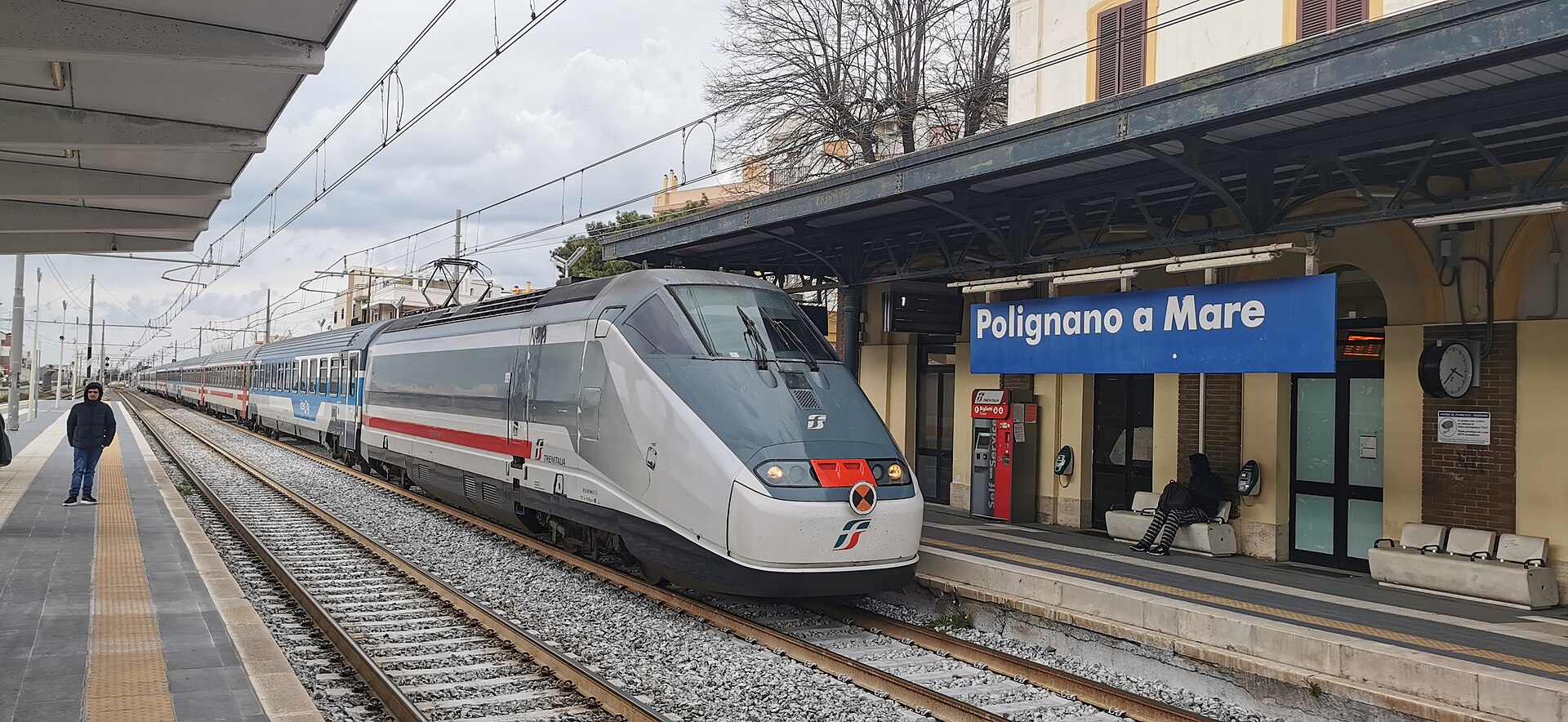
If your heart is set on the sea and you don’t want to drive, this stretch of the Adriatic is the answer. Both Monopoli and Polignano a Mare sit on the main Bari–Lecce train line, so they connect easily to Bari, to each other, and onward south.
Polignano a Mare is the one you’ve seen: white houses stacked on a cliff above a cove of impossibly clear water, with cliff divers in summer. It is small and it is gorgeous and it gets very busy, with day-trippers pouring in from Bari and beyond. As a base it works for a short, scenic stay, but it’s compact and prices reflect its fame, so I’d lean toward a couple of nights rather than a week.
Monopoli, ten minutes down the line, is the one I’d actually base in for longer. It’s a proper town with a working fishing harbour, a handsome old centre, a cathedral, and sandy coves dotted along its coast, more lived-in than Polignano, a bit calmer, and better value for what you get. It hits the sweet spot of culture and beach access without a car, and you can still pop to Polignano for the morning when you want the famous photo.
Who this coast is for: beach-and-pretty-town travelers without a car, couples, and anyone who wants to swim in the morning and eat seafood by a harbour at night. With a car it’s still lovely, but the no-car crowd is who benefits most, because here, finally, the trains do the work for you.
Ostuni: the first-timer’s all-rounder (just bring a car)
If I had to send a first-time visitor to one base for a week, and they were happy to drive, it would be Ostuni or somewhere in the surrounding Valle d’Itria. Ostuni is the “White City,” a dazzling tumble of whitewashed houses on a hilltop, with sea views on one side and a sea of silver olive groves on the other. It’s beautiful, it has range, from simple B&Bs to polished four-star places and nearby masserie, and it sits roughly between the trulli country and the coast, so day trips fan out in every direction. The Adriatic beaches are only about 20 to 30 minutes away by car.
That “by car” is doing real work, though, and it’s where Ostuni catches people out. The town is technically on the main Bari–Lecce train line, but its station sits about 3 km below the old town. The drill, as travelers keep reporting, is to walk a few minutes from the platform to a bus stop, take the bus up the hill into town, and then walk another ten minutes to the centre, all of which is a lot less charming with luggage in August heat. Doable for a day trip; tiresome as your daily reality. Ostuni rewards drivers and mildly punishes everyone else.
Who Ostuni is for: first-timers who want one beautiful, central, do-everything base and have a car; couples and small groups who like a polished town with good restaurants; anyone splitting the difference between countryside and coast.
The Valle d’Itria: trulli, masserie, and the most central touring base
This is the dreamy middle of Puglia, the part that fills your camera roll. The Valle d’Itria rolls between Bari and Brindisi in low hills stitched with dry-stone walls, olive trees, vineyards, and those conical-roofed trulli houses you came for. Alberobello has whole streets of trulli (and the crowds to match); Locorotondo is a tidy white-and-grey circular hilltop town; Cisternino and Martina Franca are slower, more local, and very easy to love over a long dinner. The best part for planning: these towns sit barely 20 to 30 minutes apart, so from one base you can string together two or three in a single relaxed day.
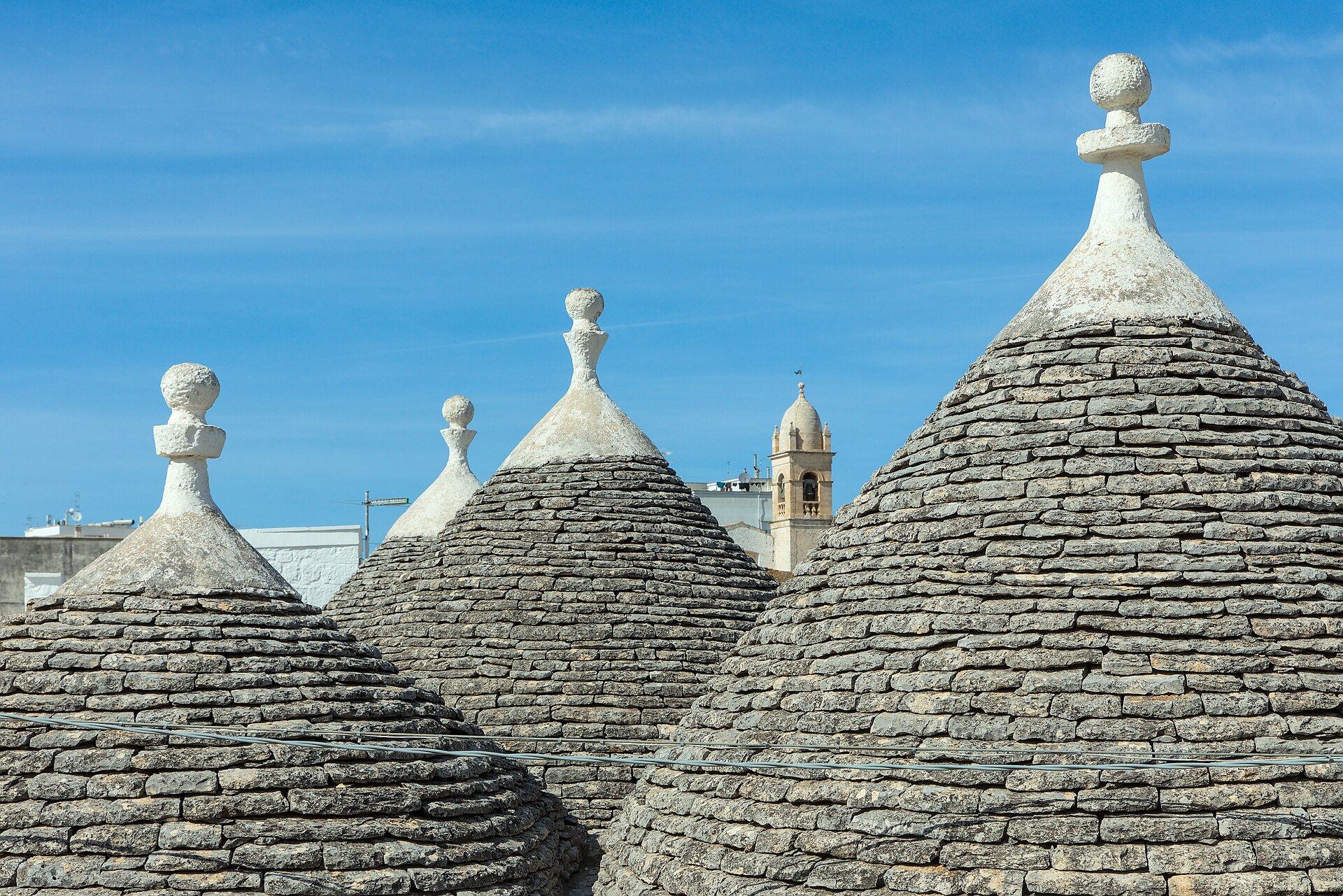
The signature way to do this region is a masseria, a fortified old farmhouse turned guesthouse or small hotel, often with a pool, an olive grove, and a kitchen cooking what grows on the land. A masseria in the Valle d’Itria is, for many people, the entire point of Puglia. It is also where the car stops being a suggestion and becomes a requirement: these places sit down long farm tracks, miles from any station, and the romance evaporates fast if you’re trying to reach one by bus.
A word on the trains here, because the map lies. The inland towns are served by the FSE (Ferrovie del Sud Est) line, which winds from Bari toward Martina Franca and on to Lecce. It exists, and you can technically reach Alberobello, Locorotondo, and Martina Franca on it, but it’s slow, infrequent, and thins out badly on weekends, sometimes needing a change at Putignano or Martina Franca. Worse, several stations (Cisternino, among others) sit 3 to 5 km outside the actual towns, with patchy shuttle buses and few taxis unless you’ve booked one ahead. The Valle d’Itria is the clearest case in all of Puglia where a car turns a frustrating trip into a magical one.
Who the Valle d’Itria is for: drivers, romantics, foodies, couples and families who want a slow countryside Puglia base with a pool and a view, and anyone for whom “staying in a trullo or a masseria” is non-negotiable. If that’s you, just rent the car and don’t look back.
Lecce and the Salento: baroque city plus the best beaches in the south
Down at the bottom of the heel, the Salento is a different mood, hotter, more Mediterranean, more about the sea. Lecce is its capital and one of my favourite cities in the south: honey-coloured baroque stone carved into wild flourishes, a relaxed student energy, excellent food, and some of the best cocktail bars and wine in Puglia. People call it the “Florence of the South,” and while that oversells the comparison, it captures that this is a city you stay in for the city itself, not just as a launchpad.
Lecce is also a smart base because it’s reachable without a car, it sits on the main line down from Bari and Brindisi, so you can arrive by train and settle in. From here the rest of the Salento is close: Otranto, Gallipoli, and a string of smaller towns are roughly 30 to 40 minutes out, which makes the south an easy region to explore from a single base.
The catch is the same one that haunts the rest of Puglia: the famous beaches need a car. The Salento has two coasts, and they’re different. The Adriatic side around Otranto is rockier and more dramatic, with clear water and swimming spots like Baia dei Turchi. The Ionian side is the soft sandy one, the “Maldives of Salento,” with pale sand and shallow turquoise water at places like Pescoluse and Punta Prosciutto. Reaching the best of these without your own wheels ranges from awkward to impossible. There’s a seasonal Salento in Bus network (roughly mid-June to mid-September) that links coastal towns, and the FSE line crawls down to Gallipoli and (with changes) toward Otranto, but it’s slow going. For beaches, the Salento wants a car even more than the north does.
Who Lecce and the Salento are for: travelers who want a real baroque city plus serious beach time; people happy to base in one place for the whole southern leg; foodies; and anyone heading deep south who’s ready to drive to the good sand.
Gallipoli and Otranto: base here for a pure beach holiday
If the trip is mainly about the beach, base directly on the Salento coast rather than in Lecce. Gallipoli has an old town on a little island, a sandy strip nearby, and a summer party energy that’s either exactly what you want or exactly what you don’t. Otranto is gentler, with a pretty harbour, a striking cathedral, and access to those clear Adriatic swimming spots to the north.
These make great single bases for a beach-focused week, especially in high summer when the seasonal buses run and the towns are fully alive. Outside peak season, the transport thins right out and a car becomes close to essential for reaching beaches and the smaller villages inland. Cost-wise the Salento is generally a touch cheaper than the polished Valle d’Itria, and the boutique places that do exist often give you more for your money than you’d get further north in Italy.
Who Gallipoli and Otranto are for: sun-and-sea travelers who want to wake up by the water, summer crowds who like a bit of buzz (Gallipoli) or a quieter harbour town (Otranto), and anyone treating the south as a beach holiday rather than a touring one.
Where to stay in Puglia for your specific trip
Let me translate all of that into plain recommendations by what you actually want, because “best base” depends entirely on your trip. So, more concretely, where to stay in Puglia based on what you’re after:
- For trulli and white hill towns: the Valle d’Itria, in a masseria, trullo, or a town like Locorotondo or Cisternino. Car essential.
- For the famous cliff-and-cove coast without a car: Monopoli (for a longer stay) or Polignano a Mare (for a short, scenic one). Both on the train line.
- For one do-everything first-time base: Ostuni, with a car, central to both the trulli and the coast.
- For baroque cities and southern beaches: Lecce, reachable by train; rent a car for beach days.
- For a pure beach holiday in the deep south: Gallipoli or Otranto on the Salento coast.
- For arrival and a no-car city base: Bari, the transport hub, with day trips by train.
One base or two? (Bari, Monopoli, Lecce)
The single most useful planning move in Puglia is splitting your trip north and south. The region is too long to see comfortably from one spot once you’re past a few nights, so think of it as two halves: the north (the coast plus the Valle d’Itria) and the south (the Salento). Here’s how I’d handle the Bari Monopoli Lecce question depending on your length of stay.
3–4 nights, one base. Pick a single base and accept you’re focusing on the north. Bari if you’re not driving and want a city; Monopoli if you want the coast without a car; Ostuni or a Valle d’Itria masseria if you’ve got a car and want countryside and trulli. You won’t reach the deep Salento beaches on this timeline, and that’s fine; save them for next time.
5–8 nights, two bases. This is the sweet spot, and the classic split runs along the Bari Monopoli Lecce spine. Start north in the Valle d’Itria or on the coast around Monopoli, then move south to Lecce for the baroque and the Salento beaches. One move, two distinct halves of Puglia, far less driving than trying to do it all from one place. If you’re flying in and out of the same airport, Bari makes a natural first stop and Lecce a natural last one.
No car, the whole way. Build the trip along the main train line and lean on three towns: Bari, Monopoli (or Polignano), and Lecce. All three are on the frequent Adriatic service, all three are worth real time, and between them they give you a working city, a coastal town, and a baroque capital, with day trips by train from each. You’ll skip the masserie and most of the trulli, but you’ll have a smooth, low-stress trip on rails.
Whatever you choose, build the itinerary around nights and transfers, not a wishlist of sights. Decide your bases first, then slot the day trips in. It’s the difference between a trip that flows and one that has you packing and repacking every other morning.
The blunt car reality (read this before you book)
I’ve hinted at it throughout, so here’s the whole truth in one place: Puglia really rewards a car, or a masseria you’re happy to anchor at. Public transport is good along the Adriatic coast and poor almost everywhere else. That single fact shapes every other decision.
With a car: the entire region opens up. Trulli, masserie, both coasts of the Salento, the empty inland villages, the beaches that don’t have a station anywhere near them, all of it is yours, and the distances are short (Valle d’Itria towns are 20–30 minutes apart, Salento towns 30–40). The flip side is Italian driving, ZTL restricted zones in town centres, and parking, so read up before you go and don’t drive into the old towns.
Without a car: stay on the Bari–Lecce line and accept the compromises. The main Trenitalia Adriatic service connecting Bari, Polignano, Monopoli, Brindisi and Lecce is your spine, and it’s frequent and reliable. Inland and deep south, you’re on the FSE line and regional buses (FSE, FlixBus, Marino, STP, plus the seasonal Salento in Bus), which are slow, less frequent, and prone to stations sitting kilometres outside the towns they serve. Buy a paper regional ticket and you must validate it on the platform or risk a fine; many local buses are cash-only or want a ticket bought at a tabaccheria first. None of it is impossible, it just takes patience and earlier trains than you’d think.
A middle path some people take: skip the rental but pre-book private or shared transfers for the awkward legs (a masseria arrival, an airport run), then walk and train the rest. Operators like Viator and GetYourGuide list these; expect upwards of €120 for a private car on a roughly one-hour drive as of 2026, with shared shuttles cheaper but slower. It’s a fine compromise for one or two key transfers, less so as a way to see the whole region.
If you remember one thing from this guide: decide the car question honestly before you fall for a countryside hotel photo. The masseria in the olive grove is the dream, and it’s a logistical headache without your own wheels.
How many nights, and a sample shape
A common question is how long Puglia needs. My short answer: five to seven nights to do it justice, ideally split into two bases. Fewer than that and you’re choosing the north or the south, not both.
A shape that works well for a week with a car: two or three nights in the north (a Valle d’Itria masseria, or Ostuni, with day trips to Alberobello, Locorotondo, Polignano, and Monopoli), then three or four nights in Lecce or on the Salento coast for the baroque city and the southern beaches. Fly into Bari, out of Brindisi if the schedule allows, and you barely backtrack.
For a no-car week: two nights Bari, two or three nights Monopoli (with a Polignano day trip), then two or three nights Lecce, all linked by the main train line. Smooth, scenic, and you never touch a steering wheel.
Final thoughts
Puglia isn’t hard to plan because there’s too little to choose from. It’s hard because it’s long, and the loveliest bits are scattered down a heel that quietly assumes you’re driving. Get the two big calls right, how many nights and whether you’ll have a car, and the rest falls into place: one base for a short trip, a north–south split for a longer one, and a town that matches the holiday you actually want. Decide on the car honestly, book your nights around transfers rather than a sight-by-sight wishlist, and Puglia rewards you the way it rewarded me, slowly, generously, and far better than any single hotel photo can promise.
For the bigger picture on choosing a region, start with our guide to where to stay in Italy, and if you’re weighing destinations, see the best cities to stay in Italy. For the kind of farmhouse stay Puglia is famous for, read up on agriturismo and masseria stays in Italy and our take on hotels vs Airbnb in Italy. To go deeper on the region itself, see the Puglia and southern Italy travel guide and this southern Italy itinerary. Sort the logistics with our notes on driving in Italy, Italy’s airports, getting around Italy by train and bus, and the best time to visit Italy. For more route ideas, browse our full set of Italy itineraries, and if your trip touches the islands or the coast, Italy’s ferries are worth a
Questions travellers ask
What is the best town to base yourself in Puglia?
For a first trip with a car, Ostuni or a Valle d’Itria base (a masseria, or a town like Locorotondo) is the strongest all-rounder, central to trulli and both coasts. Without a car, base in Monopoli or Bari on the main train line, then add Lecce for the south.
Which part of Puglia is best, the north or the south?
Neither wins outright, they’re different trips. The north (Valle d’Itria and the Adriatic coast) is about trulli, white hill towns, and easy coastal day trips. The south (the Salento, around Lecce) is about baroque architecture and the best beaches. With five or more nights, do both as a north–south split.
Where should I stay in Puglia for the first time?
Base in the Valle d’Itria or Ostuni for a do-everything first base with a car, or along the Bari–Monopoli–Lecce train line if you’re not driving. First-timers usually want the trulli, a white town, and a stretch of coast, and that combination is easiest from a central northern base plus a few day trips.
Can you visit Puglia without a car?
Yes, but with compromises. Stay on the main Trenitalia Adriatic line, Bari, Polignano, Monopoli, Brindisi, Lecce, where trains are frequent. Inland trulli towns and the famous Salento beaches are hard or slow to reach by the regional FSE trains and seasonal buses. Expect walks from far-flung stations and patchy weekend timetables.
Should I fly into Bari or Brindisi?
Bari (BRI) is the bigger airport with more connections and the better base if you’re starting in the north or not driving. Brindisi (BDS) is smaller but closer to the Salento, handy if you’re heading straight south to Lecce, Otranto, or Gallipoli. Flying into one and out of the other can save backtracking.
How many days do you need in Puglia?
Five to seven nights is the sweet spot, enough to split the trip into a northern base and a southern one without rushing. Three or four nights works for a single base focused on one half of the region. Two weeks lets you slow right down and add Matera (just over the border in Basilicata) without stress.
Is the Valle d’Itria or Salento better for beaches?
The Salento has the standout beaches, the soft Ionian “Maldives of Salento” sand and the clear Adriatic coves near Otranto, but you’ll want a car to reach the best of them. The Valle d’Itria isn’t on the coast itself, though it’s a short drive to lovely Adriatic spots like Polignano and Monopoli.
Is Lecce a good base for Puglia?
Lecce is an excellent base for the south. It’s a beautiful baroque city worth staying in for itself, it’s reachable by train from Bari and Brindisi, and the rest of the Salento (Otranto, Gallipoli) is 30–40 minutes away. Rent a car for beach days, but you can enjoy the city and nearby towns car-free.