Best Bases in Tuscany Without a Car
People picture Tuscany as a car: a convertible on a cypress-lined road, a vineyard at the end of a gravel drive, you in sunglasses. That image is real, and it is also the single biggest reason people overcomplicate a trip that the regional rail network can carry on its own.
So here is the short version. The best answer to where to stay in Tuscany without a car is Florence. It sits at the center of Tuscany’s train and bus web, so you can sleep in one bed for a week and still reach Pisa, Lucca, Siena, and Arezzo as easy day trips. Want a smaller home base? Siena or Lucca both work well. This is for travelers who’d rather walk old streets and ride trains than drive and park.
The catch is that “Tuscany without a car” and “Tuscany without a car anywhere you want” are two different trips. The cities and the rail-line towns are genuinely easy. The postcard countryside — deep Chianti, the Val d’Orcia, the hill towns floating above the vines — is where car-free travel gets hard, and where a tour or a hired driver quietly does the work a rental would have done. I’ll be straight with you about that line throughout, because most articles blur it and you end up booking a farmhouse you can’t reach.
The quick comparison: five car-free bases
Before the detail, here’s how the realistic bases stack up. “Car-free rating” is my read on how much of a real Tuscany trip you can pull off from each one using only trains and buses.
| Base | Car-free rating | Vibe | Best car-free day trips | Cost (relative) |
|---|---|---|---|---|
| Florence | Excellent | Big-city Renaissance, busy, endless | Pisa, Lucca, Siena (bus), Arezzo, Pistoia | High |
| Siena | Very good | Medieval, intimate, slower | San Gimignano (via Poggibonsi), Chianti tours, Florence | Mid |
| Lucca | Very good | Walled, flat, relaxed, local | Pisa, Florence, Viareggio coast | Mid |
| Pisa | Good | Working city, airport, river | Lucca, Florence, Livorno coast | Lower |
| Arezzo | Good | Quiet, antique, under-touristed | Florence, Cortona (+ bus), Perugia | Lower |
If you only remember one row, remember Florence. Everything else is a flavor choice on top of it.
Florence base Tuscany: why the anchor city wins
Let me make the case plainly. The reason a Florence base Tuscany trip beats every alternative for car-free travelers is geometry. Florence’s main station, Santa Maria Novella (you’ll see it written as Firenze S.M.N.), is the hub that the regional network is built around. Trenitalia regional trains fan out from it west toward Pisa and Lucca, south toward Siena and Arezzo, north toward Pistoia and Bologna. You are rarely more than 90 minutes from somewhere worth a whole day.
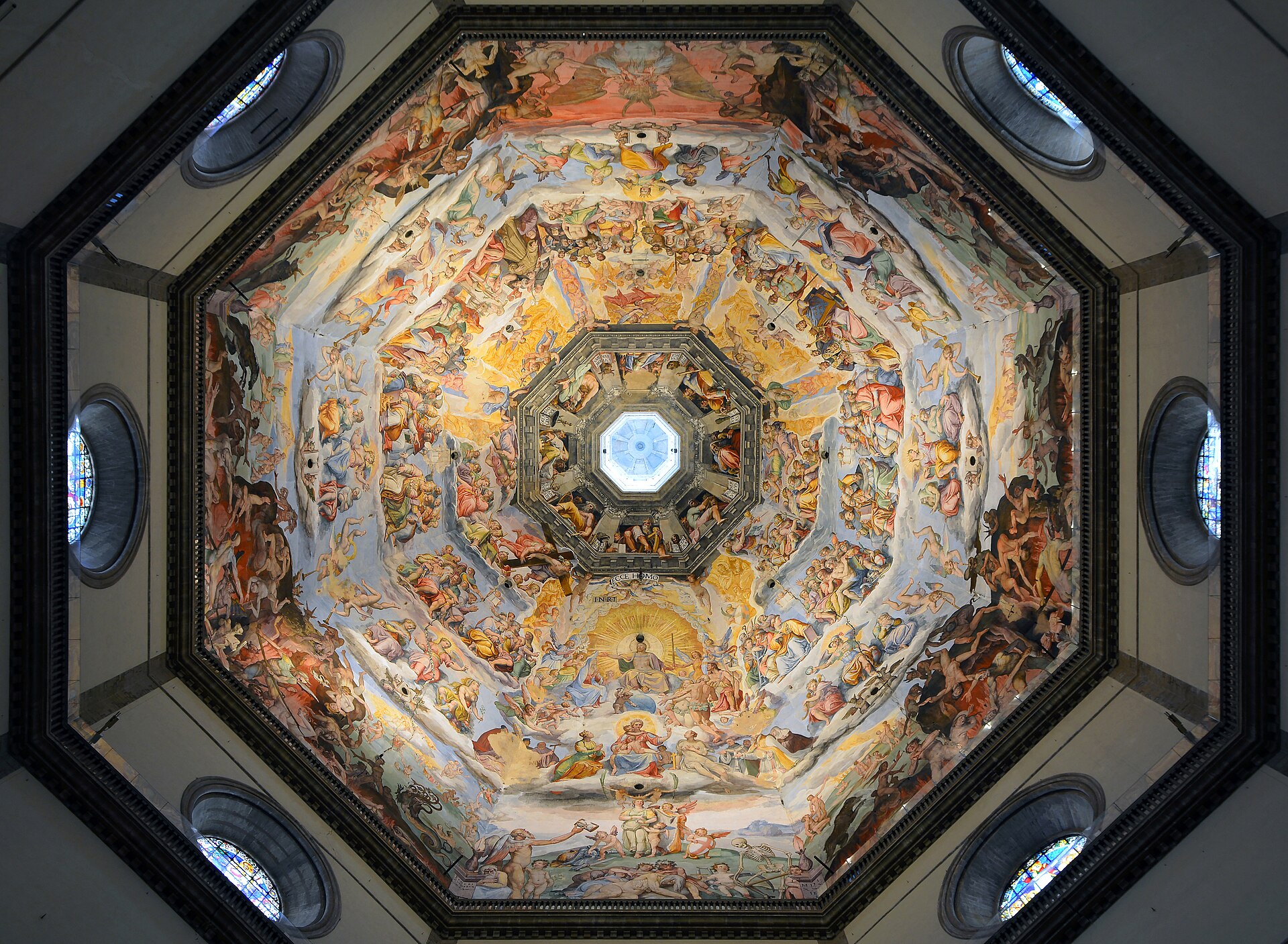
That station is also a five-minute walk from the cathedral. So your “transport hub” and your “sightseeing” are the same neighborhood, which is the quiet luxury of basing here — you roll a suitcase off a train and you’re already in the old city.
Practically, this means you unpack once. No hauling bags between three hotels, no checkout-day mornings burned on logistics, no repacking. You build your week as a wheel: Florence is the center, and each day you either stay in the city or ride a spoke out and back. As of 2026, regional fares on these short hops are cheap — generally in the high single digits to low teens of euros each way — and you usually don’t need to reserve a seat on regional trains. You do need to validate a paper ticket in the little machine on the platform before boarding, or the fine treats your stamped-less ticket as no ticket at all.
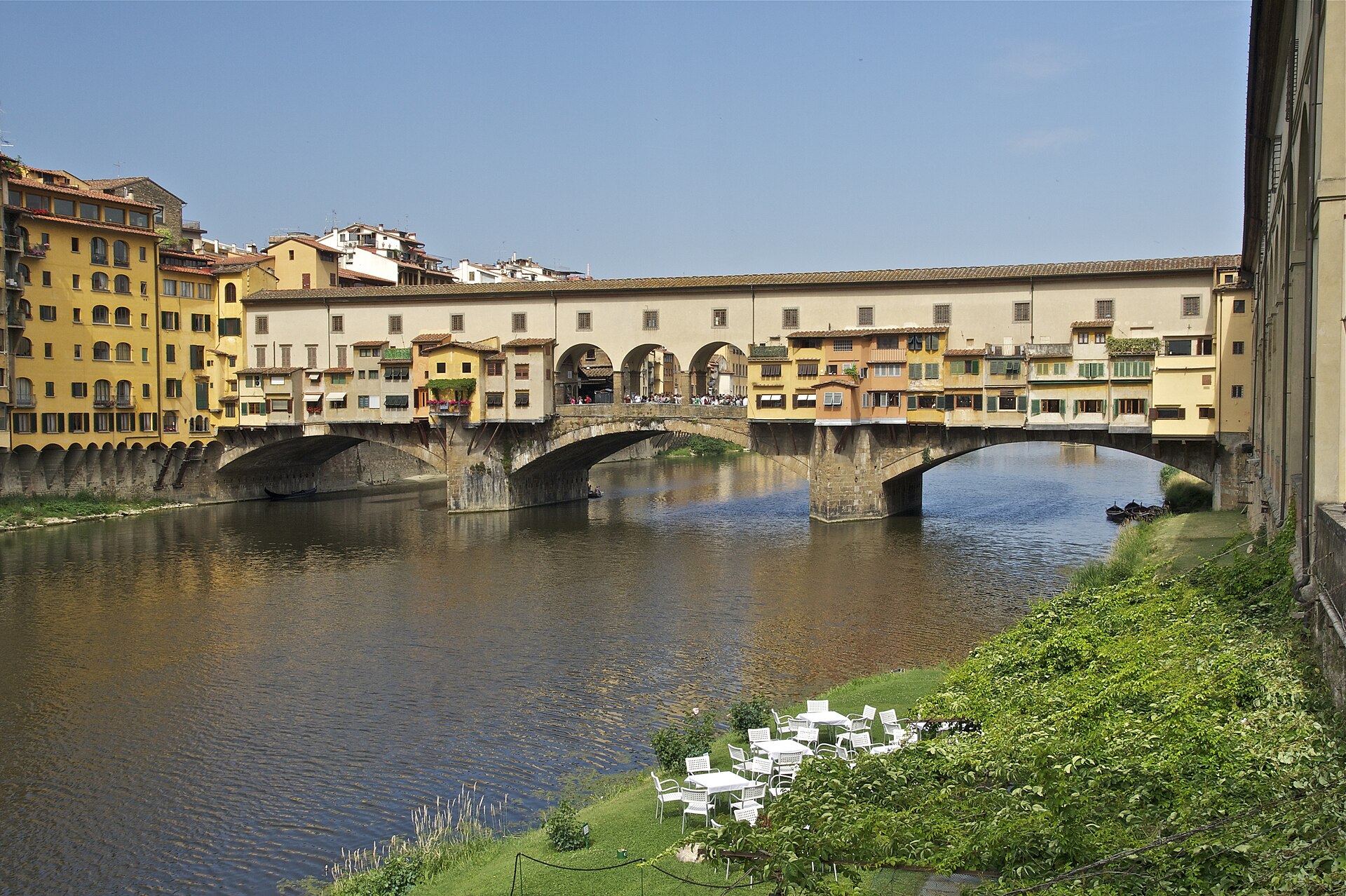
A few honest notes on Florence itself. It is crowded, and in summer the area right around the Duomo and Ponte Vecchio gets genuinely thick with people. It can feel less like a place to live for a week and more like a monument you’re queuing through. The fix is where you sleep and when you move: stay slightly off the tourist spine, do your day trips on the busiest days, and save your Florence wandering for early mornings and evenings when the day-trippers have gone home. For the deeper neighborhood breakdown, our guide on where to stay in Florence gets into specific districts, and the broader Florence Tuscany travel guide covers the city beyond the headline sights.
How many nights? I’d give Florence itself a real three days minimum before you start day-tripping — the Uffizi, the Accademia, the Duomo complex, the Oltrarno, and the climb to Piazzale Michelangelo for sunset all deserve unhurried time. Our 3 days in Florence itinerary maps that out, and if you want the long menu of options, things to do in Florence has more than you can fit. Then add a day per day trip. For most people that lands at five to seven nights in one Florence apartment, which is about the most efficient Tuscany trip a car-free traveler can build.
Tuscany base by train: realistic day trips from Florence
Here’s the heart of it. If you make Florence your Tuscany base by train, these are the day trips that genuinely work without a car — and I’m sorting them by how easy they actually are, not by how famous they are.
Pisa — easiest of all
Pisa is the layup. Regional trains run frequently from Florence S.M.N. to Pisa Centrale, and the ride is roughly an hour. From Pisa Centrale you can walk to the Leaning Tower and the Campo dei Miracoli in about 20 minutes, or take a quick local bus if you’d rather not. Half a day covers the famous square comfortably; a full day lets you see the river, the Palazzo Blu, and the parts of Pisa that aren’t the tower.
Lucca — pair it with Pisa or do it slow
Lucca sits on the same western line. Direct regional trains from Florence take around an hour and a half, running roughly a couple of times an hour, and the station is a short walk from the walls. The thing to know — and the thing that makes Lucca such a gift for car-free travelers — is that Pisa and Lucca are close together on the same route, so you can chain them in one day: Pisa in the morning, Lucca in the afternoon, back to Florence at night. I think Lucca deserves its own slow day, though. Renting a bike and riding the full circuit of the Renaissance walls is one of the most relaxed afternoons in Tuscany.
Siena — go by bus, not the train
This is the counterintuitive one, so read it twice. Siena has a train station, but the train from Florence is the awkward option: some departures make you change at Empoli, the trip runs around an hour and a half, and worst of all the station sits at the bottom of the hill, leaving you a 30-minute uphill walk (or a set of escalators and a local bus) to reach the Piazza del Campo.
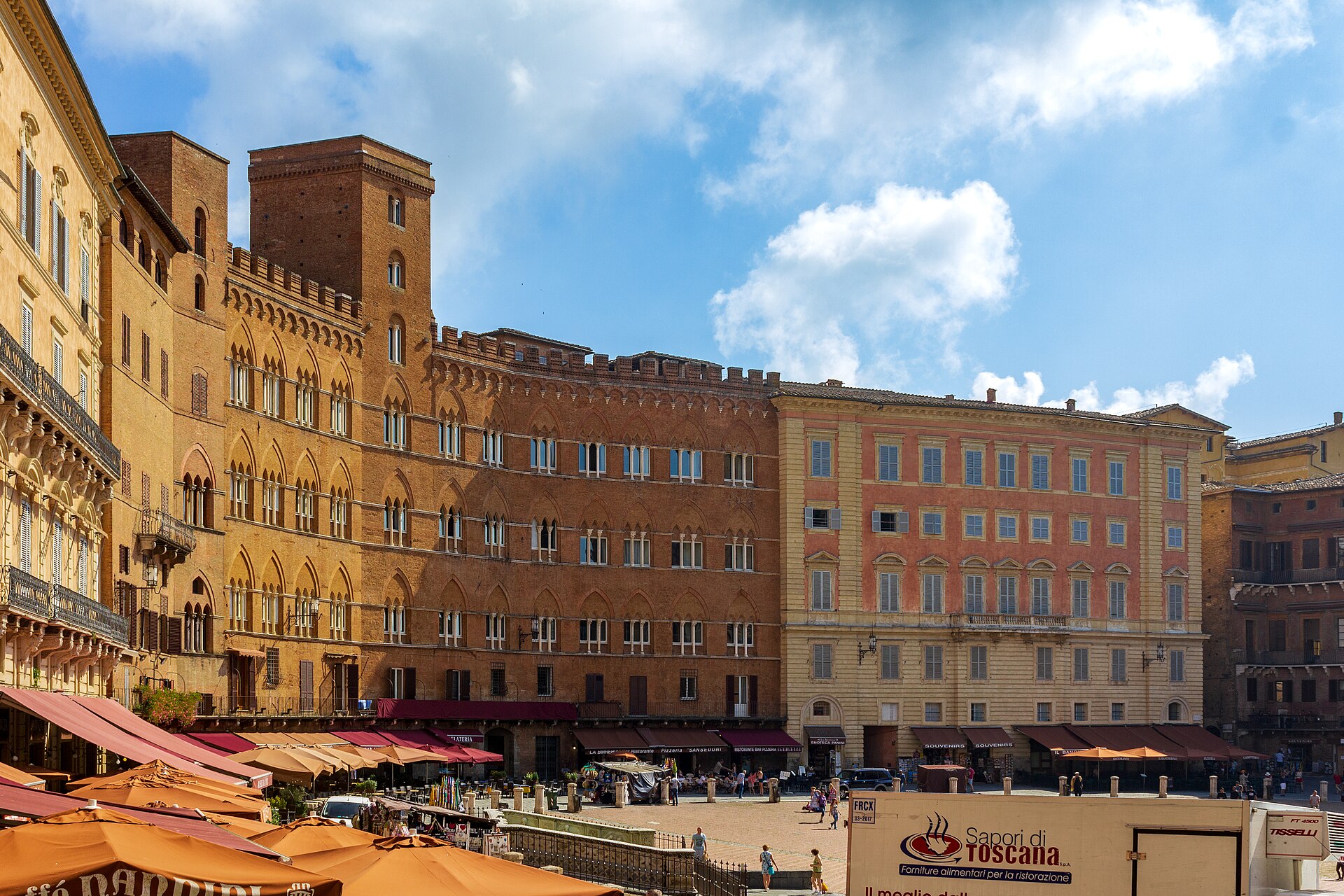
The bus is simply better. Autolinee Toscane runs the 131R line directly from near Santa Maria Novella station to Siena in roughly an hour and fifteen, departing through the day, and it drops you much closer to the historic center. As of 2026 it’s also cheap, generally in the €10–14 range. So the rule is: to Pisa and Lucca, take the train; to Siena, take the bus. Buy your return ticket at the underground bus station when you arrive so you’re not queuing at the end of the day, and validate as you board. Siena rewards a full day at minimum — the Campo, the striped Duomo, the climb up the Torre del Mangia — and our Siena travel guide covers what to prioritize if you only have the one day.
Arezzo — quiet, easy, underrated
Arezzo is the day trip people skip and shouldn’t. It’s on the fast line south toward Rome, so regional trains get you there from Florence in about 45 minutes, and the old town climbs uphill from the station to the sloping Piazza Grande and Piero della Francesca’s fresco cycle in the Basilica di San Francesco. Fewer crowds, real Tuscan life, and one of the prettiest squares in the region. Easy in, easy out.
Pistoia and Prato — the easy overlooked ones
If you want a low-effort half-day, Pistoia is barely 40-ish minutes from Florence by regional train and has a gorgeous cathedral square almost to yourself. Prato is even closer. Neither will be the headline of your trip, but on a day you don’t want a big expedition, they’re walkable from their stations and pleasant.
Cortona — possible, with a transfer
Cortona, of “Under the Tuscan Sun” fame, is the example of “reachable but not effortless.” You take a train toward the Camucia–Cortona station, but the town itself sits high on a hill above the station, so you then need a local bus or taxi up. It’s doable as a car-free day trip and worth it, but budget the extra connection and check the bus timing so you’re not stranded at the bottom.
For the full menu of options and timings, our Florence day trips page goes deeper, and if you want to understand the rail system itself — ticket types, validation, regional versus high-speed — start with trains in Italy and the more specific regional trains in Italy guide.
Where to stay in Tuscany without a car if you don’t want Florence
Florence is the smart default, but it isn’t the only good answer. If a big city for a whole week sounds exhausting, two smaller bases hold up well on public transport. This is the section to read if you’re deciding where to stay in Tuscany without a car and Florence feels like too much.
Siena as a base
Siena is my favorite alternative, and it’s the one I’d split a longer trip with — a few nights in Florence, a few in Siena. The city itself is medieval and walkable, pedestrianized in the center, and it empties out beautifully in the evening once the day-trippers leave, which is exactly when the Campo at dusk is at its best. As a base, Siena’s reach is narrower than Florence’s — fewer easy rail spokes — but it puts you closer to southern Tuscany and to the Chianti hills between Siena and Florence. From Siena you can reach San Gimignano with a train-or-bus to Poggibonsi and a connecting bus, and Florence is a straightforward bus ride back the way you came. It’s the better base if your trip is more about medieval Tuscany and less about checking off coastal cities.
Lucca as a base
Lucca is the relaxed pick, and the one I steer families and slow travelers toward. The whole old town sits inside intact Renaissance walls, it’s flat, it’s calm, and the station is walkable. From Lucca you’re on the western line, so Pisa is minutes away, Florence is an easy ride, and the Versilia beaches at Viareggio are close for a change of pace. You give up the wide day-trip fan that Florence offers, but you gain a genuinely livable, low-stress home base where the evenings belong to locals and the loudest thing is church bells.
Pisa and Arezzo as bases
I’ll be quick here, because these are situational. Pisa works if you’re flying in or out of its airport and want a no-fuss first or last night, or if you want a less touristy, more workaday city for cheaper rooms — it’s well connected to Lucca and Florence. Arezzo suits travelers who want quiet, lower prices, and a base on the southeastern side of the region with easy reach of Florence and a bus hop to Cortona. Neither replaces Florence as a hub, but both are pleasant places to sleep with real train access.
A note that applies to every base on this list: the rule is to stay in the town, within walking distance of the station or the historic center. The mistake that wrecks car-free trips is booking a romantic farmhouse in the countryside and only afterward working out that no bus goes there and the nearest taxi is 20 minutes and €40 away. Map the exact location before you book. The difference between “charming agriturismo a short walk from the train” and “charming agriturismo 8 km up an unserved gravel road” is the difference between a great car-free trip and a forced rental.
The honest part: Chianti and the Val d’Orcia without a car
Now the conversation most guides avoid. The Tuscany of the calendar photos — the lone farmhouse, the cypress avenue snaking over a golden hill, the wineries you drive between — is the part that public transport does not serve well. I’m not going to pretend otherwise, because pretending is how people end up disappointed.
Chianti
Chianti is the wine region in the hills between Florence and Siena, and it is built for cars. Buses do connect a few of the larger towns — there’s a bus between Florence and Greve in Chianti, for instance — but the service between the smaller hill towns and out to individual wineries is sparse and slow, and most cellars sit on country roads with no transit at all.
So you have two honest car-free options. One: base yourself in a single Chianti town like Greve, reachable by bus, and stay put — enjoy that town, its enoteche, and the countryside on foot, rather than trying to hop around. Chianti rewards slowing down, and if “sit in one beautiful place and drink the local wine” is the goal, this works. Two, and this is what most people actually want: take a guided wine tour or hire a driver for the day out of Florence or Siena. A tour handles the driving, the winery bookings, and the tastings, and it’s the realistic way to see multiple Chianti estates without a rental. Our Chianti wine region guide gets into which towns and which approach fit which kind of traveler.
The Val d’Orcia, San Gimignano, and Volterra
The Val d’Orcia — Pienza, Montalcino, Montepulciano, and the rolling postcard landscape south of Siena — is the hardest of all to do car-free. There’s no convenient train, the bus connections involve changes (often through Siena) and run on schedules that don’t cooperate, and once you’re in one hill town you can’t easily move to the next. The plain truth: the only easy way to actually tour the Val d’Orcia is by car or on an organized day trip. A full-day Val d’Orcia tour from Florence or Siena — the kind that strings together Pienza, Montalcino, and a wine-and-cheese tasting — is the car-free workaround, and an honestly good one, because the driving and the timing are the entire problem and the tour removes both.
San Gimignano, with its medieval towers, is a middle case: reachable by taking a train (or bus) to Poggibonsi and then the local connecting bus up to the town, roughly a two-hour journey door to door from Florence with the transfer. It’s doable on your own with patience. Volterra is harder still and really wants a tour or a car.
If after all this you decide the countryside is the trip — if you’re picturing days spent driving from vineyard to hill town with no fixed plan — then be honest with yourself and rent the car. That’s a different and also wonderful way to do Tuscany, and our Tuscany road trip guide is written for exactly that traveler. There’s no shame in either choice; the mistake is trying to do the car trip without the car. And if a countryside stay is the dream, our agriturismo in Italy guide explains how those farm stays work and which ones make sense without your own wheels.
How many nights, and how to sequence it
A simple framework. For a first Tuscany trip without a car, I’d build it like this:
- Five to seven nights, one base (Florence). Three full days in Florence, then day trips to Pisa+Lucca (one day), Siena (one day), and Arezzo or a Chianti tour (one day). Maximum sightseeing, minimum logistics. This is the trip I recommend to most people.
- Eight to ten nights, two bases. Split Florence and Siena. Use Florence for the western and northern day trips, then move to Siena (easy bus) for the south, the medieval pace, and a Val d’Orcia tour. One hotel change, not three.
- Add Lucca as a third base only if you specifically want the slow, walled-town, family-friendly rhythm and you have the nights to spare.
The through-line is restraint. The temptation in Tuscany is to keep moving — a night here, a night there, chasing every hill town. Car-free, that temptation is your enemy. Pick one or two well-connected bases, unpack, and let the trains do the moving. This whole approach is part of the bigger picture in our where to stay in Italy pillar, which frames how to think about bases across the whole country, and the companion best cities to stay in Italy roundup if Tuscany is one stop on a longer route. For the nuts and bolts of getting around once you’re on the ground, Italy transportation ties the trains, buses, and trams together.
Final thoughts
Tuscany without a car is not a compromise version of the trip — it’s just a different shape of it, built on trains and one or two well-chosen bases instead of a rental and a GPS. Put Florence at the center, add Siena or Lucca if you want a smaller second home, ride the regional rail out and back, and hand the countryside off to a tour when the buses run out. Unpack once, slow down, and let the network carry you. That’s the whole trick, and it’s a genuinely lovely way to see this part of Italy.
Questions travellers ask
Can you do Tuscany without a car?
Yes — the cities and rail-line towns are genuinely easy car-free. Base in Florence, use Trenitalia regional trains to Pisa, Lucca, and Arezzo, and the Autolinee Toscane bus to Siena. The limit is the deep countryside: Chianti and the Val d’Orcia have sparse buses, so those are best done by guided tour or hired driver rather than public transport.
What is the best base in Tuscany without a car?
Florence, clearly. Its Santa Maria Novella station is the hub of the regional network, so you can sleep in one place all week and reach the major towns as day trips without ever repacking. Siena and Lucca are the strongest smaller alternatives if you’d rather not base in a big, busy city for the whole trip.
Is it better to take the train or bus from Florence to Siena?
The bus, by a clear margin. The Autolinee Toscane 131R runs direct from near Santa Maria Novella to Siena in about an hour and fifteen and drops you close to the center. The train is slower, sometimes needs a change at Empoli, and leaves you with a 30-minute uphill walk from Siena’s station to the Piazza del Campo.
Can you visit Chianti without a car?
Partly. You can reach a larger town like Greve in Chianti by bus and stay put to enjoy it on foot. But buses between the small hill towns and out to individual wineries are thin and slow. To actually visit multiple Chianti estates car-free, a guided wine tour or a private driver from Florence or Siena is the realistic move.
Can you visit the Val d’Orcia without a car?
This is the hard one. There’s no convenient train, and bus links between Pienza, Montalcino, and Montepulciano involve awkward changes and poor schedules. The honest answer is that touring the Val d’Orcia really wants a car — or, car-free, a full-day organized tour from Florence or Siena, which handles the driving and timing that make it difficult.
How many days do you need in Tuscany without a car?
Five to seven nights based in Florence covers it well for a first trip: three days in the city, then day trips to Pisa and Lucca, Siena, and one more. If you want southern Tuscany and a slower medieval pace, add nights and split your stay with Siena. More than that lets you add Lucca or a countryside tour.
Do you need to book trains in advance in Tuscany?
For regional trains — the ones you’ll use for day trips like Pisa, Lucca, and Arezzo — no. They’re cheap, frequent, and not reservation-based; just buy a ticket and validate it in the platform machine before boarding. Advance booking matters only for high-speed trains to places like Rome or Milan, where early fares are much lower.
Is San Gimignano reachable without a car?
Yes, with a transfer. San Gimignano has no train station, so you take a train or bus to Poggibonsi and then a local connecting bus up to the town — roughly two hours door to door from Florence. It’s doable independently with a little patience, or you can fold it into a guided tour that also covers nearby Chianti or Volterra.